When the firm increases output and the costs rise disproportionately faster, then the
long-run average cost curve is ________ and the firm is experiencing ________.
A) horizontal; constant returns to scale
B) downward sloping; constant returns to scale
C) upward sloping; diseconomies of scale
D) downward sloping; economies of scale
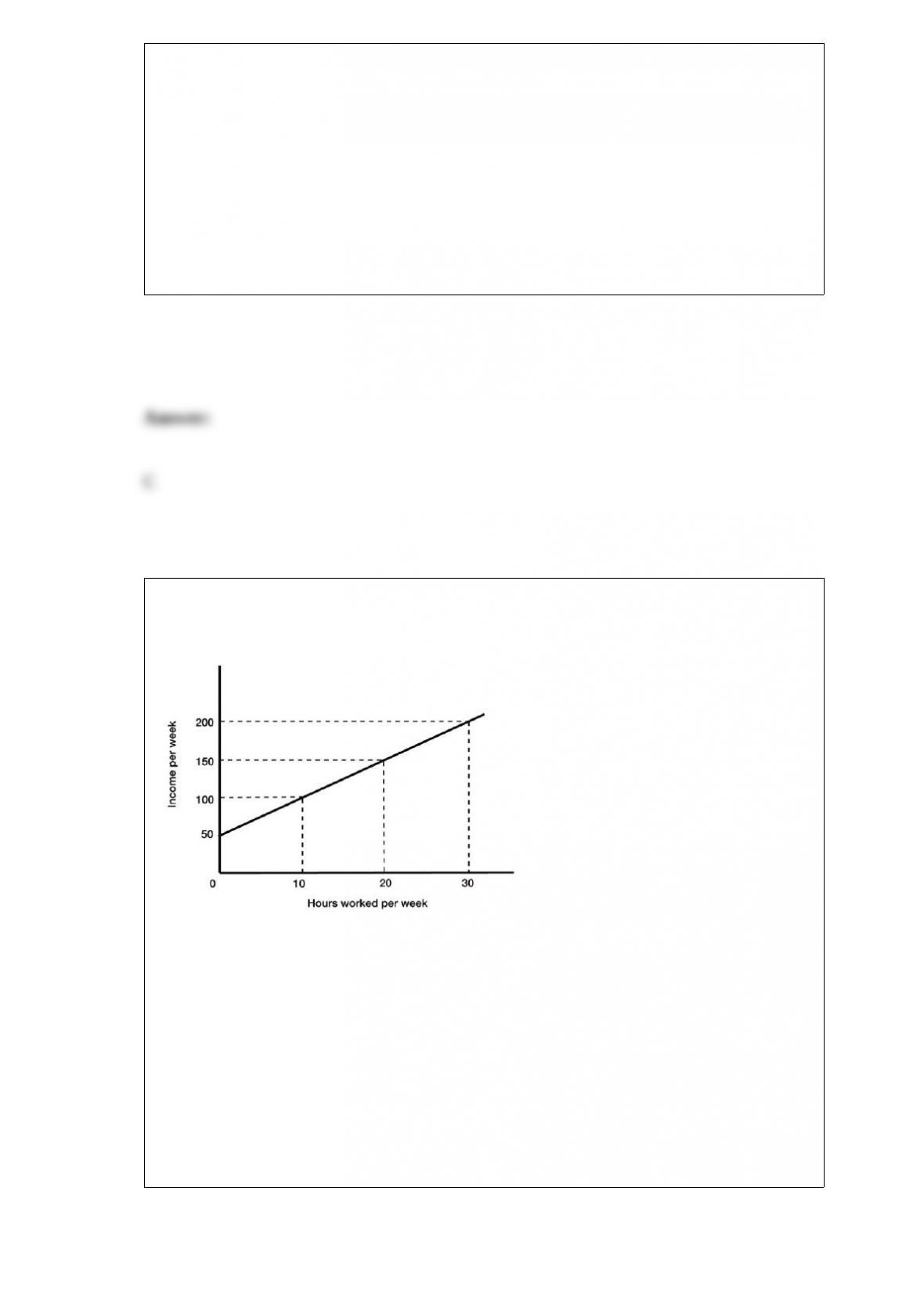
Figure 1A.1
If the hours worked per week is 30, the income per week is:
A) 50.
B) 100.
C) 150.
D) 200.

If the equilibrium price of gasoline is $2.75 per gallon and the government will not
allow oil companies to charge more than $2.00 per gallon of gasoline, which of the
following will happen?
A) Demand must eventually decrease so that the market will come into equilibrium at a
price of $2.00.
B) Supply must eventually increase so that the market will come into equilibrium at a
price of $2.00.
C) Total surplus in the market will be lower than it would be if the price was $2.75 per
gallon.
D) The market will be in equilibrium at a price of $2.00.
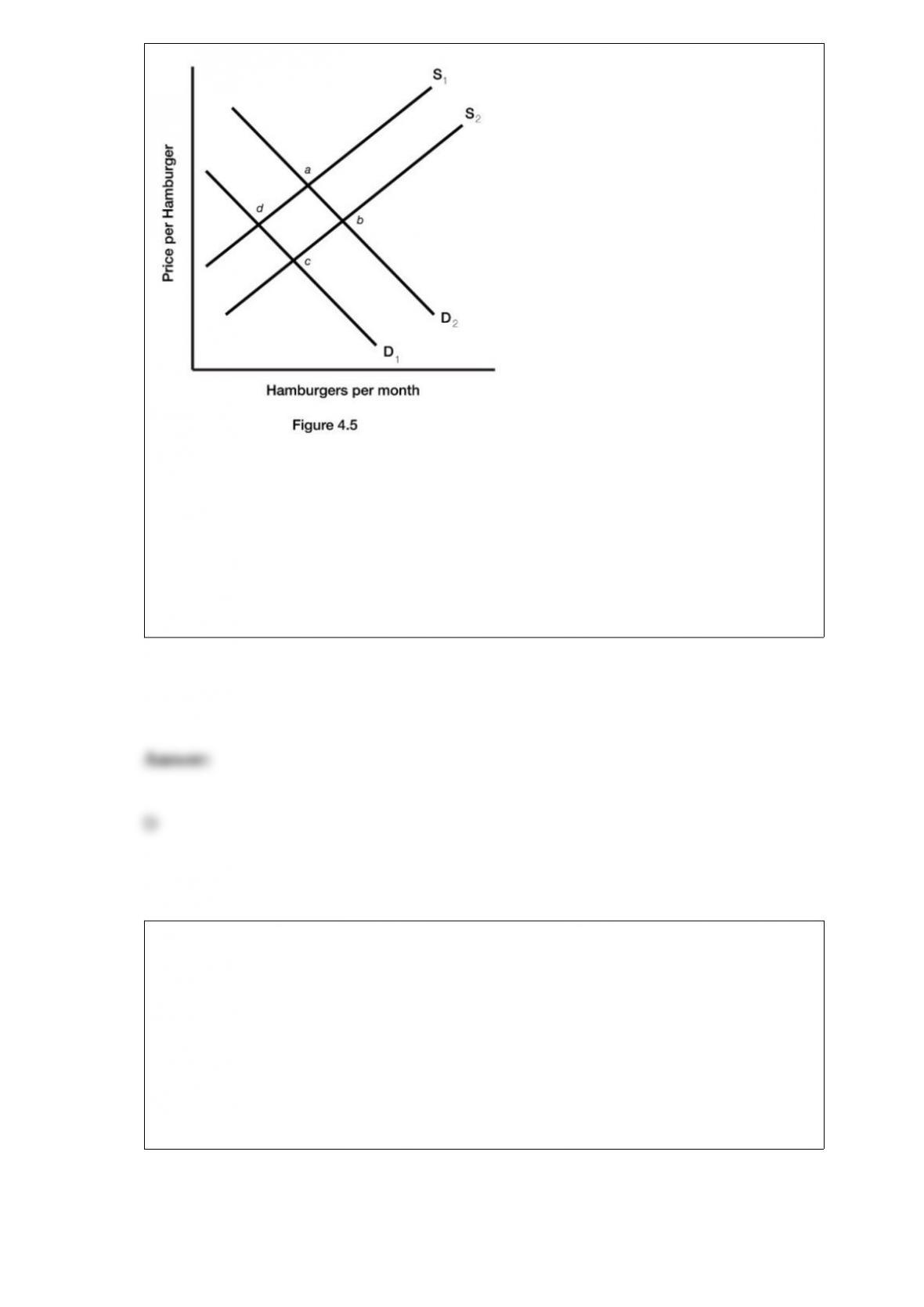
Figure 4.5 illustrates a set of supply and demand curves for hamburgers. A decrease in
supply and an increase in demand are represented by a movement from:
A) point d to point c.
B) point c to point b.
C) point b to point d.
D) point c to point a.
Which of the following products has the most elastic demand?
A) Coca Cola in 12 oz. cans
B) all cola drinks
C) all carbonated beverages
D) all beverages
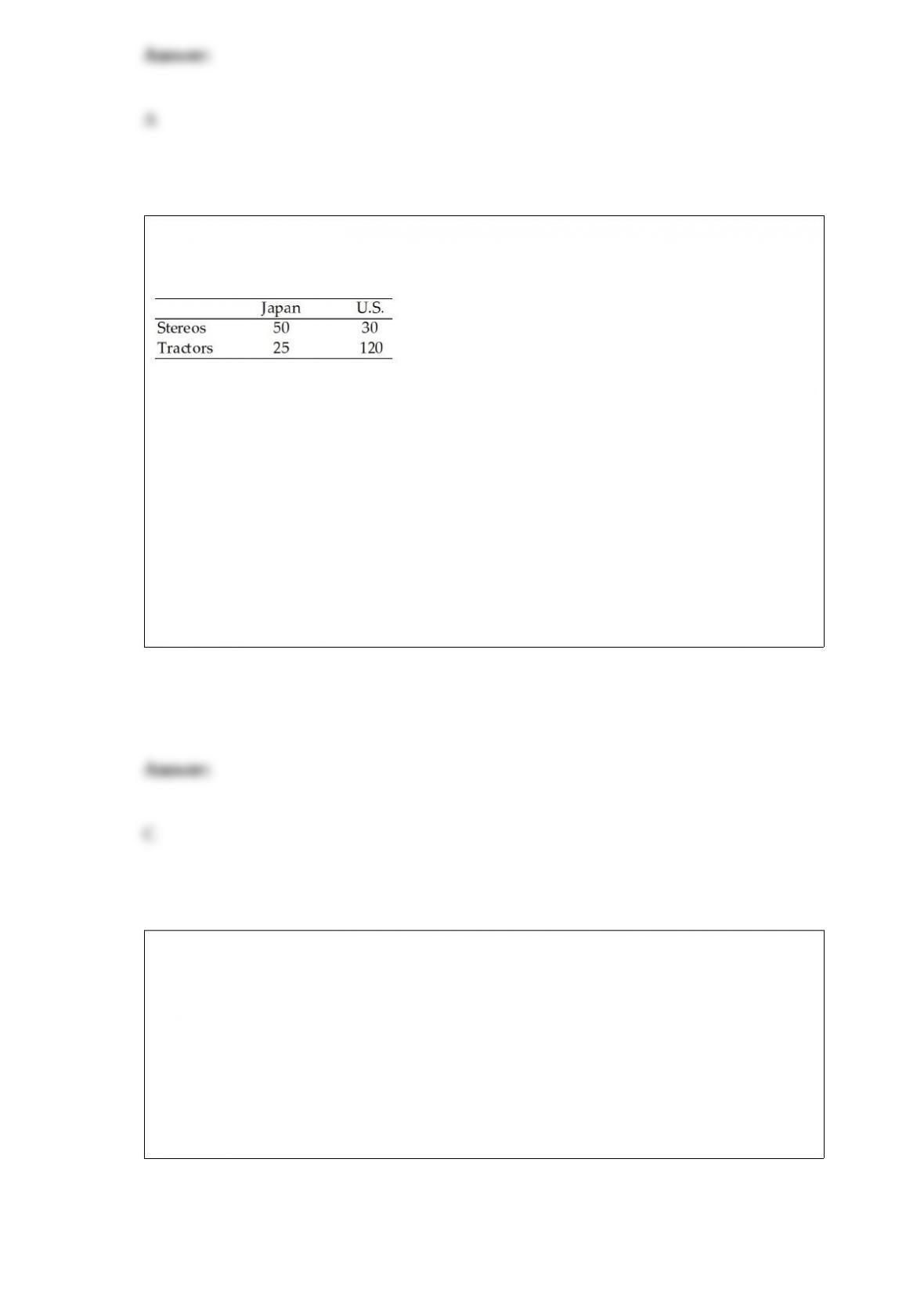
Daily Output of Japan and U.S.
Table 18.2
Refer to Table 18.2. After trade begins, ________ will specialize in the production of
stereos and ________ will specialize in the production of tractors.
A) U.S.; U.S.
B) U.S.; Japan
C) Japan; U.S.
D) Japan; Japan
In the short run:
A) firms have the ability to enter or exit the industry.
B) firms are able to alter some, but not all, of their factors of production.
C) firms are unable to adjust their output choices.
D) None of the above are correct.

Which of the following is an example of a tie-in sale?
A) In order to buy Microsoft Windows, you must also purchase Internet Explorer.
B) Bus rides are cheaper for senior citizens than for other people.
C) Two companies merge to form one company.
D) Prices are set just low enough to prevent other firms from entering the market.
In a perfectly competitive labor market, the firm ________ the price of its product and
________ the wage it pays its workers.
A) takes from the market; takes from the market
B) can freely set; takes from the market
C) takes from the market; can freely set
D) can freely set; can freely set

Suppose that a monopolistically competitive market is in its long-run equilibrium. If the
market demand curve shifts to the right due to changes in consumer preferences:
A) the number of firms in the market will increase in the short run.
B) firms will earn positive economic profits in the short run.
C) firms’ average costs of production will increase as they increase output levels in the
short run.
D) none of the above
The market demand curve is:
A) downward sloping and is flatter than an individual’s demand curve.
B) upward sloping and is flatter than an individual’s demand curve.
C) downward sloping and is steeper than an individual’s demand curve.
D) upward sloping and is steeper than an individual’s demand curve.
Refer to Table 17.1. Diminishing returns occur after the ________ worker.
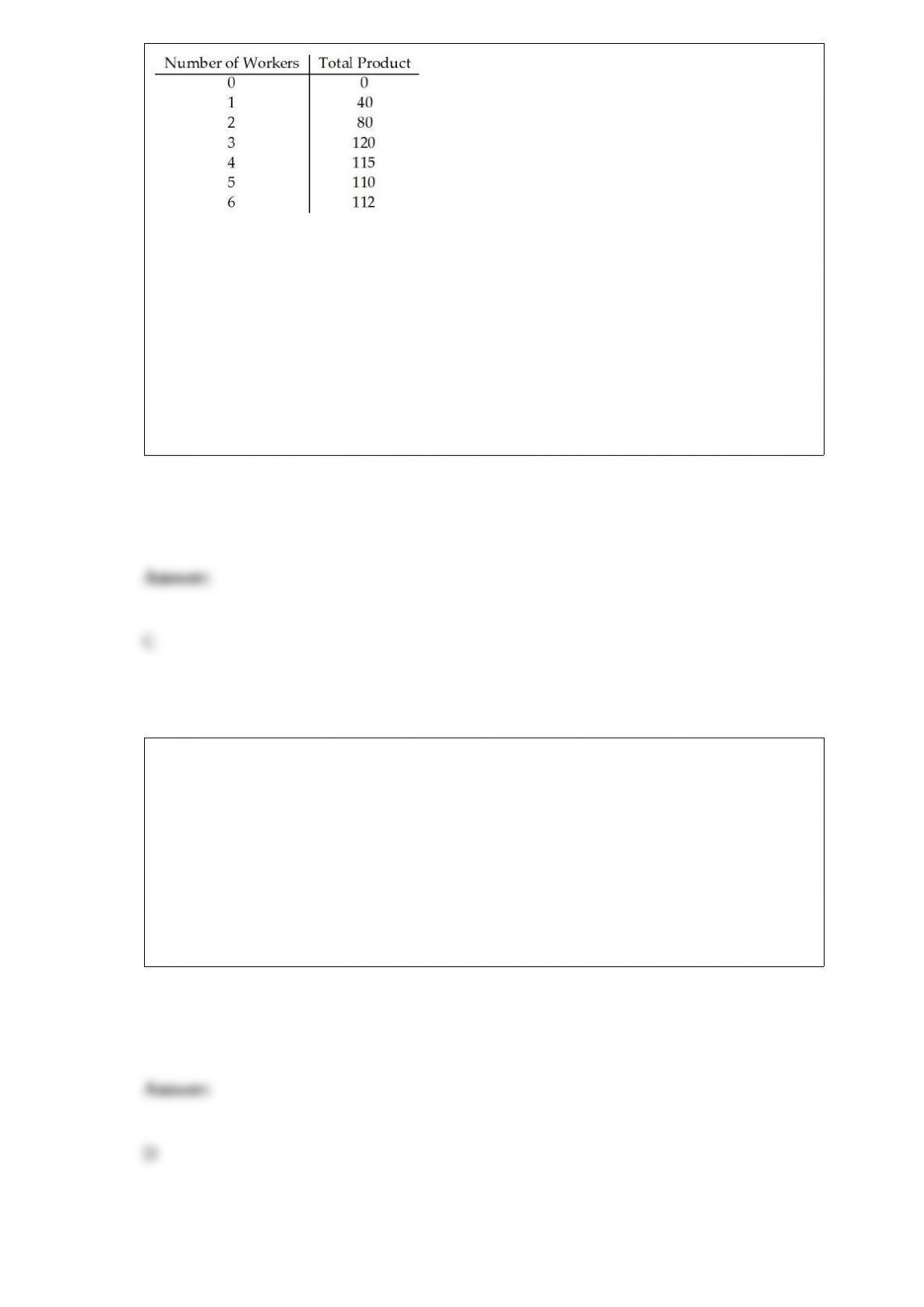
Table 17.1
A) first
B) second
C) third
D) fourth
Monopolistically competitive firms do NOT differentiate their products by:
A) changing the products’ physical characteristics.
B) selling products at different locations.
C) offering different levels of service that come with a product.
D) charging different prices to different groups of consumers.
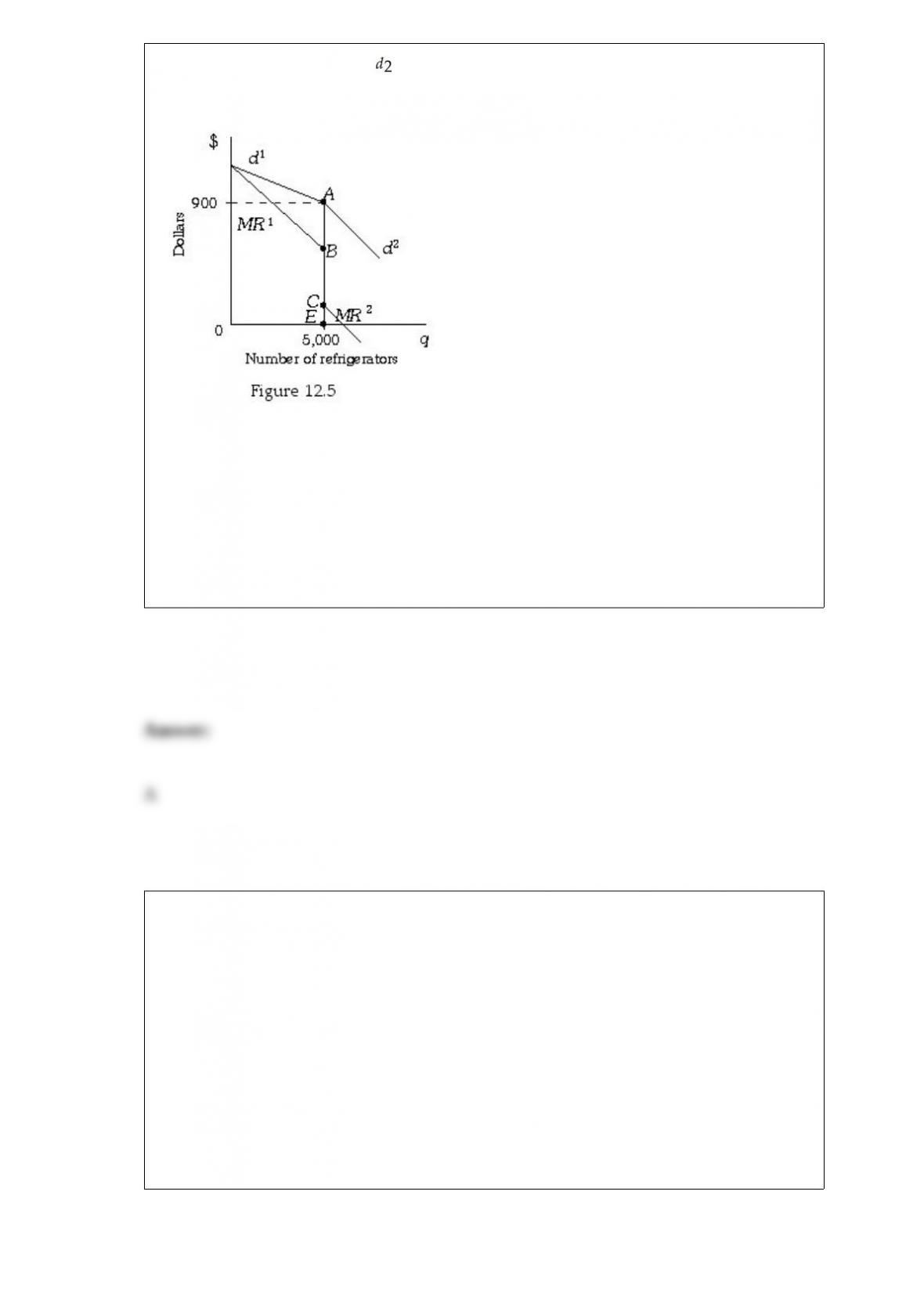
Refer to Figure 12.5. Section of the demand curve assumes that competing firms
will:
A) lower their price in response to this firm’s price reduction.
B) increase their price in response to this firm’s price reduction.
C) not change their price in response to this firm’s price reduction.
D) raise their price in response to this firm’s price increase.
Suppose Tim’s Cowboy boot factory produces in a perfectly competitive market.
Suppose the average total cost of cowboy boots is $65, the average variable cost of
cowboy boots is $60, and the price of cowboy boots is $62. If the firm is producing the
level of output where marginal cost equals price, then in the short run the firm:
A) should shut down.
B) should continue to produce since total revenue exceeds total variable cost.
C) is earning a positive economic profit.
D) can increase profit by increasing output.

Suppose that the market equilibrium price of TVs is $250 but manufacturers are not
allowed to charge more than $200 due to a government regulation. Which of the
following would be a definite result of imposing a maximum price?
A) Consumer surplus will increase.
B) Producer surplus will decrease.
C) Government revenue will increase.
D) all of the above
A benefit to consumers of monopolistically competitive markets is that:
A) consumers only have to choose from one product.
B) consumers have a variety of products from which to choose.
C) goods are sold at the lowest possible average cost of production.
D) price is equal to marginal cost in equilibrium.
An increasing-cost industry is one in which the average cost of production ________ as
the total output of the industry ________.
A) increases; increases
B) increases; decreases
C) decreases; increases
D) None of the above; there are no increasing-cost industries.
Refer to Figure 5.5. Using the midpoint method, if the price of a gardenburger is
increased from $8 to $10, the price elasticity of demand equals:
A) 0.036.
B) 0.5.
C) 4.5.
D) 9.0.

Suppose Johnson’s Rubber Factory belches black smoke into the air over the city of
Bellowsville. If the city of Bellowsville attempts to internalize the external costs
associated with the production of rubber with a pollution tax, then we expect:
A) at each price, a smaller quantity of rubber will be supplied by Johnson’s Rubber
Factory.
B) at each price, a larger quantity of rubber will be supplied Johnson’s Rubber Factory.
C) Johnson’s Rubber Factory will not change the amount of rubber supplied at each
price.
D) Johnson’s production costs not to change.
If firms in a monopolistically competitive market are earning economic profits greater
than zero in the short run, then in the long run:
A) firms will exit this market.
B) profits will increase.
C) profits will decrease.
D) demand will not change.

If the government imposes a maximum price for milk that is above the equilibrium
price:
A) this maximum price for milk will have no economic impact.
B) quantity demanded of milk will be less than quantity supplied.
C) demand for milk will be greater than supply.
D) the available milk supply will have to be rationed.
Suppose that a natural disaster substantially increases the cost of producing cheese. We
would predict that the equilibrium quantity of cheese will ________ and the
equilibrium price of cheese will ________.
A) increase; increase
B) increase; decrease
C) decrease; increase
D) decrease; decrease

If the production of a good generates external benefits, the government could increase
efficiency by:
A) taxing the production of the good to reduce the amount produced.
B) subsidizing the production of the good to increase the amount produced.
C) regulating the production of the good to reduce the amount produced.
D) requiring all producers of the product to be licensed to produce the product.
Other things being equal, if a firm’s marginal cost curve shifts upward at all output
levels:
A) the average total cost curve remains unchanged at all output levels.
B) the average variable cost curve remains unchanged at all output levels.
C) the average fixed cost curve remains unchanged at all output levels.
D) all of the above
Refer to Figure 17.2. If the demand for labor increases, then equilibrium wage will
________ and equilibrium quantity of hours will ________.
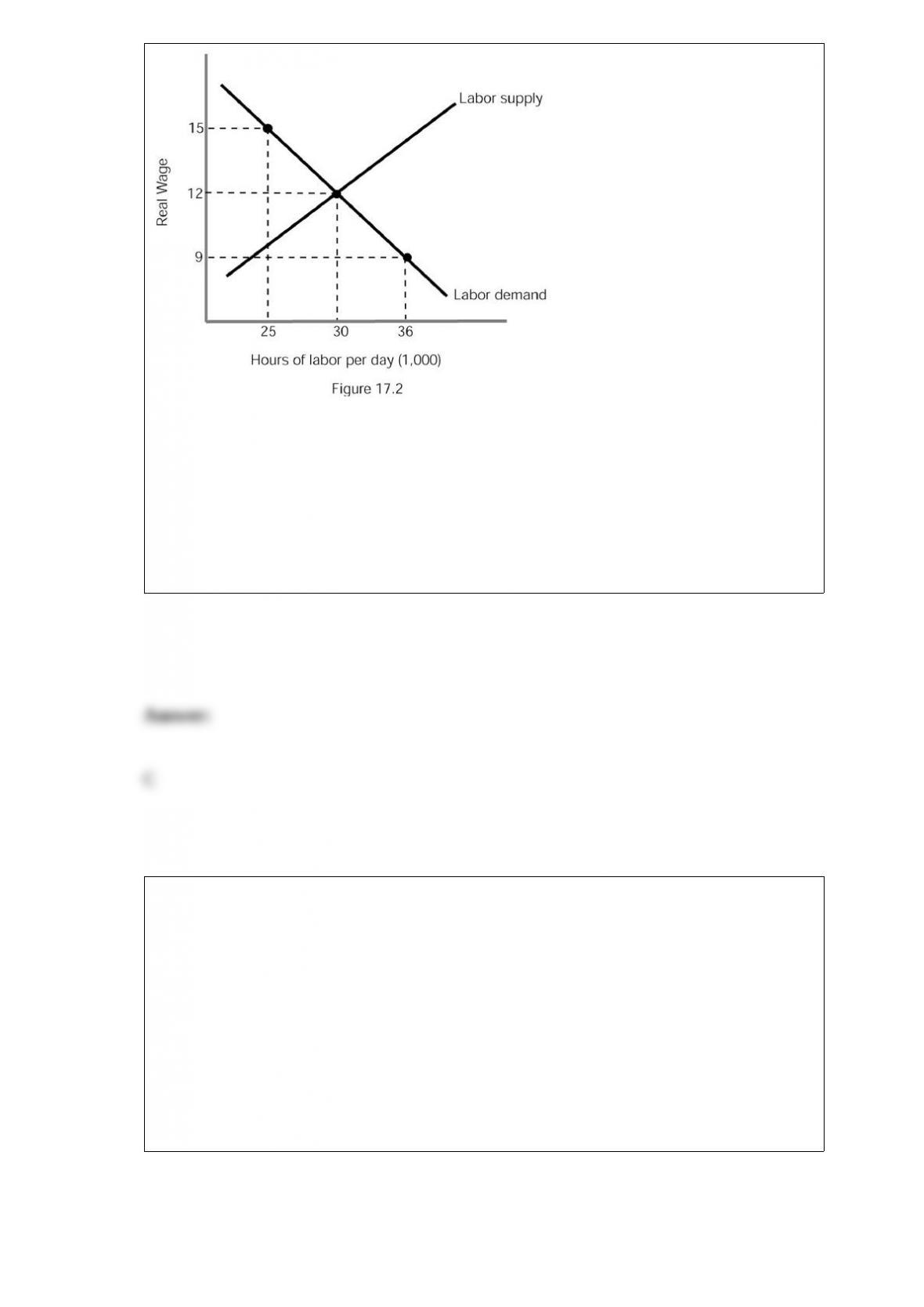
A) rise; fall
B) fall; fall
C) rise; rise
D) fall; rise
If an increase in the price of good X results in a decrease in the quantity of Y
demanded:
A) good X and good Y are substitutes.
B) good X and good Y are complements.
C) the cross-price elasticity of demand for good Y is positive.
D) There is not sufficient information to determine the relationship between good X and
good Y.
Microeconomics is the study of the choices made by ________ and how these choices
affect the markets.
A) households only
B) the government only
C) firms only
D) households, firms and governments
If demand falls in Figure 4.7, then the equilibrium:
Figure 4.7
A) price and quantity rise.
B) price rises and quantity falls.
C) price falls and quantity rises.

D) price and quantity fall.
According to the Application, the ban on gender discrimination in automobile insurance
pricing is expected to ________ adverse selection in the insurance market and
________ average cost for insurance companies.
A) promote; increase
B) promote; decrease
C) reduce; increase
D) reduce; decrease
Figure 4.3 illustrates the demand for tacos. Assume that tacos and beer are
complements. A decrease in the price of beer would bring about a movement from:
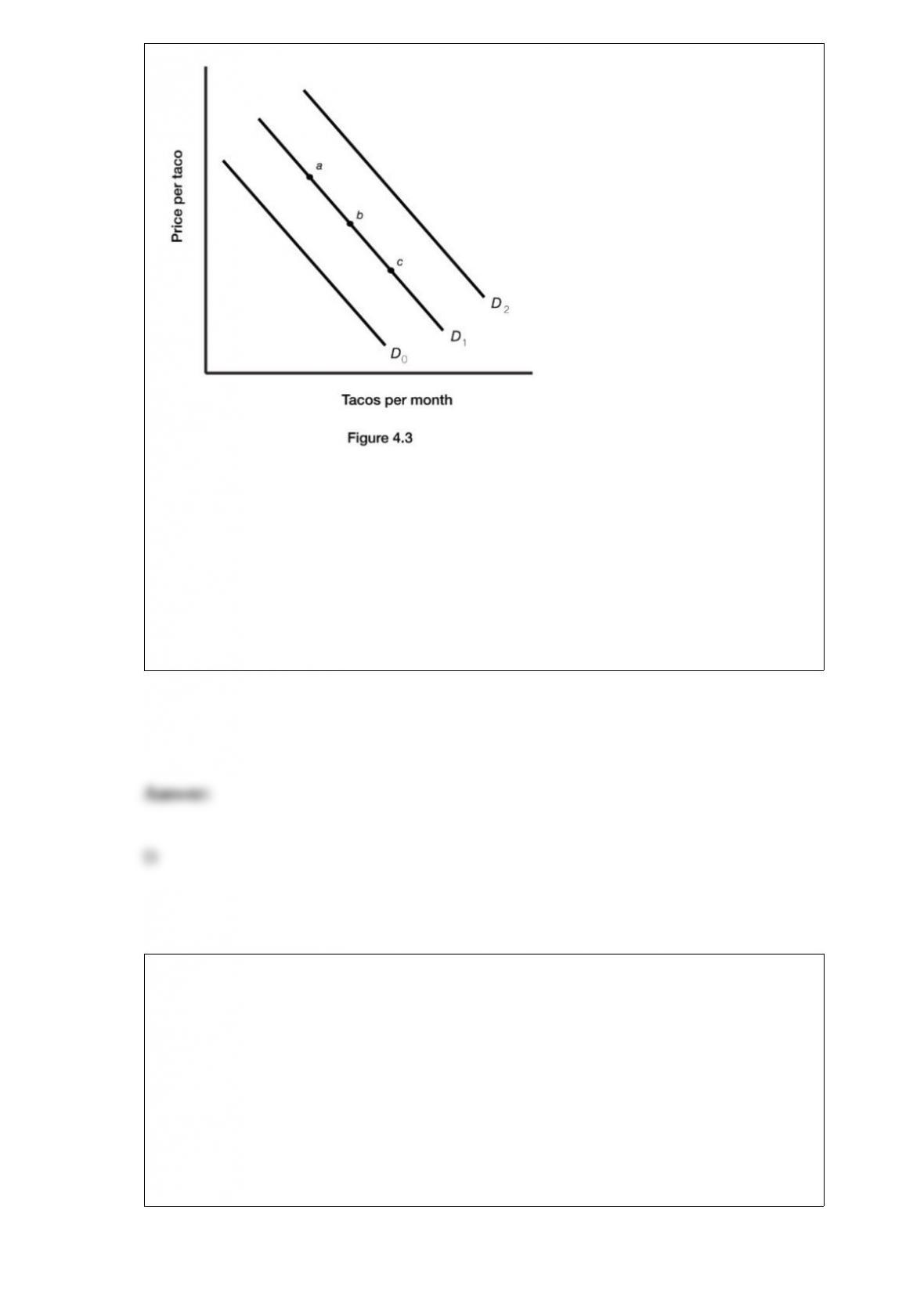
A) point a to point c.
B) point c to point a.
C) D2 to D0.
D) D0 to D2.
If the demand for pineapples is unit elastic, the value of the price elasticity of demand
for pineapples is:
A) 20.
B) 2.0.
C) 10.0.
D) 1.0.

A centrally planned economy has a planning authority that decides:
A) what products to produce.
B) how the products are produced.
C) who receives the products.
D) all of the above.
The citizens of a country may prefer a tariff to a quota because:
A) a quota, but not a tariff, generates additional revenue for the government, which can
be used for public programs.
B) a quota, but not a tariff, generates additional profits for importers, not the
government.
C) a tariff, but not a quota, generates additional revenue for the government, which can
be used for public programs.
D) a tariff, but not a quota, generates additional profits for importers, not the
government.

When private goods have external benefits:
A) marginal social cost is greater than marginal private cost.
B) marginal privates cost is greater than marginal social cost.
C) marginal social benefit is greater than marginal private benefit.
D) marginal private benefit is greater than marginal social benefit.