
Jen is offered a job answering the phone in the State U economics department during
lunchtime, from noon to 1 p.m., Tuesdays and Thursdays. Her reservation wage for this
job is $15 per hour. If the department chair offers Jen $150 per week, how much
economic surplus will she enjoy as a result of accepting the job?
A. $15 per week
B. $120 per week
C. $135 per week
D. $150 per week
Short-run equilibrium output is the level of output at which actual output:
A. equals potential output.
B. maximizes firm profits.
C. equals real GDP per capita.
D. equals planned aggregate expenditure.
Easy monetary policy reduces the real interest rate, which ______ the demand for
dollars, ______ the supply of dollars, and ______ the equilibrium value of the dollar.
A. increases; increases; increases

B. decreases; decreases; decreases
C. increases; decreases; increases
D. decreases; increases; decreases
An inflation _____ may be more likely to stabilize output as well as inflation because
they have established credibility and _____.
A. dove; lowered the core rate of inflation
B. hawk; reduced inside lags
C. dove: anchored inflationary expectations
D. hawk; anchored inflationary expectations
If a production process exhibits diminishing returns, then as output rises:
A. average total cost will eventually decrease.
B. marginal cost will eventually increase.
C. total fixed cost will eventually increase.

D. total revenue will eventually decrease.
According to the theory of purchasing power parity, the real exchange rate between two
currencies will equal ______ in the long run.
A. the nominal exchange rate
B. the ratio of the rates of inflation of the two currencies.
C. 0.
D. 1.
An exchange rate that varies according to supply and demand for the currency in the
foreign exchange market is called a ______ exchange rate.
A. real
B. nominal
C. fixed
D. flexible
The Scarcity Principle applies to:
A. all decisions.
B. only market decisions, e.g., buying a car.
C. only non-market decisions, e.g., watching a sunset.
D. only the poor.
Suppose Stan owns a piece of property with a large lake. Initially, Stan and his family
were the only people who swam in the lake. Then Stan started selling tickets to people
who wanted to go swimming in the lake. When Stan died, he left the lake and the land it
was on to the state, stipulating that the lake be left open to the public for swimming.
Due to the lake’s remote location, it was never crowded.
After Stan died, the lake became a ______ good.
A. private
B. commons
C. collective
D. public
The figure below shows the supply and demand curves for jeans in Smallville.
Suppose jeans initially sell for $60 per pair. If the price of jeans falls to $40 per pair,
then total economic surplus will increase by ______ per day.
A. $160
B. $80
C. $40
D. $20
Suppose that the owner of a local ice cream store, knowing that demand for ice cream is
higher when the weather is warmer, always charges a price in cents for a scoop of ice

cream that is equal to two times the current outdoor temperature, measured in
Fahrenheit (so that if it is 90 degrees outside, the ice cream is $1.80 per scoop). This
type of behavior is ______.
A. exactly the type of behavior that Keynes believed most firms exhibit.
B. known as meeting demand.
C. inconsistent with the key assumption upon which the basic Keynesian model is built.
D. free from menu costs.
Charlie is getting a divorce. He selects a female lawyer at a large law firm because he
believes they are more aggressive in obtaining favorable settlements in divorce cases.
Charlie’s behavior is an example of ______ discrimination.
A. market
B. employer
C. employee
D. customer
If the Federal Reserve is currently paying 1% interest on bank reserves, but then
reduces that interest rate to 0.5%, banks may decide to hold ______ reserves, and the

money supply may _____.
A. more; increase
B. more; decrease
C. fewer; increase
D. fewer; decrease
Refer to the figure below. If Jess chooses A, then Cory’s best response is:
A. non-existent.
B. to choose A.
C. to choose B.
D. to choose the cell in which Cory’s payoff is 10.
The biggest barrier to growth for many of the poorest countries in the world is the need
for:
A. larger populations.

B. more human capital.
C. more physical capital.
D. improved legal and political frameworks.
Refer to the figure below. The marginal utility of the 3rd dinner is
A. 60.
B. 75.
C. 135.
D. 160.
Fred and Barney fill egg cartons with eggs. Fred just started the job and can fill only 25
cartons an hour. Barney has significant on-the-job experience and can fill 50 cartons an
hour. Both Fred and Barney work 50 hours a week. Fred’s average weekly productivity
is ______ cartons; Barney’s average weekly productivity is ______ cartons; and as a
team their average weekly productivity is ______ cartons.
A. 25; 50; 75
B. 25; 50; 37.5
C. 1,000; 2,000; 1,500
D. 1,250; 2,500; 1,875
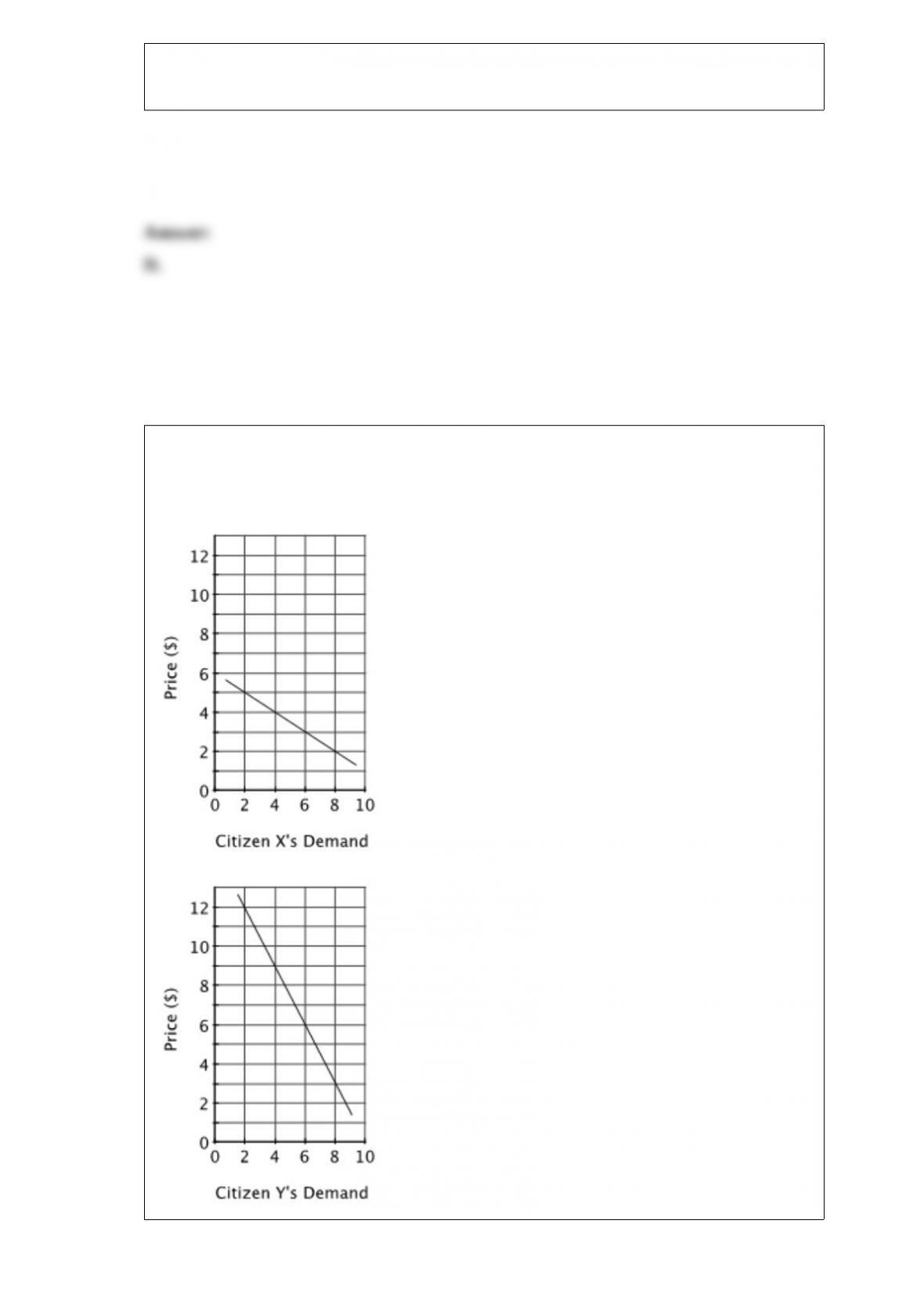
Consider a town with three residents. The residents’ demand curves for various acres of
a public park are shown below.
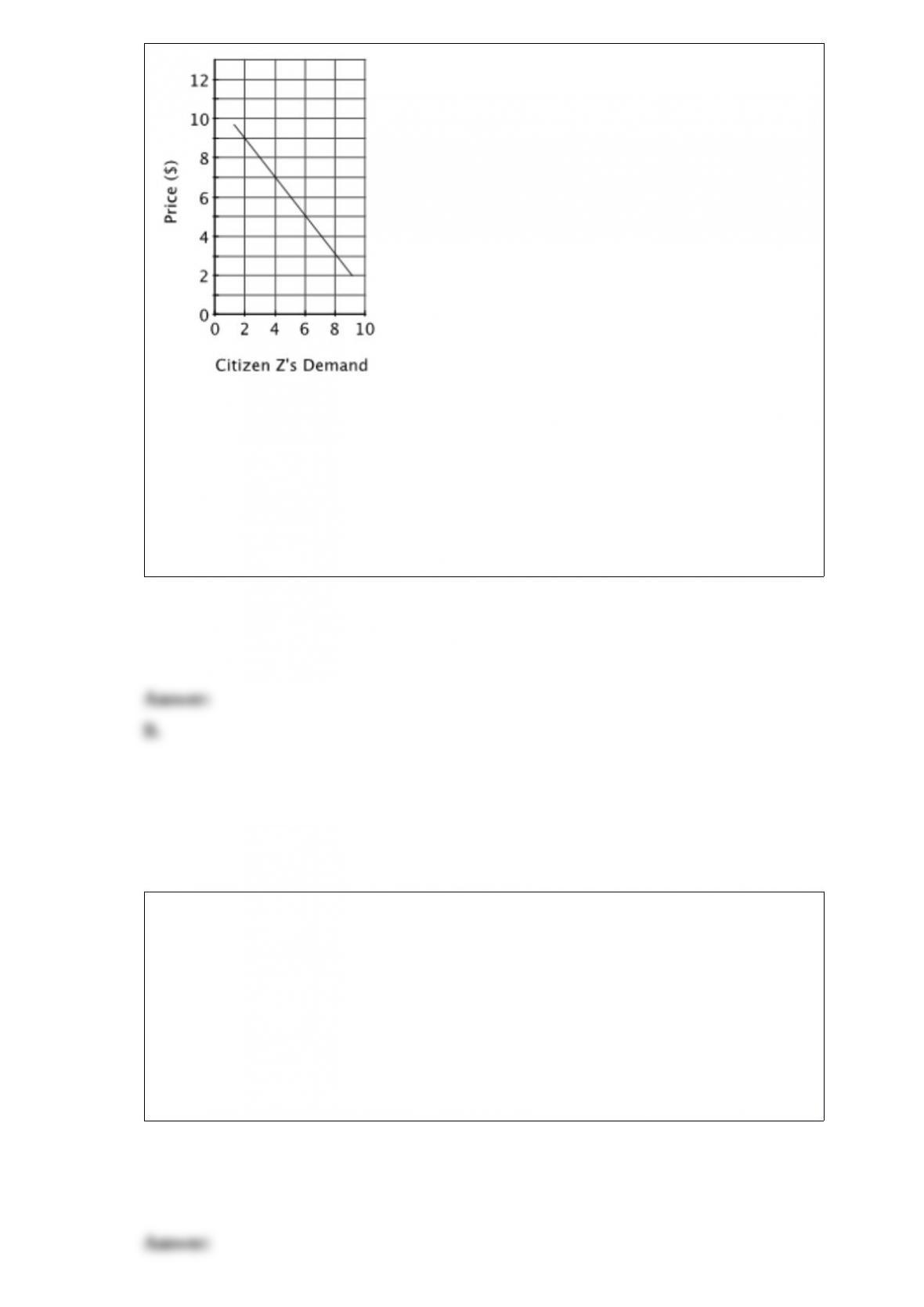
If the park is currently 2 acres, and land costs $20 per acre, the town should:
A. reduce the size of the park.
B. purchase two additional acres.
C. not change the size of the park.
D. purchase 4 additional acres.
Saving for protection against unexpected setbacks-such as the loss of a job or a medical
emergency-is called ______ saving.
A. public
B. bequest
C. precautionary
D. life-cycle

In an open economy with flexible exchange rates, monetary policy affects ______
through changes in the real interest rate and affects ______ through changes in the
exchange rate.
A. taxes and saving; net exports
B. net exports; taxes and saving
C. productivity and growth; consumption
D. consumption and investment; net exports
Refer to the figure below. If Laura and Chris are the only two consumers in this market,
then the market demand for hamburger will be 9 pounds per week when the price of
hamburger is:
A. $1.00 per pound
B. $1.50 per pound
C. $2.00 per pound
D. $2.50 per pound

Decentralized market-based financial systems improve the allocation of saving by:
A. ensuring capital gains exceed dividend payments.
B. eliminating the need for commercial banks or other financial intermediaries.
C. matching net capital inflows to net capital outflows.
D. providing information and risk-sharing services.
Whenever the quantity demanded is not equal to the quantity supplied, the quantity that
is actually sold in the market is:
A. the quantity demanded.
B. the quantity supplied.
C. the smaller of the quantity demanded and the quantity supplied.
D. the greater of the quantity demanded and the quantity supplied.
An economy produces 500,000 tables valued at $100 each. Households purchase
100,000 tables, of which 50,000 are imported. Businesses purchase 200,000

domestically produced tables, the government purchases 100,000 domestically
produced tables, and 50,000 domestically produced tables are sold abroad. At the end of
the year, the table manufacturers hold the unsold tables in inventory.What is value of
the investment component of GDP?
A. $10 billion
B. $20 million
C. $25 million
D. $30 million
Which of the following characteristics of a central bank is expected to enhance
monetary policy credibility?
A. The central bankers’ short terms that coincide with the terms of the legislature
B. Daily central bank actions that are subject to the review and veto of the executive
branch of the government
C. The central bank announcing a numerical inflation target
D. The central bank’s obligation to finance the national deficit
Starting from full employment at the initial target inflation rate, if there is a favorable
inflation shock, then the Federal Reserve must _____ in order to return output to
potential.
A. increase the target inflation rate.
B. decrease the target inflation rate.
C. maintain the initial target inflation rate.
D. shift the short-run aggregate supply curve up.
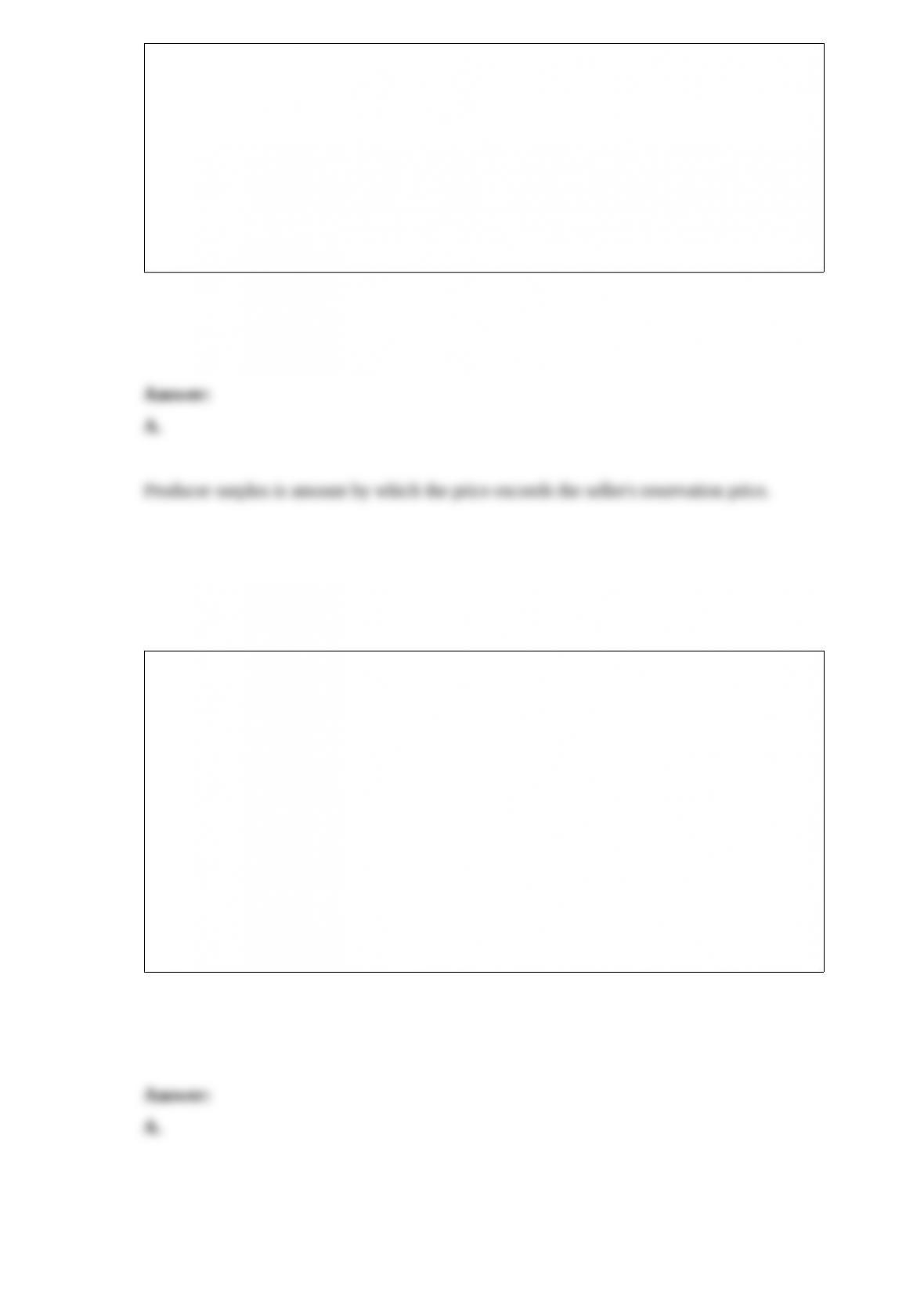
A consumer expenditure survey reports the following information on entertainment
spending:
Using 2008 as the base year, by how much does a “cost of entertainment” index
increase between 2008 and 2009?
A. 3.9 percent
B. 8.6 percent
C. 13.4 percent
D. 29.4 percent
The cumulative difference between the price producers actually receive for a good and
the lowest price for which they would have been willing to sell it is called:
A. producer surplus.
B. lost surplus.
C. total economics surplus.
D. consumer surplus.
Matt has decided to purchase his textbooks for the semester. His options are to purchase
the books online with next day delivery at a cost of $175, or to drive to campus
tomorrow to buy the books at the university bookstore at a cost of $170. Last week he
drove to campus to buy a concert ticket because they offered 25 percent off the regular
price of $16. The benefit to Matt of buying his books at the university bookstore instead
of online is:
A. $5
B. $9
C. $170
D. $175
Suppose a small island nation imports sugar for its population at the world price of
$1,500 per ton. The domestic market for sugar is shown below.
If the government provides a subsidy of $500 per ton, then relative to before the
subsidy, total economic surplus will ______ by ______ per day.
A. increase; $6,500
B. decrease; $6,500
C. increase; $1,000
D. decrease; $1,000
The costs of investment depend on the ______ and the _______.
A. marginal product of capital; relative price of the firm’s output
B. price of new capital goods; real interest rate
C. relative price of the firm’s output; real interest rate
D. taxes levied on the revenue generated; relative price of the firm’s output