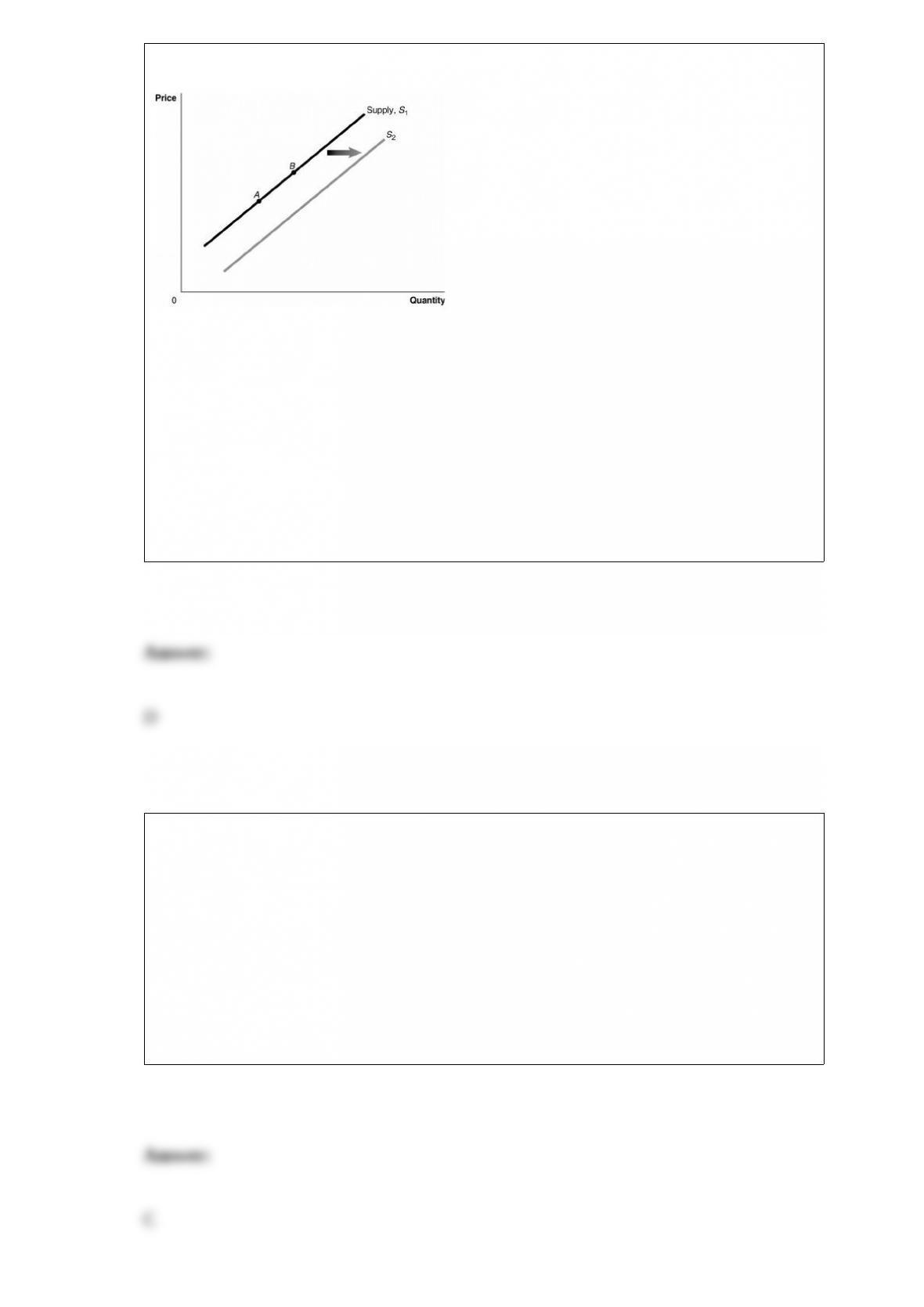
Figure 3-2
A decrease in productivity would be represented by a movement from
A) A to B.
B) B to A.
C) S1 to S2.
D) S2 to S1.
The reason that the coffeehouse market is monopolistically competitive rather than
perfectly competitive is because
A) barriers to entry are very low.
B) there are many firms in the market.
C) products are differentiated.
D) entry into the market is blocked.
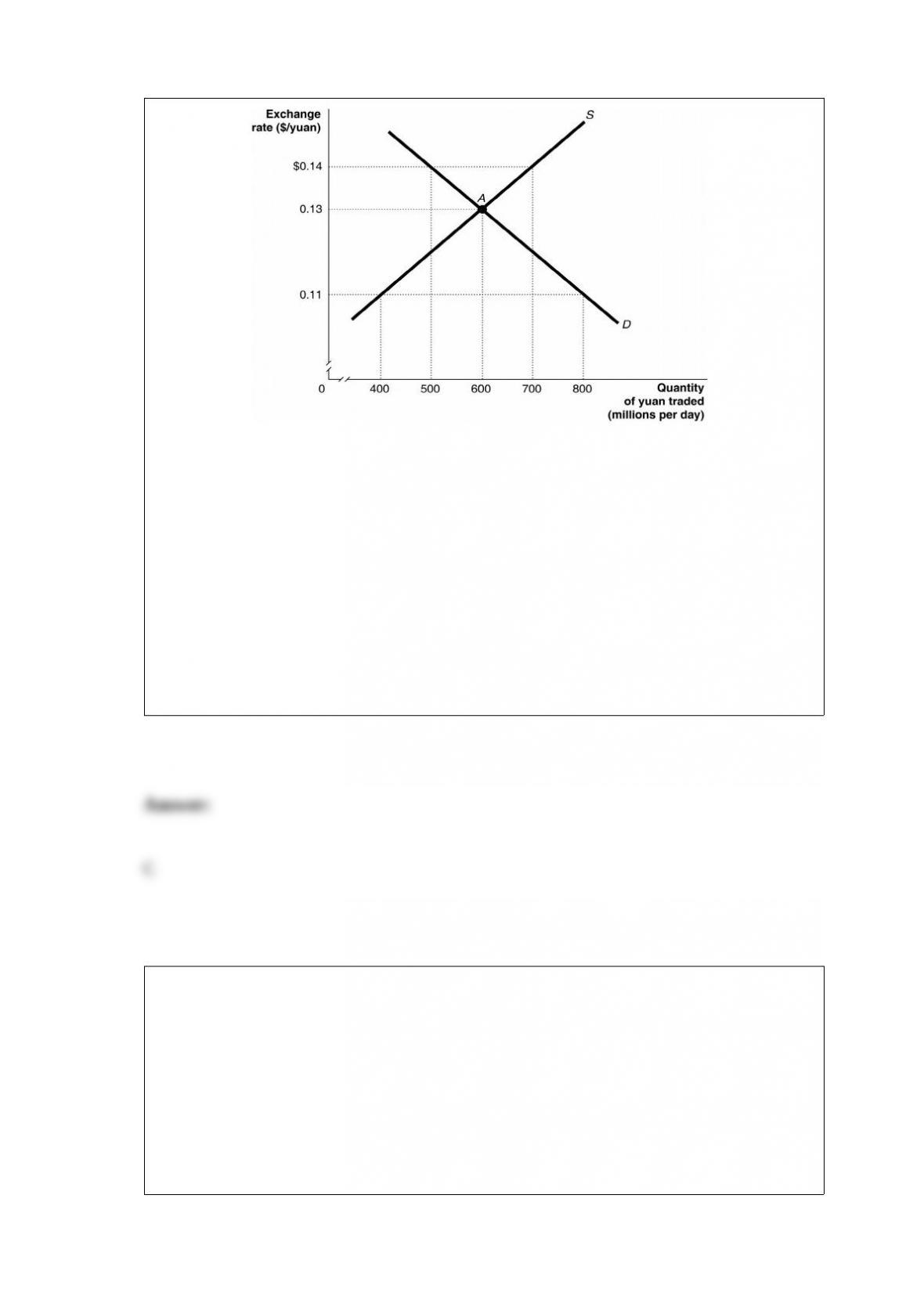
Figure 19-5
Suppose the pegged exchange rate is $0.11/yuan. Because of safety concerns and
numerous product recalls, U.S. consumers lower their demand for Chinese products.
Using the figure above, this would
A) increase the surplus of Chinese yuan.
B) decrease the surplus of Chinese yuan.
C) decrease the shortage of Chinese yuan.
D) increase the shortage of Chinese yuan.
“Taxes are what we pay for a civilized society.” This statement was made by
A) Adam Smith.
B) Oliver Wendell Holmes.
C) Herbert Hoover.
D) Franklin Roosevelt.
If the balance on the current account is $346 billion and the balance on the financial
account is -$204 billion, what is the balance on the capital account, assuming no
statistical discrepancy?
A) $550 billion
B) $142 billion
C) $0
D) -$142 billion
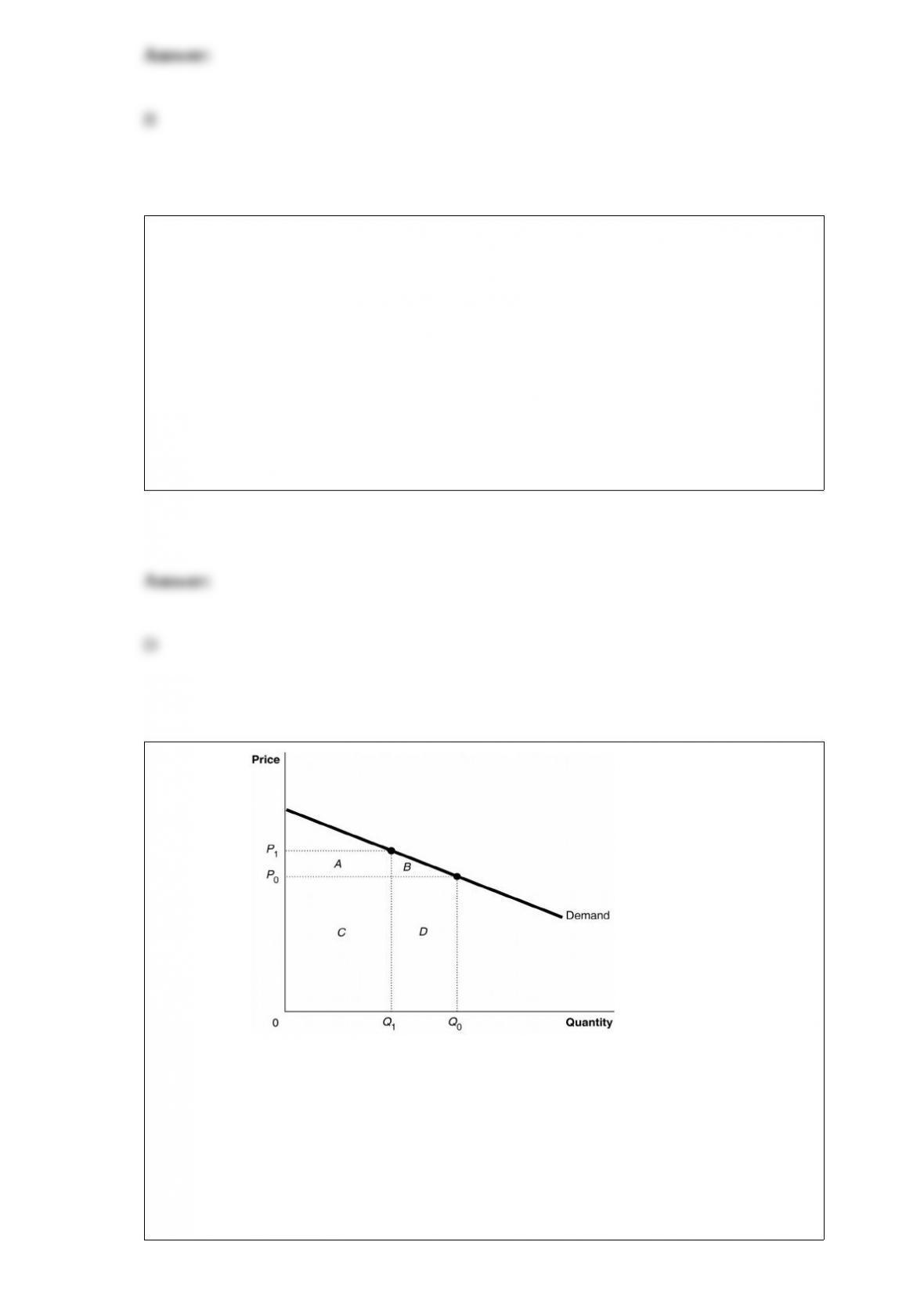
Figure 13-1
The marginal revenue from the increase in price from P0 to P1 equals
A) the area A.
B) the area (B + D – A).
C) the area (A – D).
D) the area (C – B).
How are intermediate goods treated in the calculation of GDP?
A) Their value is not counted separately, but included as part of the value of the final
good for which they are an input.
B) Their value is counted separately, and their value is also included as part of the value
of the final good for which they are an input.
C) Their value is counted separately, but is not included as part of the value of the final
good for which they are an input.
D) They are included only if they are imported.
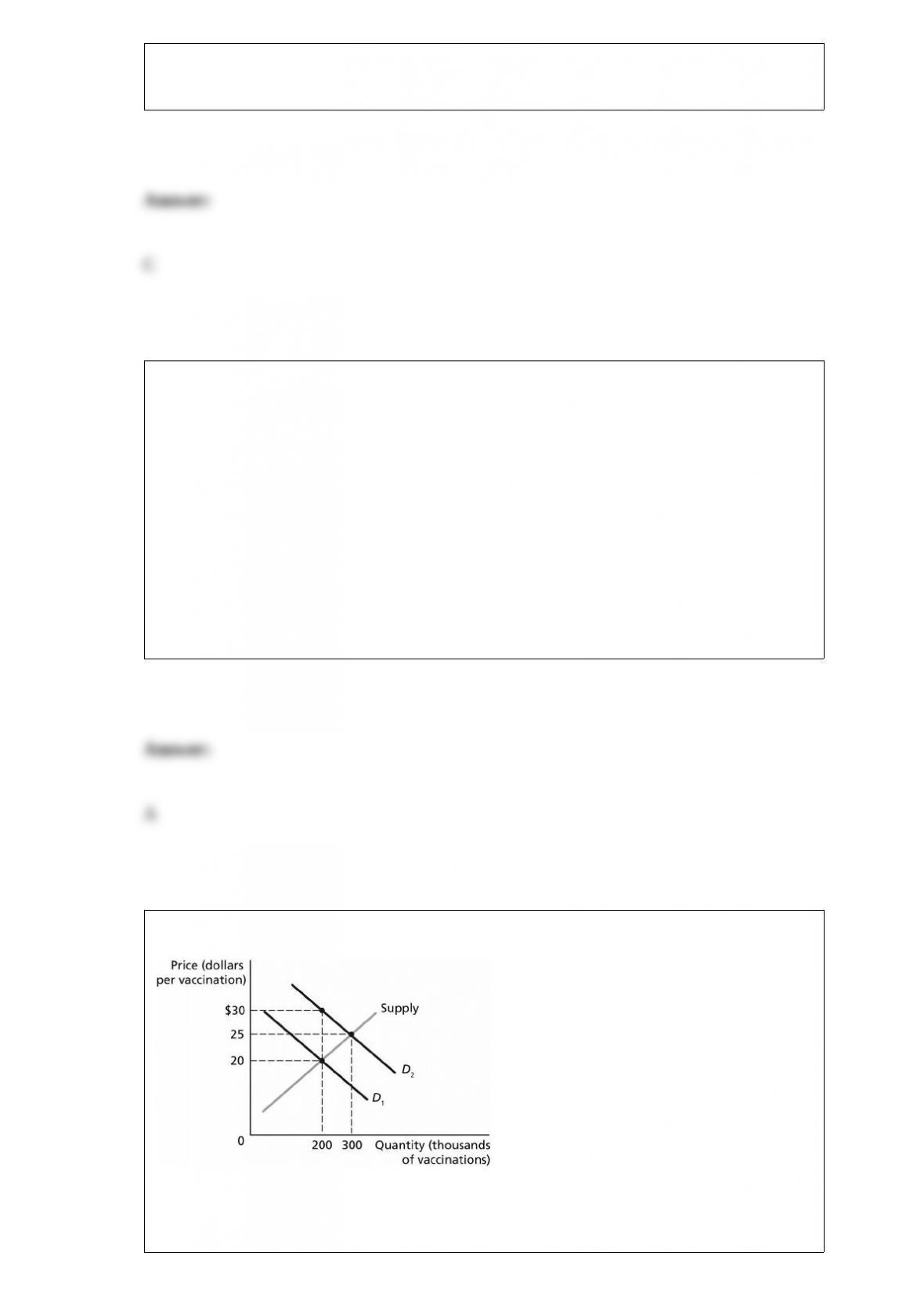
Figure 7-1
Figure 7-1 represents the market for
vaccinations. Vaccinations are considered a benefit to society, and the figure shows both
the marginal private benefit and the marginal social benefit from vaccinations. The
efficient equilibrium quantity is ________ thousand vaccinations.

A) 100
B) 200
C) 300
D) >300
“Sin taxes,” such as taxes on alcoholic beverages, are intended to
A) increase the amount of the products supplied.
B) generate money to subsidize production of the products taxed.
C) reduce the quantity demanded.
D) generate funds to aid in the medical care of those harmed by the product.
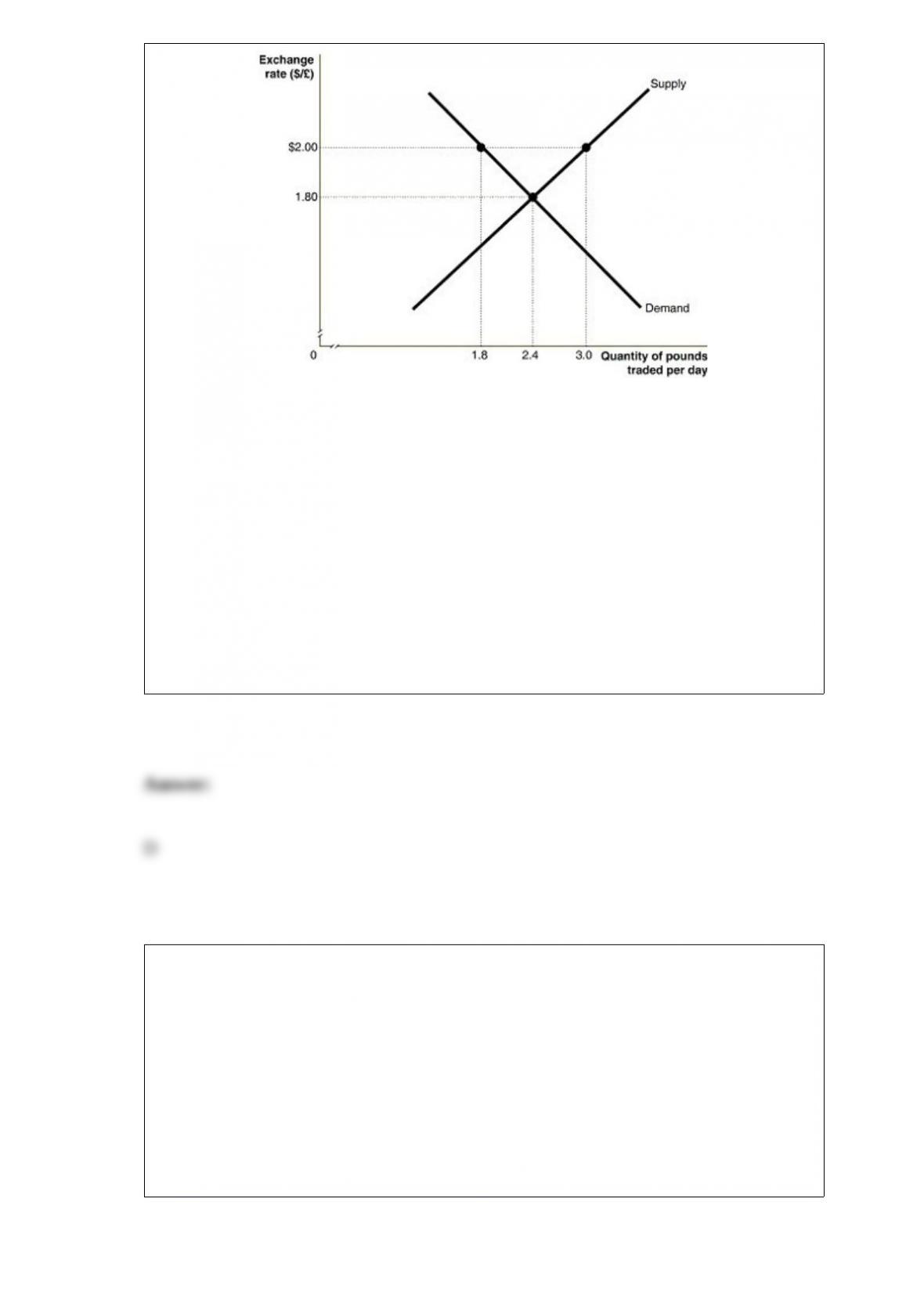
Figure 30-11
The graph above depicts supply and demand for British pounds during a trading day. At
a fixed exchange rate of $2.00 per pound, the pound is ________ versus the dollar. A
________ of the pound would correct the fundamental disequilibrium that exists in this
market.
A) undervalued; devaluation
B) undervalued; revaluation
C) overvalued; revaluation
D) overvalued; devaluation
There has been a decrease in investment. As a result, real GDP will ________ in the
short run, and ________ in the long run.
A) increase; increase further
B) increase; decrease to its initial value
C) decrease; decrease further
D) decrease; increase to its initial level
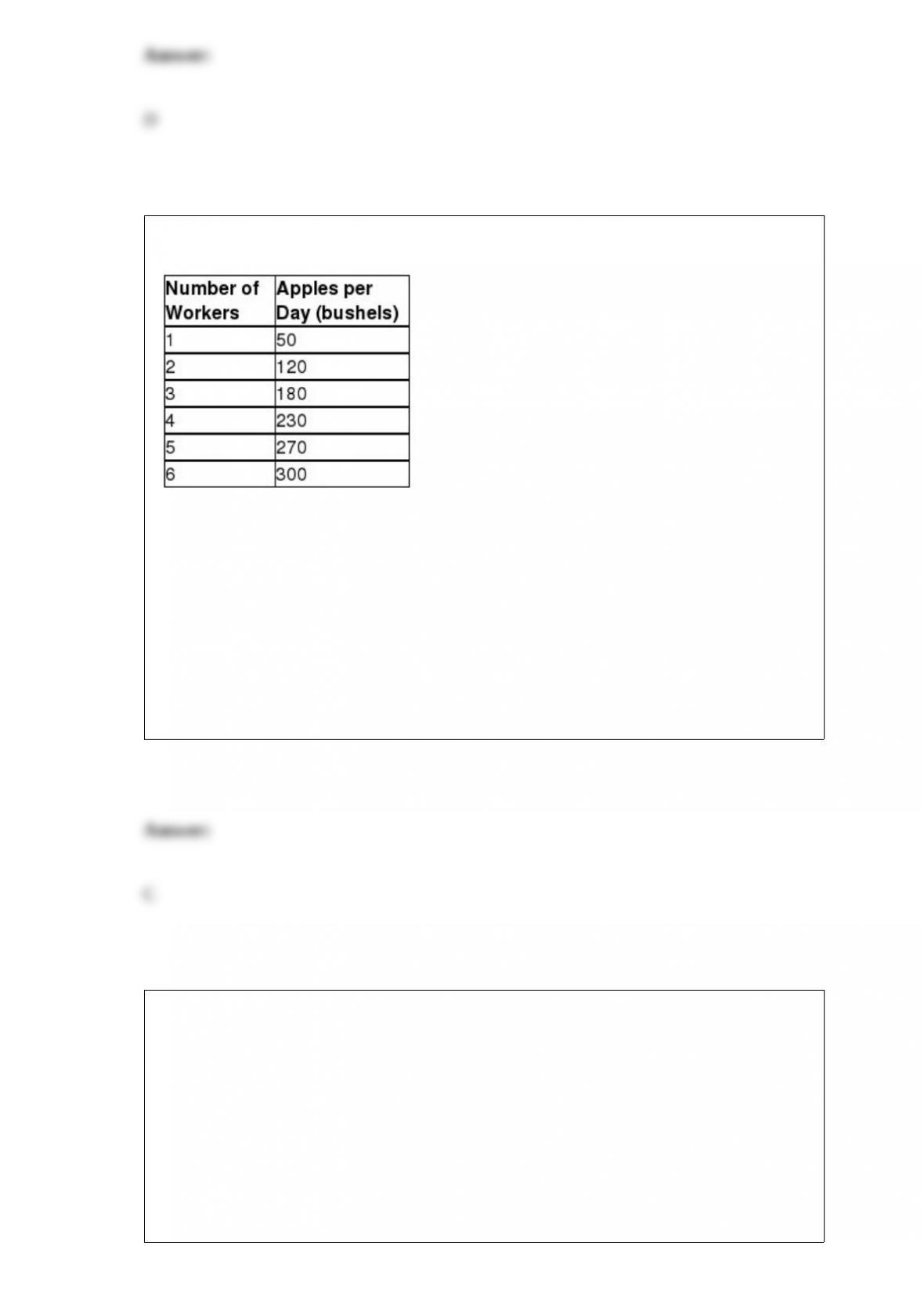
Table 11-2
Table 11-2 summarizes production at the Crunchy Apple Orchard for the month of April
2005. What is the marginal product of the 4th worker?
A) 230 bushels
B) 57.4 bushels
C) 50 bushels
D) 12.4 bushels
Which of the following is not an example of an economic trade-off that a firm has to
make?
A) whether it is cheaper to produce with more machines or with more workers
B) whether it is to outsource the production of a good or service
C) whether or not consumers will buy its products
D) whether it should produce more of its product

A tariff
A) makes domestic consumers worse off.
B) makes both domestic producers and consumers worse off.
C) makes everyone better off.
D) makes domestic producers worse off.
Which of the following would decrease the natural rate of unemployment?
A) a decrease in the number of younger, less skilled workers in the economy
B) an increase in the generosity of unemployment insurance programs
C) fewer restrictions on unions to negotiate wage changes with companies
D) a decrease in government-sponsored programs that train unemployed workers so
they can find new jobs quickly

Article Summary. In an attempt to discourage smoking, New York City Mayor
Michael Bloomberg proposed a bill which would set a $10.50 minimum price for a
pack of cigarettes. The bill would also prohibit retailers from offering any
discounts such as 2-for-1 offers or accepting discount coupons. New York City
already has the highest cigarette tax in the country, at $5.85 per pack, and the state
of New York is one of many which already require cigarettes be marked up by a
specified percentage. This bill is a companion to one which would require stores to
keep tobacco products hidden from sight. Although the bills are expected to be
challenged in court, a precedent has been set in Rhode Island, where a court
upheld a ruling allowing the city of Providence to forbid retailers from accepting
coupons and offering discounts on cigarettes.
Source: Vivian Yee, “Bloomberg Seeks End to Cheap Cigarettes,” New York Times,
March 26, 2013.
The minimum price of $10.50 per pack of cigarettes being proposed by mayor
Bloomberg would have which of the following effects on the market for cigarettes?
A) Consumer surplus will increase.
B) Producer surplus will increase.
C) Deadweight loss will increase.
D) Market efficiency will increase.