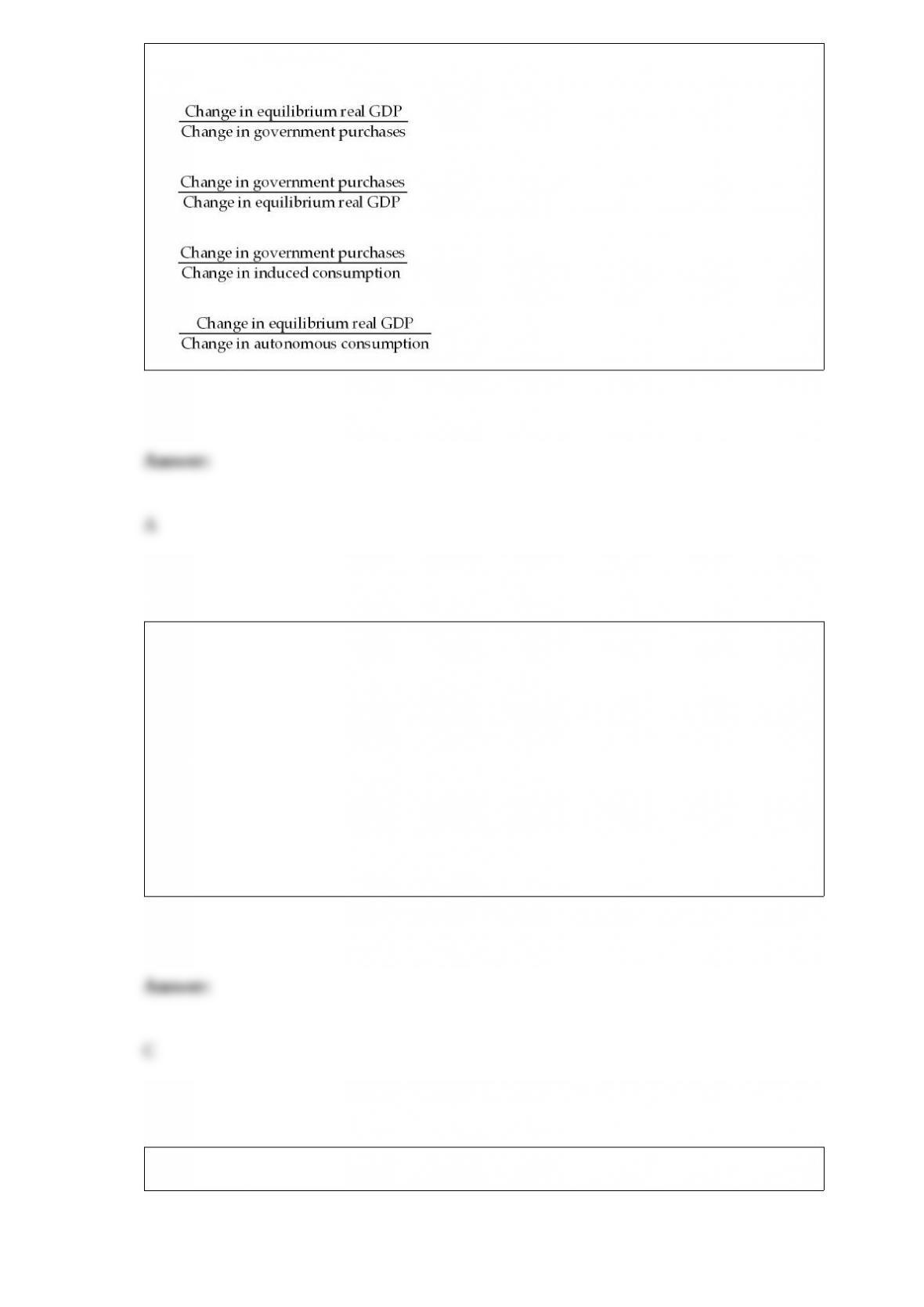
The government purchases multiplier is defined as
A) .
B) .
C) .
D) .
If the U.S. government removes tariffs it had placed on imports from countries that
have been accused of deliberately undervaluing their currencies, the price of these
imports will ________ and the demand for the undervalued currency will ________.
A) rise; rise
B) rise; fall
C) fall; rise
D) fall; fall
Figure 2-7
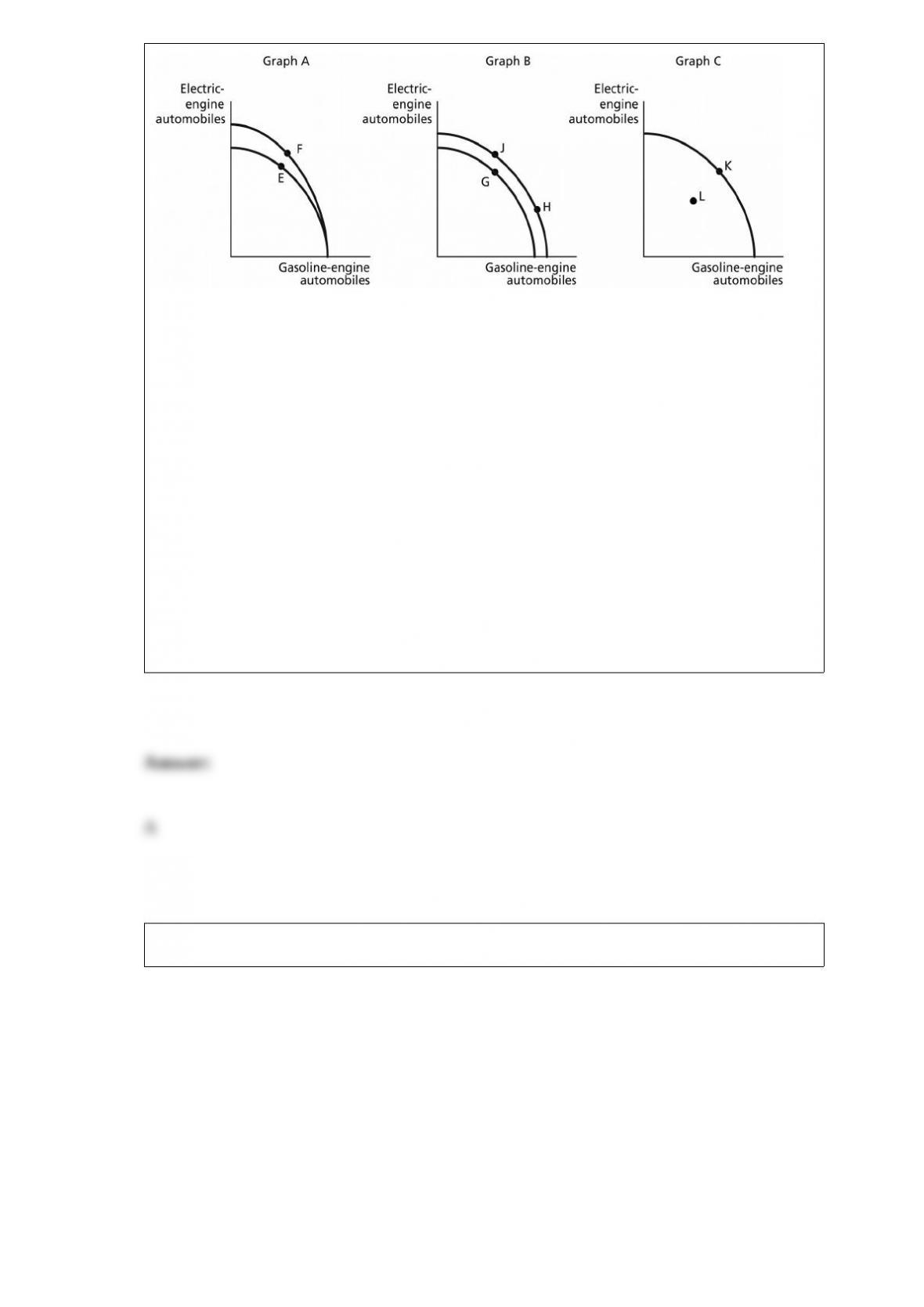
Mercedes Benz recently decided to introduce its B-class automobile in the U.S. market,
an electric car that is has designed and developed in a partnership with Tesla Motors.
Assume Mercedes Benz chooses to produce both electric-engine vehicles and
gasoline-engine vehicles. Figure 2-7 shows changes to its production possibilities
frontier in response to new developments and Different strategic production decisions.
Assume a technological advancement greatly reduces the cost to produce
electric-engine vehicles. This is best represented by the
A) movement from E to F in Graph A.
B) movement from G to H in Graph B.
C) movement from K to L in Graph C.
D) movement from H to J in Graph B.
Figure 15-2
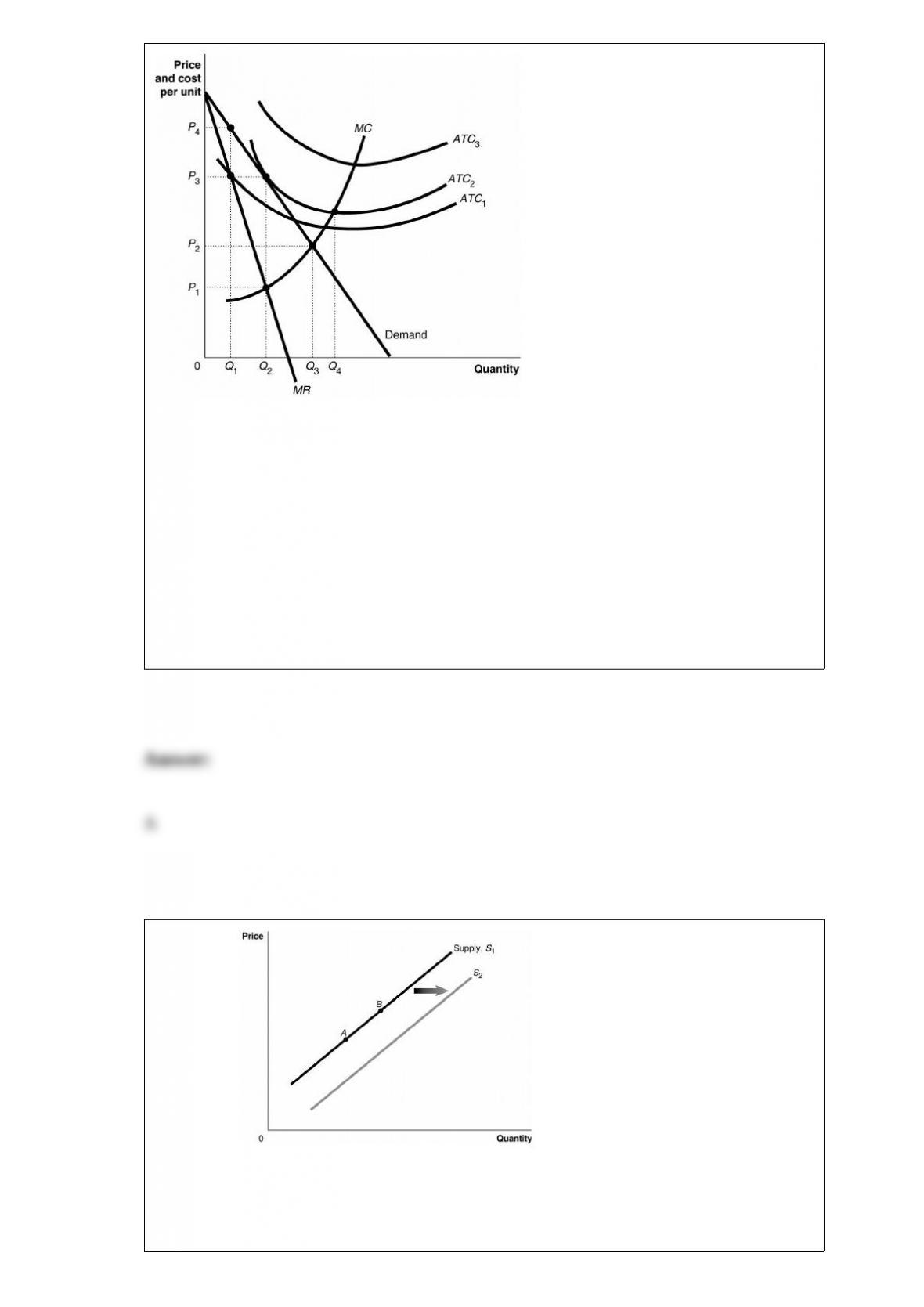
Figure 15-2 above shows the demand and cost curves facing a monopolist. If the firm’s
average total cost curve is ATC3, the firm will
A) suffer a loss.
B) break even.
C) make a profit.
D) face competition.
Figure 3-2
An increase in the price of the product would be represented by a movement from
A) A to B.

B) B to A.
C) S1 to S2.
D) S2 to S1.
The Bureau of Labor Statistics would categorize a retiree who is not working as
A) employed.
B) unemployed.
C) a discouraged worker.
D) out of the labor force.
If you pay $2,000 in taxes on an income of $20,000, and a tax of $3,500 on an income
of $30,000, then over this range of income the tax is
A) regressive.
B) proportional.
C) progressive.
D) There is insufficient information to answer the question.

All Gini coefficients must lie between 0 and 1. The lower the value
A) the more unequal the income distribution.
B) the closer the income distribution is to being equal.
C) the greater the degree of poverty.
D) the lower the degree of poverty according to the federal government’s definition of
poverty.
Which of the following statements is true?
A) Consumer surplus measures the total benefit from participating in a market.
B) When a market is in equilibrium consumer surplus equals producer surplus.
C) Consumer surplus measures the net benefit from participating in a market.
D) Producer surplus measures the total benefit received by producers from participating
in a market.
If nominal GDP rises we can say that
A) production has risen and prices remain constant.
B) prices have risen and production remains constant.
C) production has risen or prices have risen or both have risen.
D) production has fallen and prices have risen.
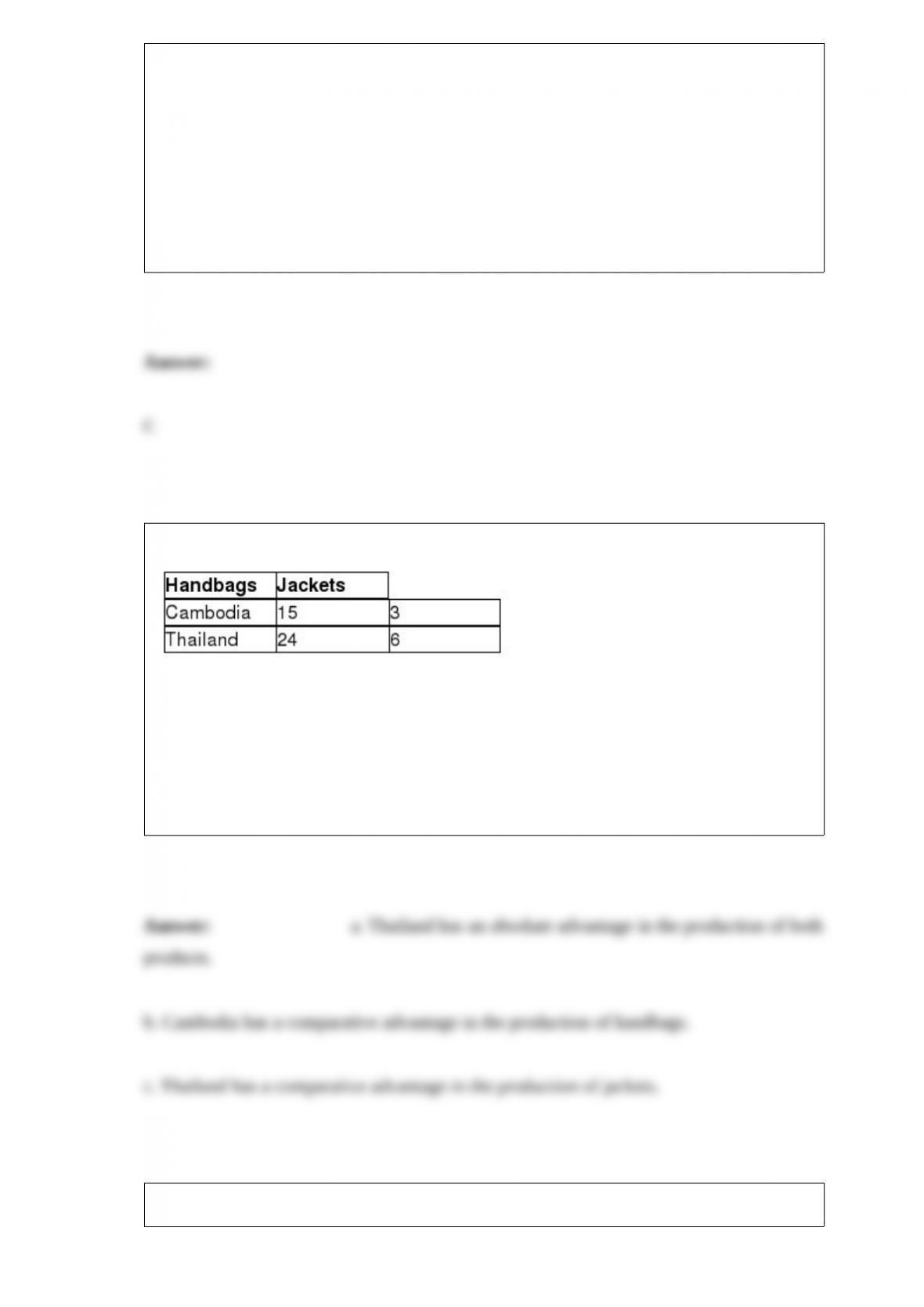
Table 9-7 Output Per Hour of Work
Table 9-7 shows the output per hour of work for handbags and jackets in Cambodia and
in Thailand. a. Which country has an absolute advantage in the production of handbags
and jackets?
b. Which country has a comparative advantage in the production of handbags?
c. Which country has a comparative advantage in the production of jackets?
Table 2-9
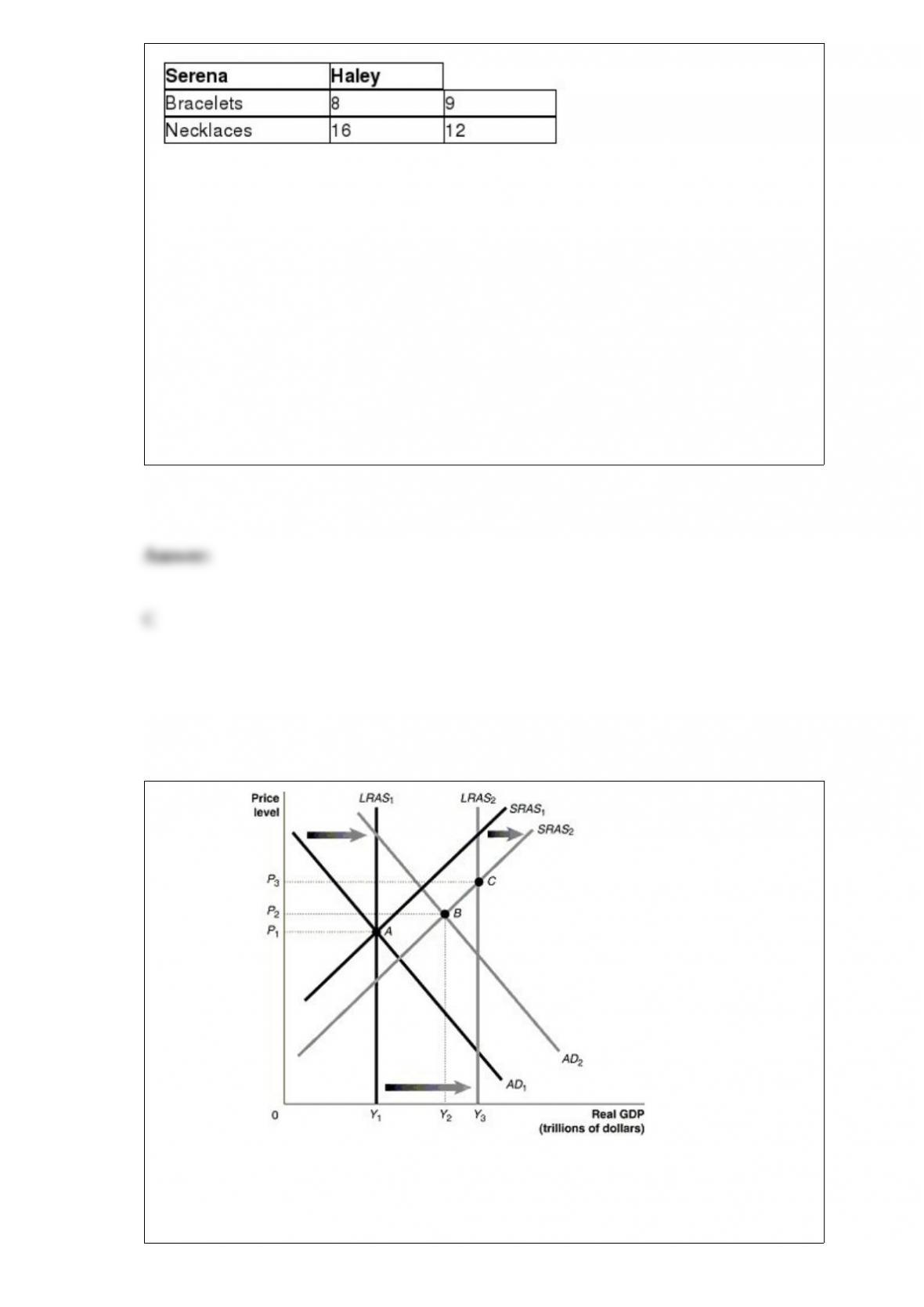
Table 2-9 shows the output per week of two jewelers, Serena and Haley. They can either
devote their time to making bracelets or making necklaces. Which of the following
statements istrue?
A) Haley has a comparative advantage in making both products.
B) Serena has a comparative advantage in making both products.
C) Haley has a comparative advantage in making bracelets and Serena in making
necklaces.
D) Haley has a comparative advantage in making necklaces and Serena in making
bracelets.
Figure 16-7
Given that the economy has moved from A to B in the graph above, which of the
following would be the appropriate fiscal policy to achieve potential GDP?

A) increase taxes
B) increase government spending
C) contractionary fiscal policy
D) decrease interest rates
The word “util” has been used by economists in the past as an objective measure of
utility. Today economists believe that
A) utility cannot be measured objectively.
B) utility can be measured objectively because people can use prices of different goods
to measure utility.
C) all of the important conclusions of the economic model of consumer behavior
depend on utility being measured objectively.
D) the util truly is an objective, rather than a subjective, measure of utility.
Figure 5-9

Companies producing toilet paper bleach the paper to make it white. The bleach is
discharged into rivers and lakes and causes substantial environmental damage. Figure
5-9 illustrates the situation in the toilet paper market.
An efficient way to get the firm to produce the socially optimal output level is
A) for government to set a quota on the quantity of toilet paper that the toilet paper
industry can produce.
B) to impose a tax to make the industry bear the external costs it creates.
C) to grant a subsidy to enable the industry to internalize the external costs of
production.
D) to assign property rights to the firms in the industry.
When colleges use yield management techniques, they
A) rank students on the basis of academic merit and award higher financial aid offers to
those at the top of the ranking.
B) increase financial aid offers to students whose demand for college education is likely
to be more price elastic and reduce financial aid offers to students whose demand for
college education is likely to be less price elastic.
C) rank students on the basis of academic merit and award higher financial aid offers to
those at the bottom of the ranking.

D) increase financial aid offers to students whose demand for college education is likely
to be more price inelastic and reduce financial aid offers to students whose demand for
college education is likely to be less price inelastic.
The Coase theorem states that
A) government intervention is always needed if externalities are present.
B) assigning property rights is the only thing the government should do in a market
economy.
C) if transactions costs are low, private bargaining will result in an efficient solution to
the problem of externalities.
D) a free market equilibrium is the best solution to address externalities.
Using the money demand and money supply model, an increase in money demand
would cause the equilibrium interest rate to
A) decrease.
B) increase.
C) not change.
D) increase, then decrease.