
Scenario 1-2
Suppose a hat manufacturer currently sells 2,000 hats per week and makes a profit of
$5,000 per week. The plant owner observes, “Although the last 300 hats we produced
and sold increased our revenue by $1,000 and our costs by $1,100, we are still making
an overall profit of $5,000 per week so I think we’re on the right track. We are
producing the optimal number of hats.”
Refer to Scenario 1-2. Using marginal analysis terminology, another economic term for
the incremental revenue received from the sale of the last 300 hats is
A) gross earnings.
B) marginal revenue.
C) sales revenue.
D) gross profit.
One reason why the average salary of Major League Baseball players is higher than the
average salary of college professors is
A) the careers of most baseball players are much shorter than the careers of most
college professors.
B) the marginal revenue product of baseball players is greater than the marginal
revenue product of college professors.
C) college professors accept lower salaries in exchange for better working conditions.
D) competition among baseball club owners forces player salaries to be much higher
than the players’ marginal revenue products.

A bond’s coupon payment divided by the bond’s current price is equal to the bond’s
A) dividend yield.
B) current yield.
C) price-earnings ratio.
D) maturity value.
In their surveys of consumers, Daniel Kaheman, Jack Knetsch and Richard Thaler
found that
A) most people considered it unfair for firms to raise their prices because of an increase
in their costs, but fair to raise their prices after an increase in demand.
B) most people considered any increase in price to be unfair as it led to an increase in
profits.
C) most people believed that low income people were hurt most by increases in prices.
D) most people considered an increase in price by firms following an increase in their
costs to be fair but believed it was unfair for firms to raise their prices because of an
increase in demand.
Which of the following statements about utility and preferences is false?
A) If Sidra prefers tea to coffee and coffee to hot chocolate, then she must prefer tea to
hot chocolate.
B) Preferences can be ranked.
C) If two individuals, Ingrid and Inez, each consume the same bundle of goods, then
both Inez and Ingrid must receive the same utility from the bundle.
D) Utility cannot be compared across consumers.
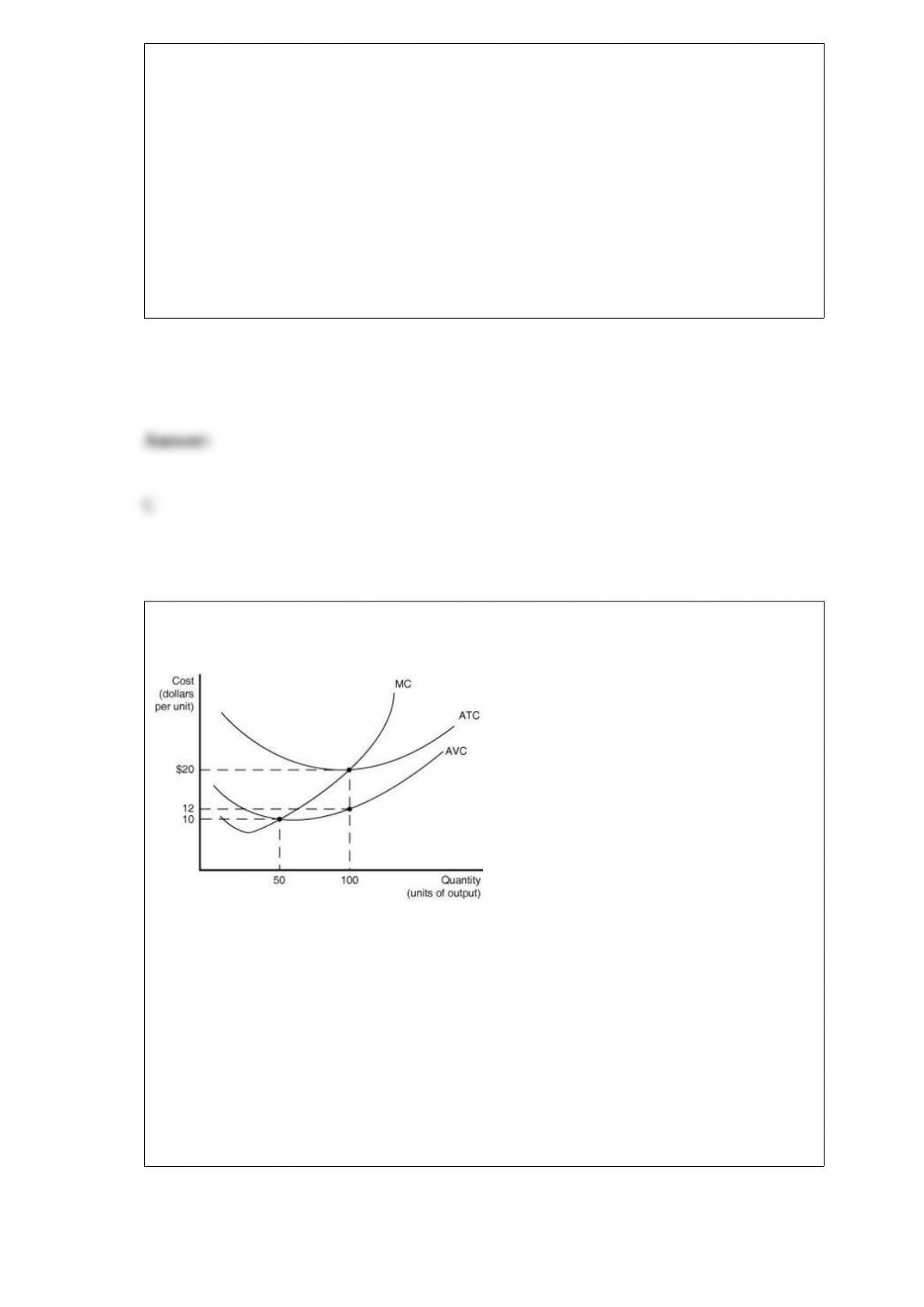
Figure 11-7
Figure 11-7 shows the cost structure for a firm.
Refer to Figure 11-7. When output level is 100, what is the total cost of production?
A) $20
B) $1,000
C) $1,200
D) $2,000

The International Nickel Company of Canada is often cited as an example of monopoly,
but International Nickel eventually lost its monopoly. What event was responsible for
this?
A) New technology allowed other firms to achieve network externalities after World
War II.
B) The Canadian government, which had owned International Nickel, sold the company
after World War II. The government no longer blocked entry into the market for nickel.
C) Competition in the market for nickel increased after nickel fields were developed in
Russia after World War II.
D) Competition in the market for nickel increased after Canada signed the North
American Free Trade Agreement with the United States and Mexico in 1994.
Ronald Coase was awarded the 1991 Nobel Prize in Economics primarily for
addressing problems related to externalities. Which of the following describes Coase’s
work?
A) Coase argued that government intervention is necessary to achieve economic
efficiency in markets that are affected by externalities.
B) Coase proved that economic efficiency cannot be achieved in a market that is
affected by positive or negative externalities.
C) Coase argued that under some circumstances private solutions to the problems of
externalities will occur.
D) Coase proved that a competitive market achieved a greater degree of economic
efficiency than a non-competitive market when externalities occur.
If society decides it wants more of one good and all resources are fully utilized, then
A) it is unable to do this unless technology advances.
B) additional resource supplies will have to be found.
C) it has to give up some of another good and incur some opportunity costs.
D) more unemployment will occur.
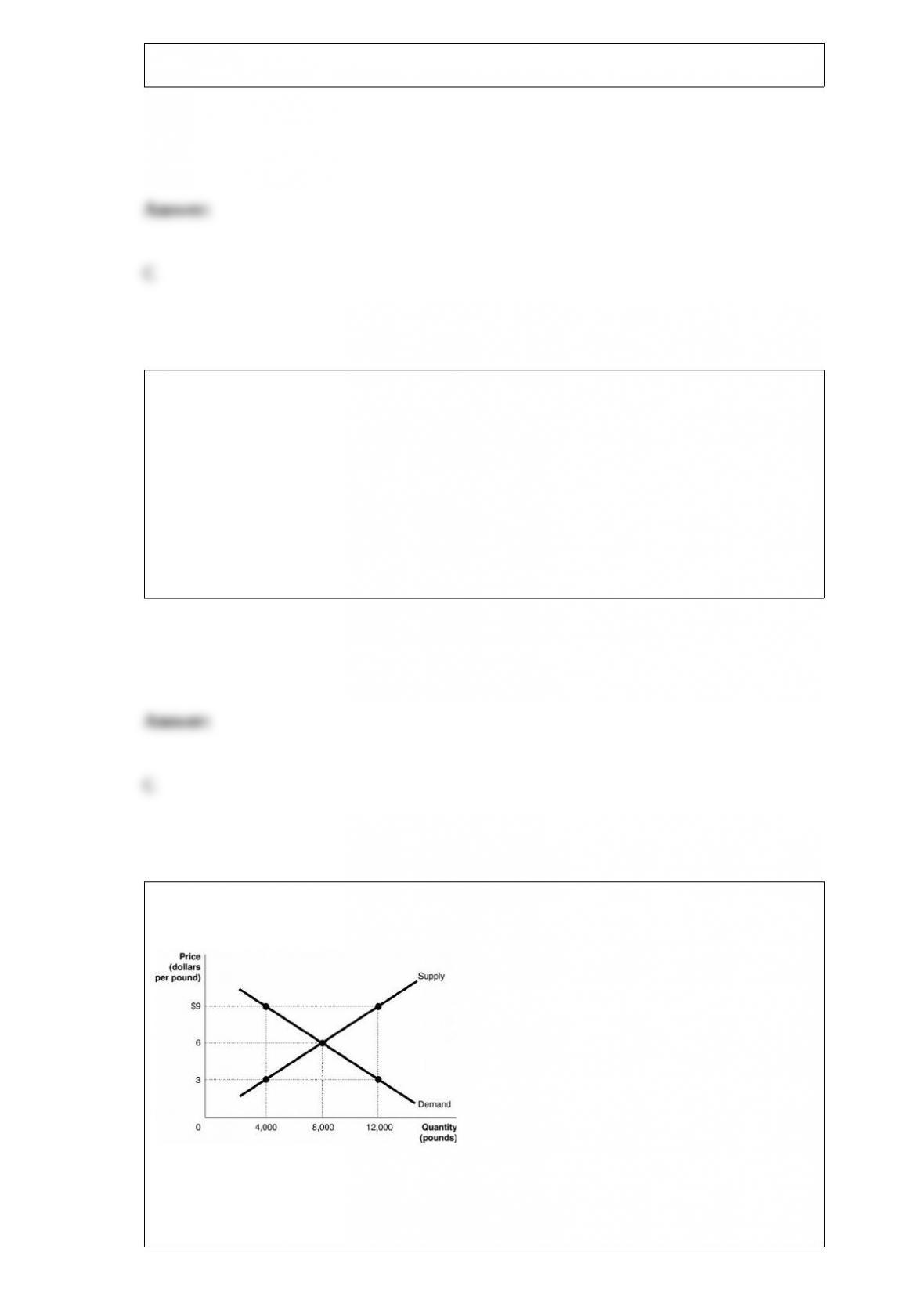
Figure 4-4
Refer to Figure 4-4. The figure above represents the market for pecans. Assume that
this is a competitive market. If 4,000 pounds of pecans are sold
A) the deadweight loss is equal to $12,000.

B) consumer surplus equals zero.
C) the marginal benefit of each of the 4,000 pounds of pecans equals $3.
D) marginal benefit is equal to marginal cost.
Maximizing the level of output for a given total cost of production
A) is equivalent to producing the profit maximizing output level.
B) is equivalent to minimizing cost for a given level of output.
C) necessitates using only relatively low-priced inputs.
D) will maximize total revenue.
Jill Borts believes that the price elasticity of demand for her economics textbook is
relatively inelastic. She argues “I was told I had to purchase a book written by Hubbard
and O’Brien that is required by my instructor. If I wanted to buy a mystery novel I
would have many authors to choose from. Therefore, the demand for mystery novels is
more elastic than the demand for my textbook.” Is Jill correct?
A) The demand for the textbook is more inelastic, but Jill’s reasoning is incorrect. The
reason the textbook has an inelastic demand is that it is more expensive than any novel.
B) She is correct.

C) She is confused. She should have concluded that the textbook has a more elastic
demand than a novel.
D) She is correct that the textbook has a more inelastic demand, but that is because
most students pay for their textbooks with credit or debit cards. Most people pay for
novels and other books with cash or by check.
Which of the following reforms could potentially reduce spending on health care
without reducing the effectiveness of health care received?
A) nationalize health care so that all health services are government funded and
operated
B) give every citizen a fixed amount of money that can only be spent on health care
services
C) reimburse consumers for preventive health care expenditures so as to avoid costly
emergency medical treatments in the future
D) standardize the tax treatment of employer-based health insurance benefits and
private spending on health care
Which of the following is one reason why the income of small family farms has
decreased over time?
A) Technology has increase farm productivity and market supply.
B) The demand for farm products is price elastic.
C) The demand for farm products is income inelastic.
D) The U.S. population has increased greatly since 1950.
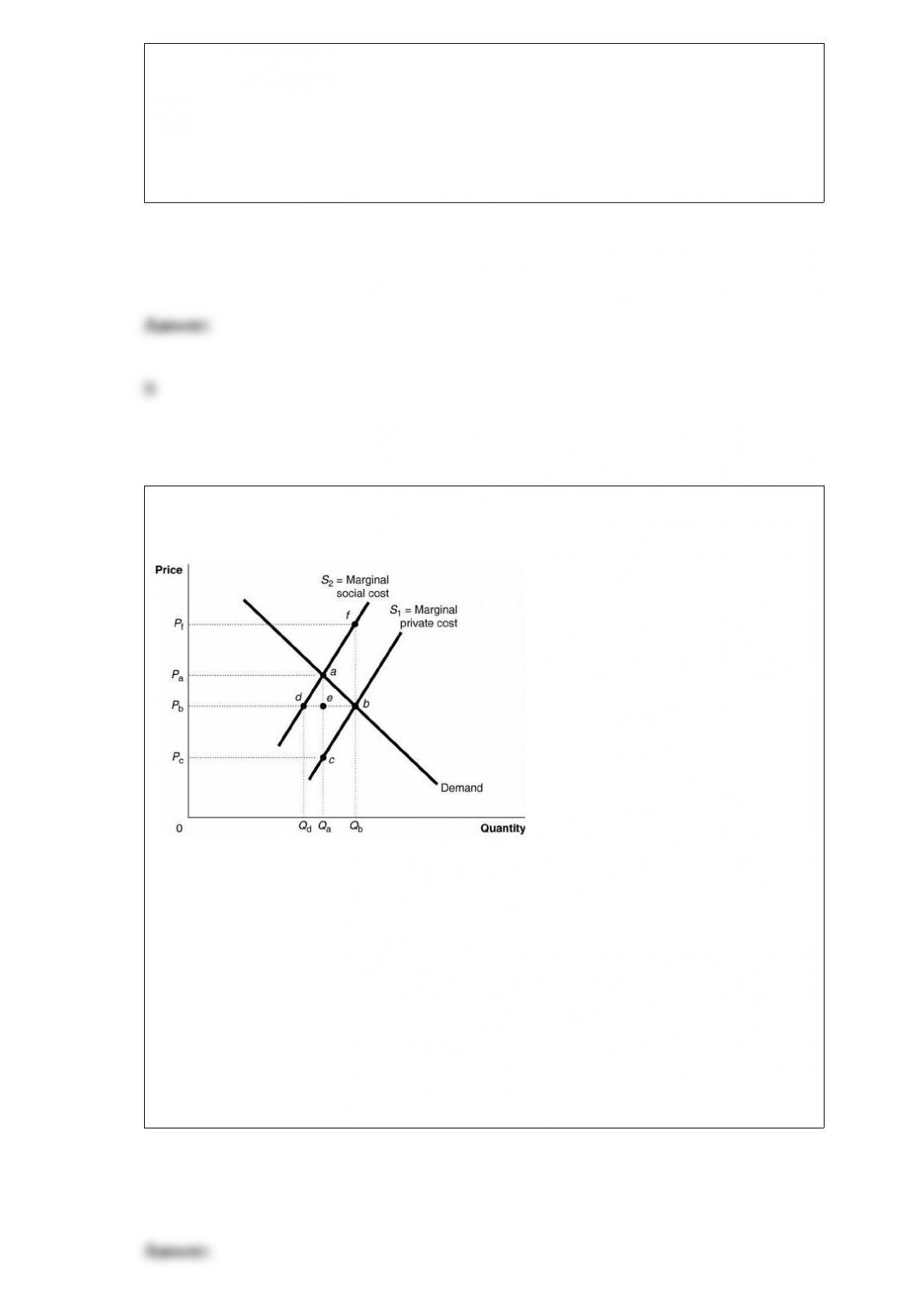
Figure 5-2
Figure 5-2 shows a market with a negative externality.
Refer to Figure 5-2. The size of marginal external costs can be determined by
A) S2+ S1at each output level.
B) S2– S1at each output level.
C) the supply curve S2.
D) the supply curve S1.
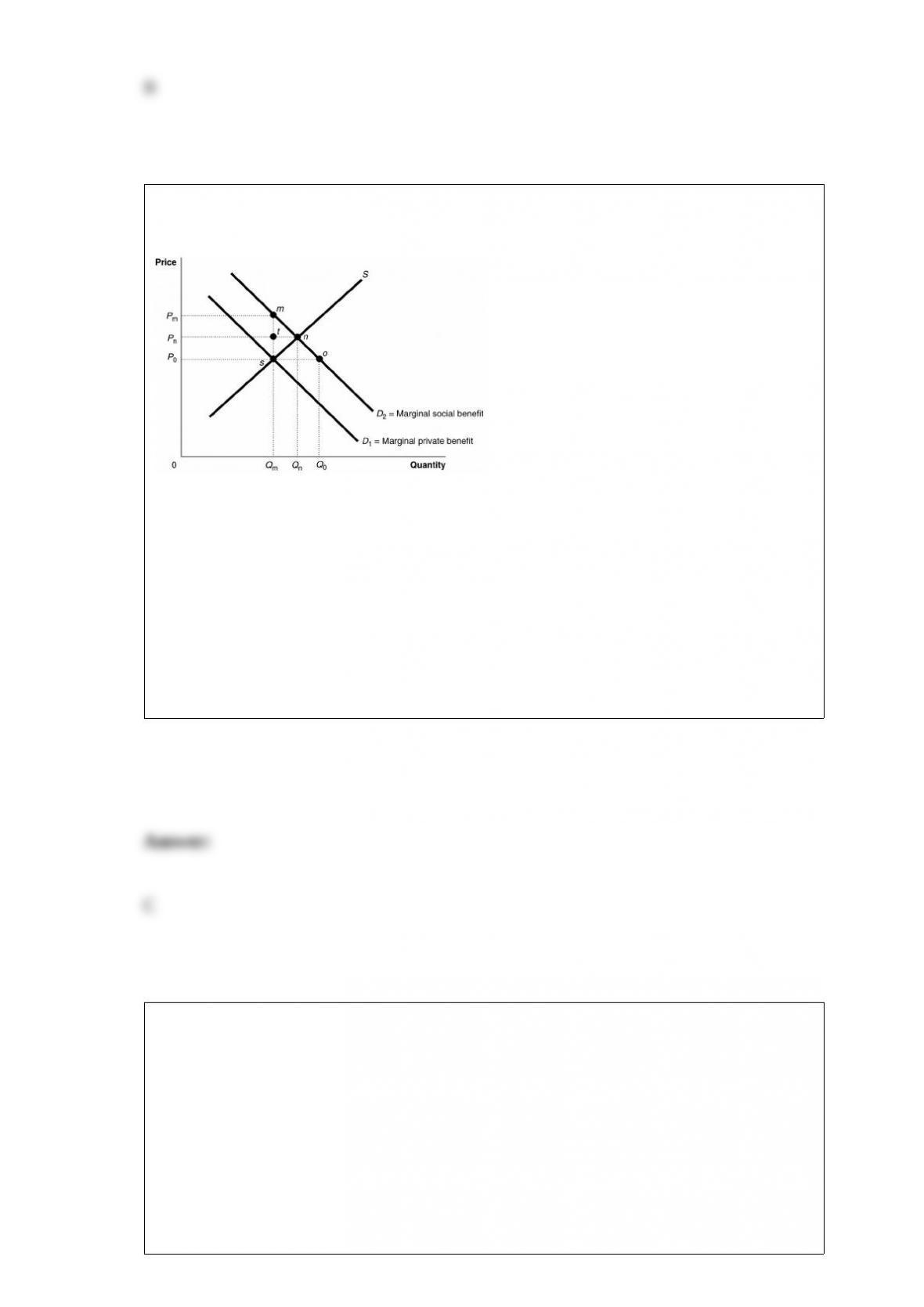
Figure 5-3
Refer to Figure 5-3. The size of marginal external benefits can be determined by
A) the demand curve D2.
B) D2+ D1at each output level
C) D2– D1at each output level.
D) the demand curve D1.
Of the following U.S. presidents, which was the first to propose a national health
insurance program to Congress?
A) Barack Obama
B) Bill Clinton
C) John F. Kennedy
D) Harry Truman
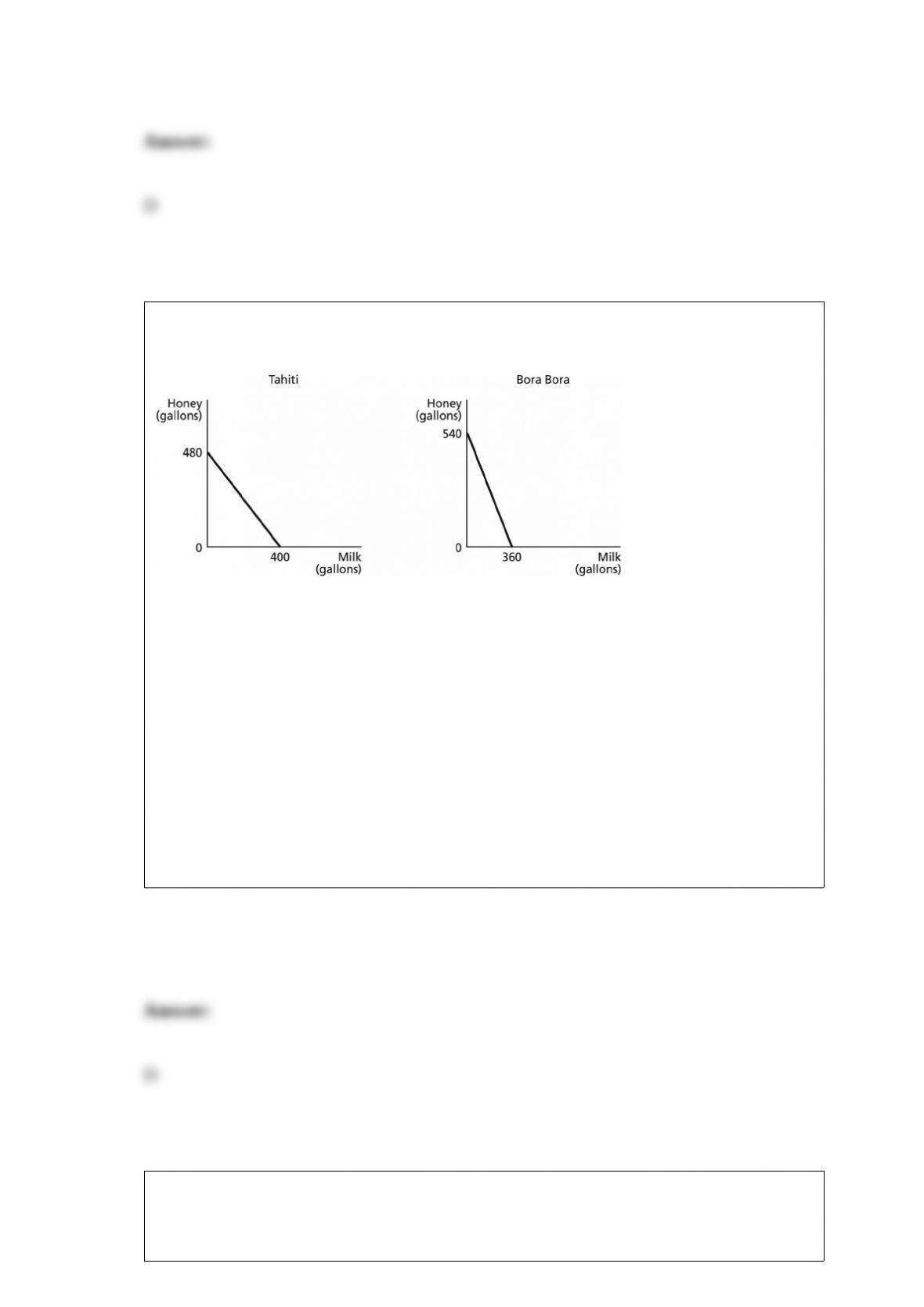
Figure 2-10
Figure 2-10 shows the production possibilities frontiers for Tahiti and Bora Bora. Each
country produces two goods, milk and honey.
Refer to Figure 2-10. What is the opportunity cost of producing one gallon of milk in
Bora Bora?
A) 2/3 gallon of honey
B) 0.8 gallon of honey
C) 1.125 gallons of honey
D) 1.5 gallons of honey
The market for smart phones has grown rapidly over the past few years, due in part to
the overwhelming success of the Apple iPhone. Following the successful launch of the
iPhone in 2007, companies such as Samsung, HTC, and LG have all introduced

products to compete with the iPhone. The smart phones introduced to compete with the
iPhone would be considered
A) complements to the iPhone.
B) substitutes for the iPhone.
C) inferior goods compared to the iPhone.
D) normal goods compared to the iPhone.
An oligopoly between two firms is called
A) a biopoly.
B) an oligopoly; there are no special terms used for oligopolies with different numbers
of firms.
C) a dual-firm oligopoly.
D) a duopoly.
If an industry is made up of five identical firms, the four-firm concentration ratio is
A) 5%.
B) 20%.
C) 80%.
D) 100%.
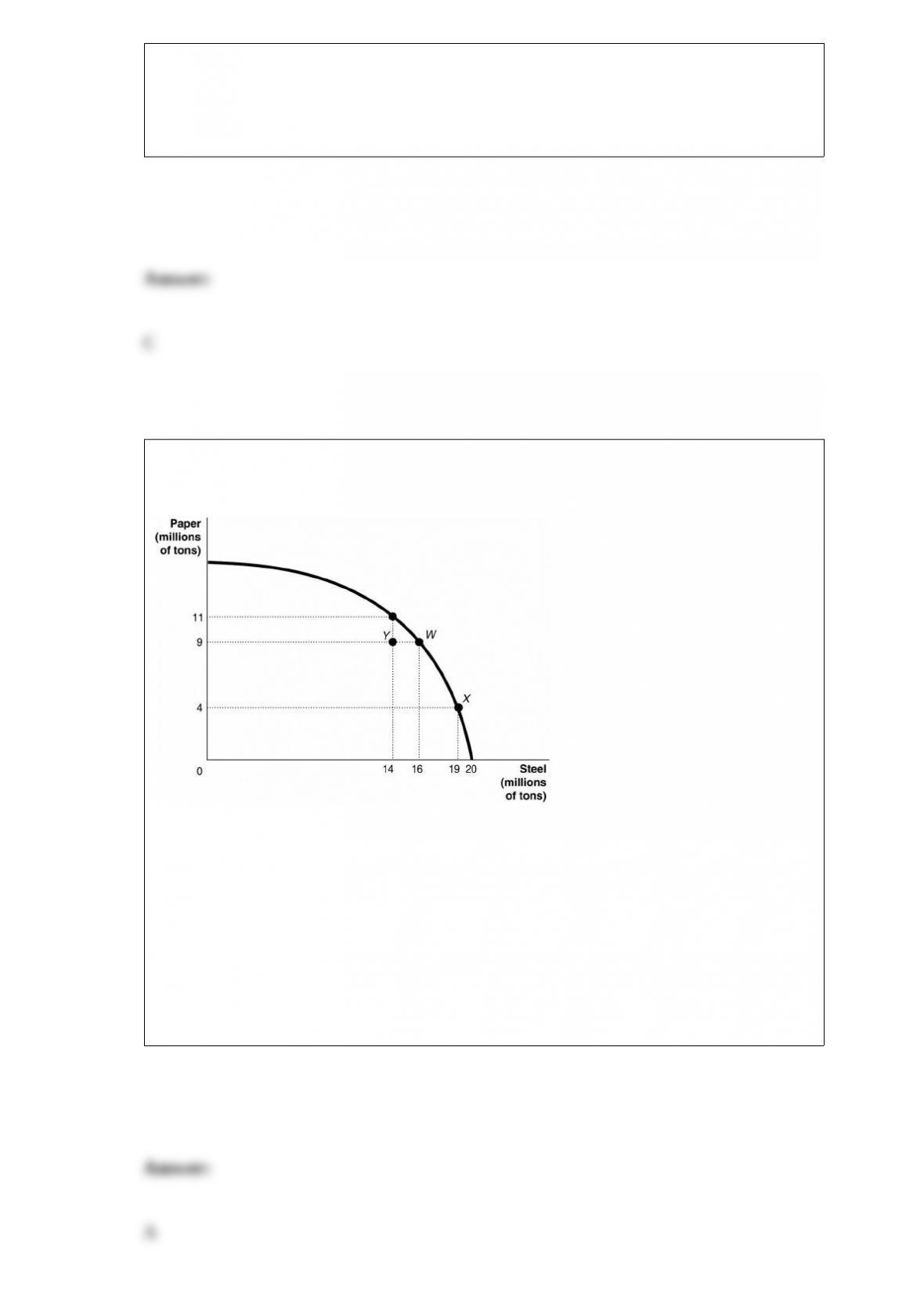
Figure 2-5
Refer to Figure 2-5. If the economy is currently producing at point X, what is the
opportunity cost of moving to point Y?
A) 5 million tons of steel
B) 9 million tons of paper
C) 5 million tons of paper
D) 14 million tons of steel

If the selling price of a firm’s product is $200 and the estimated average cost of
producing this product is $150, what is the firm’s markup?
A) 75 percent
B) 33.33 percent
C) 25 percent
D) impossible to determine with the information given
How can a proprietorship or partnership raise funds for expansion?
A) borrow from someone or an institution willing to lend the funds
B) reinvest profit back into the business
C) take on a partner or more partners
D) Any of these would generate funds for expansion.
Table 11-7
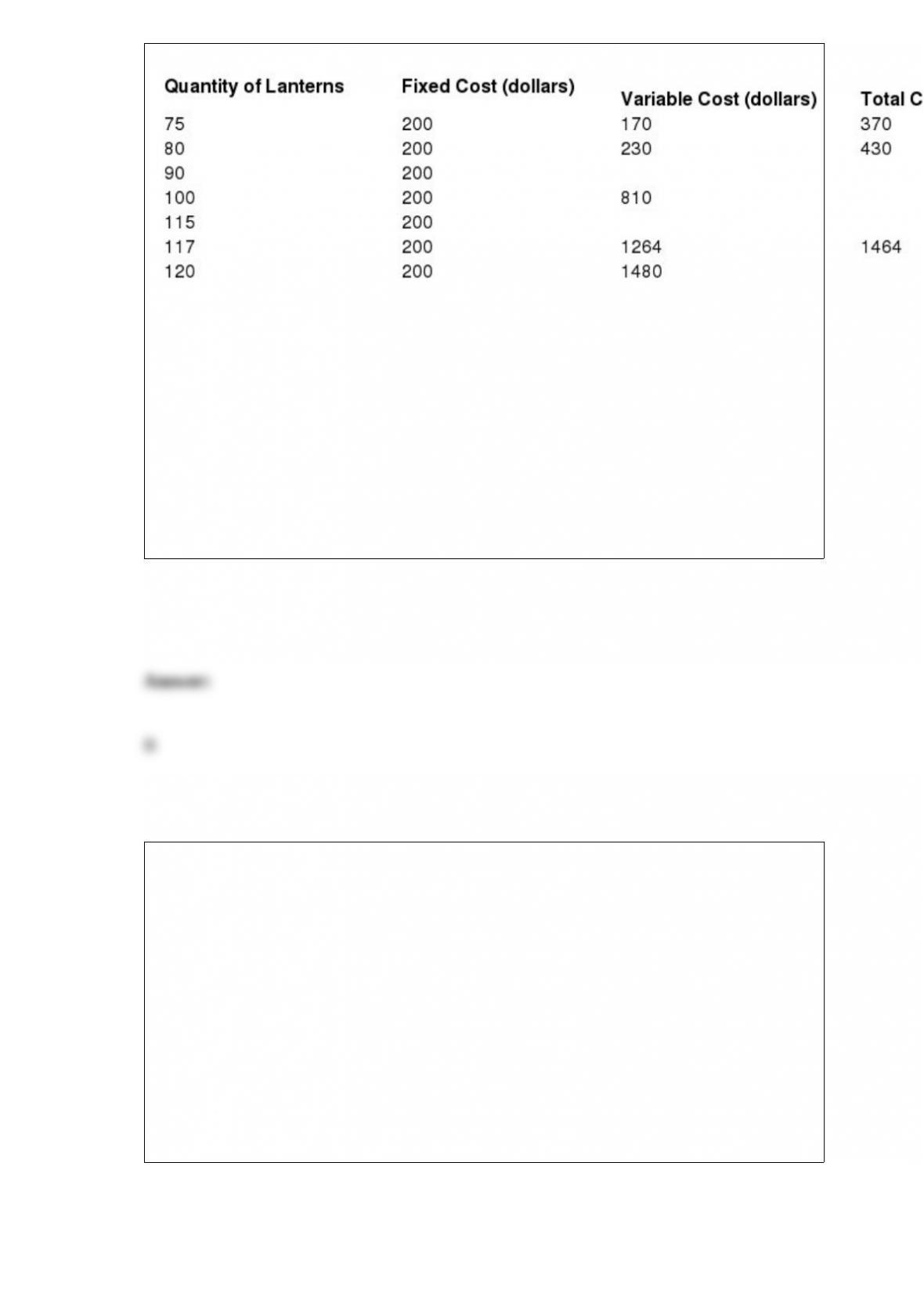
Table 11-7 shows cost data for Lotus Lanterns, a producer of whimsical night lights.
Refer to Table 11-7. What is the marginal cost per unit of production when the firm
produces 100 lanterns?
A) $420
B) $32
C) $11.1
D) $8.1
Bubba’s Hula Shack bar and bistro has begun giving customers who can show proof
that they arrived at the establishment by public transportation a 10 percent discount on
their total bill. All else equal, customers who arrive by public transportation to take
advantage of Bubba’s Hula Shack discount have a ________ for the services of the
establishment than customers who drive to the establishment.
A) higher price elasticity of demand
B) lower price elasticity of demand
C) higher price elasticity of supply
D) lower price elasticity of supply

You explain to your roommate Surya, who makes beaded headbands, about an
economic theory which asserts that consumers will purchase more of a product at lower
prices than they will at higher prices. She contends that the theory is incorrect because
over the past two years she has lowered the price of her headbands and yet has seen a
decrease in sales. How would you respond to Surya?
A) Surya is right; she has evidence to back her claim. The theory must be erroneous.
B) Surya is making the mistake of assuming that correlation implies causation.
C) I will explain to her that she is making the error of reverse causality: it is the
decrease in demand that has caused her to lower her prices.
D) I will explain to her that there are some omitted variables that have contributed to a
decrease in her sales such as changes in income.
Which of the following correctly describes the relationship between economic
efficiency and economic equity?
A) They are both automatically achieved in a free market economy.
B) They always call for opposite outcomes.
C) There is no conflict between the two goals.
D) There is often a trade-off between the two.

The median voter model implies that
A) many people will be satisfied with the amount of spending on government funded
projects.
B) many people will be dissatisfied with the amount of spending on government funded
projects.
C) people in the political middle will be dissatisfied with the amount of spending on
government funded projects.
D) spending on government funded projects reflects the preferences of only those far
away from the median.
Which of the following statements is true?
A) Monopolists are price makers. All other firms are price takers.
B) Unlike other industries, monopoly industries have high barriers to entry.
C) Only monopoly firms are granted patents and copyrights.
D) Unlike other firms, a monopolist’s demand curve is the same as the market demand
curve.
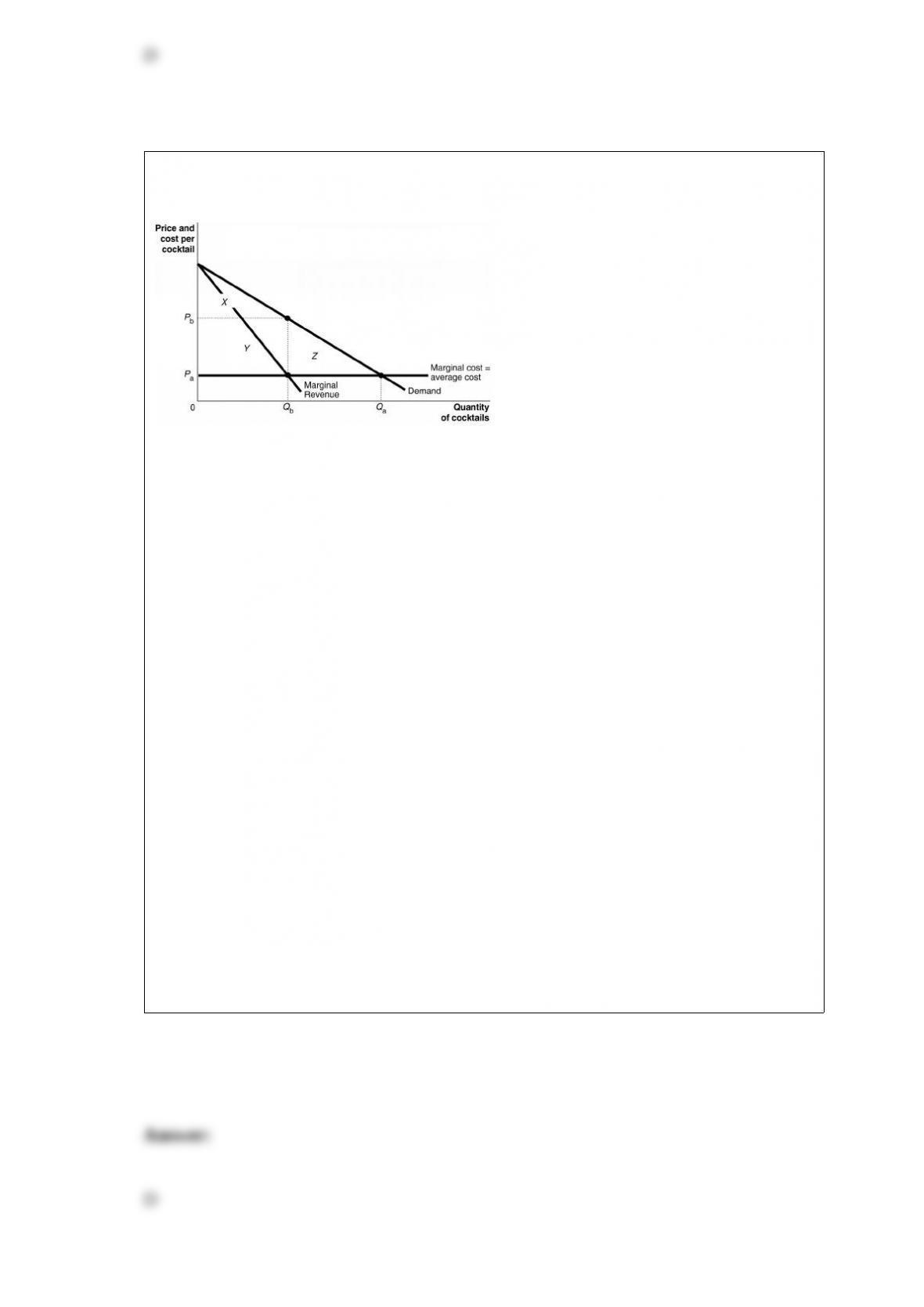
Figure 16-7
The Lizard Lounge is well known for its exotic cocktails. Figure 16-7 shows its
estimated demand curve for cocktails.
Refer to Figure 16-7. The owners of the Lizard Lounge are considering the following
four pricing options:
a. A single price scheme where the price of cocktails equals the monopoly price.
b. A single price scheme where the cocktail price equals the competitive price.
c. A two-part tariff: a monopoly price for cocktails and a cover charge that will generate
total revenue equal to the area X.
d. A two-part tariff: a competitive price for cocktails and a cover charge that will
generate total revenue equal to the area X + Y + Z.
Which scheme will earn the largest profit?
A) scheme a
B) scheme b
C) scheme c
D) scheme d

Which of the following is a reason why some firms donot use commission pay?
A) It gives workers incentive to produce more.
B) It increases firm profits.
C) It is difficult to measure the output and attribute output to a particular worker.
D) The best workers stay and less productive workers leave.