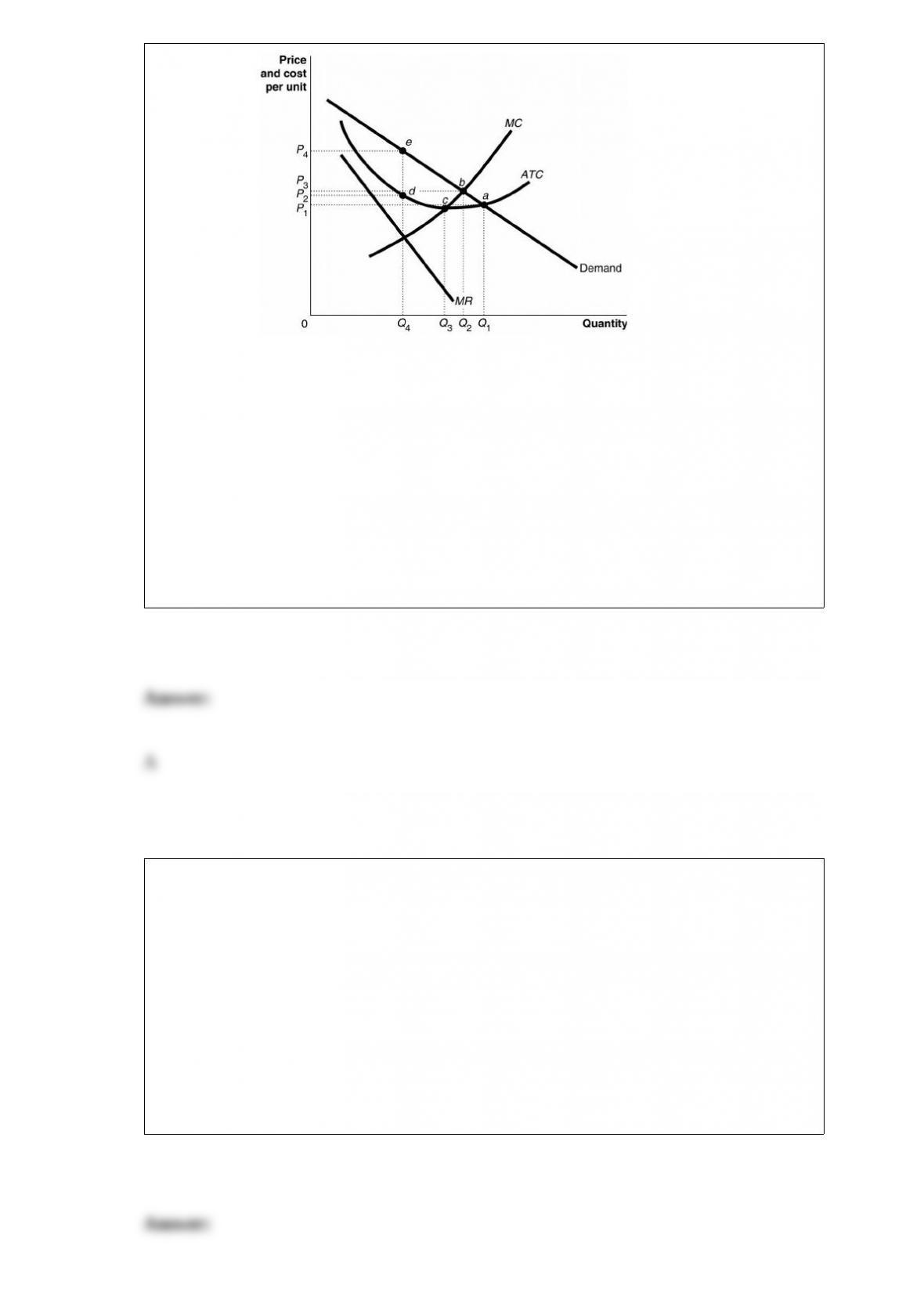
Figure 13-13
What is the output price?
A) P4
B) P3
C) P2
D) P1
If demand is taken into account, firms that use cost-plus pricing can adjust price by
A) letting sales fall, but hold the markup constant if demand falls.
B) lowering markups on price-elastic goods and raising markups on price-inelastic
goods.
C) raising markups on price-elastic goods and lowering markups on price-inelastic
goods.
D) letting sales rise, but hold the markup constant if demand rises.
Most people buy salt infrequently and in small quantities. Even a doubling of the price
of salt is likely to result in a small decline in the quantity of salt demanded. Therefore,
A) the demand for salt will be perfectly inelastic.
B) salt is a normal good.
C) the demand for salt is relatively inelastic.
D) the price elasticity of demand for salt is greater than 1 (in absolute value).
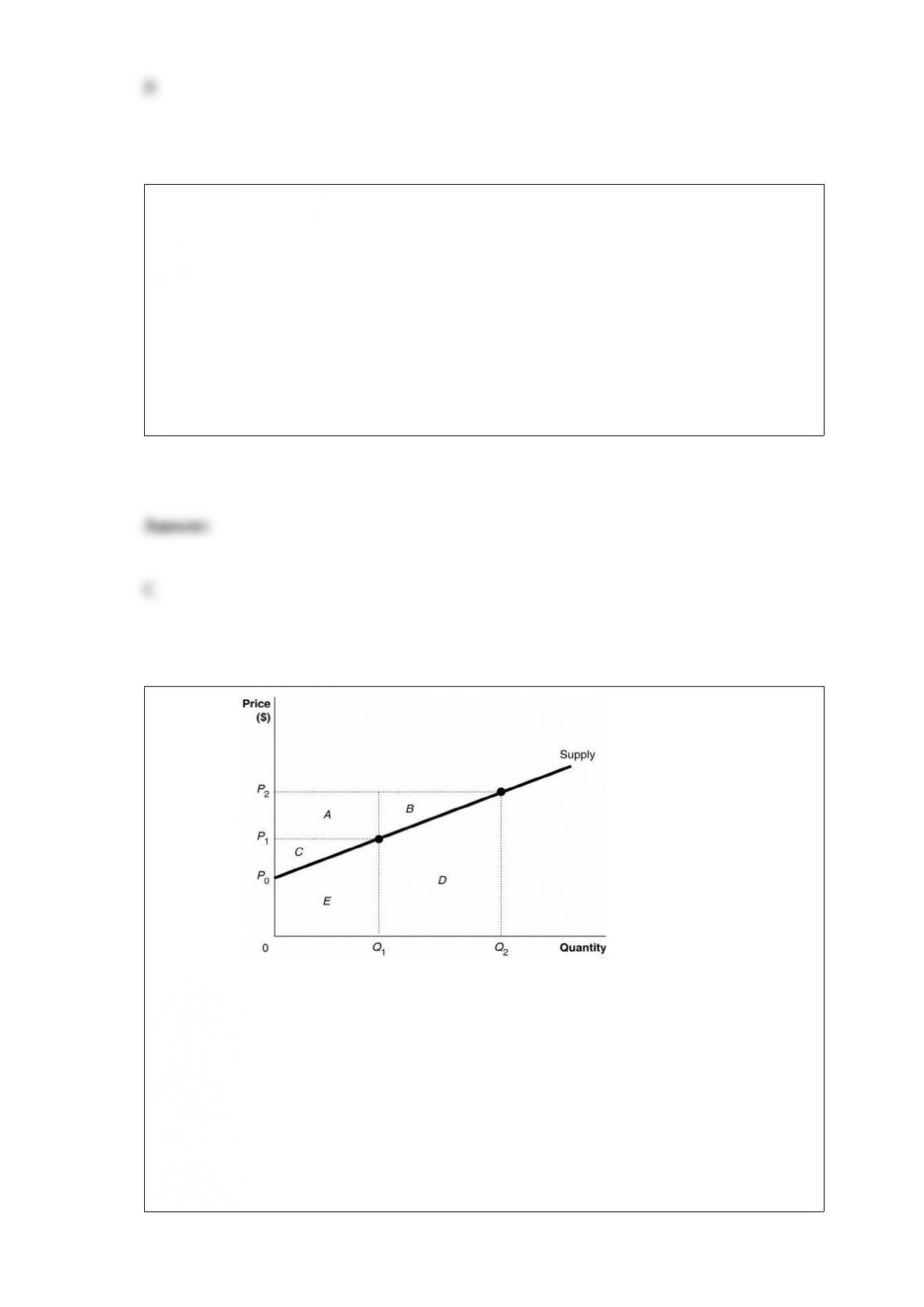
Figure 4-2
What area represents producer surplus at a price of P1?
A) C
B) A + C
C) C + E
D) A + C + E

Some consumer electronic products such as plasma TVs, DVD players and digital
cameras, are introduced at very high prices but over time, their prices start falling
(beyond what could be attributed to falling costs as companies take advantage of
economies of scale and cheaper technologies). Which of the following is the best
explanation for this observation?
A) More firms are likely to enter the consumer electronic market over time, forcing
market prices down.
B) Early adopters of these new products typically have a higher demand and higher
income compared to those who are willing to wait.
C) Early adopters are more quality conscious and are willing to pay higher prices for
the initial production of these goods.
D) After satisfying the demand for early adopters, firms lower price to attract the more
price sensitive consumers.
A firm that has the ability to control to some degree the price of the product it sells
A) is also able to dictate the quantity purchased.
B) faces a demand curve that is inelastic throughout the range of market demand.
C) is a price maker.
D) faces a perfectly inelastic demand curve.

One method of setting price using the cost-plus method is to add
A) a given percentage of marginal cost to marginal cost of production.
B) a given percentage of fixed cost to total fixed cost.
C) a given percentage of average total cost to average total cost.
D) a given percentage of average variable cost to average total cost.
During 2008, oil price increases
A) shifted the short-run aggregate supply curve farther to the left than similar increases
had 30 years earlier.
B) shifted the aggregate demand curve farther to the right than similar increases had 30
years earlier.
C) did not shift the short-run aggregate supply curve as far to the left as similar
increases had 30 years earlier.
D) shifted the aggregate demand curve farther to the left than similar increases had 30
years earlier.
Why might firms pay wages that are above the equilibrium wage in a market?
A) to increase the productivity of their workers
B) to reduce the unemployment rate
C) to encourage workers to form labor unions
D) to reduce profit
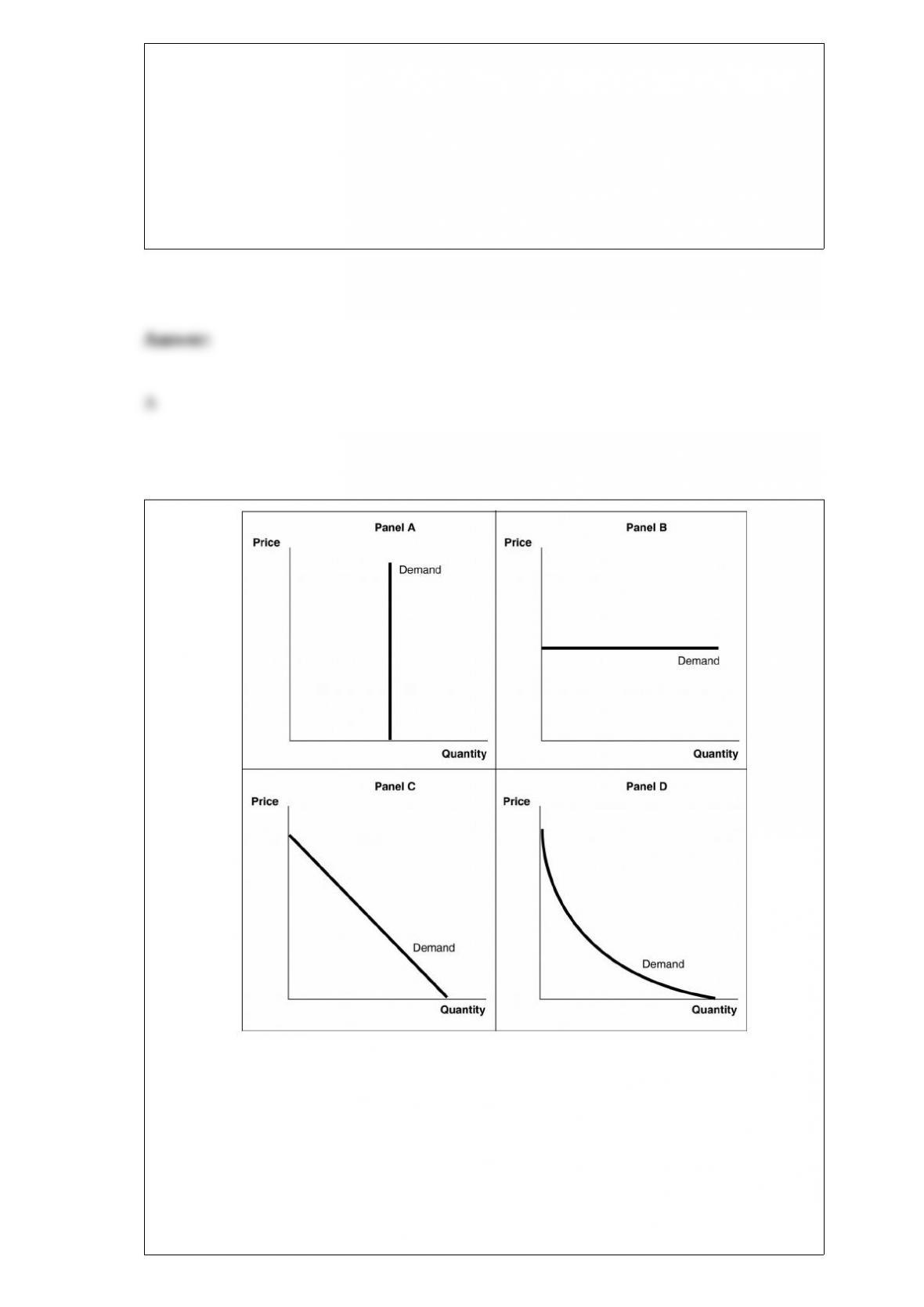
Figure 6-1
A perfectly elastic demand curve is shown in
A) Panel A.
B) Panel B.
C) Panel C.
D) Panel D.
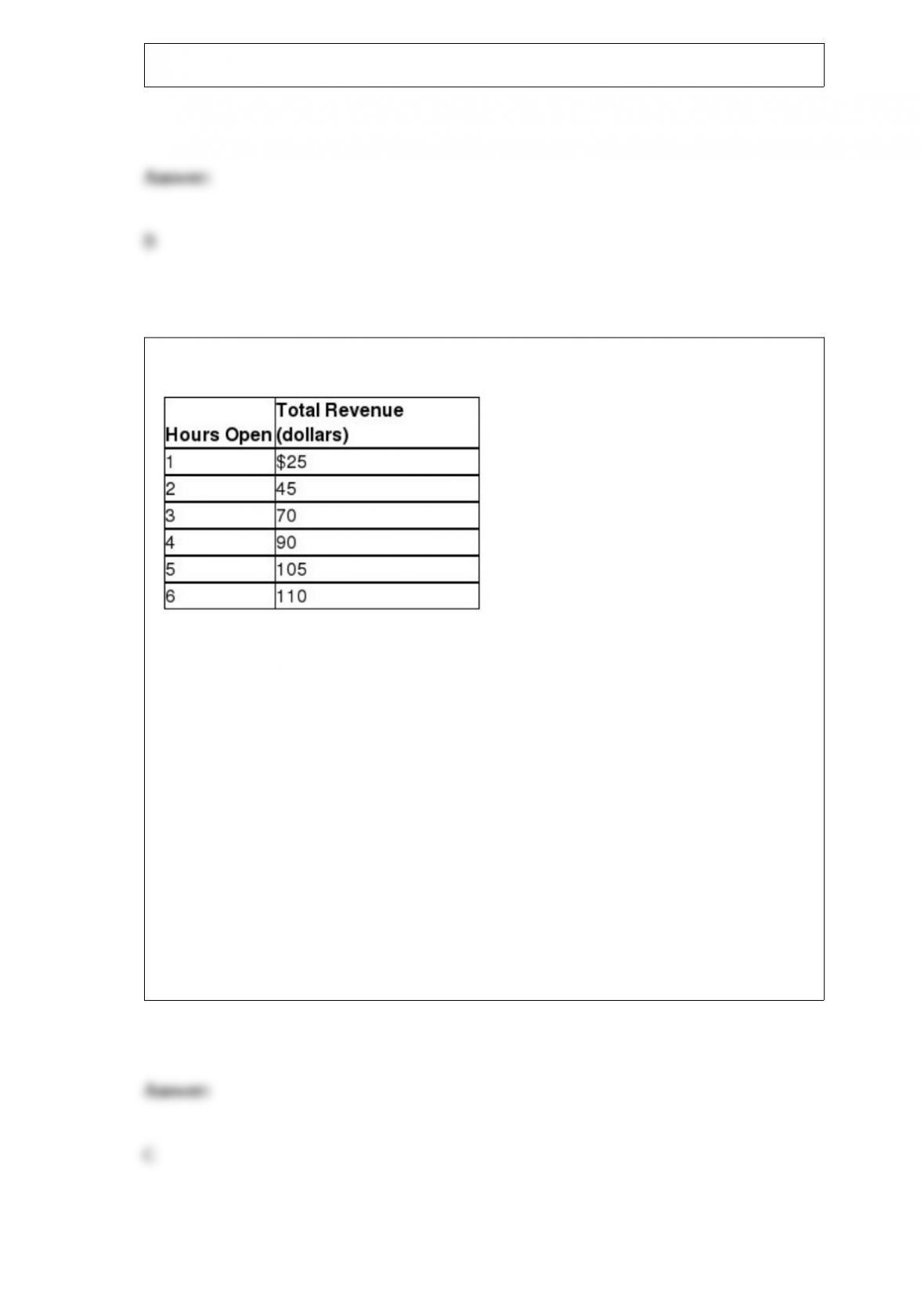
Table 1-2
Thuy Anh runs a small flower shop in the town of Florabunda. She is debating whether
she should extend her hours of operation. Thuy Anh figures that her sales revenue will
depend on the number of hours the flower shop is open as shown in the table above.
She would have to hire a worker for those hours at a wage rate of $16 per hour. Using
marginal analysis, how many hours should Thuy Anh extend her flower shop’s hours of
operations?
A) 2 hours
B) 3 hours
C) 4 hours
D) 5 hours
E) 6 hours