1) where total utility is at a maximum, marginal utility is:
a.negative.
b.positive and increasing.
c.zero.
d.positive but decreasing.
2) (last word) which of the following statements is false?
a.stock prices are one clue as to the future direction of the economy.
b.research has shown that changes in stock prices have a relatively modest impact on
the economy.
c.black monday (1987) was followed immediately by a severe recession.
d.a rise in stock prices increases consumer wealth and therefore slightly boosts
consumption spending.
3) Cyclical unemployment in the United States is essentially the consequence of:
A.procyclical fiscal policies.
B.a deficient level of aggregate expenditures.
C.rapid technological progress.
D.the geographic immobility of the labor force.
4)
Refer to the above diagram for the Federal funds market. If the Fed wants to raise the
Federal funds rate from i1 to i3, it should:
A.lower the reserve ratio.
B.loan more funds at the discount rate.
C.buy bonds from the banks and the public.
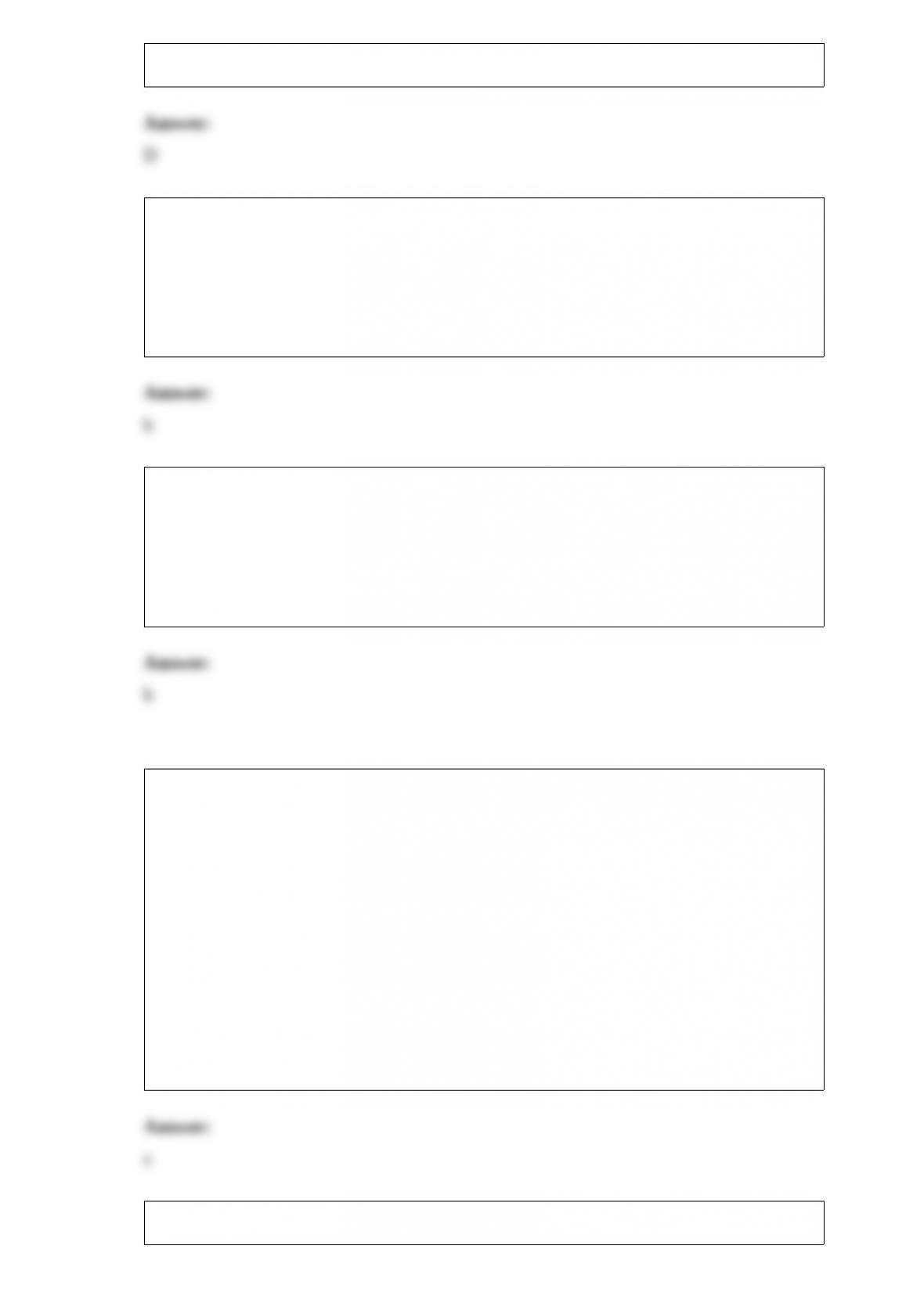
D.sell bonds to banks and the public.
5) other things equal, an increase in a consumer’s money income:
a.increases the amount of utility a consumer receives from a given quantity of a good.
b.shifts her budget line rightward because she can now purchase more of both products.
c.eliminates the individual’s economizing problem.
d.causes the consumer to choose a different combination of goods along a given budget
line.
6) if the price of product x rises, then the resulting decline in the amount purchased
will:
a.necessarily increase the consumer’s total utility from his total purchases.
b.increase the marginal utility of this good.
c.increase the total utility from purchases of this good.
d.reduce the marginal utility of this good.
7) the following is cost information for the creamy crisp donut company:
entrepreneur’s potential earnings as a salaried worker = $50,000
annual lease on building = $22,000
annual revenue from operations = $380,000
payments to workers = $120,000
utilities (electricity, water, disposal) costs = $8,000
value of entrepreneur’s talent in the next best entrepreneurial activity = $80,000
entrepreneur’s forgone interest on personal funds used to finance the business = $6,000
refer to the above data. creamy crisp:
a.has lower implicit costs, including a normal profit, than its explicit costs.
b.is earning a normal profit but not an economic profit.
c.is earning an economic profit.
d.is suffering an economic loss, when implicit costs are considered.
8) which of the following is an exhaustive governmental outlay?
a.a federal $5,000 subsidy check to an illinois farmer
b.a temporary assistance to needy families payment made by the state of new york
c.a nasa payment to boeing corporation for space hardware
d.a federal old age insurance payment to a retired coal miner
9) a recession is a period in which:
a.cost-push inflation is present.
b.nominal domestic output falls.
c.demand-pull inflation is present.
d.real domestic output falls.
10) Using antitrust law to split up an unregulated natural monopoly into several
competing firms:
A.would reduce product price.
B.would increase product price.
C.might either increase product price or reduce product price.
D.will reduce average total cost.
11) The Sherman Act was designed to:
A.exempt commercial banks from the antitrust laws.
B.make interlocking directorates legal.
C.prohibit misleading and antisocial advertising.
D.make monopoly and acts that restrain trade illegal.
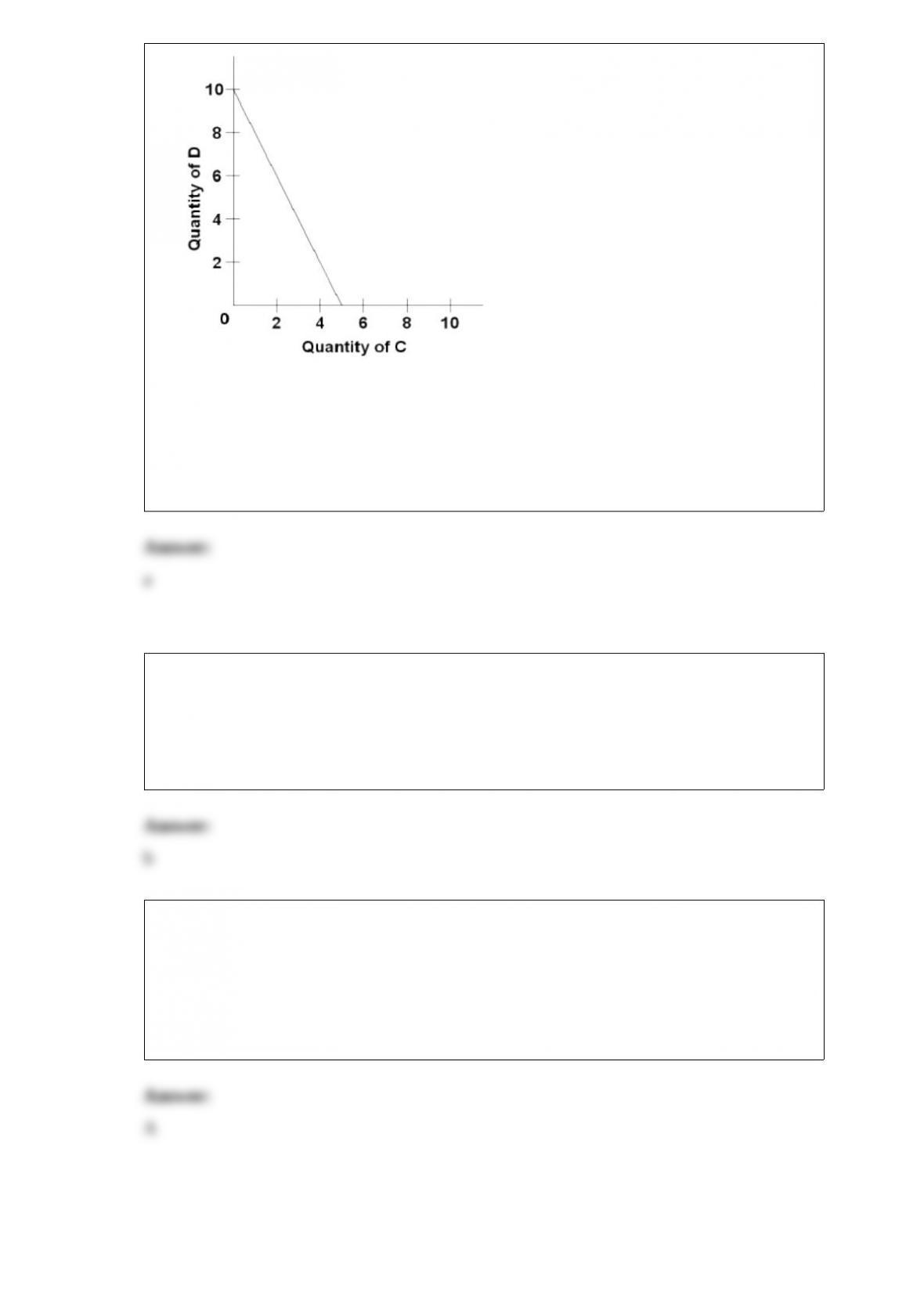
12)
refer to the budget line shown in the diagram above. if the consumer’s money income is
$20, which of the following combinations of goods is unattainable?
a.4 units of c, and 6 units of d.
b.5 units of c, and no units of d.
c.1 unit of c, and 8 units of d.
d.2 units of c, and 6 units of d
13) the smoot-hawley act:
a.bound the world’s nations to a gradual process of tariff reduction.
b.established very high tariffs on goods imported to the united states.
c.exempted american exporters from the sherman antitrust act.
d.established the reciprocal trade agreements program.
14) If we both have checking accounts in the same commercial bank and I write a check
in your favor for $200, the bank’s:
A.balance sheet will be unchanged.
B.reserves and checkable deposits will both decline by $200.
C.liabilities will decline by $200, but its net worth will increase by $200.
D.assets and liabilities will both decline by $200.