1) Which of the following events best exemplifies the concept of signaling?
a.A college student’s parents, having learned that their child is short of money, send her
a check for $1,000.
b.A new company making high quality bicycles at a reasonable price sends free bikes to
reviewers working for bicycle magazines.
c.A grocery store maintains a policy of examining the driver’s license of everyone who
writes a personal check to purchase his groceries.
d.A university maintains a policy of considering for admission only those students who
graduated among the top ten percent of their high school class.
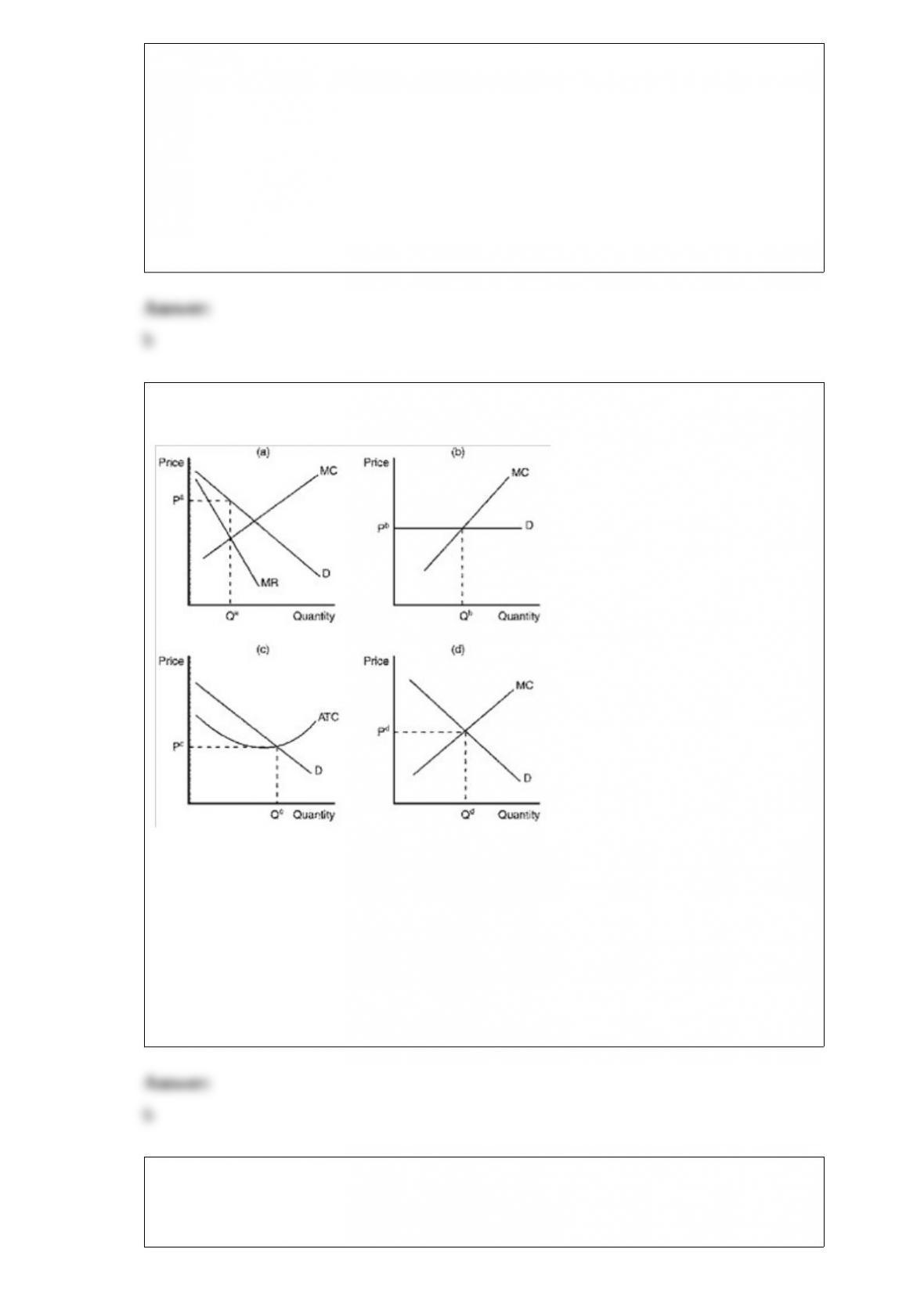
2) Figure 16-7
The firm depicted in panel b faces a horizontal demand curve. If panel b depicts a
profit- maximizing firm,
a.it could be operating in either a perfectly competitive market or in a monopolistically
competitive market.
b.it would not have excess capacity in its production as long as it is earning zero
economic profit.
c.it is able to choose the price at which it sells its product.
d.the firm can always raise its profit by increasing production since consumers will buy
as much as the firm can produce.
3) The term market failure
a.means the same thing as market power.
b.refers to the dissolution of a market when firms decide to quit producing a certain
product.
c.refers to the failure of a market to produce an efficient allocation of resources.
d.refers to government’s failure to enforce the property rights of households or firms
that participate in a certain market.
4) Which tools allow economists to determine if the allocation of resources determined
by free markets is desirable?
a.profits and costs to firms
b.consumer and producer surplus
c.the equilibrium price and quantity
d.incomes of and prices paid by buyers
5) For any country, if the world price of copper is lower than the domestic price of
copper without trade, that country should
a.export copper.
b.import copper.
c.neither export nor import copper, since that country cannot gain from trade.
d.neither export nor import copper, since that country already produces copper at a low
cost compared to other countries.
6) Making rational decisions at the margin means that people
a.make those decisions that do not impose a marginal cost.
b.evaluate how easily a decision can be reversed if problems arise.
c.compare the marginal costs and marginal benefits of each decision.
d.always calculate the dollar costs for each decision.
7) Which of the following questions about predatory pricing remains unresolved?
a.Are the courts capable of determining which price cuts are competitive and which are
predatory?
b.Are the courts capable of determining which price cuts are good for consumers?
c.Is predatory pricing ever a profitable business strategy?
d.All of the above questions about predatory pricing are unresolved.
8) In choosing the form of a tax, there is often a tradeoff between
a.allocative and productive efficiency.
b.profits and revenues.
c.efficiency and fairness.
d.fairness and profits.
9) Which of the following statements is false?
a.The Clayton Act allows triple damages in civil lawsuits in order to encourage lawsuits
against conspiring oligopolists.
b.Many economists defend the practice of resale price maintenance on the grounds that
it may help solve a free-rider problem.
c.Most economists agree that predatory pricing is a profitable business strategy that
usually preserves market power.
d.The U.S. Supreme Court’s view that the practice of tying usually allows a firm to
extend its market power is not generally supported by economic theory.
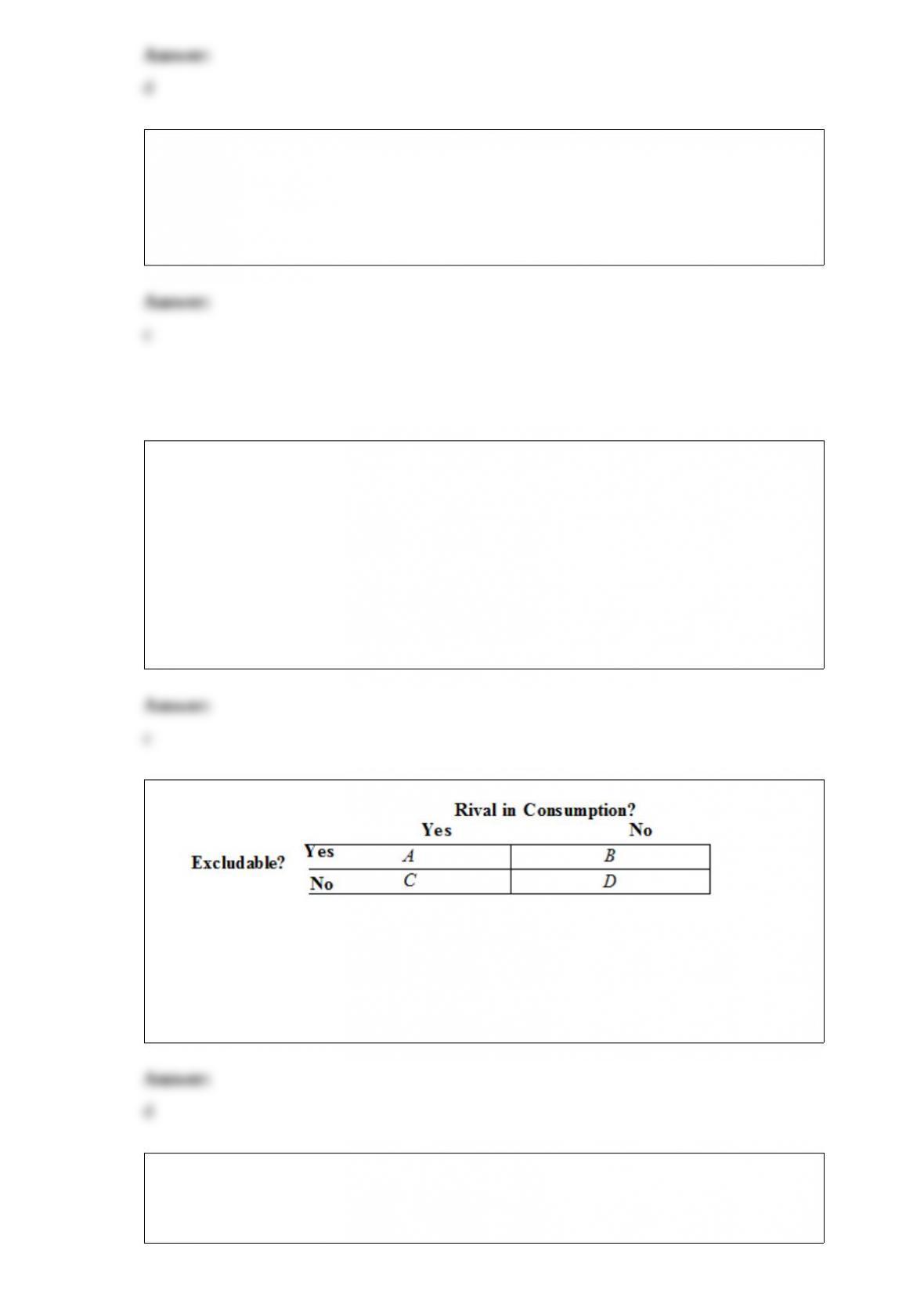
10)
The box labeled D represents
a.private goods.
b.club goods.
c.common resources.
d.public goods.
11) The gains from specialization and trade are based on absolute advantage.
a.True
b.False
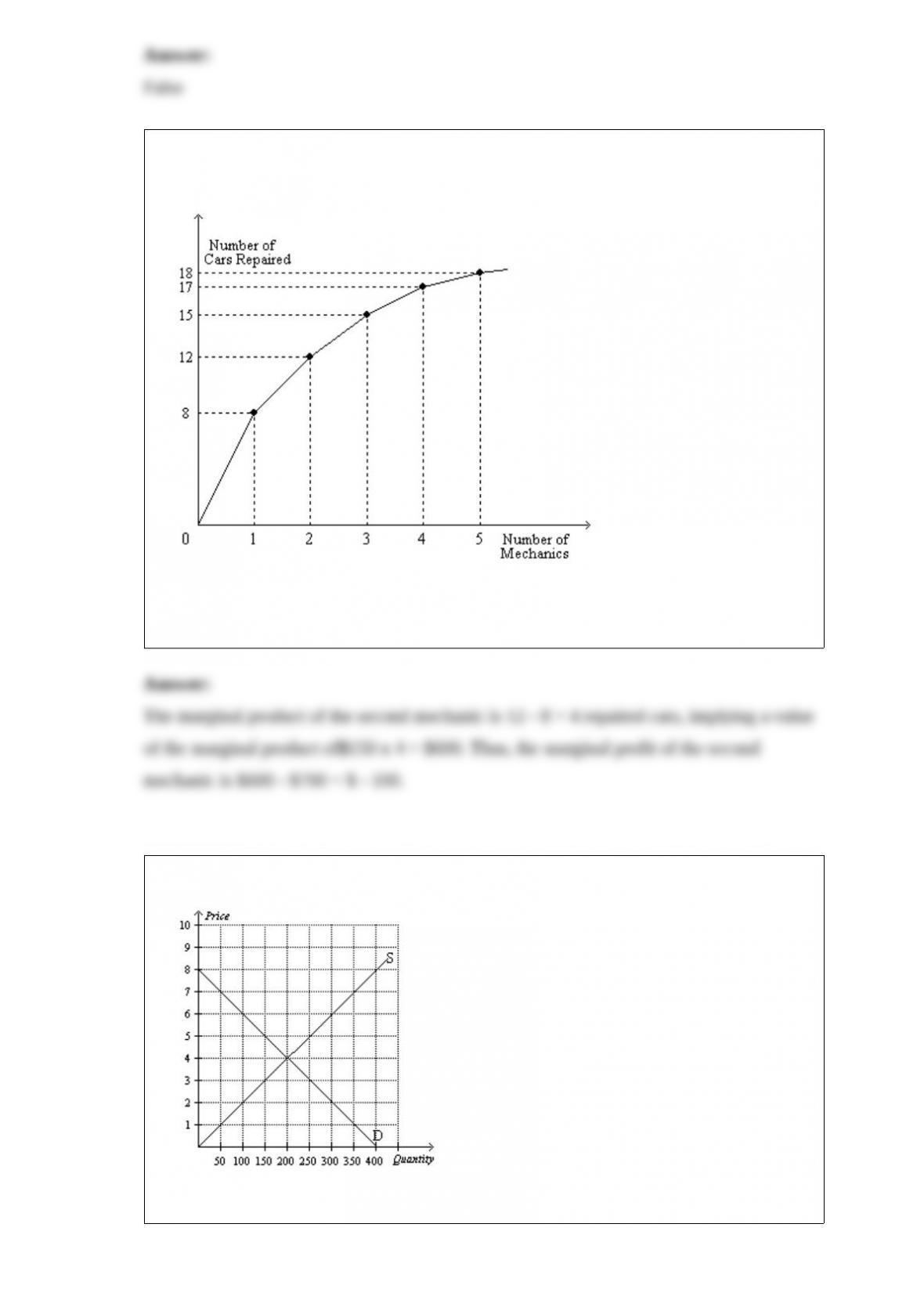
12) Figure 18-12. The figure shows the relationship between the number of mechanics
hired and the number of car repairs performed per day at a car-repair shop.
Refer to Figure 18-12. If the shop charges $150 per repair and pays each of its
mechanics a wage of $700 per day, then what is the marginal profit of the second
mechanic?
13) Consider the market for 2-packs of light bulbs below.
At a price of $6, is there a shortage or surplus, and how large is the shortage/surplus?
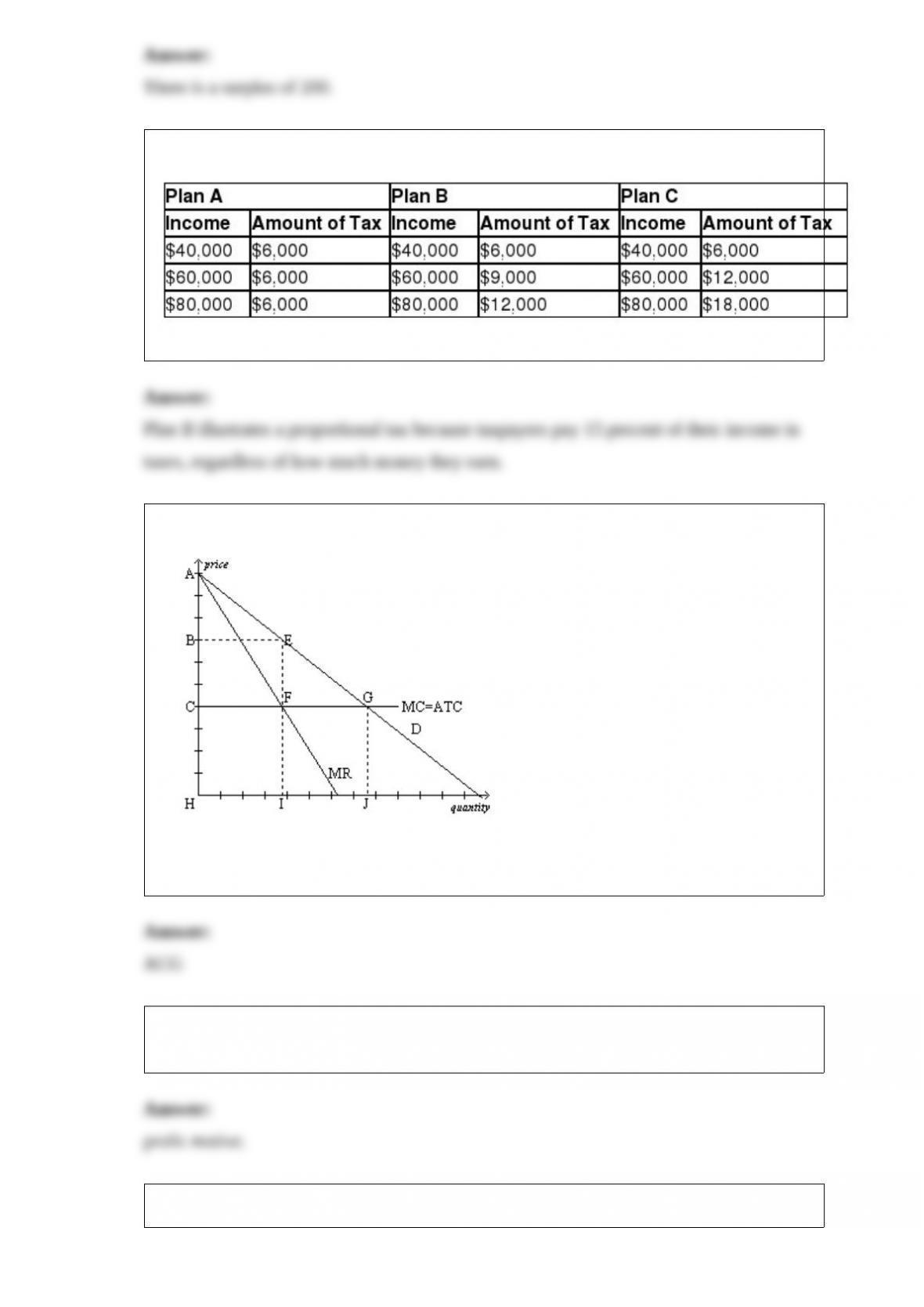
14) Table 12-25
Which plan illustrates a proportional tax?
15) Figure 15-24
Use the letters in the figure to identify the profit area if this firm were able to perfectly
price discriminate.
16) Many economists believe that competitive, market economies provide a natural
antidote to employer discrimination known as the
17) Figure 8-29
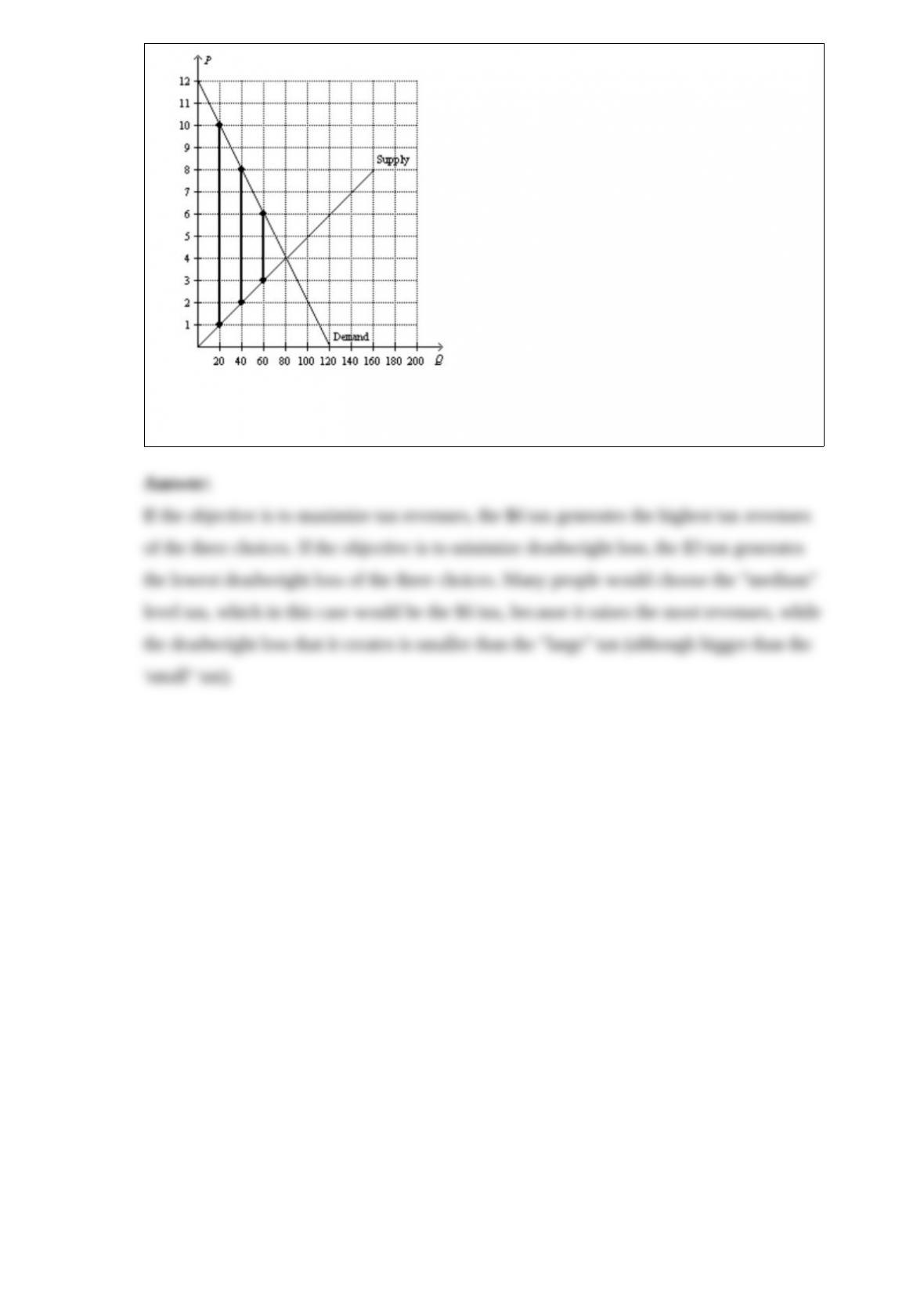
If you were a policymaker choosing between a $3, $6, or $9 tax, which would you
choose and why?