
Refer to Figure 17-2. Suppose the economy is at point C in the figure above. If workers
adjust their expectations of inflation, which of the following will be true?
A) The short-run Phillips curve will shift to the right.
B) The short-run Phillips curve will shift to the left.
C) The economy will move from C to A.
D) Workers and firms expect inflation to be 1%.
E) The natural rate of unemployment is 6%.
Caroline is an artist. She purchases canvas, paints, brushes, and accessories for $75. She
sells one of her original paintings to an art gallery for $1,500, which, in turn, sells it to
an art lover for $4,500. How much value does the gallery add?
A) $1,425
B) $1,500
C) $3,000
D) $4,500
The major shortcoming of a barter economy is
A) the requirement of a double coincidence of wants.
B) the requirement of specialization and exchange.

C) that goods and services are not traded.
D) that money loses value from inflation.
Firms disclose financial statements in ________ and in ________.
A) periodic filings to the federal government; annual reports to shareholders
B) daily filings to the federal government; daily reports to shareholders
C) monthly reports to shareholders; 5-year balance statements to the board of directors
D) weekly filings with the SEC; monthly reports to the Fed
Home Depot sells new and used doors to contractors who build new homes. Home
Depot also sells new and used doors to homeowners. Which of the following would be
counted in GDP?
A) the sale of a used door to a homeowner
B) the sale of a new door to homeowner
C) the sale of a used door to TapKon construction for installation into a new home
D) the sale of a new door to TapKon construction for installation into a new home

When the aggregate demand curve and the short-run aggregate supply curve intersect,
A) the long-run aggregate supply curve must also intersect at the same point.
B) inflation must be increasing.
C) structural and frictional unemployment equal zero.
D) the economy is in short-run macroeconomic equilibrium.
Actual investment spending does not include
A) spending on consumer durable goods.
B) spending on new capital equipment.
C) spending on new houses.
D) changes in inventories.
An implicit cost is
A) a nonmonetary opportunity cost.

B) a cost unique to sole proprietorships.
C) a cost that involves spending money.
D) a cost unique to corporations.
Scarcity refers to the situation in which
A) unlimited wants exceed limited resources.
B) unlimited resources exceed limited wants.
C) a country’s population is larger than its resource base.
D) a nation’s poverty level increases faster than its population.
Prices of smartphones (assume that this is a normal good) have fallen in recent years.
Over this same period, the price of the components used to produce smartphones has
also fallen and consumer incomes have risen. Which of the following best explains the
falling prices of smartphones?
A) The supply curve for smartphones has shifted to the right while the demand curve
for smartphones has shifted to the left.
B) The demand curve for smartphones has shifted to the right more than the supply
curve has shifted to the right.
C) The demand curve and the supply curve for smartphones have both shifted to the
left.
D) The supply curve for smartphones has shifted to the right more than the demand
curve has shifted to the right.
Abercrombie & Fitch wants to raise $8 million to finance the construction of a new
store, and the company wishes to raise the funds through direct finance. Which of the
following methods could it use?
A) It could sell $8 million in bonds.
B) It could borrow $8 million from a bank.
C) It could issue $8 million in stocks.
D) It could choose either A or C.
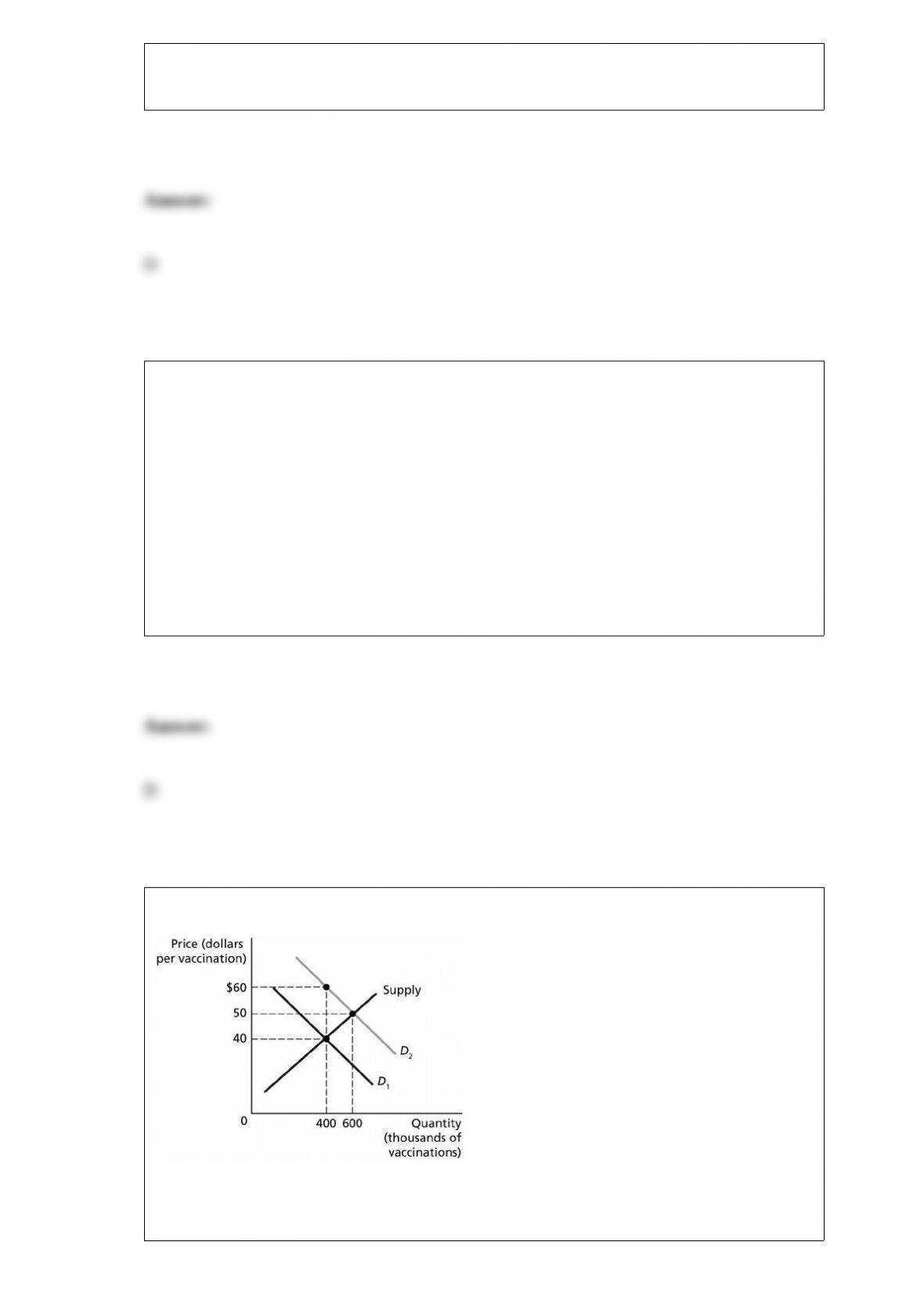
Figure 5-1
Figure 5-1 represents the market for vaccinations. Vaccinations are considered a benefit
to society, and the figure shows both the marginal private benefit and the marginal
social benefit from vaccinations.
Refer to Figure 5-1. At the market equilibrium,
A) the marginal cost is equal to the marginal benefit.
B) the marginal cost is greater than the marginal benefit.
C) the marginal cost is less than the marginal benefit.
D) the marginal cost is zero.
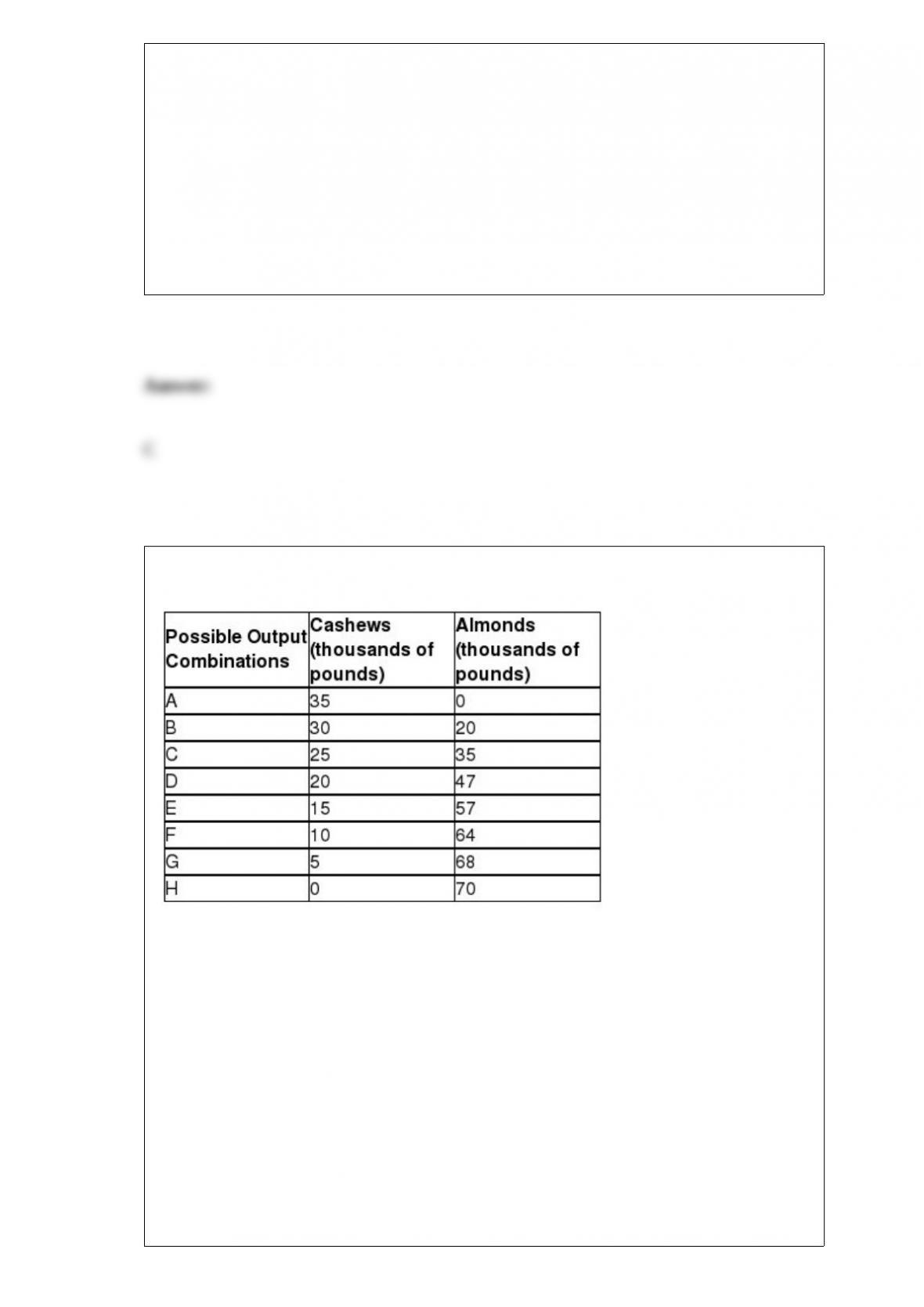
Table 2-3
Refer to Table 2-3. The Nut House produces only cashews and almonds. The table
aboveshows the maximum possible output combinations of the two nuts using all
resources and currently available technology.
a. Graph The Nut House’s production possibilities frontier. Put almonds on the
horizontal axis and cashews on the vertical axis. Be sure to identify the output
combination points on your diagram.
b. Suppose The Nut House is currently producing at point C. What is the opportunity
cost of producing an additional 12,000 pounds of almonds?
c. Suppose The Nut House is currently producing at point C. What happens to the
opportunity cost of producing more and more almonds? Does it increase, decrease or
remain constant? Explain your answer.
d. Suppose The Nut House is currently producing at point F. What happens to the
opportunity cost of producing more and more cashews? Does it increase, decrease or
remain constant? Explain your answer.
e. Suppose The Nut House is plagued by a variety of white root-rot disease, which
destroys cashew trees but not almond trees. Show in a graph what happens to its PPF.

If the dollar appreciates, how will aggregate demand in the United States be affected?
A) Aggregate demand will shift to the right as exports increase.
B) Aggregate demand will shift to the right as imports increase.
C) Aggregate demand will shift to the left as imports increase.
D) Aggregate demand will shift to the left as exports increase.
If planned aggregate expenditure is less than total production,
A) actual inventories will equal planned inventories.
B) firms will experience an unplanned increase in inventories.
C) GDP will increase.
D) the economy is in equilibrium.
Why do some economists point to a decline in the quality of labor as an explanation for
the productivity slowdown in the mid-1970s?
A) The average level of education of citizens of the United States rose dramatically
during this period of time.
B) The skill level required to perform many jobs increased during this period of time,
although the skills of the labor force did not increase as quickly.
C) Scores on standardized tests during that period of time began to rise.
D) Increases in the amount of capital available reduced labor quality.
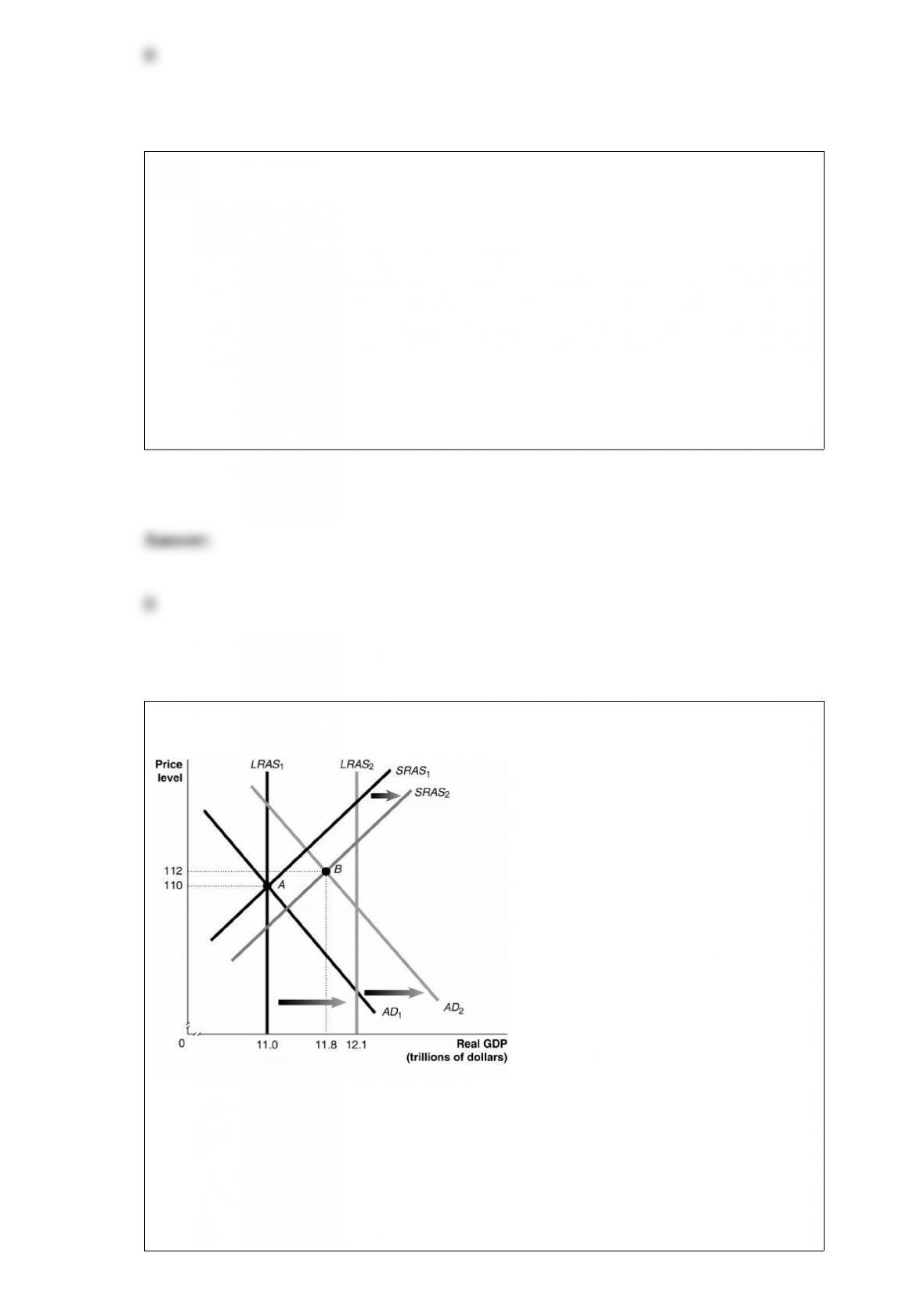
Figure 13-4
Refer to Figure 13-4. Given the economy is at point A in year 1, what will happen to
the unemployment rate in year 2?
A) It will rise.
B) It will fall.

C) It will remain constant.
D) not enough information to answer the question
The cost to firms of changing prices
A) is small even when there is rapid inflation.
B) is called a menu cost.
C) does not exist if inflation is perfectly anticipated.
D) all of the above