
The Trans-Pacific Partnership (TPP) would ________ tariffs on most goods and
services shipped between partnership countries and also ________ so-called non-tariff
barriers to trade, such the licenses governments require to import some goods.
A) eliminate; reduce
B) raise; raise
C) lower; raise
D) lower; eliminate
________ refers to the reduction in economic surplus resulting from not being in
competitive equilibrium.
A) Marginal cost
B) Producer atrophy
C) Deadweight loss
D) Economic shortage
Consider an industry that is made up of six firms with the following market shares:
Firm A – 50%, Firm B – 20%, Firms C and D – 10% each, and Firms E and F – 5% each.
What is the value of the Herfindahl-Hirschman Index and how will the industry be
categorized?
A) 2,500; mildly concentrated
B) 3,150; highly concentrated
C) 8,100; highly concentrated
D) 10,000; effectively competitive
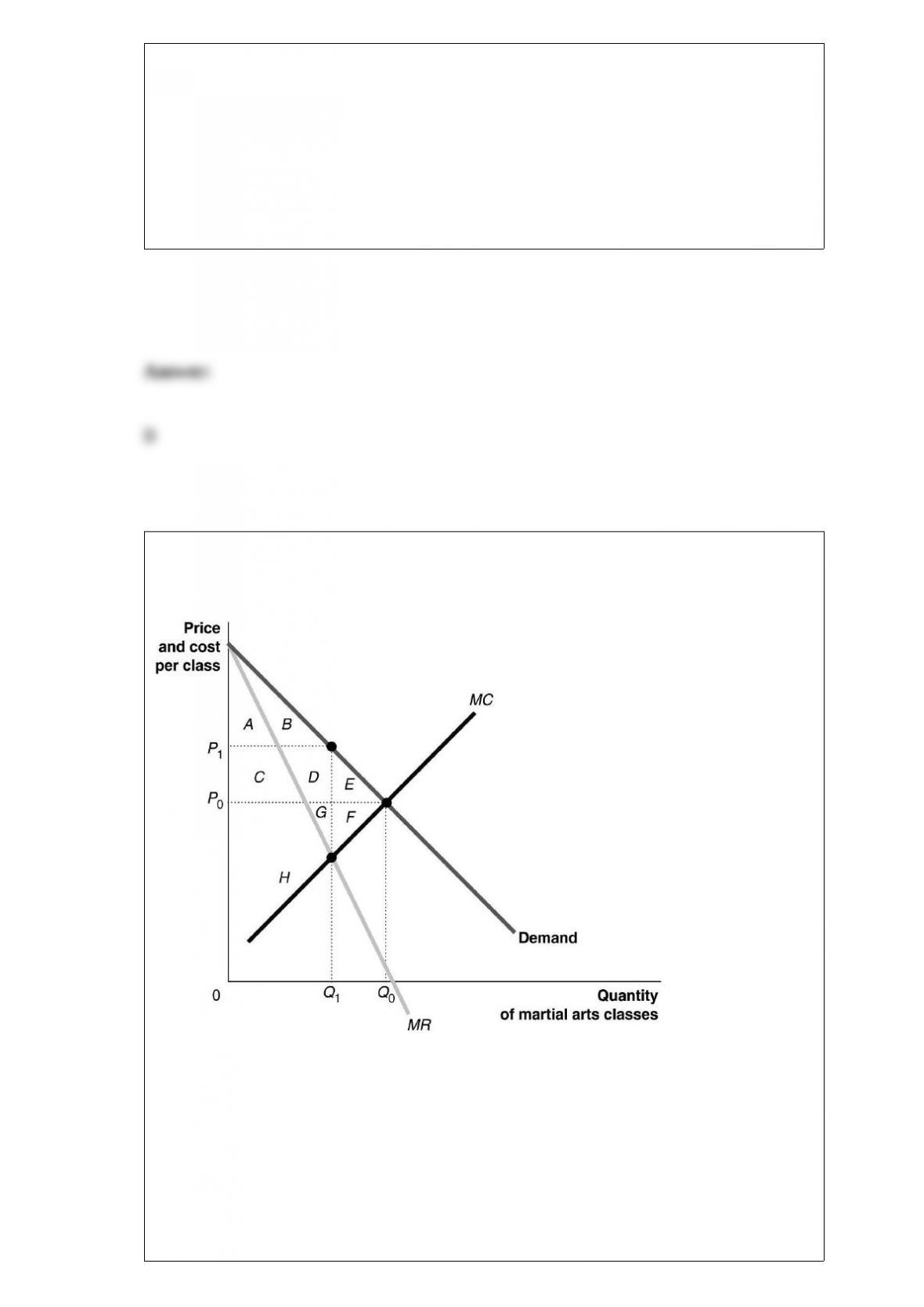
Figure 16-6
Watanabe Sensei operates the only martial arts school in Hartfield. For simplicity,
assume that consumers have identical demand curves and that Sensei knows what this
demand curve is. Figure 16-6 shows this demand curve.
Refer to Figure 16-6. Suppose instead of charging the monopoly price for his classes,
Sensei charges the competitive price. What is the competitive price and what is the
quantity demanded at this price?
A) P0, Q1

B) P0, Q0
C) P1,Q0
D) P1, Q1
The marginal product of labor is defined as
A) the change in total revenue that results when an additional unit of a labor is hired.
B) the additional labor required to produce one more unit of output.
C) the additional labor cost of producing one more unit of output.
D) the change in output that a firm produces as a result of hiring one more worker.
Ocean Spray is considered to be an oligopoly firm because, until the 1990s, it faced
little competition in the market for fresh and frozen cranberries. Why?
A) Ocean Spray had a patent on the production of cranberries that gave the company
the exclusive right to market its product for 20 years. The 20-year period ended in the
1990s.
B) Until the 1990s, Ocean Spray controlled almost the entire supply of cranberries.

C) Ocean Spray was able to achieve significant economies of scale in the production of
cranberries. Beginning in the 1990s, other firms finally achieved economies of scale as
well, but Ocean Spray still controls about 80 percent of the cranberry market.
D) The federal government imposed a high tariff on cranberry imports. During the
1990s the tariff was eliminated, but Ocean Spray still controls about 80 percent of the
cranberry market.
Which of the following is part of the secondary market?
A) New York Stock Exchange
B) the over-the-counter market
C) NASDAQ
D) all of these
An economic principle that explains why countries produce different goods and
services is
A) absolute advantage.
B) trade as a percentage of GDP.
C) comparative advantage.

D) NAFTA.
Being the first to sell a particular good can give a firm advantages over other firms that
sell similar products. What is the name given to these advantages?
A) first-mover
B) first come, first served
C) follow the leader
D) first to market
Figure 3-7
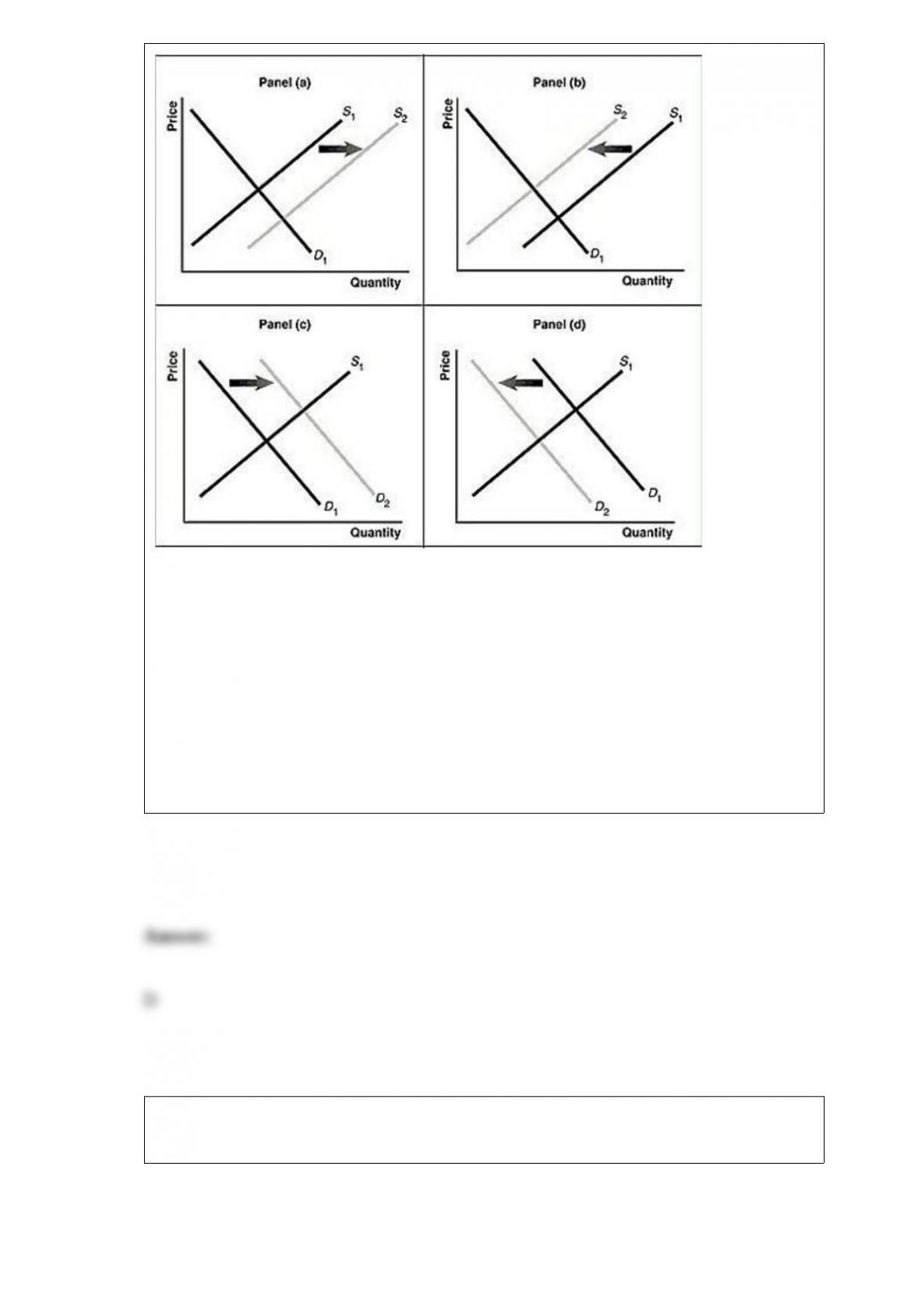
Refer to Figure 3-7. Assume that the graphs in this figure represent the demand and
supply curves for Fruitopia, a soft drink. Which panel describes what happens in the
market for Fruitopia when the price of Snapple, a substitute product, decreases?
A) Panel (a)
B) Panel (b)
C) Panel (c)
D) Panel (d)
Figure 5-2
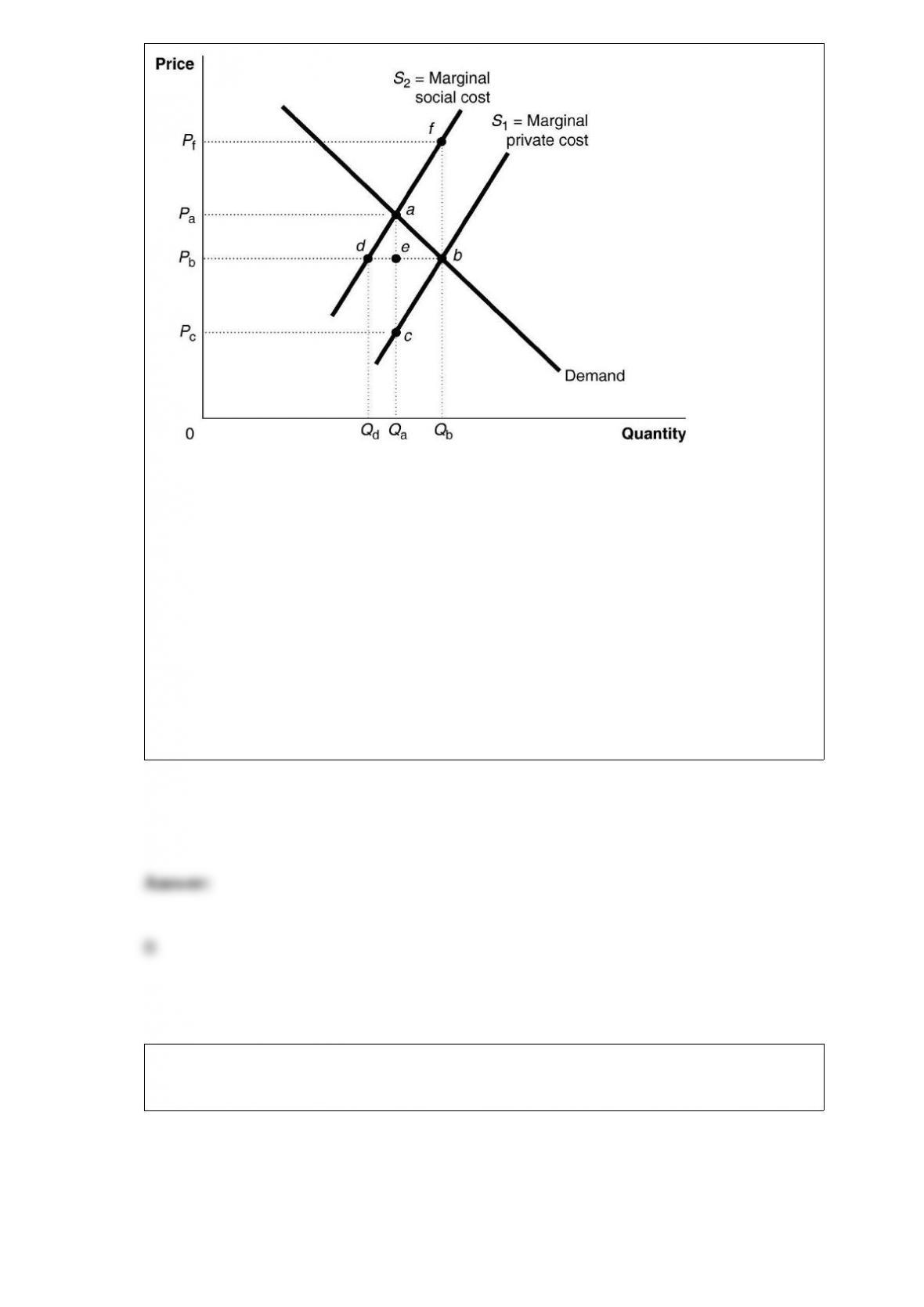
Figure 5-2 shows a market with a negative externality.
Refer to Figure 5-2. The marginal benefit of the last unit produced is represented by the
price
A) Pa.
B) Pb.
C) Pc.
D) Pf.
Figure 4-8
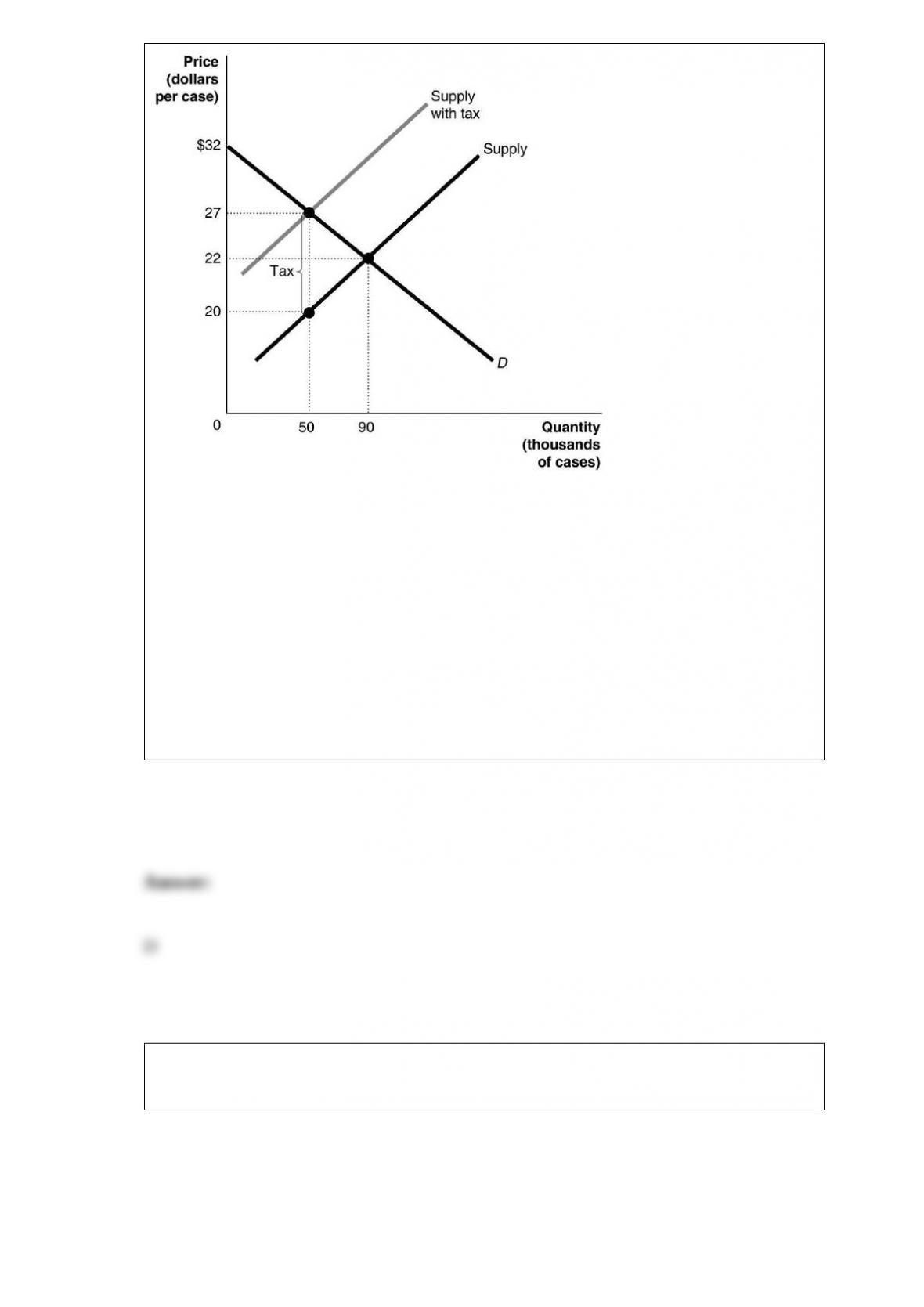
Figure 4-8 shows the market for beer. The government plans to impose a unit tax in this
market.
Refer to Figure 4-8. The price buyers pay after the tax is
A) $7.
B) $20.
C) $22.
D) $27.
Figure 5-13
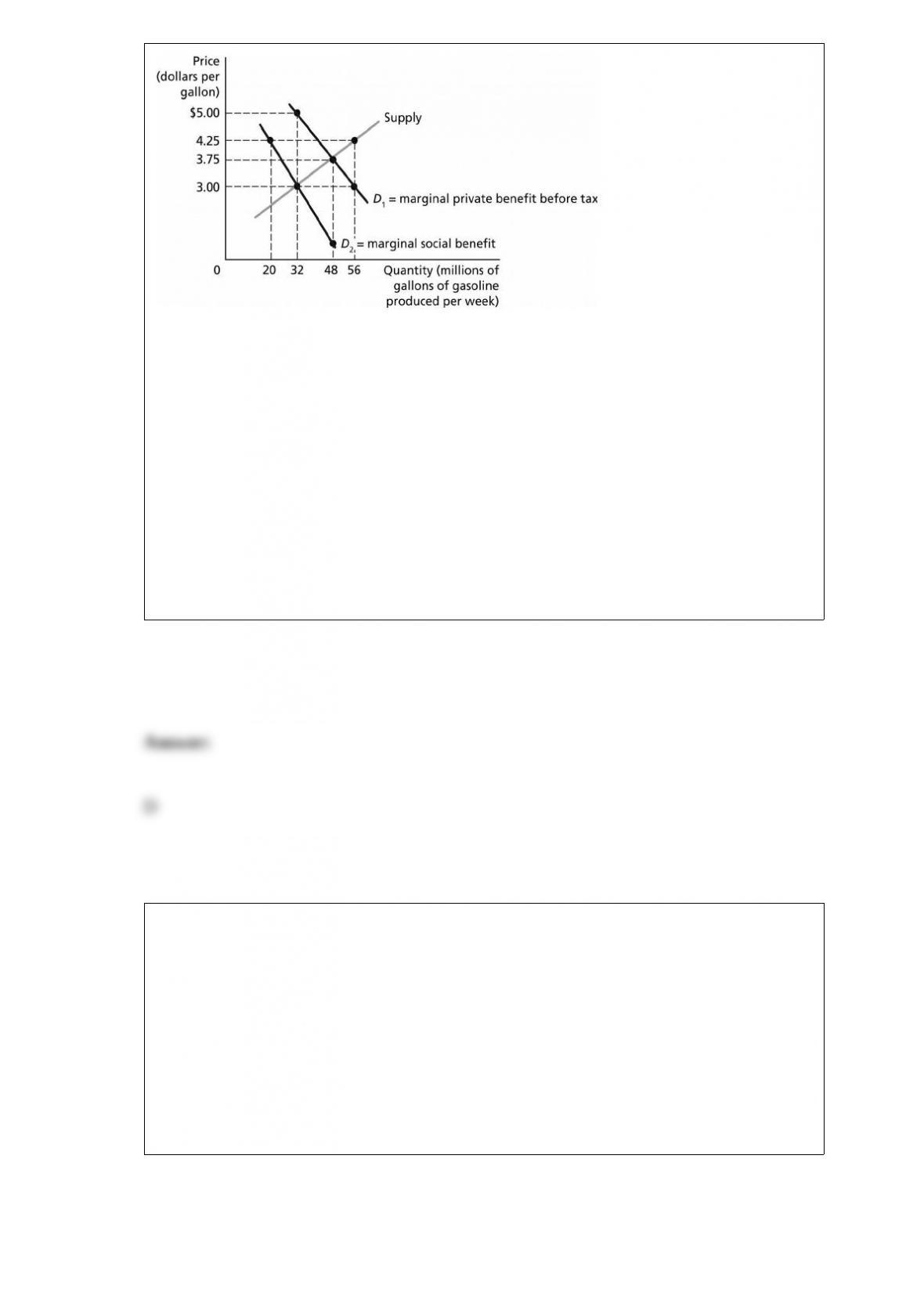
Figure 5-13 illustrates the market for gasoline before and after the government imposes
a tax to bring about the efficient level of gasoline production.
Refer to Figure 5-13. The actual price of gasoline paid by consumers after the tax is
implemented is ________ per gallon.
A) $3.00
B) $3.75
C) $4.25
D) $5.00
When a competitive equilibrium is achieved in a market
A) all individuals are better off than they would be if a price ceiling or price floor was
imposed by government.
B) the total net benefit to society is maximized.
C) the total benefits to consumers are equal to the total benefits to producers.
D) economic surplus equals the deadweight loss.

In general, a “big ticket item” such as a house or new car will
A) tend to have a more elastic demand than a lower-priced good.
B) tend to have an inelastic demand because spending on the item takes up a large share
of the average consumer’s budget.
C) tend to have an inelastic demand because it has many substitutes.
D) tend to have a more inelastic demand the more time that passes.
Assume that China has a comparative advantage in producing corn and exports corn to
Japan. We can conclude that
A) China also has an absolute advantage in producing corn relative to Japan.
B) China has a lower opportunity cost of producing corn relative to Japan.
C) Japan has an absolute disadvantage in producing corn relative to China.
D) Labor costs are higher for corn producers in Japan than in China.
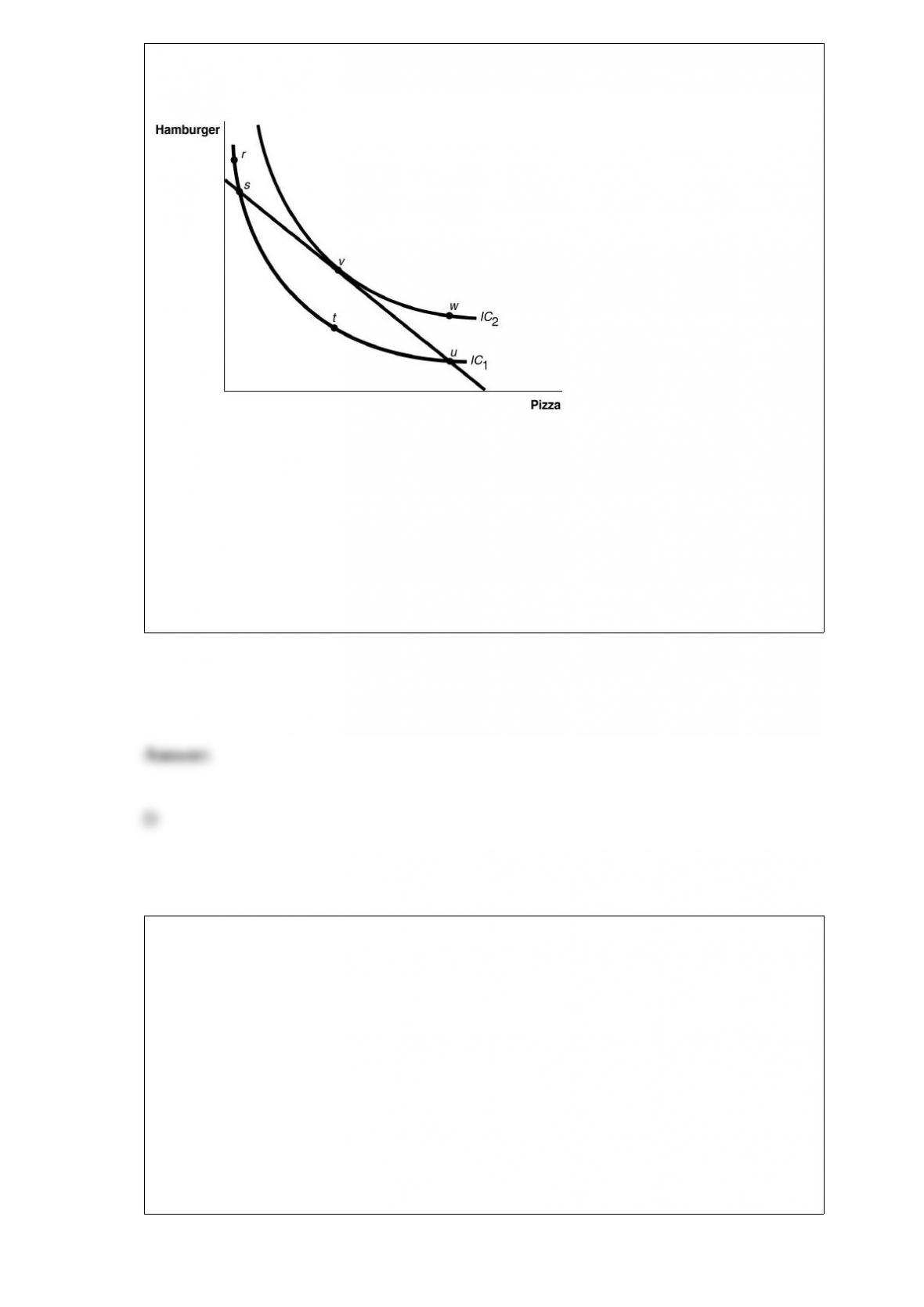
Figure 10-5
Refer to Figure 10-5. Which of the following statements is true?
A) The consumer gets more utility from bundle r than from bundlev.
B) The consumer gets less utility from bundle w than from bundlev.
C) Bundles r, s, t, and u all cost the same.
D) Bundles r and w are not affordable.
If a significant number of consumers switch from consuming traditional baked goods to
consuming vegan baked goods, a vegan bakery will likely find its demand curve
shifting to the ________ and its marginal revenue curve shifting to the ________ as
more competitors enter the market.
A) right; right
B) right; left
C) left; right
D) left; left

According to ________, in a market with an externality, private parties would
voluntarily negotiate an efficient outcome without government intervention.
A) A. C. Pigou
B) Adam Smith
C) Ronald Coase
D) John Maynard Keynes
If the cross-price elasticity of demand for computers and software is negative, this
means the two goods are
A) substitutes.
B) complements.
C) inferior.
D) normal.

Abercrombie & Fitch wants to raise $8 million to finance the construction of a new
store, and the company wishes to raise the funds through direct finance. Which of the
following methods could it use?
A) It could sell $8 million in bonds.
B) It could borrow $8 million from a bank.
C) It could issue $8 million in stocks.
D) It could choose either A or C.
The ratio at which a country can trade its exports for imports from other countries is
called
A) a trade barrier.
B) the terms of trade.
C) autarky.
D) a free trade agreement.
The study of how people make decisions in situations where attaining their goals
depends on their interactions with others is called

A) Nash equilibrium.
B) the prisoner’s dilemma.
C) game theory.
D) dominant strategy equilibrium.
In a perfectly competitive industry, in the long-run equilibrium
A) the typical firm is producing at the output where its long-run average total cost is not
minimized.
B) the typical firm is earning an accounting profit greater than its implicit costs.
C) the typical firm earns zero profit.
D) the typical firm is maximizing its revenue.
Studies show that the income elasticity of demand for wine is 5.03 and the income
elasticity of demand for spirits is 1.21. This indicates that
A) wine and spirits are luxury goods.
B) wine is a luxury good and spirits are inferior goods.
C) wine and spirits are highly price elastic.
D) wine is a luxury good and spirits are necessities.
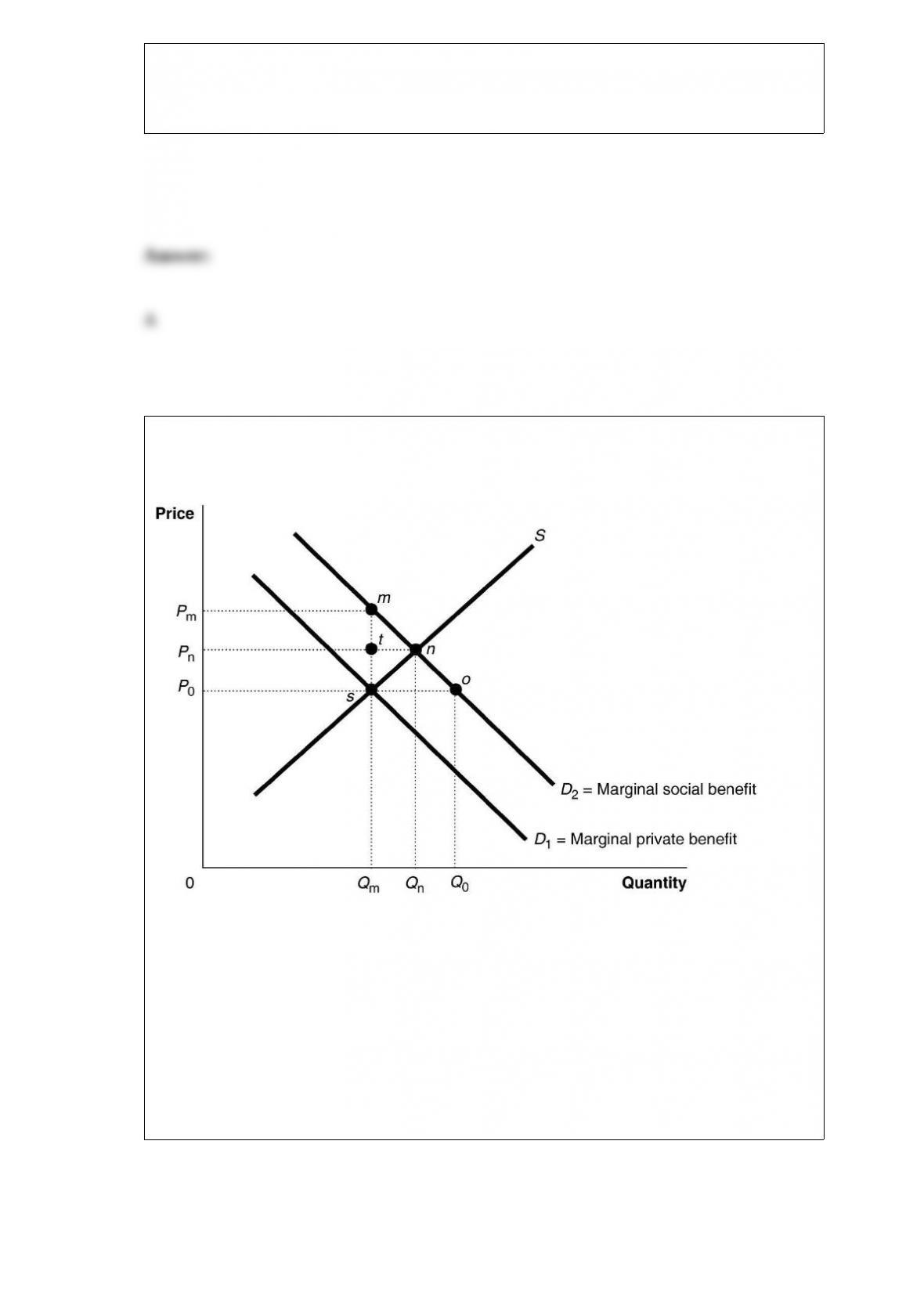
Figure 5-3
Refer to Figure 5-3. The deadweight loss due to the externality is represented by the
area
A) mso.
B) msn.
C) nso.
D) mtn.

By charging the equilibrium price for shared rides as opposed to the
government-regulated price charged by traditional taxi companies, Uber has
A) decreased consumer surplus.
B) increased consumer surplus.
C) increased deadweight loss.
D) decreased producer surplus.
Jennifer Borts moves her office from the premises she rents at a local mall to her home.
As a result of this move
A) Jennifer’s explicit costs fall and her implicit costs rise.
B) Jennifer’s total costs fall.
C) Jennifer’s implicit costs fall.
D) Jennifer’s opportunity costs fall.
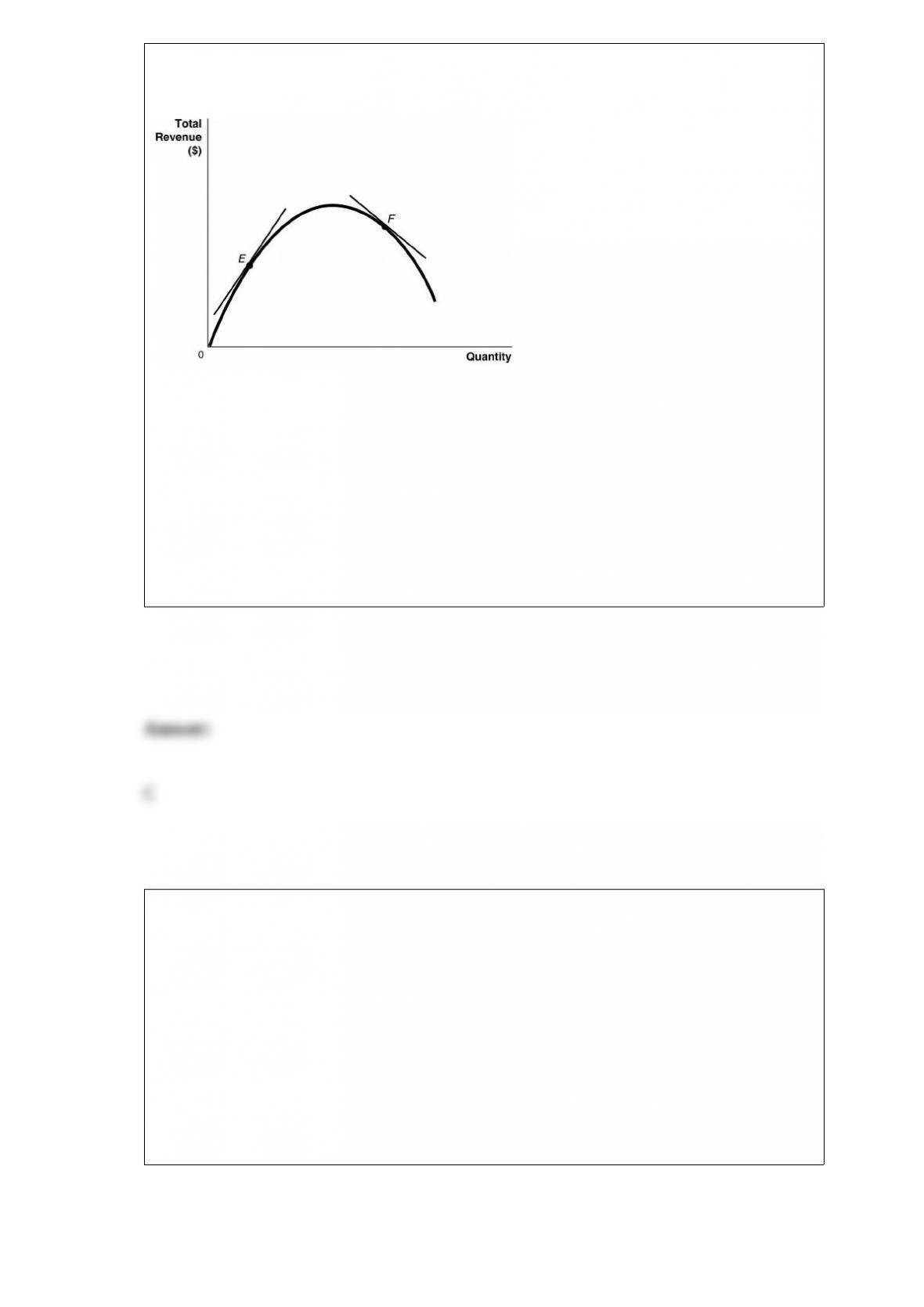
Figure 1-4
Refer to Figure 1-4. Which of the following statements is false?
A) The slope of the tangent at E is positive.
B) The slope of the tangent at F is negative.
C) The slope of the tangent at E and the slope of the tangent at F are equal.
D) Neither the slope of the tangent at E nor the slope of the tangent at F are equal to
zero.
The price a perfectly competitive firm receives for its output
A) is determined by the interaction of the firm and all of the consumers who buy from
the firm.
B) is determined by the interaction of all sellers and all buyers in the firm’s market.
C) will not change in response to changes in market demand and supply because the
firm is a price taker.
D) will be lowered by the firm in order to sell more output.
Why do economists refer to the pricing strategies of oligopoly firms as a prisoner’s
dilemma game?
Suppose the equilibrium price and quantity of a 12-pack of Dr. Pepper are $5.00 and
10,000 12-packs, respectively, and the government decides to impose a $1.00 tax on
every 12-pack of carbonated soft drinks. Draw two supply and demand graphs, one
showing the excess burden of the tax when supply is less elastic and the other showing
the excess burden of the tax when supply is more elastic. Identify the excess burden of
the tax on each graph. On which graph is the excess burden the greatest?
How does a firm raise external funds through direct finance?
Dalton, Georgia, a town with a population less than 35,000, has developed into a
leading producer of carpets, despite its small size. Some government officials argue that
the success achieved by firms in Dalton in developing a comparative advantage in
carpet making because of external economies can be used to justify trade barriers as a
means to protect an “infant industry.” After an infant industry gains experience it can
compete in international markets and the trade barriers can be removed. What
objections do economists make to this argument in favor of trade barriers?
Serafina was earning $75 per hour and working 50 hours per week. Serafina’s wage rose
to $90 per hour, and as a result, she now works 60 hours per week. What can you
conclude from this information about the income effect and the substitution effect of a
wage change for Serafina?
What area on a supply and demand graph represents consumer surplus?
How do firms and households interact in markets?
Cigars are becoming increasingly popular in the United States, and a growing number
of cigar manufacturers in the Caribbean and Central America have begun producing and
exporting cigars to the U.S. market. How has this affected the equilibrium price and
quantity of cigars?
Explain the difference between a firm’s revenue and its profit.
What is a marginal cost?
Describe each of the principles governments consider when deciding which taxes to
use.
What are some of the limitations of the Coase theorem in practice?
What is the law of supply? What does this law imply about the shape of the supply
curve?
Explain the economic idea that “people respond to incentives.”
Damian owns a tattoo parlor and has hired three tattoo artists to work for him. The
marginal product of labor is 8 for the first artist, 12 for the second artist, and 7 for the
third artist. What is Damian’s average product of labor for these three tattoo artists?
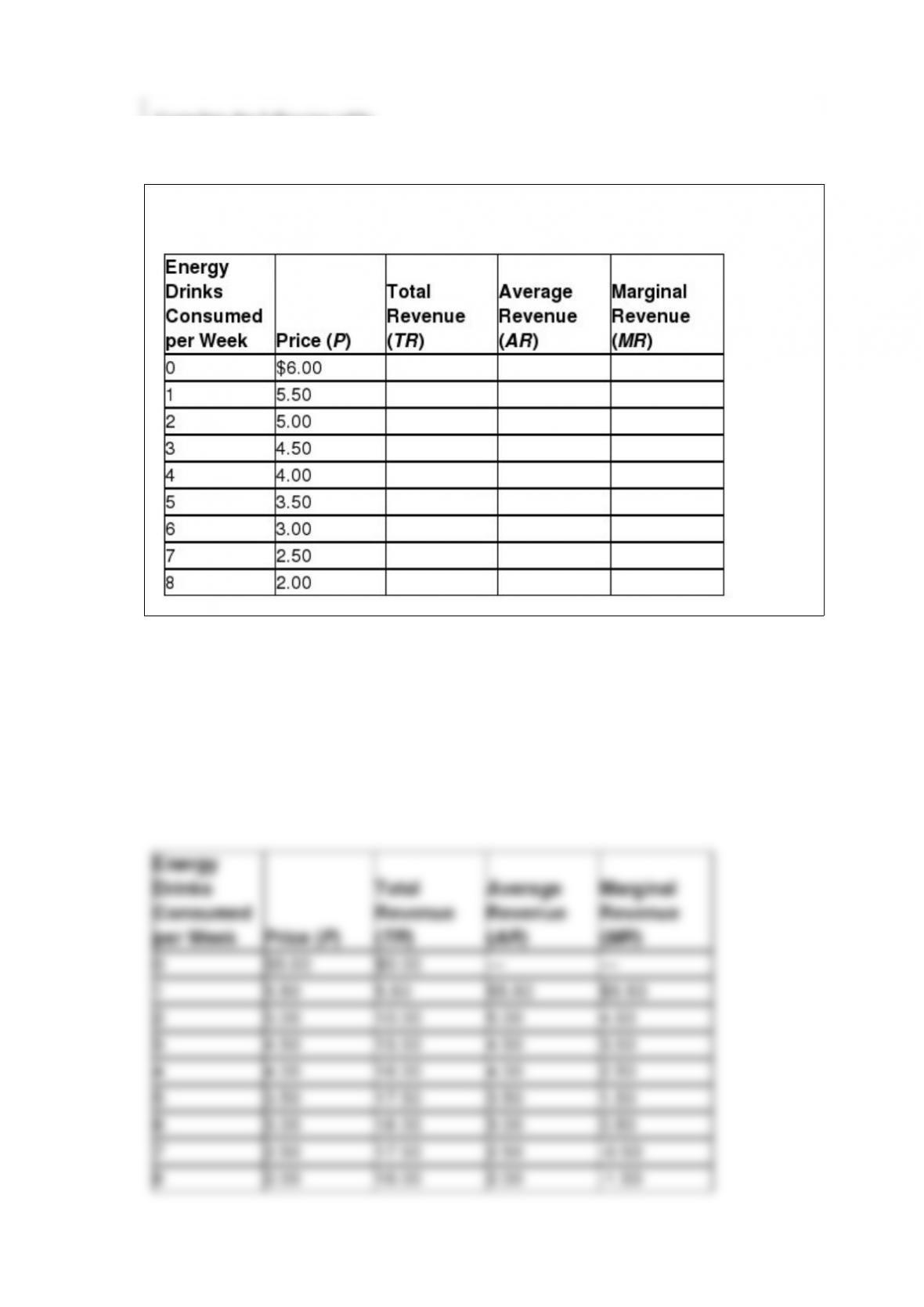
Complete the following table.
What is economic surplus? When is economic surplus at a maximum?
In economics, what is the difference between the short run and the long run?