
The cyclically adjusted budget deficit or surplus measures what the deficit or surplus
would be if the economy was
A) in a recession.
B) in an expansion.
C) at potential GDP.
D) at potential tax revenue.
When you buy at a low price in one market then sell at a higher price in another market,
you are engaging in
A) odd pricing.
B) arbitrage.
C) an antitrust prohibited practice.
D) price discrimination.
A firm using a two-part tariff faces a tradeoff because
A) the only way to increase the fixed-fee portion of the price is to lower the per-unit
portion of the price.
B) the only way to increase total revenue is to lower per-unit profit.
C) any increase in consumer surplus must be offset by a decrease in producer surplus.
D) the smaller the variation between the parts of the price, the greater the deadweight
loss generated by the pricing scheme.
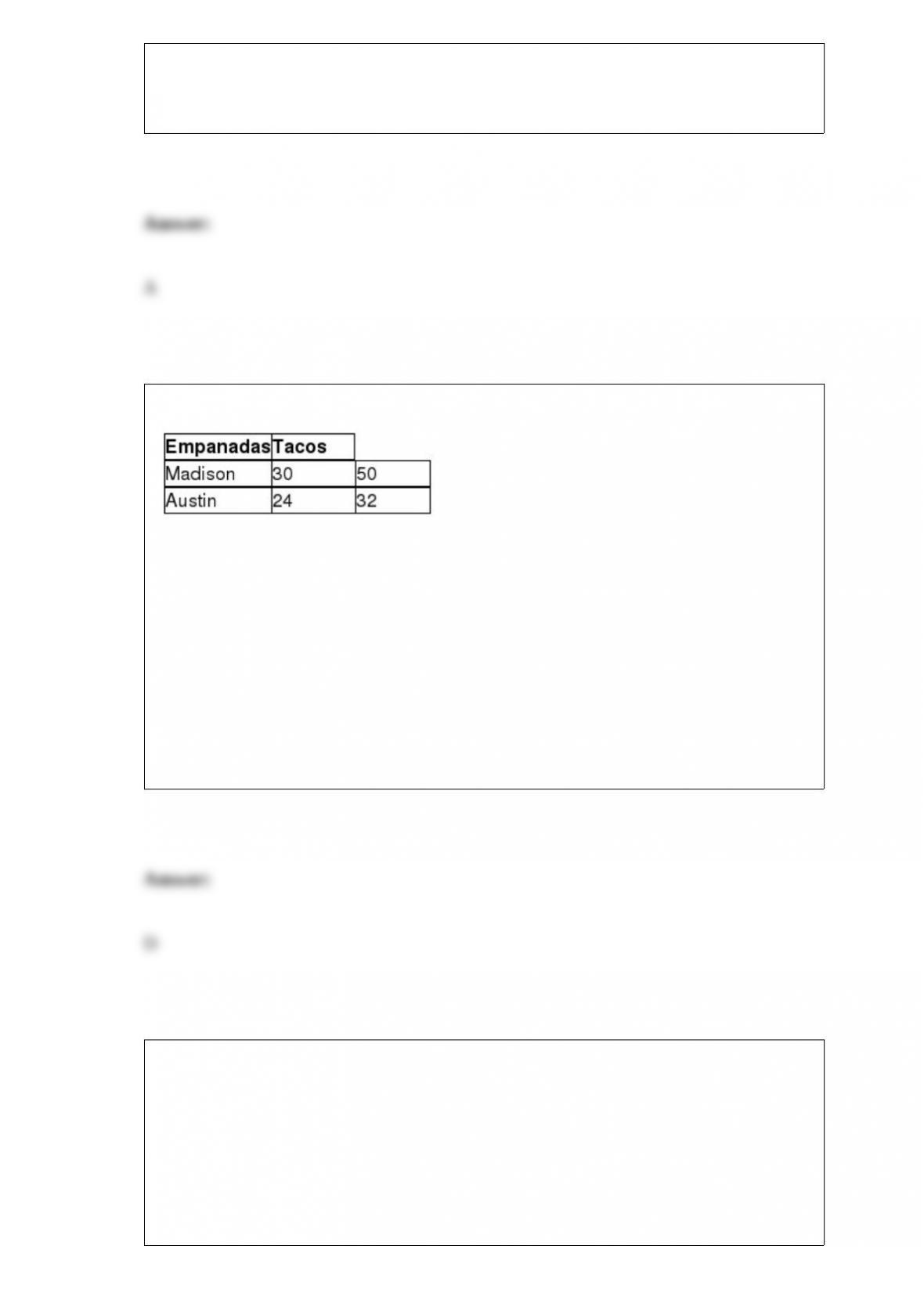
Table 7-2
Madison and Austin own Cafe Ole’. Table 7-2 lists the number of empanadas and tacos
Madison and Austin can each make in one hour. Select the statement that accurately
interprets the data in the table.
A) Madison has a comparative advantage in making empanadas.
B) Austin has a comparative advantage in making tacos.
C) Madison has a comparative advantage in making empanadas and making tacos.
D) Madison has a comparative advantage in making tacos.
The ________ in the United States is best described as a managed float exchange rate
system.
A) earliest used exchange rate system
B) current exchange rate system
C) exchange rate system used prior to the great depression
D) exchange rate system set up at the end of World War II
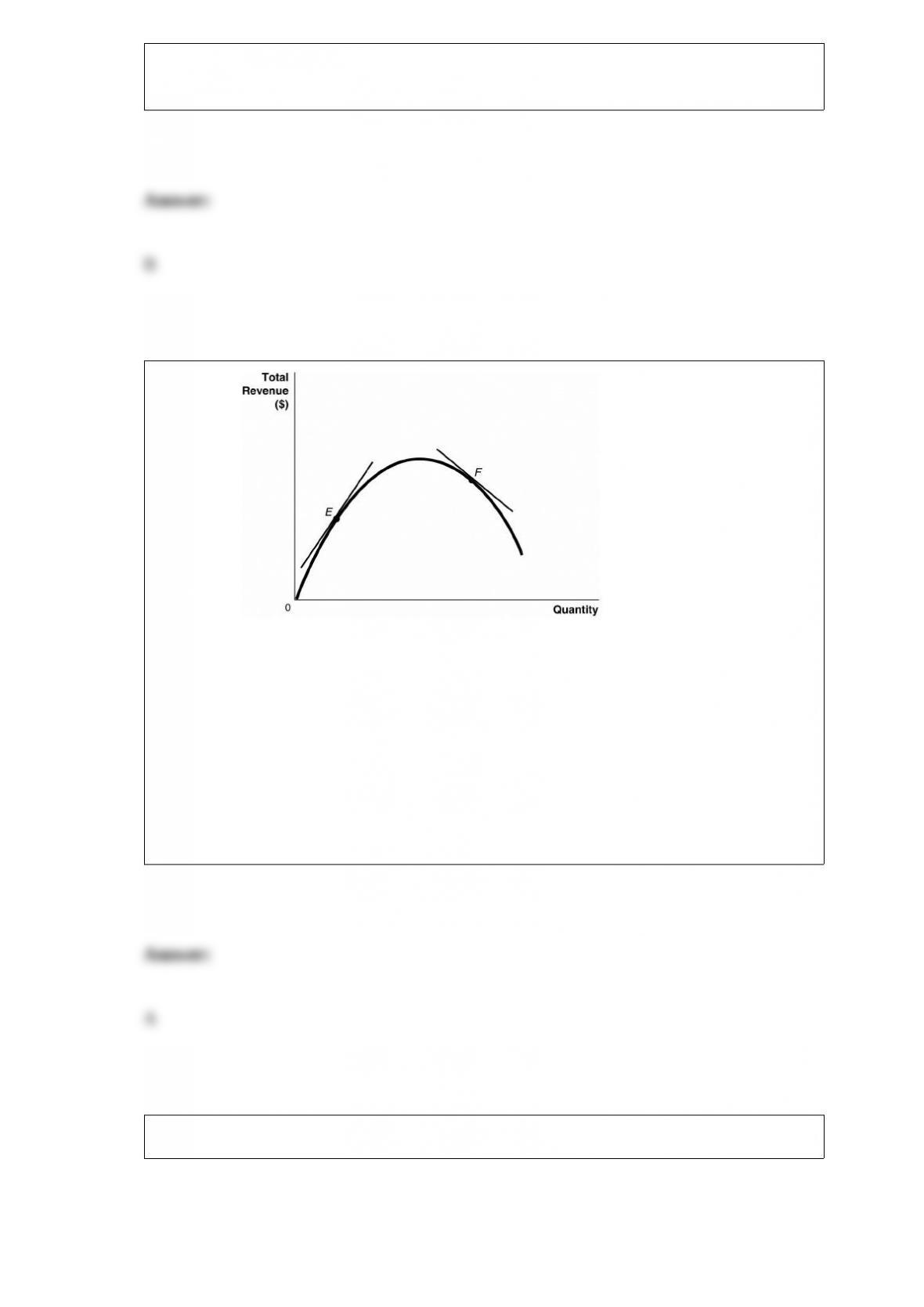
Figure 1-4
Which of the following statements is true?
A) The slope of the tangent at E is positive and the slope of the tangent at F is negative.
B) The slope of the tangent at E is negative and the slope of the tangent at F is positive.
C) The slope of the tangent at E and the slope of the tangent at F are negative.
D) The slope of the tangent at E and the slope of the tangent at F are positive.
Table 2-14
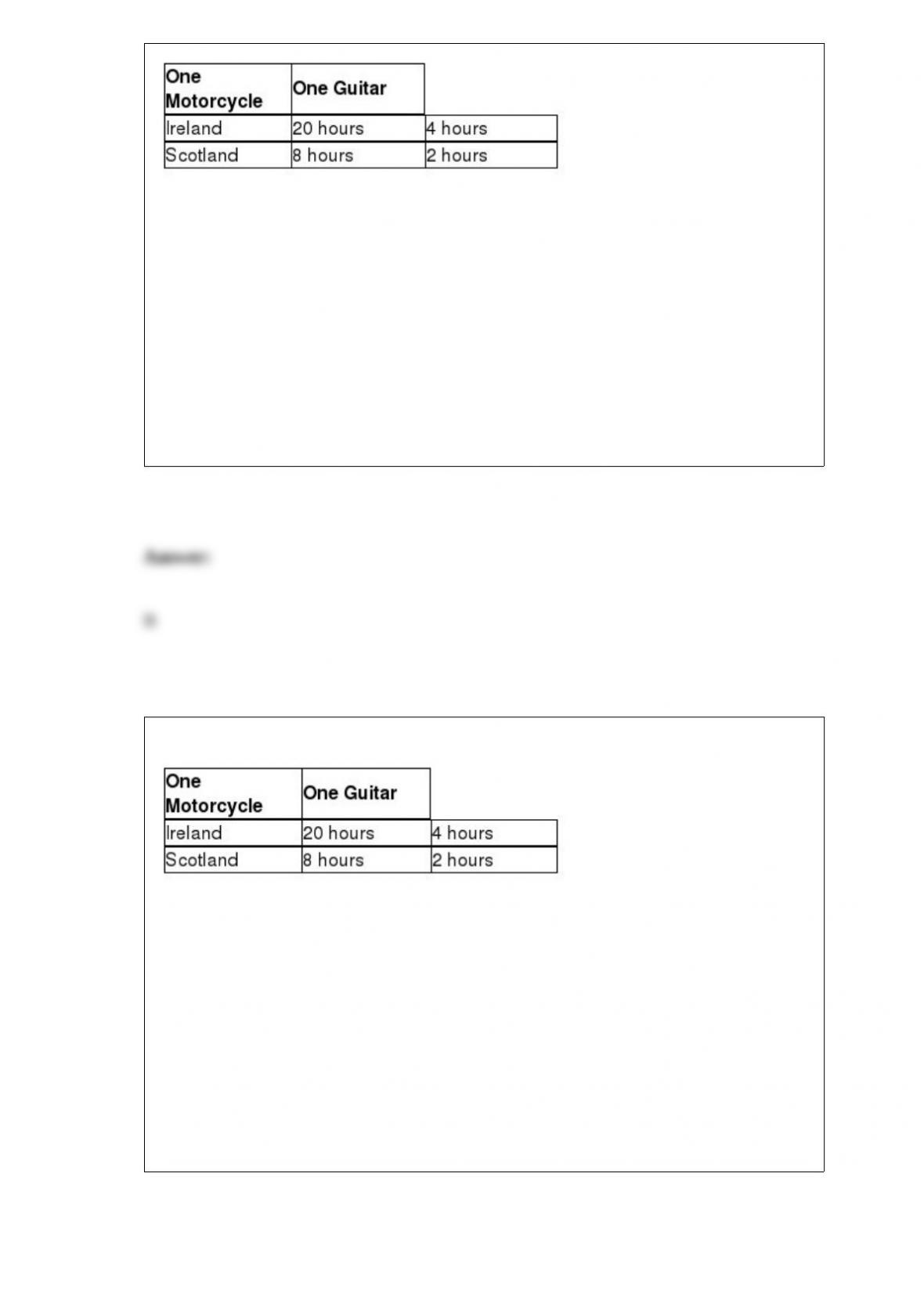
Table 2-14 shows the number of labor hours required to produce a motorcycle and a
guitar in Ireland and Scotland.
What is Scotland’s opportunity cost of producing one motorcycle?
A) 0.25 guitar
B) 4 guitars
C) 12 guitars
D) 16 guitars
Table 2-11
Table 2-11 shows the number of labor hours required to produce a motorcycle and a
guitar in Ireland and Scotland.
If the two countries specialize and trade, who should export guitars?
A) There is no basis for trade between the two countries.
B) Ireland
C) Scotland
D) They should both be exporting guitars.

If the Phillips curve represents a ‘structural relationship,” then
A) the trade-off between unemployment and inflation is permanent.
B) the trade-off between unemployment and inflation holds only for the short run.
C) the trade-off between unemployment and inflation holds in the long run, but not in
the short run.
D) the Phillips curve will be vertical in the long run.
Price elasticity of supply is used to gauge
A) how responsive suppliers are to price changes.
B) how responsive suppliers are to changes in future prices.
C) how responsive suppliers are to a change in demand.
D) how responsive sales are to a change in input prices.
Table 9-4
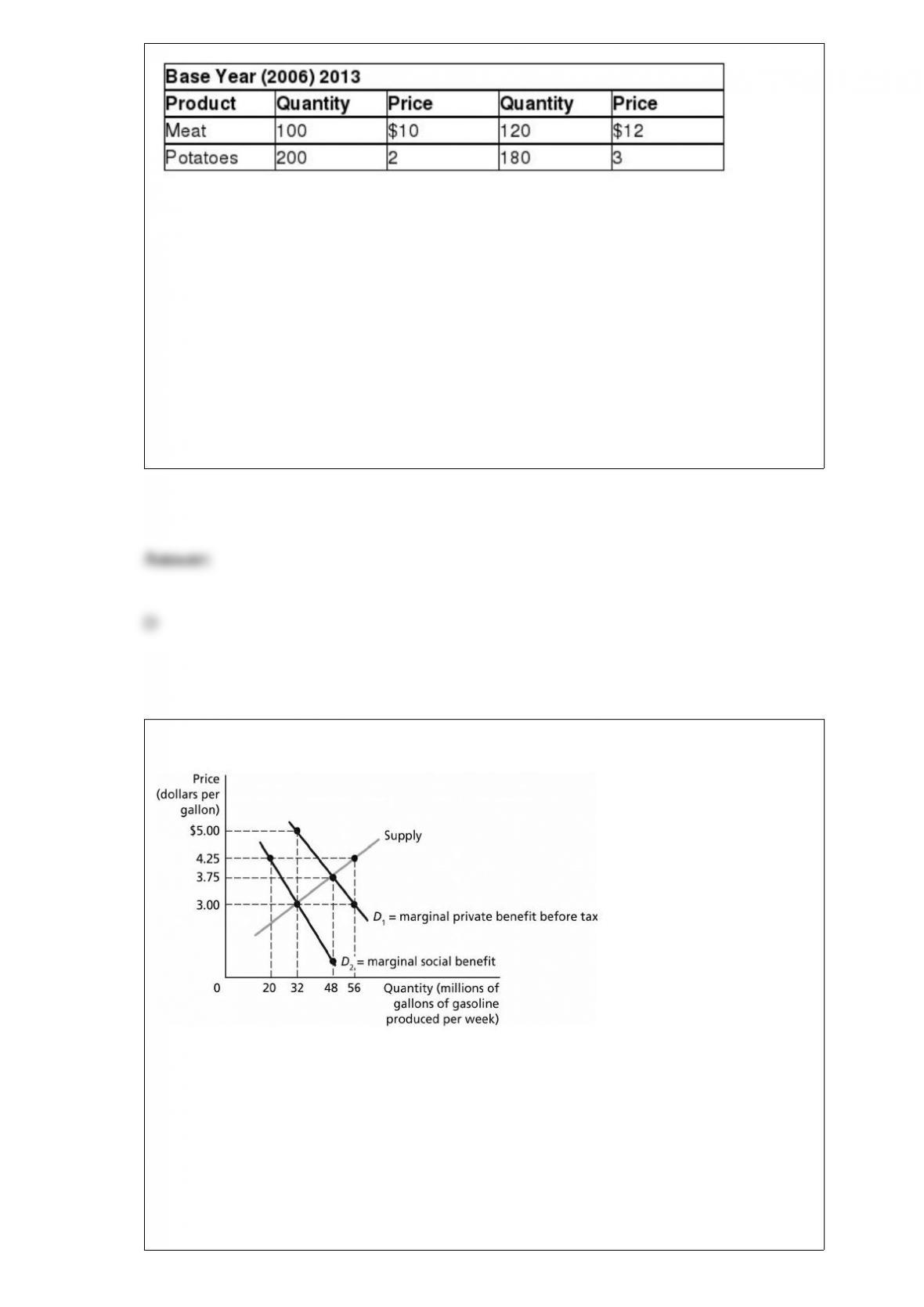
Assume the market basket for the consumer price index has two products € meat and
potatoes € with the following values in 2006 and 2013 for price and quantity: The
Consumer Price Index for 2013 equals
A) 125.
B) 129.
C) 135.
D) 141.
Figure 5-13
Figure 5-13 illustrates the
market for gasoline before and after the government imposes a tax to bring about the
efficient level of gasoline production.
The gasoline tax raises the price paid by consumers by ________ per gallon.
A) $0.75
B) $1.25

C) $1.75
D) $2.00
Economists refer to the actions people take after they have entered into a transaction
that makes the other party to the transaction worse off as
A) bad faith.
B) economic inefficiency.
C) moral hazard.
D) market failure.
The average total cost of production
A) is the extra cost required to produce one more unit.
B) equals the explicit cost of production.
C) equals total cost of production divided by the level of output.
D) equals total cost of production multiplied times the level of output.
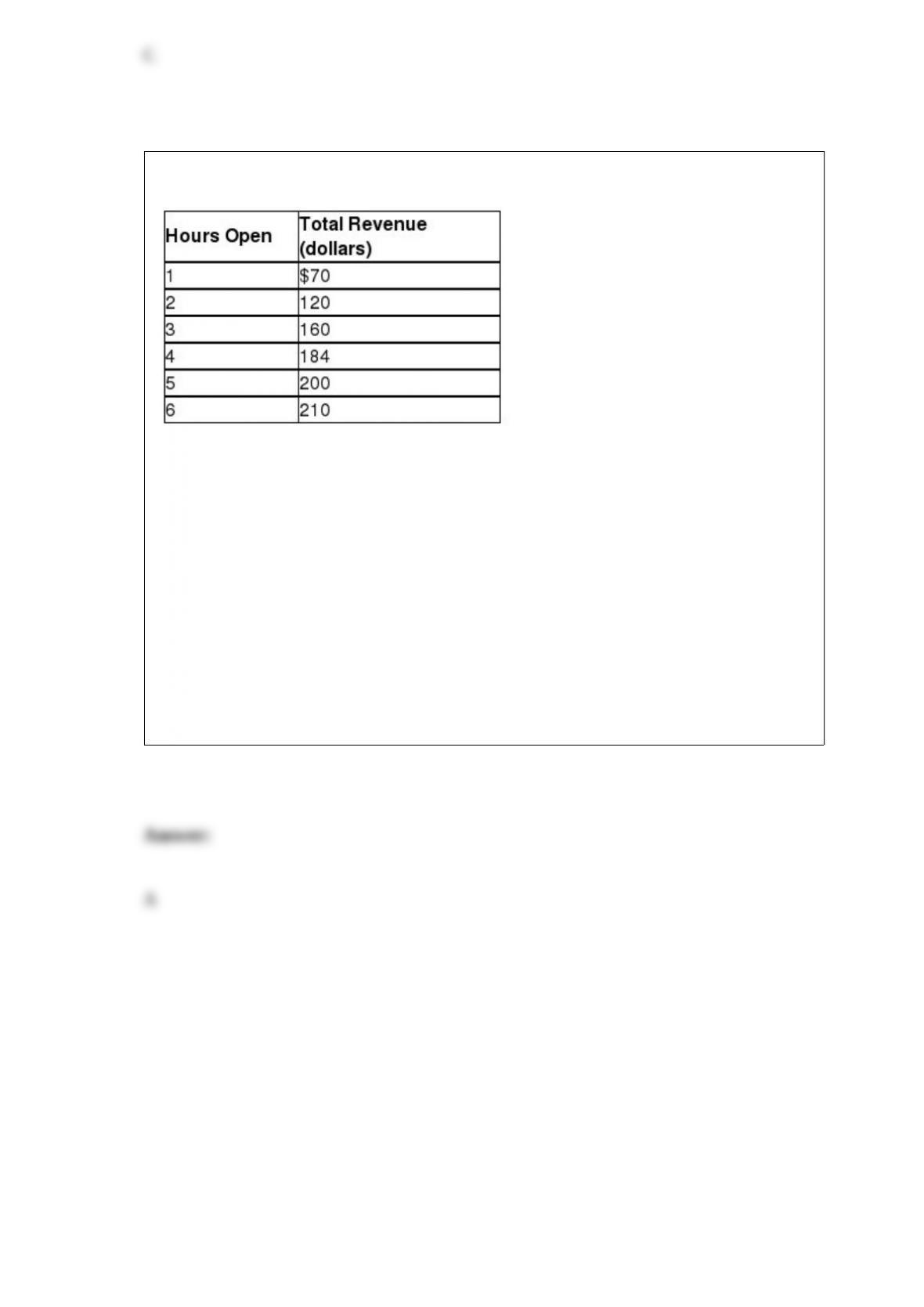
Table 1-3
Santiago runs a comic book store in the town of East Arbor. He is debating whether he
should extend his hours of operation. Santiago figures that his sales revenue will
depend on the number of hours the store is open as shown in the table above. He would
have to hire a worker for those hours at a wage rate of $18 per hour. What is Santiago’s
marginal cost if he decides to stay open for two hours instead of one hour?
A) $18
B) $36
C) $38
D) $102
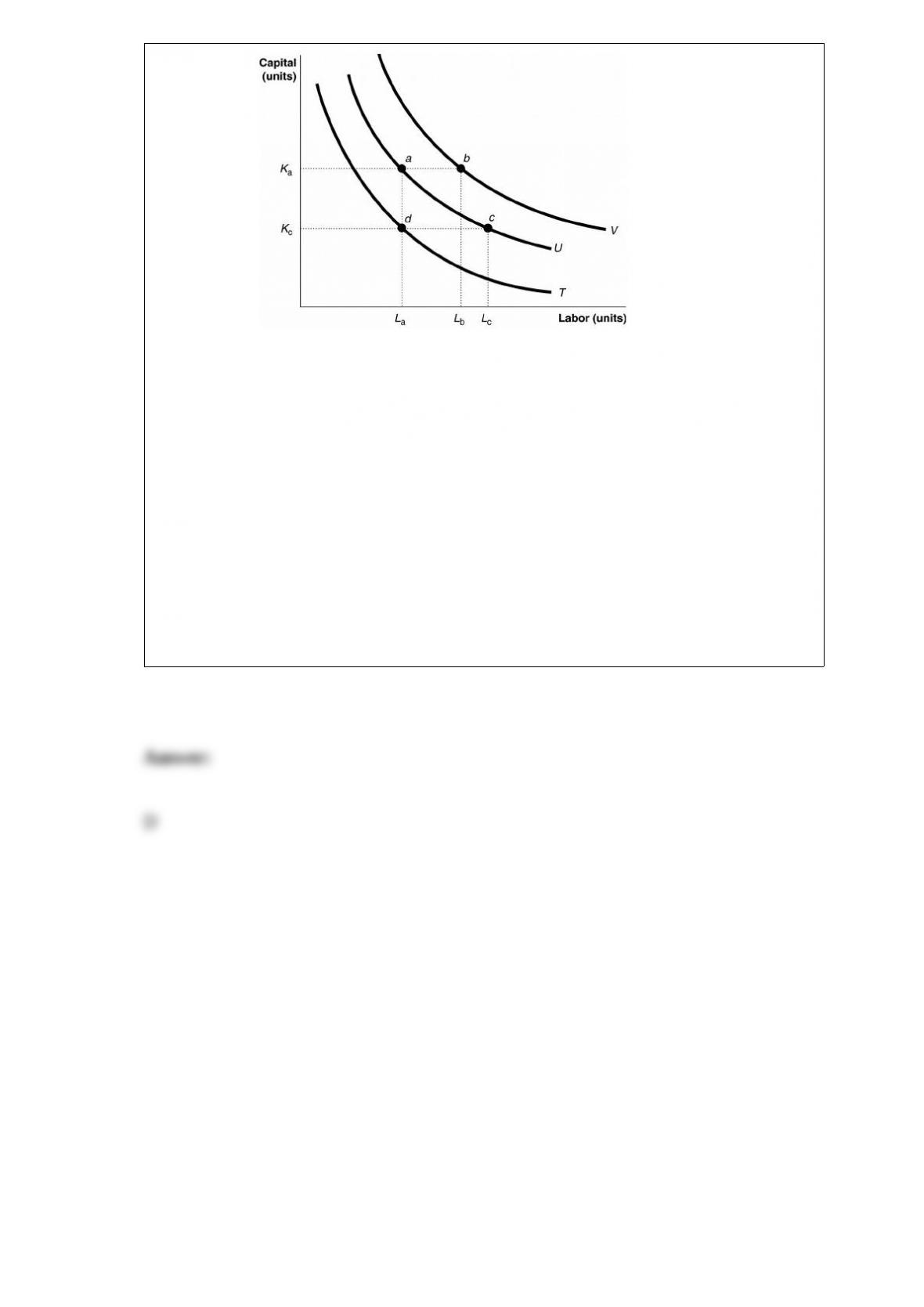
Figure 11-12
Which of the following statements about the input combinations shown in the diagram
is false?
A) The firm produces a higher output level when it uses input combination compared to
input combination a.
B) The firm produces a lower output level when it uses input combination d compared
to input combination a.
C) The firm produces the same output level when it uses input combination a or c.
D) The firm incurs the same total cost when it uses input combination a or c to produce
a given quantity of output.