
1) the “after this, therefore because of this” fallacy states that:
a.positive statements are always followed by normative judgments.
b.positive statements can never be proven true or false.
c.if one acts on one’s expectations, those expectations will always be fulfilled.
d.cause and effect can be determined merely by observing the sequence of events.
2) If net exports are positive:
A.the equilibrium GDP must be greater than the full-employment GDP.
B.imports must exceed exports.
C.aggregate expenditures are greater at each level of GDP than when net exports are
zero or negative.
D.some other component of aggregate expenditures must be negative.
3) For DVC per capita incomes to rise, birth rates must first be reduced. This statement
describes the:
A.human capital view of population growth.
B.traditional view of population growth.
C.capricious universe view.
D.demographic transition view of population growth.
4) In recent years the Fed has communicated changes in its monetary policy by
announcing changes in its policy targets for the:
A.growth of the money supply.
B.Federal funds rate.
C.prime interest rate.
D.U.S. dollar-foreign currency exchange rate.
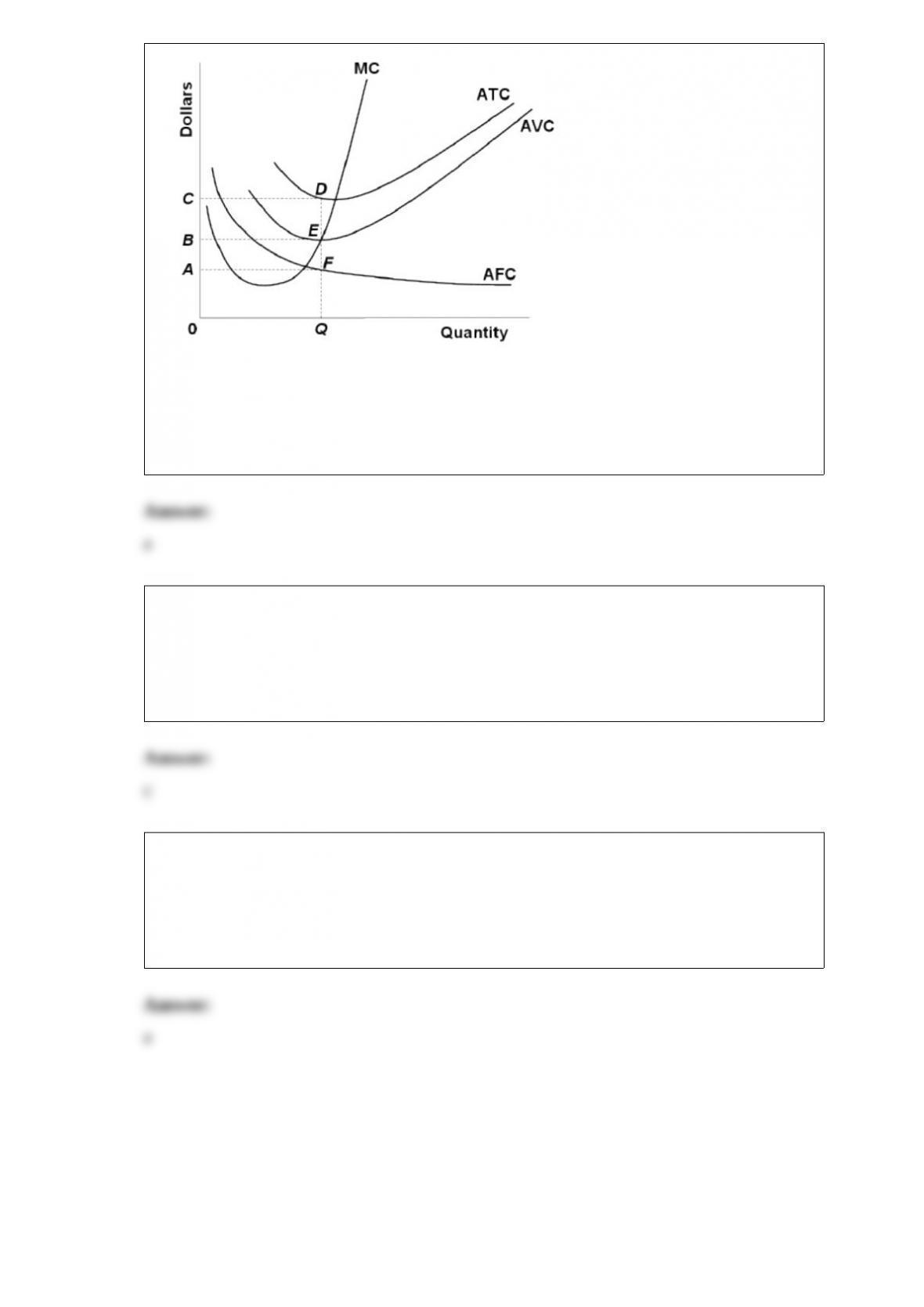
5)
refer to the above diagram. at output level q total variable cost is:
a.0beq
b.bcde
c.0cdq
d.0afq
6) the process of producing and accumulating capital goods is called:
a.money capital.
b.depreciation.
c.investment.
d.consumption.
7) labor productivity is defined as:
a.total output/worker-hours.
b.nominal gdp minus real gdp.
c.the ratio of real capital to worker-hours.
d.the annual increase in nominal gdp per worker.
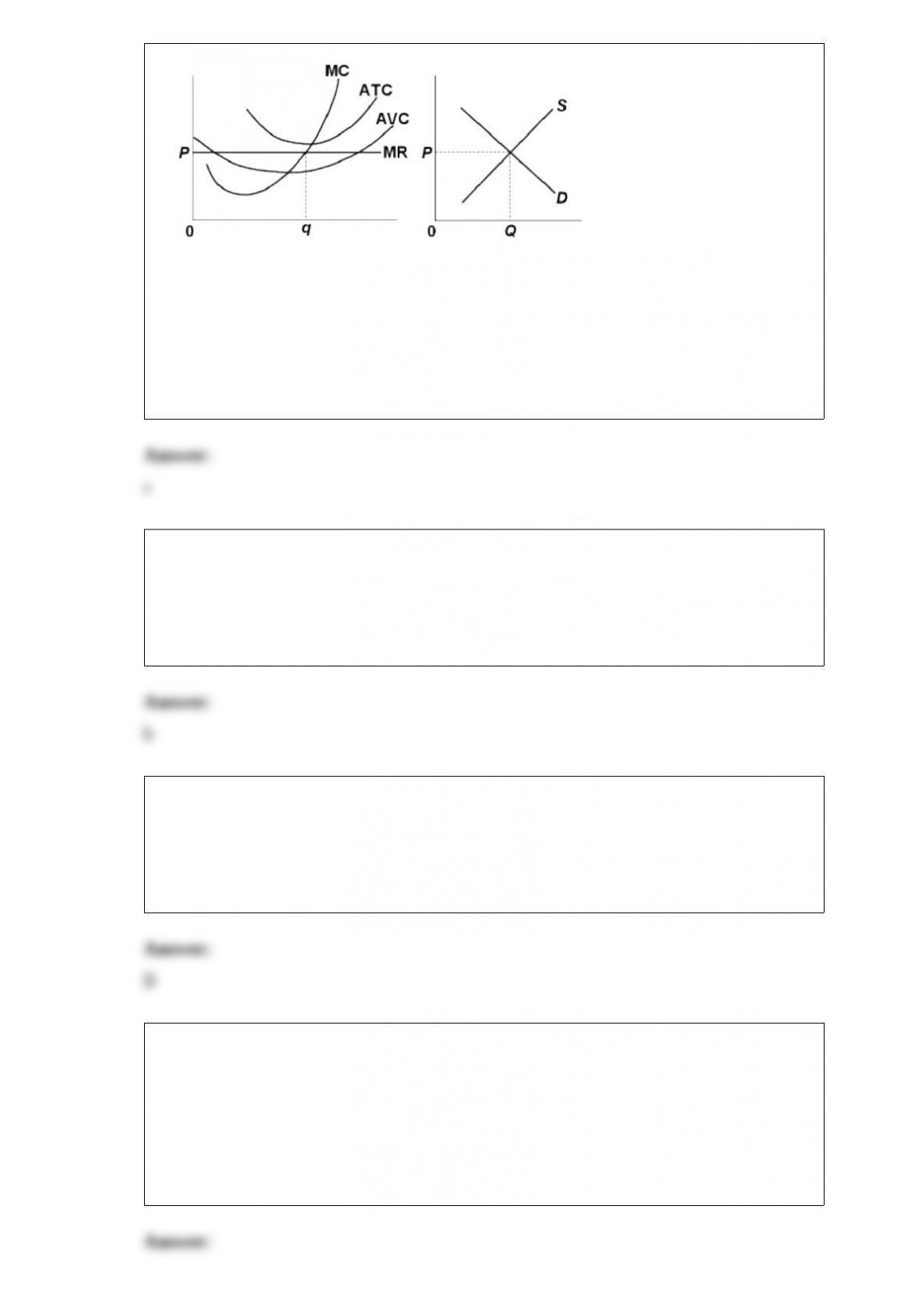
8)
refer to the above diagrams, which pertain to a purely competitive firm producing
output q and the industry in which it operates. the predicted long-run adjustments in this
industry might be offset by:
a.a decline in product demand.
b.an increase in resource prices.
c.a technological improvement in production methods.
d.entry of new firms into the industry.
9) a change in the slope of a budget line can only result from a change in:
a.consumer preferences.
b.the price of one or both goods.
c.money income.
d.the marginal rate of substitution.
10) Which country has the largest share of total world exports?
A.Japan
B.Germany
C.United States
D.China
11) (Consider This) Owners of defective used cars have more information about the
condition of their vehicles than potential buyers of those used cars. This is an example
of:
A.the moral hazard problem.
B.a spillover cost.
C.a positive externality.
D.asymmetric information.
12) “Player drafts” of professional athletes:
A.increase the competitiveness of the labor market for professional athletes.
B.reduce the profitability of professional sports franchises.
C.promote monopsony in the hire of professional athletes.
D.increase salaries of professional athletes.
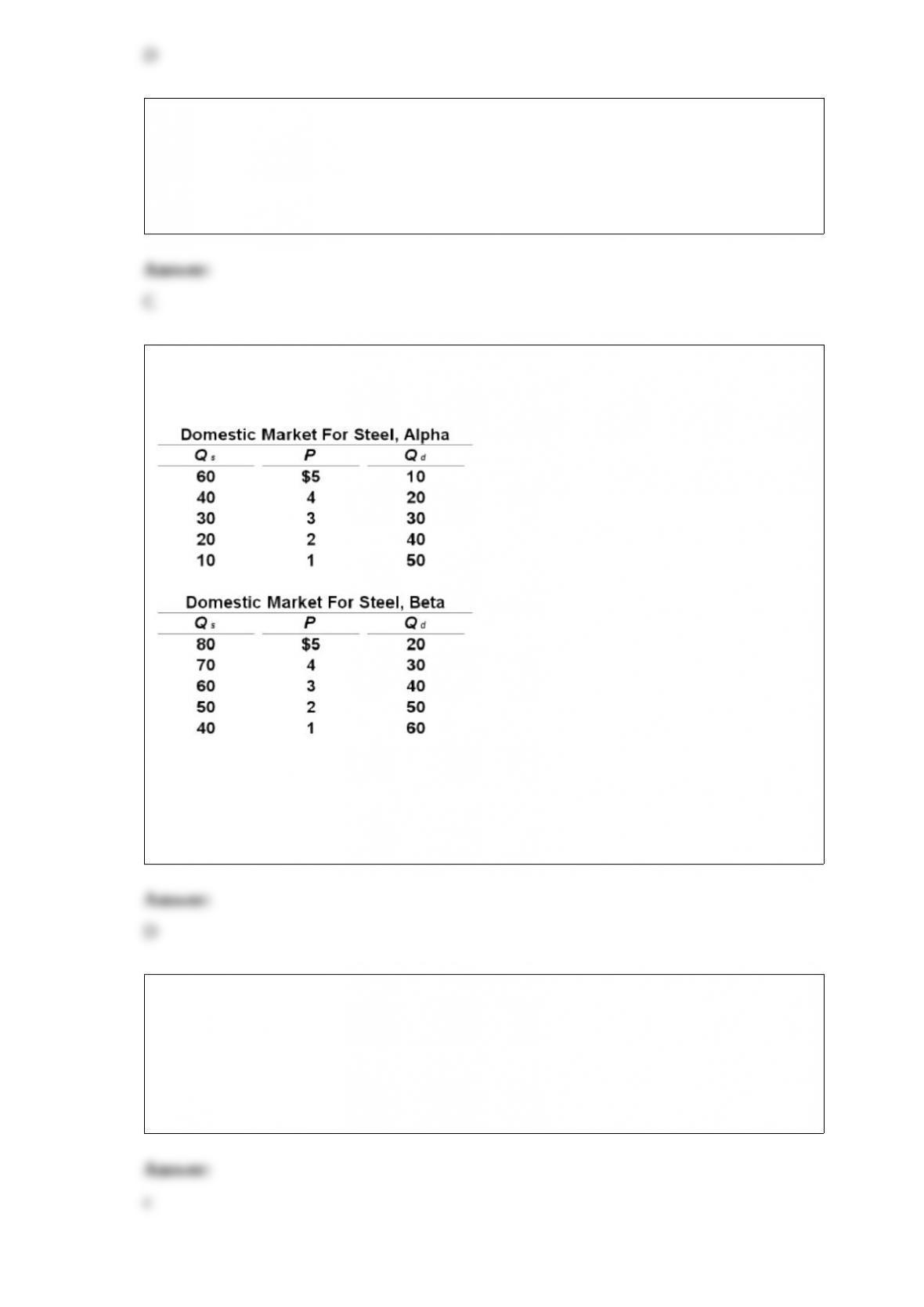
13) The following data for the hypothetical nations of Alpha and Beta. Qs is domestic
quantity supplied and Qd is domestic quantity demanded.
Refer to the above data. At the equilibrium world price:
A.both nations will export steel.
B.both nations will import steel.
C.Alpha will export steel and Beta will import steel.
D.Beta will export steel and Alpha will import steel.
14) corporations comprise about _____ percent of all businesses, but produce nearly
_____ percent of domestic output.
a.10; 90
b.25; 70
c.20; 85
d.85; 20

15) assume in a competitive market that price is initially above the equilibrium level.
we can predict that price will:
a.decrease, quantity demanded will decrease, and quantity supplied will increase.
b.decrease and quantity demanded and quantity supplied will both decrease.
c.decrease, quantity demanded will increase, and quantity supplied will decrease.
d.increase, quantity demanded will decrease, and quantity supplied will increase.