
If the equilibrium exchange rate is $1 = 90 yen, then at an exchange rate of
$1 = 80 yen there is a
a. surplus of yen.
b. shortage of yen.
c. shortage of dollars.
d. a and c
e. b and c
The answer is: “The difference between the price buyers pay for a good and the
maximum or highest price they would have paid for the good.” This is the definition for
a. taxes.
b. producers’ surplus.
c. consumers’ surplus.
d. the sum of producers’ and consumers’ surpluses.
e. the welfare triangle.
Some pollution may be preferable to zero pollution because
a. attempting to decrease the level of pollution to zero may cause significant losses in
society’s welfare.
b. we really do not have that much pollution.
c. the nation’s citizens are against government’s involvement in solving the pollution
problem.
d. no form of regulation that has been shown to be effective at solving the pollution
problem.
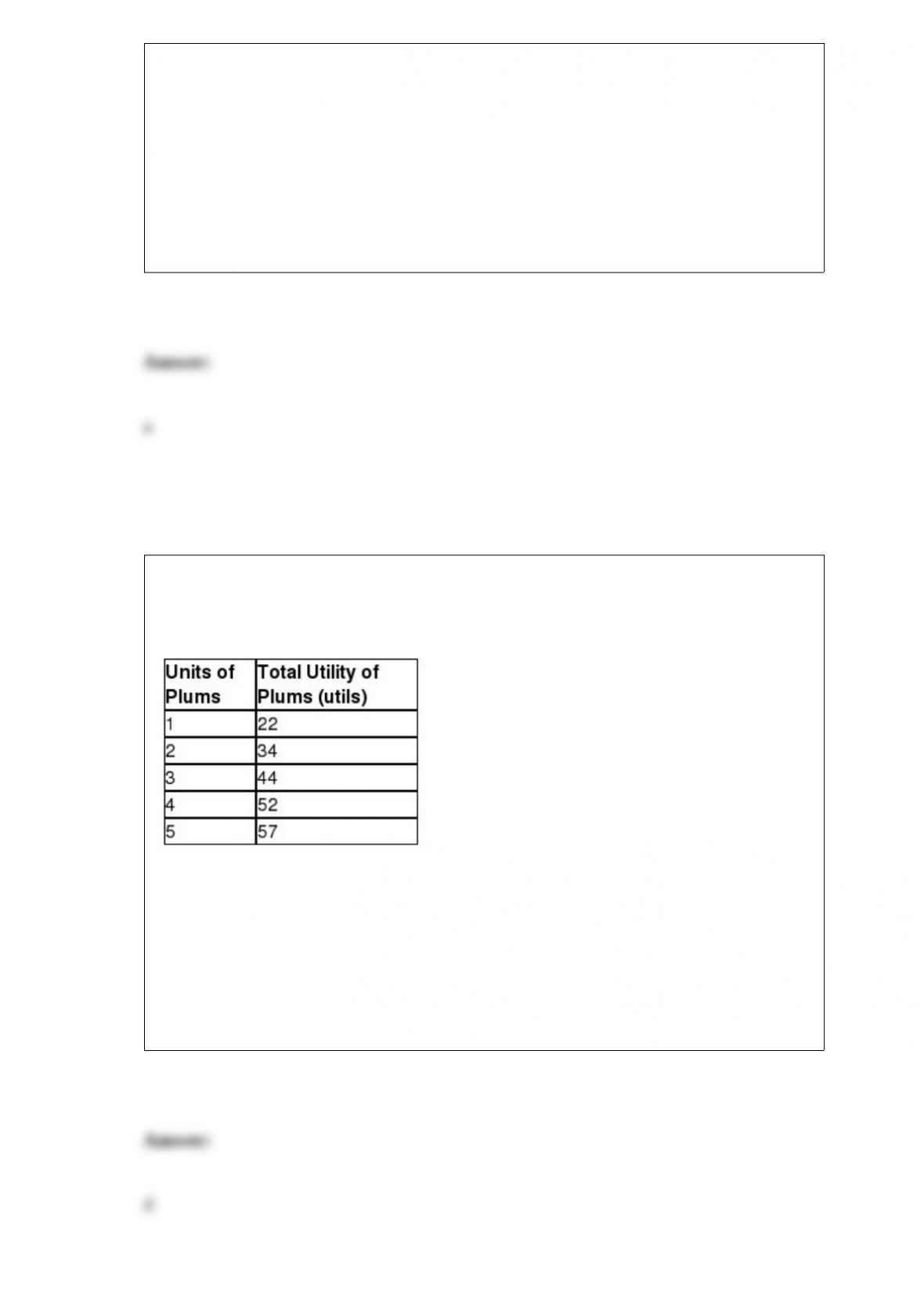
Refer to Exhibit 21-1. The marginal utility of the second plum is
Exhibit 21-1
a. 18.5 utils.
b. 7.5 utils.
c. 37 utils.
d. 12 utils.

Concentration ratios are not perfect guides to industry concentration, because they
a. do not take into account foreign competition and competition from substitute goods.
b. take into account foreign competition and competition from substitute goods.
c. do not take into account advertising expenditures.
d. do not take into account tax payments.
If a single-price monopolist and a perfectly price-discriminating monopolist face the
same demand and cost curves, then
a. the single-price monopolist will attain resource-allocative efficiency, but the
discriminating monopolist will not.
b. the single-price monopolist will attain resource-allocative efficiency, but the
discriminating monopolist may or may not, depending upon the demand for its product.
c. the single-price monopolist will not attain resource-allocative efficiency, but the
discriminating monopolist will.
d. both the single-price and the discriminating monopolist will attain resource-allocative
efficiency.
e. neither the single-price nor the discriminating monopolist will attain
resource-allocative efficiency.

Which of the following is an assumption of the theory of oligopoly?
a. There are significant barriers to entry.
b. There are many sellers and many buyers.
c. Firms produce and sell either homogeneous or differentiated products.
d. a and c
e. none of the above
A decrease in the supply of an agricultural product will increase the total revenue of
farmers if the demand for the agricultural product is
a. income elastic.
b. income inelastic.
c. price elastic.
d. price inelastic.
e. none of the above
Refer to Exhibit 21-8. A move of the budget constraint from 2 to 3 is caused by a
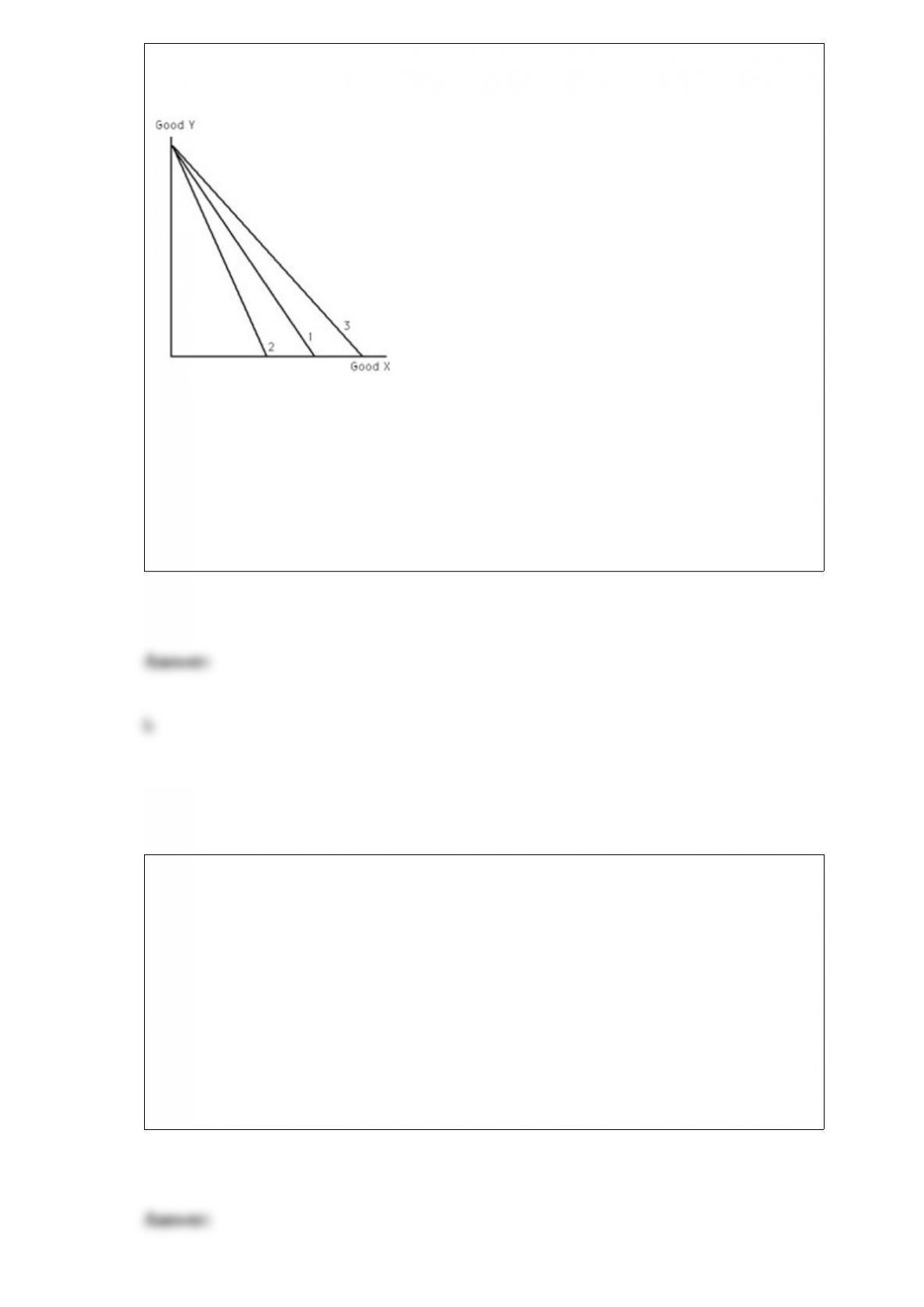
Exhibit 21-8
a. rise in the price of good X.
b. fall in the price of good X.
c. rise in the price of good Y.
d. fall in income.
Which of the following is not an assumption of oligopoly?
a. There are few sellers.
b. There are few buyers.
c. Firms produce and sell either homogeneous or differentiated products.
d. There are significant barriers to entry.
e. b and c
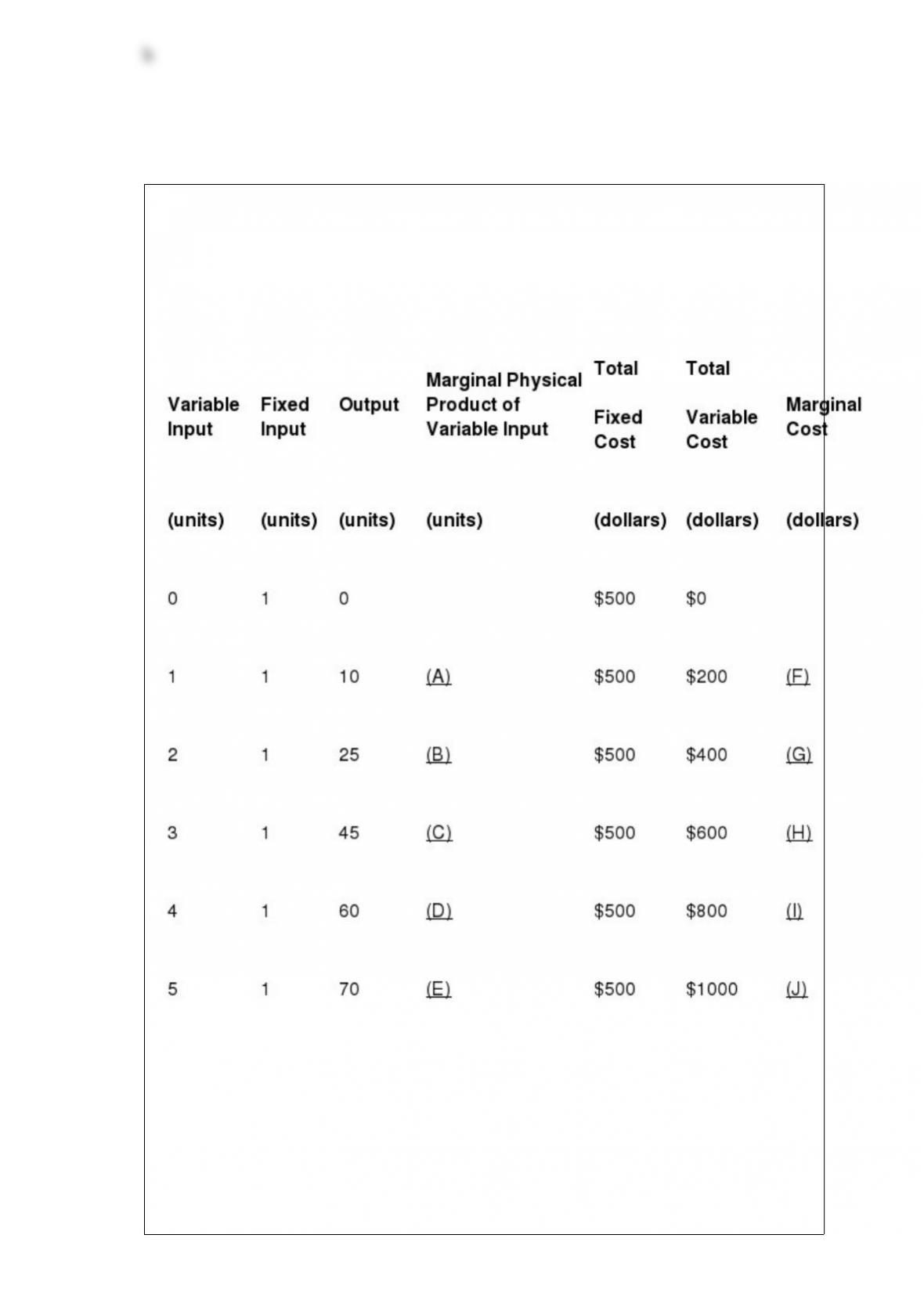
Refer to Exhibit 22-3. What is the average total cost of producing 45 units of output?
Exhibit 22-3
a. $25.11
b. $24.44
c. $21.11
d. $21.33

If average total costs for a natural monopoly are declining where they intersect the
demand curve, and government regulators set the price equal to marginal cost, then the
firm will
a. likely earn a profit.
b. likely break even.
c. likely suffer a loss.
d. surely go out of business.
e. There is not enough information to answer this question.
Refer to Exhibit 34-12. PW is the price that exists in a free world market. If the U.S.
imposes a quota to reduce imports to Q4 – Q3, price will rise to
Exhibit 34-12
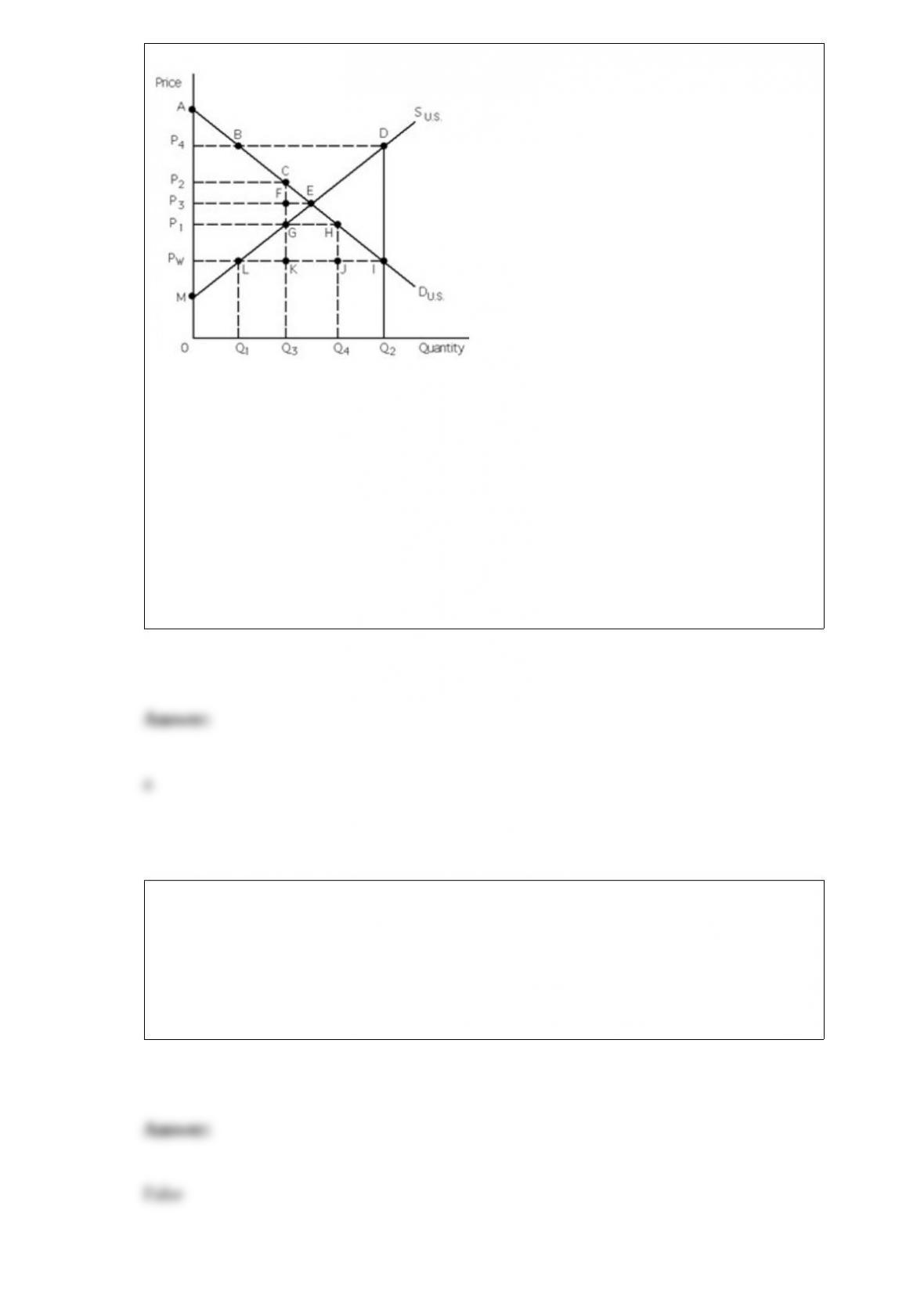
a. P1.
b. P2.
c. P3.
d. P4.
e. There is not enough information to answer the question.
If world markets change so that the U.S. dollar is no longer the primary reserve
currency, the exchange rate value of the dollar would rise.
a. True
b. False

The Wilshire 5000 stock index is made up of the stocks of 5,000 of the largest U.S.
companies.
a. True
b. False
A good will tend to have a low price elasticity of demand if
a. the good has few substitutes.
b. a person spends a high percentage of his or her budget on the good.
c. a person has a long period of time to adjust to price changes.
d. the good is a luxury.
The percentage change in the quantity demanded of good X is 20 percent and the
percentage change in the price of good Y is 10 percent. It follows that the __________
elasticity of demand is __________ and that the two goods are __________.
a. income; 0.50; substitutes
b. cross; 2.00; complements
c. cross; 0.50; substitutes
d. cross; 2.00; substitutes
e. price; 2.00; substitutes
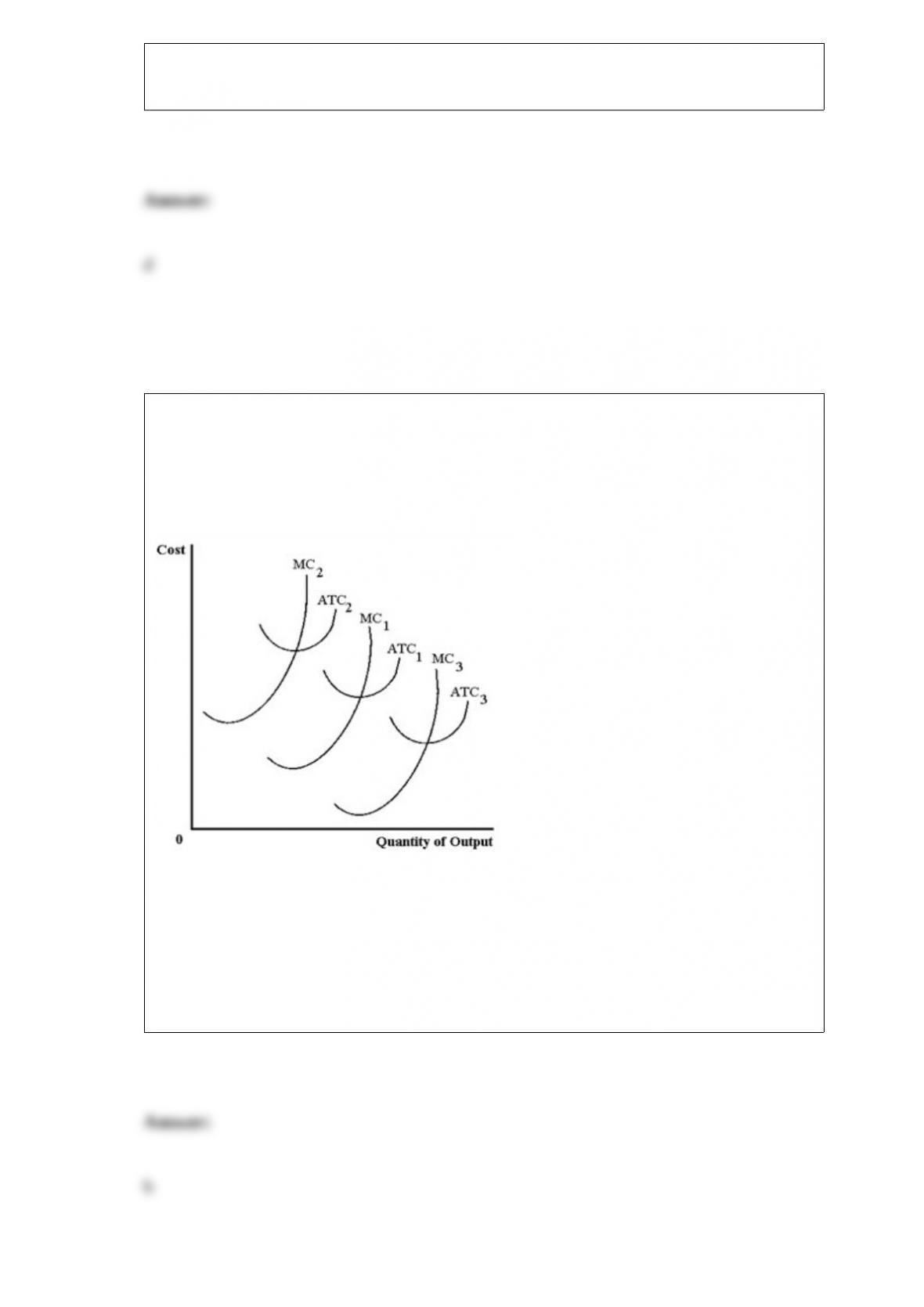
Refer to Exhibit 22-9. Let MC1 and ATC1 represent the initial cost curves of a peanut
butter producer. In which of the following cases is it most likely that the firm’s curves
will shift leftward to MC2 and ATC2?
Exhibit 22-9
a. The market price of peanuts decreases.
b. The market price of peanuts increases.
c. The government lowers taxes paid by peanut butter producers.
d. a and c