The long-run aggregate supply curve is ________, while the long-run Phillips curve is
________.
A) positively sloped; negatively sloped
B) vertical; negatively sloped
C) vertical; also vertical
D) positively sloped; positively sloped
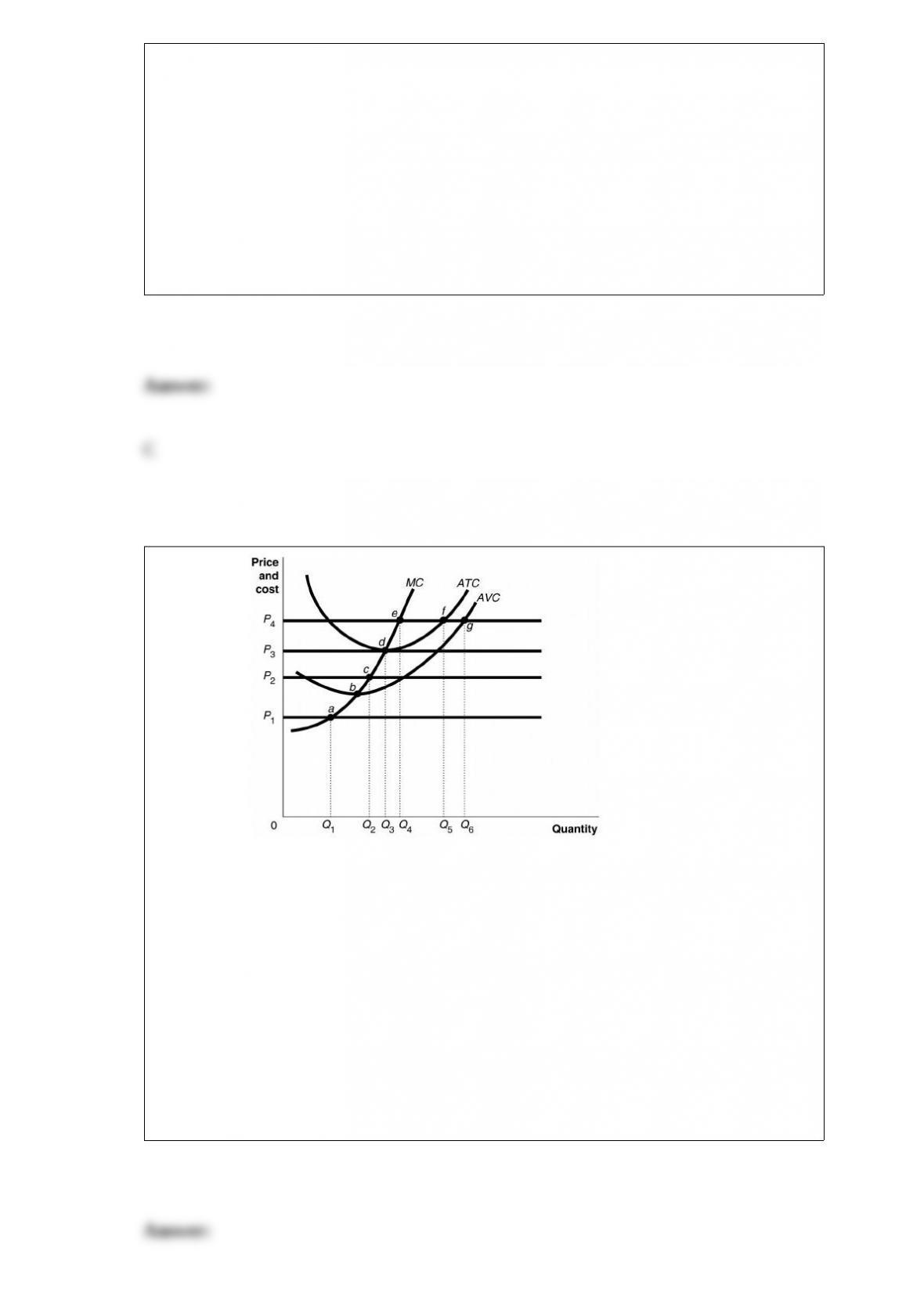
Figure 12-9 Figure 12-9 shows cost and
demand curves facing a profit-maximizing, perfectly competitive firm.
At price P4, the firm would produce
A) Q3 units.
B) Q4 units.
C) Q5 units.
D) Q6 units.
The cost to firms of changing prices
A) is small even when there is rapid inflation.
B) is called a menu cost.
C) does not exist if inflation is perfectly anticipated.
D) all of the above
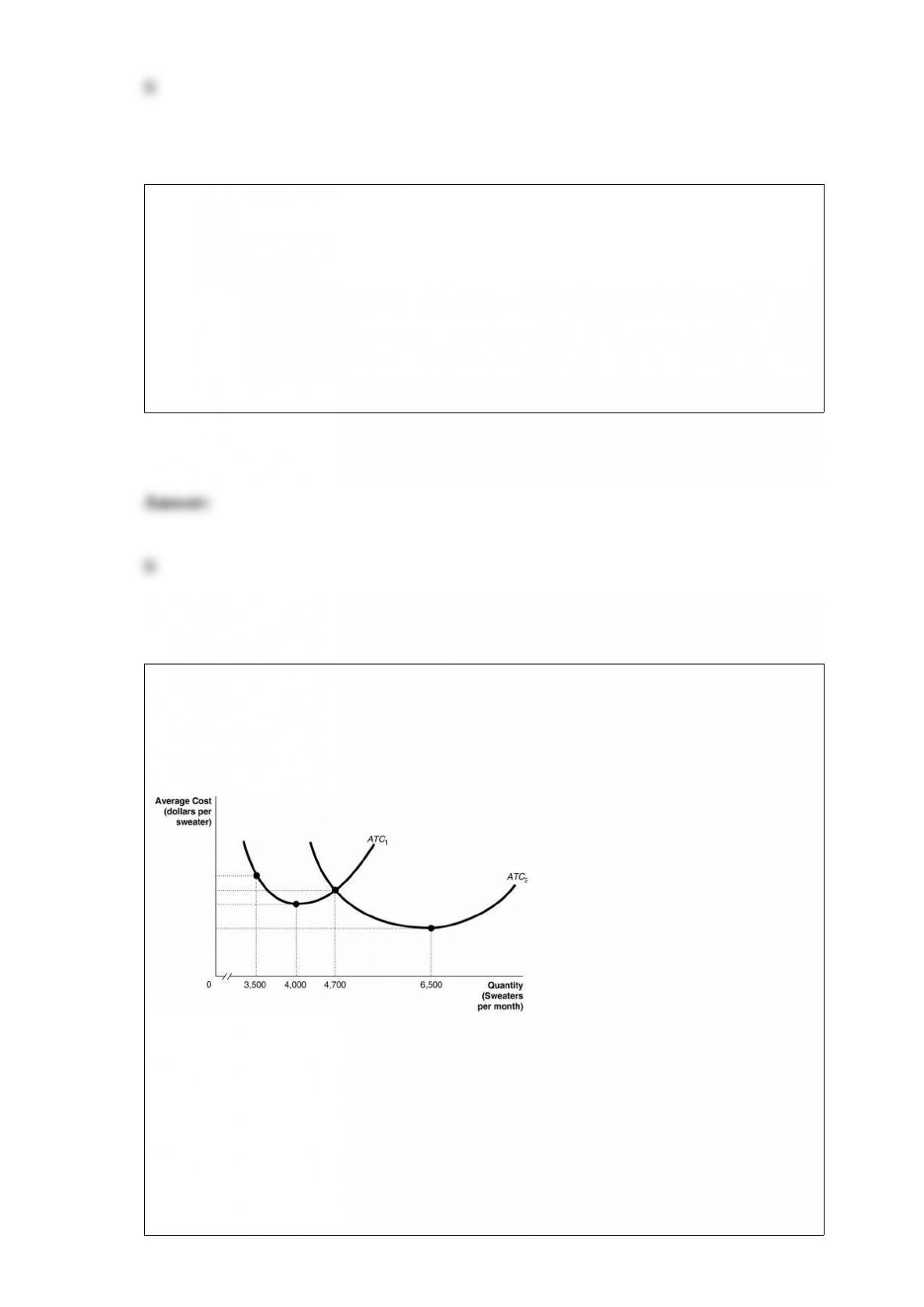
Suppose Argyle Sachs has to choose between building a smaller sweater factory and a
larger sweater factory. In the following graph, the relationship between costs and output
for the smaller factory is represented by the curve ATC1, and the relationship between
costs and output for the larger factory is represented by the curve ATC2.
a. If Argyle expects to produce 3,600
sweaters per month, should he build a smaller factory or a larger factory? Briefly
explain?
b. If Argyle expects to produce 5,000 sweaters per month, should he build a smaller
factory or a larger factory? Briefly explain.
c. If the average cost of producing sweaters is lower in the larger factory when Argyle
produces 6,500 sweaters per week, why isn’t it also lower when Argyle produces 4,000
sweaters per week?
An increase in the price level results in a(n) ________ in household consumption
spending and a(n) ________ in investment spending.
A) increase; decrease
B) increase; increase
C) decrease; decrease
D) decrease; increase
At the profit-maximizing level of output for a perfectly competitive firm, price equals
marginal cost. Which of the following is also true?
A) The difference between total revenue and total cost is the greatest.
B) Total revenue equals total cost.
C) Average revenue equals average total cost.
D) Marginal profit equals marginal cost.
Although the pegged exchange rate between the yuan and the dollar has undervalued
the yuan, China has been reluctant to abandon the peg for fear that abandoning the peg
would
A) increase exports and increase the current account deficit.
B) reduce capital inflows.
C) reduce exports and reduce economic growth.
D) increase Chinese holdings of dollars.
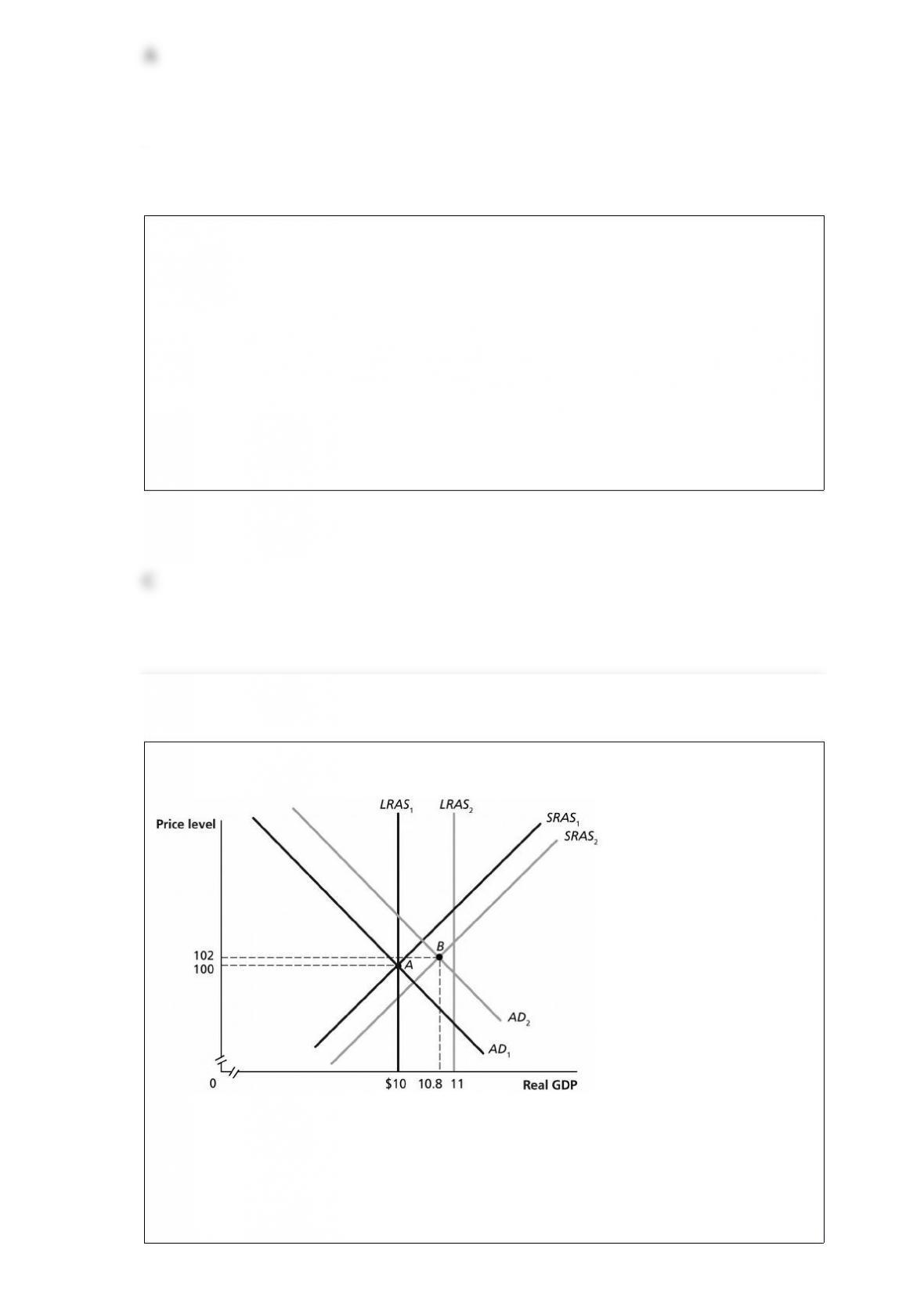
Figure 15-11
In the dynamic model of AD–AS in the figure above, if the economy is at point A in year
1 and is expected to go to point B in year 2, the Federal Reserve would most likely
A) increase interest rates.

B) decrease interest rates.
C) not change interest rates.
D) decrease the inflation rate.
What type of business is the easiest to set up?
A) sole proprietorship
B) partnership
C) corporation
D) There is no difference in the ease of establishment.
Prices of California Merlot wine (assume that this is a normal good) have risen steadily
in recent years. Over this same period, prices for French oak barrels used for wine
storage have dropped and consumer incomes have risen. Which of the following best
explains the rising prices of California Merlots?
A) The supply curve for Merlot has shifted to the right while the demand curve for
Merlot has shifted to the left.
B) The demand curve for Merlot has shifted to the right more than the supply curve has
shifted to the right.
C) The demand curve and the supply curve for Merlot have both shifted to the left.
D) The supply curve for Merlot has shifted to the right more than the demand curve has
shifted to the right.
Which of the following variables will not cause the market supply curve of labor to
shift?
A) increases in population
B) a favorable change in consumer tastes
C) a change in the labor participation rate of women
D) an increase in the number of people between the ages of 16 and 65
What is a ‘structural” relationship?
A) a relationship that depends on the size of firm investments in capital such as
buildings and other structures
B) a relationship that depends on the basic behavior of consumers and firms and
remains unchanged over long periods
C) a relationship between any two variables that is temporary
D) any relationship that cannot be anticipated
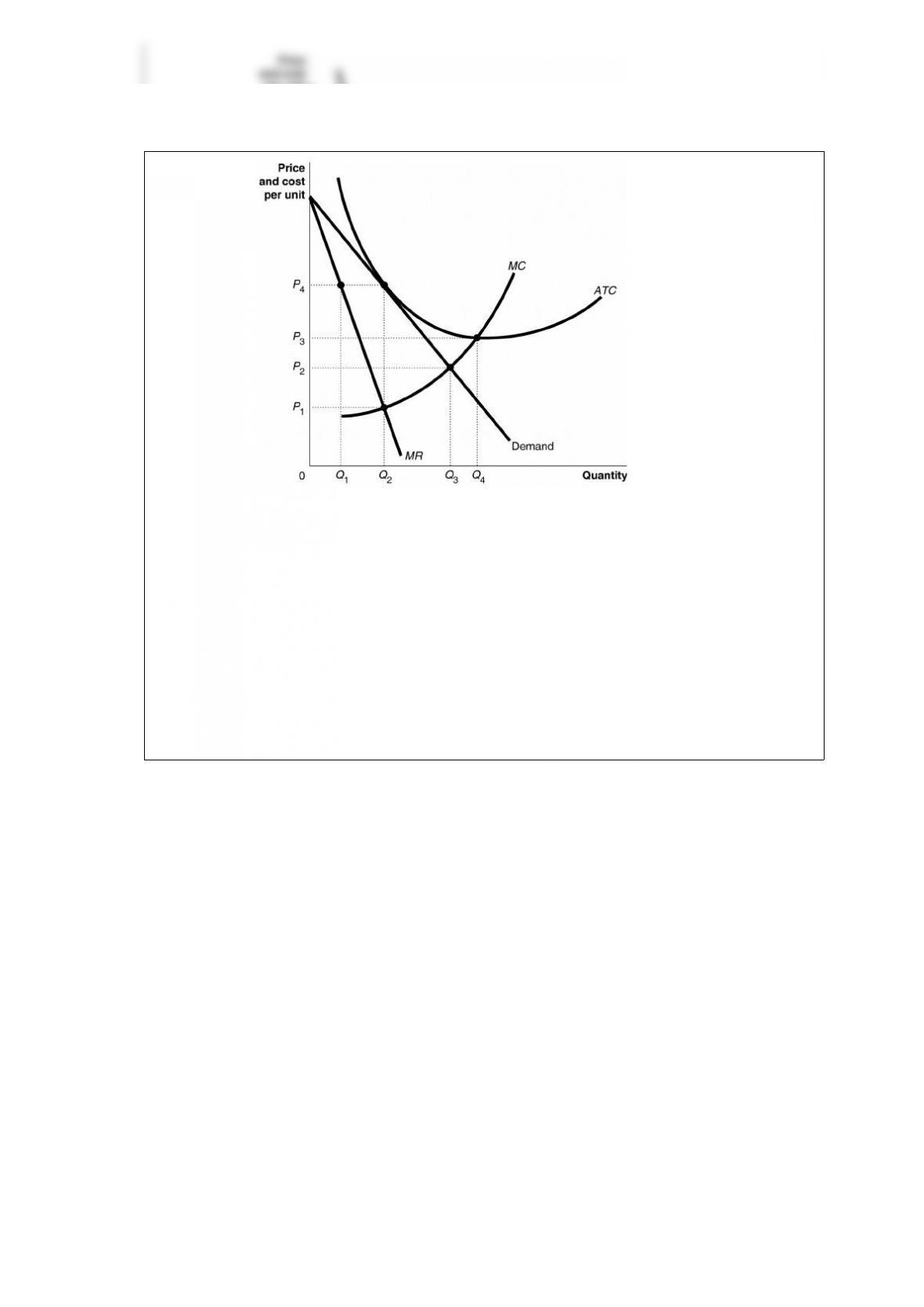
Figure 13-11
What is the amount of excess capacity?
A) Q4 – Q3 units
B) Q4 – Q2 units
C) Q3 – Q2 units
D) Q3 – Q1 units