1) An increase in aggregate expenditures resulting from some factor other than a change
in the price level is equivalent to:
A.a rightward shift of the aggregate demand curve in the AD-AS model.
B.a leftward shift of the aggregate demand curve in the AD-AS model.
C.a movement downward along a fixed aggregate demand curve in the AD-AS model.
D.a decrease in aggregate supply in the AD-AS model.
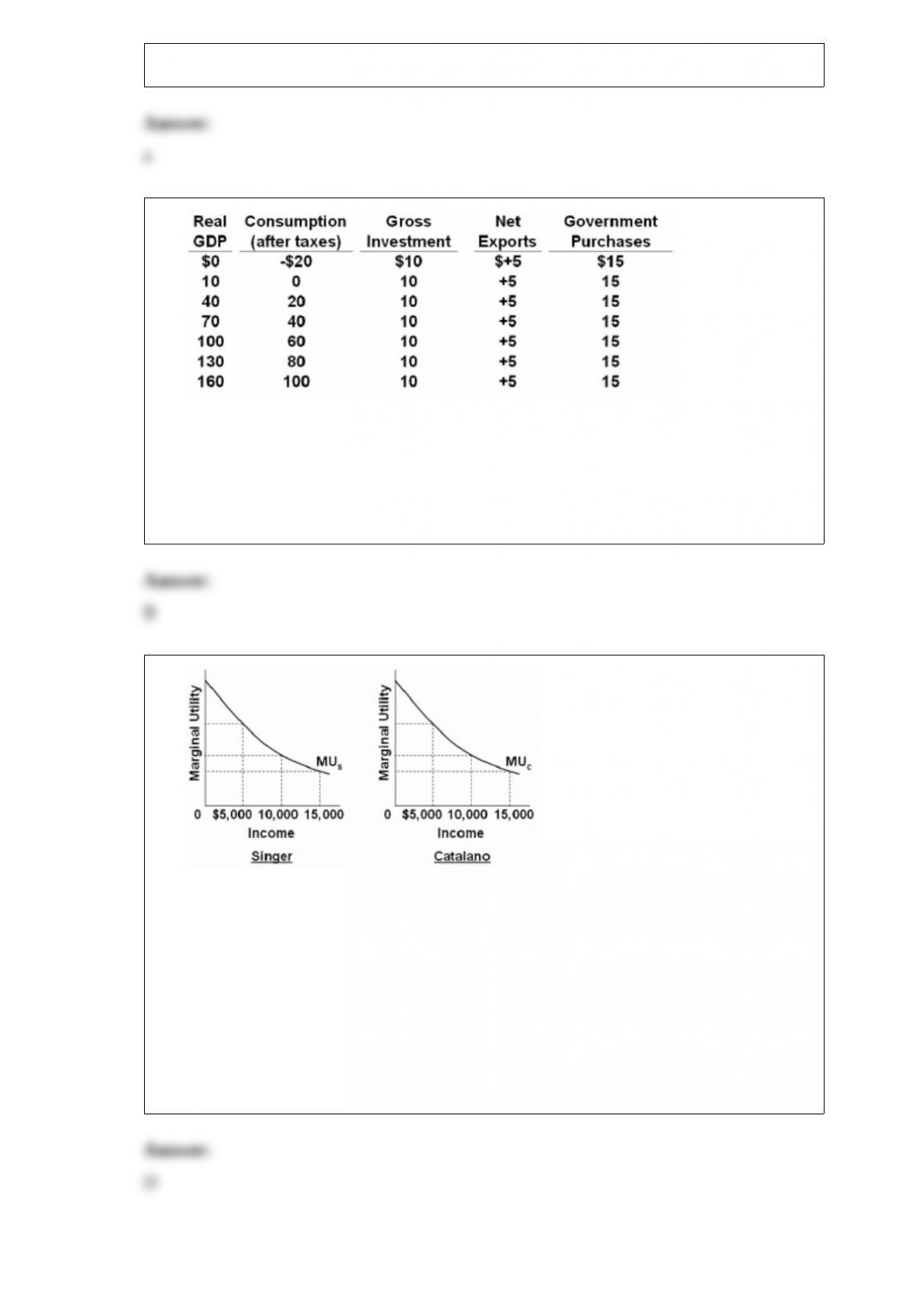
2) Complete the accompanying table.
(a)Using the below graphs, show the consumption and saving schedules graphically.
(b)Locate the break-even level of income. How is it possible for households to dissave
at very low income levels?
(c)If the proportion of total income consumed decreases and the proportion saved
increases as income rises, explain both verbally and graphically how the MPC and MPS
can be constant at various levels of income.
3) Structuralists take the position that:
A.the rule of reason is appropriate and desirable in interpreting the Sherman Act.
B.only unreasonable anticompetitive acts should be regarded as violations of the
antitrust laws.
C.industries should be judged on the basis of their technological progress and their
price-output behavior.
D.an industry that is highly concentrated will behave monopolistically.
4) Two of the implications of large U.S. trade deficits for the United States are:
A.decreased current consumption and decreased indebtedness to foreigners.
B.reduced budget deficits and decreased indebtedness to foreigners.
C.reduced current consumption and higher saving.
D.increased current consumption and increased indebtedness to foreigners.
5) Which of the following tactics is most associated with the demand-enhancement
union model?
A.Reducing the price of inputs that are substitutes for union workers.
B.Lobbying for increases in public expenditures on the product it is producing.
C.Restricting the number of workers allowed to work in the industry.
D.Increasing the price of products that are complements for the one it is producing.
6) Most of the world’s population lives in:
A.North America.
B.the DVCs.
C.Western Europe.
D.the IACs.
7) The following is a list of figures for a given year in billions of dollars. Using this
data, compute: (a) GDP; (b) NDP; (c) NI; (d) PI; (e) DI; (f) Net exports.
8) insurance companies use deductibles and copayments to:
a.increase access to health care.
b.reduce health care costs by discouraging overuse of the health care system.
c.prevent small companies from self-insuring their workers.
d.keep government out of the health care insurance industry.
9) which of the following is most likely to be a fixed cost?
a.shipping charges
b.property insurance premiums
c.wages for unskilled labor
d.expenditures for raw materials
10)
Refer to the above diagram, in which Qf is the full-employment output. If the
economy’s current aggregate demand curve is AD3, it would be appropriate for the
government to:
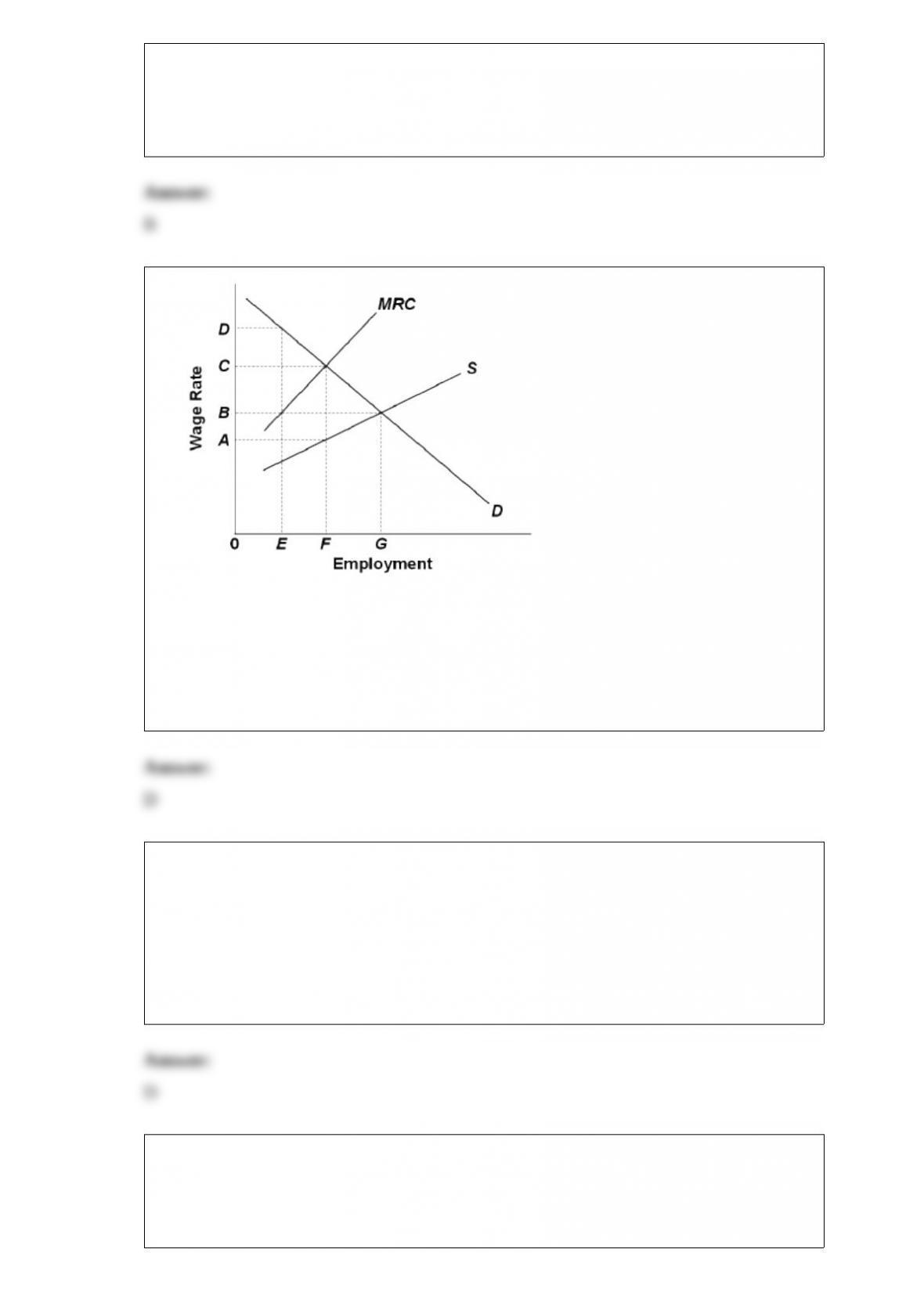
A.reduce government expenditures and taxes by equal-size amounts.
B.reduce government expenditures or increase taxes.
C.increase government expenditures or reduce taxes.
D.reduce unemployment compensation benefits.
11)
Refer to the above diagram. If an inclusive union seeks to maximize the number of jobs
available for its members, what wage rate will it seek to impose on the monopsonist?
A.D minus A
B.F
C.C
D.B
12) A commercial bank’s reserves are:
A.liabilities to both the commercial bank and the Federal Reserve Bank holding them.
B.liabilities to the commercial bank and assets to the Federal Reserve Bank holding
them.
C.assets to both the commercial bank and the Federal Reserve Bank holding them.
D.assets to the commercial bank and liabilities to the Federal Reserve Bank holding
them.
13) (last word) growth of real per capita income and china has largely resulted from:
a.increased use of technology and improved technology.
b.population decline.
c.reduced unemployment rates.
d.its trade deficit with the united states.
14)
Refer to the above table. If the full-employment real GDP is $40 the:
A.inflationary expenditure gap is $20.
B.inflationary expenditure gap is $10.
C.recessionary expenditure gap is $30.
D.recessionary expenditure gap is $10.
15)
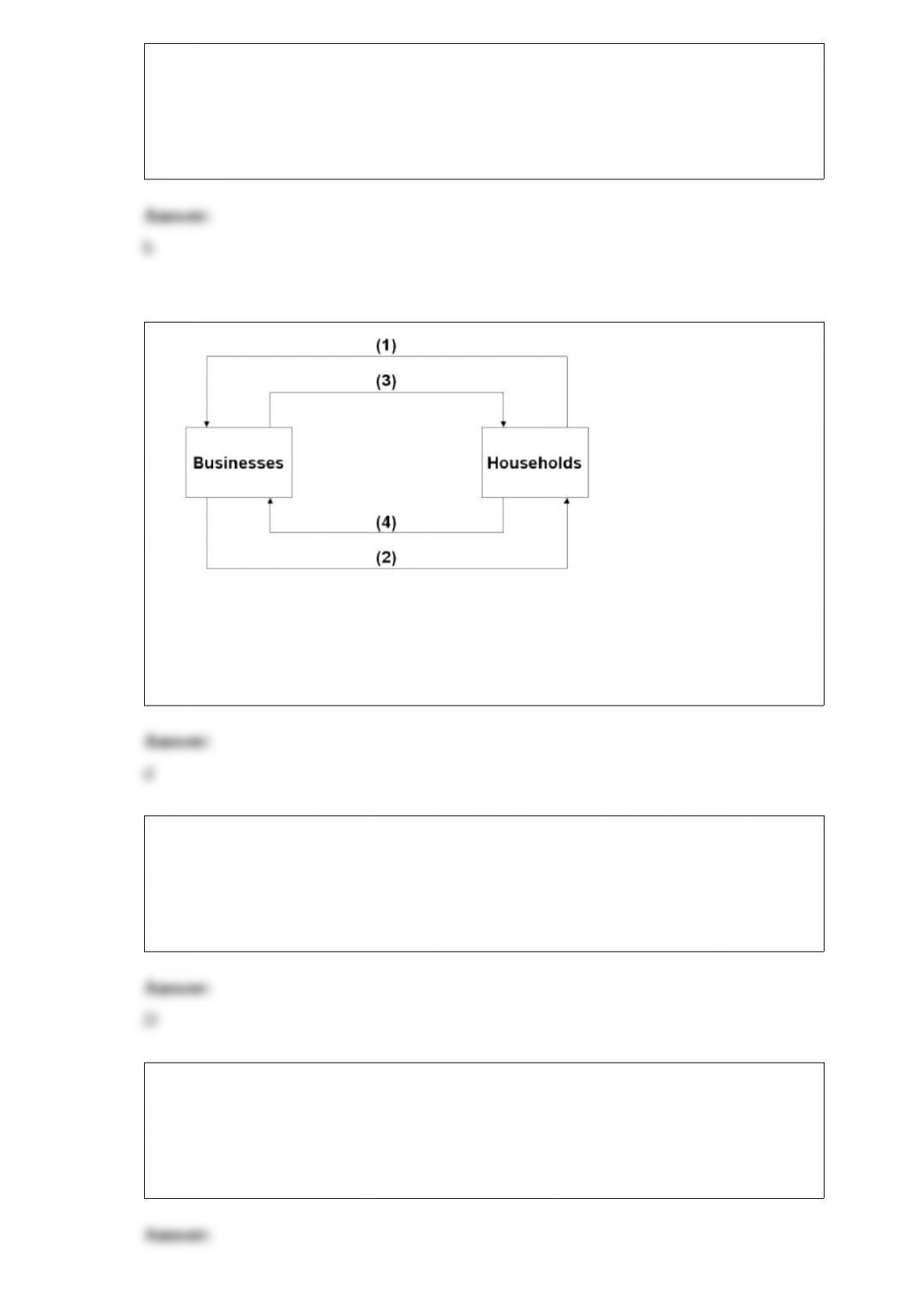
Refer to the above diagrams that show identical marginal utility from income curves for
Singer and Catalano. If a given income of $20,000 is initially distributed so that Singer
receives $15,000 and Catalano $5,000:
A.no judgment can be made as to the effect of a redistribution of income on total utility.
B.this initial distribution of income is maximizing the combined total utility of the two
consumers.
C.the combined total utility of the two consumers can be increased by redistributing
income from Catalano to Singer.
D.the combined total utility of the two consumers can be increased by redistributing
income from Singer to Catalano.
16) a government subsidy to the producers of a product:
a.reduces product supply.
b.increases product supply.
c.reduces product demand.
d.increases product demand.
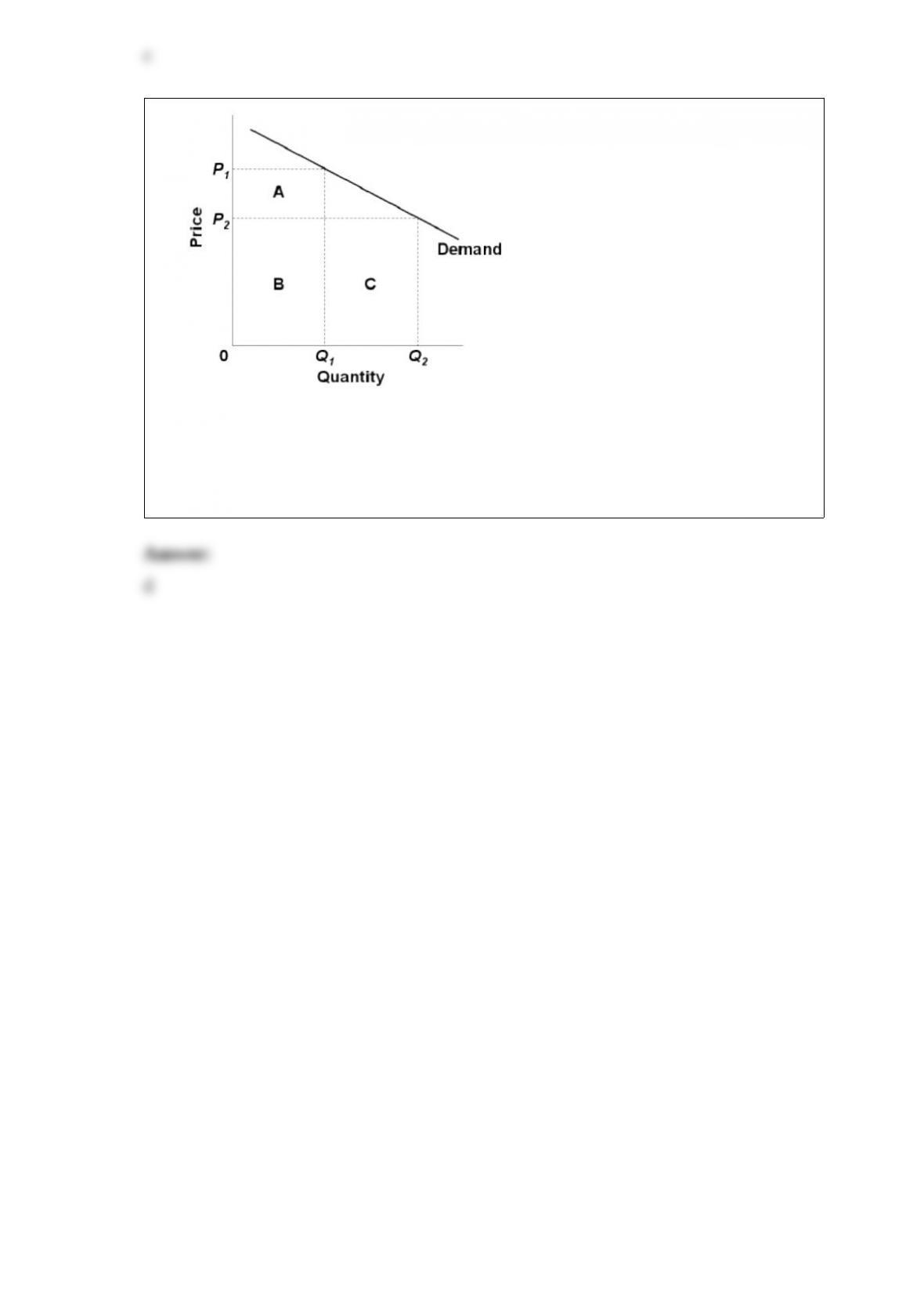
17)
refer to the above diagram. arrows (1) and (2) represent:
a.goods and resources respectively.
b.money incomes and output respectively.
c.output and money incomes respectively.
d.resources and goods respectively.
18) Other things equal, a decrease in the price level will:
A.shift the aggregate supply curve to the left.
B.shift the aggregate demand curve to the left.
C.cause a movement up a short-run aggregate supply curve.
D.cause a movement down an aggregate supply curve.
19) which of the following best approximates a pure monopoly?
a.the foreign exchange market
b.the kansas city wheat market
c.the diamond market
d.the soft drink market
20)
the above diagram implies that whenever a firm’s demand curve is downsloping:
a.price discrimination is not possible.
b.monopolists will be more efficient than competitors.
c.the demand and marginal revenue curves will coincide.
d.marginal revenue is less than price.