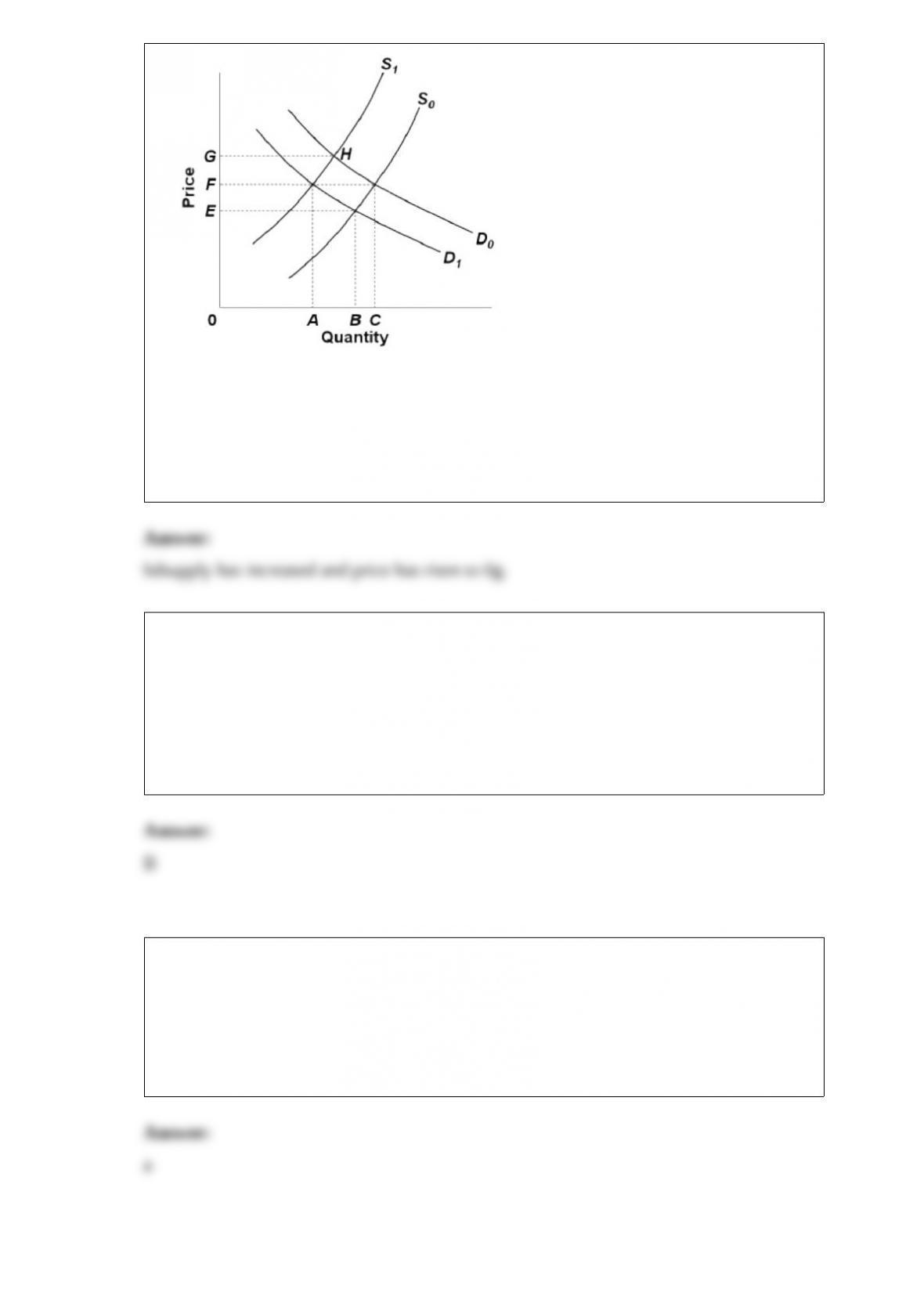
1)
refer to the above diagram, which shows demand and supply conditions in the
competitive market for product x. given d0, if the supply curve moved from s0 to s1,
then:
a.supply has increased and equilibrium quantity has decreased.
b.supply has decreased and equilibrium quantity has decreased.
c.there has been an increase in the quantity supplied.
2) Suppose that Mick and Cher are the only two members of society and are willing to
pay $10 and $8, respectively, for the 3rd unit of a public good. Also, assume that the
marginal cost of the 3rd unit is $17. We can conclude that:
A.the 3rd unit should not be produced.
B.the 3rd unit should be produced.
C.zero units should be produced.
D. 4 units should be produced.
3) the percentage of the working-age population in the labor force (= employed +
officially unemployed) is called the:
a.labor force participation rate.
b.employment-population ratio.
c.work-activity rate.
d.work-nonwork ratio.
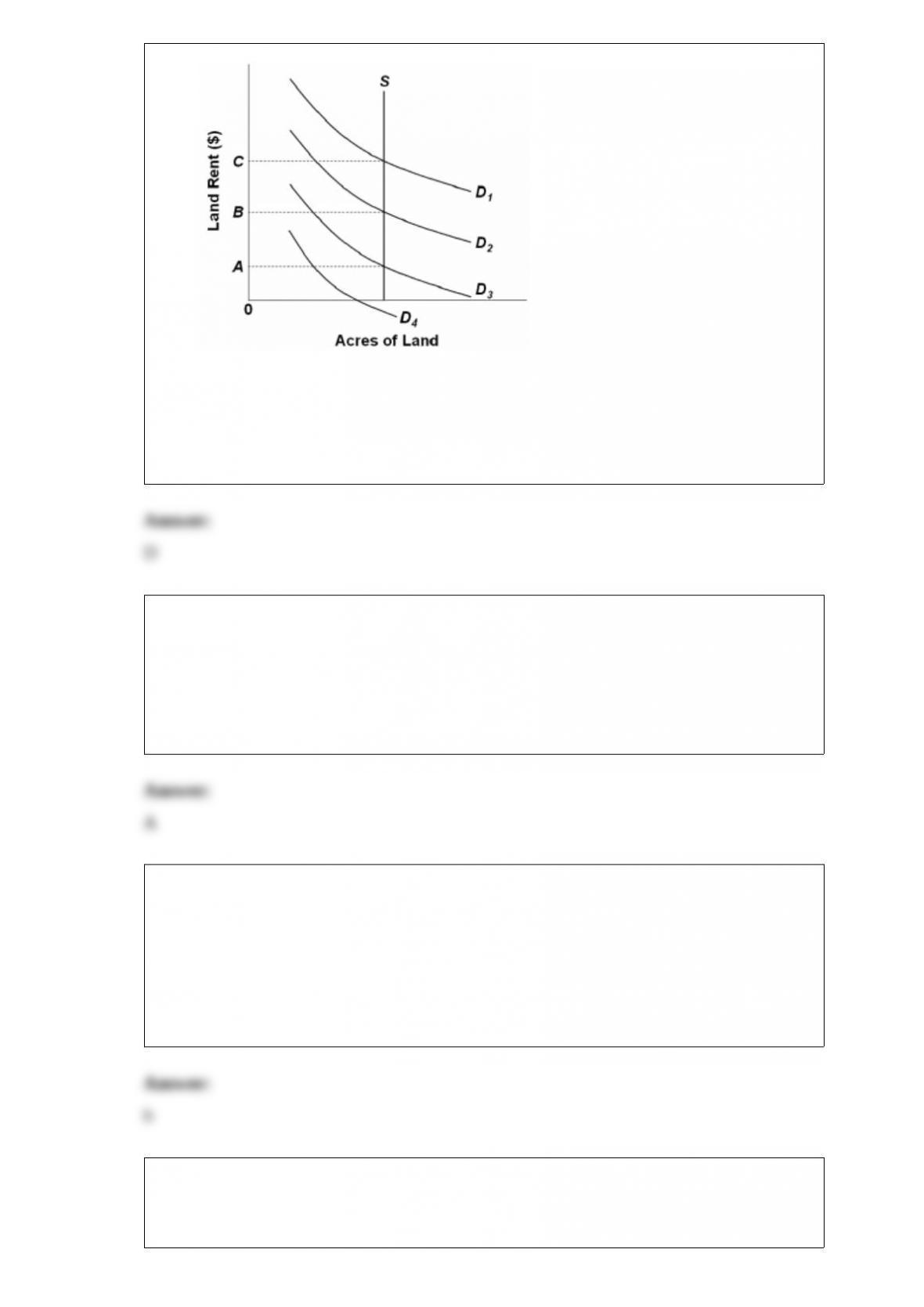
4)
Refer to the above diagram. If demand is D2, a tax of A per acre will:
A.encourage the substitution of land for other productive resources.
B.lower the cost of land to individual farmers.
C.reduce the demand for land to, say, D3 or D4.
D.not affect the quantity of land available to society.
5) Some economists advocate taxes on land because such taxes:
A.do not affect the supply of land.
B.increase the supply of land.
C.improve the allocation of land by shifting it from low-productivity to
high-productivity uses.
D.have a positive incentive function.
6) a firm is defined as a(n):
a.physical establishment that performs one or more functions in fabricating and
distributing goods and services.
b.organization that employs resources to produce goods and services for profit and
operates one or more plants.
c.a group of companies that produce the same, or similar, products.
d.any company that is vertically or horizontally integrated.
7) assume in a competitive market that price is initially below the equilibrium level. we
can predict that price will:
a.decrease, quantity demanded will decrease, and quantity supplied will increase.
b.decrease and quantity demanded and quantity supplied will both decrease.
c.increase, quantity demanded will increase, and quantity supplied will decrease.
d.increase, quantity demanded will decrease, and quantity supplied will increase.
8) Suppose that government imposes a specific excise tax on product X of $2 per unit
and that the price elasticity of demand for X is unitary (coefficient = 1). If the incidence
of the tax is such that consumers pay $1.80 of the tax and the producers pay $.20, we
can conclude that the:
A.supply of X is highly inelastic.
B.supply of X is highly elastic.
C.demand for X is highly inelastic.
D.demand for X is highly elastic.
9) Which of the following includes only examples of industrially advanced nations
(IACs)?
A.the United States, Canada, and Mexico.
B.Pakistan, India, and China.
C.Japan, South Korea, and China.
D.Germany, Italy, and France.
10) if a variable input is added to some fixed input, beyond some point the resulting
extra output will decline. this statement describes:
a.economies and diseconomies of scale.
b.x-inefficiency.
c.the law of diminishing returns.
d.the law of diminishing marginal utility.
11) The pushing-on-a-string analogy makes the point that, monetary policy may be
better at:
A.controlling demand-pull inflation than cost-push inflation.
B.pulling the aggregate demand curve leftward than pushing it rightward.
C.pulling the unemployment rate downward than pushing the economic growth rate
upward.

D. keeping rapid inflation from occurring than reducing it once it has begun.
12) In the U.S. balance of payments, foreign purchases of assets in the United States are
a:
A.foreign currency outflow.
B.foreign currency inflow.
C.current account item.
D.debit, or outpayment.
13) The major source of new scientific knowledge in the United States is:
A.university and government research.
B.R&D work in large corporations.
C.entrepreneurs working alone.
D.purely competitive and monopolistically competitive firms.
14) Assume that the commercial banking system has checkable deposits of $10 billion
and excess reserves of $1 billion at a time when the reserve requirement is 20 percent.
If the reserve requirement is now raised to 30 percent, the banking system then has:
A.excess reserves of $2 billion.
B.neither an excess nor a deficiency of reserves.
C.a deficiency of reserves of $.5 billion.
D.excess reserves of only $.5 billion.
15) assume that kyle is temporarily unemployed because he has voluntarily quit his job
with company a and will begin a better job next week with company b. kyle will be
considered as:
a.cyclically unemployed.
b.frictionally unemployed.
c.secularly unemployed.
d. employed.
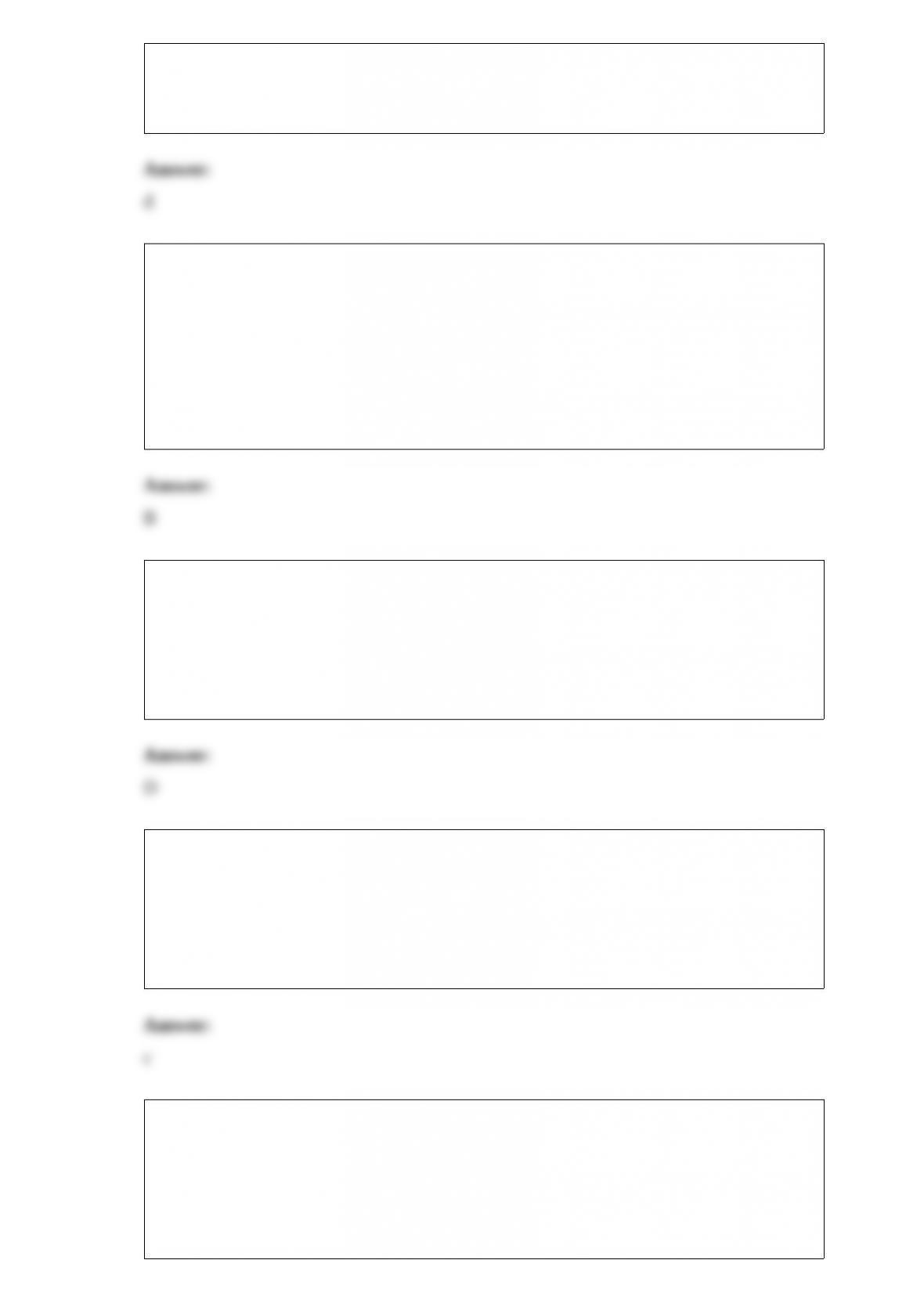
16)
refer to the above table. suppose that demand is represented by columns (3) and (2) and
supply is represented by columns (3) and (5). if the price were artificially set at $6, a:
a.the market would clear.
b.a surplus of 40 units would occur.
c.a shortage of 40 units would occur.
d.demand would change from columns (3) and (2) to columns (3) and (1).
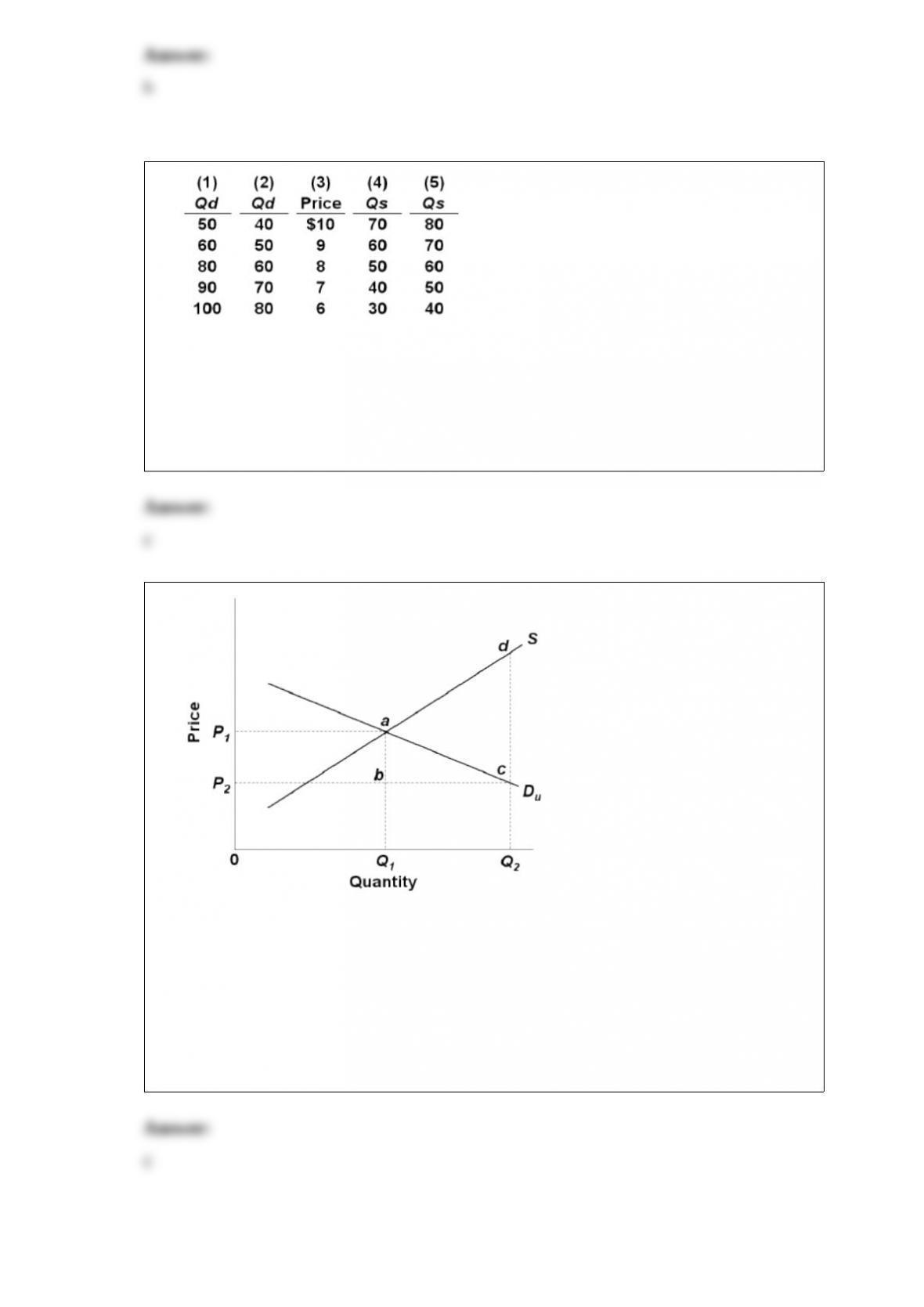
17)
refer to the above demand and supply diagram that relates to the health care market. if
suppliers provide the quantity of health care demanded and insurance pays one-half of
the equilibrium price of the health care good or service depicted above, the immediate
price to the consumer and the quantity of health care consumed would be:
a.p1 and q1.
b.p1 and q2.
c.p2 and q2.
d.p2 and q1.