1) in explaining international trade, the product life cycle theory focuses on
a.tastes and preferences
b.the role of technological innovation
c.per-capita income levels of nations
d.both b and c
2) the largest amount of trade with the united states in recent years has been conducted
by:
a.canada
b.germany
c.chile
d.united kingdom
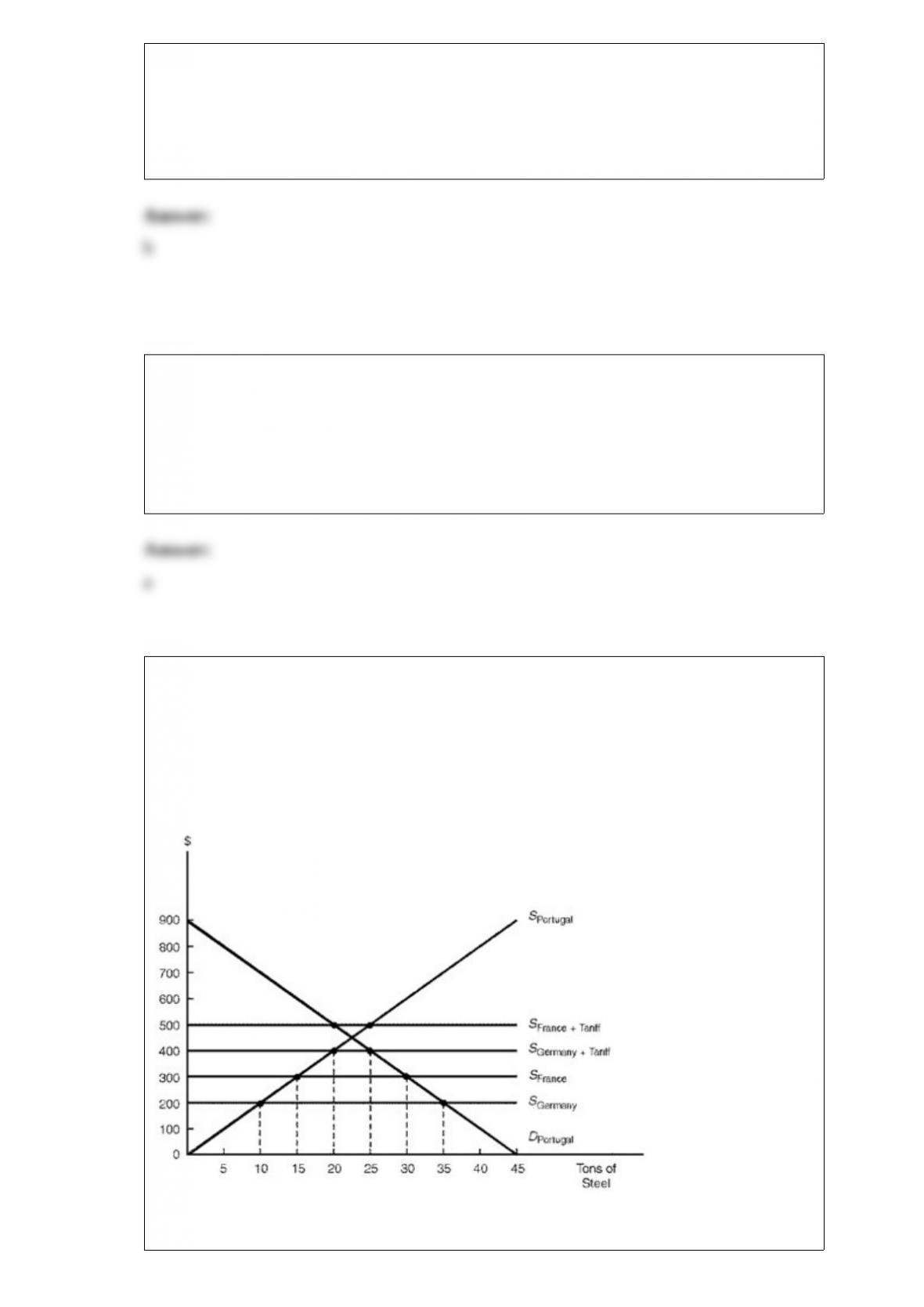
3) the figure below depicts the steel market for portugal, a small nation that is unable to
affect the world price. assume that germany and france can supply steel to portugal at a
price of $200 and $300 respectively.
figure 8.2. portugal’s steel market
consider figure 8.2. if portugal had formed a customs union with germany, portugal’s
welfare would have decreased by $500.

a.true
b.false
4) from the perspective of the american public as a whole, export subsidies levied by
overseas governments on goods sold to the united states:
a.help more than they hurt
b.hurt more than they help
c.are equivalent to an import quota
d.are equivalent to an export quota
5) assume that interest rates in london rise relative to those in switzerland. under a
floating exchange-rate system, one would expect the pound (relative to the franc) to:
a.depreciate due to the increased demand for pounds
b.depreciate due to the increased demand for francs
c.appreciate due to the increased demand for francs
d.appreciate due to the increased demand for pounds
6) increased foreign competition tends to increase profits of domestic import-competing
companies.
a.true
b.false
7) assume the canadian demand elasticity for imports equals 0.2, while the foreign
demand elasticity for canadian exports equals 0.3. responding to a trade deficit, suppose
the canadian dollar depreciates by 20 percent. for canada, the depreciation would lead
to a:
a.worsening trade balance–a larger deficit
b.improving trade balance–a smaller deficit
c.unchanged trade balance
d.none of the above

8) a primary reason why nations conduct international trade is because:
a.some nations prefer to produce one thing while others produce other things
b.resources are not equally distributed among all trading nations
c.trade enhances opportunities to accumulate profits
d.interest rates are not identical in all trading nations
9) with globalization and import competition, u.s. prices have generally:
a.increased
b.decreased
c.remained stable
d.all of these at various times
10) if the demand schedule for bauxite is relatively inelastic to price changes, an
increase in the supply schedule of bauxite will cause a:
a.decrease in price and a decrease in sales revenue
b.decrease in price and an increase in sales revenue
c.increase in price and a decrease in sales revenue
d.increase in price and an increase in sales revenue
11) following world war ii, the u.s.:
a.became less open
b.negotiated reductions in trade barriers with other countries
c.passed a number of protective tariffs
d.concentrated on armament production
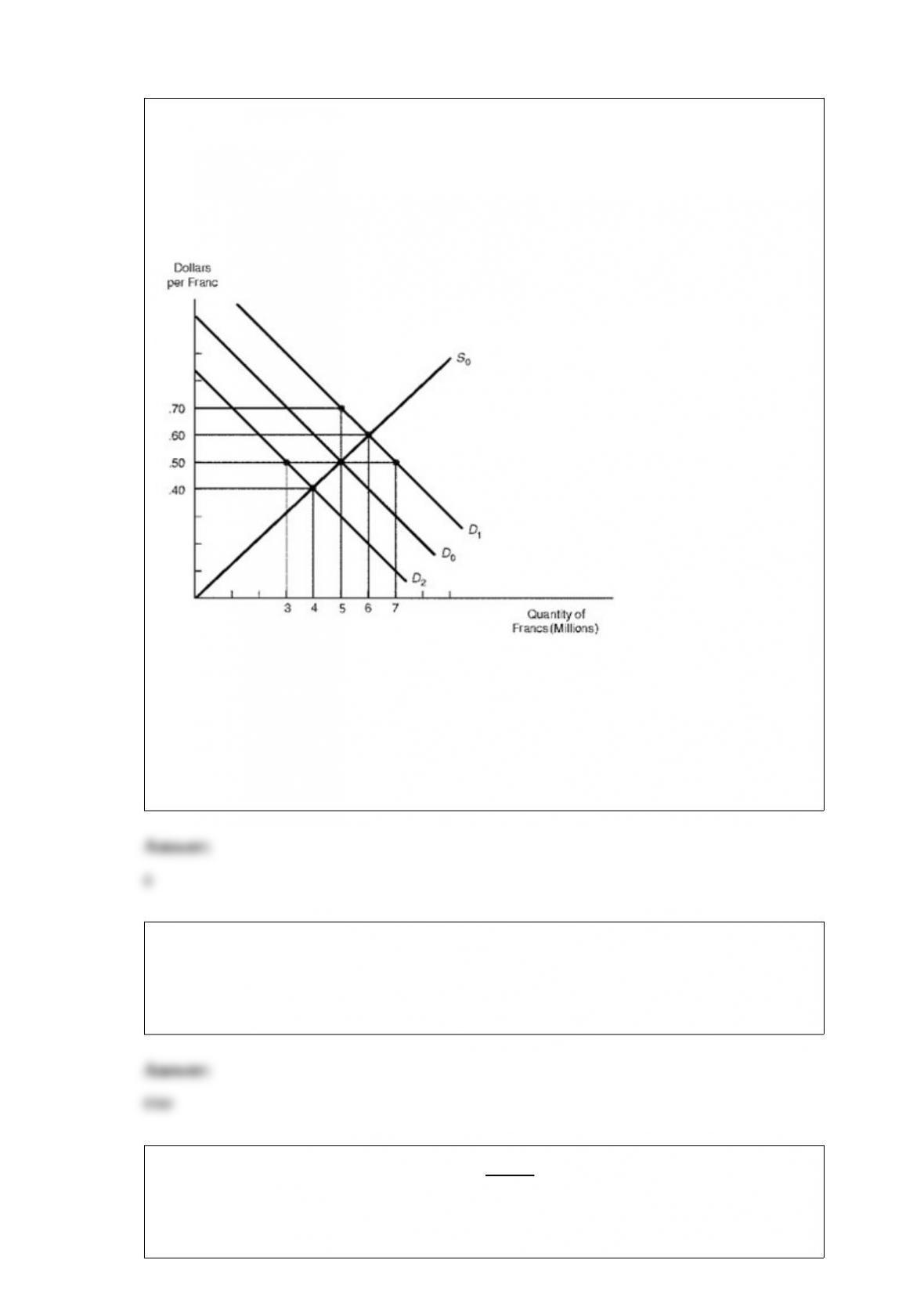
12) figure 15.1 shows the market for the swiss franc. in the figure, the initial demand
for marks and supply of marks are depicted by d0 and s0 respectively.
figure 15.1. the market for the swiss franc
refer to figure 15.1. suppose the demand for francs increases from d0 to d1. under a
fixed exchange rate system, the u.s. exchange stabilization fund could maintain a fixed
exchange rate of $0.50 per franc by:
a.selling francs for dollars on the foreign exchange market
b.selling dollars for francs on the foreign exchange market
c.decreasing u.s. exports, thus decreasing the supply of francs
d.stimulating u.s. imports, thus increasing the demand for francs
13) eurocurrencies are deposits, denominated and payable in dollars and other foreign
currencies, in banks outside the united states, primarily in london, the market’s center.
a.true
b.false
14) all of the following may be exit barriers except
a.employee health benefit costs
b.treatment, storage and disposal costs
c.penalties for terminating contracts with raw material suppliers
d.increasing opportunity cost of production
15) if the demand for coffee is price inelastic, an increase in the supply of coffee leads
to falling prices and rising sales revenues.
a.true
b.false
16) although the uruguay round of multilateral trade negotiations succeeded in reducing
nontariff trade barriers, it could not achieve reductions in tariff trade barriers.
a.true
b.false
17) a debt-equity swap results in a trade surplus nation forgiving the loans made to a
trade-deficit nation.
a.true
b.false
18) u.s. military aid granted to foreign countries is entered in the:
a.merchandise trade account
b.capital account
c.current account
d.official settlements account
19) the monetary approach contends that, under a fixed exchange rate system, an excess
supply of money leads to a trade surplus.
a.true
b.false
20) under u.s. antidumping law, an antidumping duty can be levied when the u.s.
commerce department determines that a foreign product is being sold in the united
states at less than fair value and the u.s. international trade commission determines that
the dumped product is causing economic harm to domestic producers.
a.true
b.false