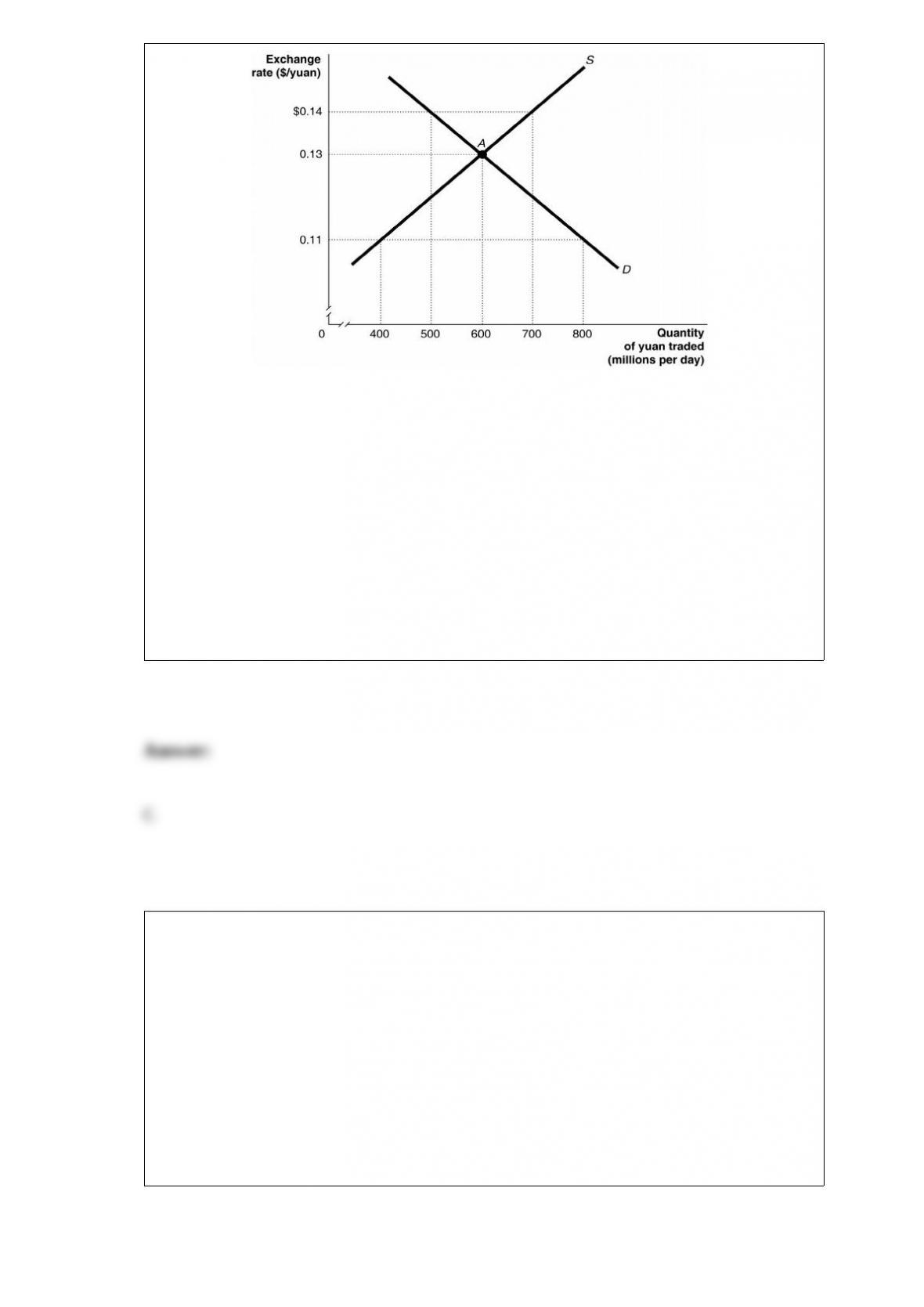
Figure 19-5
The Chinese government pegs the yuan to the dollar, at one of the specified exchange
rates on the graph, such that it overvalues its currency. Using the figure above, this
would generate
A) a shortage of yuan equal to 500 million.
B) a shortage of yuan equal to 100 million.
C) a surplus of yuan equal to 200 million.
D) a surplus of yuan equal to 700 million.
From an initial long-run macroeconomic equilibrium, if the Federal Reserve anticipated
that next year aggregate demand would grow significantly slower than long-run
aggregate supply, then the Federal Reserve would most likely
A) increase income tax rates.
B) decrease income tax rates.
C) increase interest rates.
D) decrease interest rates.

In a perfectly competitive market the term “price taker” applies to
A) sellers and buyers.
B) firms but not buyers.
C) buyers but not sellers.
D) only the smallest sellers and buyers.
In New York City, about 1 million apartments are subject to rent control by the local
government. Rent control
A) puts a legal limit on the rent that landlords can charge for an apartment.
B) is a price floor which sets a minimum rent for apartments.
C) only applies to those apartments which are owned and rented out by the local
government.
D) is a government policy which limits apartment rental to those people whose incomes
are less than $50,000 per year.
Who was the economist who first analyzed the advantages of specialization and the
division of labor?
A) David Ricardo
B) Arthur C. Pigou
C) Ronald Coase
D) Adam Smith
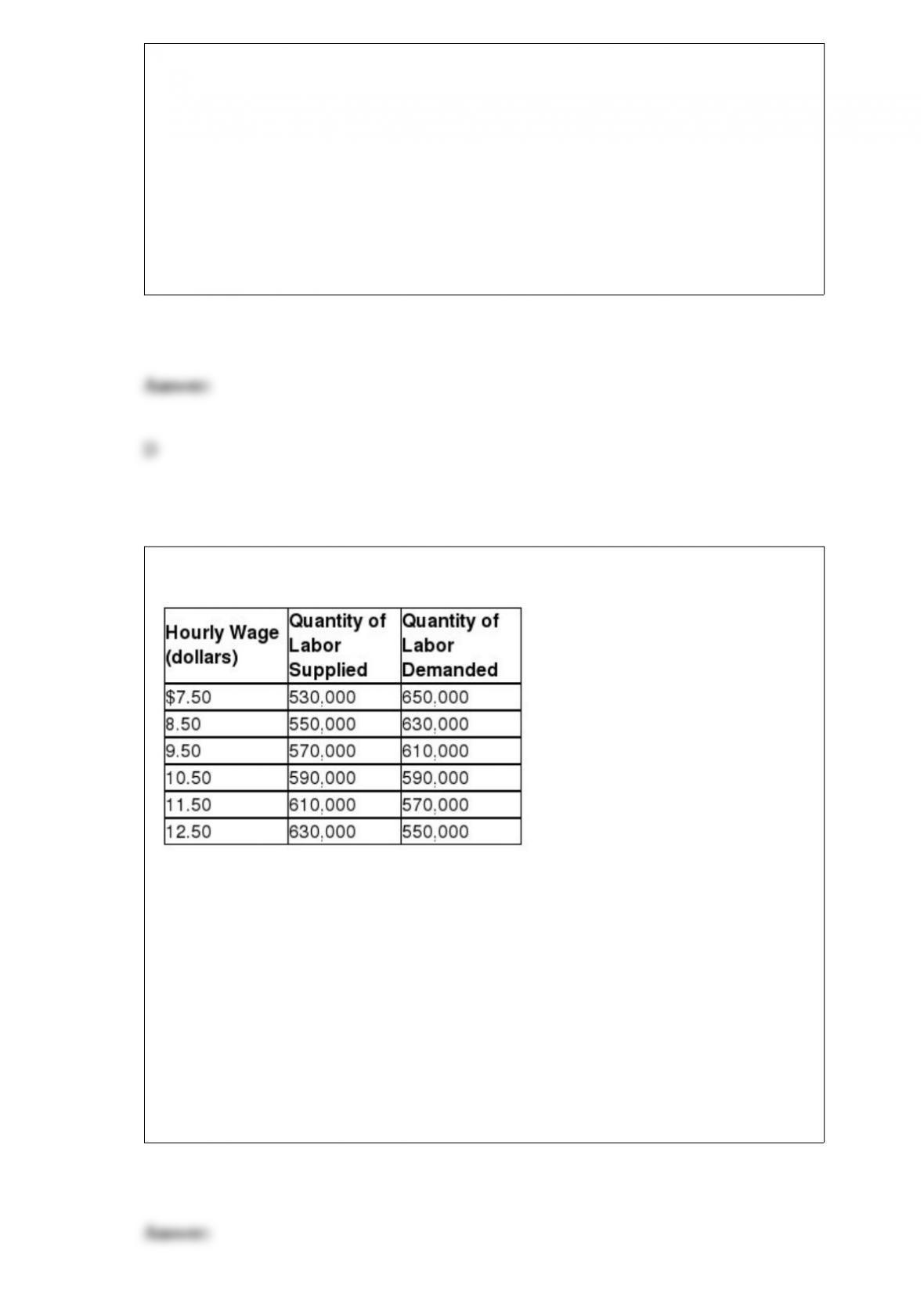
Table 4-4
Table 4-4 shows the demand and supply schedules for labor market in the city of Pixley.
Suppose that the quantity of labor supplied decreases by 80,000 at each wage level.
What are the new free market equilibrium hourly wage and the new equilibrium
quantity of labor?
A) W = $8.50; Q = 550,000
B) W = $12.50; Q = 550,000
C) W = $8.50; Q = 630,000
D) W = $11.50; Q = 610,000

Sole proprietorships are ________ type of business.
A) the most profitable
B) the least common
C) the most common
D) the least risky
Real GDP is GDP in a given year
A) adjusted only for anticipated inflation.
B) adjusted only for unanticipated inflation.
C) valued in the prices of that year.
D) valued in the prices of the base year.
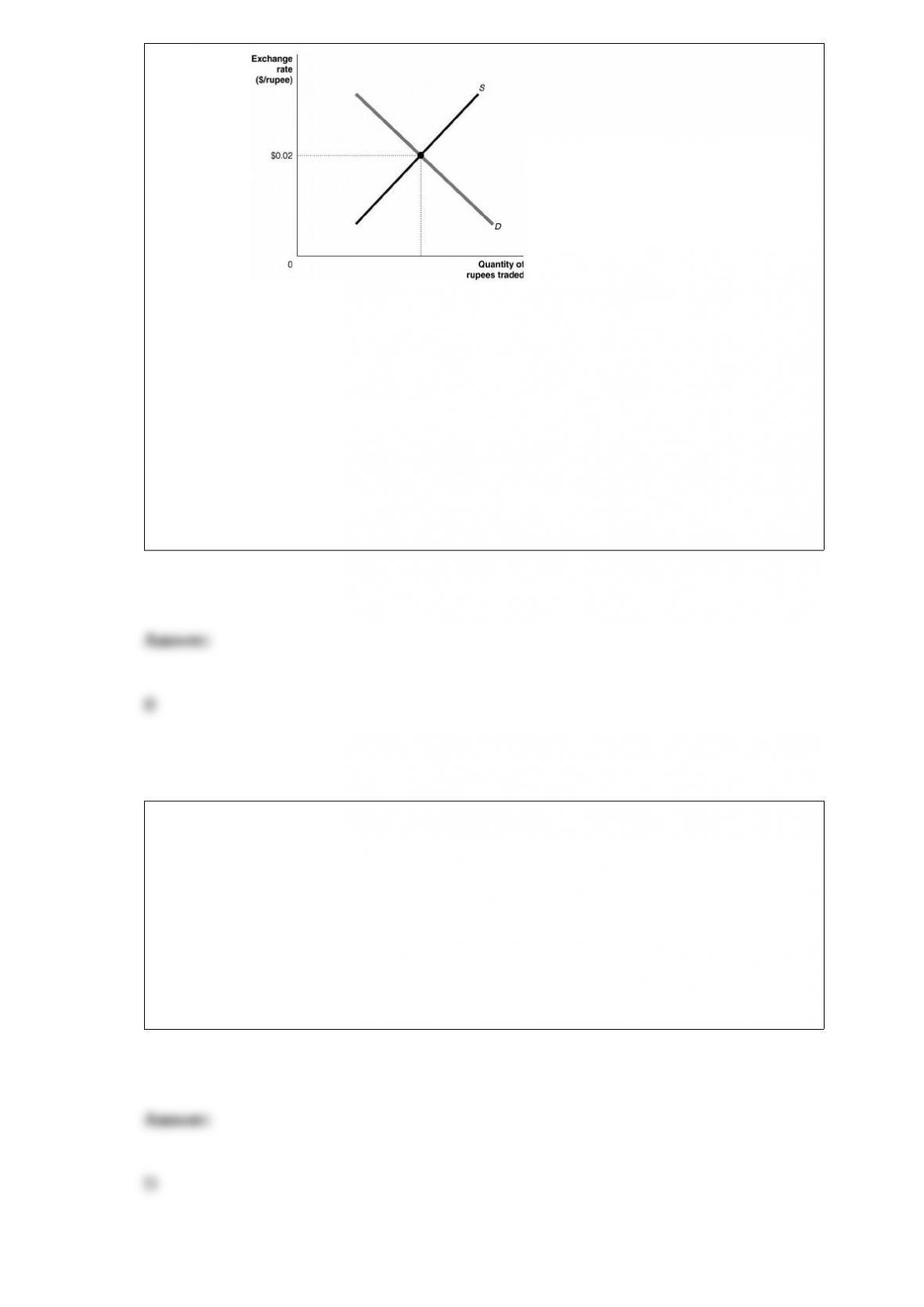
Figure 30-7
If the Indian government pegs its currency to the dollar at a value above $.02/rupee, we
would say the currency is
A) undervalued.
B) overvalued.
C) parity valued.
D) equilibrium valued.
Which of the following is an example of a common resource?
A) catfish in a private pond in Mississippi
B) impounded dogs in a dog pound
C) public health care services in the United States
D) sea otters in the coastal waters of the Pacific Ocean
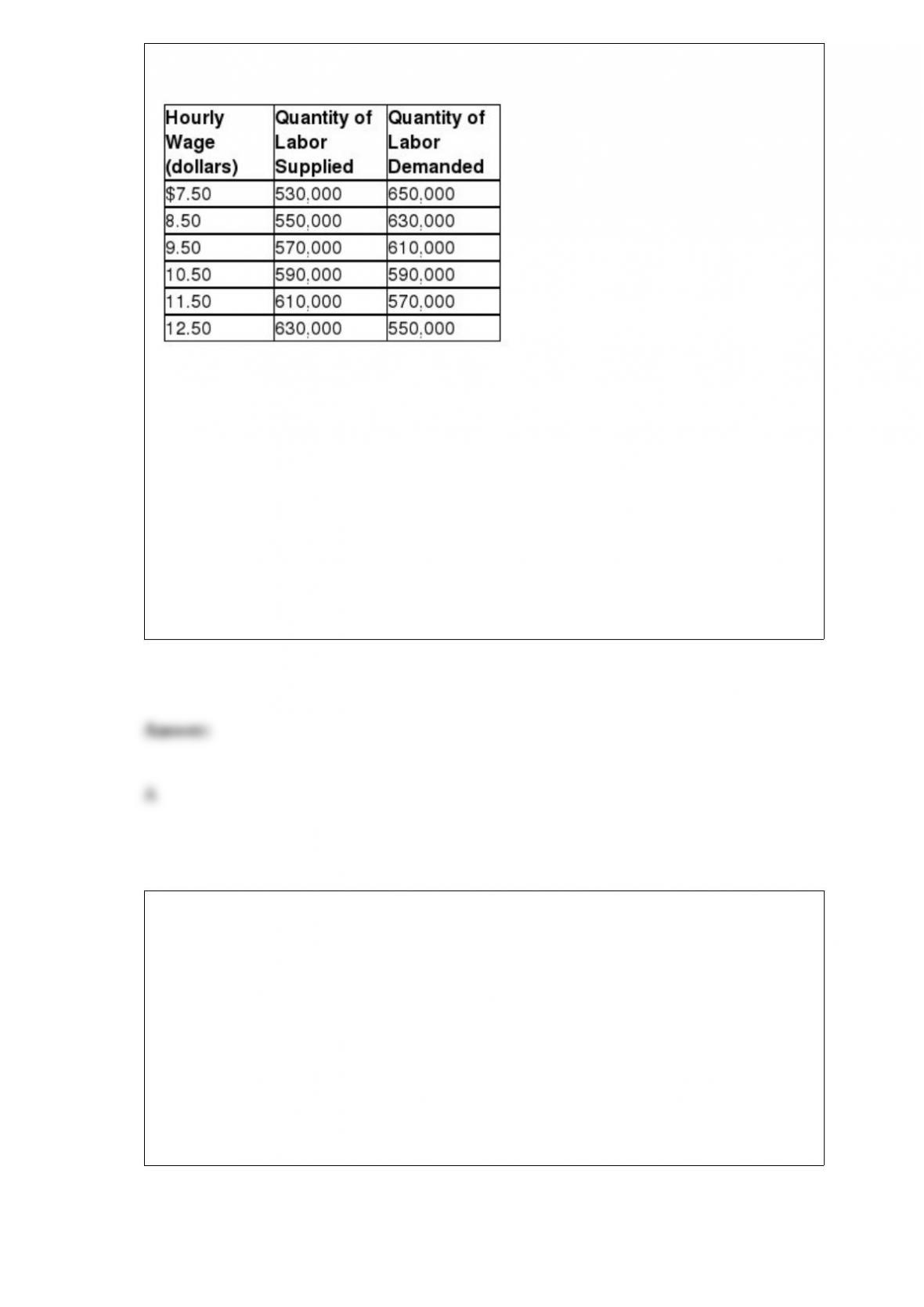
Table 4-7
Table 4-7 shows the demand and supply schedules for labor market in the city of Pixley.
What is the equilibrium hourly wage (WXOA) and the equilibrium quantity of labor
(QXOA)?
A) WXOA = $10.50; QXOA = 590,000
B) WXOA = $11.50; QXOA = 570,000
C) WXOA = $9.50; QXOA = 570,000
D) WXOA = $10.50; QXOA = 1,200,000
Suppose the government wants to maintain a balanced budget. To achieve this goal,
when the economy falls into recession government would need to ________ taxes,
which would cause aggregate demand to ________.
A) decrease; decrease
B) decrease; increase
C) increase; decrease
D) increase; increase
The ________ effect refers to the change in quantity demanded for a good that results
from the effect of a change in the good’s price on consumers’ purchasing power.
A) ceteris paribus
B) population
C) substitution
D) income
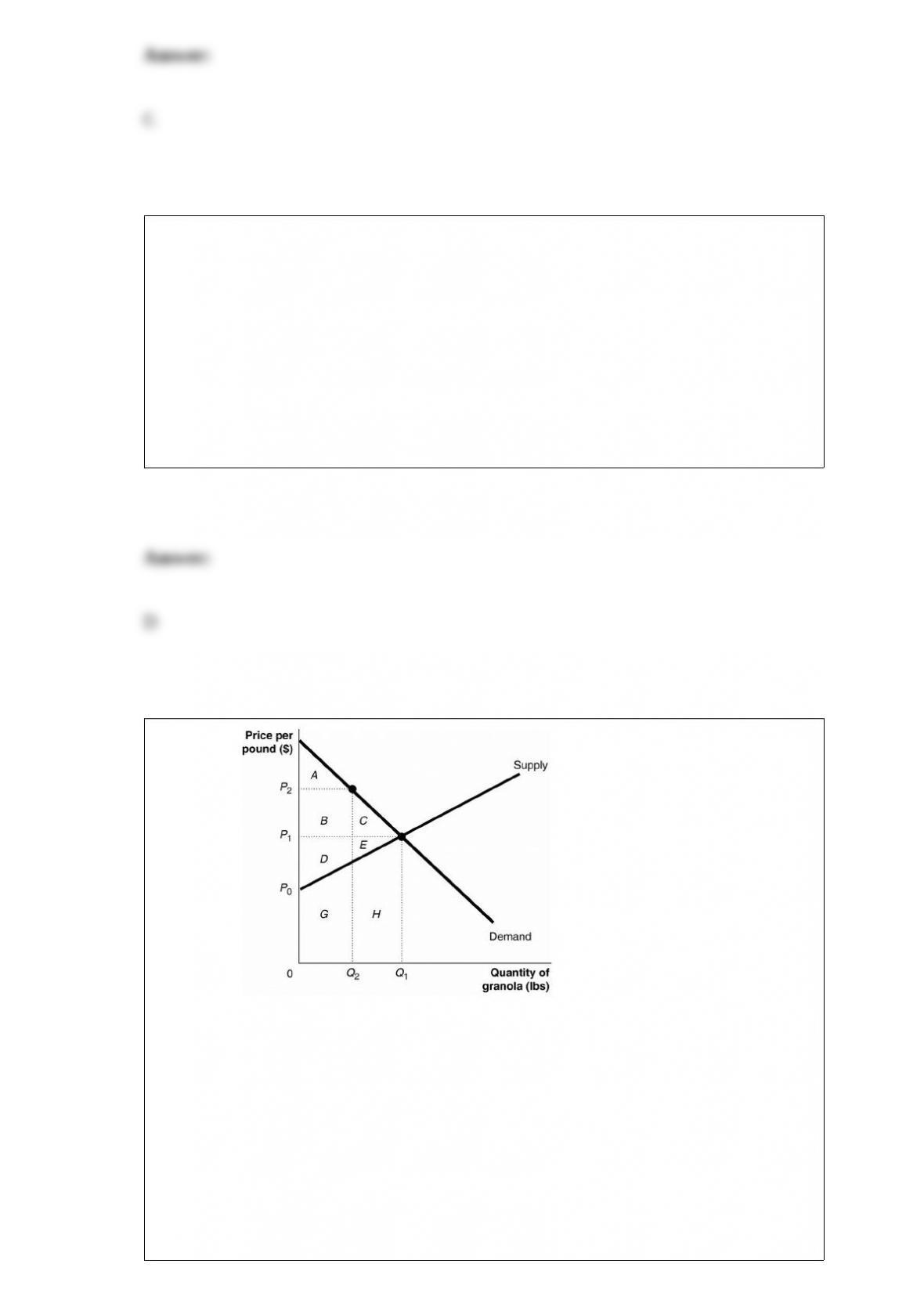
Figure 4-3 Figure 4-3 shows the market for
granola. The market is initially in equilibrium at a price of P1 and a quantity of Q1. Now
suppose producers decide to cut output to Q2 in order to raise the price to P2. What area
represents the deadweight loss at P2?
A) C + E + H
B) G + H
C) C + E
D) B + C
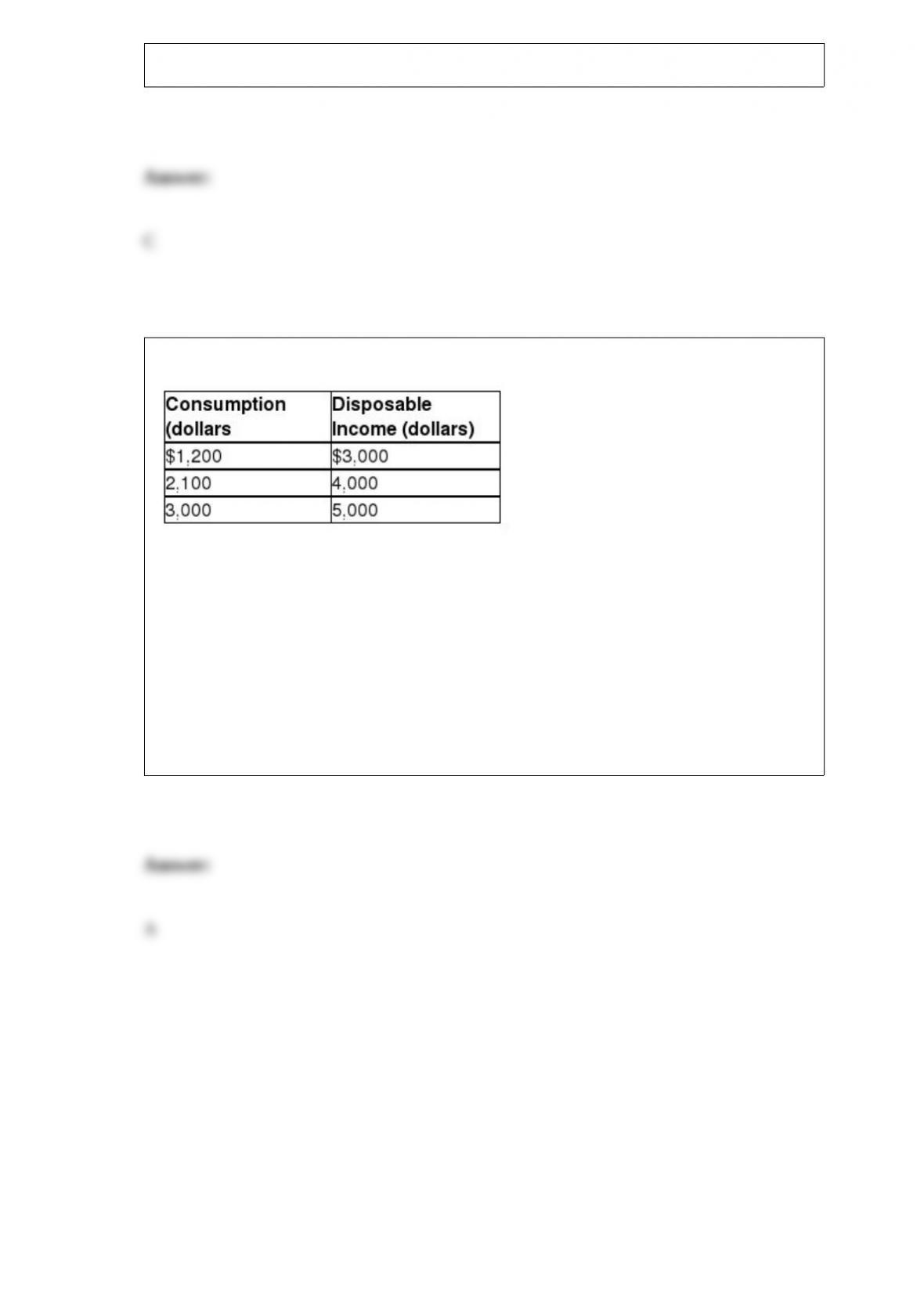
Table 23-3
Given the consumption schedule in the table above, the marginal propensity to save is
A) 0.1.
B) 0.4.
C) 0.7.
D) 0.9.