
When there is a positive externality
A) the private benefit received by consumers is greater than the external benefit.
B) the social benefit received by consumers is greater than the private benefit.
C) the private benefit received by consumers is greater than the private cost.
D) the private benefit received by consumers is greater than the social benefit.
Which of the following is an example of a way in which a firm in oligopoly can escape
the prisoner’s dilemma?
A) producing more of its product
B) advertising that it will match its rival’s price
C) reneging on a previous tacit agreement with rival firms to charge identical high
prices
D) ignoring the pricing decisions of the other firms
The best measure of the income households actually have available to spend is
A) personal income.
B) disposable personal income.
C) national income.

D) net national income.
In the United States in 2012, the percentage of firms that employed more than 200
workers and offered health insurance as a fringe benefit to the workers was about
A) 29%.
B) 42%.
C) 61%.
D) 98%.
If tolls on a toll road can be raised significantly before commuters will consider using a
free alternative, demand for using the toll road must be
A) inelastic.
B) elastic.
C) unit elastic.
D) perfectly elastic.
Suppose in Belize, the opportunity cost of producing a sailboat is 5 hang gliders. In
Honduras, the opportunity cost of producing a sailboat is 8 hang gliders.
a. What is the opportunity cost of producing a hang glider for Belize?
b. What is the opportunity cost of producing a hang glider for Honduras?
c. Which country has a comparative advantage in the production of hang gliders?
d. Which country has a comparative advantage in the production of sailboats?
Most employees ________ on the value of health insurance provided by employers, and
most people ________ when buying individual health insurance policies.
A) pay taxes; get a tax break
B) pay taxes; do not get a tax break
C) do not pay taxes; get a tax break
D) do not pay taxes ; do not get a tax break
The “Big Mac Theory of Exchange Rates” tests the accuracy of purchasing power
parity theory. In July 2013, The Economist reported that the average price of a Big Mac
in the United States was $4.56. In India, the average price of a Big Mac at that time was
90 rupees. What is the “implied exchange rate” between the yen and the dollar?
A) 0.05 rupees per dollar
B) 19.74 rupees per dollar
C) 46.72 rupees per dollar
D) 410.4 rupees per dollar
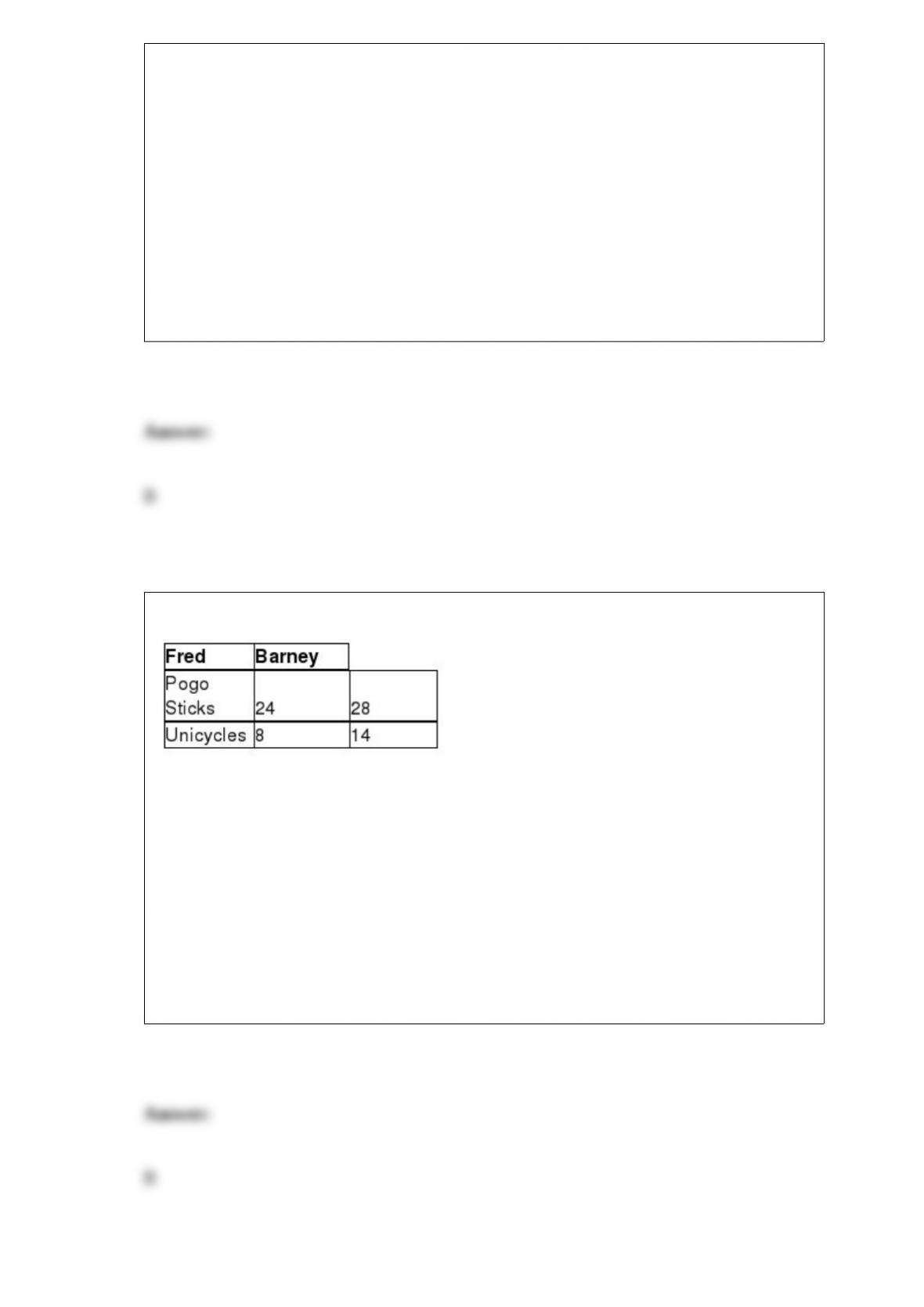
Table 2-10
Table 2-10 shows the output per month of two people, Fred and Barney. They can either
devote their time to making pogo sticks or making unicycles. What is Fred’s
opportunity cost of making a unicycle?
A) 1/3 pogo stick
B) 3 pogo sticks
C) 1/2 unicycle
D) 1.3 pogo sticks
Consider two industries, industry W and industry X. In industry W there are five
companies, each with a market share of 20% of total sales. In industry X, there are six
companies. One company has a 50% market share and each of the other five firms has a
market share of 10%. a. Calculate the four-firm concentration ratio for each industry.
b. Calculate the Herfindahl-Hirschman Index (HHI) for each industry.
c. What do the values of the two concentration measures imply about the degree of
market power in the two industries?
Nominal GDP is GDP in a given year
A) adjusted for inflation.
B) adjusted for anticipated inflation.
C) valued in the prices of that year.
D) valued in the prices of the base year.

Publishers practice price discrimination when they sell books at high prices to
A) early adopters.
B) local bookstores.
C) large chain bookstores.
D) online book sellers.
When the value of a currency is determined mostly by demand and supply, but with
occasional government intervention, the exchange rate system is defined as
A) fixed.
B) floating.
C) managed float.
D) Bretton Woods.
Figure 4-1
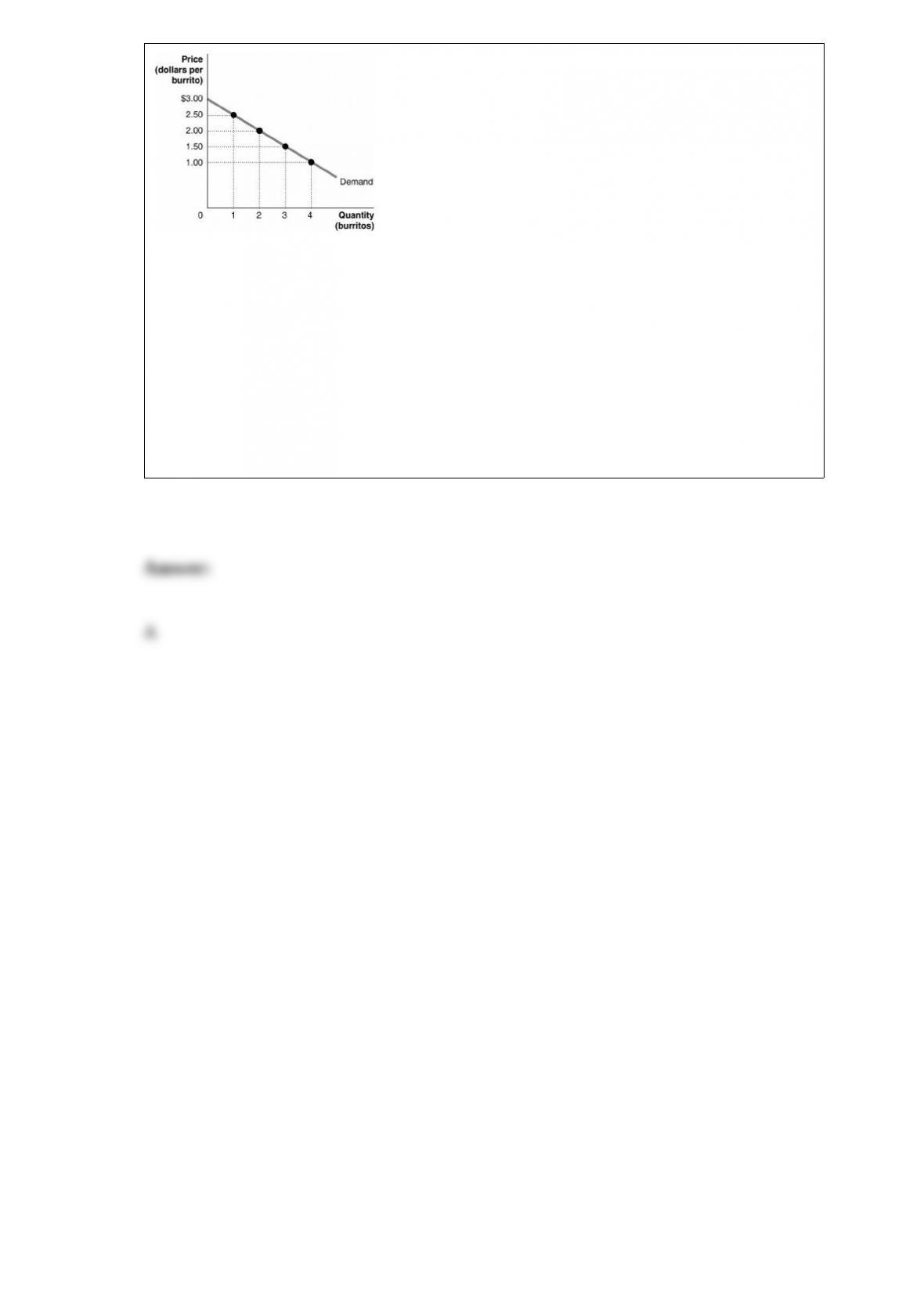
Figure 4-1 shows Arnold’s demand curve for burritos.
If the market price is $1.50, what is the consumer surplus on the second burrito?
A) $0.50
B) $1.00
C) $1.50
D) $3.50