
Importers collect additional revenues from a ________, and governments collect
additional revenues from ________.
A) tariff; voluntary export restraints
B) quota; import bans
C) quota; tariffs
D) voluntary export restraint; quotas
When Bob has to give up lunch in order to have a fancy dinner, the economic principle
that is highlighted by his situation is the:
A) marginal principle.
B) spillover principle.
C) principle of opportunity cost.
D) reality principle.
Consider the game tree in Figure 12.8. If Store B’s payoff in the second rectangle from
the top were $250 instead of $100, the outcome of the game will be that:
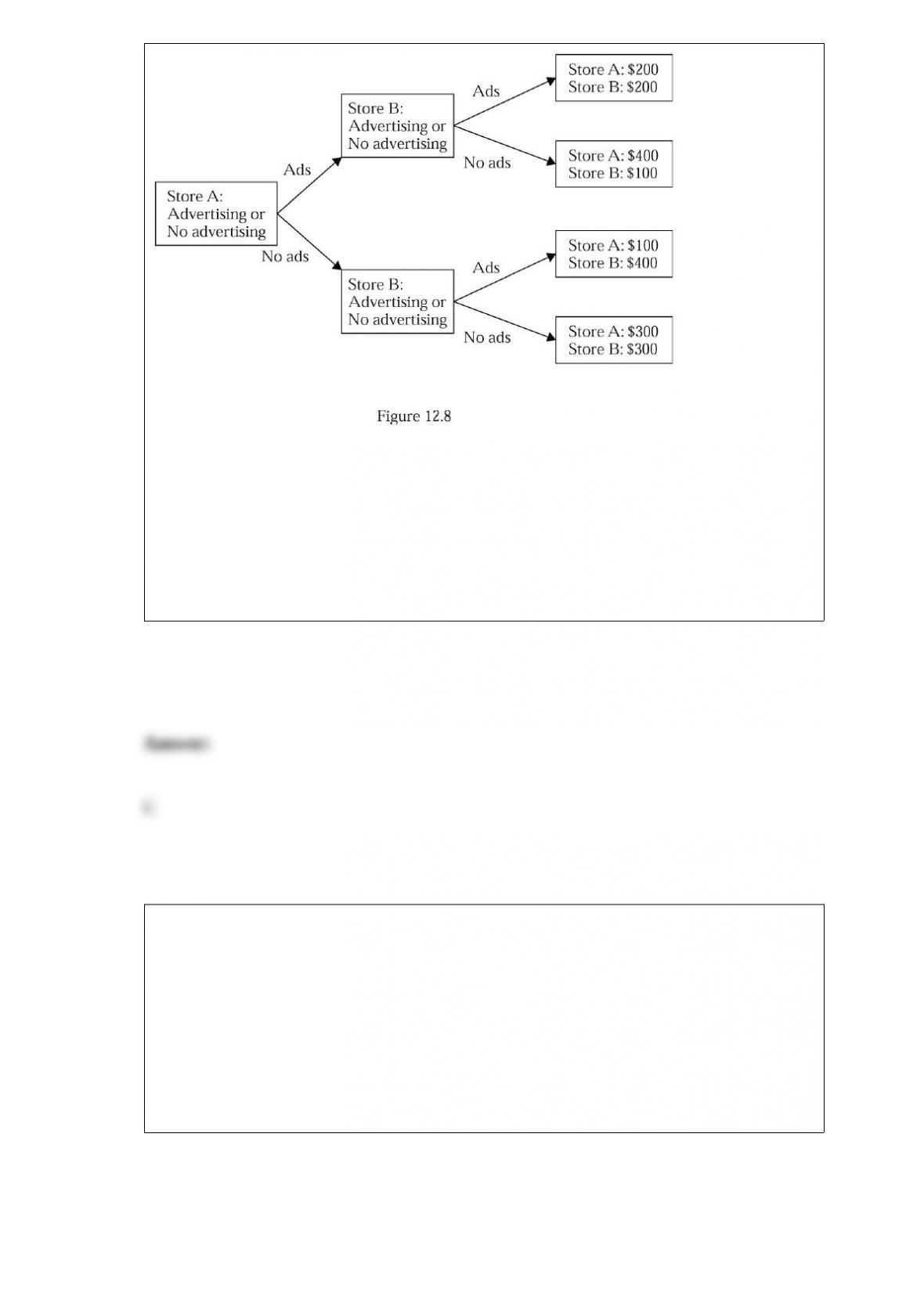
A) both stores choose to advertise.
B) both stores choose not to advertise.
C) Store A chooses to advertise but Store B chooses not to advertise.
D) Store B chooses to advertise but Store A chooses not to advertise.
An external cost is the cost experienced by people who:
A) do not decide how much of a good to produce or consume.
B) did not know why they are experiencing the cost.
C) decide how much of a good to produce or consume.
D) consume a good.
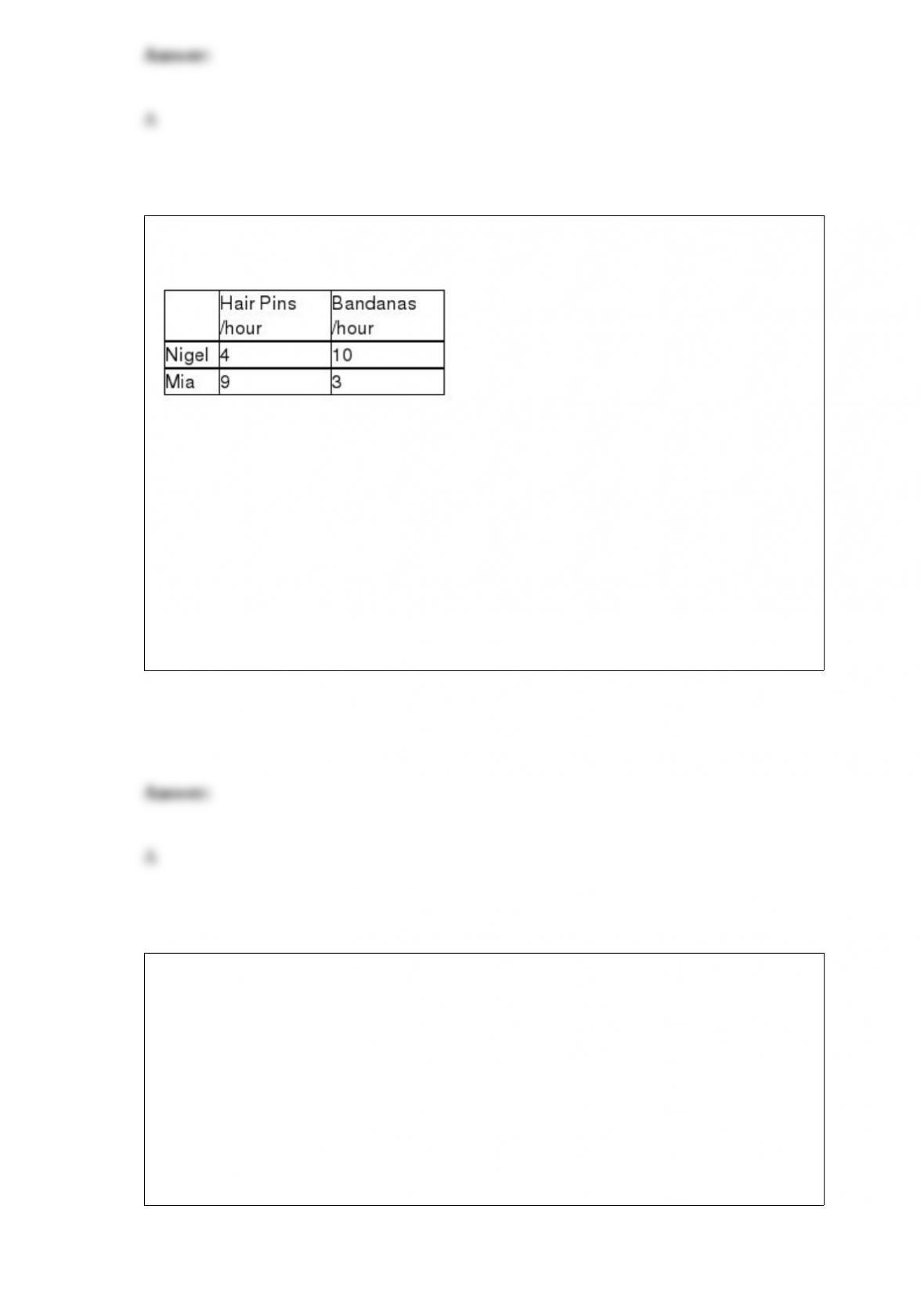
Consider two individuals, Nigel and Mia, who produce hair pins and bandanas. Nigel’s
and Mia’s hourly productivity are shown in Table 3.3.
Table 3.3
Mia’s opportunity cost of producing one hair pin is:
A) 1/3 of a bandana.
B) 2.5 bandanas.
C) 3 bandanas.
D) 10 bandanas.
The benefit from a good experienced by people who do not decide how much of the
good to produce or consume is called a(n):
A) public benefit.
B) private benefit.
C) external benefit.
D) consumption benefit.

The more product differentiation in the market, the ________ the firm specific demand
curve. The less product differentiation in the market, the ________ the firm specific
demand curve.
A) steeper; flatter
B) flatter; steeper
C) more concave; more convex
D) more convex; more concave
Which of the following is a question that needs to be answered with normative
economic reasoning?
A) If the college offers free parking for students, will more students drive to campus?
B) If the college provided more financial aid assistance, would more students benefit?
C) If the college increases tuition, would class size decline?
D) Should the college reduce tuition to stimulate enrollment?

An import ban results in:
A) a decrease in the supply of the product.
B) an increase in the product’s price.
C) a decrease in the quantity of the product bought and sold.
D) all of the above.
Other things being equal, as diminishing marginal returns begin to occur, the marginal
revenue product of labor:
A) decreases as more workers are used.
B) increases as more workers are used.
C) remains unchanged as more workers are used.
D) none of the above
If Figure 11.1 depicts the current situation for a monopolistically competitive firm, then
in the long run we expect:
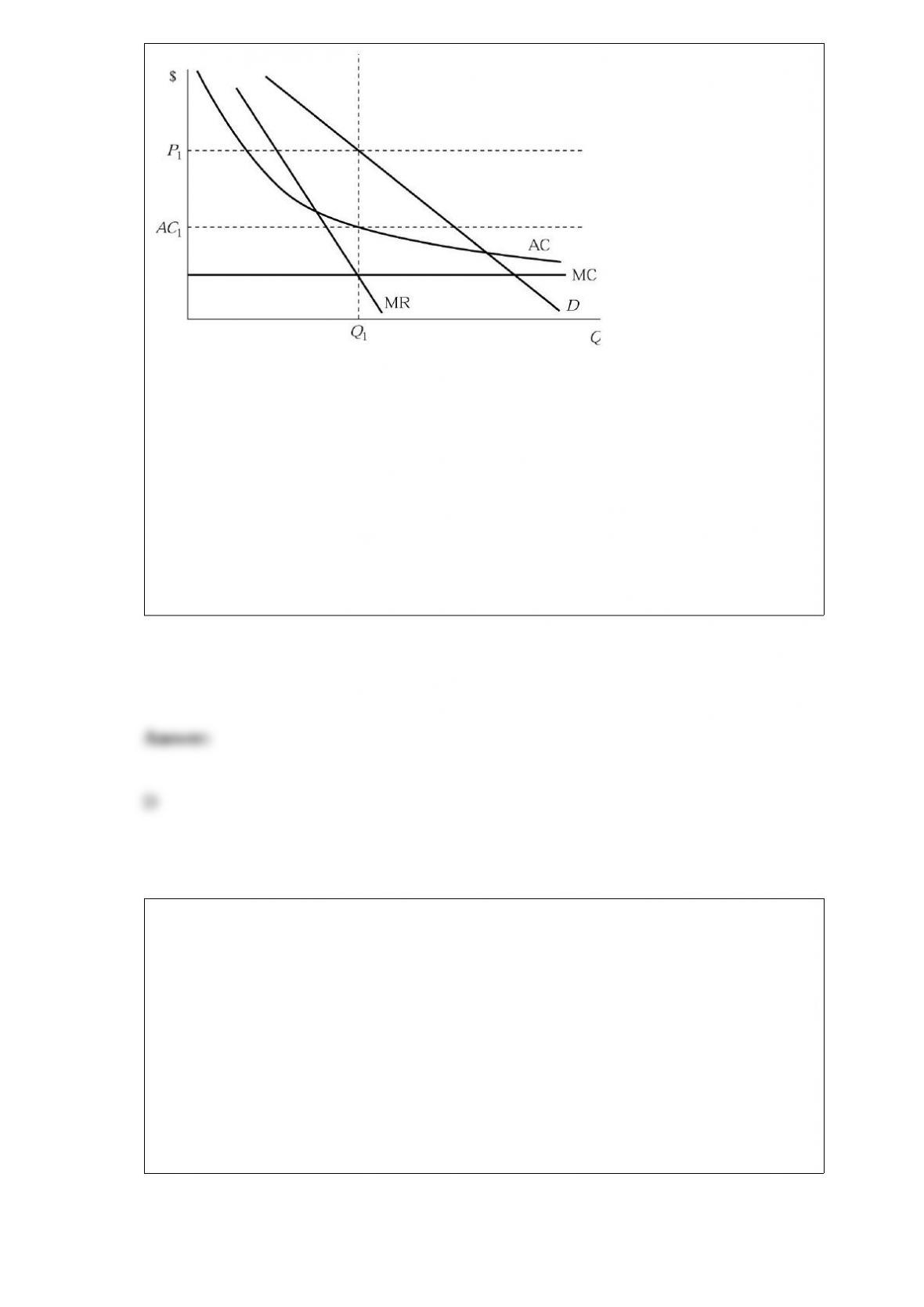
Figure 11.1
A) the firm to charge a price higher than P1.
B) the firm to produce and sell more than Q1.
C) the average costs of production to decrease below AC1.
D) the firm to charge a price lower than P1.
In a perfectly competitive market, the firm specific demand curve is ________ at the
market price, compared to in a monopolistically competitive market, the firm specific
demand curve is ________.
A) negatively sloped; positively sloped
B) negatively sloped; horizontal
C) horizontal; negatively sloped
D) positively sloped; negatively sloped
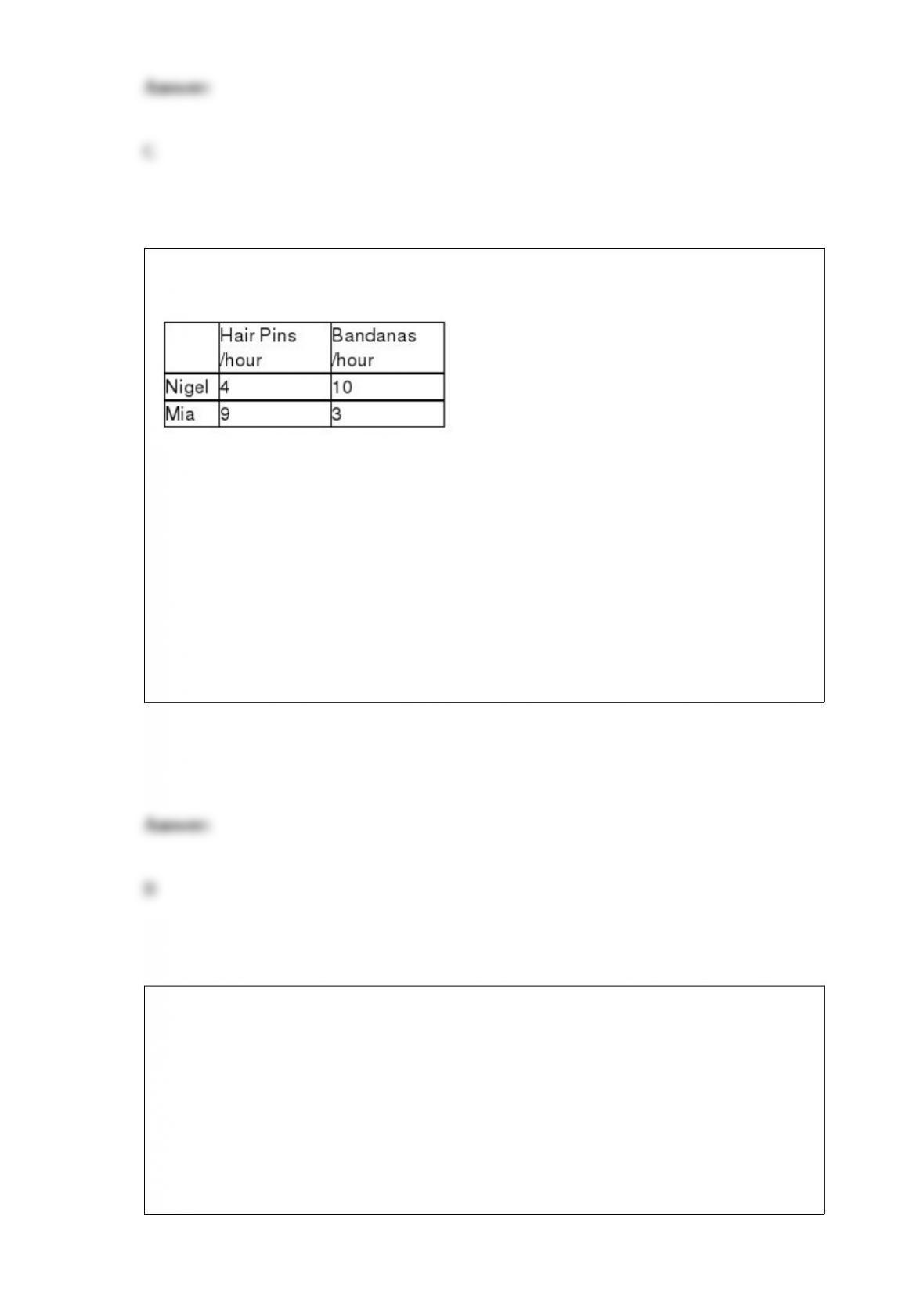
Consider two individuals, Nigel and Mia, who produce hair pins and bandanas. Nigel’s
and Mia’s hourly productivity are shown in Table 3.3.
Table 3.3
Nigel’s opportunity cost of producing one bandana is:
A) 1/4 of a hair pin.
B) 2/5 of a hair pin.
C) 2.5 hair pins.
D) 4 hair pins.
If a pollution tax imposed on a firm is greater than than its external cost:
A) the externality will be fully internalized.
B) the social production cost will increase by the amount of the pollution tax.
C) the pollution tax will be efficient.
D) the firm will be producing too little from a society’s point of view.

Suppose that the Surgeon General releases a study suggesting that orange juice
consumption reduces the risk of cancer. We would predict that the equilibrium quantity
of orange juice will ________ and the equilibrium price of orange juice will ________.
A) rise; rise
B) rise; fall
C) fall; rise
D) fall; fall
Asymmetric information occurs:
A) only in used good markets.
B) only in new good markets.
C) in the markets for new and used goods.
D) only in public good markets.
A profit-maximizing firm will choose the level of advertisements such that:
A) the marginal cost of advertising is equal to the marginal benefit from advertising.
B) the marginal benefit from advertising exceeds the marginal cost of advertising.
C) the marginal cost of advertising exceeds the marginal benefit from advertising.
D) the firm receives the greatest marginal benefit from advertising.
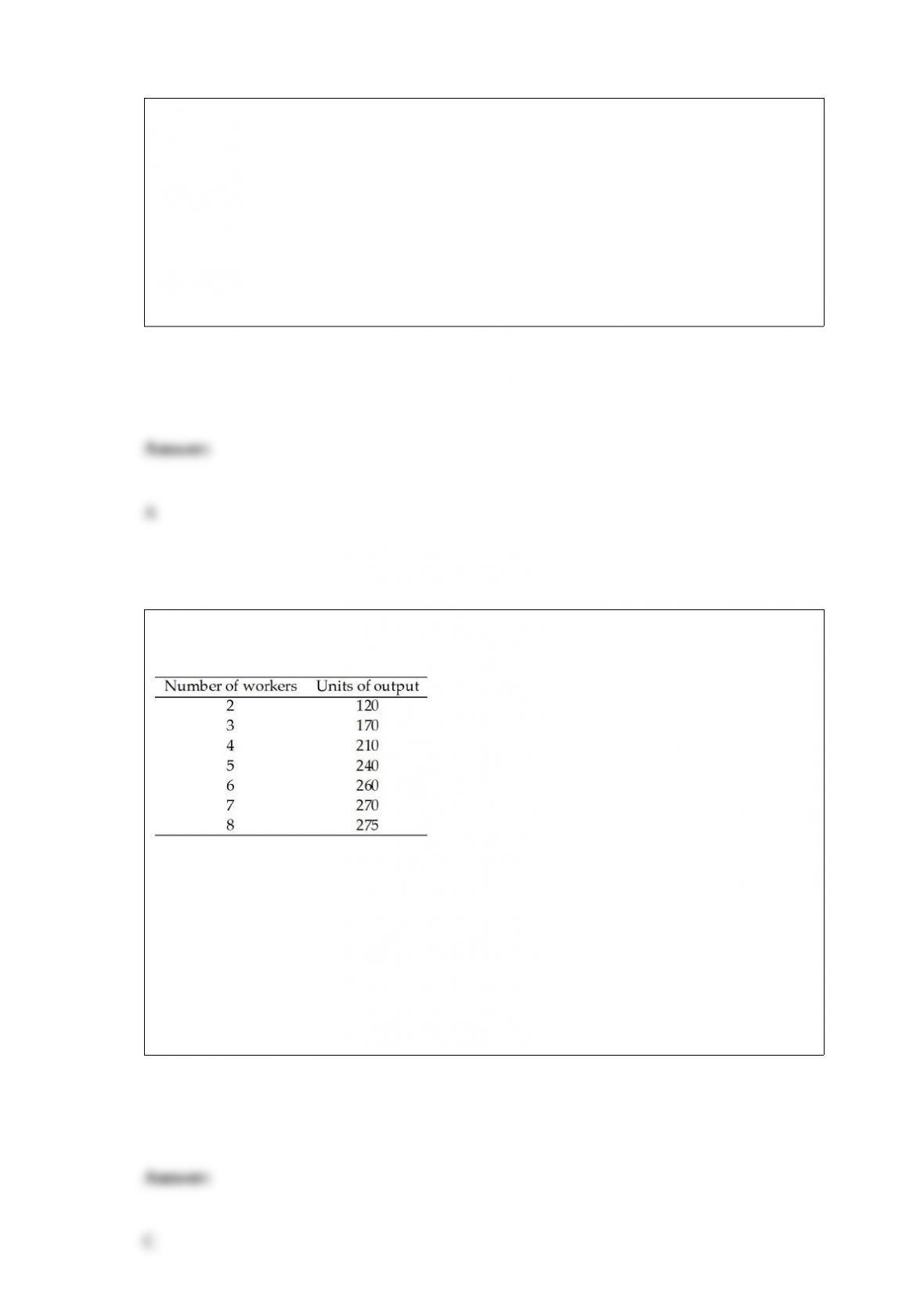
Refer to Table 17.2. If the price of output is $10 per unit, the marginal revenue product
of the sixth unit of labor is:
Table 17.2
A) $20.
B) $50.
C) $200.
D) $500.

When a second firm enters a monopolist’s market, the monopolist’s marginal revenue
curve will:
A) shift to the left as its initial demand curve shifts to the left.
B) shift to the right as its initial demand curve shifts to the right.
C) remain the same.
D) none of the above
According to the data presented in the text, the effect of Japan’s voluntary export
restraints on cars was to:
A) increase the price of Japanese cars in the U.S.
B) decrease the price of Japanese cars in the U.S.
C) increase the number of Japanese cars imported in the U.S.
D) caused Japanese car companies to delay building plants in the U.S.
If the equilibrium price of a good increases and the equilibrium quantity of the good
decreases, we can conclude that:

A) demand increased.
B) demand decreased.
C) supply increased.
D) supply decreased.
Consumers should allocate their scarce income so that:
A) the marginal utility for all goods consumed is zero.
B) the marginal utility for all goods consumed is equal.
C) the marginal utility divided by price is equal for all goods consumed.
D) the marginal utility divided by price is maximized for all goods consumed.
Which of the following is an example of a barrier to entry?
A) A firm is open for business only at certain hours of the day, and has its doors locked
at other times.
B) The government grants licenses to taxicab drivers, without which it is illegal to
operate a taxicab.
C) A newspaper sells advertising space to businesses.

D) lack of a Web site
Because of the advertisers’ dilemma, an industry, as a whole would, if legal have an
incentive to ________ advertising to ________ competition among sellers.
A) restrict; increase
B) encourage; increase
C) restrict; reduce
D) encourage; reduce
Refer to Figure 12.7. If Barney got to move first instead of Fred, the path of the game
would be:
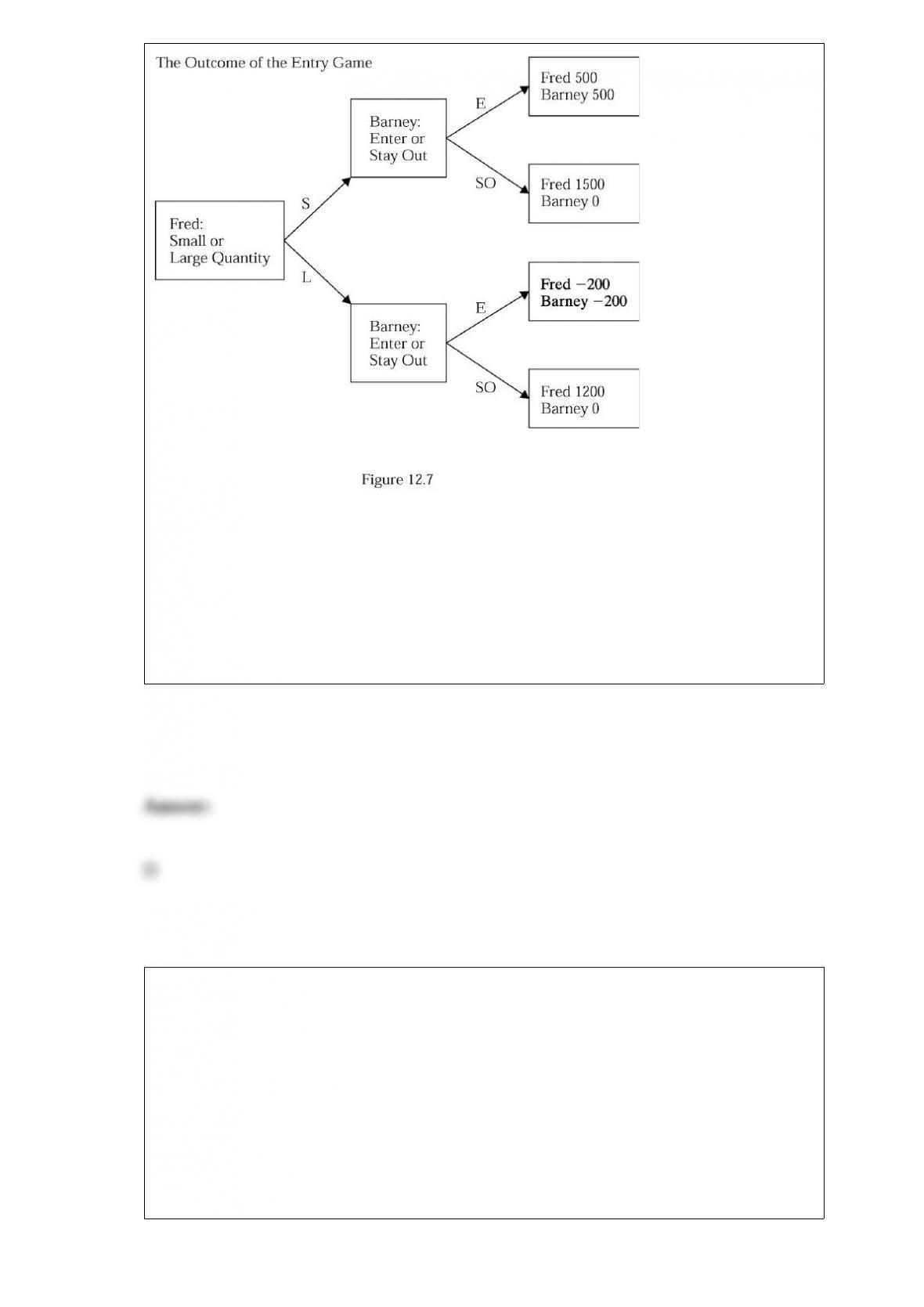
A) Barney stays out and Fred chooses a large quantity.
B) Barney enters and Fred chooses a large quantity.
C) Barney stays out and Fred chooses a small quantity.
D) Barney enters and Fred chooses a small quantity.
When the firm increases output and the costs rise disproportionately slower, then the
long-run average cost curve is ________ and the firm is experiencing ________.
A) horizontal; constant returns to scale
B) downward sloping; constant returns to scale
C) upward sloping; diseconomies of scale
D) downward sloping; economies of scale

A change in quantity supplied of a product is the result of a change in:
A) consumer income.
B) the state of production technology.
C) the cost of producing the product.
D) the price of the product.
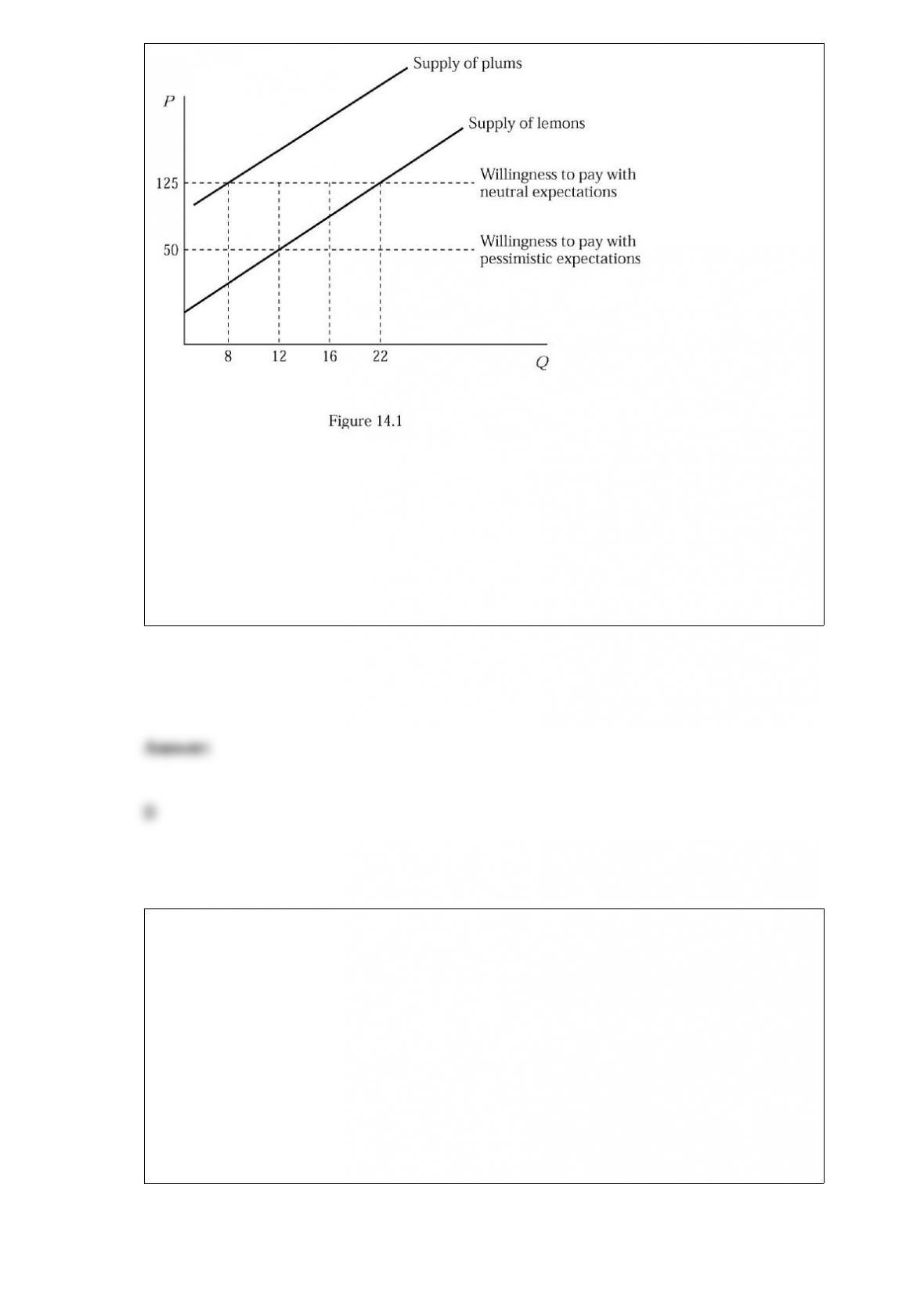
Figure 14.1 represents the market for used bikes. Suppose buyers are willing to pay
$200 for a plum (high-quality) used bike and $50 for a lemon (low-quality) used bike.
If buyers believe that 50% of used bikes in the market are lemons (low quality), what
fraction of used bikes sold will actually be lemons (low quality)?
A) 8/30
B) 22/30
C) 8/22
D) 30/30
You observe that at your current production of rutabaga, the average total cost of
producing rutabaga is $1 and the marginal cost of producing rutabaga is $2. What
should always happen if you increase rutabaga production?
A) Marginal cost will fall.
B) Average total cost will rise.
C) Average total cost will fall.
D) Both A and B are correct.
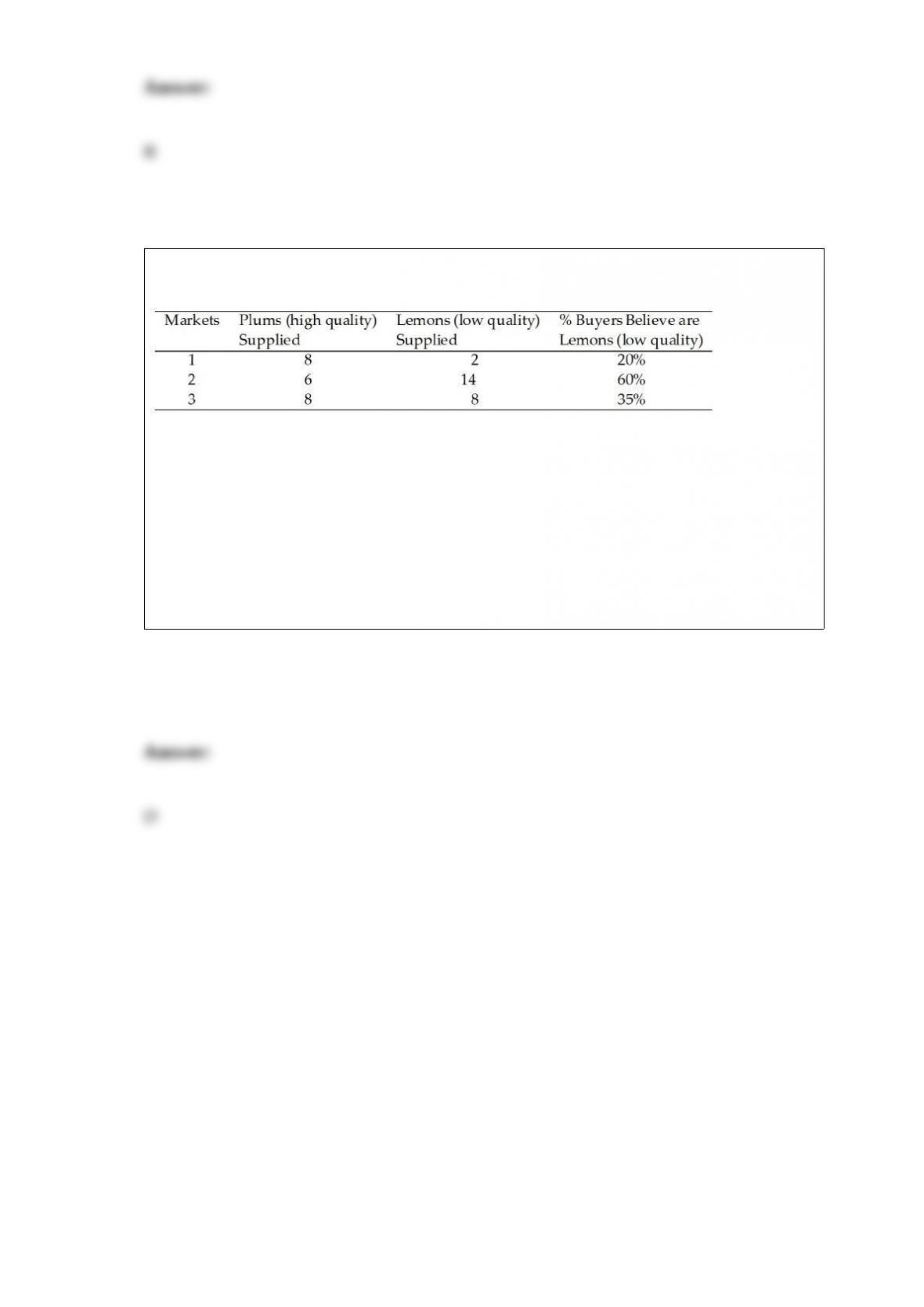
Table 14.2 represents 3 markets for used guitars. Which of the markets in Table 14.2 are
NOT in equilibrium?
Table 14.2
A) 1 only
B) 2 only
C) 3 only
D) 2 and 3