
When motorcycles are taxed and sellers of motorcycles are required to pay the tax to
the government,
a. the quantity of motorcycles bought and sold in the market is reduced.
b. the price paid by buyers of motorcycles decreases.
c. the demand for motorcycles decreases.
d. there is a movement downward and to the right along the demand curve for
motorcycles.
Suppose the number of buyers in a market increases and a technological advancement
occurs also. What would we expect to happen in the market?
a. Equilibrium price would decrease, but the impact on equilibrium quantity would be
ambiguous.
b. Equilibrium price would increase, but the impact on equilibrium quantity would be
ambiguous.
c. Equilibrium quantity would decrease, but the impact on equilibrium price would be
ambiguous.
d. Equilibrium quantity would increase, but the impact on equilibrium price would be
ambiguous.
Which of the following is likely to have the most price elastic demand?
a. ice cream
b. frozen yogurt
c. vanilla ice cream
d. HagenDazs vanilla bean ice cream
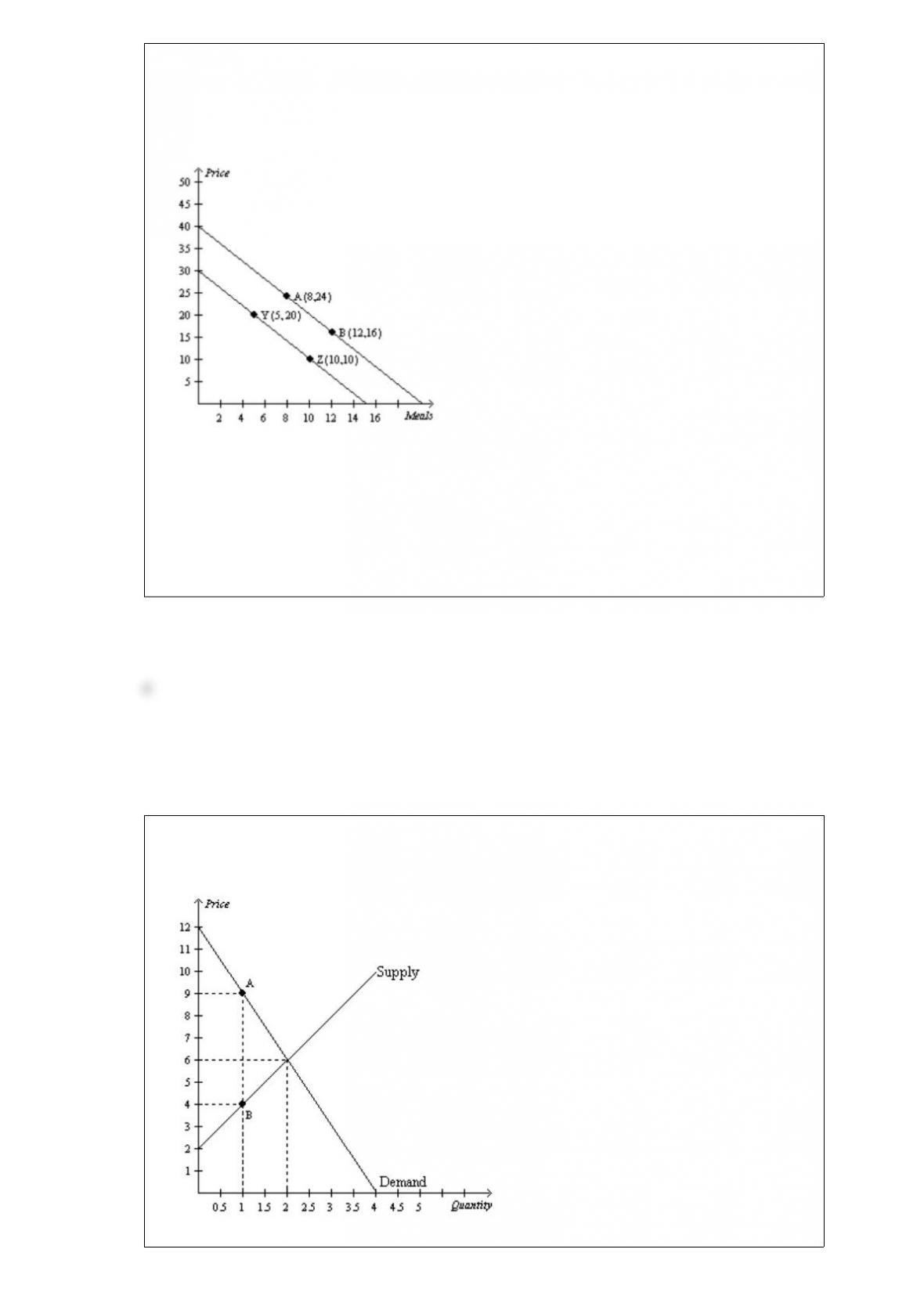
Figure 218
Relationship between Price and Restaurant Meals
Refer to Figure 218. Which of the following could result in a movement from point B
to point Z?
a. a change in the price of a restaurant meal
b. a change in the number of restaurant meals demanded
c. a change in income
d. Both a and b are correct.
Figure 82
The vertical distance between points A and B represents a tax in the market.

Refer to Figure 82. The loss of consumer surplus associated with some buyers
dropping out of the market as a result of the tax is
a. $0.
b. $1.50.
c. $3.
d. $4.50.
Table 322
Assume that Zimbabwe and Portugal can switch between producing toothbrushes and
producing hairbrushes at a constant rate.
Machine Minutes
Needed to Make 1
ToothbrushHairbrush
Zimbabwe310
Portugal56
Refer to Table 322. Suppose Zimbabwe decides to increase its production of
toothbrushes by 10. What is the opportunity cost of this decision?
a. 0.3 hairbrush
b. 3 hairbrushes
c. 30 hairbrushes
d. 100 hairbrushes
Taxes on labor encourage all of the following except
a. older workers to take early retirement from the labor force.
b. mothers to stay at home rather than work in the labor force.
c. workers to work overtime.
d. people to be paid “under the table.”

Table 335
Labor Hours Needed
to Produce
1 Dozen Eggs1 Pound Ham
Denmark108
Finland64
Refer to Table 335. Which good(s) does Finland have an absolute advantage
producing?
a. both eggs and ham.
b. eggs but not ham.
c. ham but not eggs.
d. neither ham nor eggs.
For which of the following goods is the income elasticity of demand likely highest?
a. water
b. diamonds
c. hamburgers
d. housing
Assume the market for tennis balls is perfectly competitive. When one tennis ball
producer exits the market,
a. the price of tennis balls increases.
b. the price of tennis balls decreases.
c. the price of tennis balls does not change.
d. there is no longer a market for tennis balls.

Which of the following would not shift the supply curve for mp3 players?
a. an increase in the price of mp3 players
b. a decrease in the number of sellers of mp3 players
c. an increase in the price of plastic, an input into the production of mp3 players
d. an improvement in the technology used to produce mp3 players
If consumers often purchase muffins to eat while they drink their latts at local coffee
shops, what would happen to the equilibrium price and quantity of latts if the price of
muffins rises?
a. Both the equilibrium price and quantity would increase.
b. Both the equilibrium price and quantity would decrease.
c. The equilibrium price would increase, and the equilibrium quantity would decrease.
d. The equilibrium price would decrease, and the equilibrium quantity would increase.
An increase in the price of a good would
a. increase the supply of the good.
b. increase the amount purchased by buyers.
c. give producers an incentive to produce more.
d. decrease both the quantity demanded of the good and the quantity supplied of the
good.
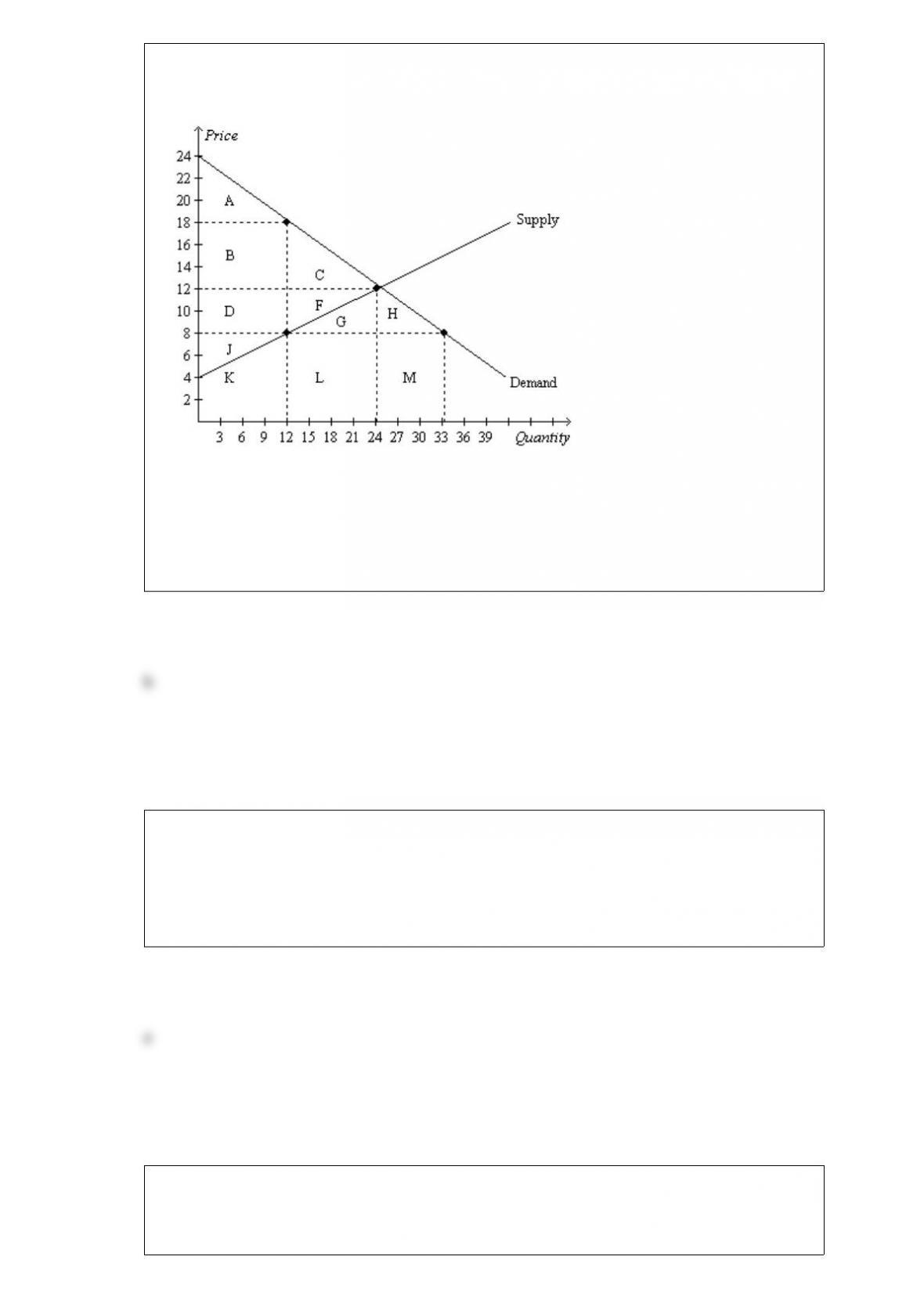
Figure 88
Suppose the government imposes a $10 per unit tax on a good.
Refer to Figure 88. The tax causes consumer surplus to decrease by the area
a. A.
b. B+C.
c. A+B+C.
d. A+B+C+D+F.
A statement describing how the world should be
a. is a normative statement.
b. is a positive statement.
c. would only be made by an economist speaking as a scientist.
d. would only be made by an economist employed by the government.
Figure 322
Alice and Betty’s Production Possibilities in one 8hour day.
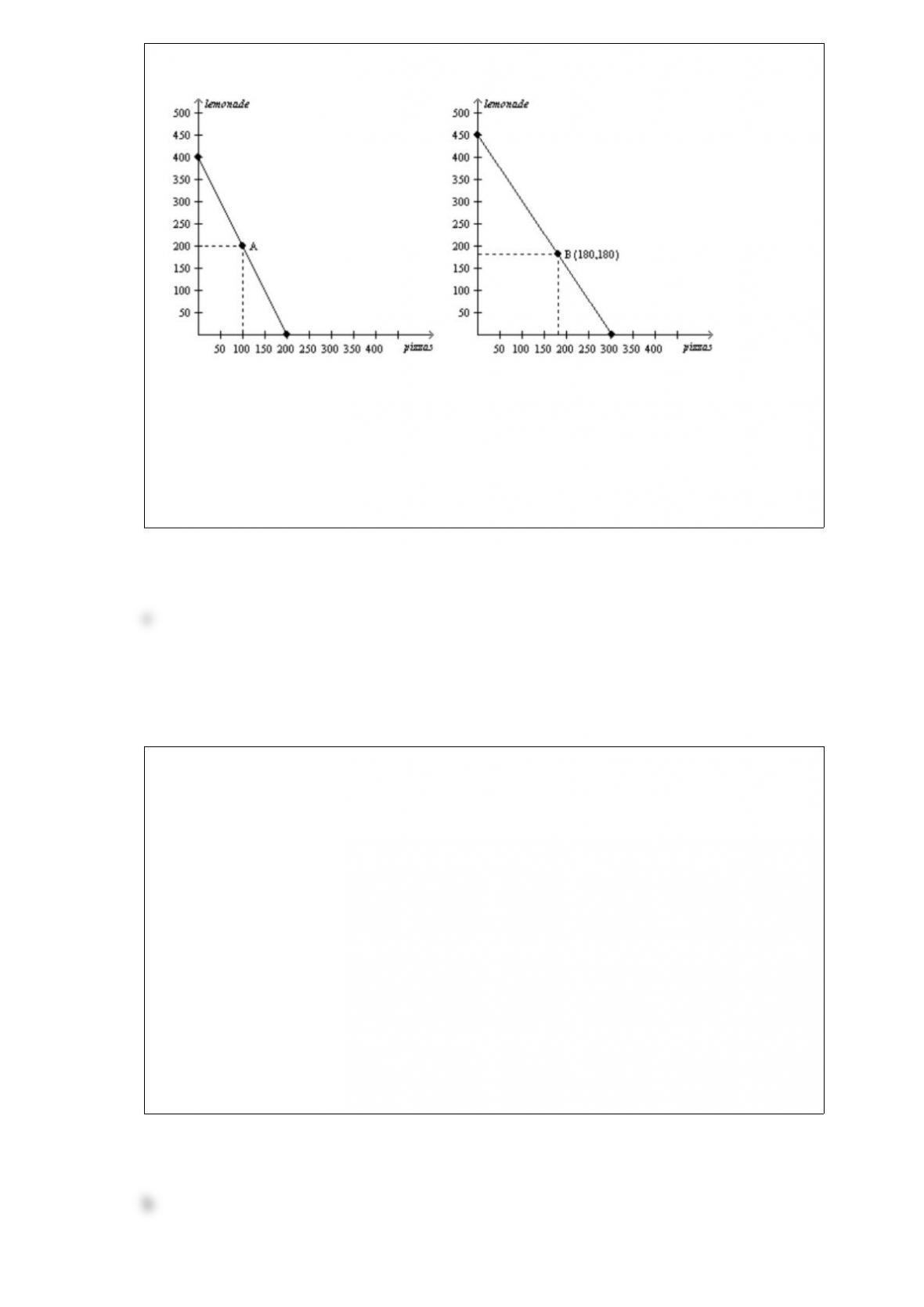
Alice’s Production Possibilities FrontierBetty’s Production Possibilities Frontier
Refer to Figure 322. Which of the following prices would result in an mutually
advantageous trade for Alice and Betty?
a. 100 pizzas for 100 pitchers of lemonade
b. 100 pizzas for 125 pitchers of lemonade
c. 100 pizzas for 180 pitchers of lemonade
d. 100 pizzas for 220 pitchers of lemonade
Table 35
Assume that Aruba and Iceland can switch between producing coolers and producing
radios at a constant rate.
Labor Hours
Needed to Make 1
CoolerRadio
Aruba25
Iceland14
Refer to Table 35. Which of the following combinations of coolers and radios could
Aruba produce in one 40hour week?
a. 3 coolers and 7 radios
b. 5 coolers and 6 radios
c. 11 coolers and 4 radios
d. 13 coolers and 3 radios
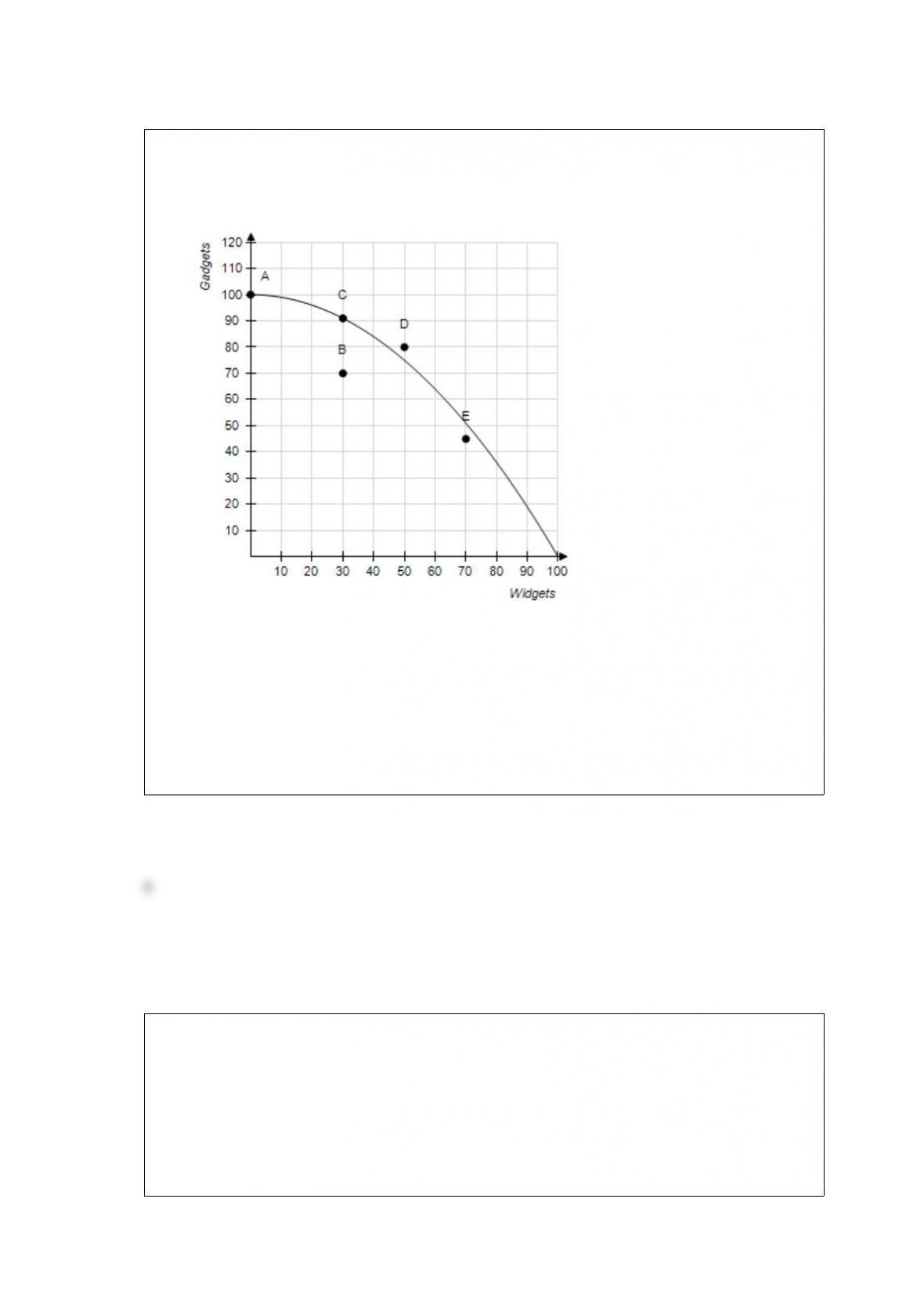
Figure 216
Refer to Figure 216. The opportunity cost of obtaining 30 additional widgets by
moving from point A to point C is approximately
a. 10 gadgets.
b. 30 widgets
c. 10 gadgets and 30 widgets.
d. 0 gadgets.
When a tax is placed on the sellers of energy drinks, the
a. sellers bear the entire burden of the tax.
b. buyers bear the entire burden of the tax.
c. burden of the tax will be always be equally divided between the buyers and the
sellers.
d. burden of the tax will be shared by the buyers and the sellers, but the division of the
burden is not always equal.

Which of the following statements about the price elasticity of demand is correct?
a. The price elasticity of demand for a good measures the willingness of buyers of the
good to buy less of the good as its price increases.
b. Price elasticity of demand reflects the many economic, psychological, and social
forces that shape consumer tastes.
c. Other things equal, if good x has close substitutes and good y does not have close
substitutes, then the demand for good x will be more elastic than the demand for good y.
d. All of the above are correct.
Donald produces nails at a cost of $350 per ton. If he sells the nails for $500 per ton, his
producer surplus is
a. $150.
b. $350.
c. $500.
d. $850.
You are considering staying in college another semester so that you can complete a
major in economics. In deciding whether or not to stay you should
a. compare the total cost of your education to the total benefits of your education.
b. compare the total cost of your education to the benefits of staying one more semester.
c. compare the cost of staying one more semester to the benefits of staying one more
semester.
d. compare the total benefits of your education to the cost of staying one more semester.
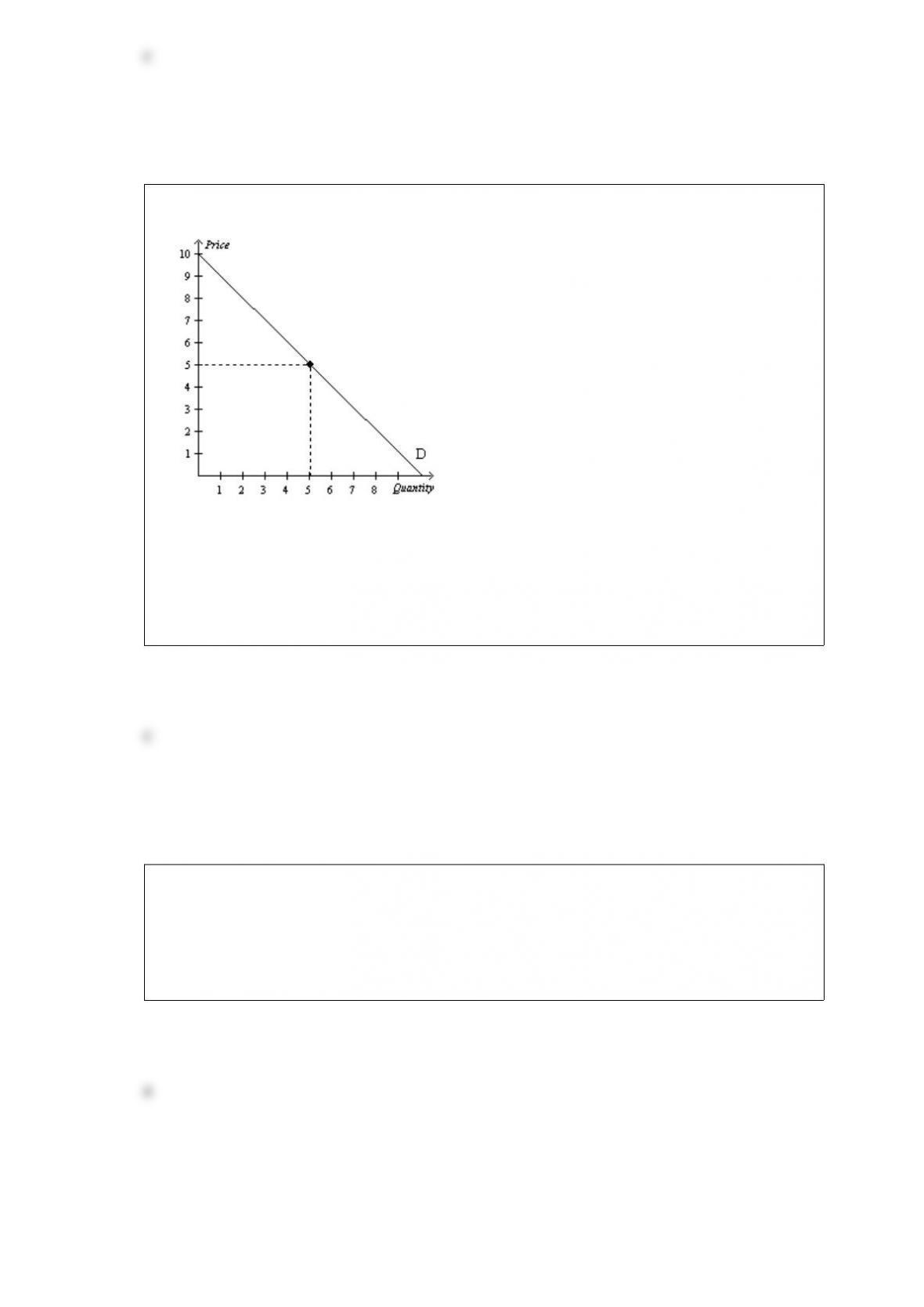
Figure 57
Refer to Figure 57. For prices above $5, demand is price
a. elastic, and raising price will increase total revenue.
b. inelastic, and raising price will increase total revenue.
c. elastic, and lowering price will increase total revenue.
d. inelastic, and lowering price will increase total revenue.
If a tax is levied on the sellers of a product, then the supply curve will
a. shift up.
b. shift down.
c. become flatter.
d. not shift.
The benefit that government receives from a tax is measured by
a. the change in the equilibrium quantity of the good.
b. the change in the equilibrium price of the good.
c. tax revenue.
d. total surplus.
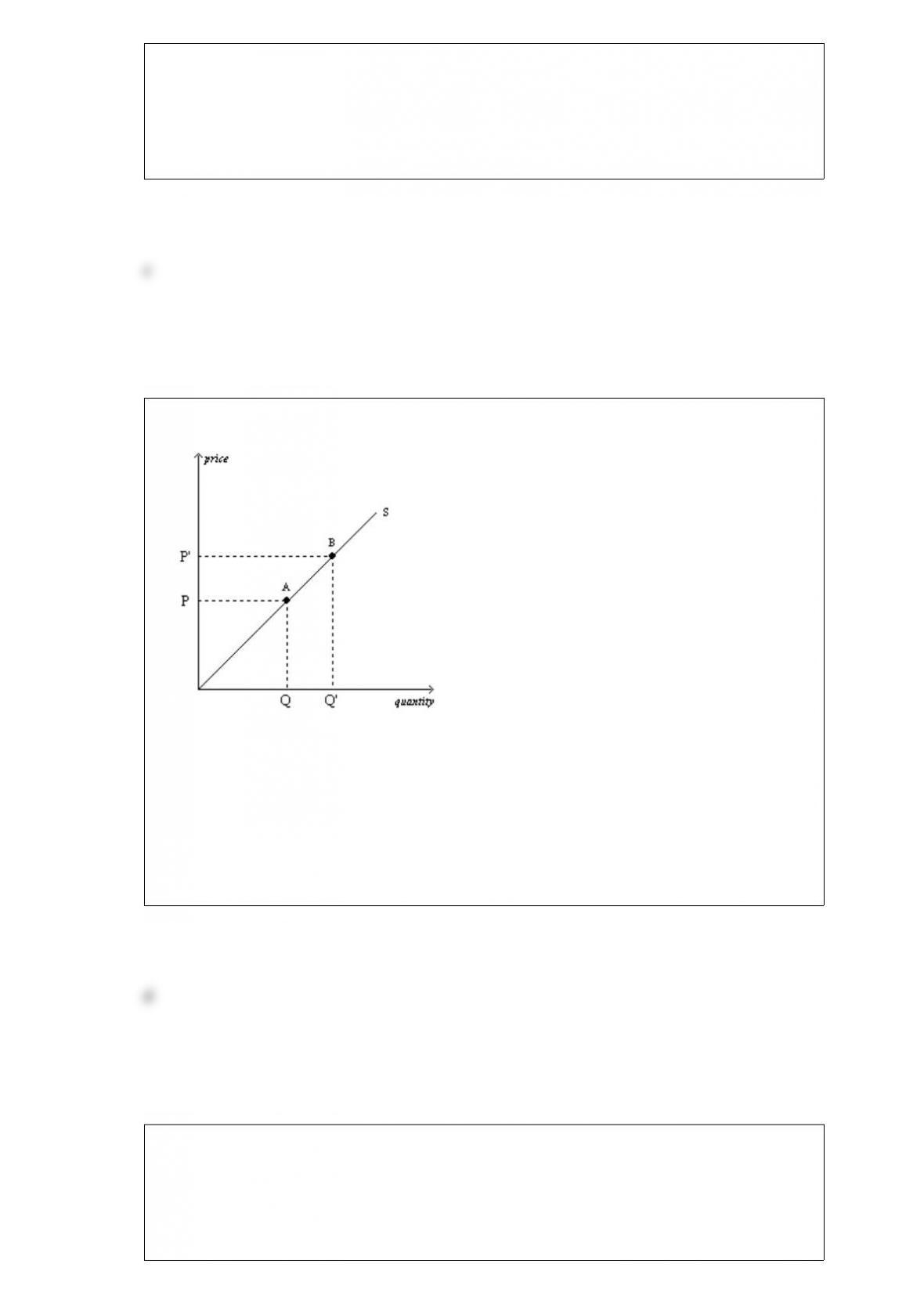
Figure 411
Refer to Figure 411. The movement from point A to point B on the graph represents
a. an increased willingness and ability on the part of suppliers to supply the good at
each possible price.
b. an increase in the number of suppliers.
c. a decrease in the price of a relevant input.
d. an increase in the price of the good that is being supplied and the suppliers’ responses
to that price change.
The following table contains a demand schedule for a good.
PriceQuantity Demanded
$10100
$20Q1
If the law of demand applies to this good, then Q1 could be
a. 0.
b. 100.
c. 200.
d. 400.
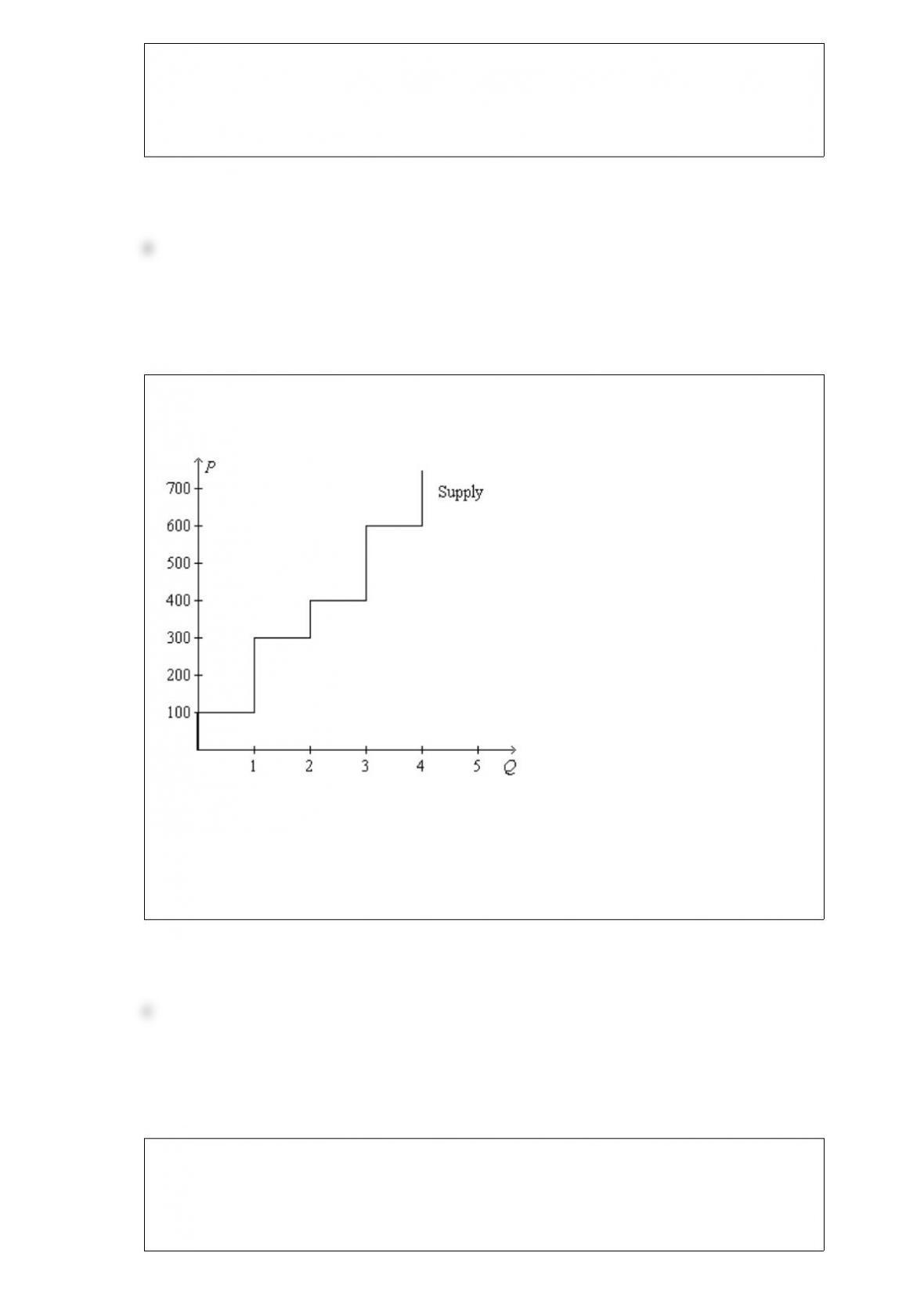
Figure 716
Refer to Figure 716. If the price of the good is $500, then producer surplus amounts to
a. $450.
b. $575.
c. $700.
d. $800.
Normative statements are
a. not usually made by economists.
b. claims about how the world should be.
c. claims about how variables in the economy normally behave.

d. pessimistic interpretations of the economy.
Suppose France subsidizes French wheat farmers, while Germany offers no subsidy to
German wheat farmers. As a result of the French subsidy, sales of French wheat to
Germany
a. may prompt German farmers to invoke the unfaircompetition argument.
b. increase the consumer surplus of German buyers of wheat.
c. increase the total surplus of the German people.
d. All of the above are correct.
Which of the following is not correct?
a. The economy contains many labor markets for different types of workers.
b. The impact of the minimum wage depends on the skill and experience of the worker.
c. The minimum wage is binding for workers with high skills and much experience.
d. The minimum wage is not binding when the equilibrium wage is above the minimum
wage.