Many economists are critical of proposals to pass comparable worth legislation. Which
of the following is the best explanation for this criticism?
A) Comparable worth legislation will only lead to efficient market outcomes if women
in low-paying jobs suffer from cognitive dissonance.
B) Proposals for comparable worth legislation assume that wages for low-paying
women’s jobs should include compensating differentials. Economists believe that
compensating differentials should be part of the wages for all jobs held by women.
C) Proposals for comparable worth legislation call for increases in the wages of jobs
held predominantly by women. Economists believe that this legislation should be used
to increase the wages of all workers.
D) Many economists believe that allowing markets to determine wages, rather than the
rules required by comparable worth legislation, results in more efficient outcomes.
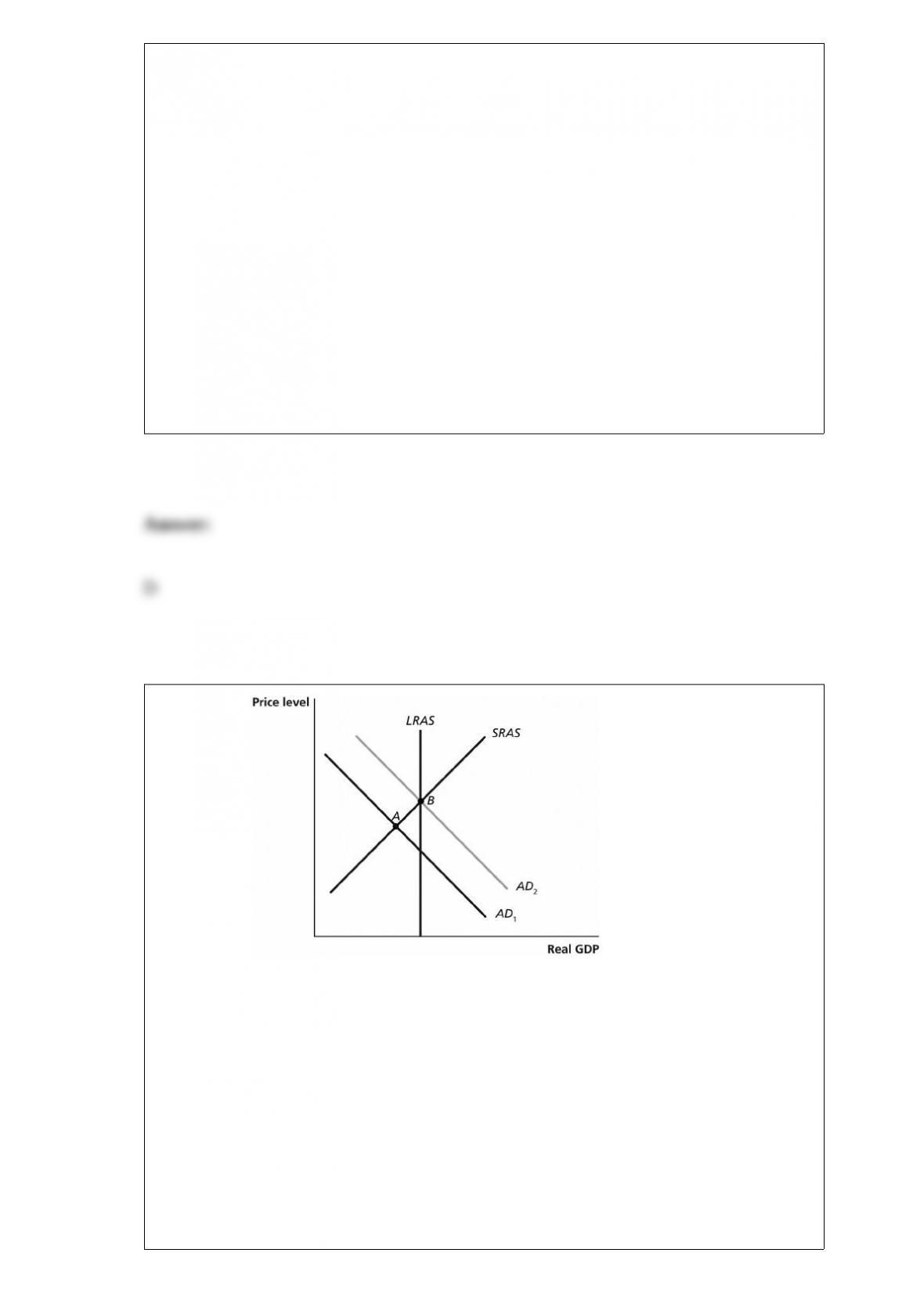
Figure 15-9
In the figure above suppose the economy is initially at point A. The movement of the
economy to point B as shown in the graph illustrates the effect of which of the
following policy actions by the Federal Reserve?
A) a decrease in income taxes
B) an increase in the required reserve ratio
C) an open market purchase of Treasury bills
D) an open market sale of Treasury bills
A stock’s dividend yield is determined by
A) dividing the dividend payment by the stock’s initial price.
B) dividing the dividend payment by the stock’s closing market price.
C) dividing the stock’s closing market price by the dividend payment.
D) subtracting the stock’s initial purchase price from the stocks’ closing market price on
a given day.
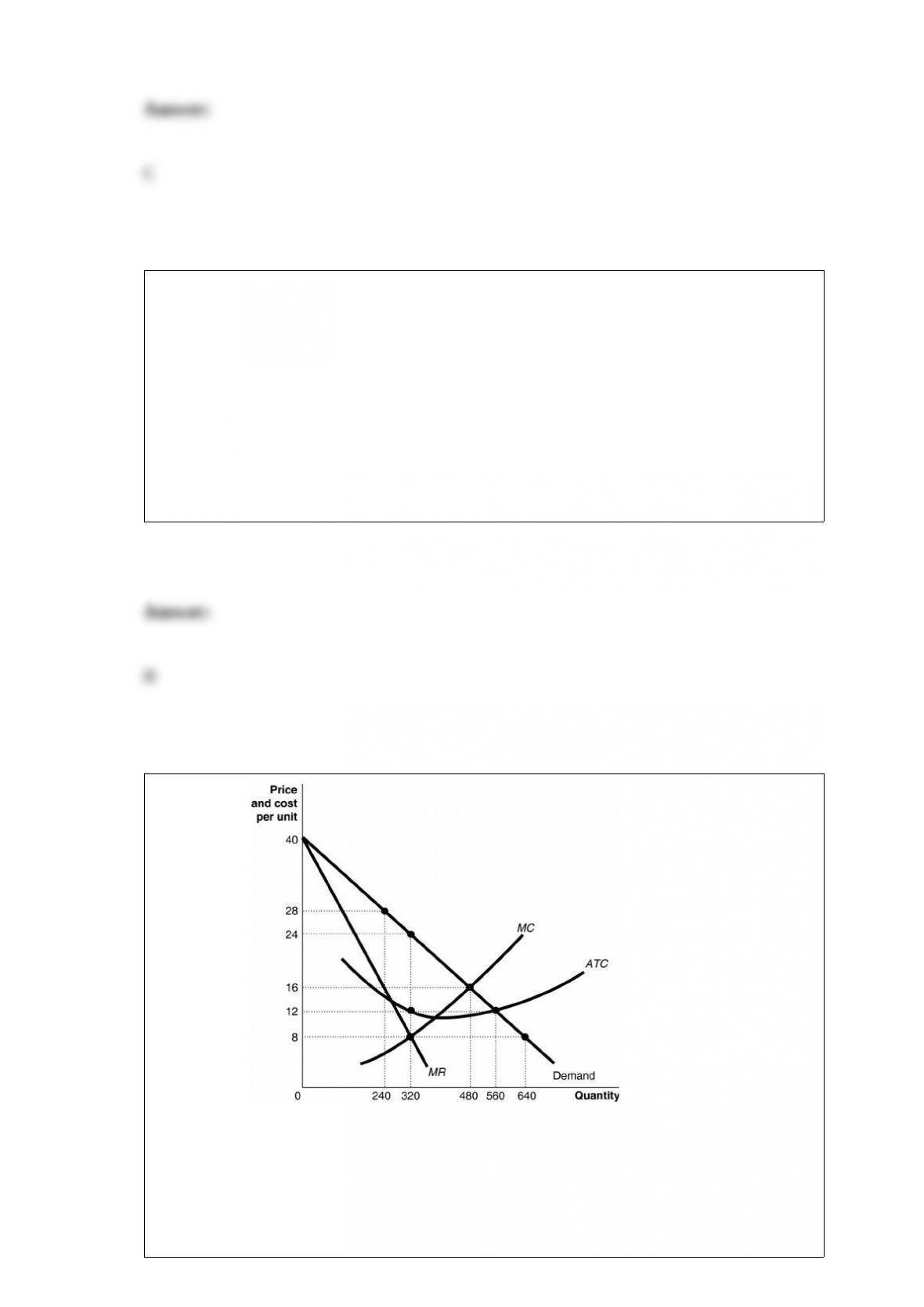
Figure 16-5
Suppose the firm represented in the diagram decides to practice perfect price
discrimination. What is the total revenue collected by the firm?
A) $6,720

B) $7,680
C) $10,240
D) $13,440
A tragedy of the commons occurs when a resource is
A) rival and excludable.
B) rival and nonexcludable.
C) nonrival and nonexcludable.
D) nonrival and excludable.
Consider the following statements:
a. Consumers buy more MP3 players from an electronics store that sells MP3 players at
a lower price than other rival electronics stores in the area.
b. Schools take steps to increase security since they believe it is more costly to allow
vandalism than to hire additional security guards.
c. Citrus growers produce more oranges when the selling price of oranges falls. Which
of the above statements demonstrates that economic agents respond to incentives?
A) a only.
B) b only.
C) c only.
D) a and b.
E) a, b, and c.
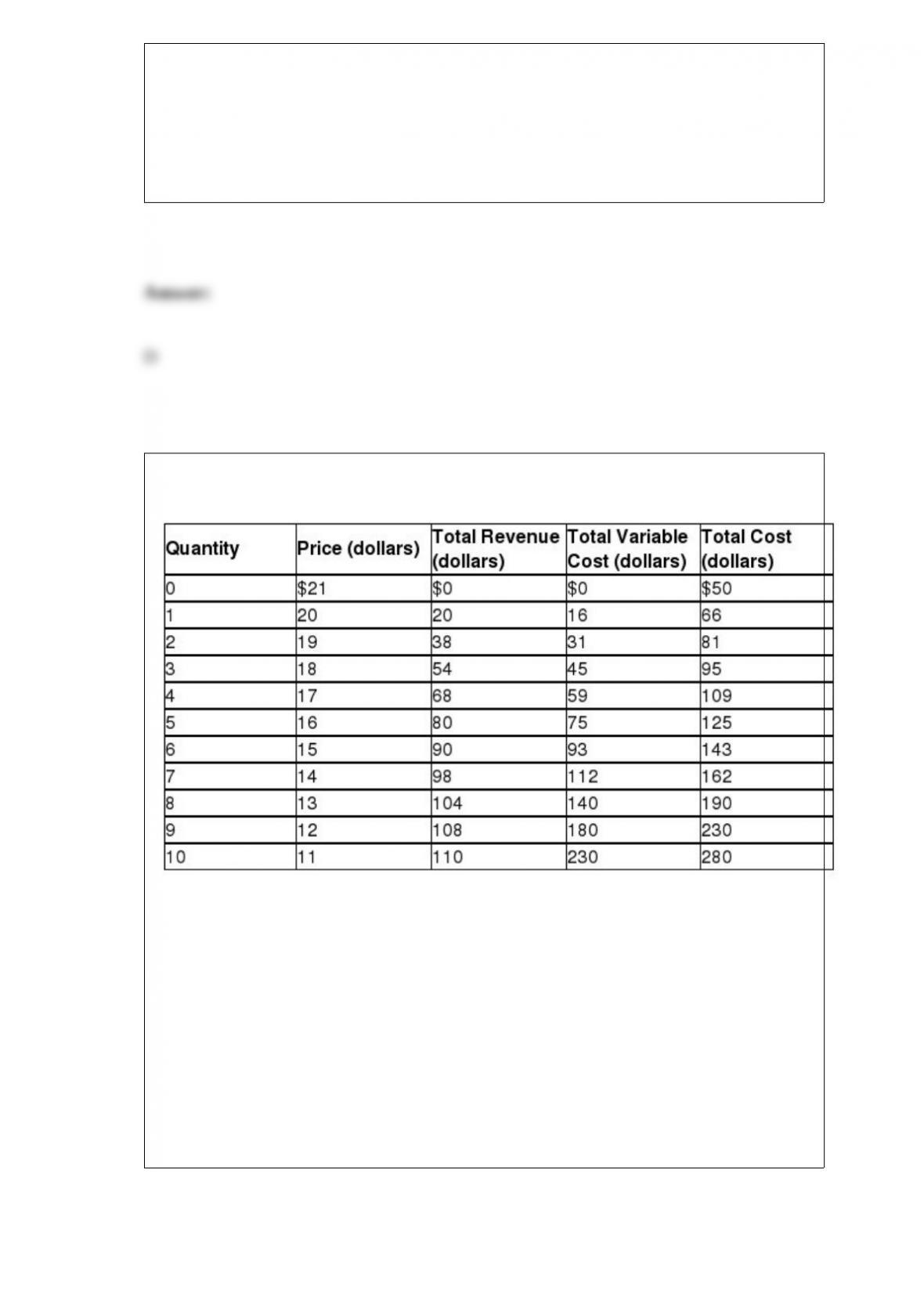
Table 13-3
Table 13-3 shows the demand and cost schedules for a monopolistically competitive
firm.
What is its average variable cost of production at its optimal output level?
A) $0 (because its optimal output =0)
B) $15
C) $14.75
D) $29

The payroll tax is a tax imposed on ________ that is used to fund Social Security and
Medicare.
A) employers only
B) workers only
C) employers and workers
D) the unemployed
What is meant by the term “rational ignorance”?
A) It refers to the absence of a negative incentive, for example, a fine for not voting,
which results in a low voter turnout.
B) It refers to a situation where one policymaker deliberately approves a bill he does
not support in exchange for a future favorable vote for his own cause.
C) It means the lack an economic incentive for voters to become informed about a
pending legislation.
D) It refers to the fact that policymakers and their constituents have different ideas of
what it means to behave rationally and each party deliberately ignores the other’s view.

In the world oil market, oil is supplied up to the point where
A) the marginal cost of the last barrel is just equal to the price buyers are willing to pay
for that last barrel.
B) the marginal cost of the last barrel is zero.
C) the marginal cost of the last barrel is the greatest distance from the price buyers are
willing to pay for that last barrel.
D) the marginal cost of the last barrel is at a maximum.
An increase in capital outflows from the United States will
A) decrease the balance on the financial account.
B) increase the balance on the financial account.
C) decrease the balance on the capital account.
D) increase the balance on the current account.
What is moral hazard?
A) It refers to the private, self-interested actions that people pursue, which when taken
collectively leads to a loss in economic surplus.
B) It refers to the actions people take after they have entered into a transaction that
makes the other party to the transaction worse off.

C) It refers to the situation in which one party to a transaction takes advantage of
knowing more than the other party to the transaction.
D) It refers to the actions people take before they enter into a transaction so as to
mislead the other party to the transaction.
How does a decrease in the federal budget deficit affect the demand for dollars and the
supply of dollars on the foreign exchange market?
A) The demand for dollars falls, and the supply of dollars falls.
B) The demand for dollars rises, and the supply of dollars rises.
C) The demand for dollars rises, and the supply of dollars falls.
D) The demand for dollars falls, and the supply of dollars rises.