
Consider the impact of a general increase in real wages. Empirical evidence suggests
that men will tend to work _____ hours and women will tend to work _____ hours.
a. more; fewer
b. more; about the same
c. fewer; fewer
d. about the same; more
The U.S. earnings distribution is:
a.best represented by a straight line Lorenz curve
b. not symmetrical around the mean earnings level
c.concentrated around a rightward mode
d.skewed to the left
Average hourly pay for production workers in the U. S. in 2010 was:
a. higher than in most other industrialized countries in Europe and Asia
b. lower than in most other industrialized countries in Europe and Asia

c. about the same as in most other industrialized countries in Europe and Asia
d. lower than in many other industrialized countries in Europe but greater than in newly
industrialized countries such as Singapore, Taiwan, and Korea
Nobel Laureate Gary Becker’s basic professional contribution is his:
a. application of traditional theories of anthropology to labor markets
b. application of the economic perspective to law, sociology, demographics, and
anthropology
c. statistical verification of race and gender discrimination
d. explanation of the limitations of the economic perspective in explaining labor
markets
If the screening hypothesis is true:
a. educational attainment and the level of fringe benefits received will be inversely
related
b. the private rate of return to education will tend to overstate the social rate of return
c. the private rate of return to education will not accurately reflect the gain to the
individual student
d. the college wage premium is much greater than is hypothesized by human capital
theorists
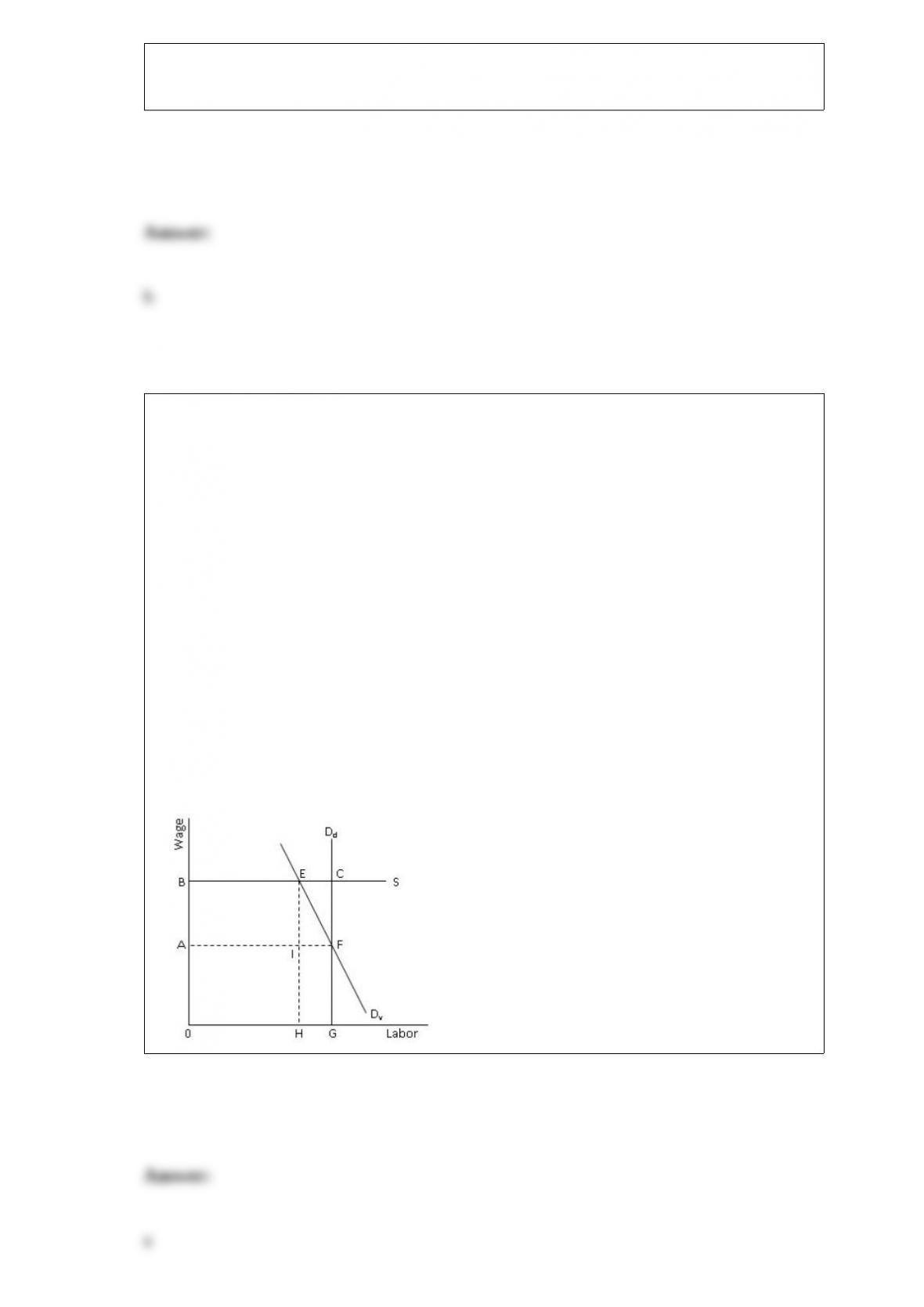
Which of the following best explains why the government demands fewer persons for
the armed forces under the volunteer system than under a draft system (that is, H as
compared to G)? (the following graph of the demand for and supply of armed forces
personnel).
a.The higher wages of a volunteer system induce a shift to greater relative use of capital
and a reduction in scale.
b.The higher wages of a volunteer system forces the military to employ more labor
relative to capital, which reduces the productivity of labor.
c.Because a volunteer system attracts only low-wage, low-skill workers, many highly
technical jobs must be eliminated.
d.The military uses the same number of workers under either system since the true cost
is independent of the system used, but it must reduce the amount of capital it uses.

The official BLS unemployment rate may overstate economic hardship because:
a.all part-time workers are considered fully employed
b.some workers may be underemployed
c.the unemployed include semi-retired workers and teens who wish to work only
part-time
d.the unemployed include people who are not actively seeking work
In 2006, the employment-population ratio was approximately:
a.54%
b.63%
c.71%
d.79%
Productivity growth:
a.has been associated with rising aggregate unemployment
b.has been associated with growing aggregate employment
c.in specific industries results in growing employment in those industries
d.in specific industries results in growing unemployment in those industries
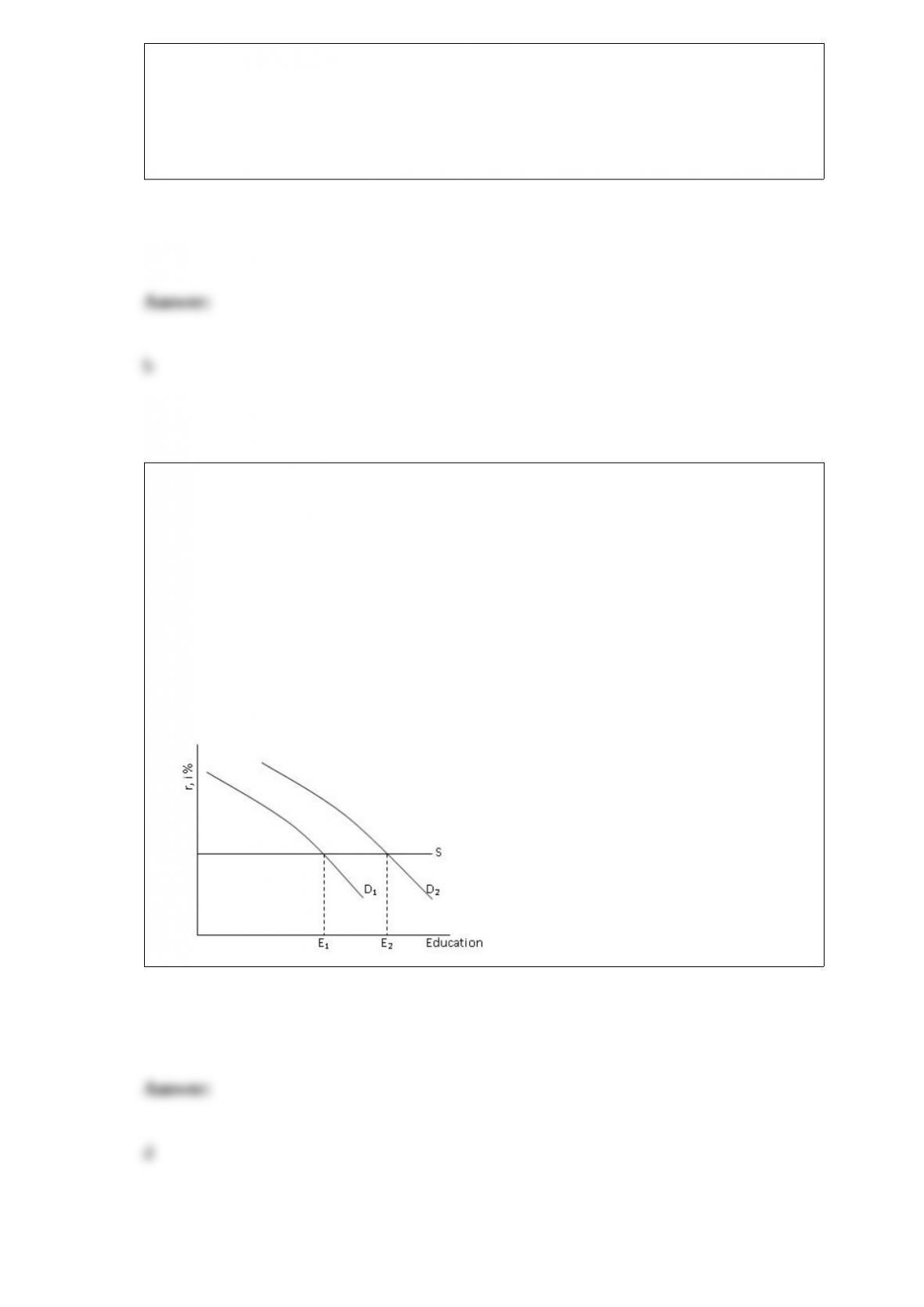
Refer to the diagram. Which one of the following might cause a person’s human capital
investment demand curve to shift from D1 to D2?
a. The person discounts future earnings at a higher rate than before
b. The indirect costs of education increase
c. The college wage premium falls
d. The college wage premium increases

The average quality of labor has increased, partly because the demand for education
and health care are:
a.income elasticrising national income generates more than proportional increases in
spending on these items
b.income elasticfalling national income generates more than proportional increases in
spending on these items
c.income inelasticrising national income generates more than proportional increases in
spending on these items
d.income inelasticrising national income generates less than proportional increases in
spending on these items
In 2010, hourly pay (measured in U.S. dollars) was highest in:
a. Sweden
b. Japan
c. U.S.
d. Norway
27. The shape of the worker’s indifference curvesI1, I2, and I3indicates that:
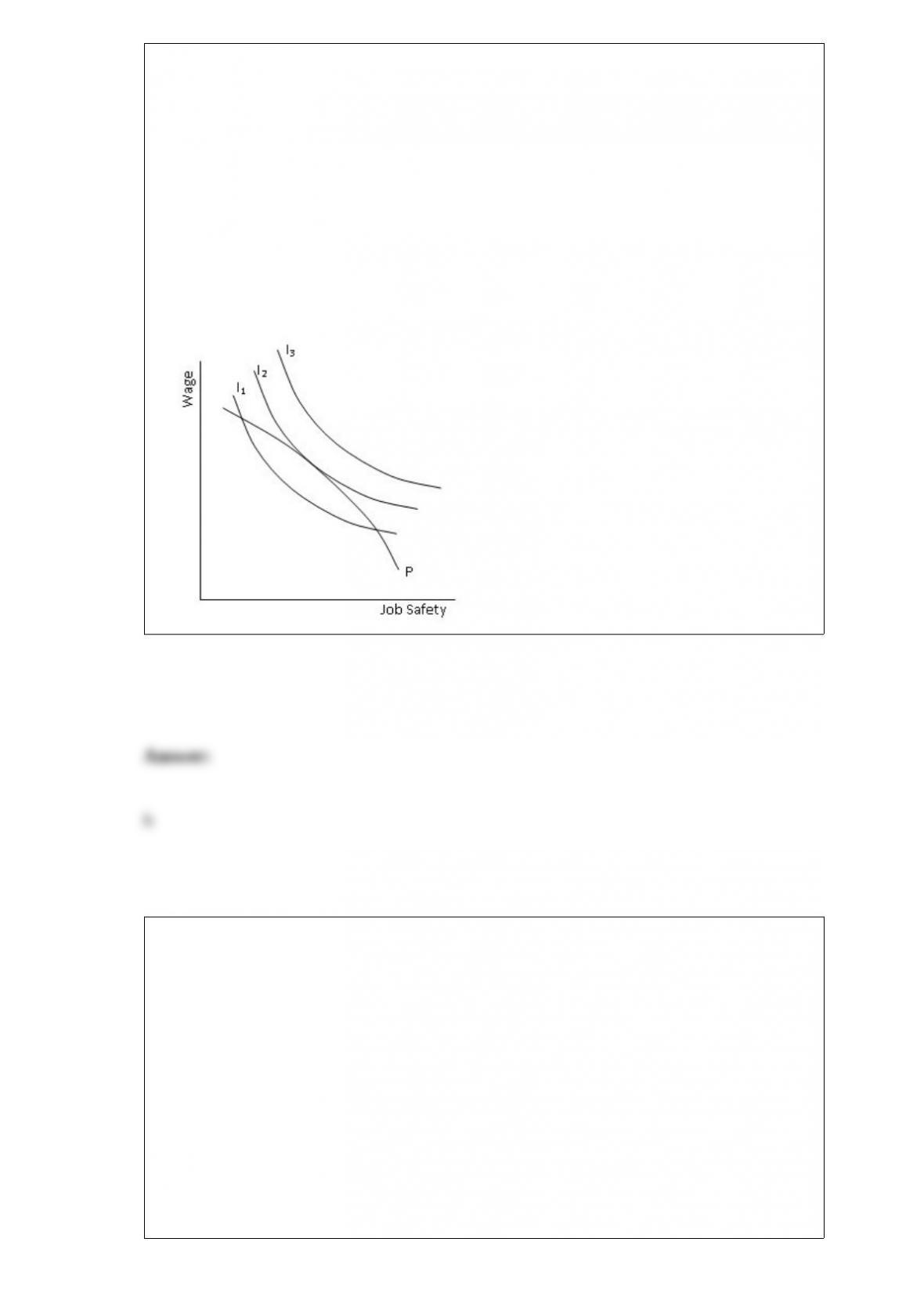
a. the worker faces a constant trade-off between job safety and wages
b. for each successive reduction in job safety, greater increases in wages are required to
maintain the same utility
c. for each successive reduction in job safety, smaller increases in wages are required to
maintain the same level of utility
d. for each successive reduction in job safety, smaller reductions in wages are required
to maintain the same utility
The allocative efficiency loss associated with unions arises because:
a.job losers in the union sector take away jobs from more productive workers in the
nonunion sector
b.the value of lost output in the union sector is greater than the value of any additional
output in the nonunion sector
c.the union wage rises above the value of marginal product while the nonunion wage
falls below it
d.job losers in the union sector are unqualified to work in the nonunion sector, so
society loses their potential output

Suppose an income maintenance program offers a basic benefit of $7500 per year and
the benefit-reduction rate is 33 1/3%. The break-even level of income is then:
a. $2500
b. $7500
c. $15,000
d. $22,500
Which of the following is a true statement regarding the U.S. earnings distribution?
a.Because the distribution is skewed to the right, the mean exceeds the mode
b.Because the distribution is skewed to the right, the mode exceeds the mean
c.Because the distribution is skewed to the left, the mean exceeds the mode
d.Because the distribution is skewed to the left, the mode exceeds the median

The expected private rate of return to migration to a particular individual:
a.is similar to that on other forms of investment in human capital
b.equals that individual’s actual rate of return
c.cannot be determined because there are backflows in migration
d.cannot be determined because there are earnings disparities between the origin and
the destination
Suppose a tax is levied on Muhammad which reduces his real income. The money
collected is used to provide a public good which restores his utility to exactly the same
level it had been prior to the tax. Compared to his original work effort, Muhammad will
now work:
a.more hours because the substitution and income effects reinforce one another
b.fewer hours because the income effect of the public good exactly offsets the income
effect of the tax, leaving only the substitution effect of the lower net wage
c.more hours because the income effect of the public good exactly offsets the income
effect of the tax, leaving only the substitution effect of the lower net wage
d.either more or fewer hours, depending on the relative strengths of the income and
substitution effects
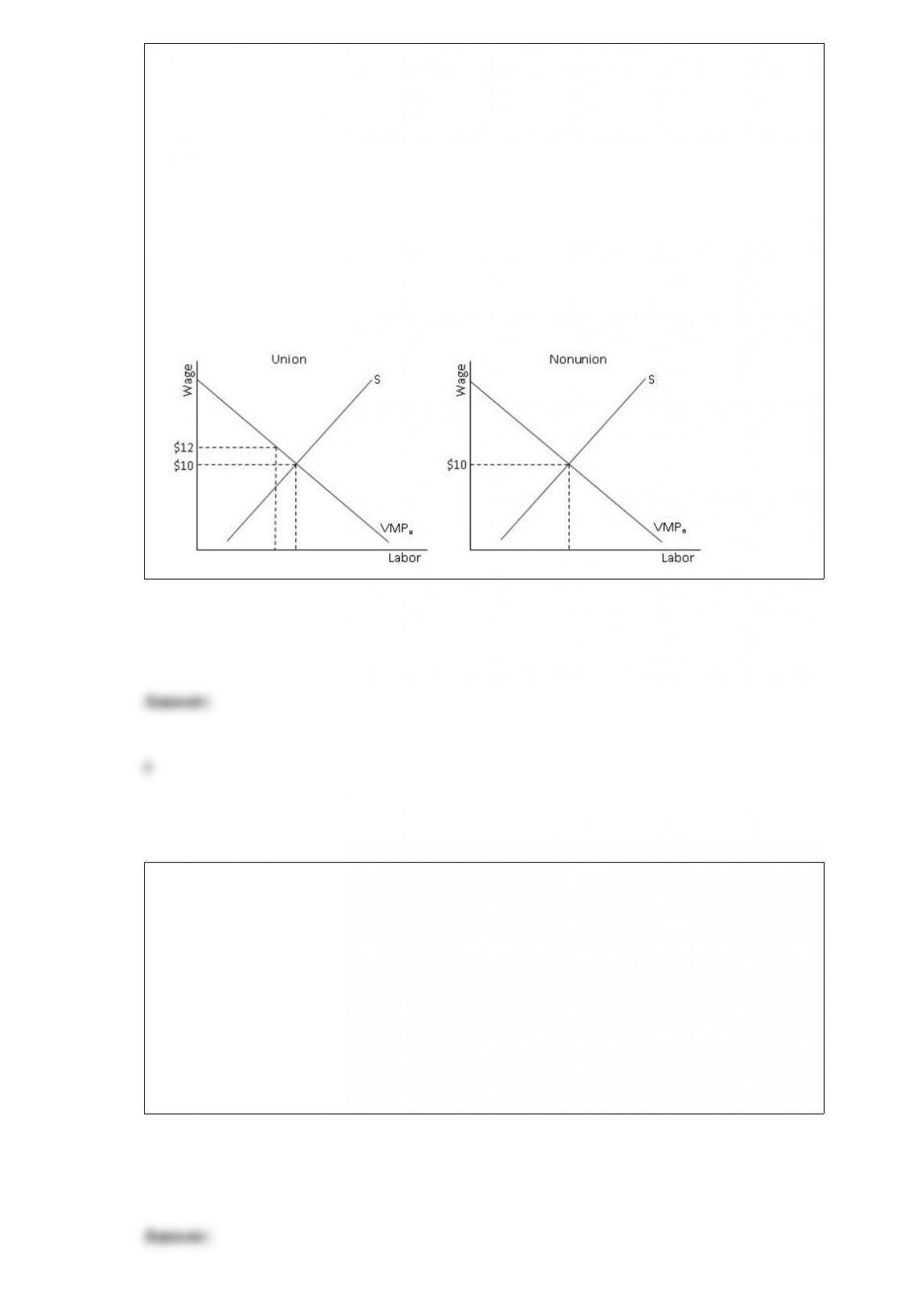
The pure union wage advantage in this market is: (Wages in both the union and
nonunion sectors are initially $10. The union then negotiates a wage rate of $ The
post-negotiation nonunion wage is not yet known.)
a.20%
b.25%
c.$2
d.More information is needed
Concerning the relationship between unemployment and migration, empirical studies
generally find that:
a.families headed by unemployed persons are less likely than others to migrate
b.a higher rate of unemployment at the origin raises the likelihood of out-migration
c.a lower rate of unemployment at the destination positively affects immigration
d.there is no relationship between unemployment and the migration decision

If nonunion workers in a given occupation are paid $16 per hour while union workers
receive $20 per hour, the pure union wage advantage is:
a.20%
b.25%
c.80%
d.more information is required
In equilibrium:
a. worker A will work for firm X; worker B will work for firm Y
b. worker A will work for firm Y; worker B will work for firm X
c. both workers will work for firm X
d. both workers will work for firm Y

On a standard income-leisure diagram, Sara has steeper indifference curves than John.
This likely reflects the fact that:
a. Sara likes leisure but dislikes income while John likes both
b. Sara likes income but dislikes leisure while John likes both
c. Sara values leisure more highly compared to income than John does
d. John values leisure more highly compared to income than Sara does
One view of the firm is that stockholders hire managers who, in turn, hire workers.
Maximum profits are earned by satisfying the customer. The two principal-agent
relationships illustrated in this view are:
a. manager-stockholder; worker-manager
b. stockholder-manager; customer-manager
c. manager-stockholder; manager-worker
d. stockholder-manager; manager-worker

Research by Dale and Krueger shows that, all else equal:
a. starting salaries of college graduates are not generally affected by choice of major
b. starting salaries of college graduates are positively related to the selectivity of the
college attended but inversely related to the selectivity of other schools to which the
student applied
c. it does not generally pay to attend a school with higher tuition
d. it does not generally pay to attend a more selective college
The employment impact of a union-imposed above-equilibrium wage will tend to be
greater:
a.the longer the amount of time that transpires
b.if there is a union shop clause in the labor contract
c.the more inelastic the labor supply
d.the more inelastic the labor demand
Assuming workers must work TS hours or not work at all, worker B will:
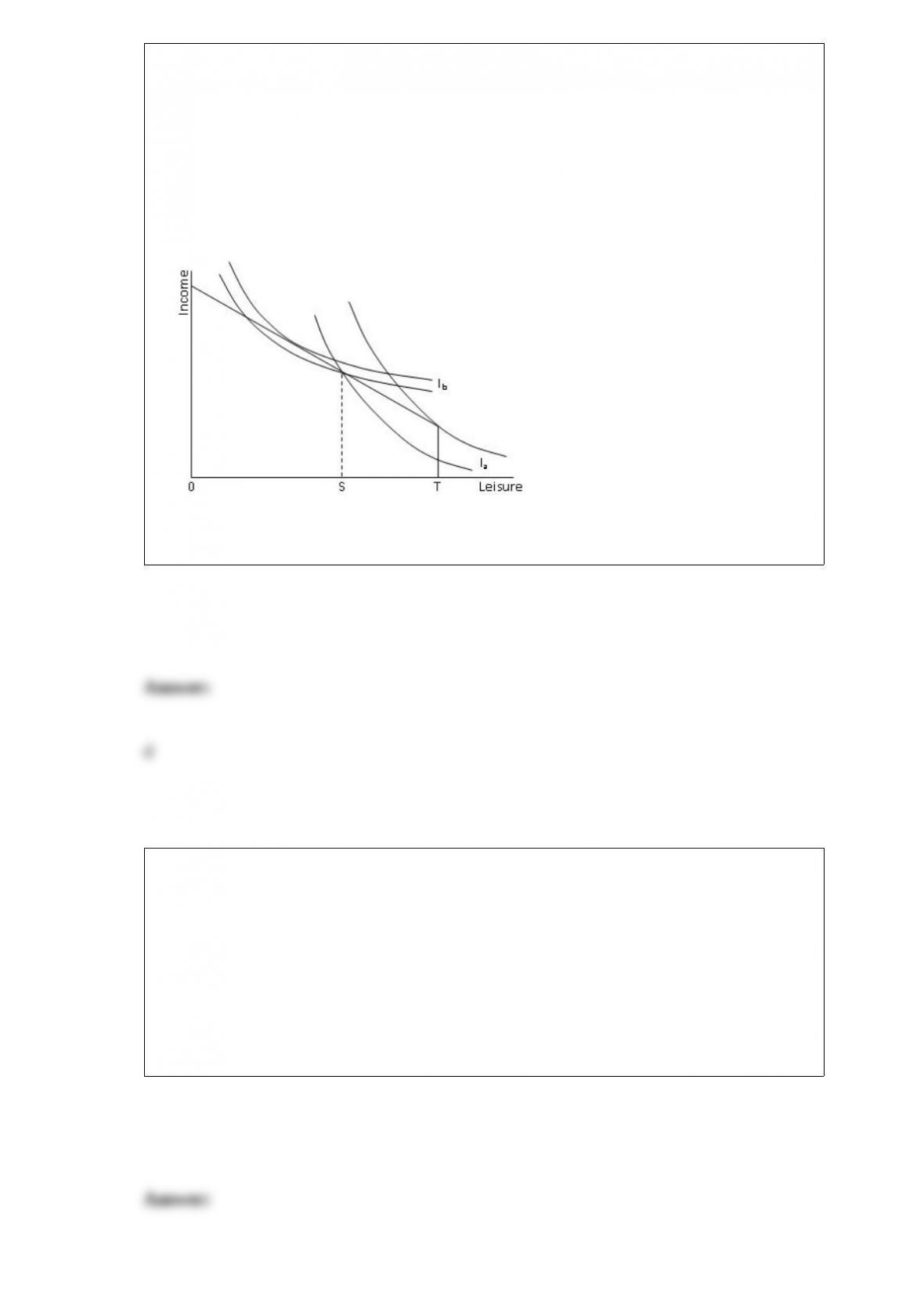
a. not participate in the labor force
b. be at an optimum at TS hours of work
c. work the standard workweek but will feel overemployed
d. work the standard workweek but will feel underemployed
TS represents the standard 40-hour workweek. Indifference curves labeled with
subscripts “a” and “b” are for individuals A and B, respectively.
Compared to basic work-leisure choice model, Becker’s model of time allocation:
a. considers the week rather than the day as the basic unit of time
b. considers the household rather than the individual as the basic decision-making unit
c. assumes that goods and services take no time to consume
d. considers time spent in household work as work time rather than leisure time

Discrimination contributes to earnings inequality through:
a.pay discrimination only
b.pay discrimination and occupational segregation only
c.pay discrimination, occupational segregation, and human capital discrimination
d.chance and risk taking, which reduce the Gini coefficient
According to the “demand and supply” interpretation of Becker’s model, which one of
the following will tend to reduce the male-female wage gap?
a. An increase in the supply of female labor
b. An increase in the discrimination coefficients of some employers
c. An increase in the number of nondiscriminating firms
d. An overall increase in the demand for labor
Suppose the government’s demand for military personnel is Dd, and that it wishes to
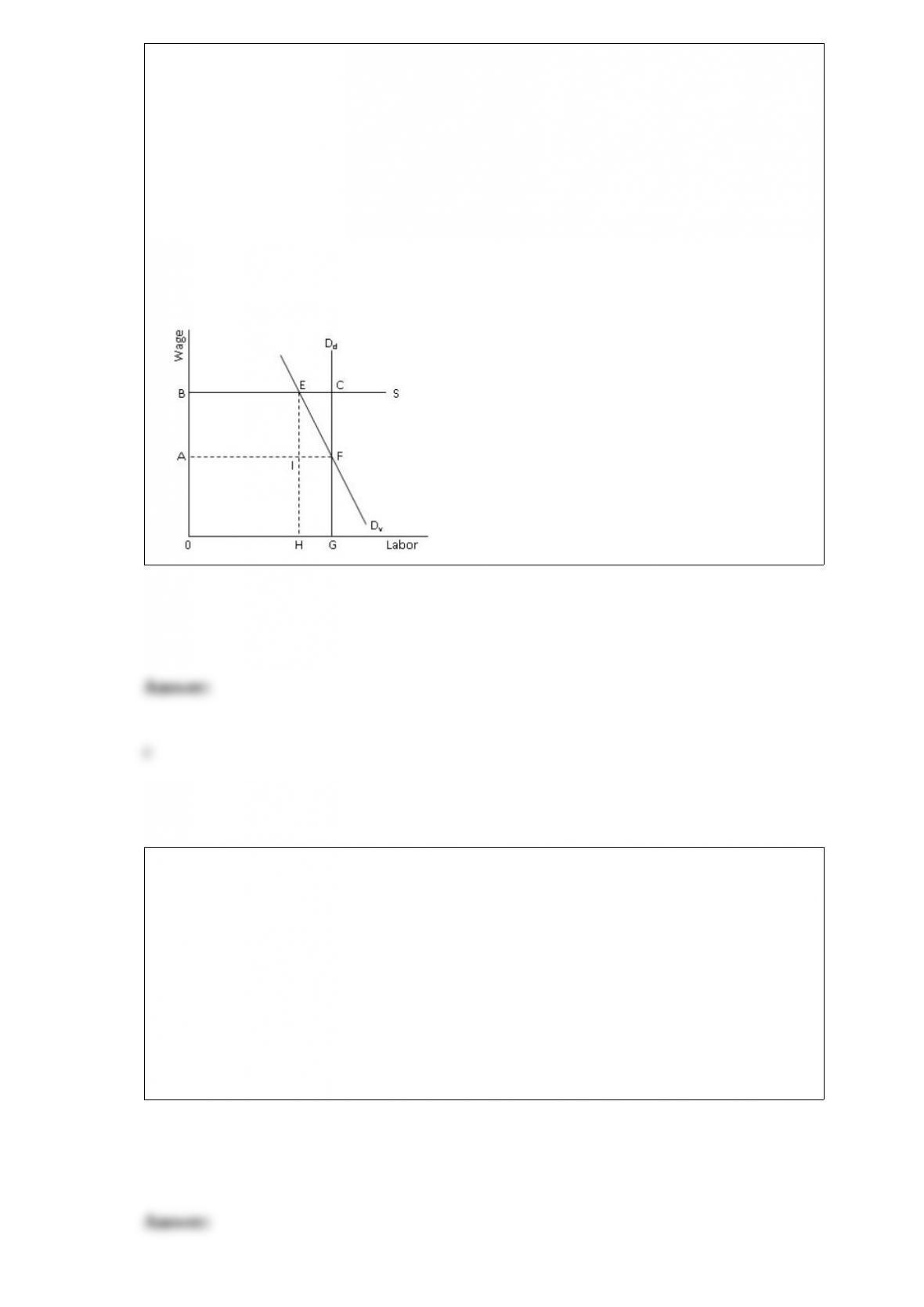
draft G persons at a wage of $A. The full cost to society of this proposal is area: (the
following graph of the demand for and supply of armed forces personnel).
a.0AFG
b.0BEH
c.0BCG
d.0BEFG
Ignoring the tax consequences of its provision, what might we conclude if people work
more hours in response to the provision of a public good?
a.The good is complementary with leisure
b.The good is complementary with work
c.The substitution effect exceeds the income effect
d.The substitution effect and income effect cancel each other
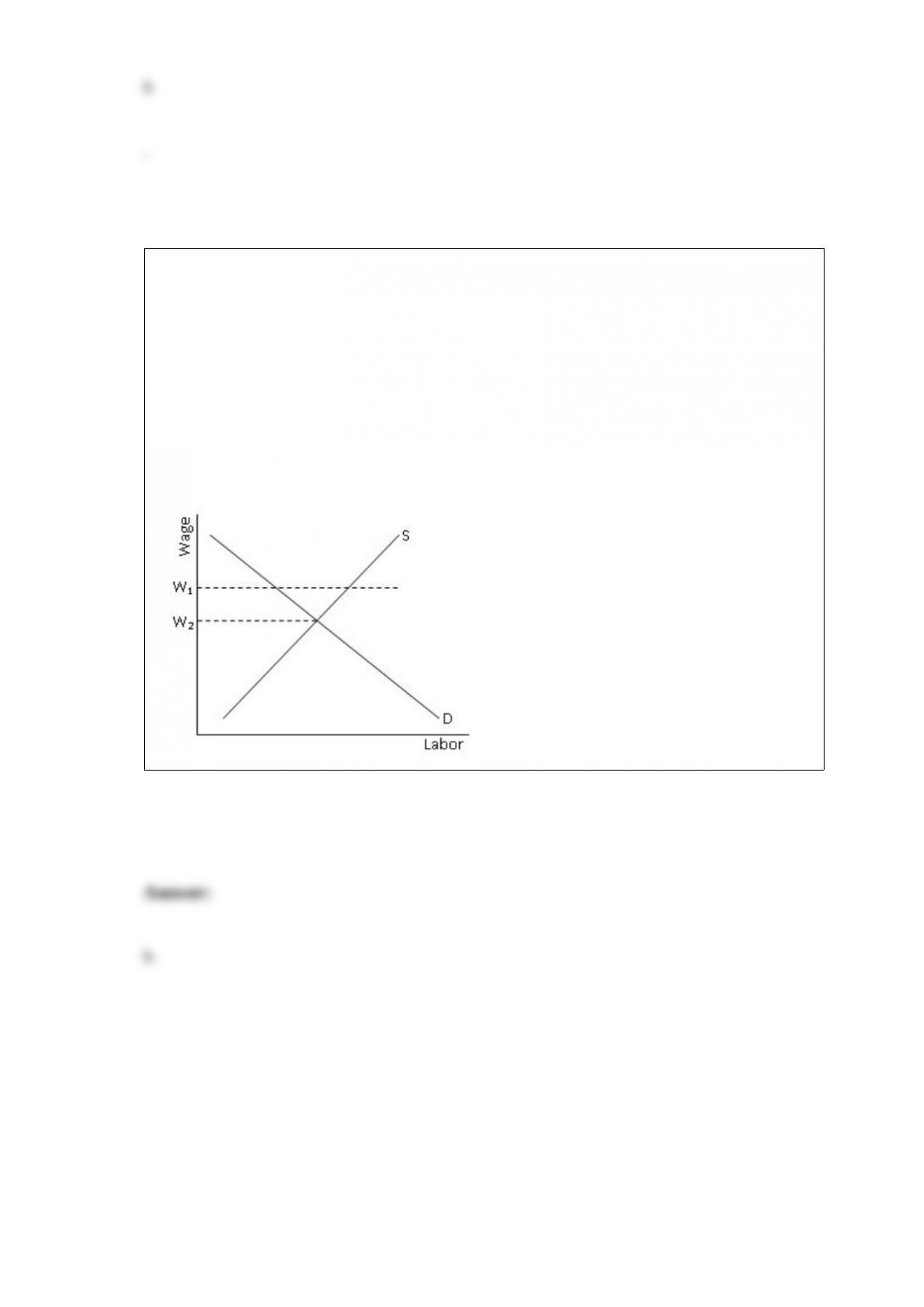
For the supply and demand curves in the diagram, the level of employment will be
highest at:
a. wage rate W1
b. wage rate W2
c. a wage rate higher than W1
d. a wage rate lower than W2