1) producing goods for export produces:
a.jobs
b.income
c.tariffs
d.a and b
2) suppose that steel from japan faces a 20 percent tariff in france and a 25 percent tariff
in italy, while france and italy maintain free trade between each other. france and italy
are therefore part of a (an):
a.free trade area
b.customs union
c.common market
d.economic union
3) an orderly marketing agreement is a market-sharing pact negotiated by trading
nations, and its effect is to moderate the intensity of international competition.
a.true
b.false
4) figure 5.5 illustrates the television market for mexico, assumed to be a small country
that is unable to affect the world price. smexico is the domestic supply schedule and
dmexico is the domestic demand schedule. suppose that japan can supply televisions to
mexico at a price of $100 per set.
figure 5.5. mexico’s television market
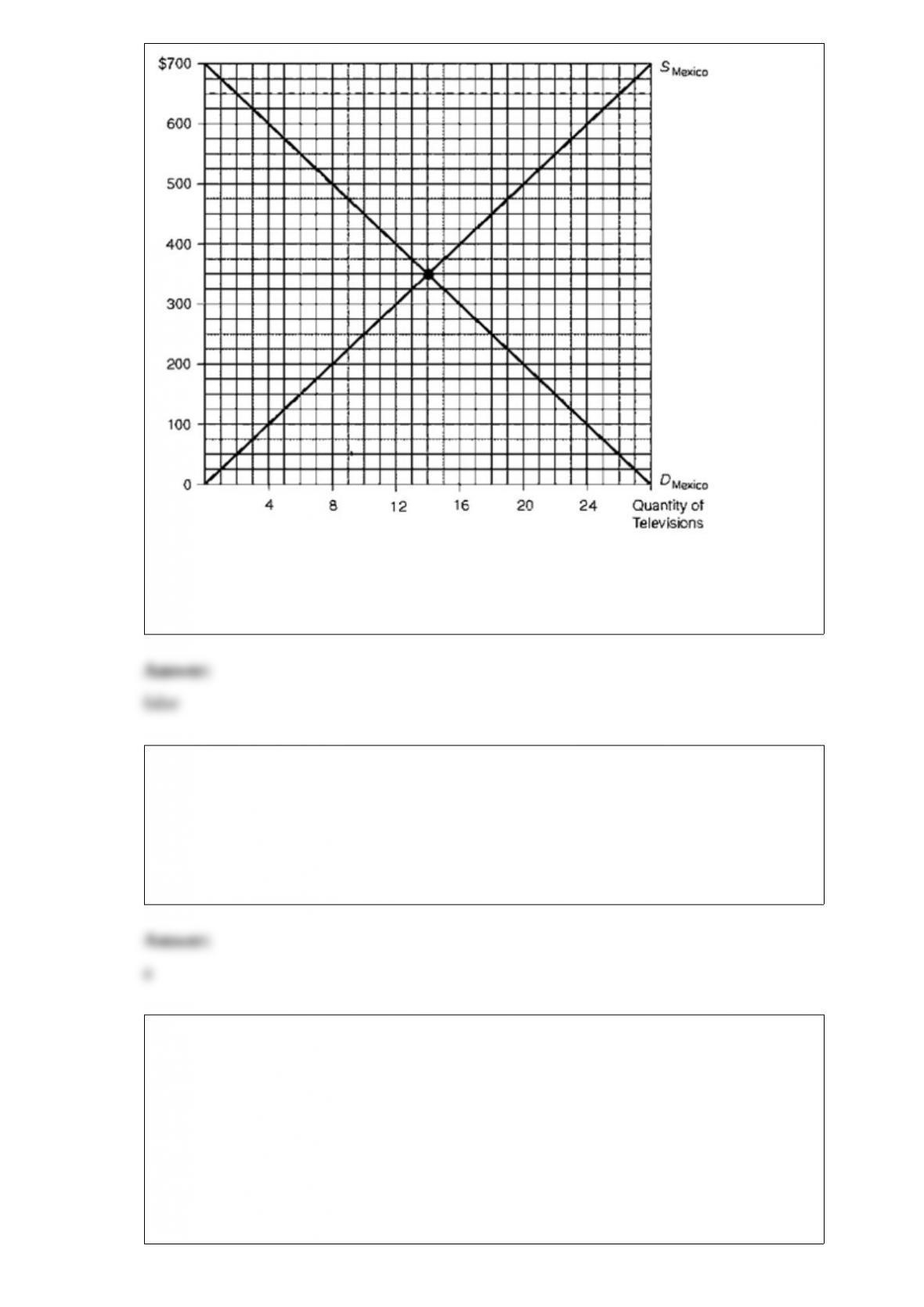
consider figure 5.5. with free trade, mexican producer surplus equals $2450 and
mexican consumer surplus equals $200.
a.true
b.false
5) the lag that occurs between changes in relative prices and the quantities of goods
traded is the
a.recognition lag
b.recovery lag
c.implementation lag
d.legislative lag
6) figure 8.1 depicts the supply and demand schedules of calculators for greece, a
‘small” country that is unable to affect the world price. greece’s supply and demand
schedules of calculators are respectively depicted by sg and dg. assume that greece
imports calculators from either germany or france. suppose germany is the world’s
low-cost producer who can supply calculators to greece at $20 per unit, while france
can supply calculators at $30 per unit.
figure 8.1. effects of a customs union
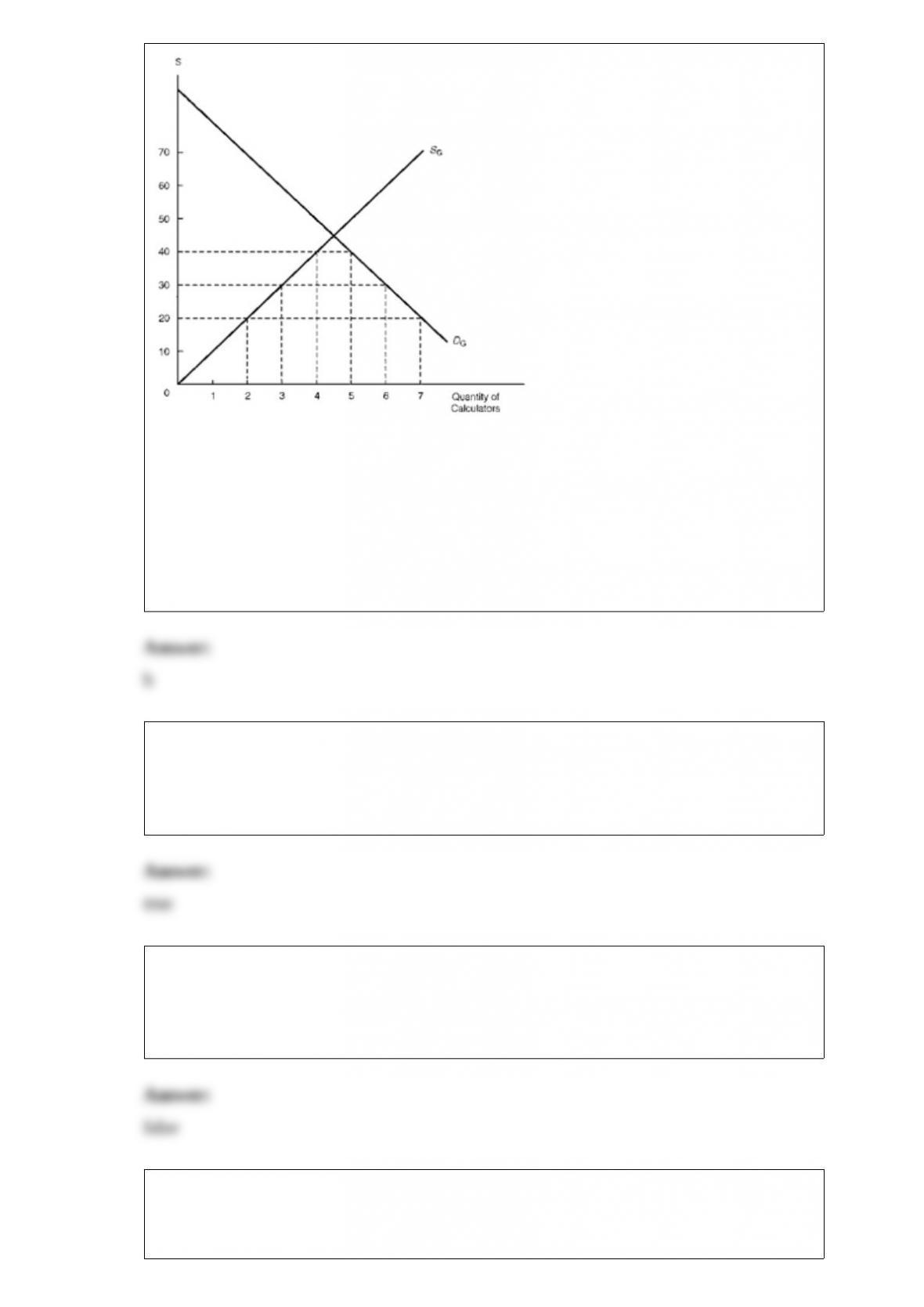
consider figure 8.1. assume greece levies a per-unit tariff of $20 on imports from both
germany and france.
the deadweight welfare loss to greece, resulting from the $20 tariff, equals:
a.$20
b.$40
c.$60
d.$80
7) according to the monetary approach, balance-of-payments disequilibriums are the
result of imbalances in a country’s money supply and money demand.
a.true
b.false
8) large industrial nations with diversified economies and small trade sectors have
generally pegged their currencies to one of the world’s key currencies.
a.true
b.false
9) human rights activists contend that this organization supports governments that
permit sweatshops:
a.the international organization for standardization
b.the international monetary fund
c.the world health organization
d.all of these
10) when producing jetliners, suppose that boeing employs labor and materials whose
costs are denominated in dollars and marks respectively. if the dollar’s exchange value
depreciates 20 percent against the mark, the mark-denominated cost of a boeing jetliner
falls by an amount less than 20 percent.
a.true
b.false
11) if a nation has an open economy, it means that the nation:
a.allows private ownership of capital
b.has flexible exchange rates
c.has fixed exchange rates
d.conducts trade with other countries
12) ____ is the ability of a firm/industry, under free and fair market conditions, to
design, produce, and market goods and services that are better and/or cheaper than
those of other firms/industries.
a.competitiveness
b.protectionism
c.comparative advantage
d.absolute advantage