
Protectionism refers to the use of trade barriers to shield domestic firms from foreign
competition.
In the United States, imports and exports make up more than half of GDP.
Price leadership is a form of explicit collusion where one firm in an oligopoly
announces a price change and expects all other firms to follow suit.
The Federal Reserve could target both the money supply and the interest rate at the
same time if it controlled money demand along with money supply.

When Jack’s income increases by $1,000, he spends an additional $850 dollars. This
implies that his marginal propensity to save is 0.85.
A product’s price approaches its marginal cost as market concentration increases.
As output increases, the distance between average total cost and average variable cost
increases.
When the government imposes a tax equal to the external cost of producing a product
that causes pollution, the government is said to externalize the externality.

Because many business situations are repeated games, firms may be able to avoid the
prisoner’s dilemma and implicitly collude to keep prices high.
Suppose that when the price per ream of recycled printer paper rises from $4 to $4.50,
the quantity demanded falls from 800 to 600 reams per day. Using the midpoint
formula, what is the price elasticity of demand (in absolute value) over this range?
A) 0.003
B) 0.41
C) 2.43
D) 4
When a firm’s long-run average cost curve is horizontal for a range of output, then that
range of production displays
A) increasing returns to scale.
B) constant returns to scale.
C) decreasing returns to scale.
D) constant average fixed costs.
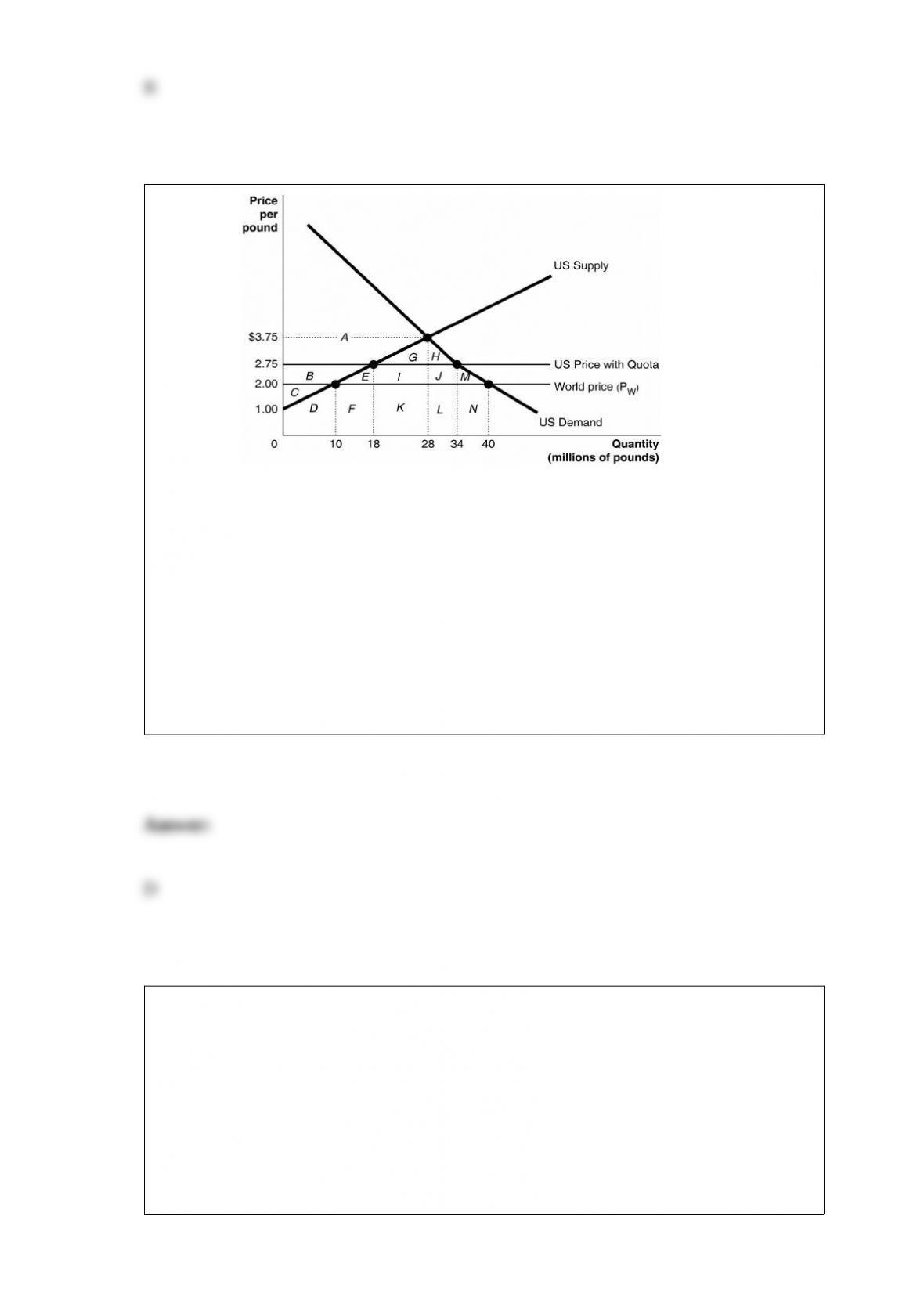
Figure 9-3 Since 1953 the
United States has imposed a quota to limit the imports of peanuts. Figure 9-3 illustrates
the impact of the quota. What is the value of consumer surplus after the imposition of
the quota?
A) $8 million
B) $26.25 million
C) $45.5 million
D) $72.25 million
Economists assume that rational behavior is useful in explaining choices people make
A) because irrational people do not make economic choices.
B) even though people may not behave rationally all the time.
C) because individuals act rationally all the time in all circumstances.
D) even though people rarely, if ever, behave in a rational manner.
Economists caution that conventional statistics used to estimate the extent of poverty in
the United States fail to account for benefits people receive that, if considered, would
reduce the amount of poverty. Which of the following is an example of these benefits?
A) Individuals can use tax credits and the personal exemption to reduce their taxable
incomes. This reduces what they owe the government and increases their disposable
incomes.
B) The federal income tax system is progressive. As a result, the poor have higher
after-tax incomes than they would have if the income tax system was proportional or
progressive.
C) Individuals with low incomes receive non-cash benefits such as free school lunches
and food stamps.
D) The federal minimum wage forces employers to pay workers with low skills an
efficiency wage.
Figure 24-2
Ceteris paribus, an increase in workers and firms adjusting to having previously
underestimated the price level would be represented by a movement from
A) SRAS1 to SRAS2.
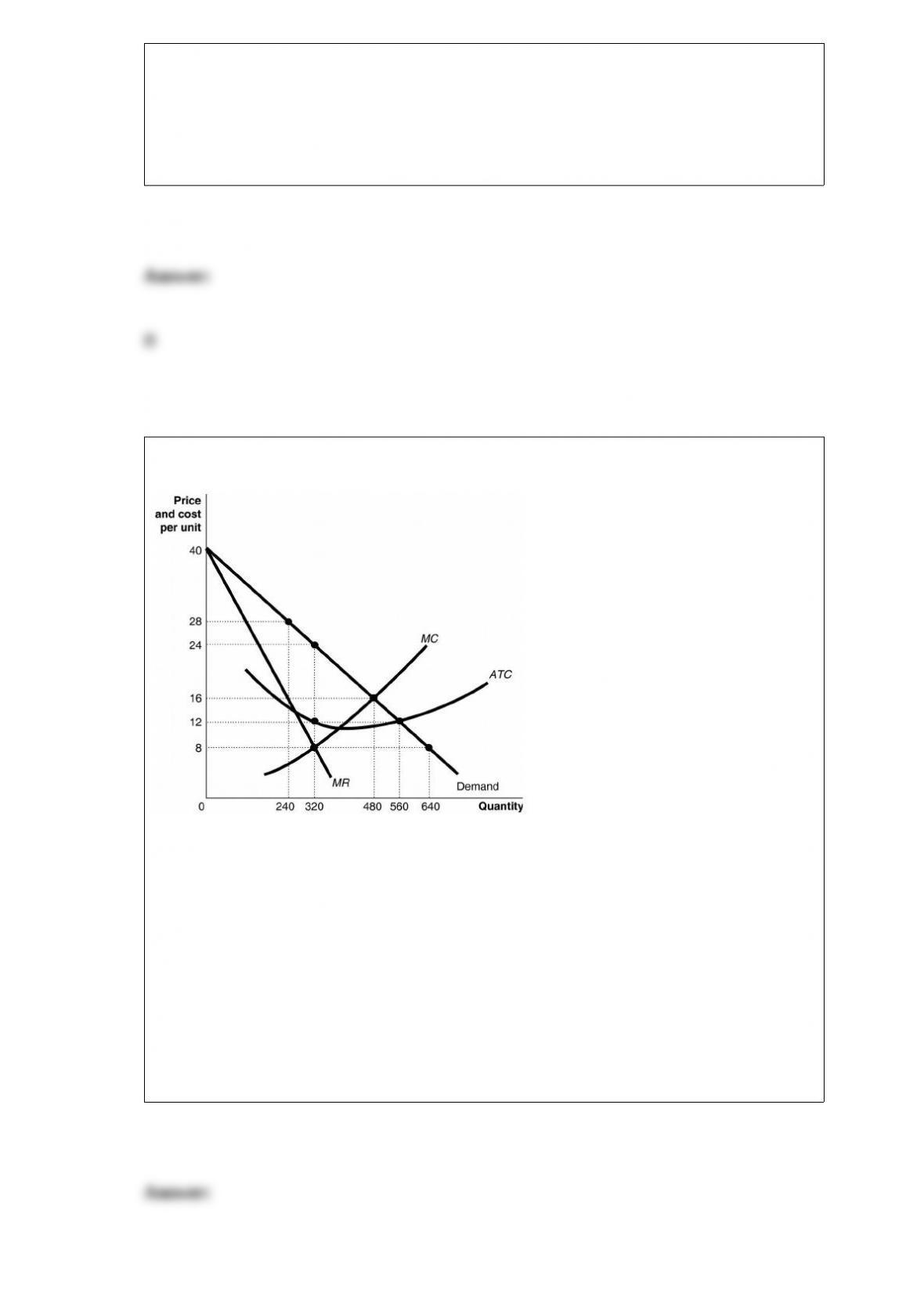
B) SRAS2 to SRAS1.
C) point A to point B.
D) point B to point A.
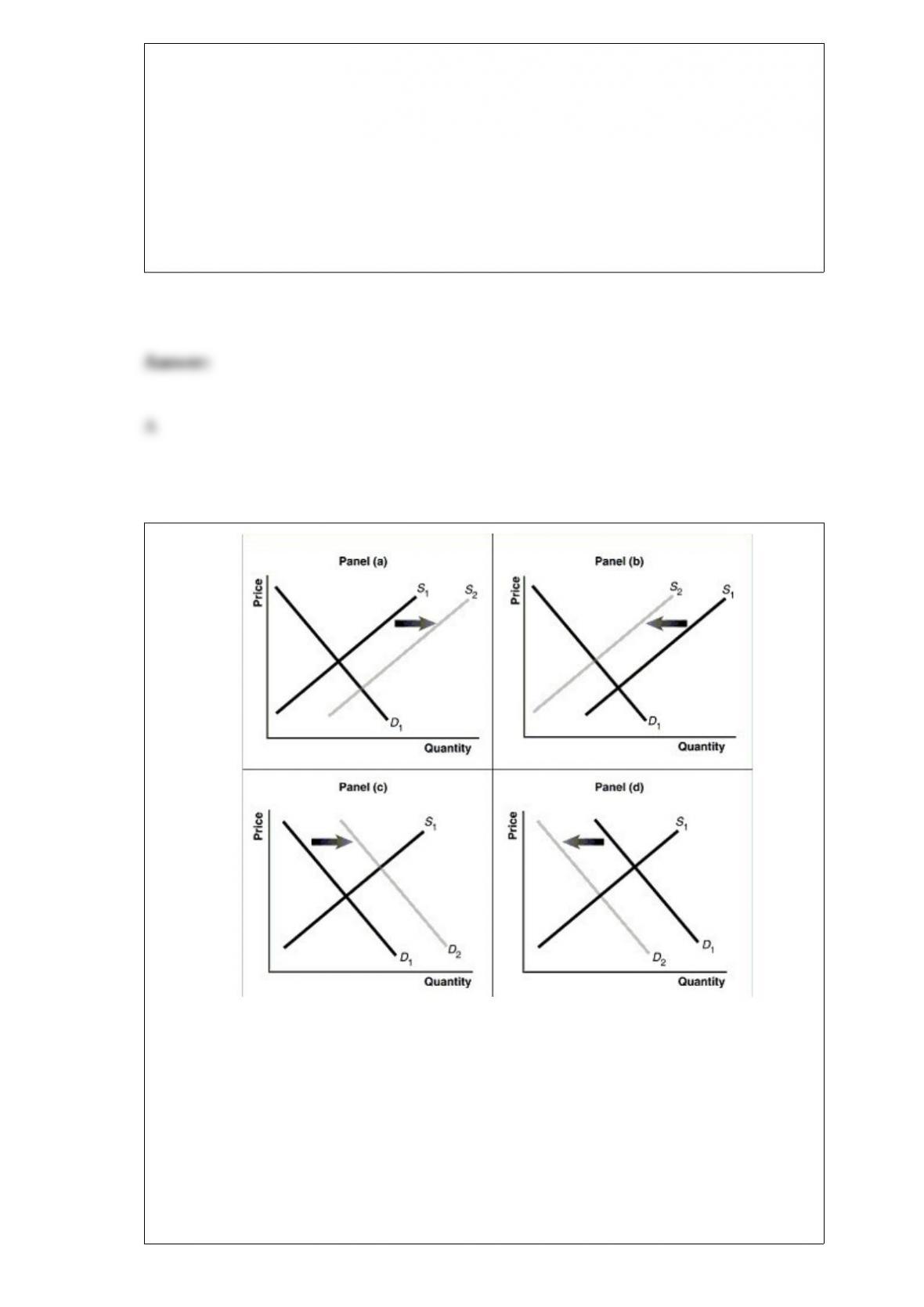
Figure 16-5
Suppose the firm represented in the diagram decides to use a two-part pricing strategy
such that it charges a fixed fee and a per-unit price equal to the monopoly price. What is
the profitearned under this pricing scheme?
A) $5,760
B) $6,400
C) $7,680
D) $7,870

If net foreign investment in the United States is positive, how must national saving and
domestic investment be related? (Assume that the capital account is zero and net
transfers are zero.)
A) Domestic investment and national saving must also be positive.
B) Domestic investment must be less than national saving.
C) Domestic investment must be greater than national saving.
D) Domestic investment can be greater than or less than national saving.
Joan Jillson owns a coffee shop. Assume that the marginal product of the labor Joan
employs (MPL)equals 500 cups per week and the marginal product of her shop’s capital
(MPK) equals 1,000. Assume also that the wage (w) Joan pays her workers equals $250
per week and the rental price () of her capital – her coffee machines – equals $500 per
week. Which of the following correctly analyzes whether Joan is minimizing her costs?
A) No, Joan is not minimizing her costs because MPK is greater than MPL and is
greater than w.
B) Yes, Joan is minimizing her costs because MPK/ equals MPL/w.
C) No, Joan is not minimizing her costs because MPLw is less than MPK .
D) Yes, Joan is minimizing her costs because the she is a price-taker in the markets for
labor and capital.

Economists argue that the corporate income tax is an example of a tax with a high
deadweight loss because
A) some of the burden of the tax is passed on to consumers in the form of higher prices.
B) it discourages corporations from undertaking capital investments to enhance market
competitiveness.
C) taxing a corporation’s income amounts to double taxing the earnings on individual
shareholders’ investments in corporations.
D) it encourages corporations to seek ways to evade taxes.
Suppose a hurricane decreased the supply of oranges so that the price of oranges rose
from $120 a ton to $180 a ton and quantity sold decreased from 800 tons to 240 tons.
What is the absolute value of the price elasticity of demand?
A) 0.11
B) 0.37
C) 2.69
D) 9.33
A major factor contributing to the slow growth rate of less developed economies is
A) the lack of well-defined and enforceable property rights.
B) the lack of natural resources.
C) the lack of workers.
D) the high rate of illiteracy.
Figure 3-7
Assume that the graphs in this figure represent the demand and supply curves for laptop
computers. Which panel best describes what happens in this market when the price of
computer hard drives falls?
A) Panel (a)
B) Panel (b)
C) Panel (c)
D) Panel (d)
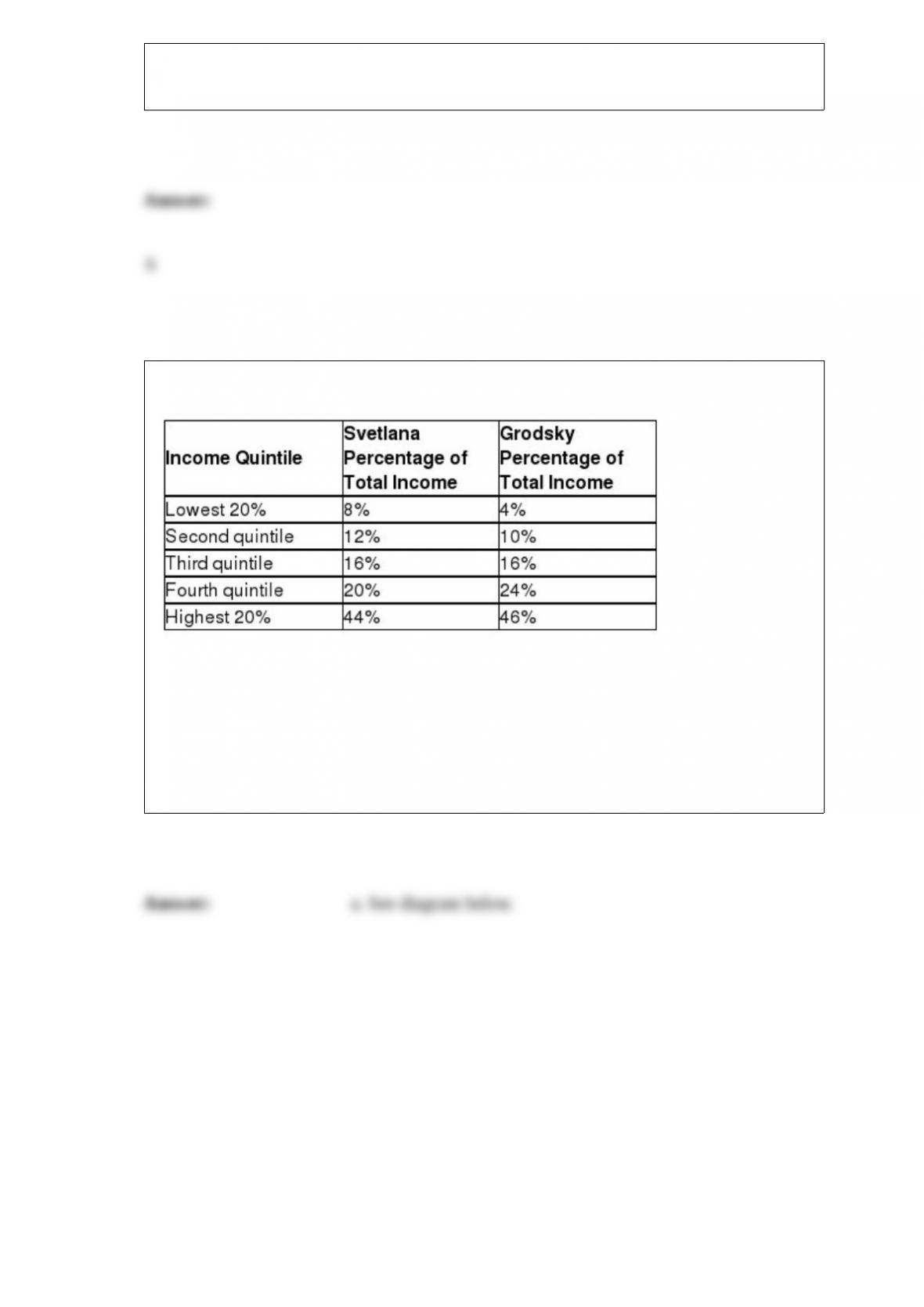
Table 18-11
Table 18-11 shows income distribution data for two countries. Use this data to answer
the following questions. a. Draw a Lorenz curve for each country.
b. Which country has the more equal distribution of income?
c. Based on the Lorenz curve for the two countries, can you determine which country
has the more progressive tax system? Explain your answer.
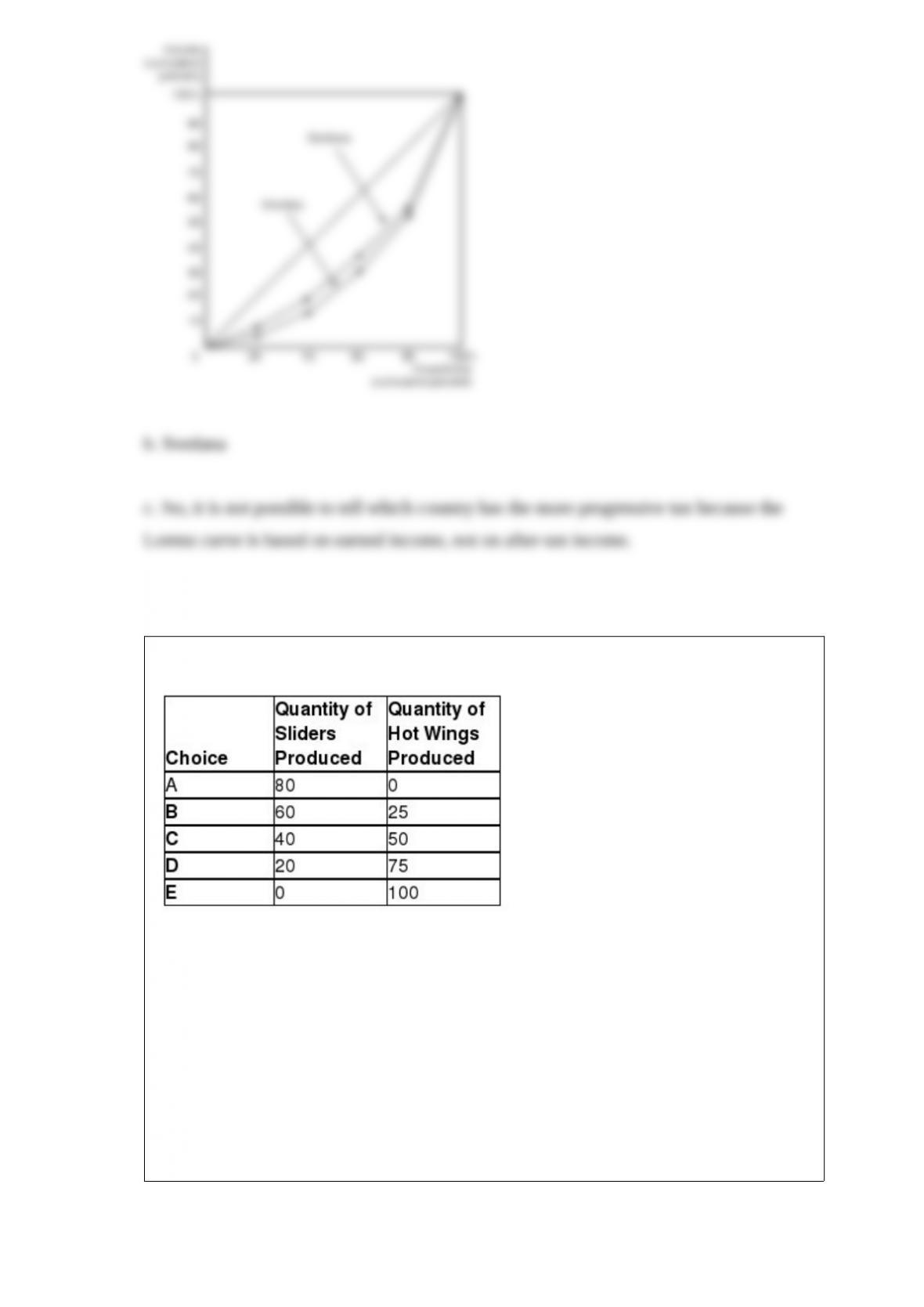
Table 2-4 Production Choices for Dina’s Diner
Assume Dina’s Diner only produces sliders and hot wings. A combination of 50 sliders
and 50 hot wings would appear
A) along Dina’s production possibilities frontier.
B) inside Dina’s production possibilities frontier.
C) outside Dina’s production possibilities frontier.
D) at the vertical intercept of Dina’s production possibilities frontier.

If, as your taxable income decreases, you pay a larger percentage of your taxable
income in taxes, then the tax is
A) regressive.
B) proportional.
C) progressive.
D) unfair.
How would a marketing campaign directed at single women improve the chances of
success at a place like a cigar bar?
Explain why selling output at a price below that at which marginal revenue equals

marginal cost might serve to deter entry of a potential competitor.
List two ways the labor force experience is different between workers in Europe and in
the United States. How do these differences influence productivity?
How does the U.S. federal government assist workers who have lost their jobs due to
international trade?
What do reports that the dollar is “undervalued” mean? How will foreign exchange
markets respond to this information? Support your answer graphically.

Using the money demand and money supply model, show and explain why the Federal
Reserve cannot achieve a target for both the money supply and an interest rate.
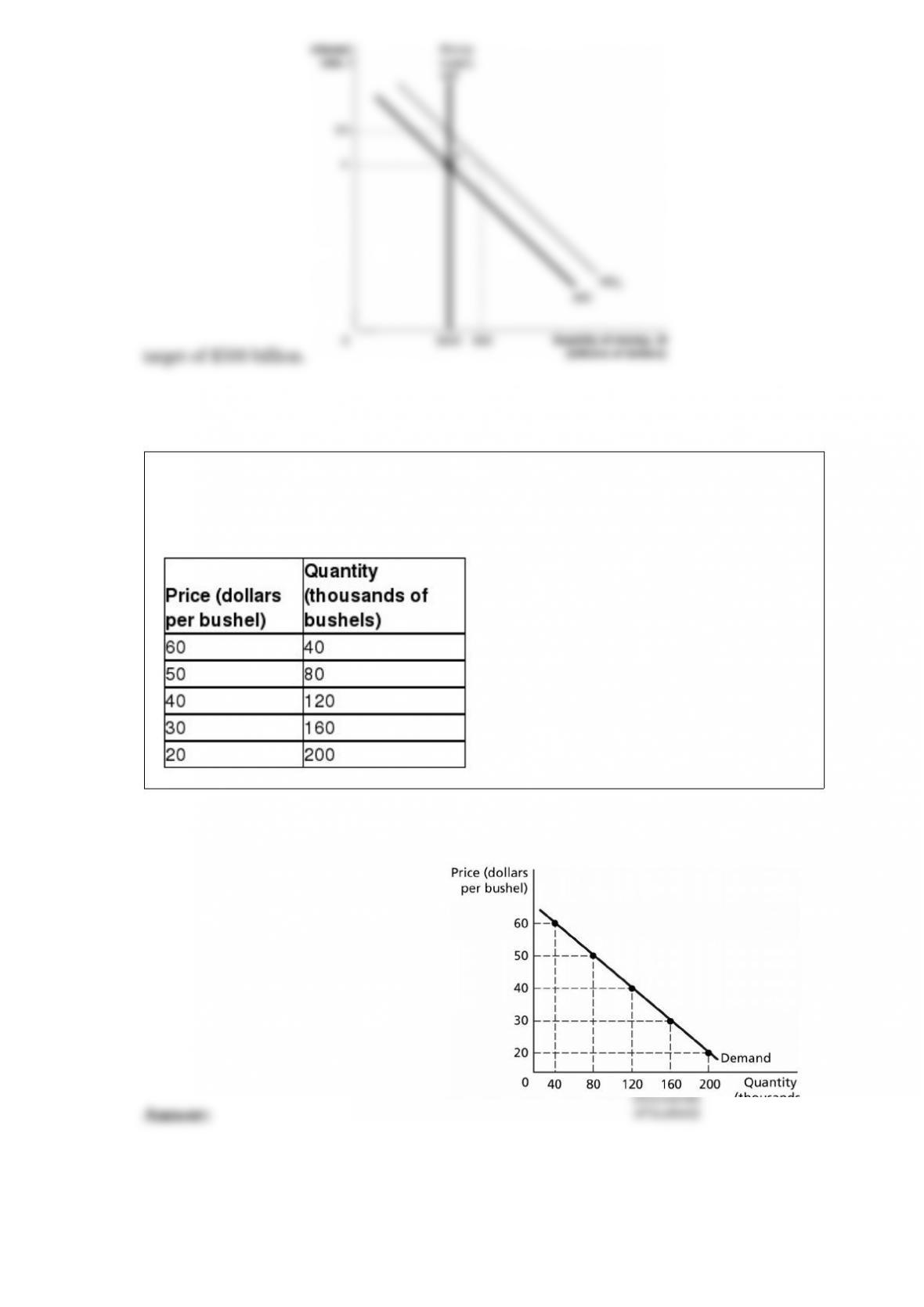
Use the following demand schedule for cherries to draw a graph of the demand curve.
Be sure to label the demand curve and each axis, and show each point on the demand
curve.

Describe the difference between technology and positive technological change.