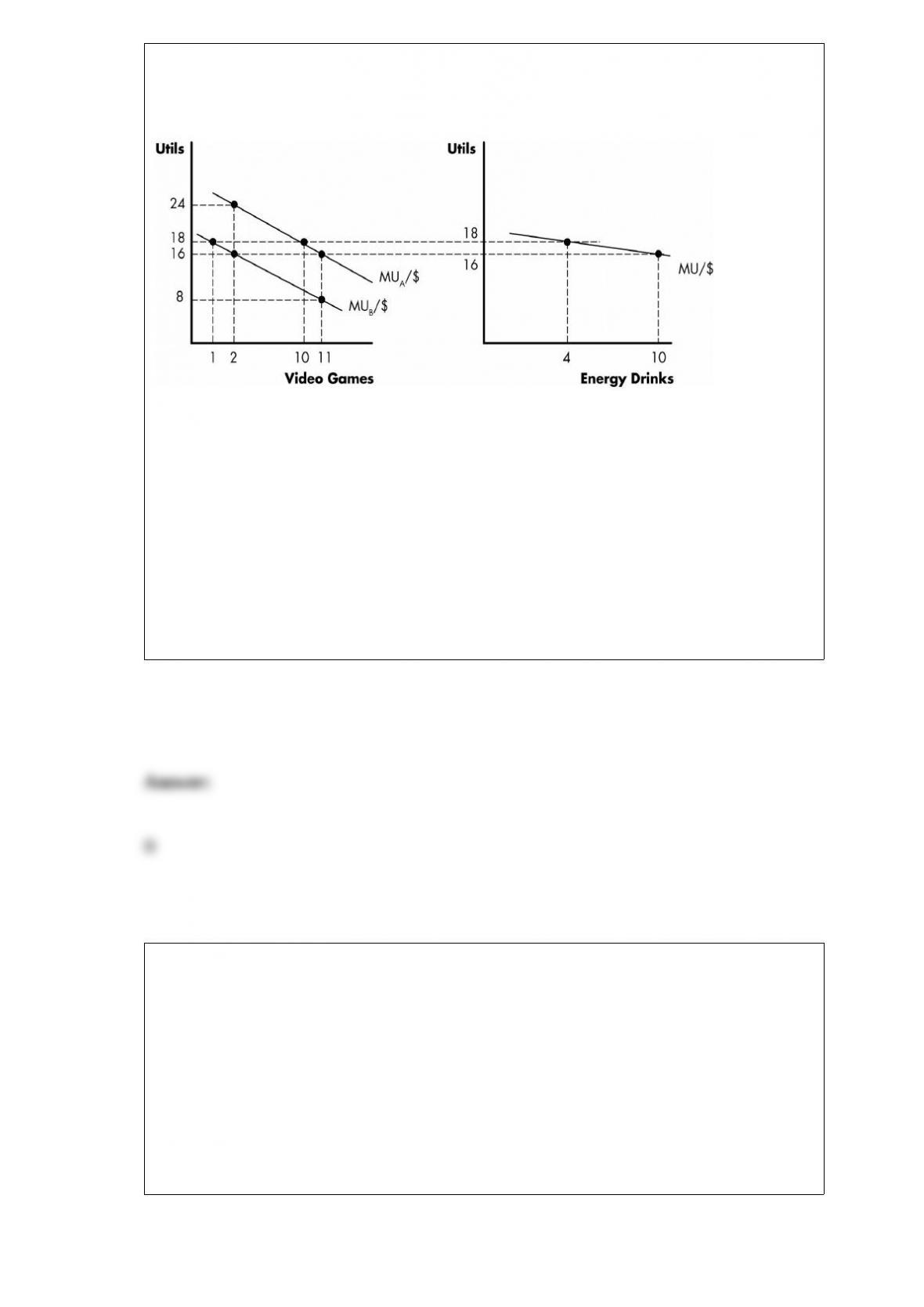
Refer to Figure 7.3. If the price of video game rentals is $4, the utility maximizing
combination is ________ video game rentals and ________ energy drinks.
Figure 7.3
The price of Video Game rentals is $2 For MUA/$ and $4 for MUB/$.
The price of Energy Drinks is $2.
Budget = $28.
A) 1; 4
B) 2; 10
C) 10; 4
D) 11; 10
According to the Application, a mature tree adds about $7,000 to the value of an
owner’s house generates a total external benefit of ________ for neighboring houses.
A) $0
B) $4,500
C) $7,000
D) $13,000
At a price of $10, the marginal revenue of a monopolist is $6. If the marginal cost of
production is $8, what should the monopolist do in order to maximize profits?
A) Increase its price.
B) Decrease its price.
C) Keep its price at the same level.
D) not enough information to solve
Peaches and cream are complements. When the price of peaches falls and the price of
raw milk (used to make cream) rises:
A) the equilibrium price of cream rises and the equilibrium quantity of cream might rise
or fall.
B) the equilibrium price of cream falls and the equilibrium quantity of cream might rise
or fall.
C) the equilibrium price of cream falls and the equilibrium quantity of cream falls.
D) the equilibrium price of cream falls and the equilibrium quantity of cream rises.
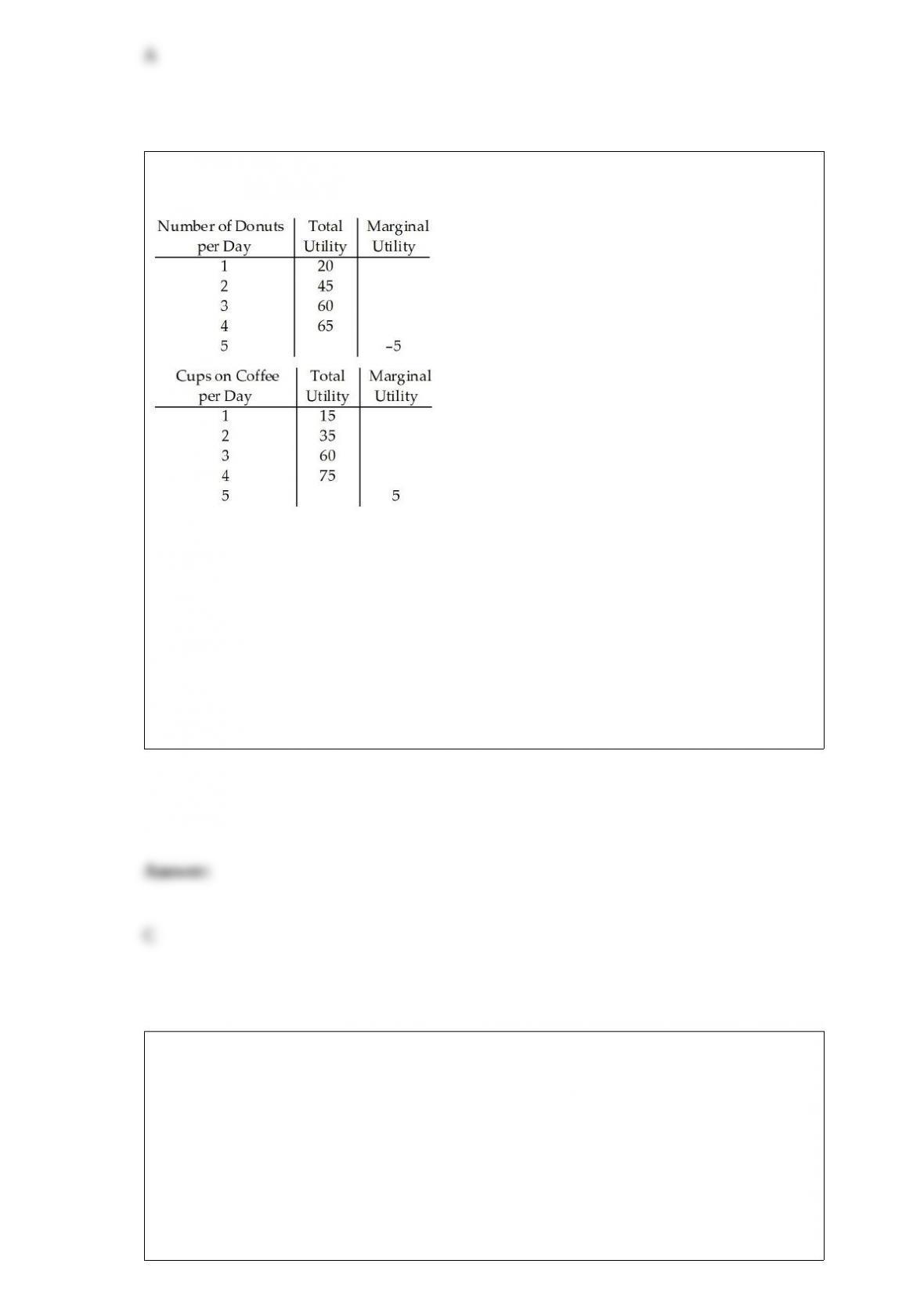
Refer to Table 7.1. Diminishing marginal utility sets in after the ________ cup of coffee
per day.
Table 7.1
A) first
B) second
C) third
D) fourth
Suppose marginal cost is $5. Average variable costs are $10. For the next unit of output
produced, average variable costs will be:
A) less than $10.
B) more than $10.
C) equal to $10.
D) It is impossible to say.
Over decades of choices, the dopamine system is used to learn the benefits for a wide
variety of products, with benefit valuations that can be used ________ for new
purchases and ________ for repeat purchases.
A) directly; directly
B) directly; indirectly
C) indirectly; directly
D) indirectly; indirectly
The marginal cost curve intersects the short-run average total cost curve where:
A) marginal cost is minimized in the short run.
B) average variable costs are minimized in the short run.
C) average total costs are minimized in the short run.
D) average variable costs are maximized in the short run.
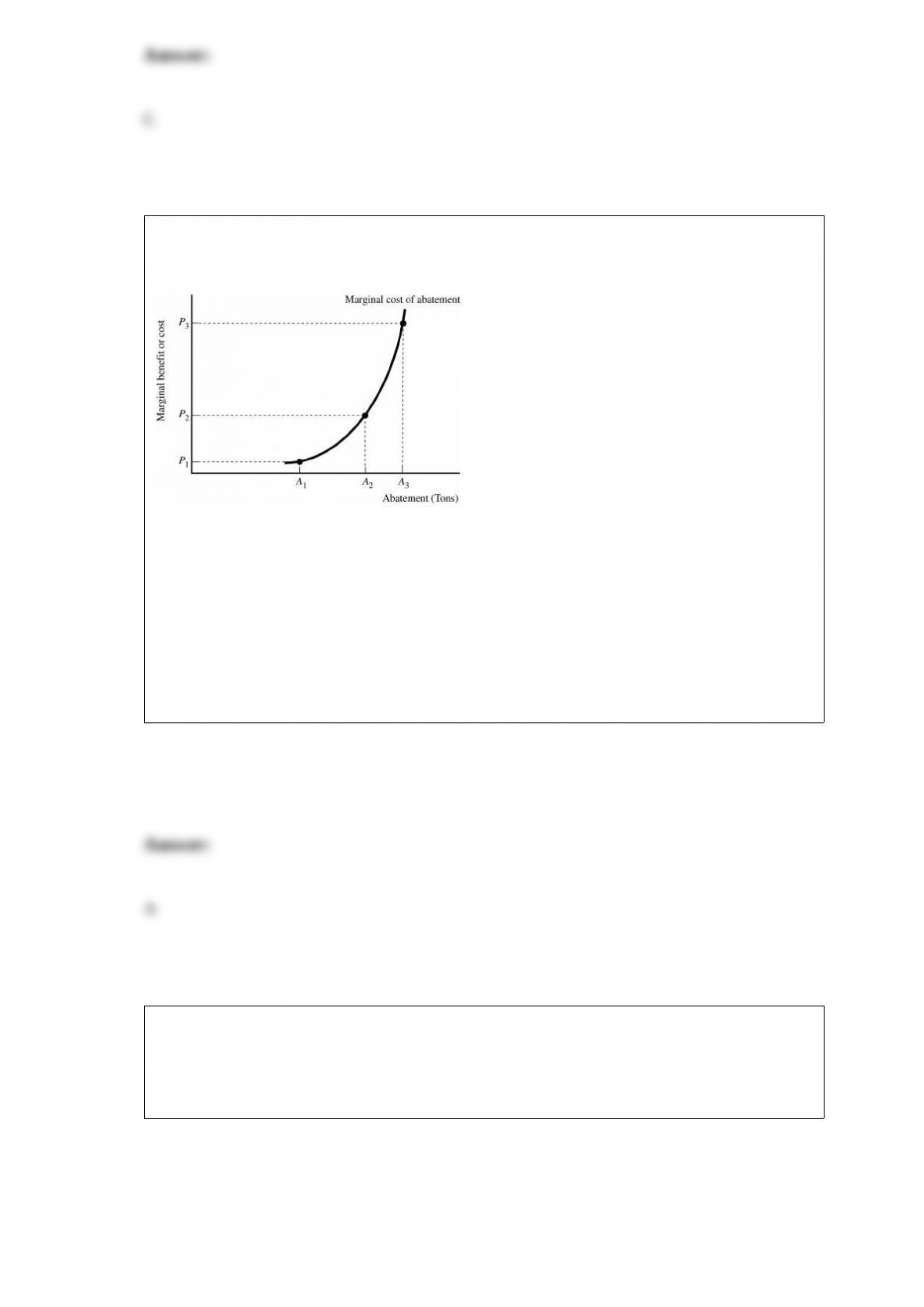
A firm that generates pollution is illustrated in Figure 16.1. If the government imposes a
pollution tax equal to P2 and the firm’s abatement level is A3 the firm is:
Figure 16.1
A) abating more than is optimal for the firm.
B) abating less than is optimal for the firm.
C) choosing an abatement level that is optimal.
D) violating the environmental protection laws.
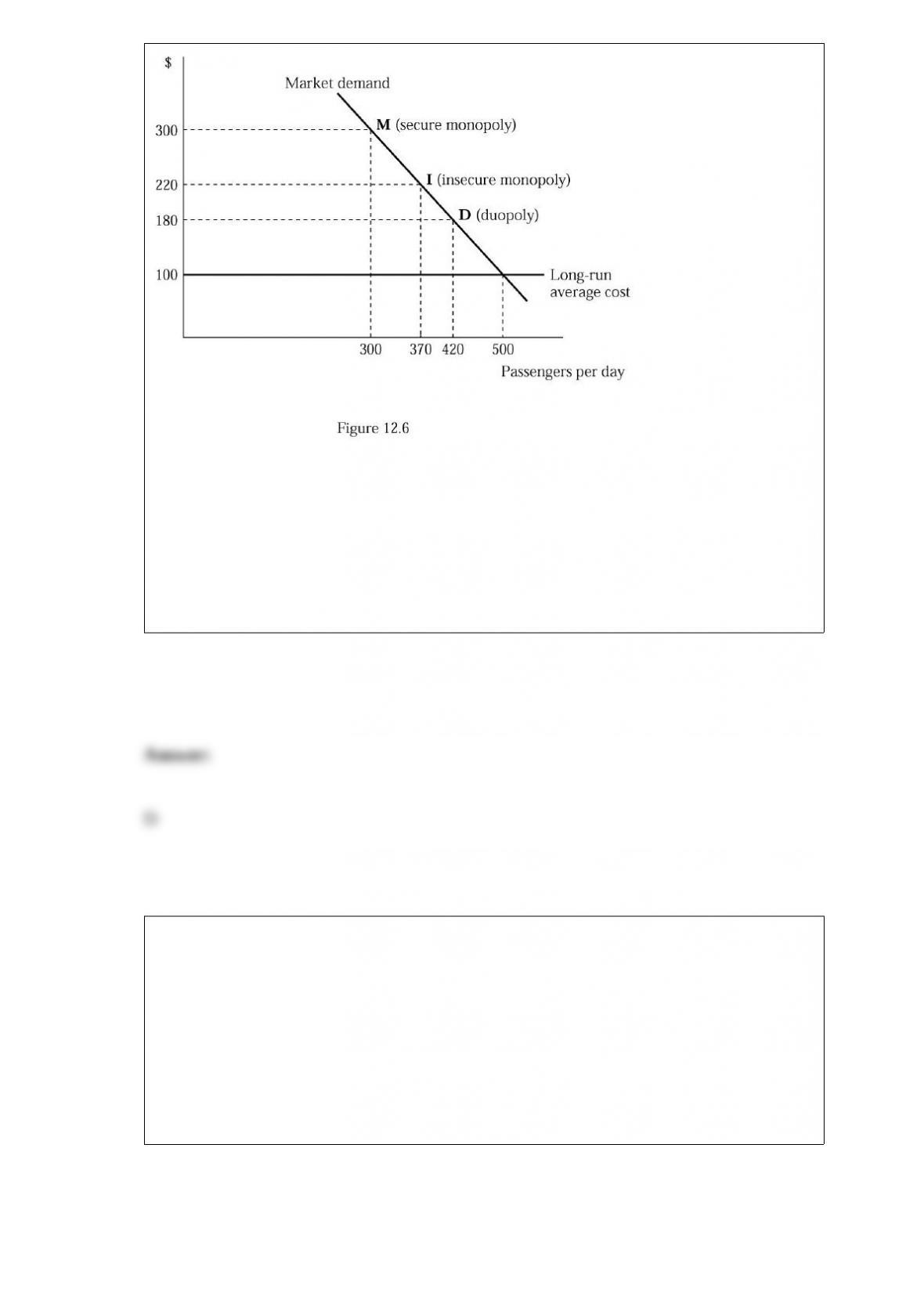
In Figure 12.6, airline Fly Smart is initially a secure monopoly between two cities X
and Y at point M, serving 300 passengers per day at the profit maximizing price of $300
per ticket. Suppose that Fly Smart discovers that a second airline is contemplating
entering the market. If Fly Smart accommodates the entry, what will its profit be?
A) $44,400
B) $33,600
C) $29,600
D) $16,800
If the supply of land were perfectly inelastic, a tax on land would be paid:
A) partly by sellers and partly by buyers.
B) entirely by sellers.
C) entirely by buyers.
D) It is impossible to determine given this information.
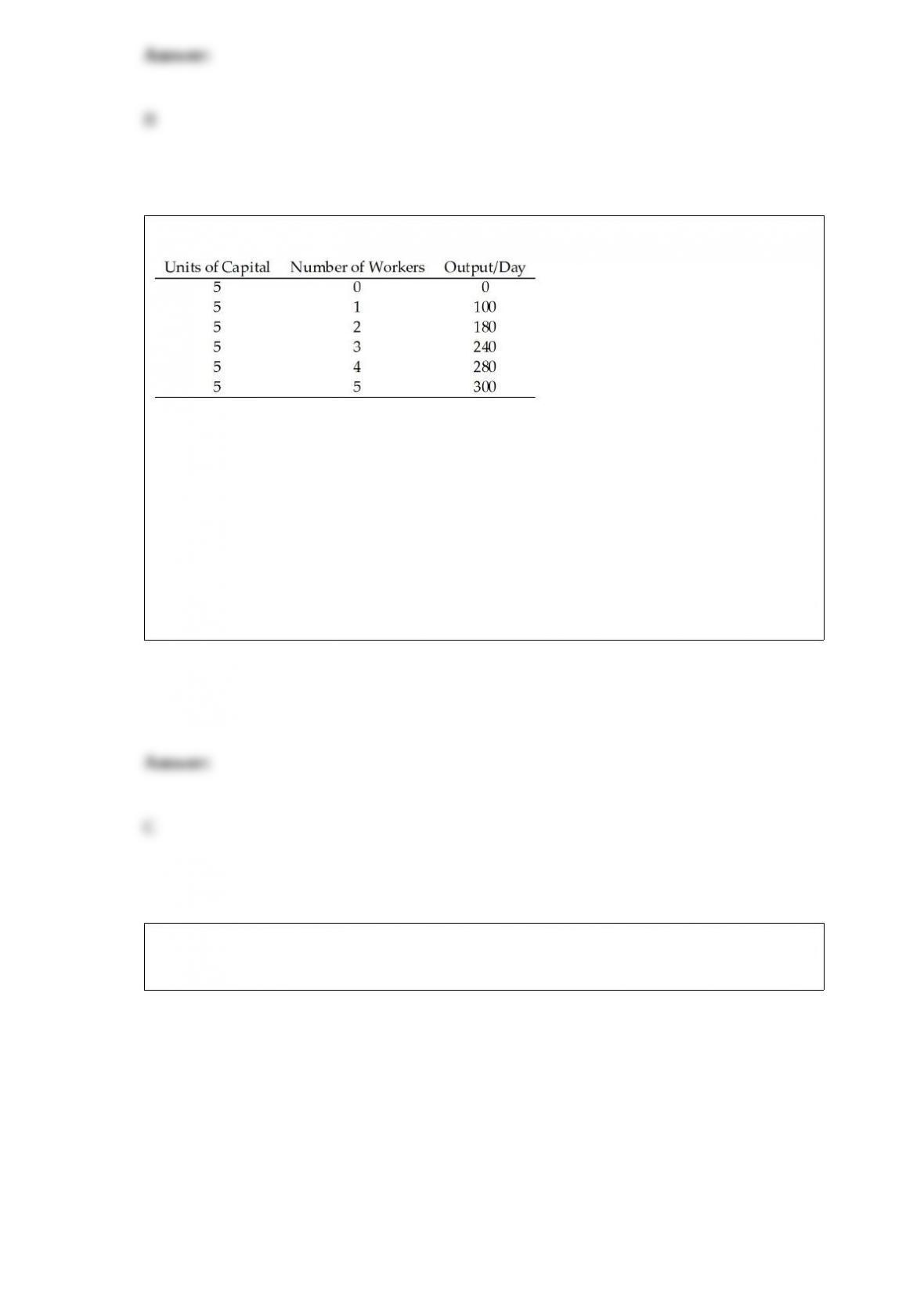
Refer to Table 2.3. The marginal product of the 3rd worker is:
Table 2.3
A) 100 units of output.
B) 80 units of output.
C) 60 units of output.
D) 40 units of output.
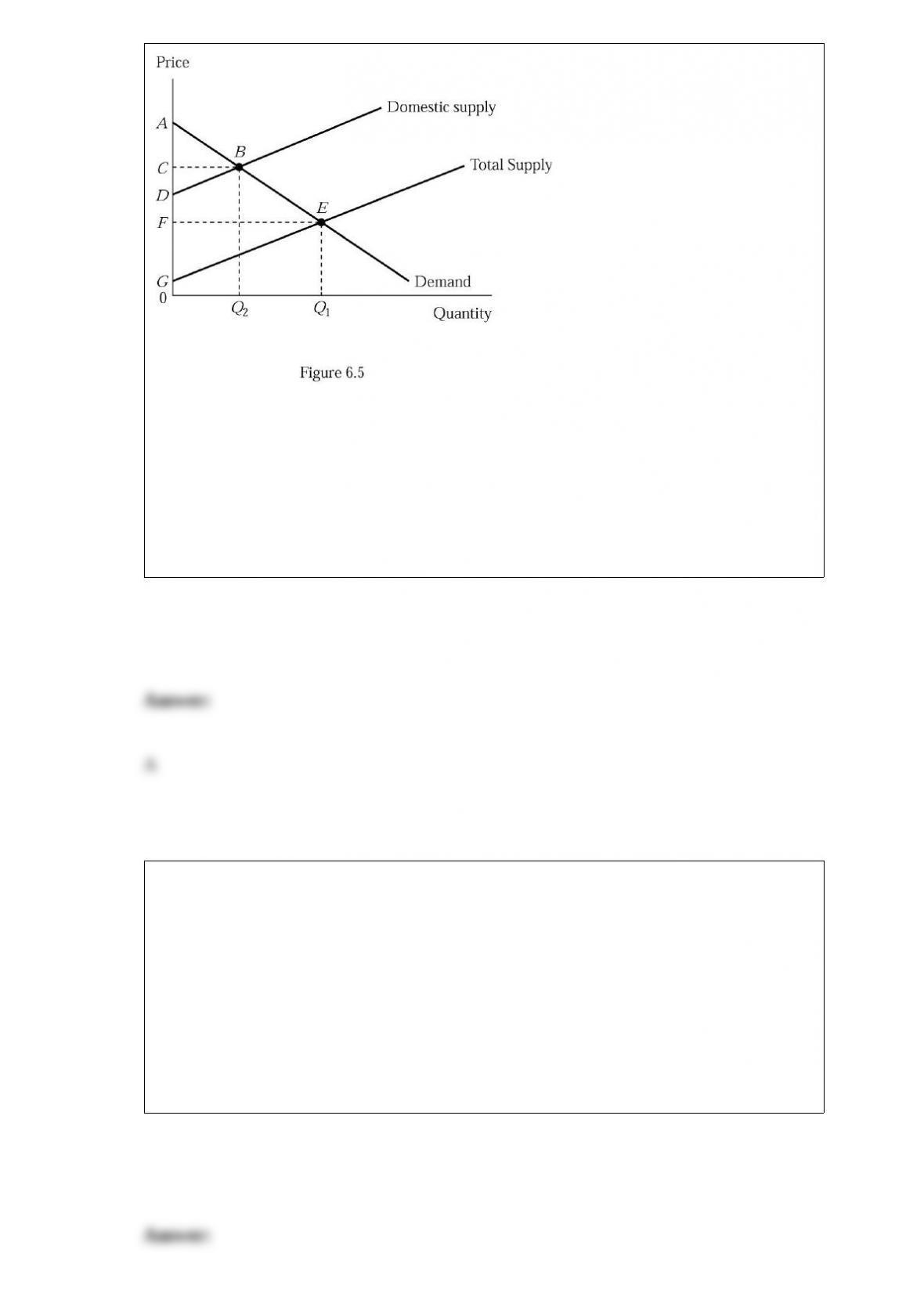
Figure 6.5 illustrates the market for sugar. If imports of sugar were banned, the price of
sugar would be at point:
A) C.
B) D.
C) F.
D) G.
If the price elasticity of supply is elastic, which of the following could be a possible
value of the elasticity?
A) 3
B) 1
C) 0.3
D) 0
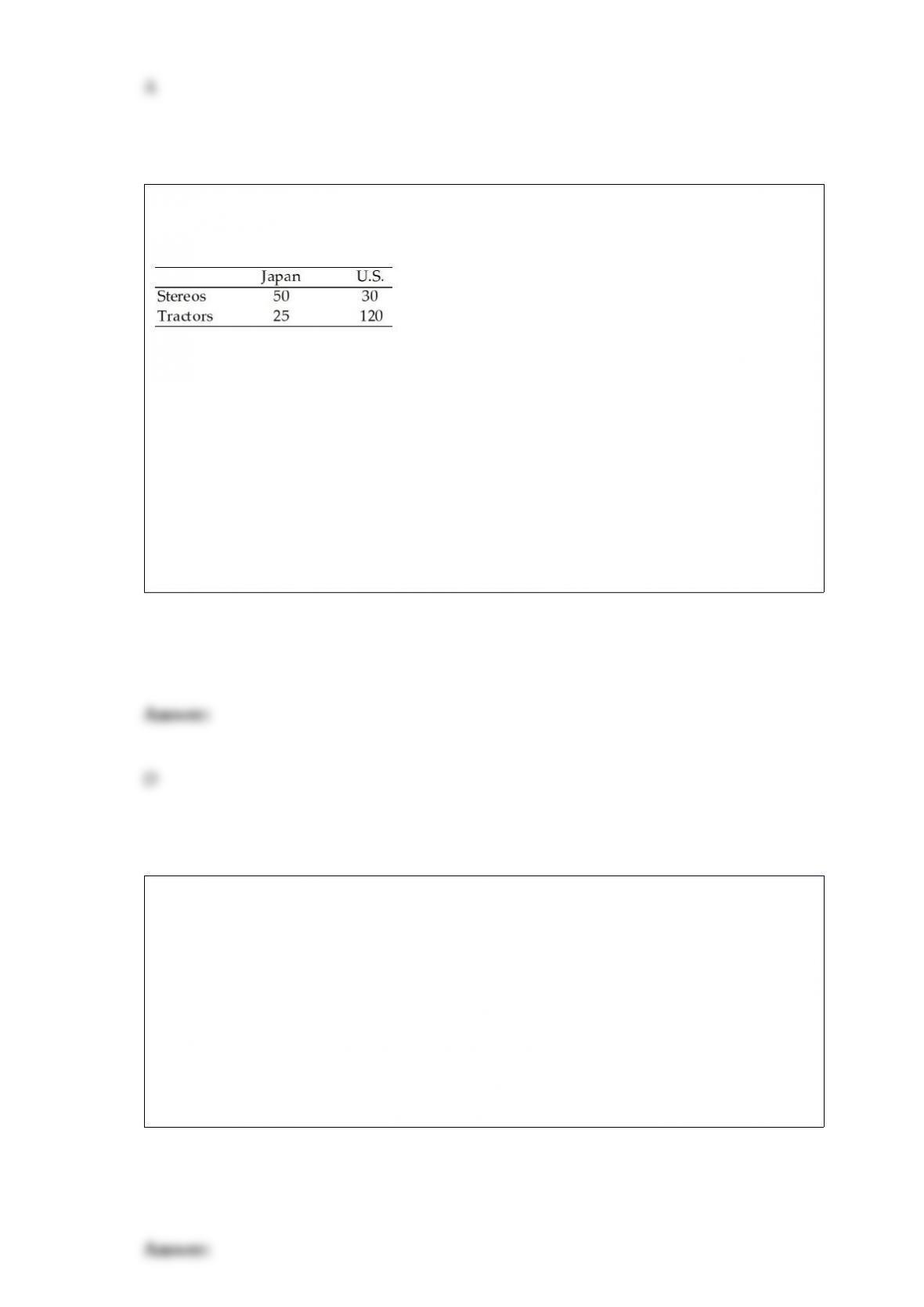
Daily Output of Japan and U.S.
Table 18.2
Refer to Table 18.2. The opportunity cost of stereos in the U.S. is:
A) 2 tractors.
B) 1/4 tractor.
C) 1/2 tractor.
D) 4 tractors.
If the price elasticity of demand is very elastic, which of the following could be a
possible value of the elasticity?
A) 2
B) 1
C) 1/3
D) 0
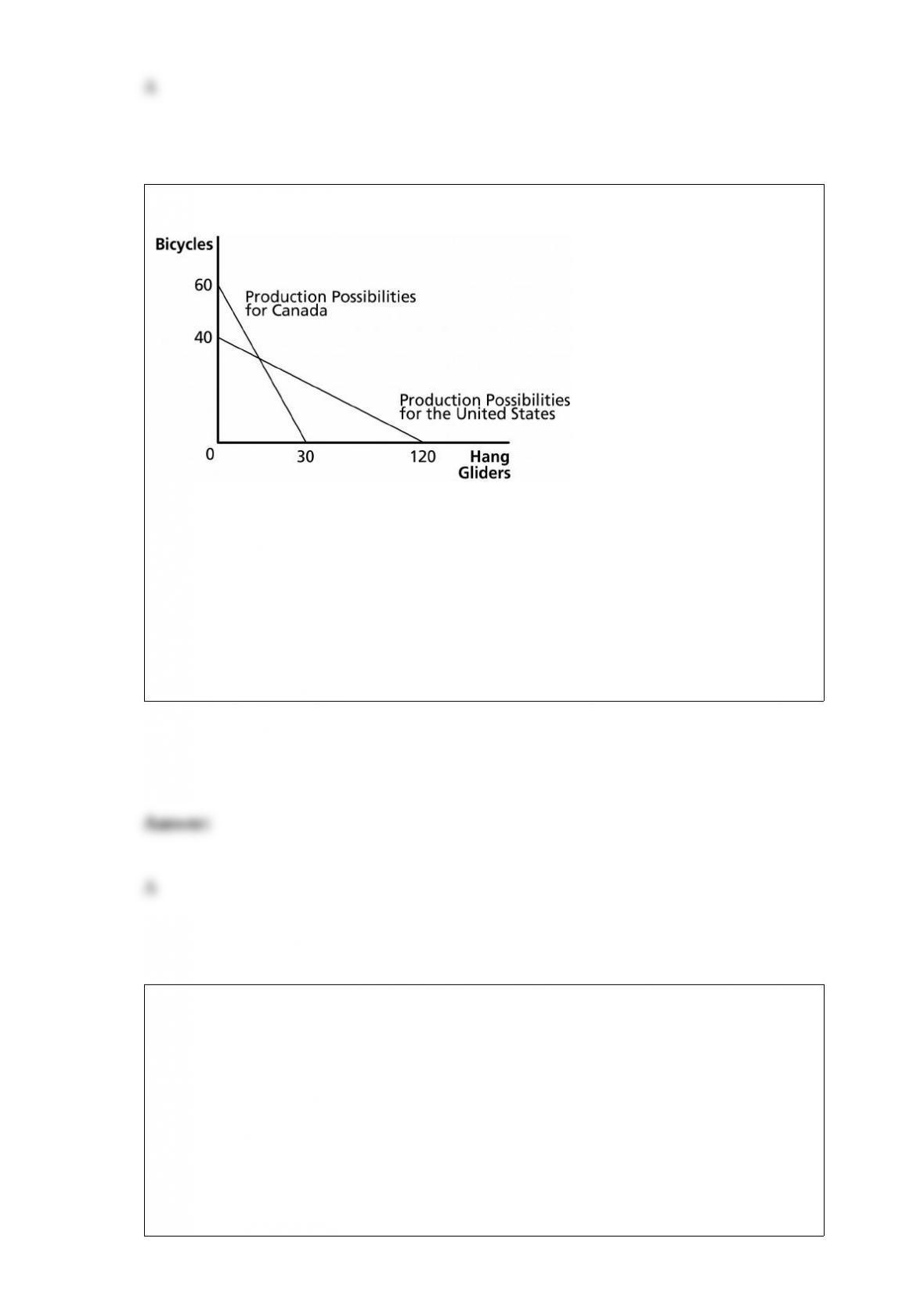
Refer to Figure 18.1. The opportunity cost of bicycles in Canada is:
Figure 18.1
A) 1/2 of a hang glider.
B) 2/3 of a hang glider.
C) 2 hang gliders.
D) 4 hang gliders.
At Fresh Hot Bakery, the average cost of making 20 baguettes is $1.00. The average
cost of making 21 baguettes is $1.10. The marginal cost of the 21st baguettes is:
A) $0.10.
B) $2.10.
C) $3.00.
D) $3.10.
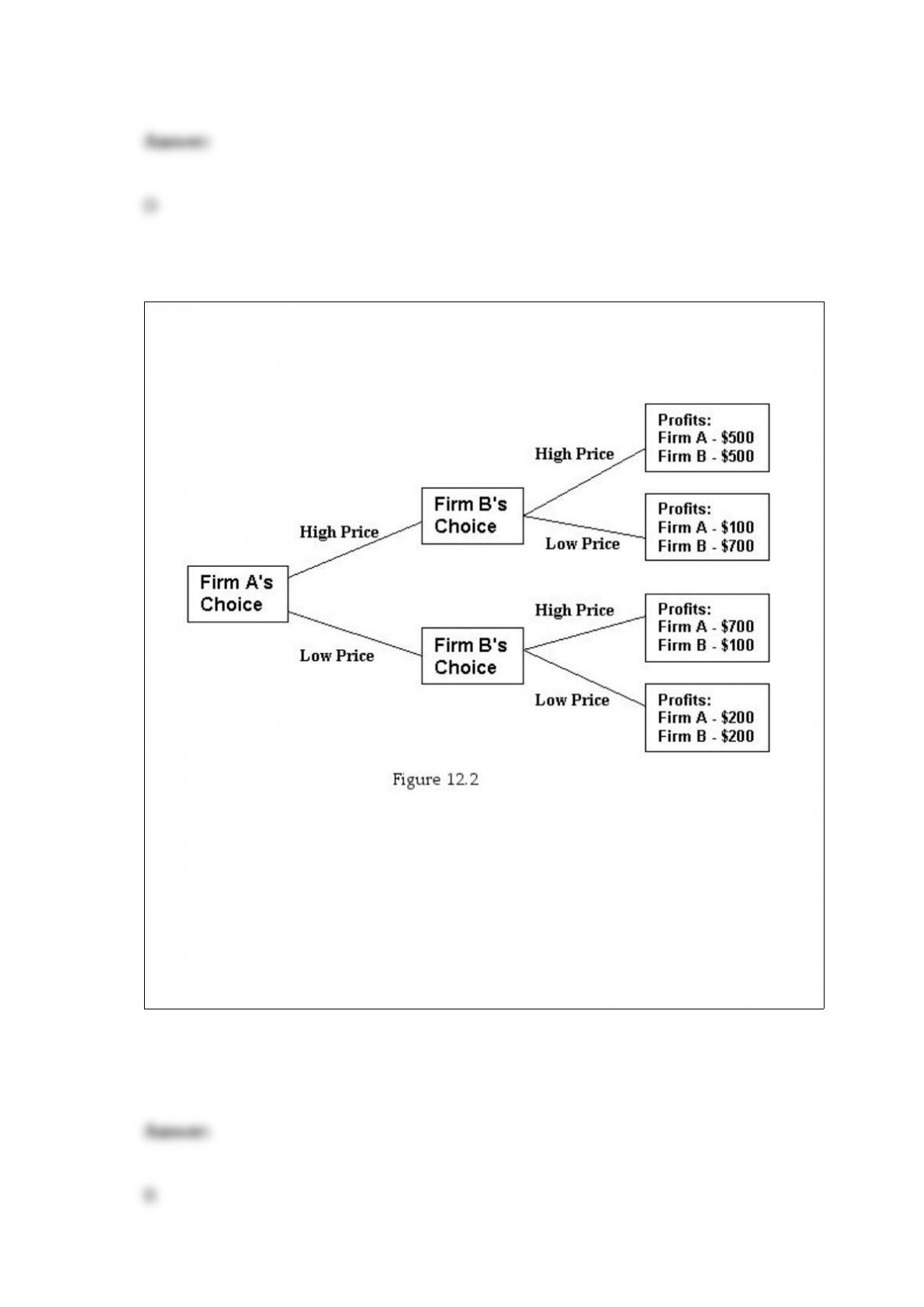
Figure 12.2 shows the decision tree for setting price for the only two firms in a market.
One way for both firms to charge a high price is for both firms to:
A) play their dominant strategies.
B) collude.
C) expand output.
D) any of the above
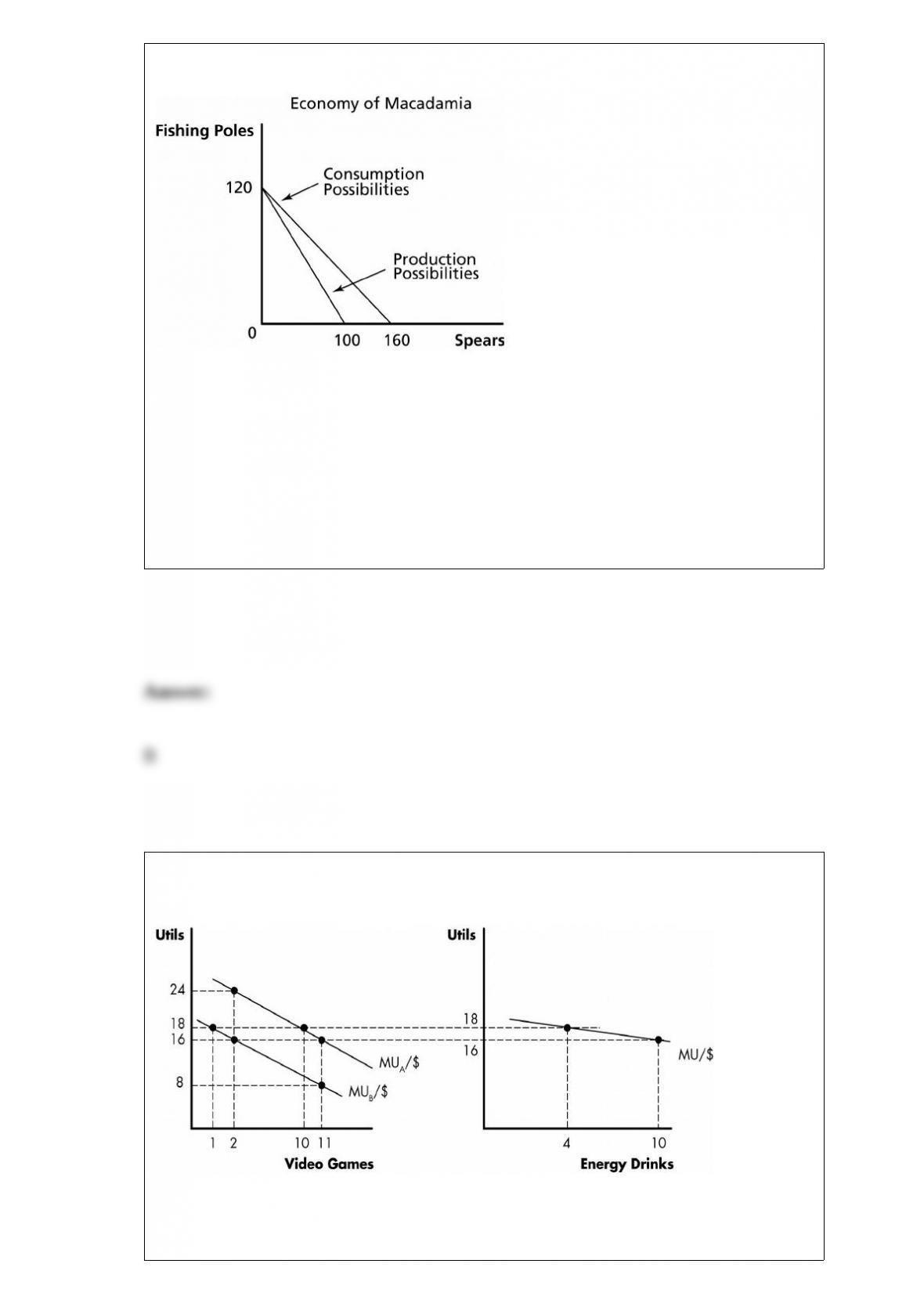
Refer to Figure 18.2. The opportunity cost of producing spears in Macadamia is:
Figure 18.2
A) 3/4 of a fishing pole.
B) 5/6 of a fishing pole.
C) 6/5 fishing poles.
D) 4/3 fishing poles.
Refer to Figure 7.3. A decrease in the price of video game rentals from $4 to $2 will:
Figure 7.3
The price of Video Game rentals is $2 For MUA/$ and $4 for MUB/$.
The price of Energy Drinks is $2.
Budget = $28.

A) increase the marginal utility per dollar of video game rentals.
B) decrease the marginal utility per dollar of video game rentals.
C) increase the marginal utility per dollar of energy drinks.
D) decrease the marginal utility per dollar of energy drinks.
If a severe natural disaster reduced the population of a city, one would expect a natural
monopoly to:
A) lower prices.
B) split into two firms.
C) merge with a competitor.
D) experience an increase in average costs.
If the price of a 32GB memory card decreases from $25 to $20, the percentage change
is:
A) -20 percent.
B) -33 percent.
C) -50 percent.
D) -60 percent.
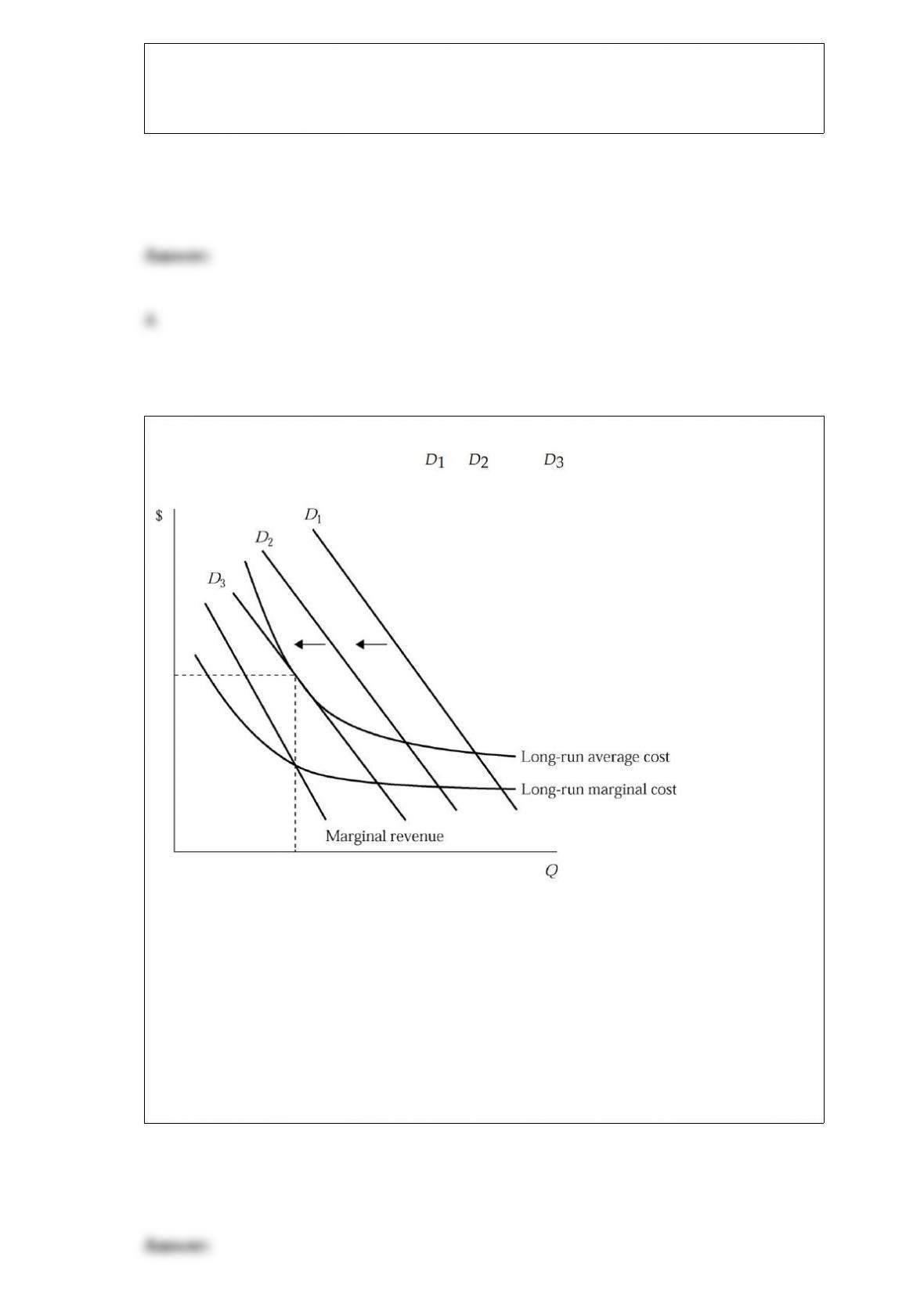
Figure 11.3 shows demands and costs for a monopolistically competitive firm. When
the firm’s demand curve shifts from to and to :
Figure 11.3
A) the demand for the firm’s product is decreasing.
B) the firm’s average cost of production is increasing.
C) the firm’s marginal revenue curve also shifts to the left.
D) all of the above

Recall Application 1, “The Impact of Tariffs on the Poor,” to answer the following
questions:
After reading the application, we can conclude that U.S. tariffs hurt poor consumer’s the
disproportionately because:
A) U.S. tariffs fall heaviest on labor intensive goods.
B) U.S. tariffs fall heaviest on the lowest price goods in a category.
C) U.S. tariffs are on goods like apparel items that poor consumers spend a larger
fraction of income on.
D) all of the above
Suppose that a consumer is currently spending all of her income on 10 units of good A
and 5 units of good B. The price of good A is $4 per unit, the price of good B is $10 per
unit, the marginal utility of the last unit of good A consumed is 20, and the marginal
utility of the last unit of good B consumed is 60. If the consumer wants to maximize her
utility from consuming the two goods she should:
A) consume more of good B and less of good A.
B) consume more of good A and less of good B.
C) continue to consume 10 units of good A and 5 units of good B.
D) consume more of both goods.
Suppose your bank pays you 5 percent interest per year on your savings account. If
prices increase by 5 percent per year over that time, approximately how much real value
do you gain by keeping $100 in the bank for a year?
A) $0
B) $1
C) $3
D) $6
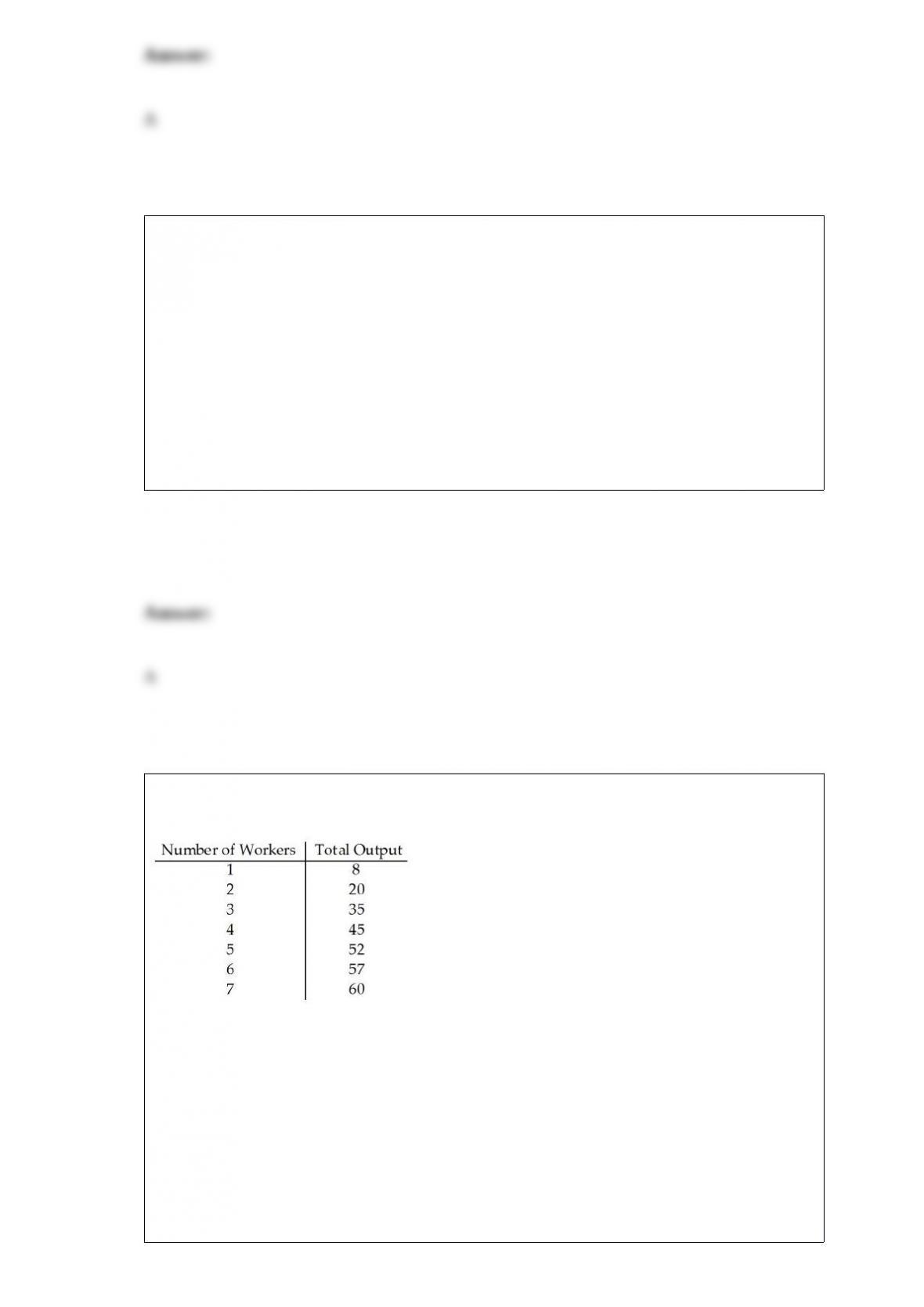
Refer to Table 8.3. The firm will experience diminishing marginal returns to labor as
long it hires more than:
Table 8.3
A) 0 units of labor.
B) 1 unit of labor.
C) 2 units of labor.
D) 3 units of labor.
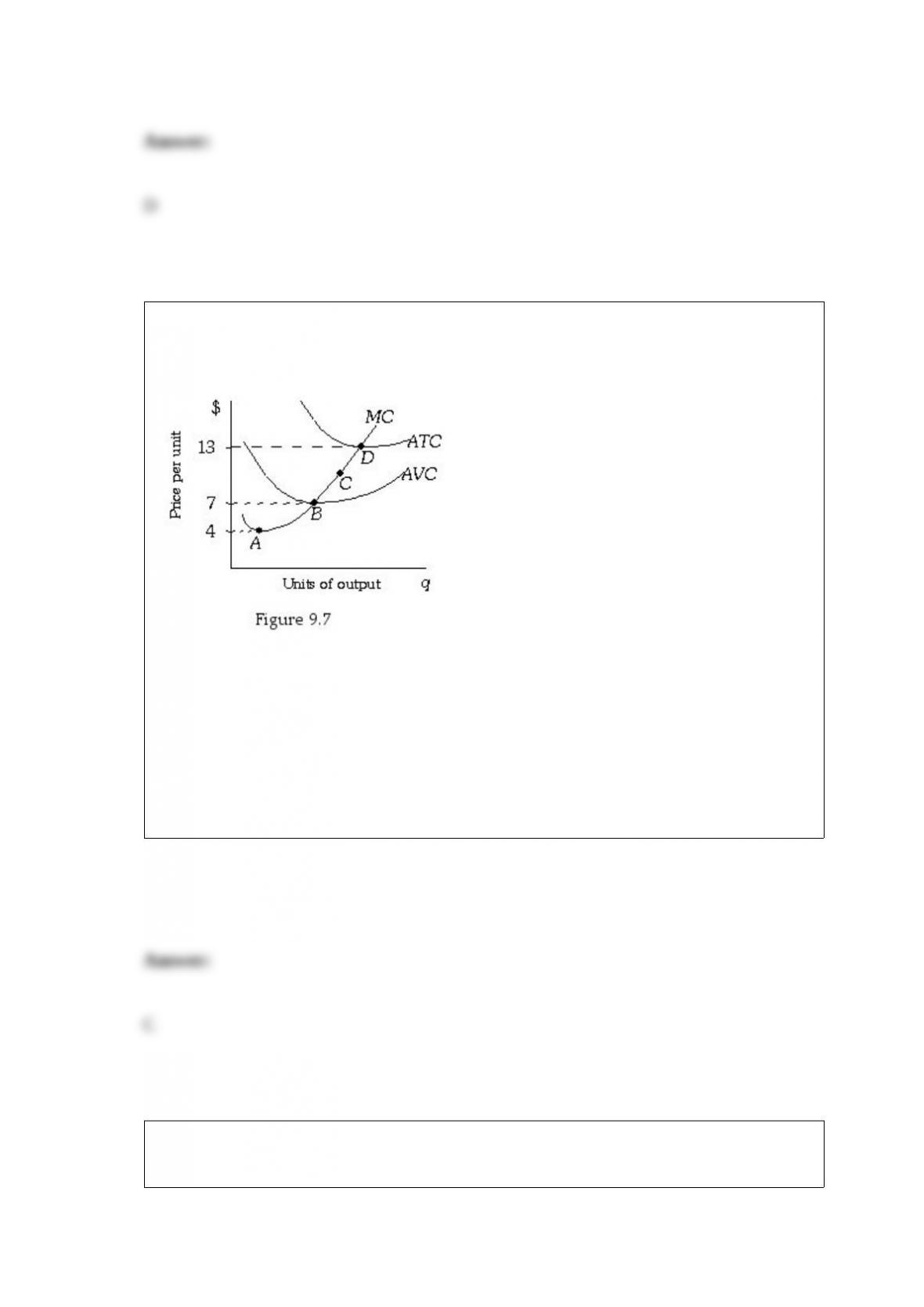
Refer to Figure 9.7. This firm will choose to continue operating but incur an economic
loss if the price is:
A) between $0 and $4.
B) between $4 and $7.
C) between $7 and $13.
D) above $13.
Consider the game tree in Figure 12.8. Compared to the dominant strategy outcome,
guaranteed coordination would lead to:
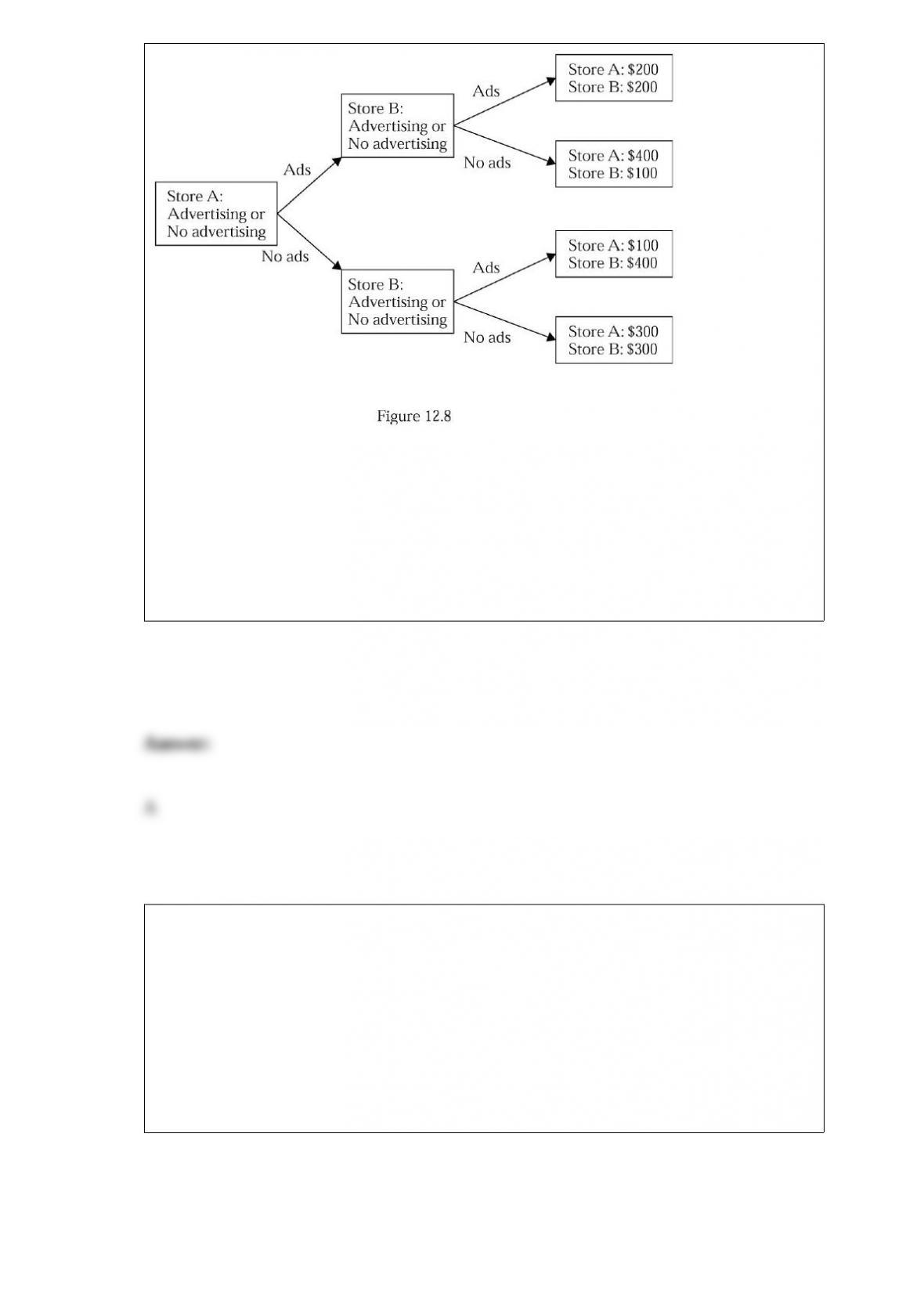
A) higher profits for both stores.
B) lower profits for both stores.
C) higher profit only for Store A.
D) higher profit only for Store B.
Which of the following products has the least elastic demand?
A) Raspberry Mocha Kona coffee blend at Starbuck’s
B) Starbuck’s coffee
C) coffee
D) all beverages

In a market with an adverse selection problem:
A) one side of the market has better information about the goods than the other.
B) the uninformed side of the market must choose from an undesirable selection of
goods.
C) some high-quality goods are sold but fewer than would be sold in a market with
perfect information.
D) all of the above