1) Suppose a familys annual disposable income is $8000 of which it saves $2000.
(a)What is their APC?
(b)If income rises to $10,000 and they plan to save $2800, what are MPS and MPC?
(c)Did the familys APC rise or fall with their increase in income?
2) According to the marginal-cost-marginal-benefit rule:
A.only government projects (as opposed to private projects) should be assessed by
comparing marginal costs and marginal benefits.
B.the optimal project size is the one for which MB = MC.
C.the optimal project size is the one for which MB exceeds MC by the greatest amount.
D.project managers should attempt to minimize both MB and MC.
3) if the marginal tax rate is greater than the average tax rate, then:
a.the average tax rate must be rising.
b.the average tax rate must be falling.
c.the average tax rate may be either rising or falling.
d.the tax is regressive.
4) any combination of goods lying outside of the budget line:
a.implies that the consumer is not spending all his income.
b.yields less utility than any point on the budget line.
c.yields less utility than any point inside the budget line.
d.is unattainable, given the consumer’s income.
5) if the price elasticity of demand for a product is 2.5, then a price cut from $2.00 to
$1.80 will:
a.increase the quantity demanded by about 2.5 percent.
b.decrease the quantity demanded by about 2.5 percent.
c.increase the quantity demanded by about 25 percent.
d.increase the quantity demanded by about 250 percent.
6) final goods and services refer to:
a.goods and services that are unsold and therefore added to inventories.
b.goods and services whose value has been adjusted for changes in the price level.
c.goods and services purchased by ultimate users, rather than for resale or further
processing.
d.the excess of u.s. exports over u.s. imports.
7)
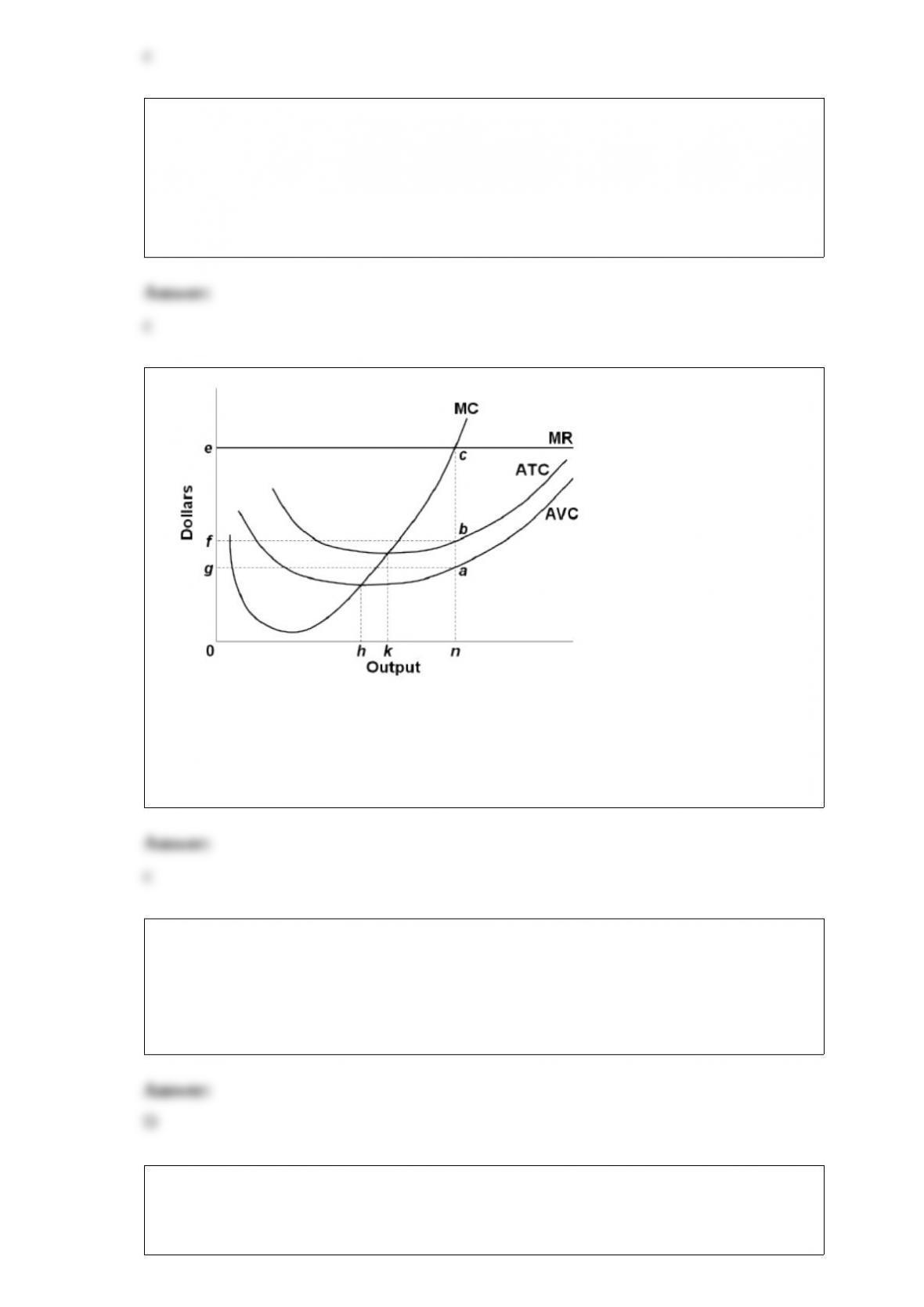
refer to the above diagram. at the profit-maximizing output, average variable cost is:
a.ef
b.fg
c.na
d.ac
8) Unions prefer:
A.open shops to agency shops.
B.agency shops to closed shops.
C.agency shops to union shops.
D.union shops to agency shops.
9) An economist who favored expanded government would recommend:
A.tax cuts during recession and reductions in government spending during inflation.
B.tax increases during recession and tax cuts during inflation.
C.tax cuts during recession and tax increases during inflation.
D.increases in government spending during recession and tax increases during inflation.
10) the pursuit of self-interest:
a.is highly detrimental to the market system.
b.means the same as ‘selfishness.”
c.is reflected in the behavior of firms, but not in the behavior of consumers.
d.gives direction to the market system.
11)
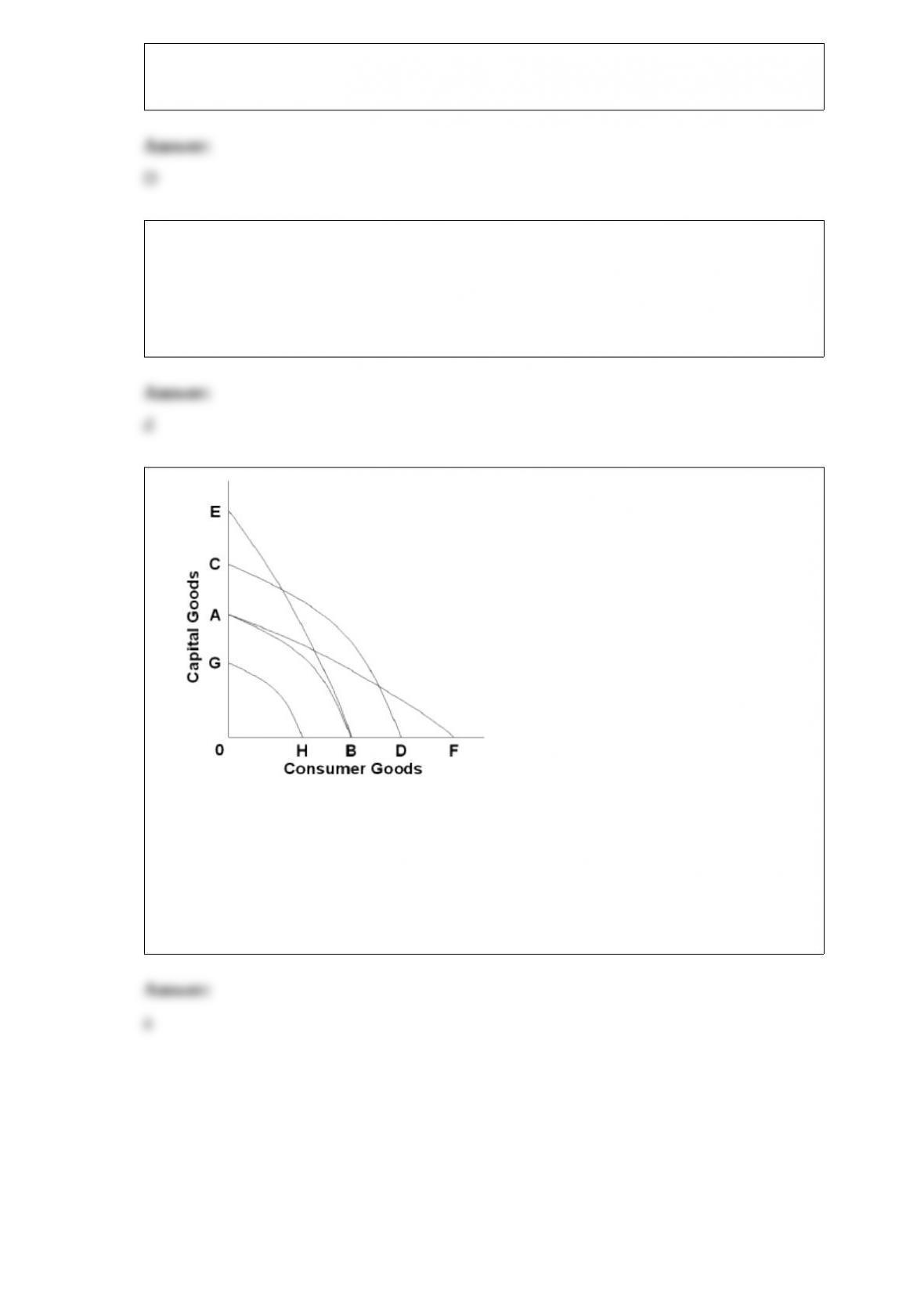
refer to the above diagram. which of the following positions relative to pp1 would be
the most likely to result in a future production possibilities curve of pp3, rather than
pp2?
a.a.
b.b.
c.c.
d.d.
12)
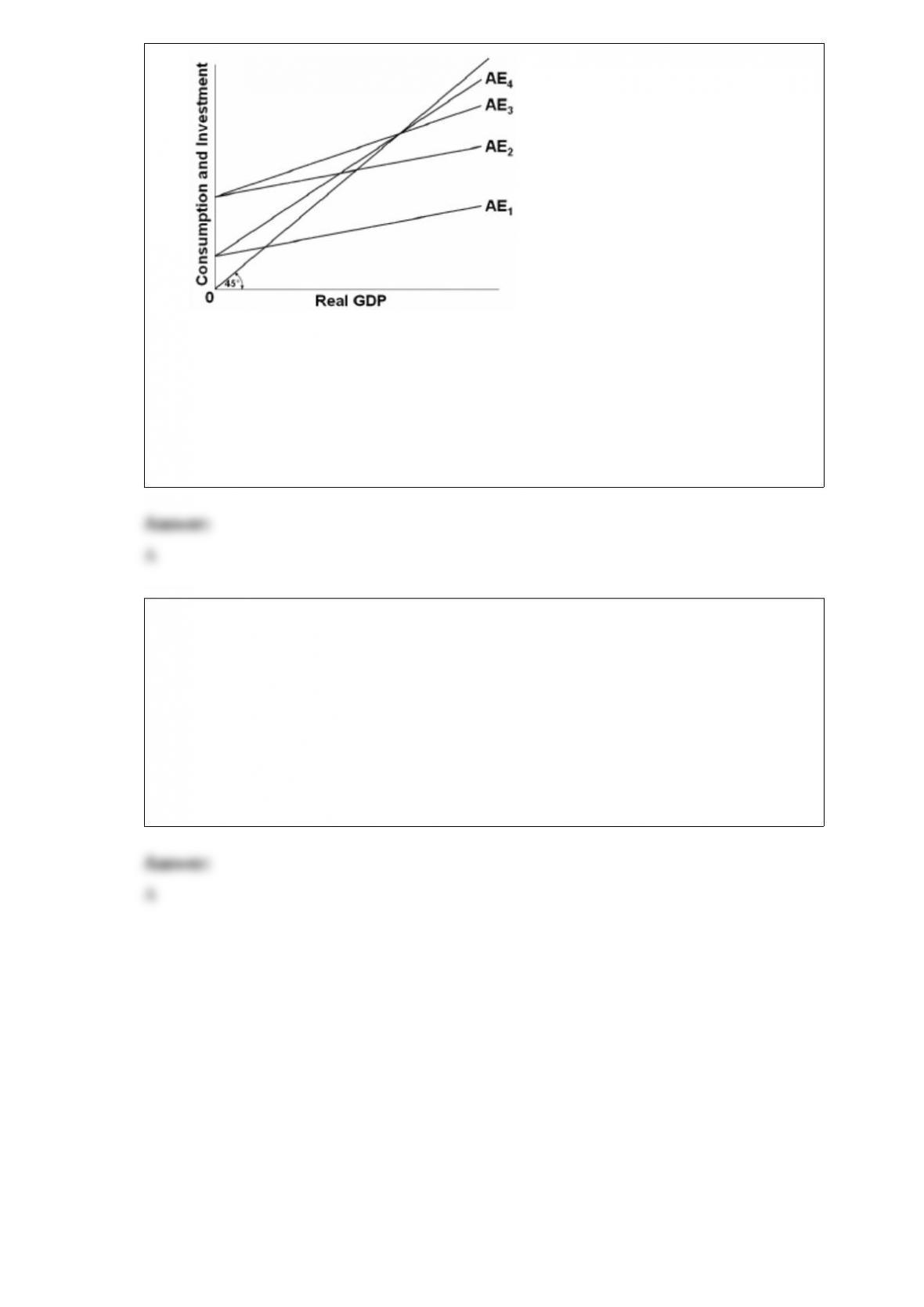
Which two aggregate expenditure schedules AE in the above diagram for a private
closed economy have the same MPC, assuming investment is the same at each level of
income?
A.AE1 and AE2
B.AE2 and AE3
C.AE1 and AE4
D.AE3 and AE4
13) The following information about a banking system: new currency deposited in the
system = $40 billion; legal reserve ratio = 0.20; excess reserves prior to the currency
deposit = $0.
Refer to the above information. The banking system will be able to expand the money
supply through loans by:
A.$160 billion.
B.$200 billion.
C.$40 billion.
D.$128 billion.