
What country is our largest trading partner, as measured by exports and imports?
a. Japan. d. Canada.
b. The United Kingdom. e. Mexico.
c. China.
In Europe during the 14th century, the Black Plague killed 24 million people or close to
37 percent of the population. How would this affect the production possibilities curves
for the countries of Europe at that time?
a. The production possibilities curves for these countries would have shifted outward.
b. The production possibilities curves for these countries would have shifted inward.
c. The production possibilities curves for these countries would have been unaffected.
d. This would have been illustrated by a movement along the production possibilities
curves for these countries, but it would not have shifted them.
If society leaves some of its resources unemployed, then it will be operating at a point:
a. beneath its production possibilities curve.
b. at a corner of its production possibilities curve.
c. anywhere along its production possibilities curve.
d. outside of its production possibilities curve.

If a potato farmer expands output, he finds that the increase in total revenue is less than
the increase in total costs. This means that:
a. profit is being maximized.
b. he should not have expanded output.
c. he should produce even more output.
d. the firm is wasting resources.
e. the farmer should go out of business.
Which of the following best describes a production function?
a. The relationship between consumer preferences and market demand.
b. The relationship between the quantity of labor employed and total cost.
c. The relationship between the maximum amounts of output a firm can produce and
various quantities of inputs.
d. The relationship between price and quantity supplied by sellers in a market.
In economics, the term marginal refers to:
a. the change or difference from a current situation.
b. man-made resources as opposed to natural resources.
c. the satisfaction a consumer receives from a good.
d. holding everything else constant in the analysis.
Two goods that are complementary are:
a. wrapping paper and scotch tape.
b. letter and fax.
c. beef and chicken.
d. bicycle and motorcycle.
e. Coke and Pepsi.
Which of the following will not cause a change in demand for crackers?
a. A change in consumers’ income.
b. A change in the price of crackers.
c. A change in the price of cheese.
d. A change in the number of cracker-eaters.
e. A change in consumers’ tastes for crackers.
An externality is:
a. always a benefit to the recipient.
b. always a detriment to the recipient.
c. an activity that occurs in a business which is unknown to management.
d. unintended benefits or costs imposed on third parties as a result of economic activity.
e. an act, caused by a firm located in this country, which has an effect on a person in a
foreign country.
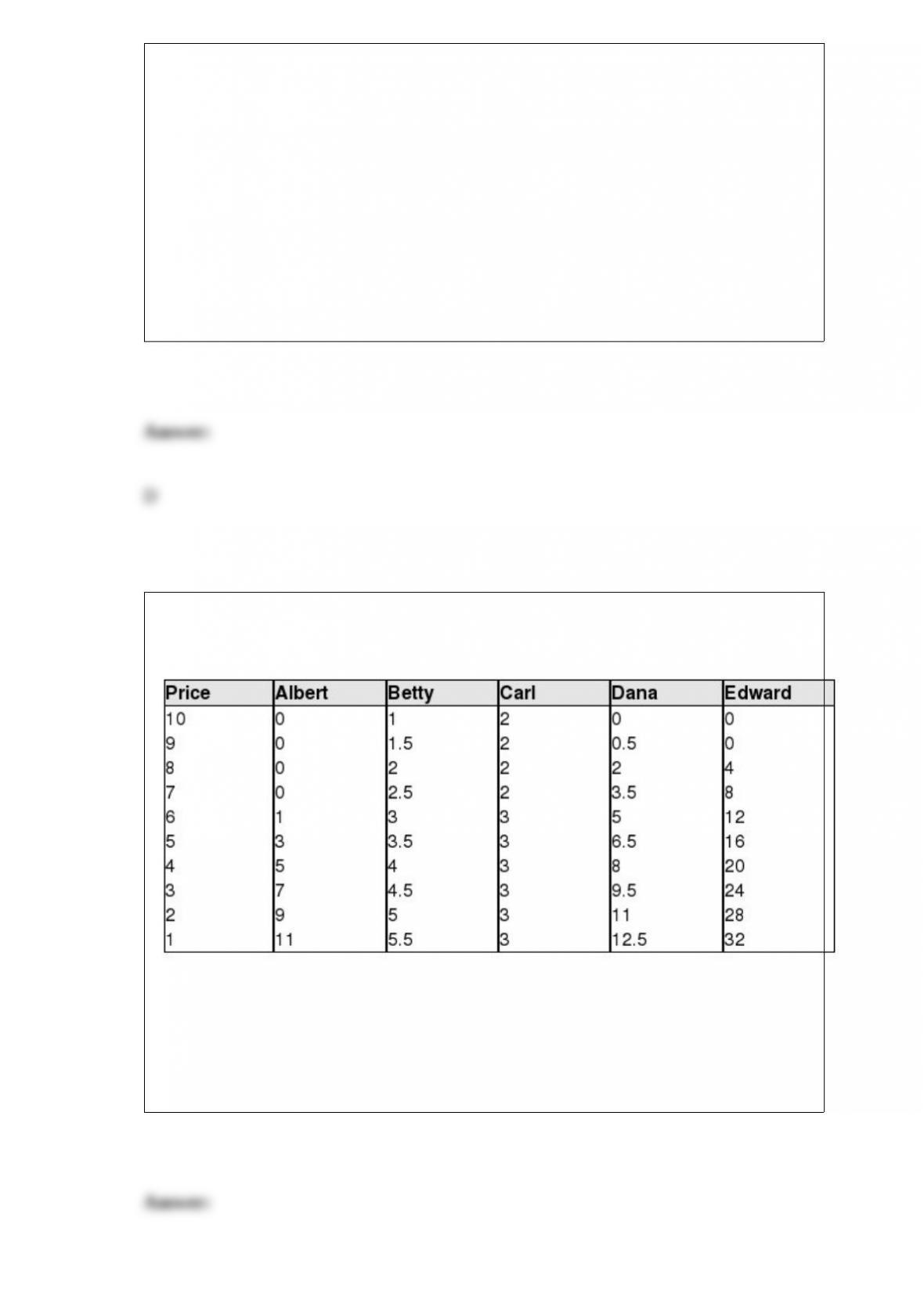
Exhibit 5-3 Demand curves for gallons of orange juice
Using Exhibit 5-3, in general, whose demand for orange juice is the most inelastic?
a. Albert
b. Betty
c. Carl
d. Dana
e. Edward
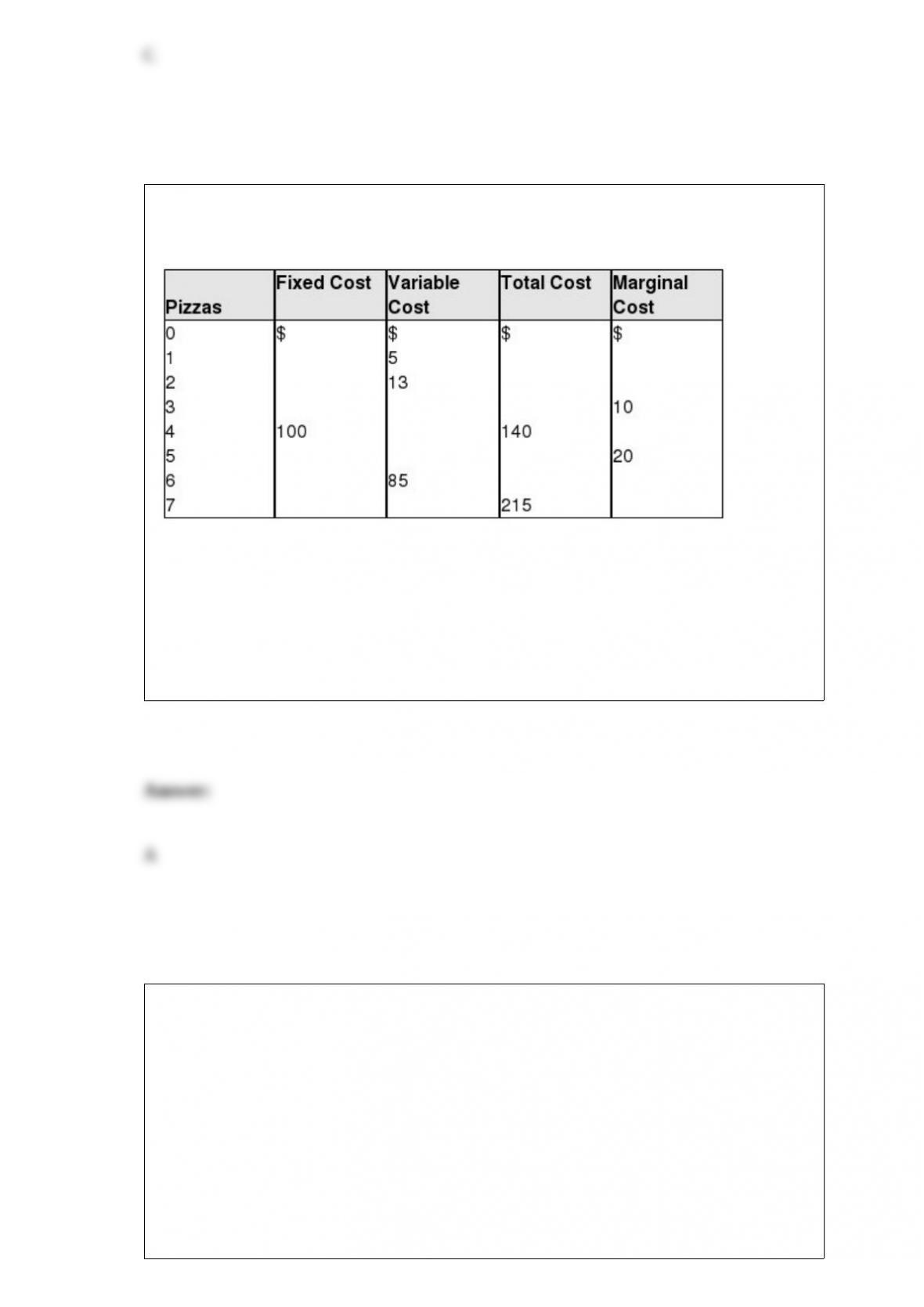
Exhibit 7-8 Costs schedules for producing pizza
By filling in the blanks in Exhibit 7-8, the fixed cost of producing 6 pizzas is shown to
be equal to:
a. $100.
b. $150.
c. $200.
d. $185.
e. $85.
The hot spot problem is:
a. the U.S. obtains the majority of its oil supplies from politically unfriendly countries.
b. some air pollutants such as sulfur dioxide have a greater effect nearby than further
away.
c. some air pollutants such as carbon dioxide have an equal effect nearby and further
away.
d. nuclear plants heat up nearby water, causing a decline in the native fish population.

If goods imports are greater than goods exports, the nation is experiencing a:
a. negative balance on current account.
b. goods trade deficit.
c. capital account imbalance.
d. weakening of its currency.
e. growth in foreign reserves.
Supporters of advertising claim that it:
a. makes demand for a firm’s product more elastic.
b. is a barrier to entry.
c. promotes better quality products.
d. all of these.
Which of the following is not an example of an externality?
a. Drunk drivers raise everyone’s auto insurance premiums.

b. The price of lumber increases as lumberjacks’ wages increase.
c. The neighbor’s beautiful front yard increases your home value.
d. Someone drives a car that emits thick black smoke.
e. People who live near a bakery enjoy the smell of baked bread.
In long-run equilibrium for a perfectly competitive firm, price equals which of the
following?
a. Economies of real cost.
b. Maximum total revenue.
c. Diseconomies of scale cost.
d. Minimum point on the long-run average cost curve.
The price elasticity of demand for a particular good is influenced by which of the
following factors?
a. b and c.
b. The income of the buyers.
c. The availability of substitutes.
d. The level of competition among sellers.
e. How many uses the good has.
Which of the following explains how a cartel with 100 percent control might raise price
to monopoly-like levels?
a. By setting a group output level equal to a profit-maximizing monopolist, and then
assigning binding quota shares to cartel members.
b. By setting an official price that members can secretly undercut.
c. By forbidding price competition, but allowing non-cooperative rivalry in output
levels.
d. None of the above.
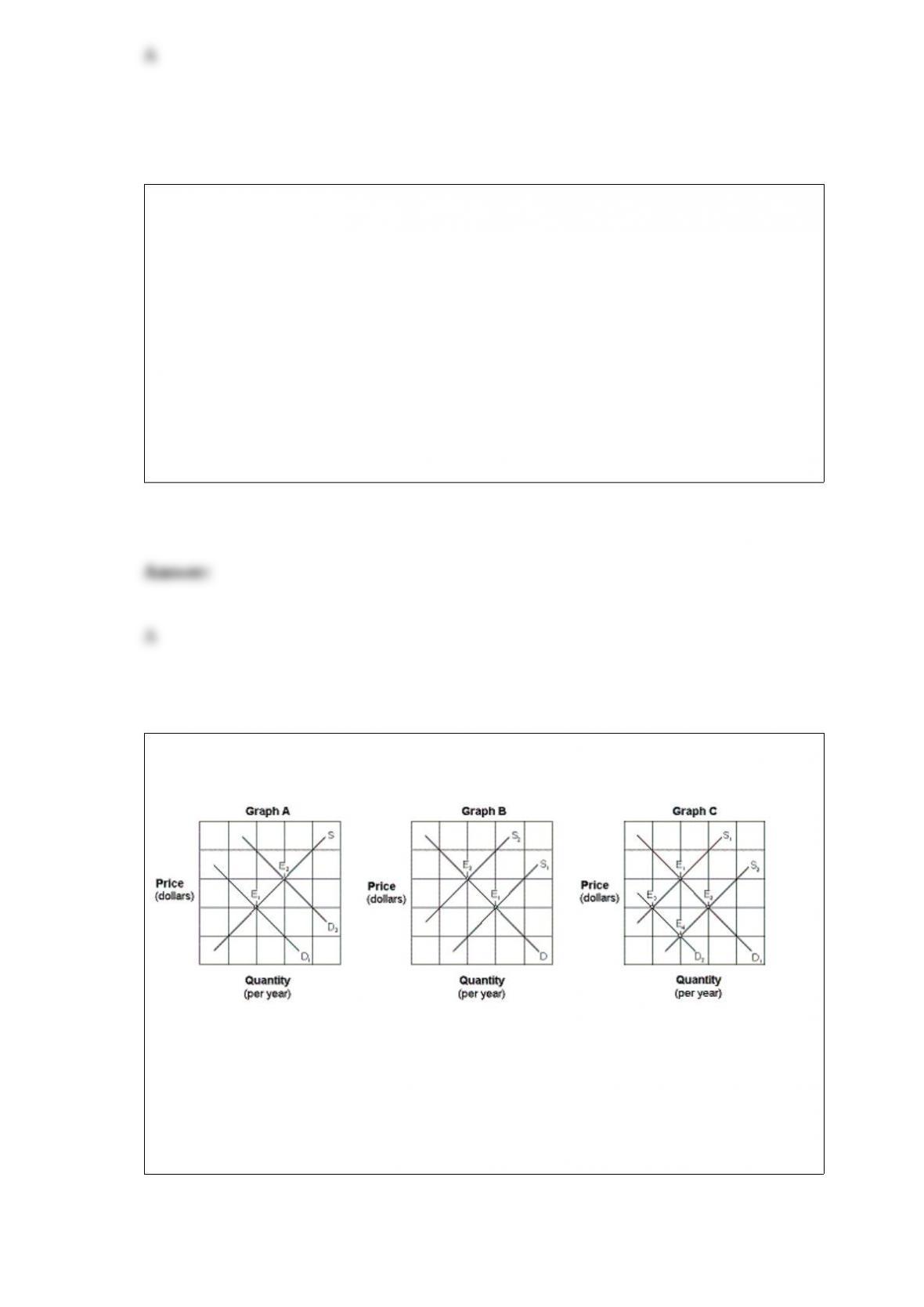
Exhibit 4-4 Supply and demand curves for good X
An increase in the price of a complementary good would be represented in which of the
graphs in Exhibit 4-4?
a. Graph A. c. Graph C.
b. Graph B. d. None of these.
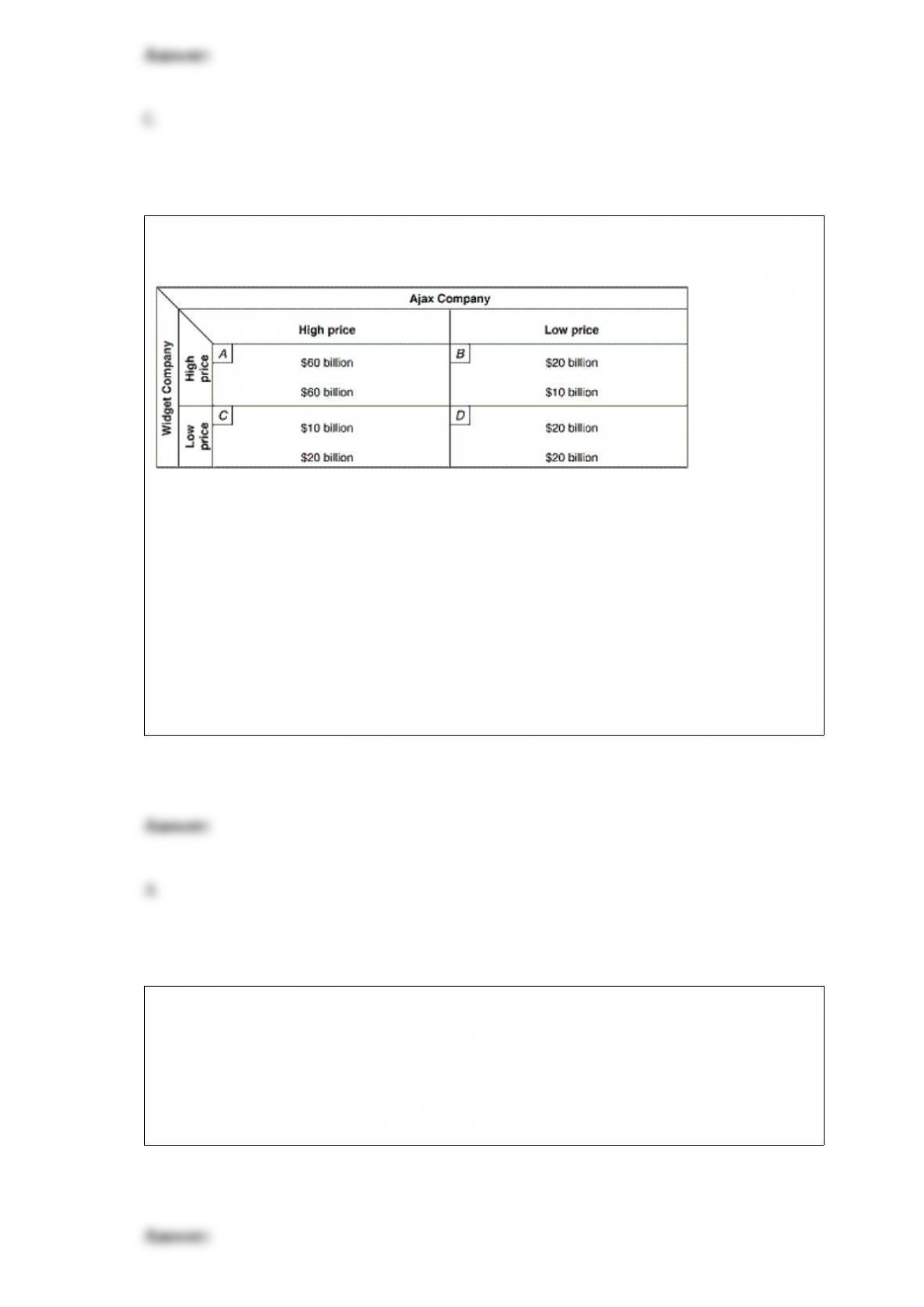
Exhibit 10-6 Two-Firm Payoff Matrix
Suppose costs are identical for the two firms in Exhibit 10-6. If both firms assume the
other will compete and charge a lower price, equilibrium will be established by:
a. Widget Co. charging the low price and Ajax Co. charging the low price.
b. Widget Co. charging the high price and Ajax Co. charging the low price.
c. Widget Co. charging the low price and Ajax Co. charging the high price.
d. Widget Co. charging the high price and Ajax Co. charging the high price.
A positive statement is:
a. something good or desirable.
b. a call for improvement.
c. a statement of opinion.
d. a statement testable by facts.
e. a suggestion for policy.

Which of the following is an implicit cost of going to college?
a. Tuition.
b. Books.
c. Lost income.
d. Future income.
e. Room and board.
Price discrimination requires:
a. a firm to be a competitive firm.
b. a firm to be able to segment its customers based on different price elasticities of
demand.
c. arbitrage.
d. that the product can be easily resold.
There was an extensive black market (illegal market) for many consumer products in
the United States during World War II. A likely explanation of the black market is that:
a. the prices of goods were artificially held down by price controls.
b. black markets were legal during the war.

c. goods were not subject to price controls.
d. gasoline rationing greatly restricted civilians from driving to stores.
A measure of sensitivity or responsiveness to changes in price or income is called:
a. elasticity.
b. technology.
c. supply and demand.
d. social pressure.
e. kickback.