1) The labor demand curve of an imperfectly competitive seller is downward sloping:
A.solely because of diminishing marginal utility.
B.both because of diminishing returns and the necessity to lower price to sell more
output.
C.solely because product price must be reduced to sell more output.
D.solely because of diminishing returns.
2) scholarly estimates of the effects of immigration on the average american wage range
from:
a.minus 5 to minus 2 percent.
b.plus 2 to plus 3 percent.
c.minus 5 to plus 3 percent.
d.minus 3 to plus 2 percent.
3)
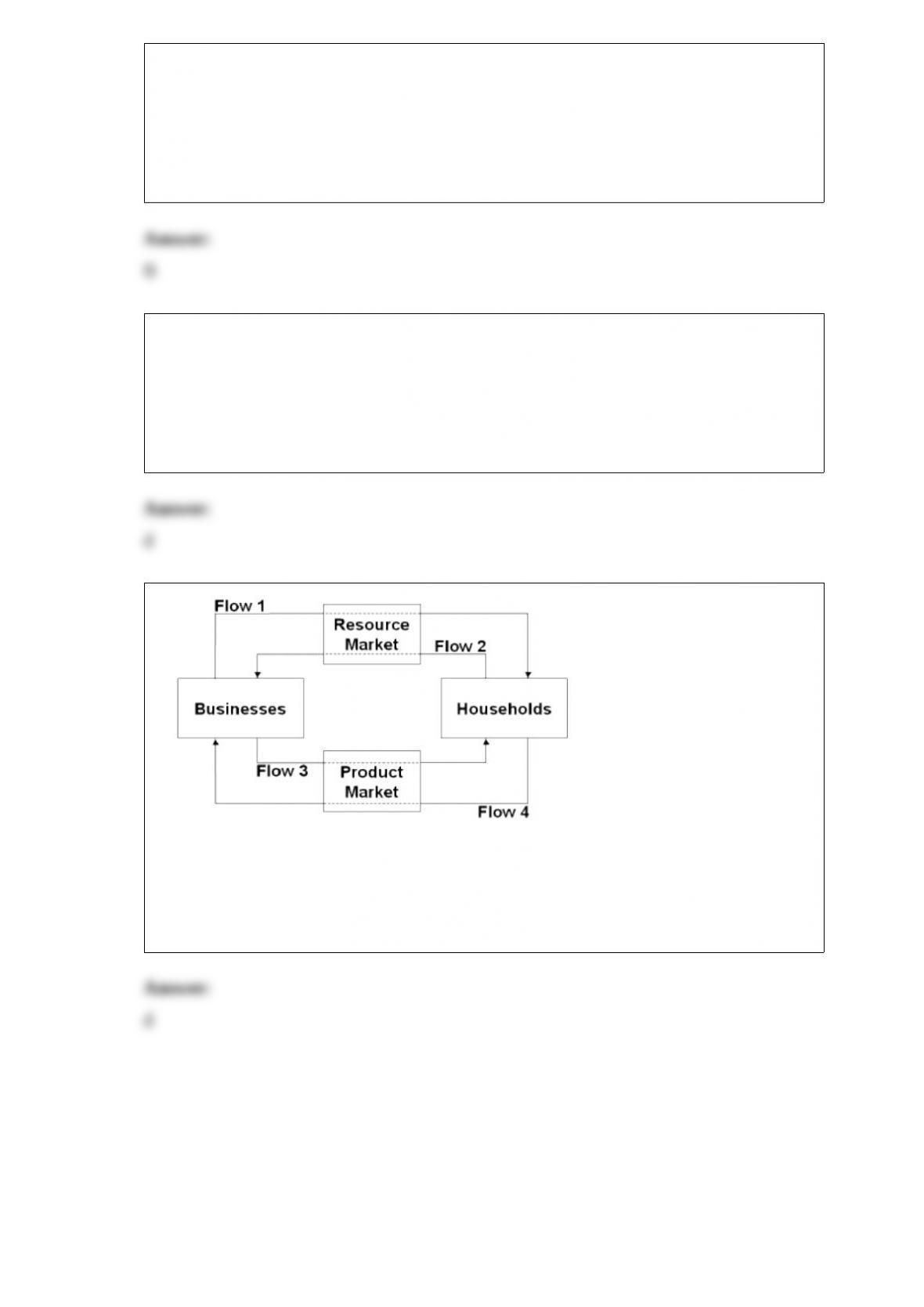
refer to the above diagram. flow (4) represents:
a.wage, rent, interest, and profit income.
b.land, labor, capital, and entrepreneurial ability.
c.goods and services.
d.consumer expenditures.
4)
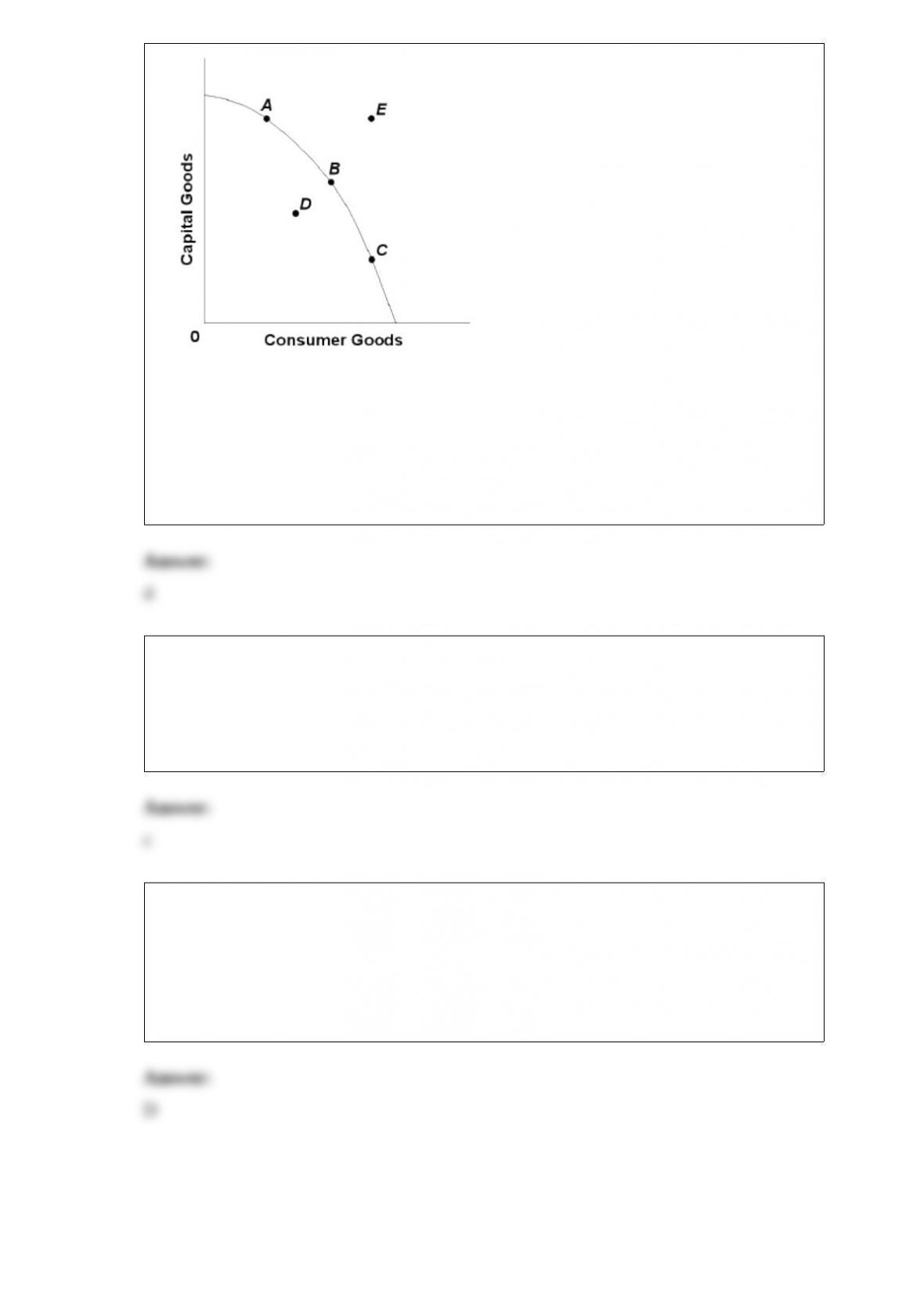
refer to the above domestic production possibilities curve for karalex. the gain to
karalex from specialization and international trade is represented by a move from:
a.a to b
b.c to a
c.c to d
d.b to e
5) which of the following would not be expected to increase labor productivity?
a.technological advance
b.the acquisition of more education and training by the labor force
c.an increase in the size of the labor force
d.the realization of economies of scale
6) According to monetarists, the Great Depression in the United States largely resulted
from:
A.contractionary fiscal policy.
B.excessive imports relative to exports.
C.significant changes in technology and resource availability.
D.inappropriate monetary policy.
7)
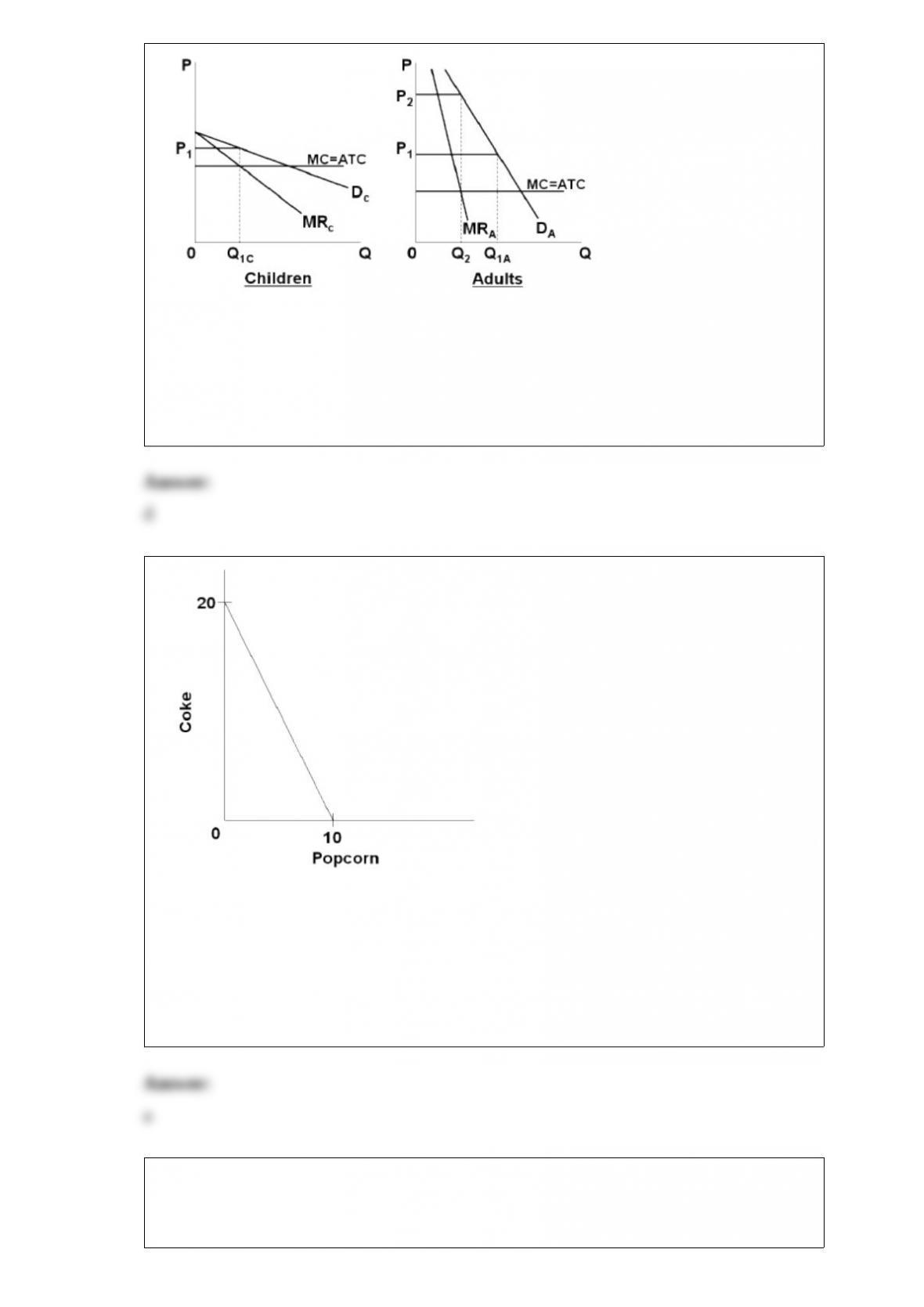
assume the above figure applies to a pure monopolist. if this firm is able to price
discriminate between children and adults, its economic profit will be:
a.(p2 – mc) (q1c + q2).
b.(p1 – mc) (q1c + q2).
c.(p2 – p1) (q1c + q2).
d.[(p1 – mc) q1c] + [(p2 – mc) q2].
8)
suppose you have a money income of $10, all of which you spend on coke and popcorn.
in the above diagram, the prices of coke and popcorn respectively are:
a.$.50 and $1.00.
b.$1.00 and $.50.
c.$1.00 and $2.00.
d.$.40 and $.50.
9) Suppose there are only two planets in the universe, Zenope and Zuranda. On each
planet, its inhabitants consume two productscoffee and fried chicken. Each planet has
an equal population. Producing solely coffee, Zenope can produce 50 units of coffee,

while Zuranda can produce 80 units of coffee. Producing solely fried chicken, Zenope
can produce 25 units, while Zuranda can produce 30 units.
(a)Which planet has the absolute advantage in coffee? In fried chicken?
(b)Which planet has the comparative advantage in coffee? In fried chicken?
10) In considering euros and dollars, the rates of exchange for the euro and the dollar:
A.are directly related.
B.are inversely related.
C.are unrelated.
11) (consider this) since 1990, u.s. immigrants have founded ____ of every _____
public companies financed by venture capital.
a.1, 4
b.1, 3
c.1, 2
d.2, 5
12) an indifference curve shows all:
a.possible equilibrium positions on an indifference map.
b.equilibrium combinations of two products that are obtainable with a given money
income.
c.combinations of two products yielding the same total utility to a consumer.
d.possible combinations of two products that a consumer can purchase, given her
income and the prices of the products.
13) The main purpose of industrial regulation is to:
A.lower price to marginal cost.
B.lower price to average total cost such that the firm earns a fair return.
C.break monopolies into competing firms.
D.reduce X-inefficiency.
14)
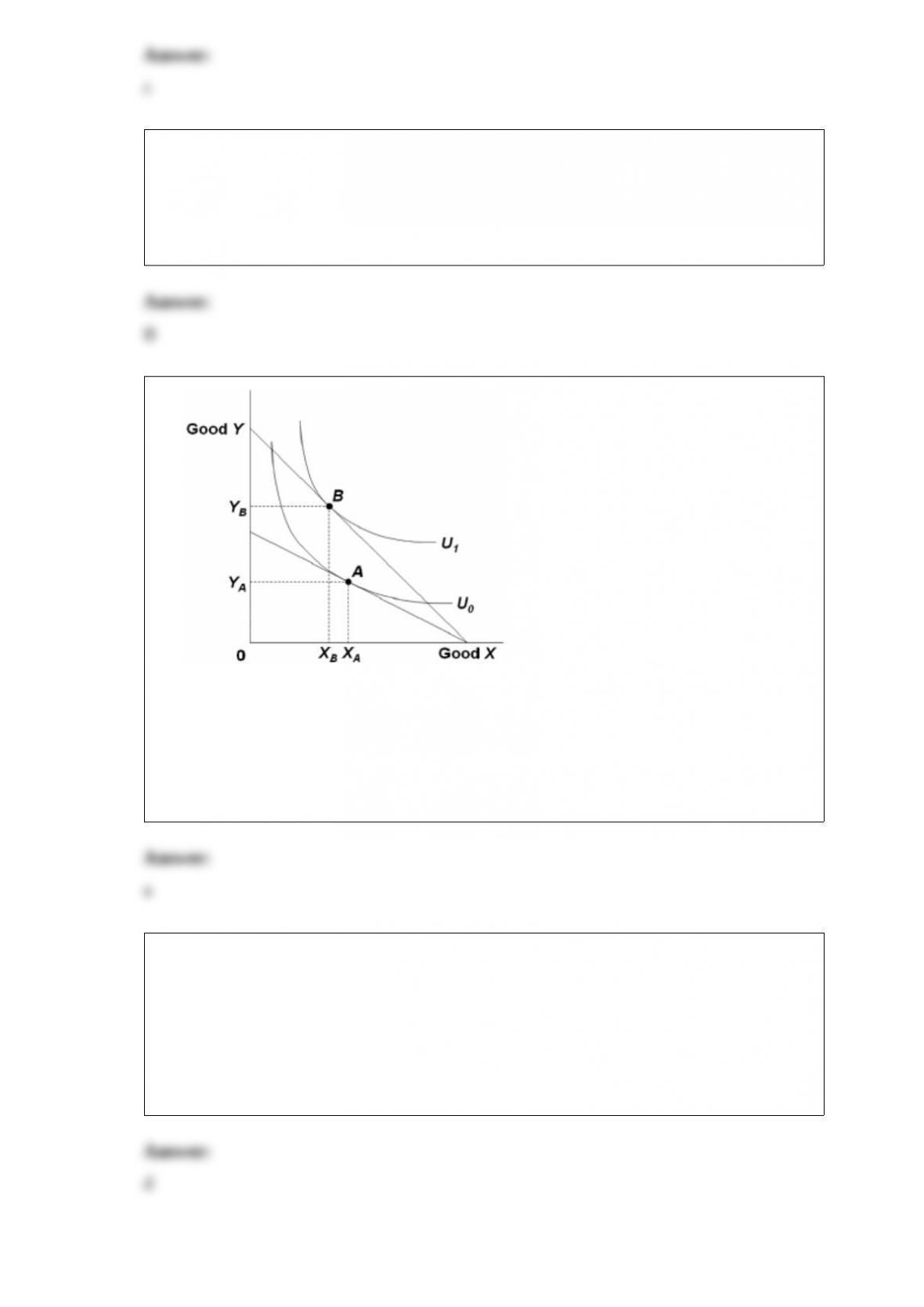
refer to the above diagram. the budget line shift which moves the consumer’s
equilibrium position from point a to point b suggests:
a.an increase in the quantity of y demanded.
b.a decrease in the quantity of y demanded.
c.a leftward shift in the demand curve for y.
d.a rightward shift in the demand curve for y.
15) the personal distribution of income refers to the:
a.division of income between personal taxes, consumption expenditures, and saving.
b.division of income on the basis of industry sources, for example, agriculture,
transportation, and mining.
c.distribution of income to basic resource classes, that is, wages, rents, interest, and
profits.
d.way income is distributed among specific households or spending units.

16) As a percent of GDP, the United States public debt is:
A.the highest among major industrial nations.
B.the lowest among major industrial nations.
C.lower than the public debts of several other major industrial nations.
D.higher than the percentages for Canada, Germany, and Italy.