
Absolute advantage is the ability of a country to produce a good with ________ than
another country.
a. a lower opportunity cost
b. a higher opportunity cost
c. fewer resources
d. more resources
A consumer buys only food and clothing. If the quantity of food bought increases while
that of clothing remains the same, the marginal utility of food will:
a. fall, but not as fast as the marginal utility of clothing falls.
b. rise, but not as fast as the marginal utility of clothing rises.
c. rise relative to the marginal utility of clothing.
d. fall relative to the marginal utility of clothing.
Which of the following statements concerning the supply of labor is true?
a. The supply of labor is determined by the prevailing wage rate.
b. The labor supply curve is downward sloping.
c. The wage rate has no effect on the supply of labor.
d. None of these.

Which of the following provides the best explanation of why low-income countries
generally remain poor?
a. Their political environment and policies often discourage productive activity and
reduce the potential gains from specialization and exchange.
b. They are oppressed by developed nations that benefit from the cheap goods available
from countries with low wage rates.
c. They are poorly endowed with natural resources, which are essential for long-term
rapid growth.
d. When the average income level is low, workers have little incentive to earn higher
incomes.
Which of the following is not a source of economies of scale?
a. Division and specialization of labor.
b. Increase in output.
c. More efficient use of capital.
d. All of the above.
e. Centralized marketing.
Under socialism, which of the following industries would probably be owned by the
government?
a. Steel. c. Agriculture.

b. Electricity. d. All of these.
If the percentage change in the quantity demanded of a good equals the percentage
change in price, price elasticity of demand is:
a. elastic. c. perfectly elastic.
b. inelastic. d. unitary elastic.
Assume that Coca-Cola and Pepsi-Cola are substitutes. A rise in the price of Coca-Cola
will have which of the following effects on the market for Pepsi?
a. A movement down along the Pepsi demand curve.
b. A rightward shift in the Pepsi demand curve.
c. A movement up along the Pepsi demand curve.
d. A leftward shift in the Pepsi demand curve.
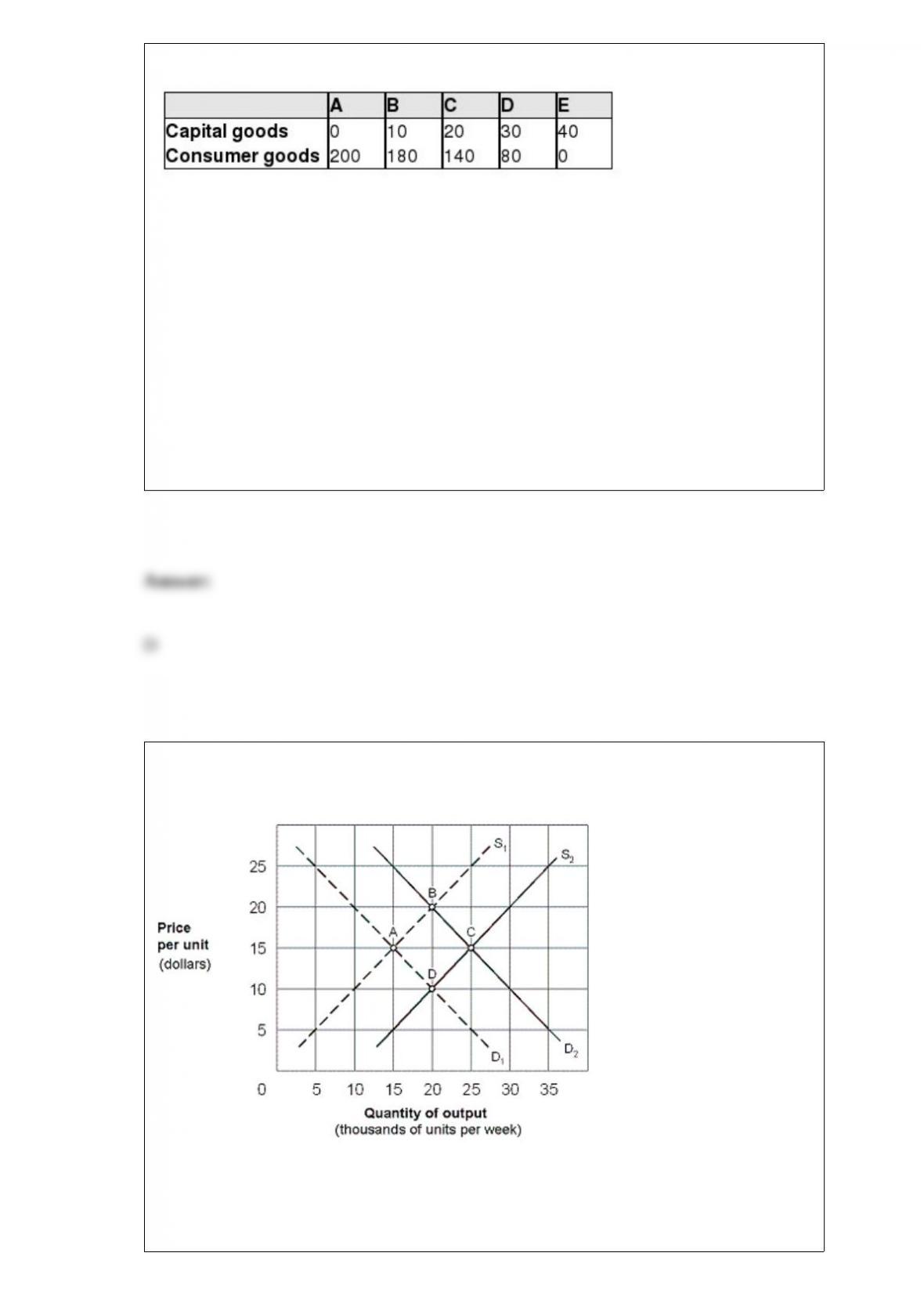
Exhibit 2-4 Production possibilities curve data
According to the data given in Exhibit 2-4, the production of 140 units of consumer
goods and 10 units of capital goods:
a. is possible but would be inefficient.
b. may be a result of unemployment.
c. may be a result of unused natural resources.
d. all of the above.
e. none of the above.
Exhibit 8-19 Long-run perfectly competitive industry
As shown in Exhibit 8-19, assume that a perfectly competitive industry is in long-run
equilibrium at point A. If the demand curve shifts from D1 to D2, the adjustment
sequence between points will be:
a. A to B, then back to A.

b. A to D, then back to A.
c. A to D, then to C.
d. A to B, then to C.
If an economy is producing at full employment, it means that:
a. there are idle resources in this economy.
b. the production is not efficient.
c. the economy is producing along its production possibilities curve.
d. the economy is producing at a point that is to the left of the production possibilities
curve.
e. the economy is producing at a point that is to the right of the production possibilities
curve.
It is Valentine’s Day and Jason is desperately looking all over town for a dozen roses to
give to Judy. Most likely, Jason’s price elasticity of demand is:
a. infinitely large.
b. negative.
c. equal to one.
d. greater than one.
e. less than one.

The fundamental rule of profit maximization for firms is to produce where:
a. MR = MC.
b. ATC is minimized.
c. quantity of output is maximized.
d. price is maximized.
e. total revenue is maximized.
If a decrease in the price of good Y causes the demand for good Z to decrease, this
indicates that:
a. Y and Z are complements.
b. Y and Z are substitutes.
c. Y and Z are unrelated.
d. Y is a normal good and Z is an inferior good.
Exhibit 8-12 Marginal revenue and cost per unit curves
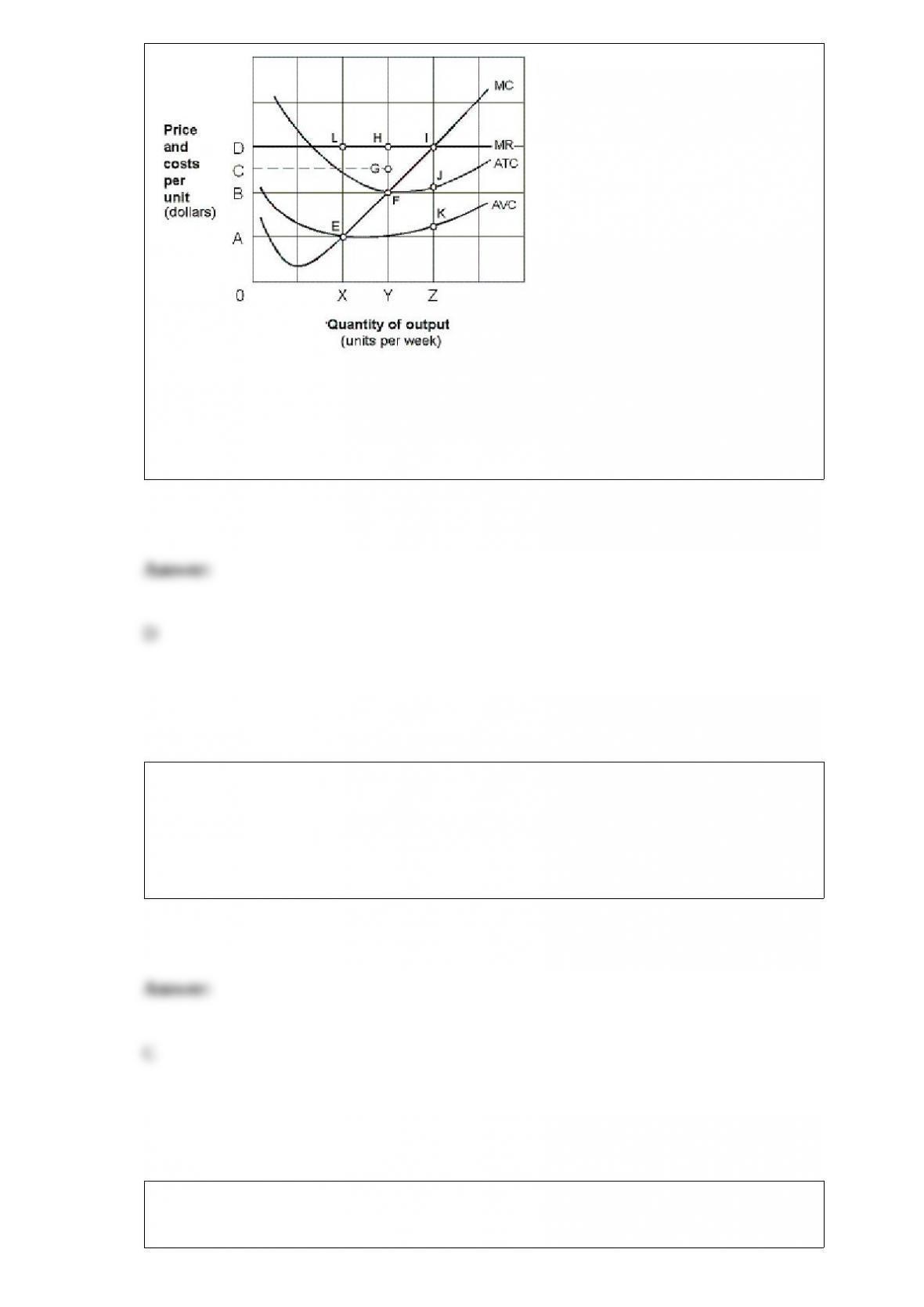
The firm shown in Exhibit 8-12 will:
a. produce where marginal cost equals marginal revenue.
b. be a price taker.
c. not produce below a price of OA.
d. all of these.
The number of satellite dishes increased by 50 percent when the average monthly price
of cable TV increased by 10 percent. Assuming that other factors are held constant,
satellite dishes and cable TV are classified as:
a. complements. c. substitutes.
b. unrelated goods. d. social goods.
Suppose Jones sells a good for $100 at a yard sale. If the producer surplus from the sale
is $75, Jones’s cost of the good must have been:

a. $100. c. $25.
b. $175. d. equal to the deadweight loss.
A technological advance that increases the productivity of teachers can be expected to
have what effects on the equilibrium labor market for teachers?
a. Wages will rise, and quantity of labor will fall.
b. Wages will rise, and quantity of labor will rise.
c. Wages will fall, and quantity of labor will fall.
d. Wages will fall, and quantity of labor will rise.
e. Wages and quantity of labor will remain the same.
A monopolist faces a downward sloping demand curve that is equal to which of the
following?
a. The prevailing market price.
b. The market demand curve.
c. Its marginal cost curve.
d. Marginal revenue.
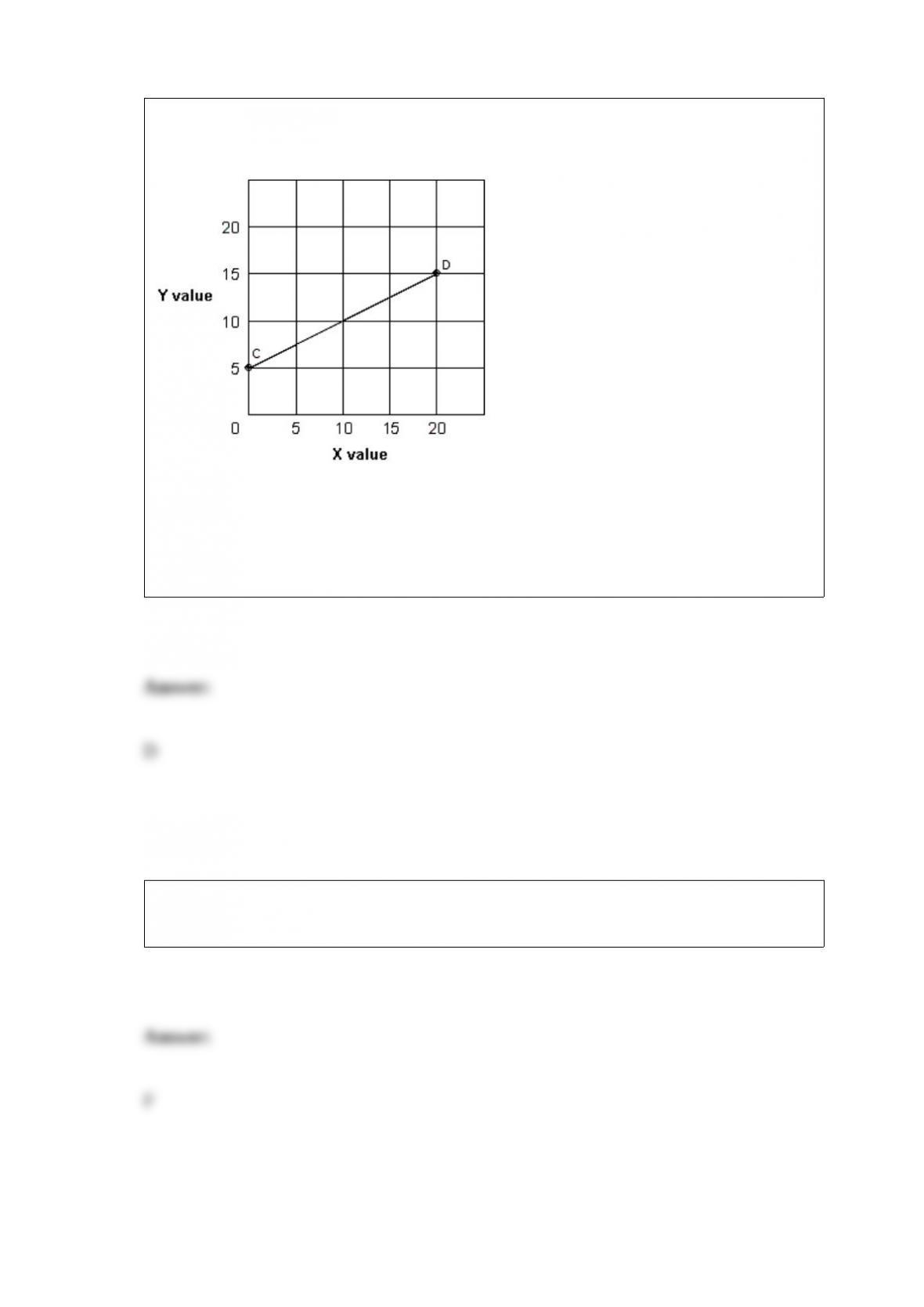
Exhibit 1A-2 Straight line
Straight line CD in Exhibit 1A-2 shows that:
a. increasing values for X will increase the value of Y.
b. decreasing values for X will decrease the value of Y.
c. there is a direct relationship between X and Y.
d. all of these.
For a perfectly competitive firm, marginal revenue product is equal to price minus
marginal revenue.

Scarcity has no importance to understanding economics.
Campaign speeches normally include normative economic statements.
Diseconomies of scale occur when high levels of output are produced in a short period
of time.
If a firm’s average variable cost curve is rising, its marginal cost must exceed its
average variable cost.
Explain why a monopsonist’s marginal factor cost curve must lie above its labor supply
curve.
Economic profit equals accounting profit minus implicit costs.
Wage discrimination means workers with equal productivity are paid unequal wages, or
workers with unequal productivity are paid equal wages.

Distinguish macroeconomics and microeconomics.
Prior to 1914, did antitrust legislation have much effect on monopoly power in the
United States?