Monetarists think that the Fed should use ________ as a target when conducting
monetary policy.
A) the money supply
B) the federal funds rate
C) the Treasury bill rate
D) the inflation rate
E) the unemployment rate
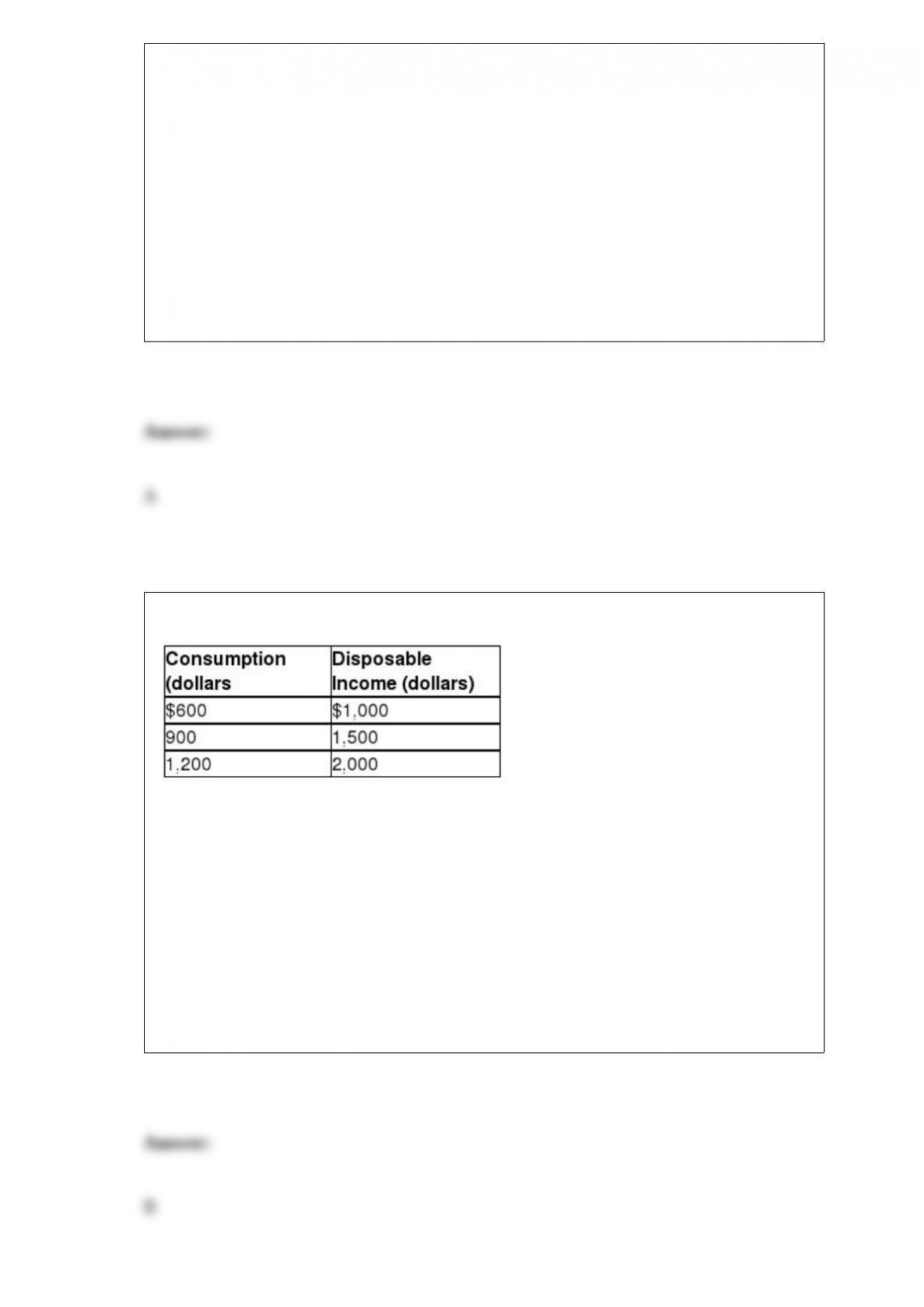
Table 23-4
Given the consumption schedule in the table above, the marginal propensity to consume
is
A) 0.5.
B) 0.6.
C) 0.75.
D) 0.8.

Which of the following statements refers to rent seeking?
A) “Laws passed by the federal government often provide benefits for a small number
of individuals. These individuals, in turn, have an incentive to contribute to the
campaigns of politicians who pass these laws.”
B) “The federal government should spend more money on programs that help low
income citizens and less money on national defense.”
C) “The role of the federal government in the U.S. economy grew significantly after the
Great Depression. Government spending and taxes are a much greater proportion of
total income today than they were in 1929.”
D) “There is an opportunity cost whenever the federal government spends tax revenue.
For example, an additional $1 billion spent on national defense means there will be less
revenue for highway construction and maintenance or some other program.”
Which of the following is true of trademarks?
A) A successful trademark is one that becomes a generic name for a product, for
example, “Xerox” has become a generic term for making photocopies.
B) A successful trademark is one that allows consumers to immediately identify the
source or producer of the product.
C) If a firm is granted a trademark, then no other firms can legally produce similar
products for a given period of time.
D) If a firm is granted a trademark, then no other firms can legally sell in the same
geographic area for a given period of time.
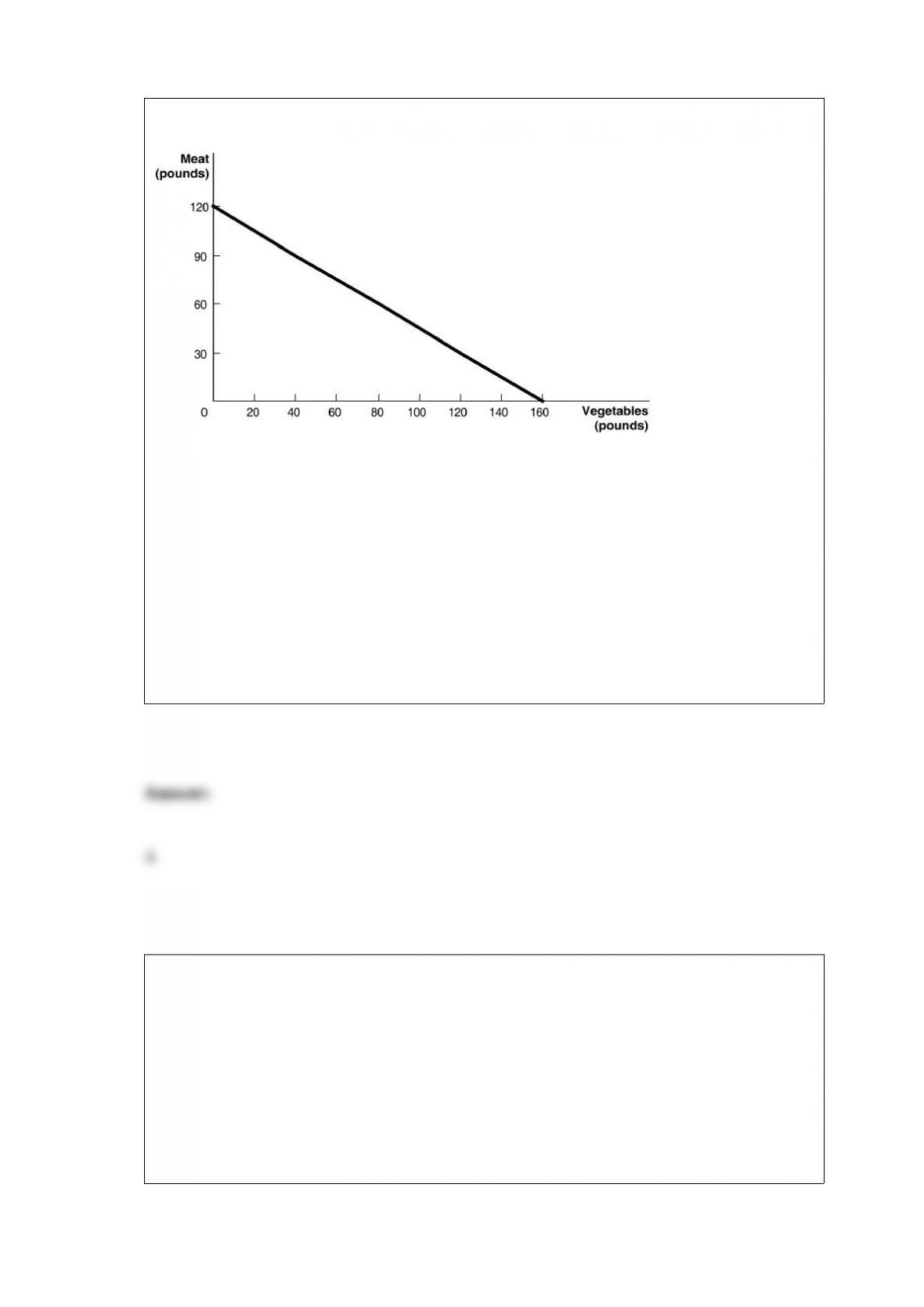
Figure 2-2
Figure 2-2 above
shows the production possibilities frontier for Mendonca, an agrarian nation that
produces two goods, meat and vegetables. If Mendonca chooses to produce 160 pounds
of vegetables, how much meat can it produce to maximize production?
A) 0 pounds of meat
B) 30 pounds of meat
C) 60 pounds of meat
D) 120 pounds of meat
Which of the following firms is not able to practice price discrimination?
A) movie theaters
B) commercial airlines
C) land-line telephone companies
D) the largest wheat farmer in Nebraska
Increases in the price level
A) increase the opportunity cost of holding money.
B) decrease the opportunity cost of holding money.
C) increase the quantity of money needed for buying and selling.
D) decrease the quantity of money needed for buying and selling.
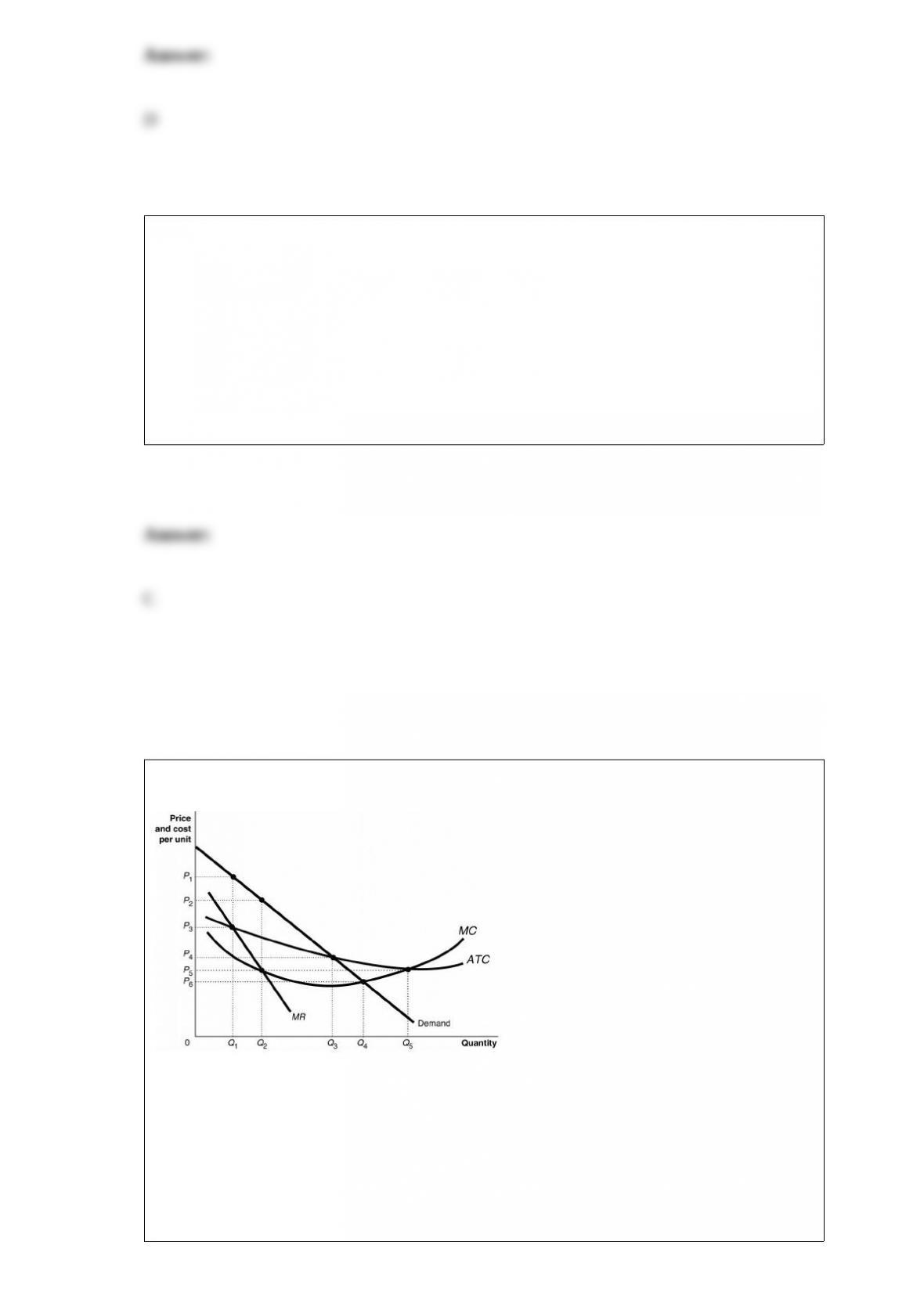
Figure 15-16
Figure 15-16 shows the market demand
and cost curves facing a natural monopoly. If the regulators of the natural monopoly
allow the owners of the firm to break even on their investment the firm will produce an
output of ________ and charge a price of ________.
A) Q1 units; P4
B) Q1 units; P1
C) Q5 units; P3
D) Q3 units; P3
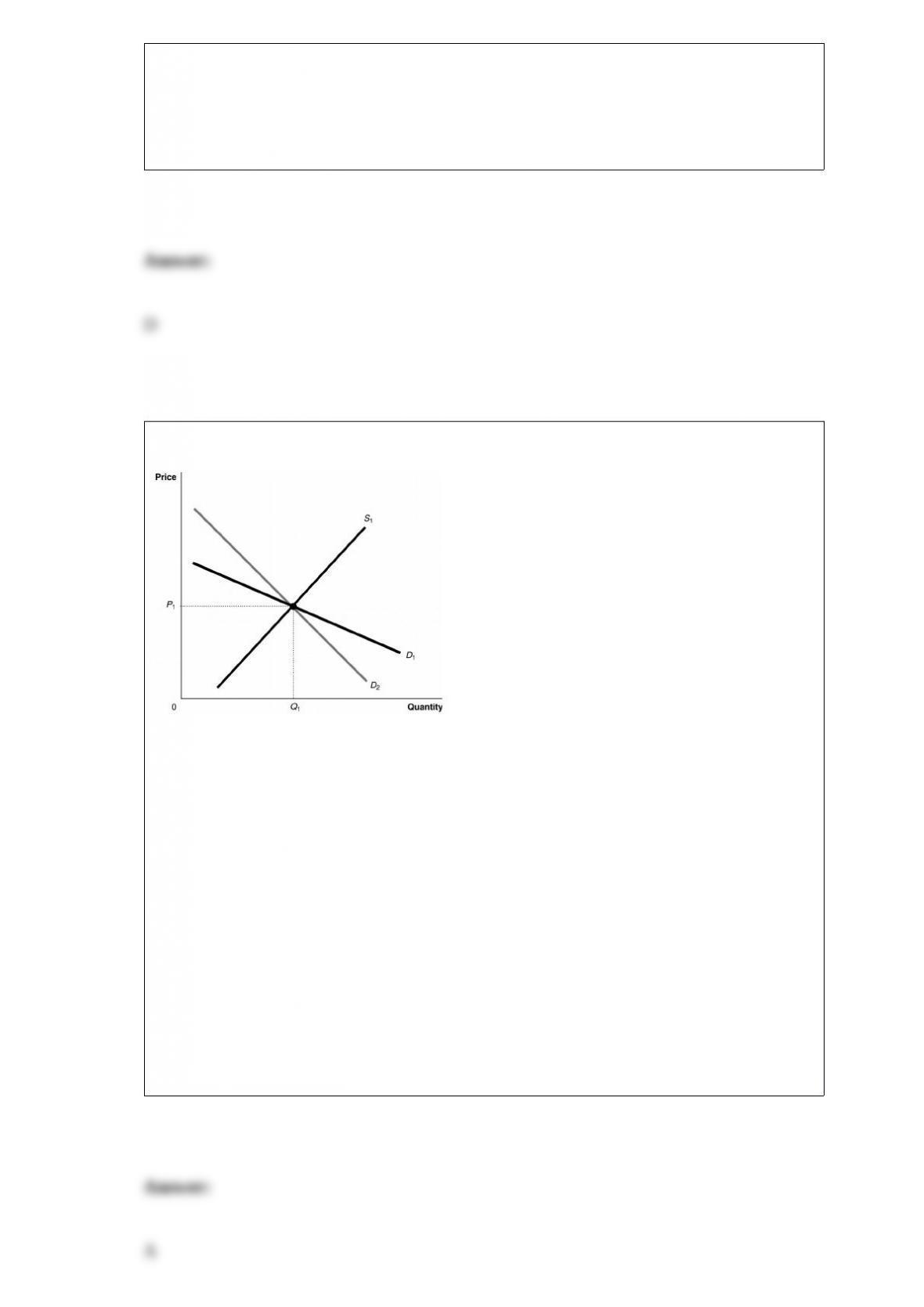
Figure 4-10
Suppose the market is initially in equilibrium at price P1 and then the government
imposes a tax on every unit sold. Which of the following statements best describes the
impact of the tax?
A) The consumer will bear a smaller share of the tax burden if the demand curve is D1.
B) The consumer’s share of the tax burden is the same whether the demand curve is D1
or D2.
C) The consumer will bear a smaller share of the tax burden if the demand curve is D2.
D) The consumer will bear the entire burden of the tax if the demand curve is D2 and
the producer will bear the entire burden of the tax if the demand curve is D1.

Which of the following is true of a typical firm in a monopolistically competitive
industry?
A) Product differentiation allows a successful firm to emerge as a market leader in the
industry.
B) All firms have identical cost structures.
C) The more successful firms have an incentive to merge in order to exert greater
market power.
D) Each firm acts independently.
The ________ the sale of an additional unit of a product is a marginal benefit to the
firm.
A) revenue received from
B) extra cost of
C) total value of
D) sales tax on
If the slope of a demand curve is equal to -0.1 then
A) demand is inelastic.

B) we don’t know whether the demand is elastic or inelastic.
C) the demand is elastic at low prices and inelastic at high prices.
D) as price increases by 10 percent, quantity demanded decreases by 1 percent.
Gretchen expects the price level to rise from 104 this year to 108 next year, and she is
able to incorporate these expectations into her wage contract. If the price level rises to
106 next year instead of 108, which of the following will occur?
A) Gretchen’s real wage will be unchanged.
B) Gretchen’s real wage will fall.
C) Gretchen’s real wage will rise.
D) Gretchen’s real wage may rise or fall, depending on the unemployment rate.
The U.S. government has frequently used a “command and control” approach in dealing
with pollution. Which of the following describes this approach?
A) The government uses taxes in order to internalize the externalities caused by
pollution.
B) The government uses subsidies to encourage firms to use new technology that
reduces pollution.
C) The government imposes quantitative limits on the amount of pollution firms are
allowed to generate.

D) The government distributes information to consumers and producers on how to
reduce pollution.
Suppose the following two events occur in the market for elementary school teachers:
a. Overcrowded schools and education budget cuts have discouraged young college
students from pursuing careers in teaching.
b. With an increasing birth rate, the number of children entering the elementary school
system is expected to increase significantly over the next ten years. What is likely to
happen to the equilibrium wage and quantity of teachers as a result of these two events?
A) The equilibrium quantity and the equilibrium wage of elementary school teachers
fall.
B) The equilibrium wage rises and the effect on the equilibrium quantity of elementary
school teachers is indeterminate.
C) The equilibrium quantity falls and the effect on the equilibrium wage of elementary
school teachers is indeterminate.
D) The equilibrium quantity falls and the equilibrium wage of elementary school
teachers rises.
Given the fact that the productivity slowdown of the mid-1970s to the mid-1990s
affected all industrial countries, which of the following explanations for the
productivity slowdown in the United States is not likely to be correct?
A) A deterioration of the U.S. education system caused a decline in the quality of labor.
B) high oil prices
C) Services have become a larger fraction of GDP.
D) stricter environmental regulations
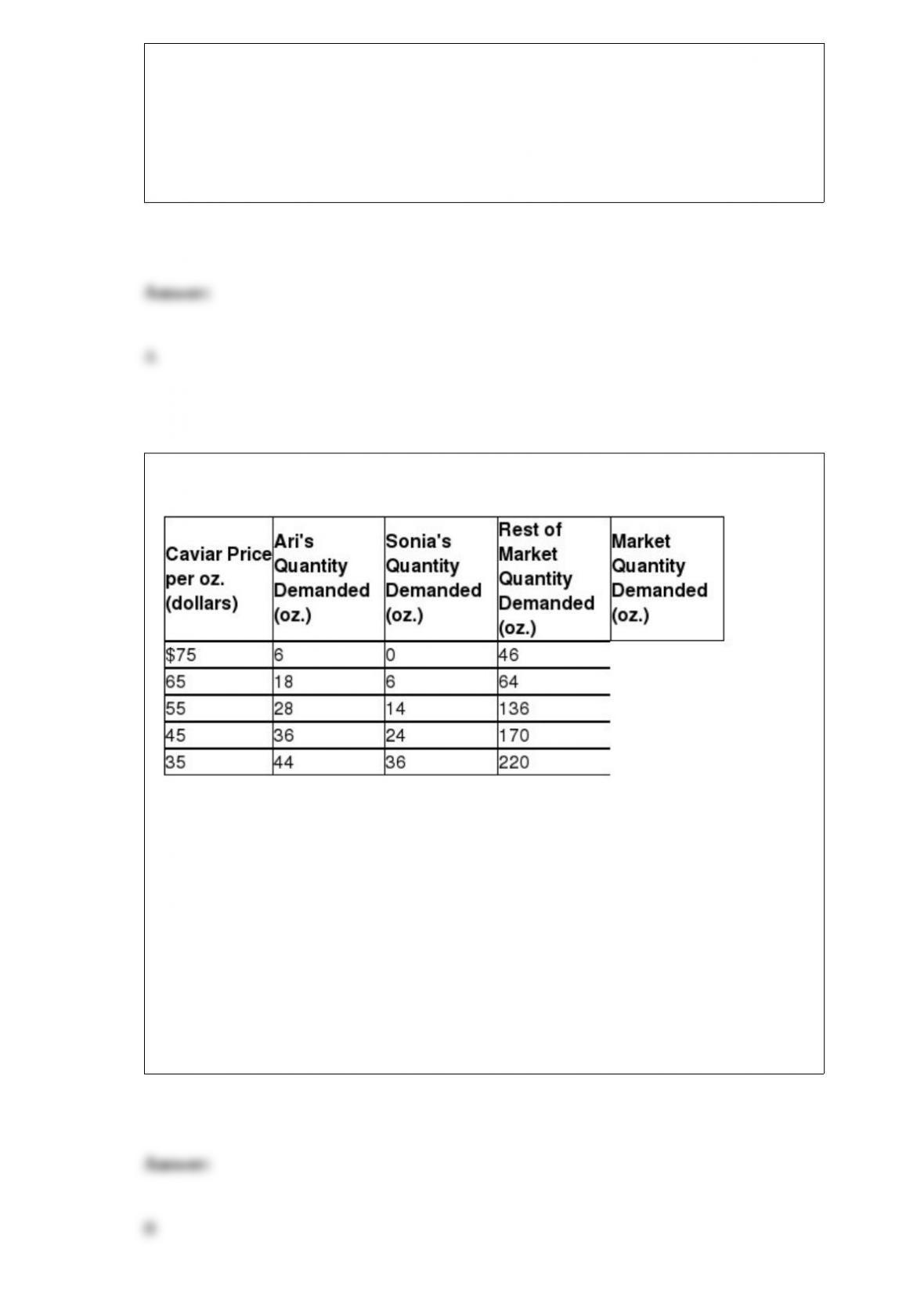
Table 3-2
The table above shows the demand schedules for caviar of two individuals (Ari and
Sonia) and the rest of the market. If the price of caviar falls from $45 to $35, the market
quantity demanded would
A) decrease by 50 oz.
B) increase by 70 oz.
C) increase by 50 oz.
D) decrease by 70 oz.
Vipsana’s Gyros House sells gyros. The cost of ingredients (pita, meat, spices, etc.) to
make a gyro is $2.00. Vipsana pays her employees $60 per day. She also incurs a fixed
cost of $120 per day. Calculate Vipsana’s variable cost per day when she produces 50
gyros using two workers?
A) $100
B) $124.40
C) $220
D) $240
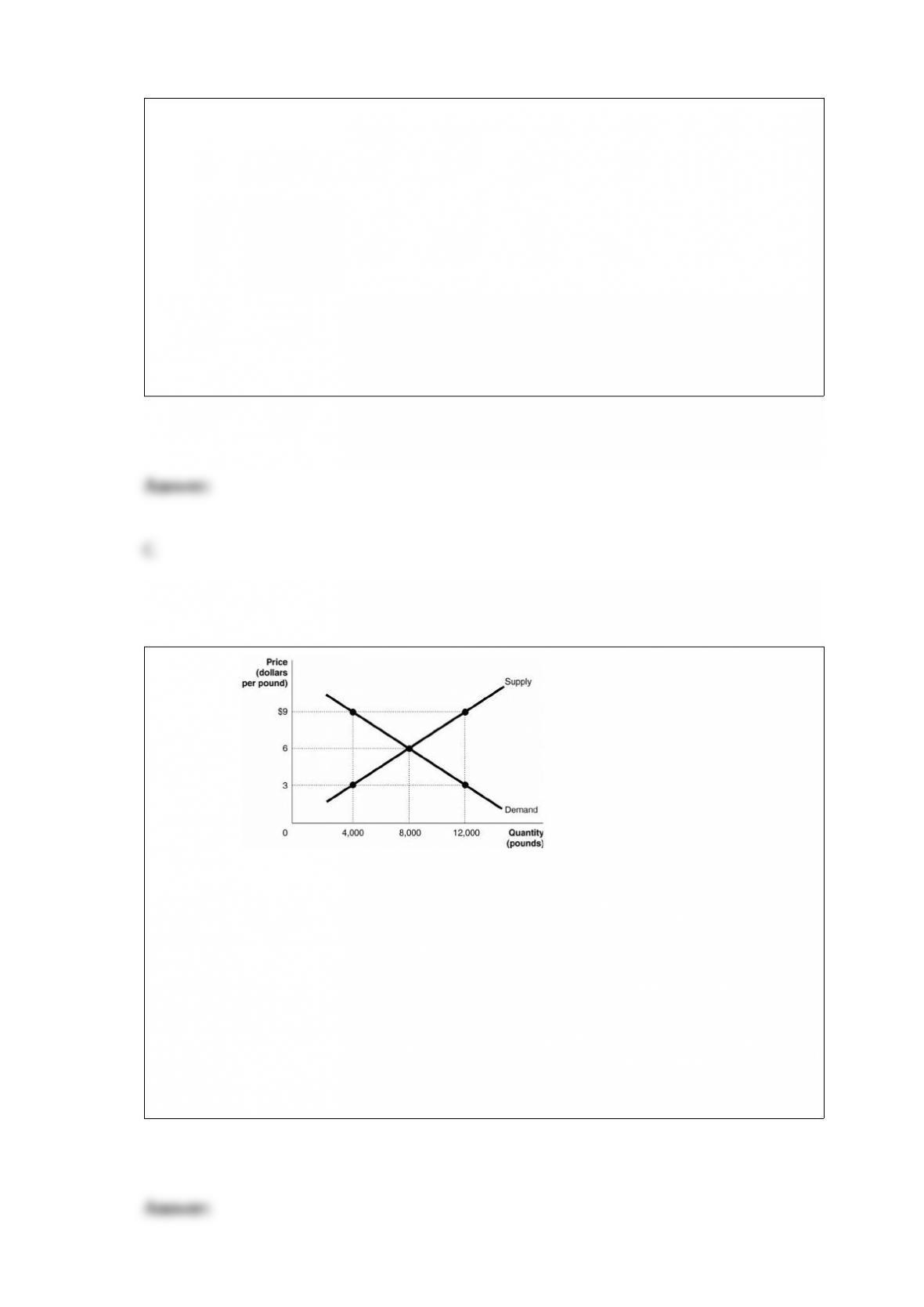
Figure 4-5
The figure above represents the market for pecans. Assume that this is a competitive
market. If 4,000 pounds of pecans are sold,
A) the deadweight loss is equal to $12,000.
B) consumer surplus equals zero.
C) the marginal benefit of each of the 4,000 pounds of pecans equals $3.
D) marginal benefit is equal to marginal cost.
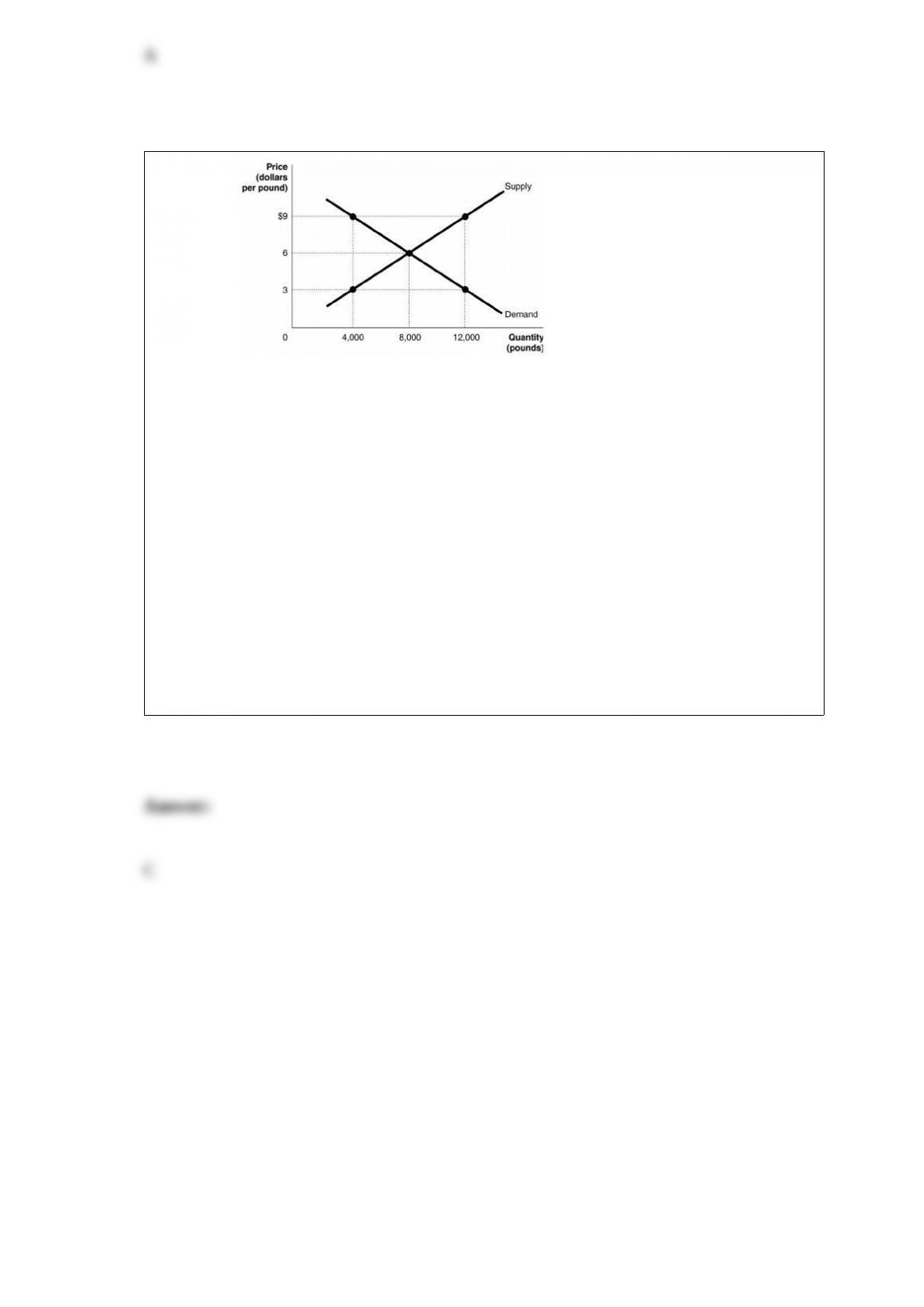
Figure 4-5
The figure above represents the market for pecans. Assume that this is a competitive
market. At a price of $9,
A) the marginal cost of pecans is greater than the marginal benefit; therefore, output is
inefficiently low.
B) producers should lower the price to $3 in order to sell the quantity demanded of
4,000.
C) the marginal benefit of pecans is greater than the marginal cost; therefore, output is
inefficiently high.
D) the marginal benefit of pecans is greater than the marginal cost; therefore, output is
inefficiently low.