According to the Application about productivity in the nation of Latvia in the
1990s,, workers in the EU were more productive than workers in Latvia in the 1990s,
yet despite this, EU nations chose to trade with Latvia. Engaging in trade with Latvia
allowed ________ to become more productive.
A) workers in the EU but not workers in Latvia
B) workers in Latvia but not workers in the EU
C) neither workers in the EU nor in Latvia
D) workers in both the EU and in Latvia
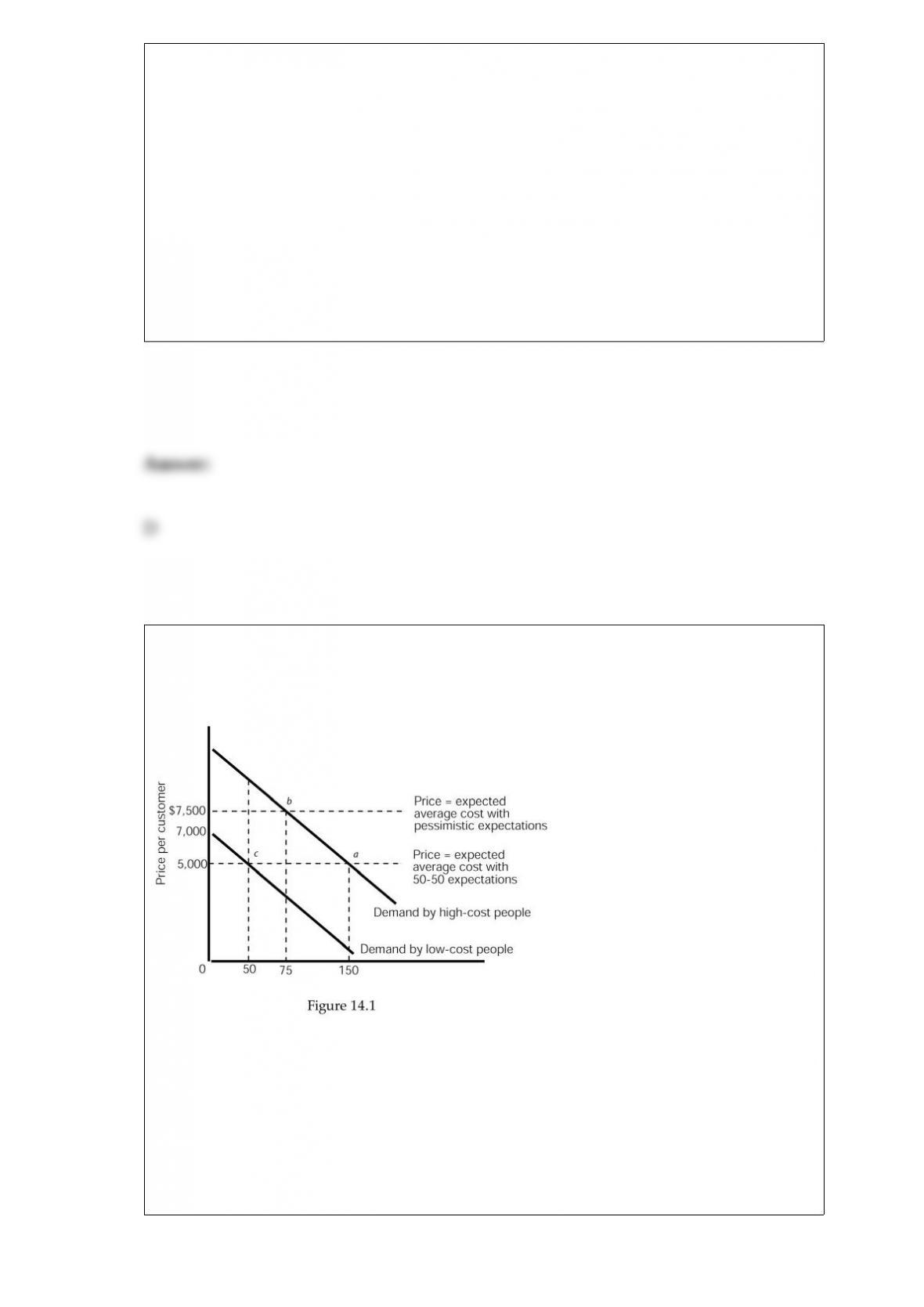
Refer to Figure 14.1. If the insurance company assumes there will be a 50-50 split
between high-cost and low-cost customers, the price of insurance will be ________ and
there will be ________ consumers.
A) 5000; 150
B) 5000; 200
C) 7500; 75
D) 7500; 125
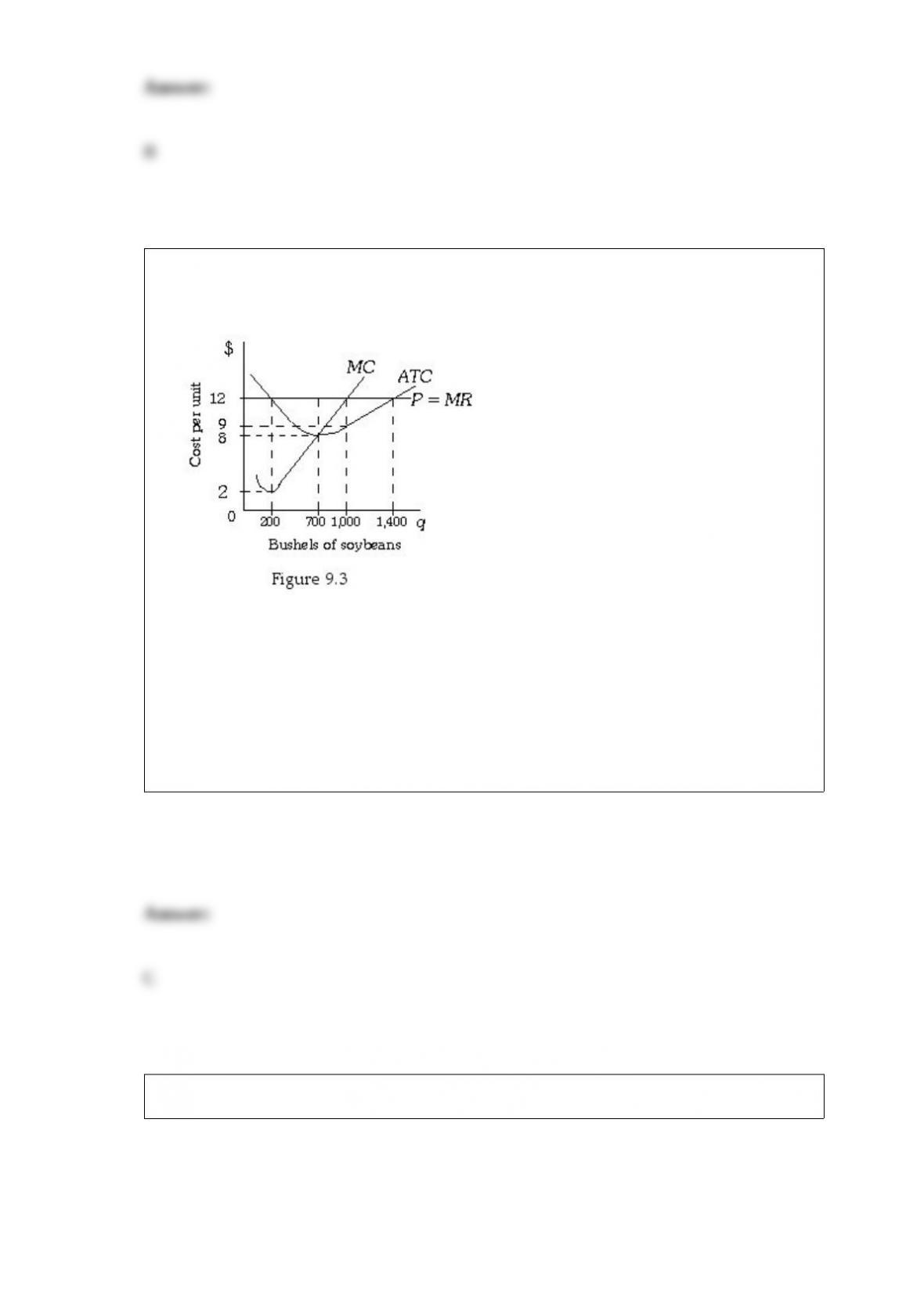
Refer to Figure 9.3. If this farmer is producing the profit-maximizing level of output,
his profit is:
A) $0.
B) $2,800.
C) $3,000.
D) $12,000.
Refer to Table 8.4. There are diminishing returns to labor for:
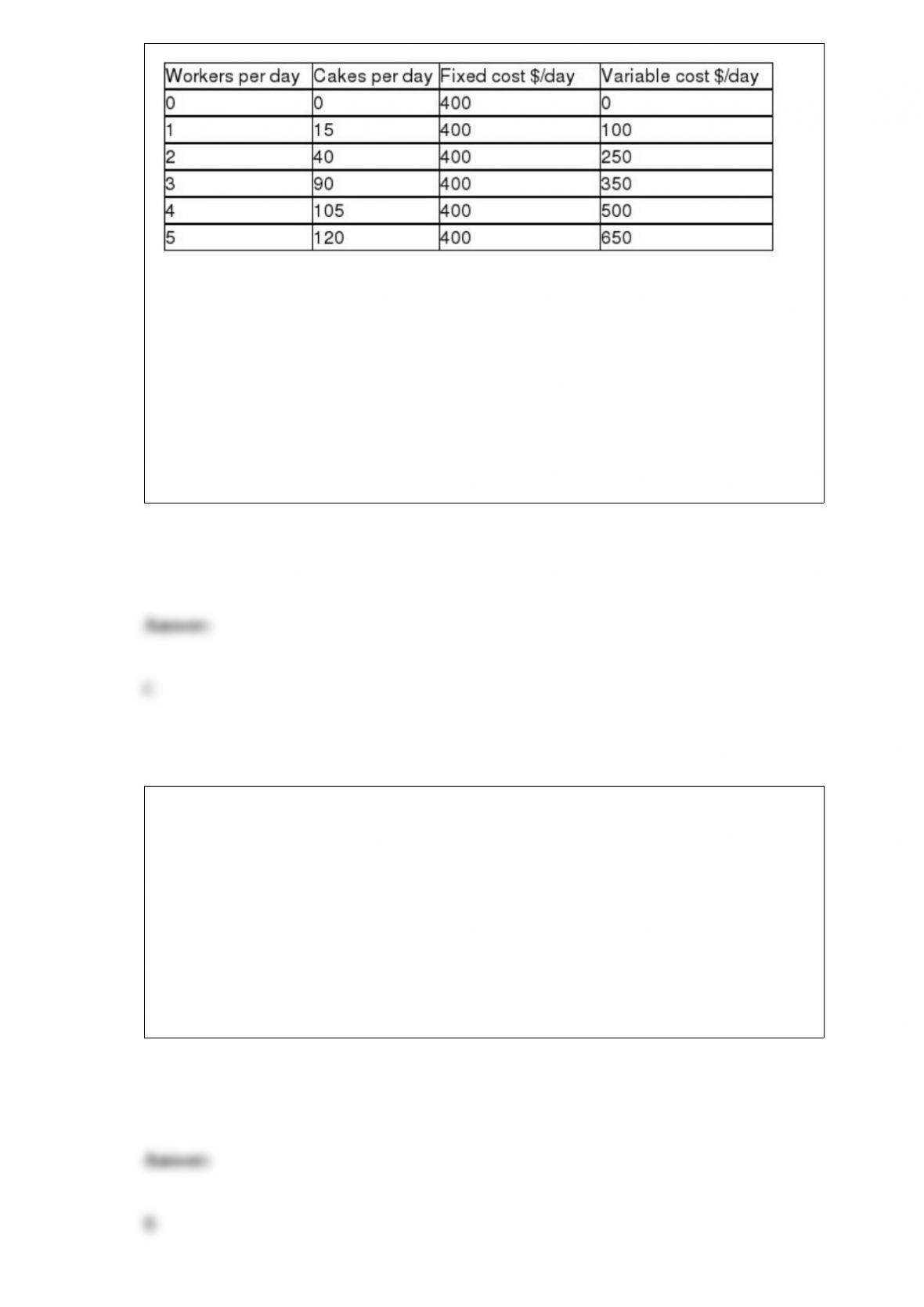
Table 8.4
A) all workers.
B) workers 1 and 2 only.
C) workers 4 through 5 only.
D) worker 1 only.
A ban on imports will ________ the price domestic consumers pay for the good, and
________ the amount of the good consumed by domestic consumers.
A) increase; increase
B) increase; decrease
C) decrease; increase
D) decrease; decrease
Assume Sarah is a CPA who earns $85,000 a year and her favorite entertainment
magazine costs her $15 a year. For her, the price elasticity of demand for the magazine
is likely to be:
A) elastic.
B) inelastic.
C) perfectly elastic.
D) none of the above.
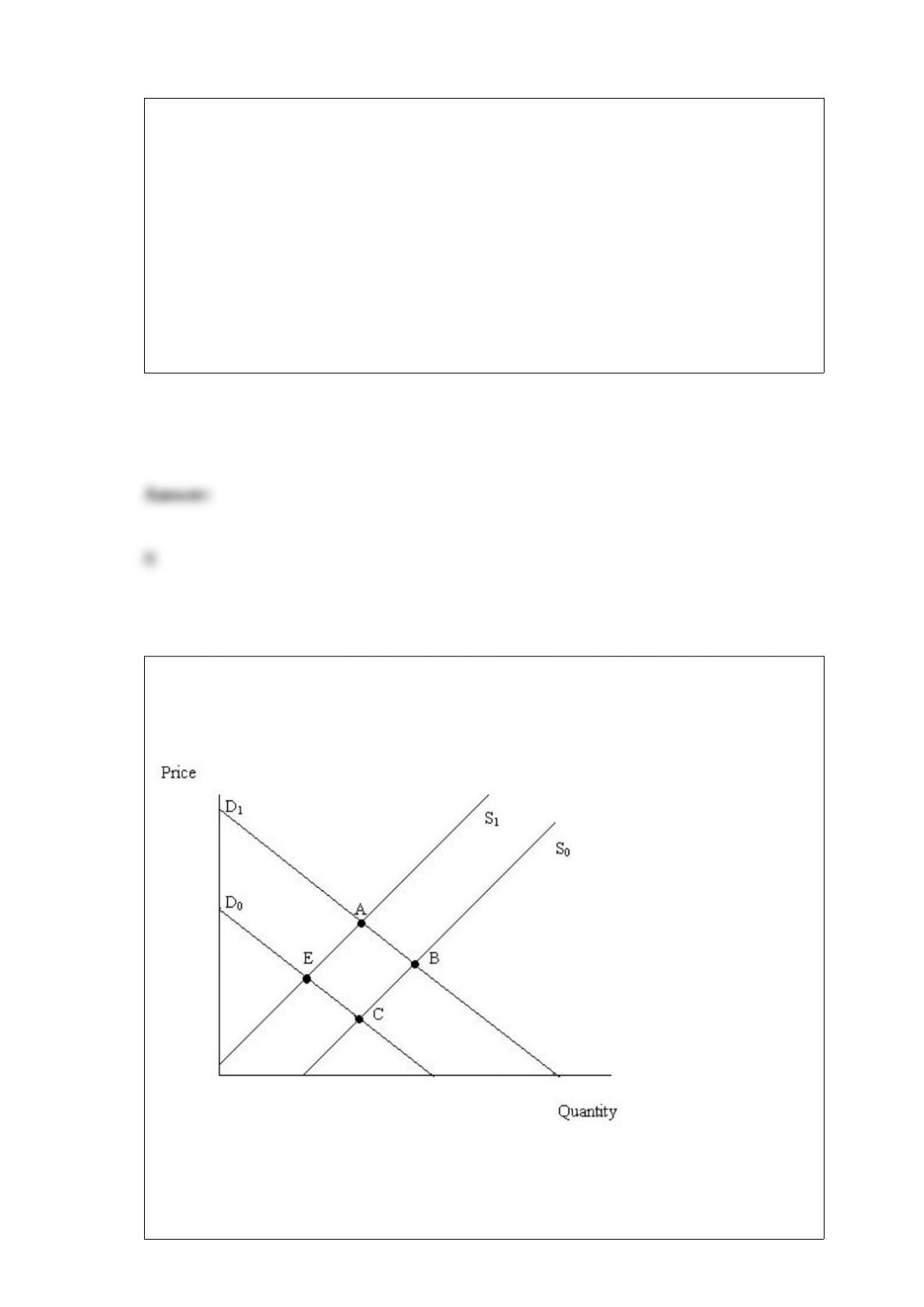
Figure 4.6 illustrates a set of supply and demand curves for a product. If the good were
inferior and the consumer’s income decreases, then this can be illustrated as moving
from point:
Figure 4.6
A) A to B.
B) C to B.
C) E to B.
D) B to A.
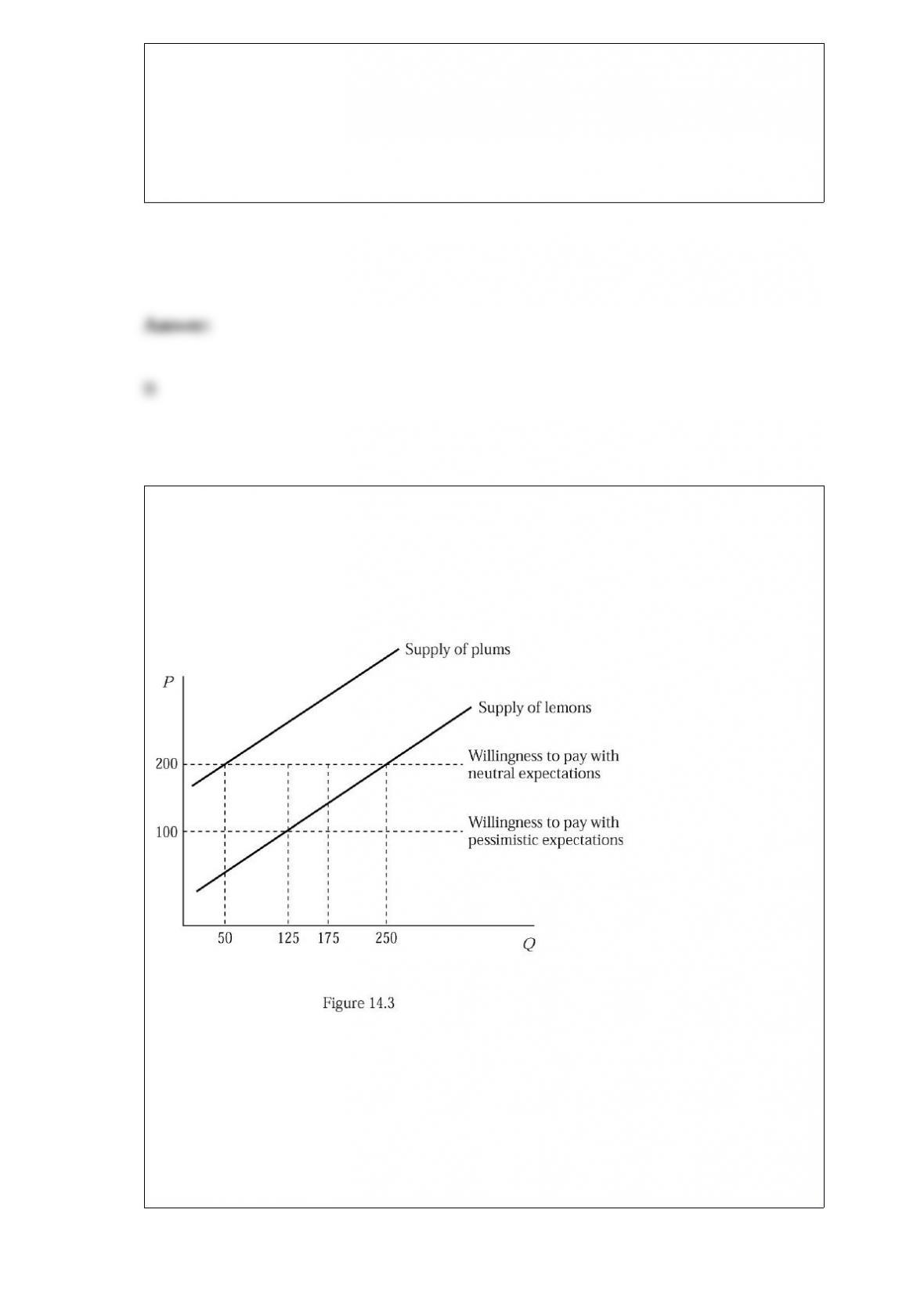
Figure 14.3 represents the market for used refrigerators. Suppose buyers are willing to
pay $300 for a plum (high-quality) used refrigerator and $100 for a lemon (low-quality)
used refrigerator. If buyers believe that 50% of used refrigerators in the market are
lemons (low quality), what fraction of used refrigerators sold will actually be lemons
(low quality)?
A) 50/250
B) 50/300
C) 250/300
D) All of the refrigerators sold will be lemons.

If the variable on the vertical axis increases by 24 and the variable on the horizontal
axis decreases by 3, the slope of the line is:
A) -24.
B) -8.
C) 3.
D) 72.
Recall the Application. Based on estimates of the value mature trees add to the value of
an owner’s house and the greater value that is added to neighboring houses, the
equilibrium number of mature trees in residential neighborhoods is most likely:
A) greater than the socially efficient number.
B) less than the socially efficient number.
C) equal to the socially efficient number.
D) infinite.
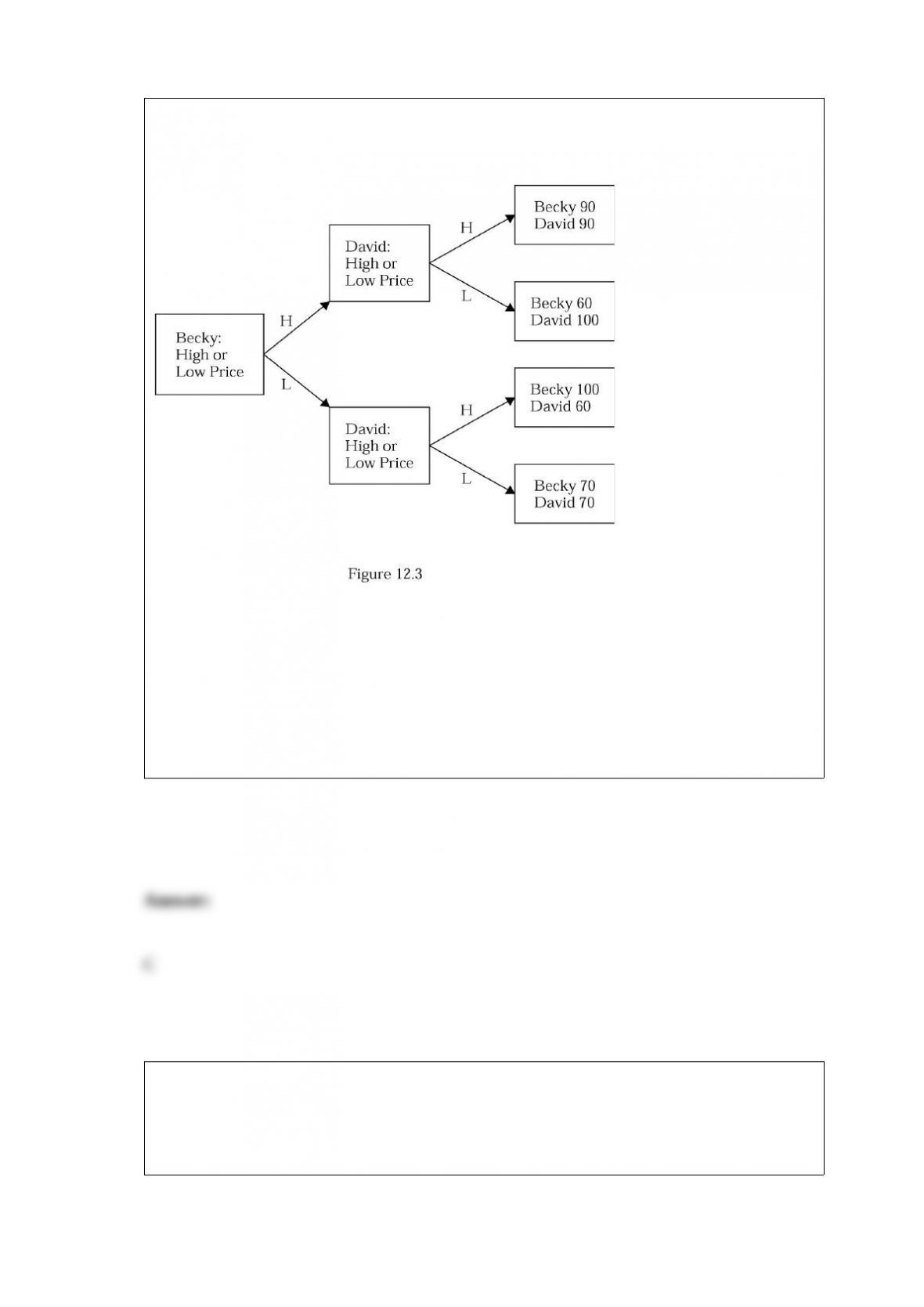
Consider Figure 12.3. If Becky’s payoff in the second rectangle from the top were 80
instead of 60, the outcome of the game would be that:
A) both choose a high price.
B) both choose a low price.
C) Becky chooses a high price and David chooses a low price.
D) David chooses a high price and Becky chooses a low price.
Refer to Figure 4.6, which shows David’s and Celeste’s individual supply curves for
flower arrangements per week. Assuming David and Celeste are the only producers in
the market, what is the market quantity supplied at a price of $20?
Figure 4.6
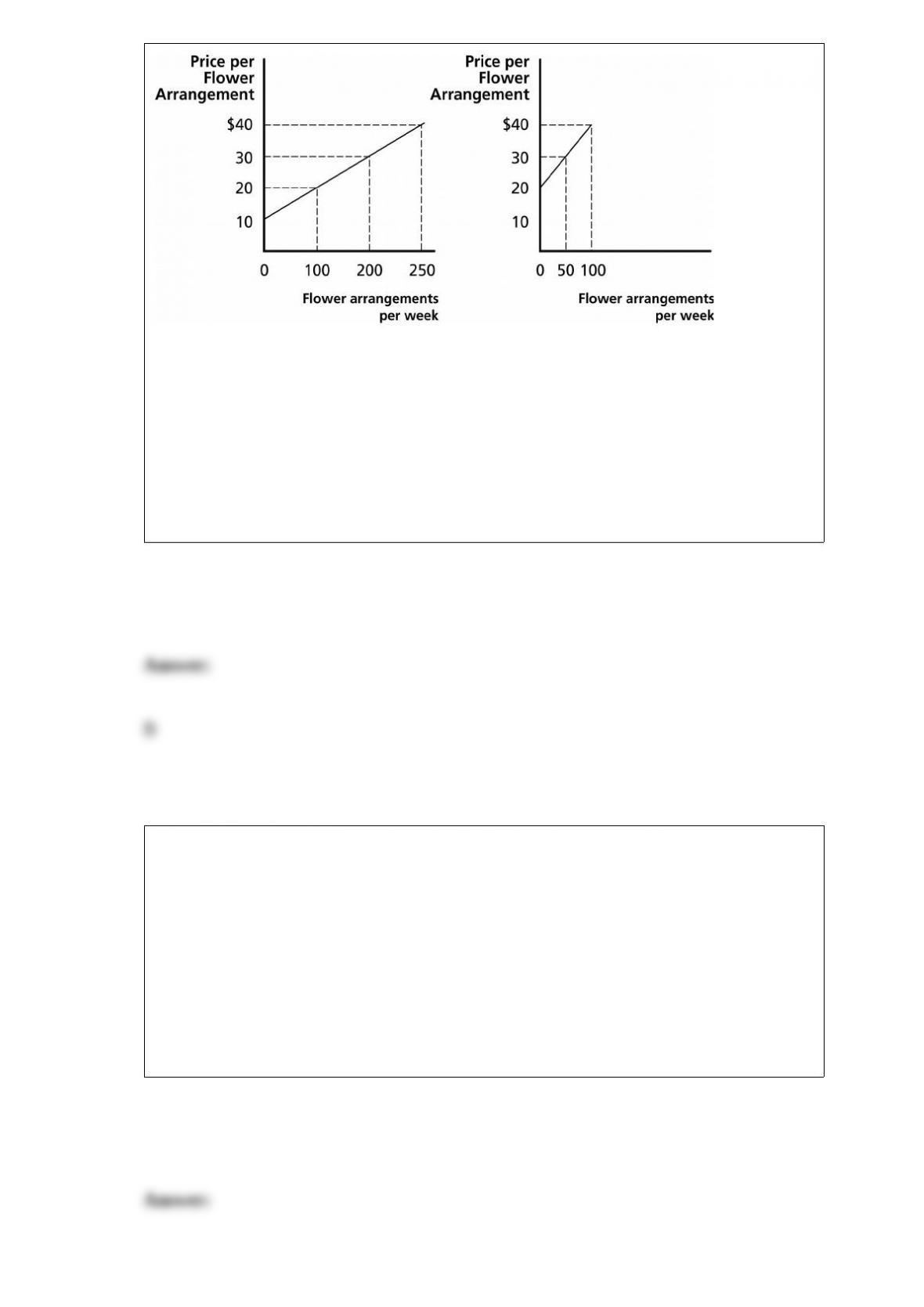
David’s Supply Schedule Celeste’s Supply Schedule
A) 0
B) 100
C) 150
D) 200
A perfectly competitive industry is in long-run equilibrium. If demand for the product
increases, we can expect the price of the good to:
A) rise at first and then fall.
B) fall at first and then rise.
C) rise and remain at the higher price.
D) fall and remain at the lower price.

Autarky refers to:
A) a situation in which nations trade goods and services.
B) a nation in the Middle East.
C) a situation in which there is no trade.
D) the equilibrium a nation reaches after trade begins.
One consequence of imperfect information in the health insurance market is that:
A) less healthy individuals are more likely to buy insurance, driving up the cost of
insurance for everyone.
B) the most healthy individuals are more likely to buy insurance, leaving the least
healthy without access to health care.
C) health insurance increases the demand for health care and so increases the price of
health care.
D) unhealthy individuals are denied health insurance.

Suppose that the price elasticity of supply is 0.5 and the price increases by 4%. We
would predict:
A) an 8% increase in quantity supplied.
B) a 2% increase in quantity supplied.
C) a 0.8% increase in quantity supplied.
D) a 0.2% increase in quantity supplied.
A tax imposed on the supplier of Blu Ray players shifts:
A) the demand curve for Blu Ray players to the left.
B) the supply curve for Blu Ray players to the left.
C) the demand curve for Blu Ray players to the right.
D) the supply curve for Blu Ray players to the right.
Suppose that a technological advancement substantially reduces the cost of producing
cheese. We would predict that the equilibrium quantity of cheese will ________ and the
equilibrium price of cheese will ________.
A) rise; rise

B) rise; fall
C) fall; rise
D) fall; fall
According to this Application, tariffs in the United States are very high on textiles,
apparel items and footwear, and within these categories tariffs are highest on the
cheapest products. These tariffs disproportionately impact lower-income households
because:
A) higher-income consumers tend to refuse to purchase products with tariffs.
B) only lower-income consumers buy cheap, imported products.
C) these cheaper products tend to be purchased by lower-income consumers.
D) higher-income consumers can deduct the tariff from their income taxes.
Daily Output of Scotland and Poland
Table 18.1

Refer to Table 18.1. Poland has a comparative advantage in:
A) accordions.
B) bagpipes.
C) both accordions and bagpipes.
D) neither accordions nor bagpipes.
Which of the following is NOT true when the firm experiences diminishing marginal
product?
A) The total product is decreasing.
B) The marginal product of the previous worker is higher than the current worker.
C) The firm is operating in the short run.
D) The firm’s total cost is increasing.
An example of a public good is:
A) national defense.
B) a hamburger.

C) a laundromat.
D) a personal computer.
The long-run labor demand curve is:
A) more elastic than the short-run labor demand curve.
B) less elastic than the short-run labor demand curve.
C) either more or less elastic than the short-run labor demand curve.
D) perfectly elastic (horizontal).
At a price of $25, a store can sell 28 picture frames a day. If the price falls to $20, the
store can sell 35 picture frames a day. Using the initial-value method, the price elasticity
of demand is:
A) 1.9.
B) 2.5.
C) 0.8.
D) 1.25.

If supply decreases in Figure 4.7, then the equilibrium:
Figure 4.7
A) price and quantity rise.
B) price rises and quantity falls.
C) price falls and quantity rises.
D) price and quantity fall.
Which of the following is an example of a firm that received protection from the
government because the government wants the domestic firm to establish a monopoly
in the world market?
A) Airbus
B) Apple

C) Harley Davidson
D) Ford
Recall the Application regarding how the price elasticity of demand for gasoline varies
over time. Based on the application, in the long run consumers have time respond to
changes in price and the demand for gasoline is:
A) more elastic.
B) inelastic.
C) unit elastic.
D) less elastic
Suppose that the marginal benefit per dollar spent on pop tarts is less than the marginal
benefit per dollar spent on waffles. The consumer can always increase her utility by
buying:
A) more pop tarts and fewer waffles.
B) fewer pop tarts and more waffles.
C) more of both goods.
D) The consumer cannot increase her utility.

Suppose that Gigantic Company is increasing in size. As Gigantic Company grows,
they are able to buy inputs in bulk, resulting in lower input prices. It is likely that
continued growth will result in:
A) economies of scale.
B) Gigantic Company achieving the minimum efficient scale of production.
C) diseconomies of scale.
D) increasing marginal returns.
Which of the following will make the labor demand curve shift to the right?
A) a decrease in price
B) an increase in labor force
C) an increase in productivity
D) all of the above