If Jack bought 21 DVDs last year when his income was $30,000 and he buys 23 DVDs
this year when his income is $35,000, then his income elasticity of demand is
______________ which means that DVDs are a(n) ______________ good for Jack.
a. +1.69; normal
b. -1.69; inferior
c. +0.59; normal
d. +0.59; inferior
e. -0.44; inferior
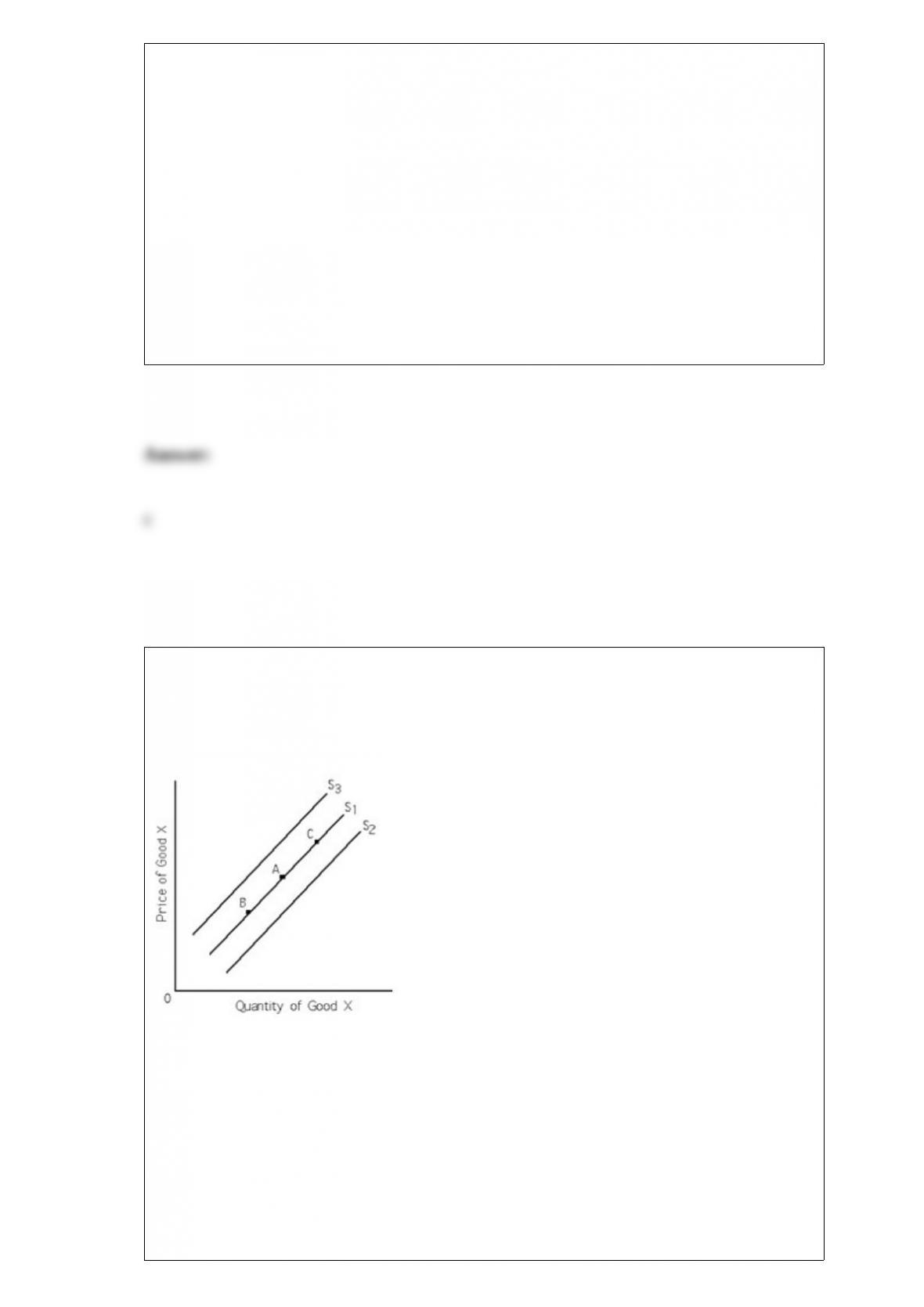
Refer to Exhibit 3-7. If S1 is the relevant supply curve, a decline in technology in
theproduction of good X causes
Exhibit 3-7
a. the supply of good X to shift from S1 to S2
b. the supply of good X to shift from S1 to S3.
c. a movement along S1 perhaps from point A to point B.
d. a movement along S1 perhaps from point A to point C.

e. no change in the supply of good X.
An overvalued dollar makes U.S.
a. imports rise in price.
b. exports rise in price.
c. monetary policy expansionary.
d. fiscal policy contractionary.
The price charged by a perfectly competitive firm is determined by
a. the firm’s demand curve alone.
b. the firm’s cost curves alone.
c. market demand and market supply, together.
d. market demand alone.
e. market supply alone.
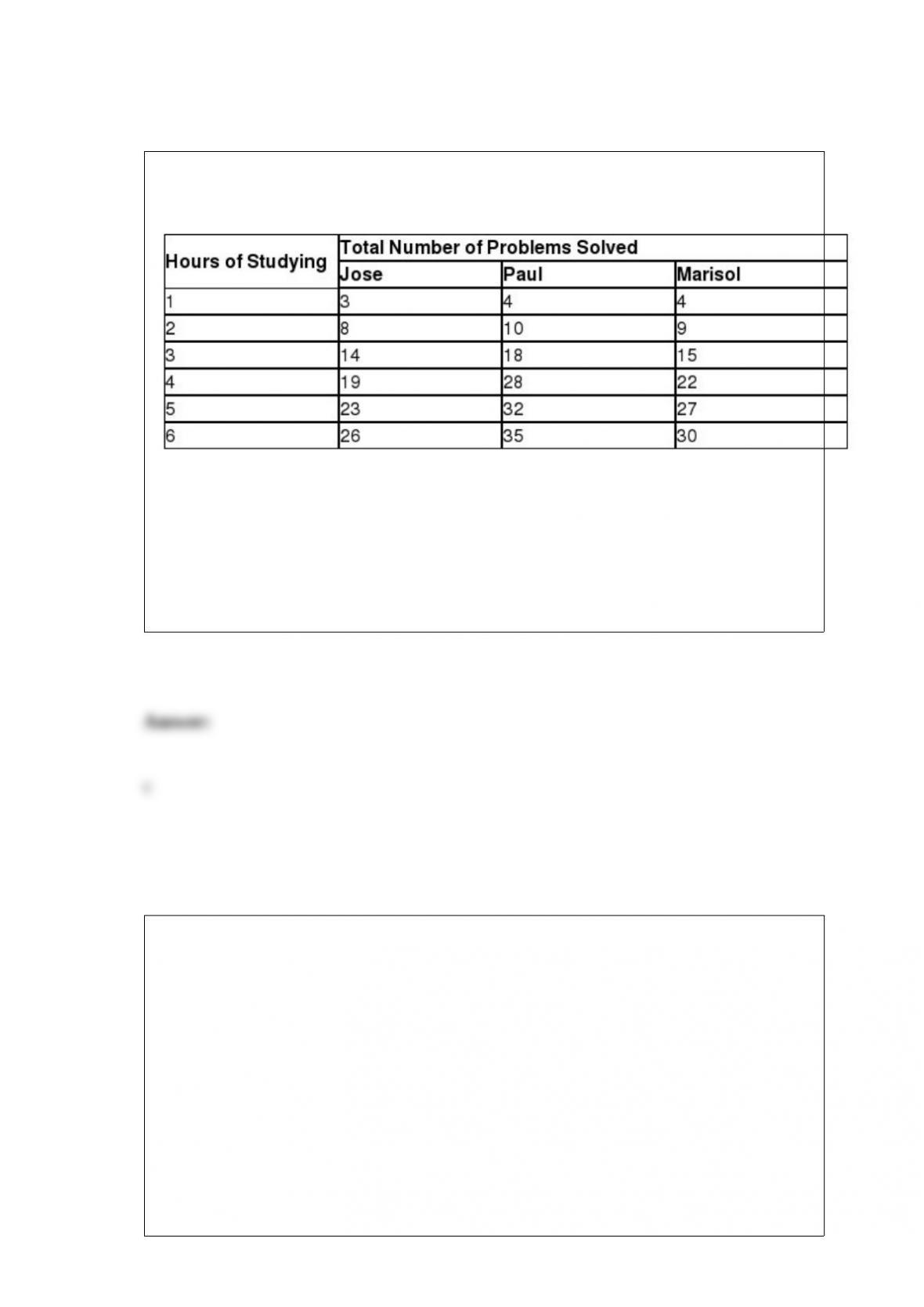
Refer to Exhibit 22-10. Jose is experiencing increasing marginal returns
Exhibit 22-10
a. only in the first hour of studying.
b. up to the third hour of studying.
c. up to the fourth hour of studying.
d. during all six hours of studying.
The relationship between a monopolistic competitive firm’s marginal revenue curve and
its demand curve is that the
a. two curves coincide and are horizontal at the market price.
b. marginal revenue curve lies above the demand curve and the demand curve is
horizontal at the market price.
c. marginal revenue curve lies below the demand curve and both are downward sloping.
d. two curves coincide and are downward sloping to the right.
e. marginal revenue curve lies above the demand curve and both are downward sloping.
As the marginal physical product curve rises,
a. the marginal cost curve rises.
b. the marginal cost curve falls.
c. the total cost curve rises.
d. the total cost curve falls.
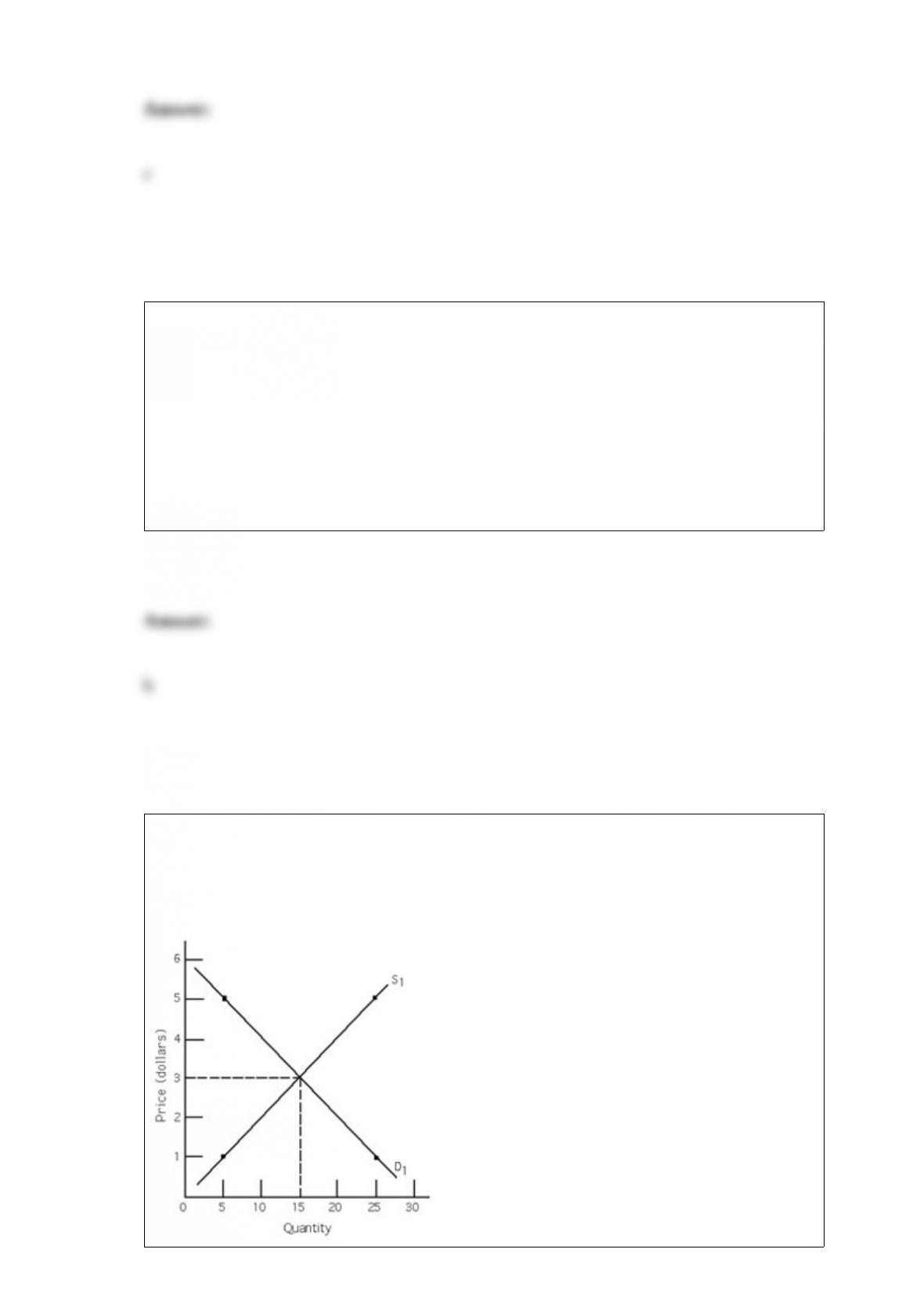
Refer to Exhibit 3-8. A price of $5 will result in a ___________________ in this market
which will cause the price of the product to gravitate _______________.
Exhibit 3-8

a. shortage; downward
b. shortage; upward
c. surplus; downward
d. surplus; upward
Why does the marginal revenue product (MRP) curve slope downward for a perfectly
competitive firm?
a. Because MRP = MR x MPP.After some point, as more of a factor is employed, the
lower its MPP is; thus MRP declines.
b. Because MRP = MFC x MPP. After some point, as more of a factor is employed, the
lower its MFC is; thus MRP declines.
c. Because MRP = MR x MPP. After some point, MR declines for a product price taker;
thus, MRP declines.
d. Because MRP = MFC x MR. After some point, MFC and MR decline; thus, MRP
declines.
Refer to Exhibit 27-7. The exhibit shows two markets in which labor of identical skills
is employed. Assume that both markets are in equilibrium with Q1 and Q2 quantities of
labor employed at the respective prices of $4 and $6 per unit. If this equilibrium persists
in the long run, an economist would suspect that
Exhibit 27-7
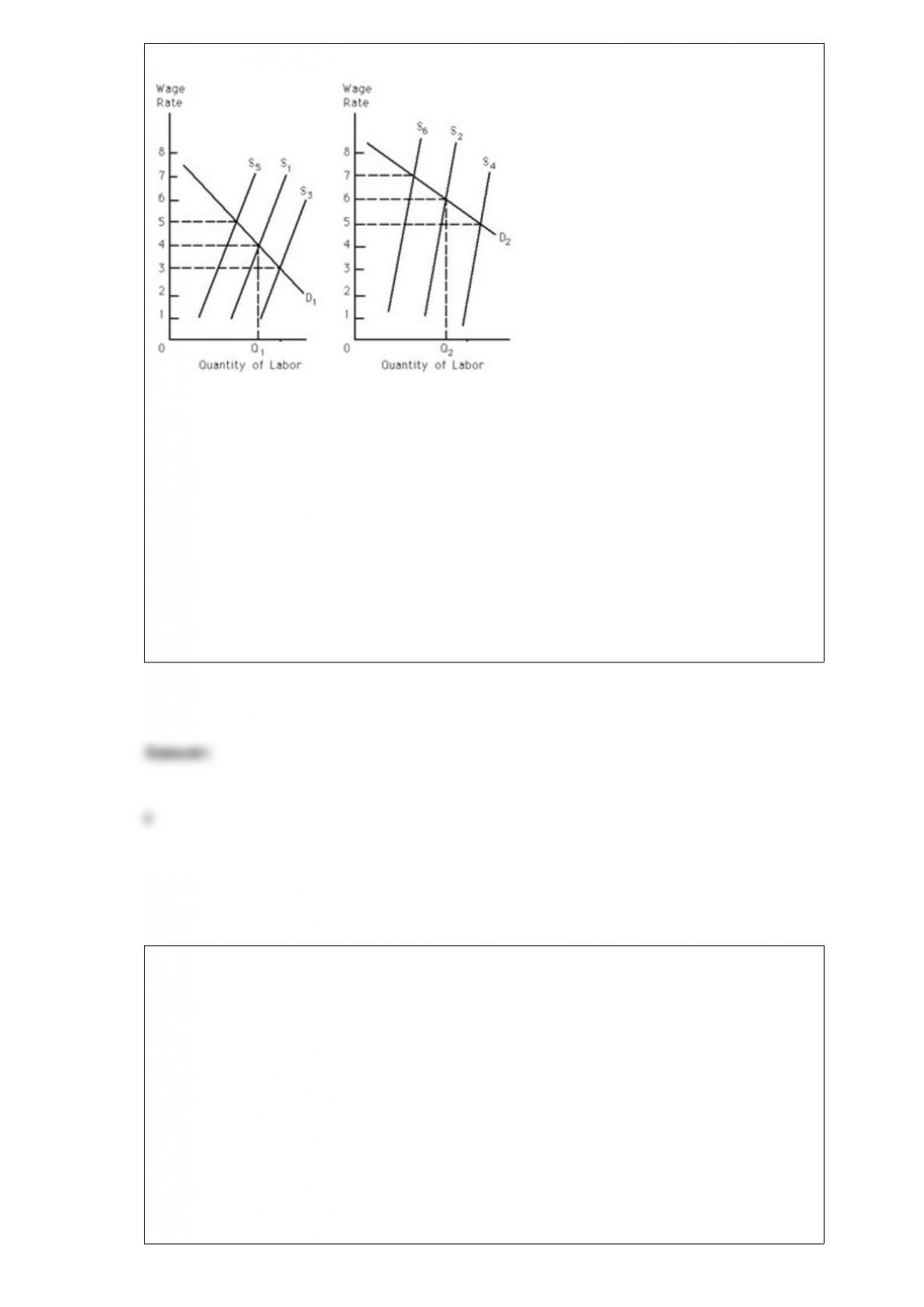
Market AMarket B
a. nonpecuniary benefits are higher in market A.
b. nonpecuniary benefits are higher in market B.
c. there is discrimination in market A.
d. there is no cost of moving across markets.
e. b and c
Suppose the government imposes a price ceiling above the equilibrium price of a given
good. Which of the following is the most likely result?
a. Some other rationing device will emerge to allocate the good among buyers.
b. Some buyers and sellers will be willing to risk breaking the law in order to exchange
the good at a price above the equilibrium price since there would be a shortage of the
good at the price ceiling.
c. No change will occur in the market.
d.Brute force will be used to allocate the good among buyers.

e. a, b, and d
Arbitrage is
a. a form of negotiation between two parties having a disagreement.
b. buying a good in one market and selling it in another for a profit.
c. a form of price discrimination where the producer sells its product at two different
prices.
d. a means of deciding the most efficient way of producing a product.
According to public choice theorists, people behave differently in the market sector
than in the public sector because
a. the more people there are in the market sector the less influence they are able to
exert, whereas the more people there are in the public sector the more influence they are
able to exert.
b. the fewer people there are in the market sector the less influence they are able to
exert, whereas the fewer people there are in the public sector the more influence they
are able to exert.
c. self-interest is the motivating force in the market sector, whereas altruism is the
motivating force in the public sector.

d. altruism is the motivating force in the market sector, whereas self-interest is the
motivating force in the public sector.
e. institutional arrangements are different in the two sectors.
Proponents of the flexible exchange rate system argue that under a fixed exchange rate
system,
a. there is too great a chance that the exchange rate will diverge from the equilibrium
exchange rate.
b. nations that experience persistent trade deficits might be tempted to impose trade
barriers.
c. nations might sacrifice their domestic economic policy goals for the sake of
maintaining the exchange rate.
d. b and c
e. a, b, and c
Demand for a given good is inelastic, so it follows that if price rises, __________ will
rise, too.
a. quantity demanded
b. total revenue
c. total cost

d. income
e. supply
Factor X is used in the production of good Y. Which of the following will increase the
demand for factor X?
a. a decrease in the demand for Y
b. a rise in the MPP of factor X
c. a fall in the price of good Y
d. a fall in the cost of employing factor X
e. a and b
As the dollar price of a foreign currency (for example, dollars per yen) increases,
__________ dollars will be demanded by foreigners, U.S. goods will be __________
expensive for foreigners, __________ U.S. goods will be purchased by foreigners, and
__________ foreign currency will be supplied to the foreign exchange market.
a. more; less; more; more
b. more; less; more; less
c. fewer; more; fewer; less
d. fewer; more; fewer; more
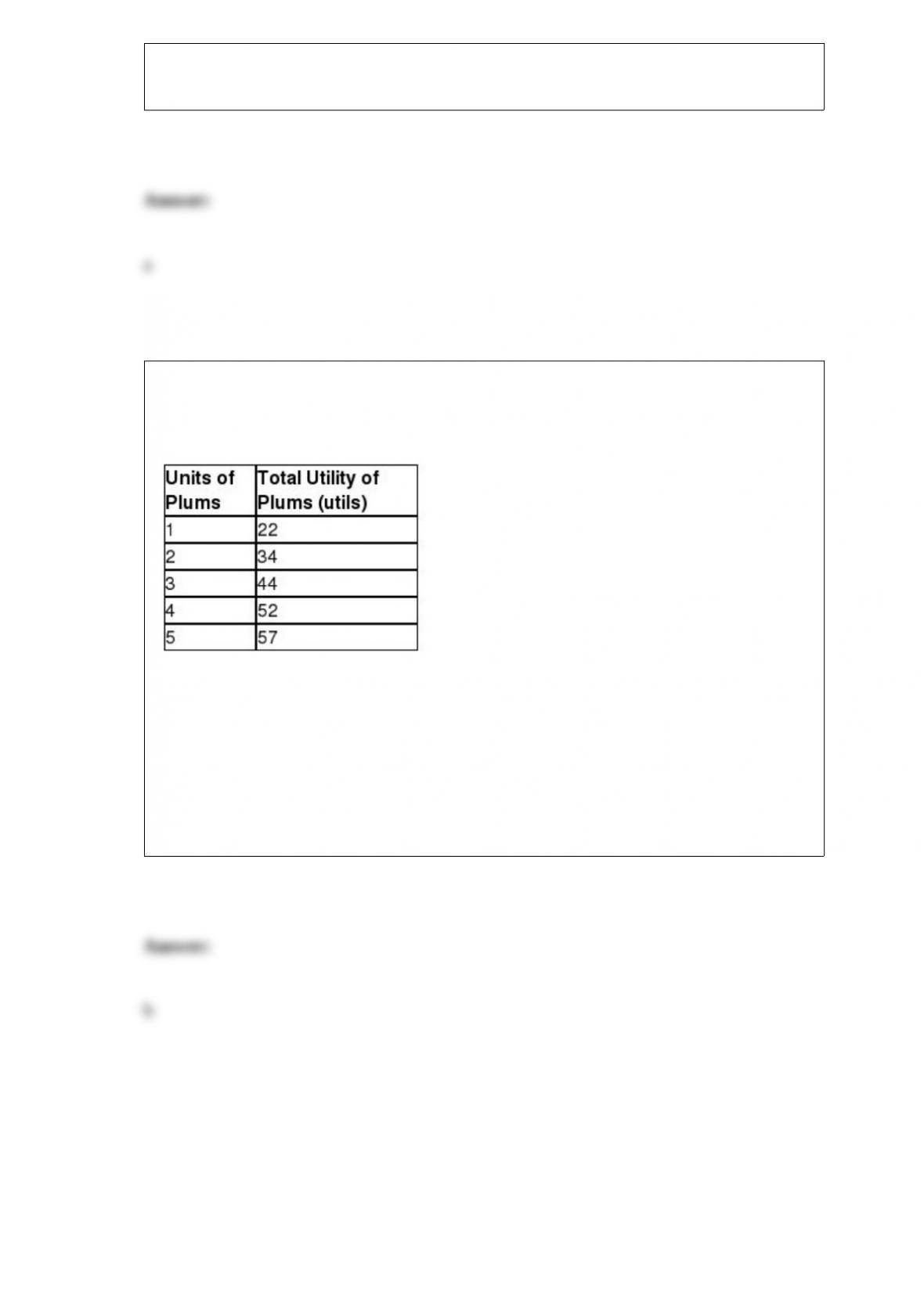
Refer to Exhibit 21-1. In this example, marginal utility
Exhibit 21-1
a. constantly increases.
b. constantly diminishes.
c. increases then diminishes.
d. diminishes then increases.