
A. W. Phillips’ findings were based on data
a. from 1861-1957 for the United Kingdom.
b. from 1861-1957 for the United States.
c. mostly from the post-World War II period in the United Kingdom.
d. mostly from the post-World War II period in the United States.
When shopping you notice that a pair of jeans costs $20 and that a tee-shirt costs $10.
You compute the price of jeans relative to tee-shirts.
a. The dollar price of jeans and the relative price of jeans are both nominal variables.
b. The dollar price of jeans and the relative price of jeans are both real variables.
c. The dollar price of jeans is a nominal variable; the relative price of jeans is a real
variable.
d. The dollar price of jeans is a real variable; the relative price of jeans is a nominal
variable.
The supply of loanable funds would shift to the right if either
a. tax reforms encouraged greater saving or the budget deficit became smaller.
b. tax reforms encouraged greater saving or investment tax credits were increased.
c. the budget deficit became larger or investment tax credits were increased.
d. the budget deficit became larger or tax reforms discouraged saving.
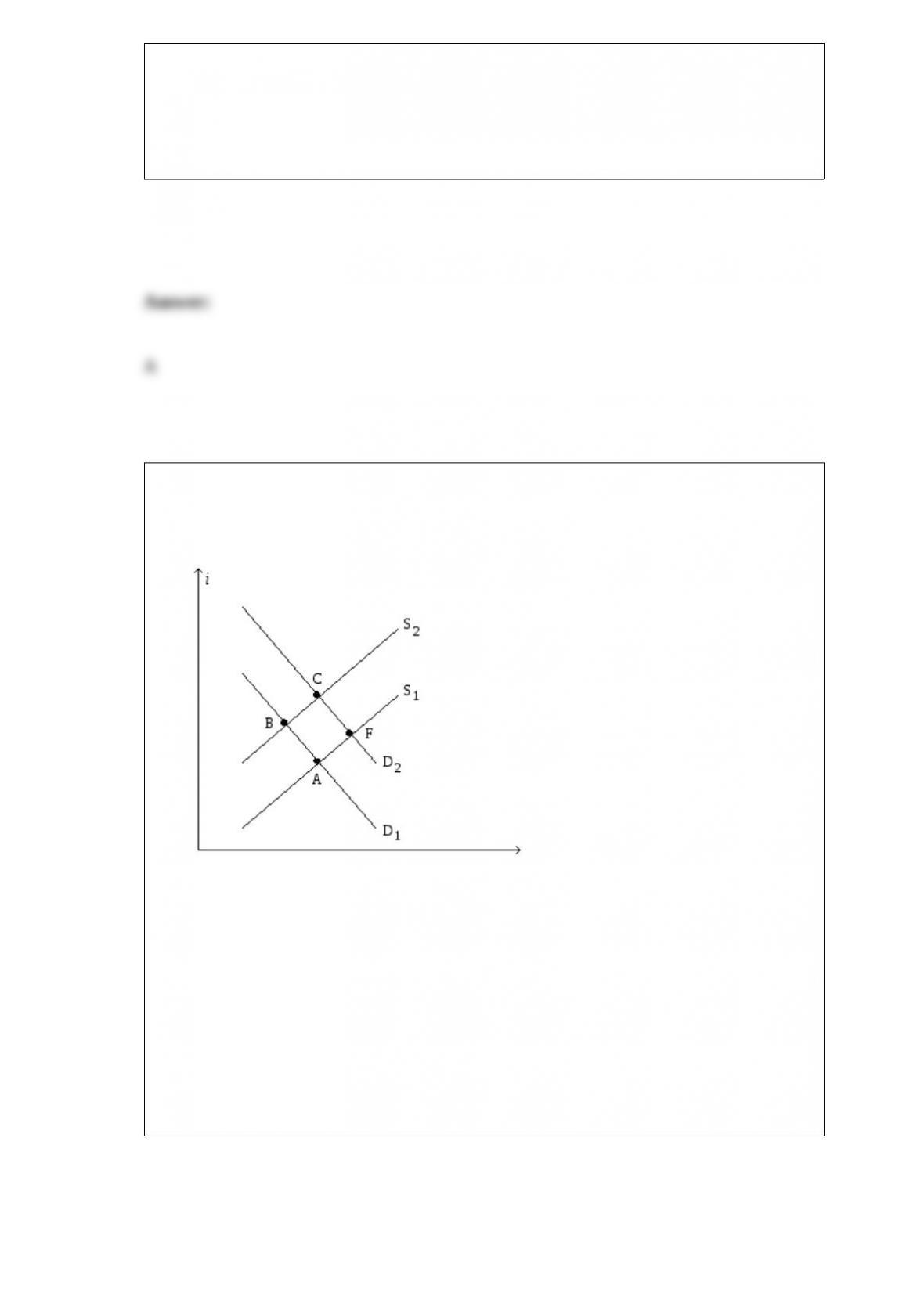
Figure 13-3. The figure shows two demand-for-loanable-funds curves and two
supply-of-loanable-funds curves.
Refer to Figure 13-3. Which of the following movements shows the effects of a new
law that makes more people than before eligible for Individual Retirement Accounts?
a. a movement from Point A to Point B
b. a movement from Point B to Point F
c. a movement from Point C to Point F
d. a movement from Point C to Point B
GDP is used as the basic measure of a society’s economic well-being. A better measure
of the economic well-being of individuals in society is
a. saving per person.
b. GDP per person.
c. government expenditures per person.
d. investment per business firm.
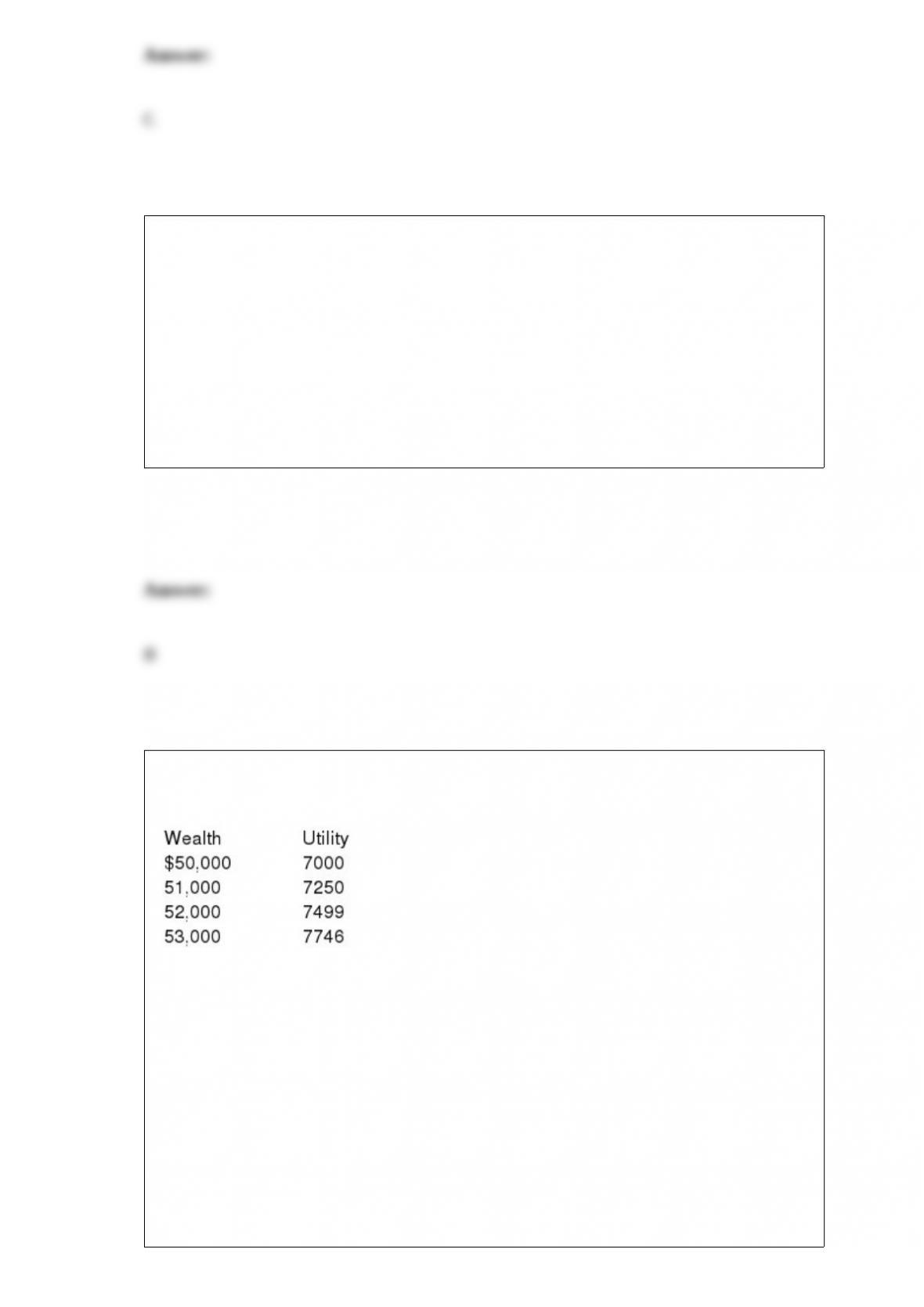
Matt’s Utility Function
If Matt’s current wealth is $51,000, then
a. his gain in utility from gaining $1,000 is greater than his loss in utility from losing
$1,000. Matt is risk averse.
b. his gain in utility from gaining $1,000 is greater than his loss in utility from losing
$1,000. Matt is not risk averse.
c. his gain in utility from gaining $1,000 is less than his loss in utility from losing
$1,000. Matt is risk averse.

d. his gain in utility from gaining $1,000 is less than his loss in utility from losing
$1,000. Matt is not risk averse.
For a market for a good or service to exist, there must be a
a. group of buyers and sellers.
b. specific time and place at which the good or service is traded.
c. high degree of organization present.
d. All of the above are correct.
When the government redistributes income from the wealthy to the poor,
a. efficiency is improved, but equality is not.
b. both wealthy people and poor people benefit directly.
c. people work less and produce fewer goods and services.
d. the government collects more revenue in total.
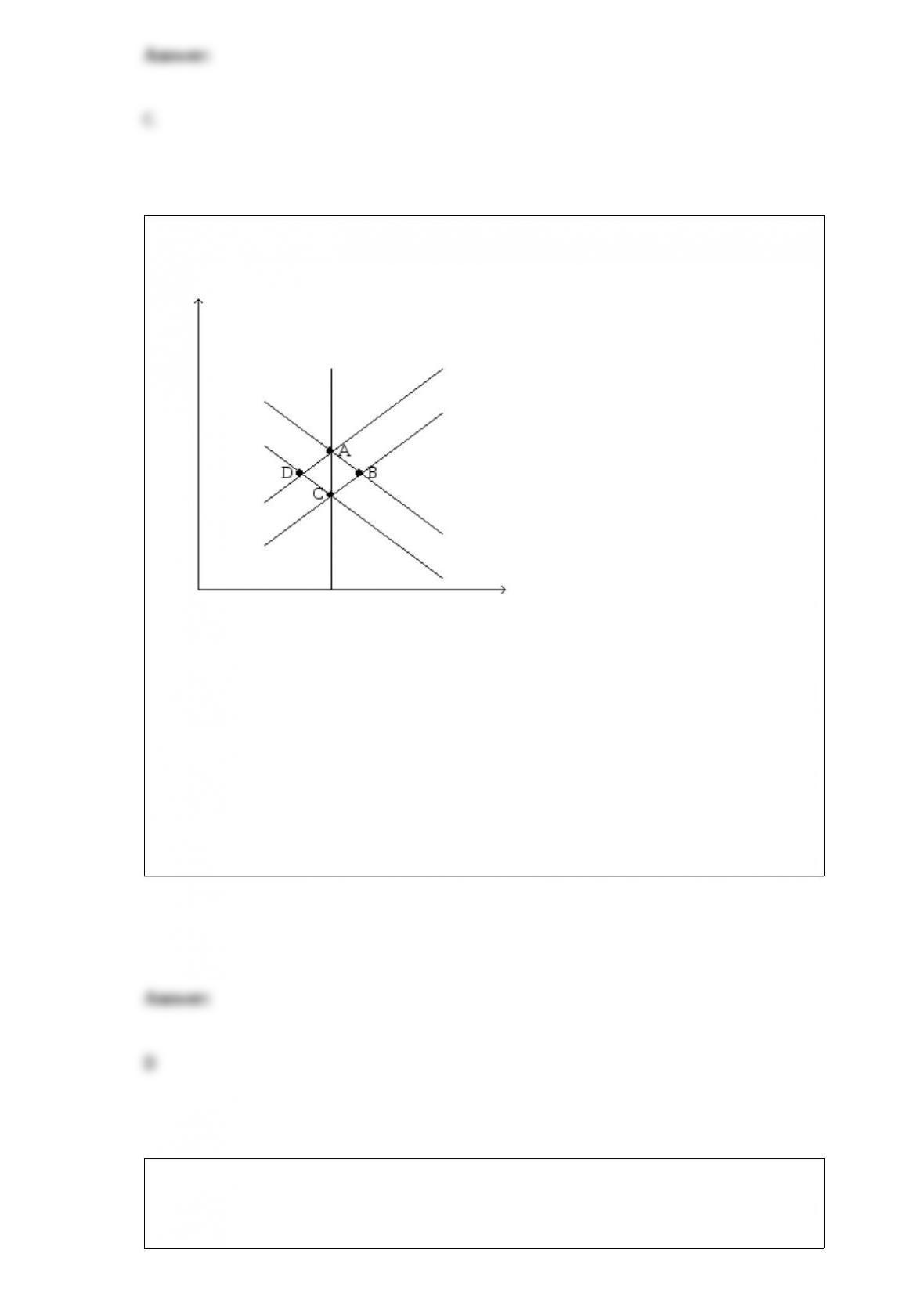
Consider the exhibit below for the following questions.
Figure 20-1
Refer to Figure 20-1. If the economy is in long-run equilibrium, then an adverse shift
in aggregate supply would move the economy from
a. A to B.
b. C to D.
c. B to A.
d. D to C.
A tariff
a. lowers the domestic price of the exported good below the world price.

b. keeps the domestic price of the exported good the same as the world price.
c. raises the domestic price of the imported good above the world price.
d. lowers the domestic price of the imported good below the world price.
Congresswoman Gaga represents a state in which several firms manufacture furniture.
She wants to impose tariffs on all imported furniture. Which of the following is the
least likely consequence of such tariffs?
a. Domestic furniture buyers will lose consumer surplus, have less variety, and will pay
higher prices.
b. Domestic furniture producers will gain producer surplus.
c. Domestic furniture producers will have a higher rate of technological advance.
d. Domestic furniture producers will have more market power.
Net capital outflow
a. is always greater than net exports.
b. is always less than net exports.
c. is always equal to net exports.
d. could be any of the above.
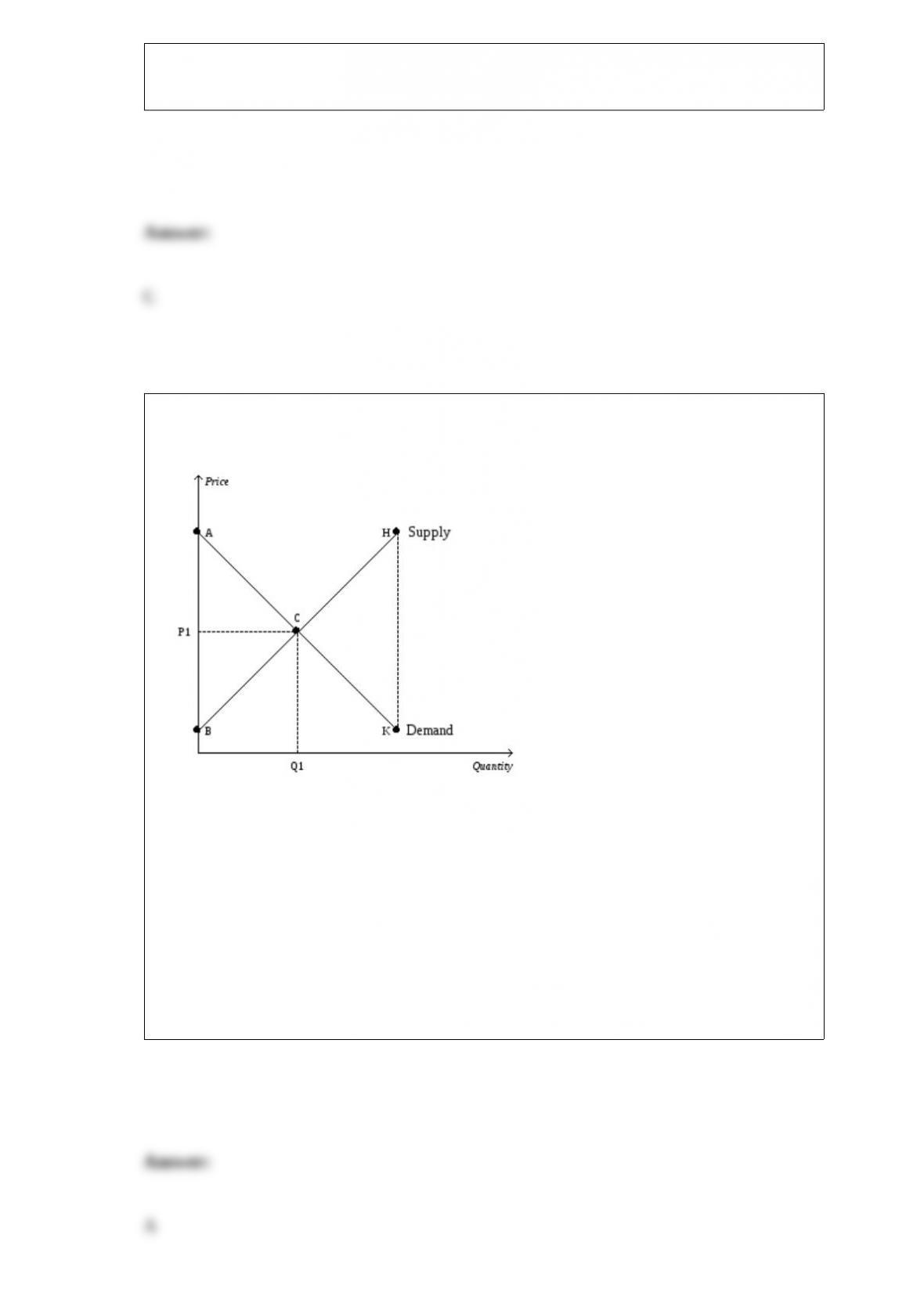
Figure 7-21
Refer to Figure 7-21. Buyers who value this good more than the equilibrium price are
represented by which line segment?
a. AC.
b. CK.
c. BC.
d. CH.
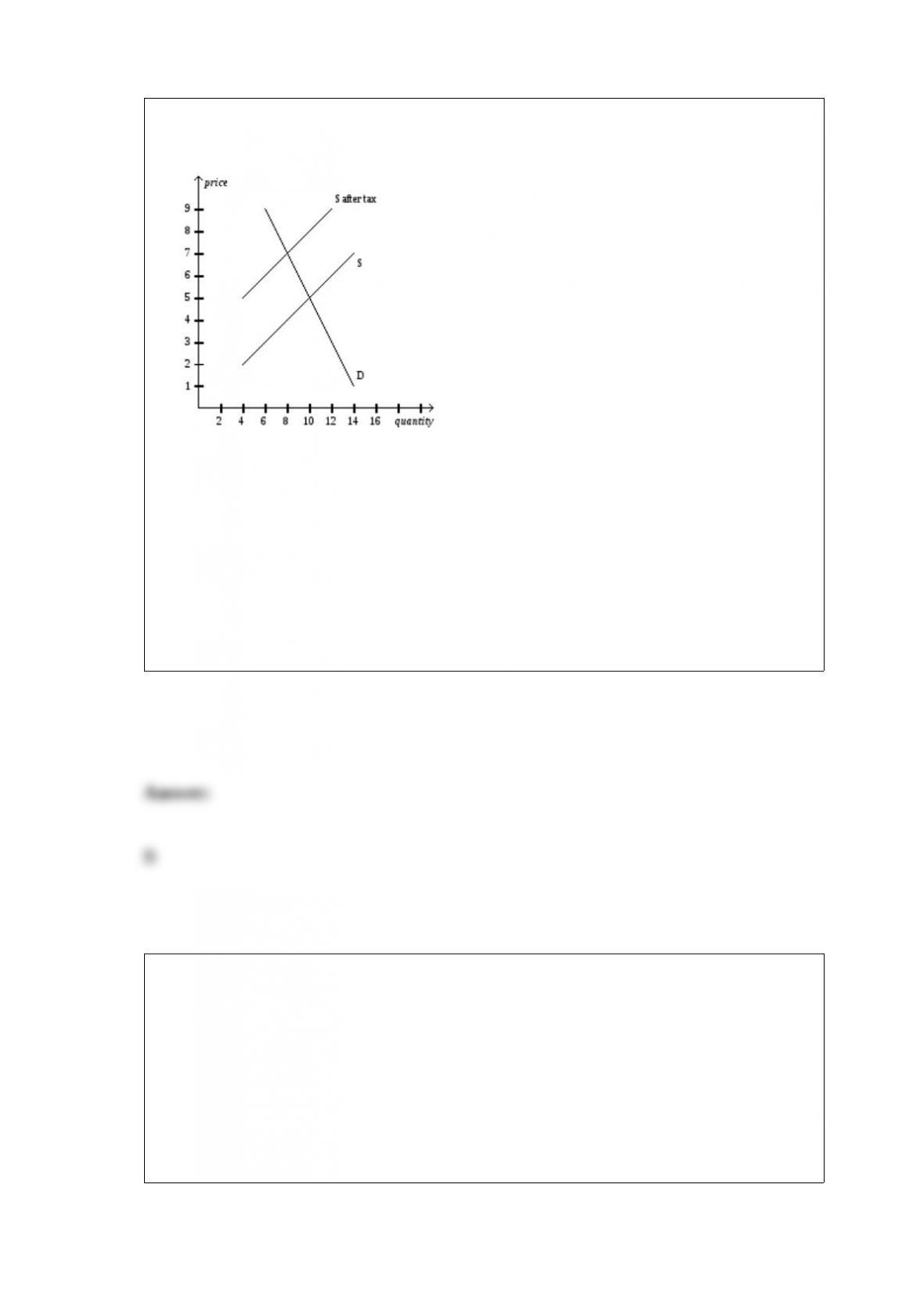
Figure 6-19
Refer to Figure 6-19. The effective price received by sellers after the tax is imposed is
a. $3.
b. $4.
c. $5.
d. $7.
When the government prevents prices from adjusting naturally to supply and demand,
a. it equates the amount buyers want to buy with the amount sellers want to sell.
b. it adversely affects the allocation of resources.
c. it improves equality and efficiency.
d. it improves efficiency but reduces equality.
An example of a firm with market power is a
a. delicatessen in New York.
b. cable TV provider in St. Louis.
c. clothing store in Los Angeles.
d. family farm in Illinois.
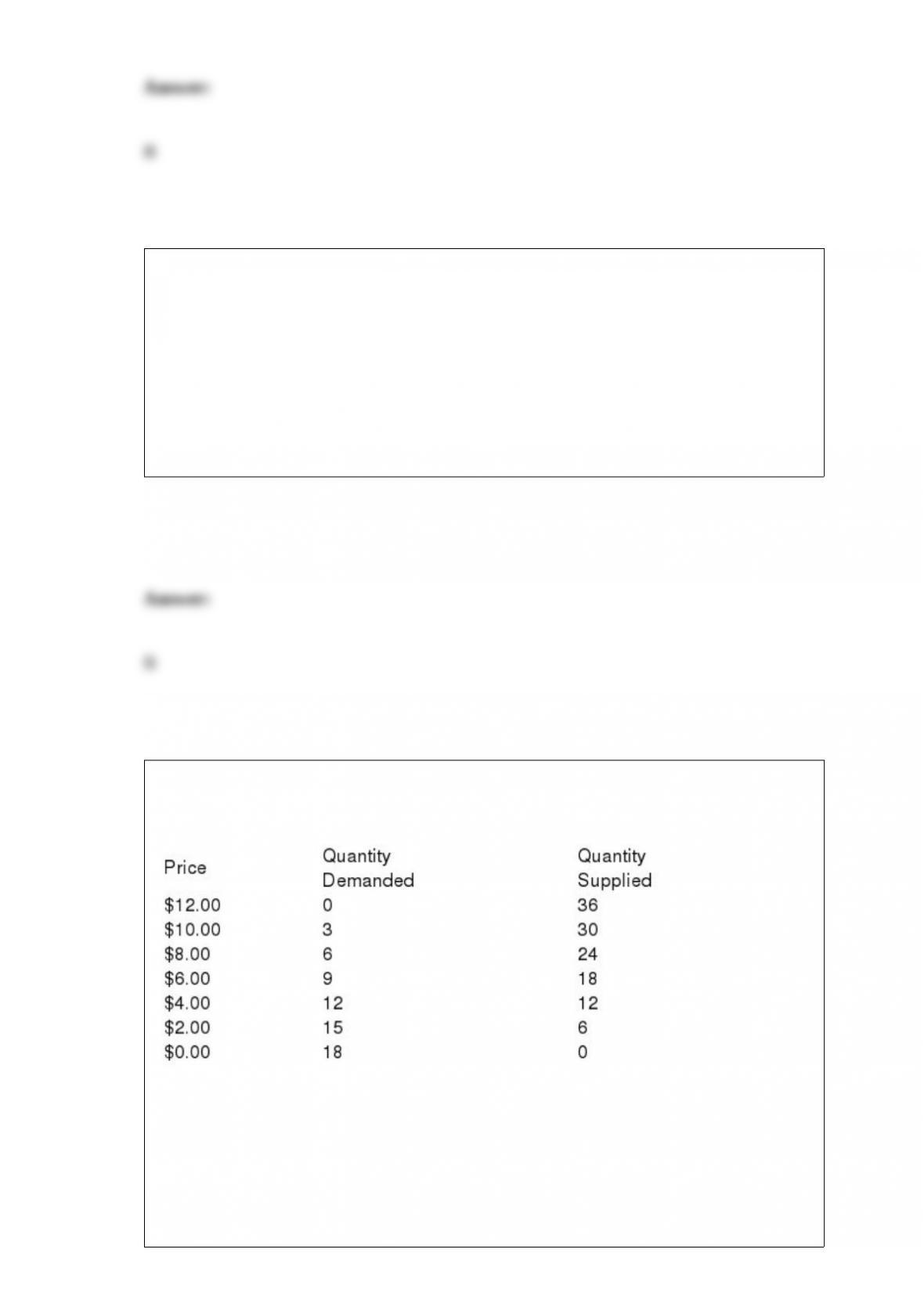
Table 7-11
Refer to Table 7-11. Both the demand curve and the supply curve are straight lines. If
the price is $4 but only 6 units are bought and sold, total surplus will be
a. $42.
b. $48.
c. $54.
d. $60.
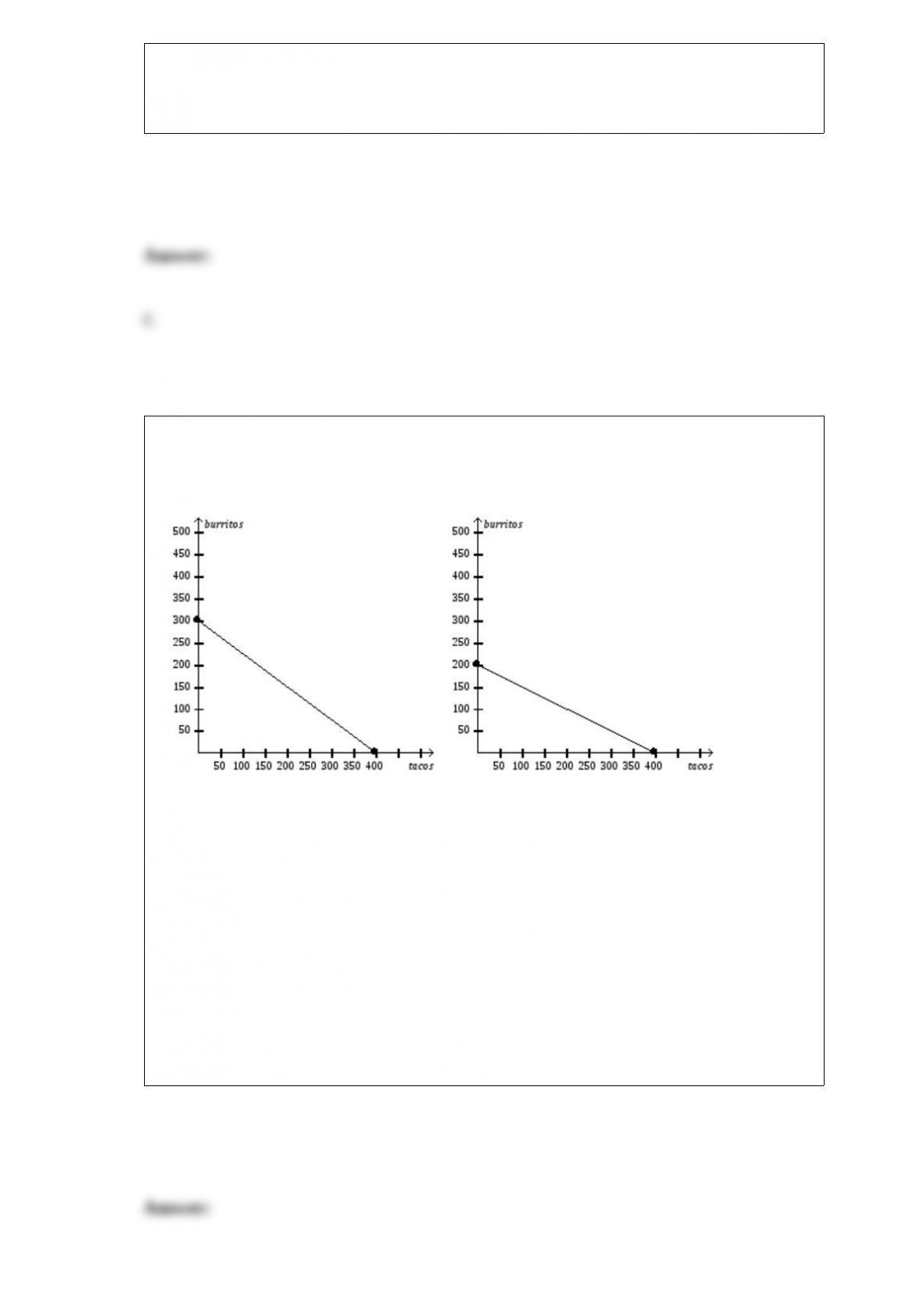
Figure 3-3
Arturo’s Production Possibilities Frontier Dina’s Production Possibilities Frontier
Refer to Figure 3-3. If Arturo and Dina switch from each person dividing their time
equally between the production of tacos and burritos to each person spending all of
their time producing the good in which they have a comparative advantage, then total
production of burritos will increase by
a. 50.
b. 100.
c. 150.
d. 300.

If a binding price floor is imposed on the video game market, then
a. the quantity of video games demanded will decrease.
b. the quantity of video games supplied will increase.
c. a surplus of video games will develop.
d. All of the above are correct.
Who of the following are included in the Bureau of Labor Statistics’ “employed”
category?
a. certain unpaid workers
b. part-time workers
c. workers on vacation
d. All of the above are correct.
Historical episodes are

a. valuable to economists because they allow economists to see how the science of
economics has evolved.
b. valuable to economists because they allow economists to evaluate economic theories.
c. not of concern to economists because economics is about predicting the future, not
dwelling on the past.
d. not of concern to economists because the exact circumstances of historical episodes
are unlikely to be observed again.
In the absence of right-to-work laws, workers
a. that went on strike could be permanently replaced.
b. might be required to join the union if they worked for a unionized firm.
c. would not be able to unionize.
d. would not be able to strike.
If an allocation of resources is efficient, then
a. consumer surplus is maximized.
b. producer surplus is maximized.

c. all potential gains from trade among buyers are sellers are being realized.
d. the allocation achieves equality as well.
Which of the following would shift the long-run aggregate supply curve right?
a. both an increase in the capital stock and an increase in the price level
b. an increase in the capital stock, but not an increase in the price level
c. an increase in the money supply, but not an increase in the capital stock
d. neither an increase in the money supply nor an increase in the capital stock
Which of the following is always correct?
a. Y – I = NCO
b. NCO = NX
c. NX = I
d. All of the above are correct.

Spells of unemployment end about
a. 1/5 of the time with the person leaving the labor force.
b. 1/4 of the time with the person leaving the labor force.
c. 1/3 of the time with the person leaving the labor force.
d. 1/2 of the time with the person leaving the labor force.
In a system of 100-percent-reserve banking,
a. banks do not accept deposits.
b. banks do not influence the supply of money.
c. loans are the only asset item for banks.
d. All of the above are correct.
Which of the following is correct?
a. A bank’s deposits at the Federal Reserves counts as part of the bank’s reserves. The
Federal Reserve pays interest on these deposits.
b. A bank’s deposits at the Federal Reserves counts as part of the bank’s reserves. The
Federal Reserve does not pay interest on these deposits.
c. A bank’s deposits at the Federal Reserves does not count as part of the bank’s
reserves. The Federal Reserve pays interest on these deposits.
d. A bank’s deposits at the Federal Reserves does not counts as part of the bank’s
reserves. The Federal Reserve does not pay interest on these deposits.
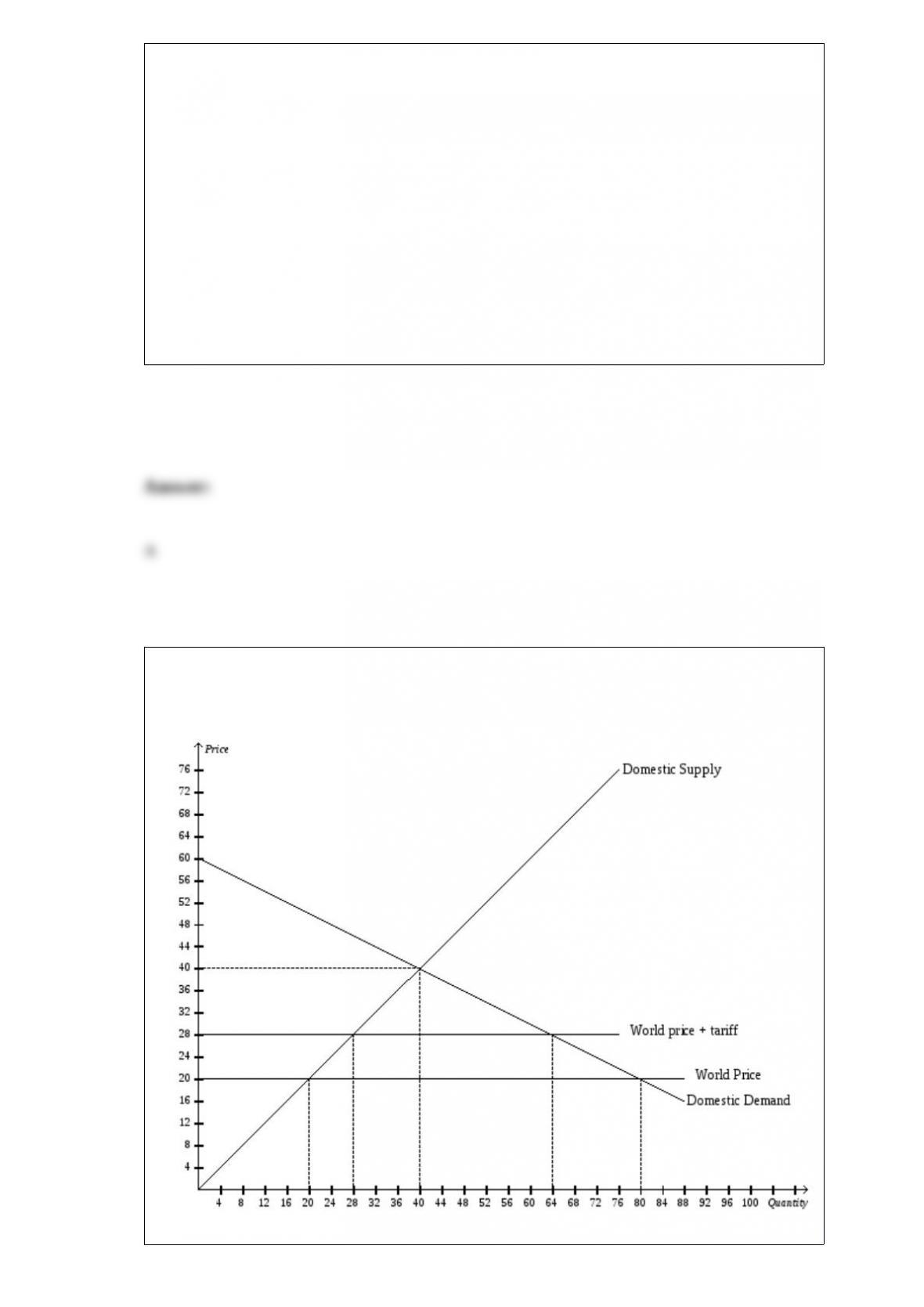
Figure 9-17

Refer to Figure 9-17. With trade and a tariff, consumer surplus is
a. $808 and producer surplus is $200.
b. $808 and producer surplus is $392.
c. $1,024 and producer surplus is $200.
d. $1,024 and producer surplus is $392.
In which of the following cases does the aggregate-demand curve shift to the right?
a. The price level rises, causing the interest rate to fall.
b. The price level falls, causing the interest rate to fall.
c. The money supply increases, causing the interest rate to fall.
d. The money supply decreases, causing the interest rate to fall.
Mike and Sandy are two woodworkers who both make tables and chairs. In one month,
Mike can make 4 tables or 20 chairs, while Sandy can make 6 tables or 18 chairs. Given
this, we know that
a. Mike has an absolute advantage in chairs.
b. Mike has a comparative advantage in tables.

c. Sandy has an absolute advantage in chairs.
d. Sandy has a comparative advantage in chairs.
For many years country A has had a lower unemployment rate than country B.
According to the long-run Phillips curve which of the following could explain this?
Country A has
a. maintained a higher money supply growth rate.
b. maintained a lower money supply growth rate.
c. a higher minimum wage than country B.
d. a lower minimum wage than country B.
A permanent reduction in inflation would
a. permanently reduce menu costs and permanently lower unemployment.
b. permanently reduce menu costs and temporarily raise unemployment.
c. temporarily reduce menu costs and temporarily lower unemployment.
d. temporarily reduce menu costs and temporarily raise unemployment.
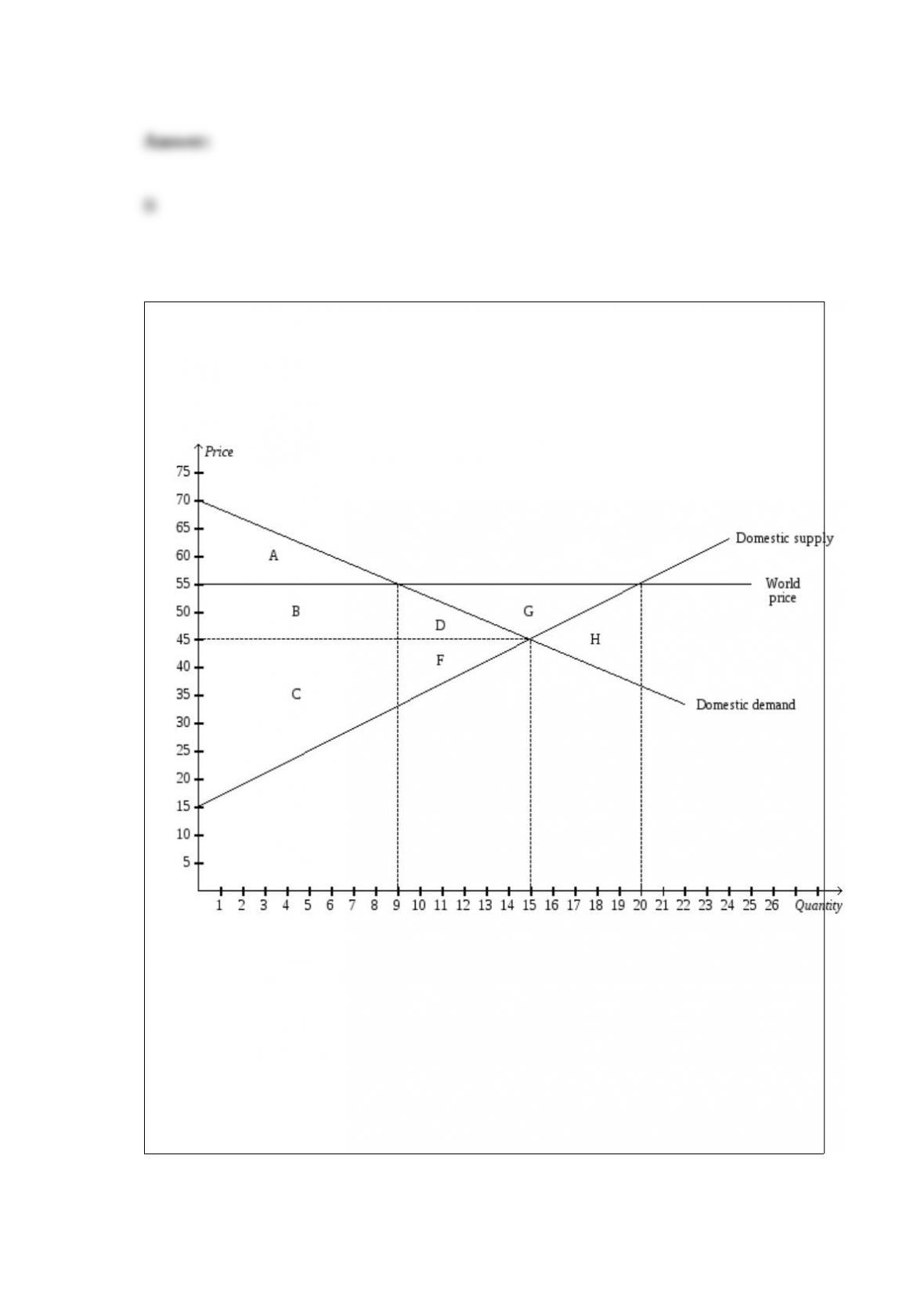
Figure 9-1
The figure illustrates the market for wool in Scotland.
Refer to Figure 9-1. With trade, Scotland will
a. export 11 units of wool.
b. export 5 units of wool.
c. import 15 units of wool.
d. import 6 units of wool.