1) international trade is based on the idea that:
a.exports should exceed imports
b.imports should exceed exports
c.resources are more mobile internationally than are goods
d.resources are less mobile internationally than are goods
2) a voluntary export agreement
a.typically applies only to the world’s most important exporting nation(s)
b.typically applies only to the world’s least important exporting nation (s)
c.is always more restrictive on trade than a tariff or import quota
d.all of the above
3) according to the strategic-trade-policy hypothesis, government can alter the terms of
competition to favor domestic companies, thus increasing their profits at the expense of
their rivals.
a.true
b.false
4) according to the quantity theory of money, a change in the domestic money supply
will bring about:
a.inverse and proportionate changes in the price level
b.inverse and less-than-proportionate changes in the price level
c.direct and proportionate changes in the price level
d.direct and less-than-proportionate changes in the price level
5) a producer successfully practicing international dumping would charge:
a.a relatively higher price in the more inelastic market
b.a relatively higher price in the more elastic market
c.the same price in all markets, regardless of their elasticities
d.different prices in all markets, regardless of their elasticities
6) the united states has discouraged the “brain drain” problem by permitting the
immigration of unskilled workers while restricting the immigration of skilled persons.
a.true
b.false
7) a primary objective of dual exchange rates is to allow a country the ability to insulate
its balance of payments from net:
a.current account transactions
b.unilateral transfers
c.merchandise trade transactions
d.capital account transactions
8) trade adjustment assistance policies
a.can resolve all workers’ challenges to free trade
b.attempt to share gains from free trade with disadvantaged workers
c.have never been used to sustain a losing business concern
d.are financed by state and local tax revenues
9) figure 7.3. world oil market
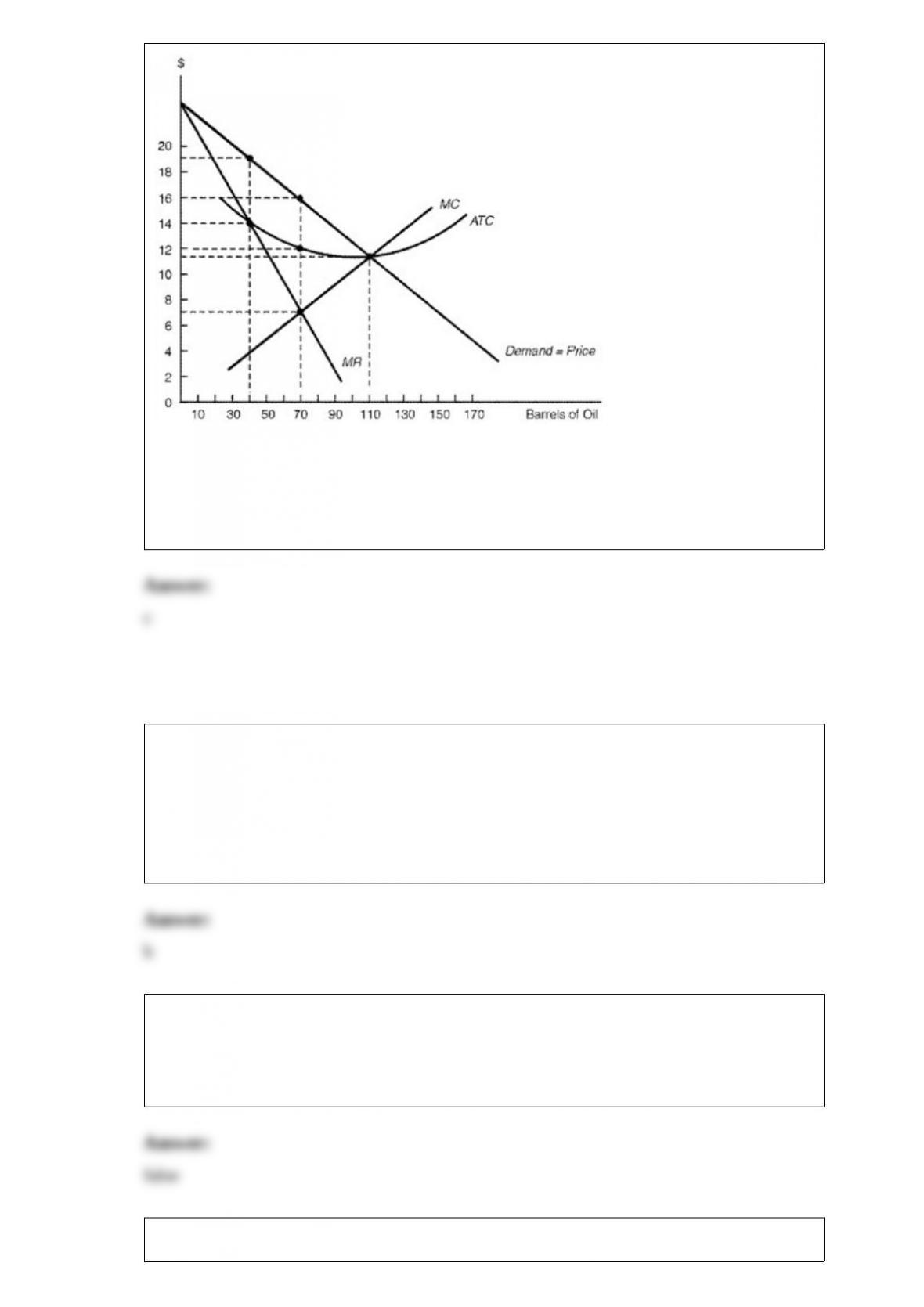
consider figure 7.3. under a profit-maximizing cartel, the price of a barrel of oil equals:
a.$7
b.$11
c.$16
d.$19
10) if the international terms of trade settle at a level that is between each country’s
opportunity cost:
a.there is no basis for gainful trade for either country
b.both countries gain from trade
c.only one country gains from trade
d.one country gains and the other country loses from trade
11) if a country’s terms of trade improve, it must exchange more exports for a given
amount of imports.
a.true
b.false
12) if a tariff reduces the quantity of japanese autos imported by the united states, over
time it reduces the ability of japan to import goods from the united states.
a.true
b.false
13) the united states exports a larger percentage of its gross domestic product than
japan, germany, and canada.
a.true
b.false