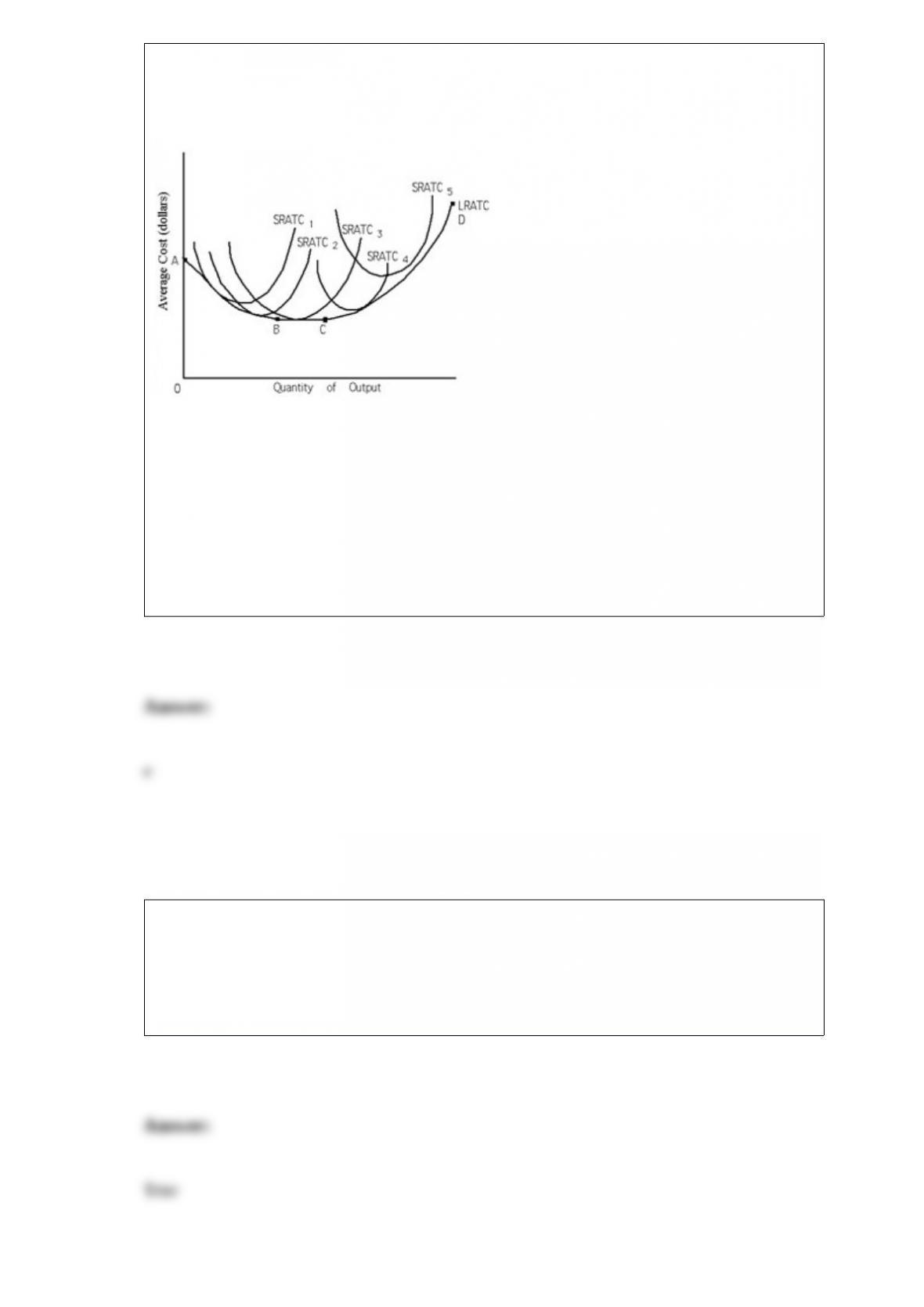
Refer to Exhibit 22-5. Diseconomies of scale are present between
Exhibit 22-5
a. points A and B.
b. points A and C.
c. points B and C.
d. points B and D.
e. points C and D.
Concentration ratios are often used to determine the degree of oligopoly in an industry.
a. True
b. False
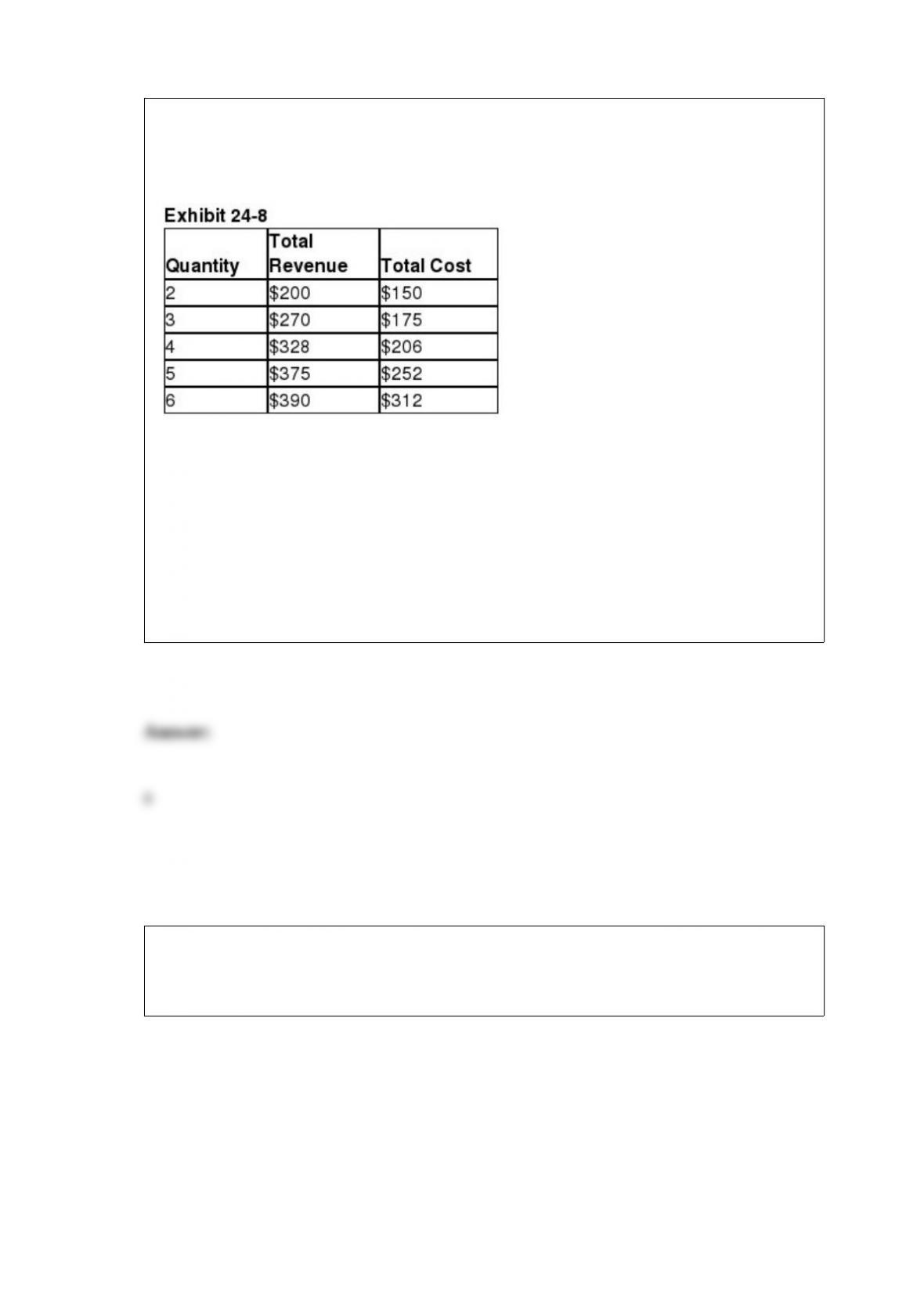
Refer to Exhibit 24-8. Assuming that total fixed costs are $80, the average variable cost
of producing 5 units of output is
a. $34.40.
b. $50.40.
c. $10.67.
d. $38.67.
e. There is not enough information given to answer this question.
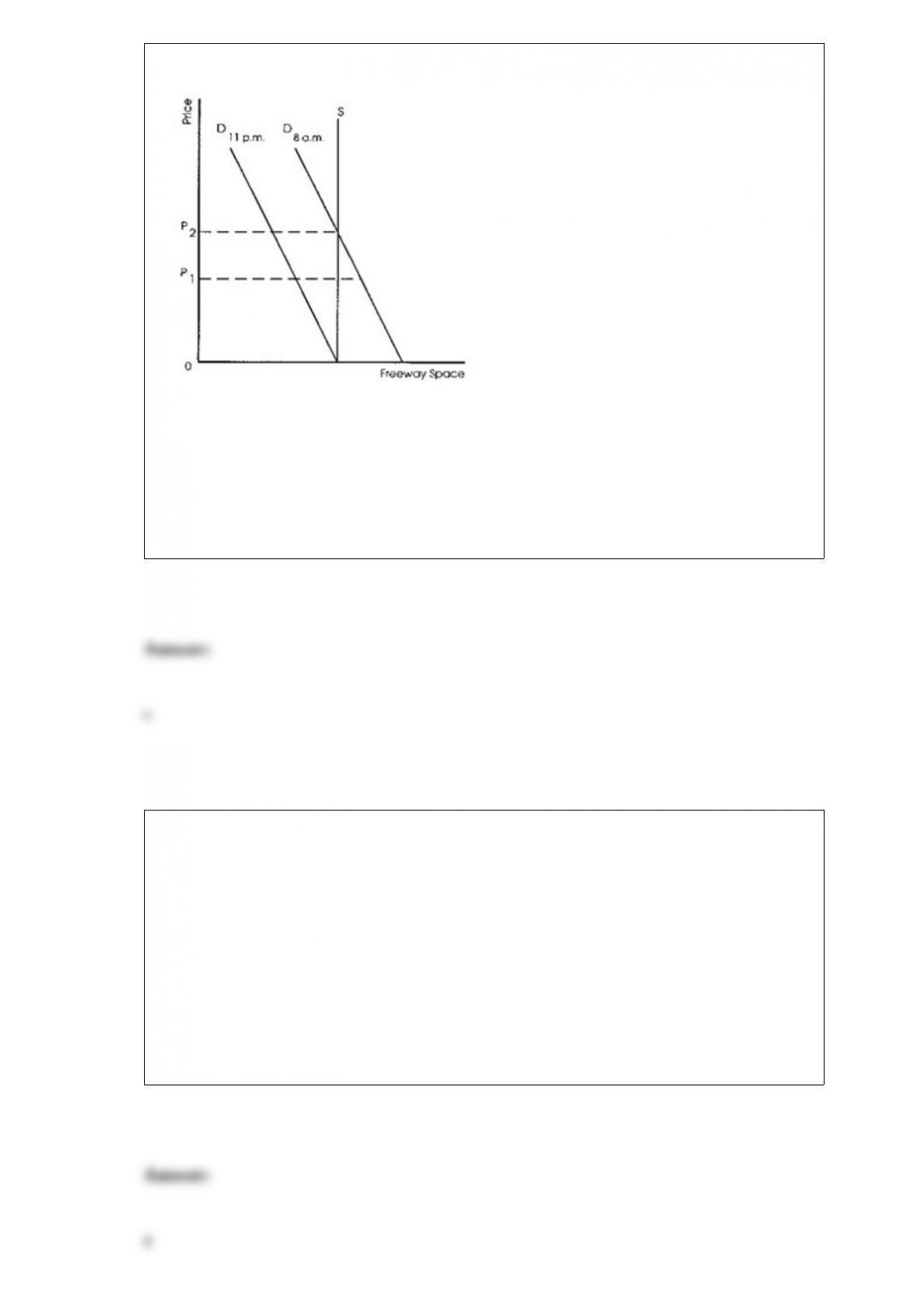
Refer to Exhibit 5-1, which shows supply and demand for freeway space at both 8 a.m.
and 11 p.m. Which toll creates equilibrium at 11 p.m.?
Exhibit 5-1
a. P2
b. P1
c. 0
d. It is not constant.
Suppose that the exchange rate between the U.S. dollar and the Mexican peso is 1 peso
= $0.11.If the U.S. dollar price per Mexican peso changes to 1 peso =$0.10, the peso is
said to have __________ and the dollar to have __________.
a. depreciated; appreciated
b. appreciated; appreciated
c. appreciated; depreciated
d. depreciated; depreciated
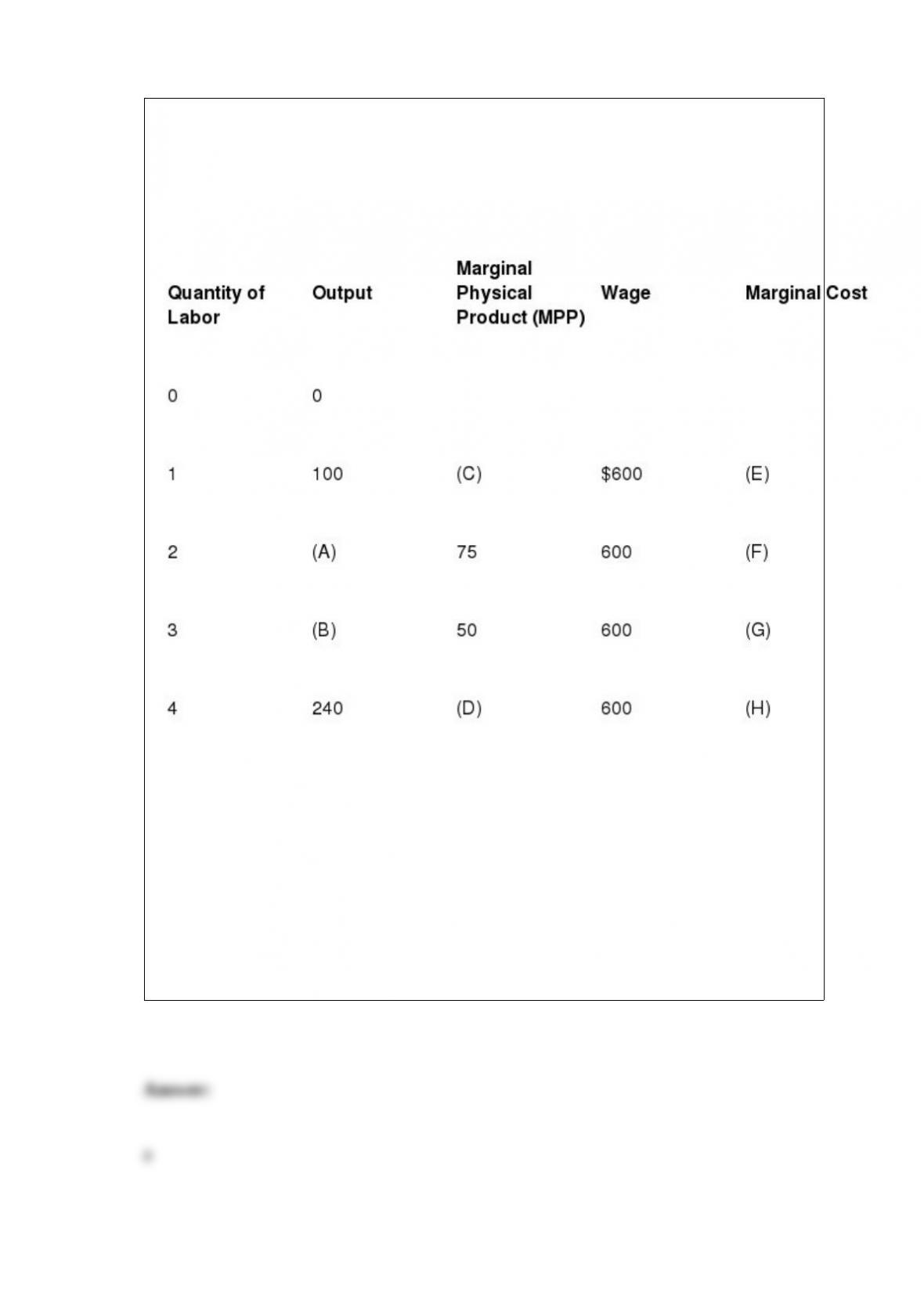
Refer to Exhibit 22-14. What is the level of output with 2 and 3 laborers working
[blanks (A) and (B)], respectively?
Exhibit 22-14
a. 175 units; 225 units
b. 100 units; 175 units
c. 100 units; 225 units
d. 50 units; 175 units
e. none of the above

An economy can produce the following combinations of goods: 50X and 0Y, 40X and
10Y, 30X and 20Y, 20X and 30Y, 10X and 40Y, and 0X and 50Y. The production
possibilities frontier (PPF) for the economy is
a. concave downward because the opportunity cost of producing the 10th unit of Y is
greater than the opportunity cost of producing the first unit of Y.
b. a straight (downward-sloping) line because the opportunity cost of producing the two
goods is constant.
c. concave downward because the opportunity cost of producing the 40th unit of Y is
less than the opportunity cost of producing the 10th unit of Y.
d. a straight (downward-sloping) line because the opportunity cost of producing the
10th unit of X is greater than the opportunity cost of producing the 40th unit of X.
e. a straight (downward-sloping) line because the opportunity cost of producing the
30th unit of Y is greater than the opportunity cost of producing the 30th unit of X.
During much of the 20th century, agricultural product prices
a. rose relative to other prices.
b. fell relative to other prices.
c. neither rose nor fell relative to other prices.
d. rose as agricultural productivity increased.
Refer Exhibit 2-10. Which of the following statements is true?
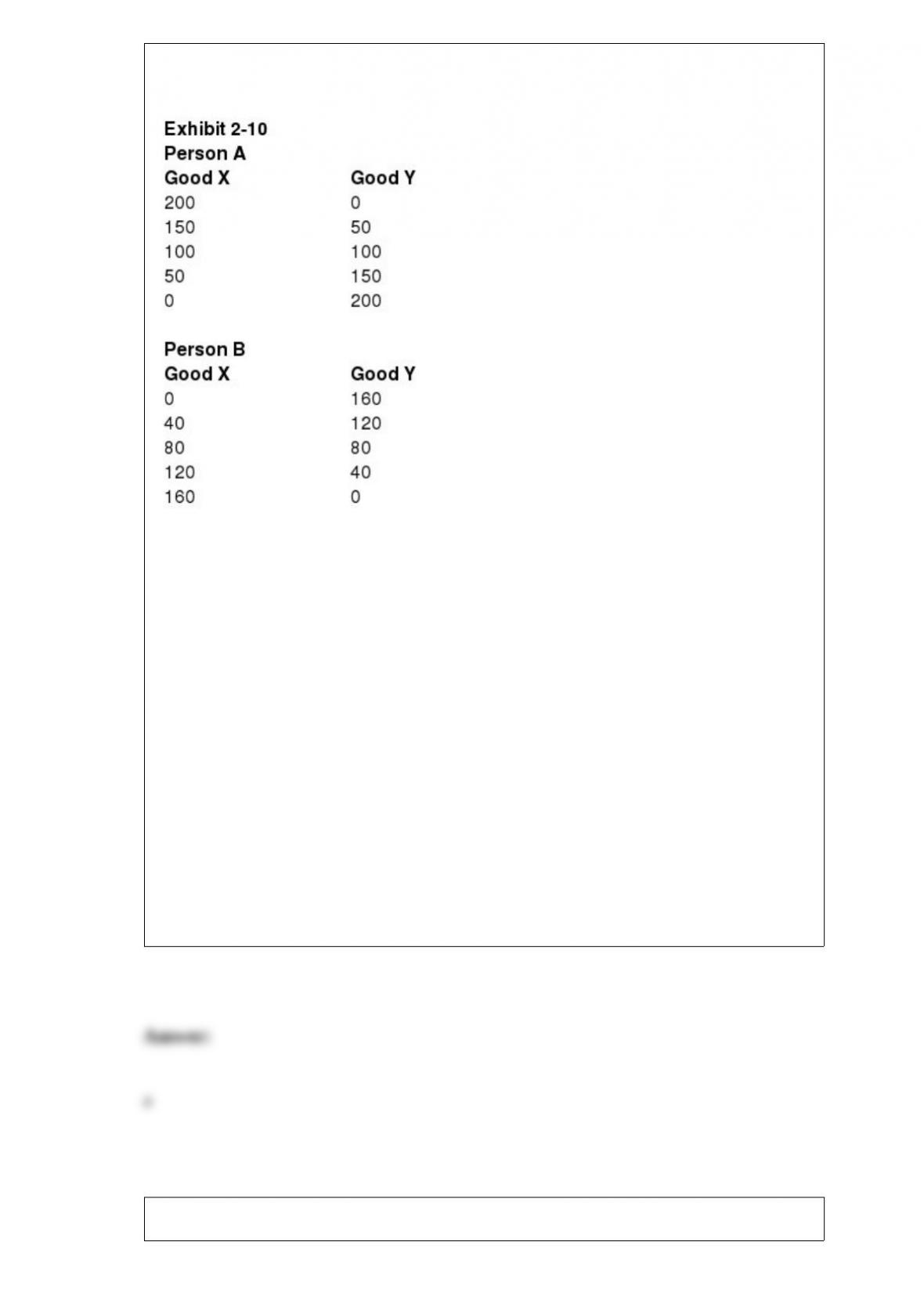
a. There would be no gains from trade between person A and person B because they
have the opportunity cost of producing one unit of good X (or one unit of good Y) is the
same for both persons.
b. Both person A and person B will benefit from specialization and trade as long as
person A specializes in the production of good X and person B specializes in the
production of good Y.
c. Both person A and person B will benefit from specialization and trade as long as
person A specializes in the production of good Y and person B specializes in the
production of good X.
d. Both person A and person B will benefit from trade as long as person A produces
both good X and good Y, and person B produces neither good.
e. Both person A and person B will benefit from trade as long as person B produces
both good X and good Y, and person A produces neither good.
Refer to Exhibit 20-9.What is the price elasticity of supply between $4 and $6?
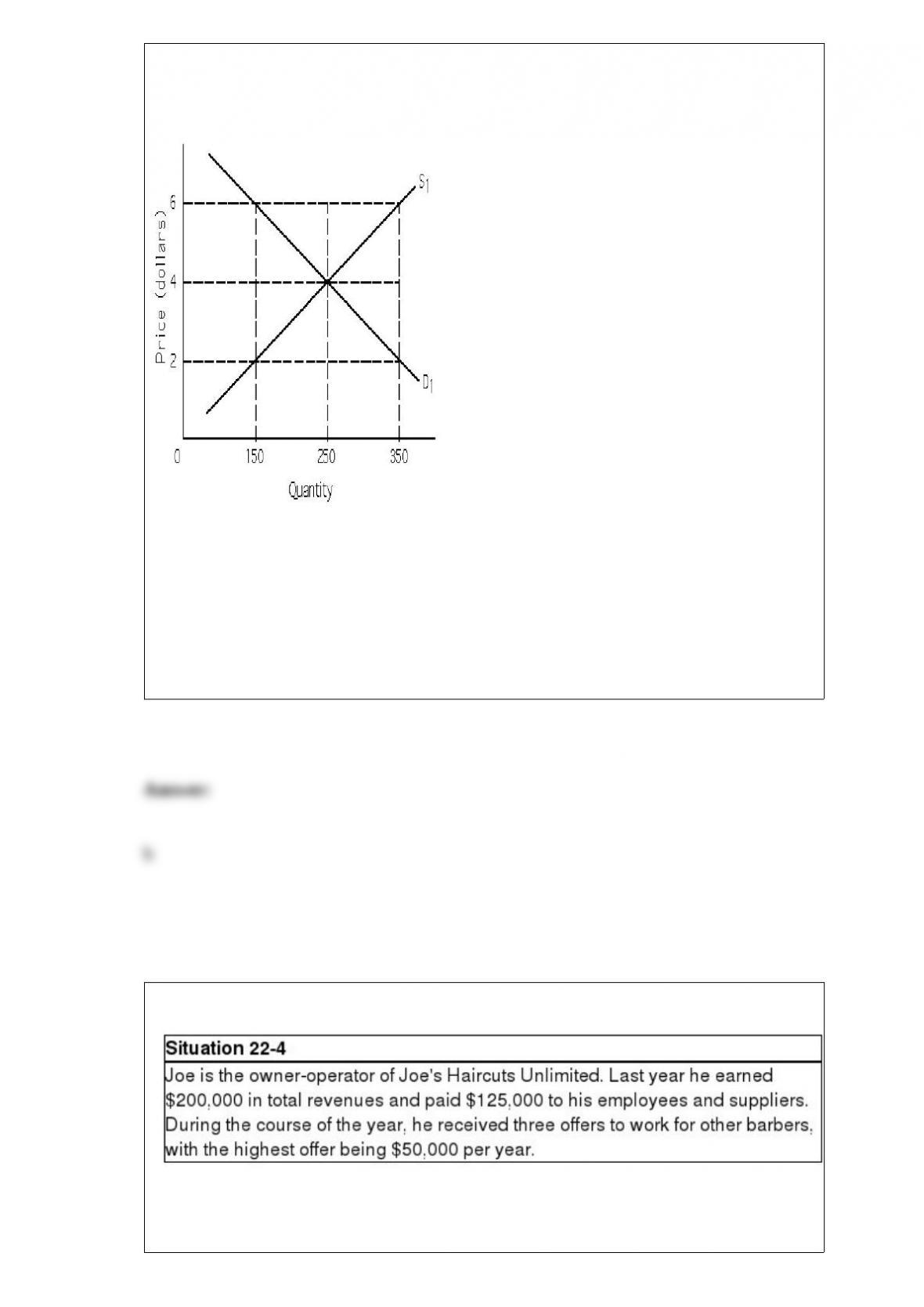
Exhibit 20-9
a. 0.825
b. 0.833
c. 1.25
d. 1.20
Refer to Situation 22-4.Is Joe earning a normal profit?
a. No, he is earning an above-normal profit.
b. No, but he is earning an accounting profit and that is all that matters.
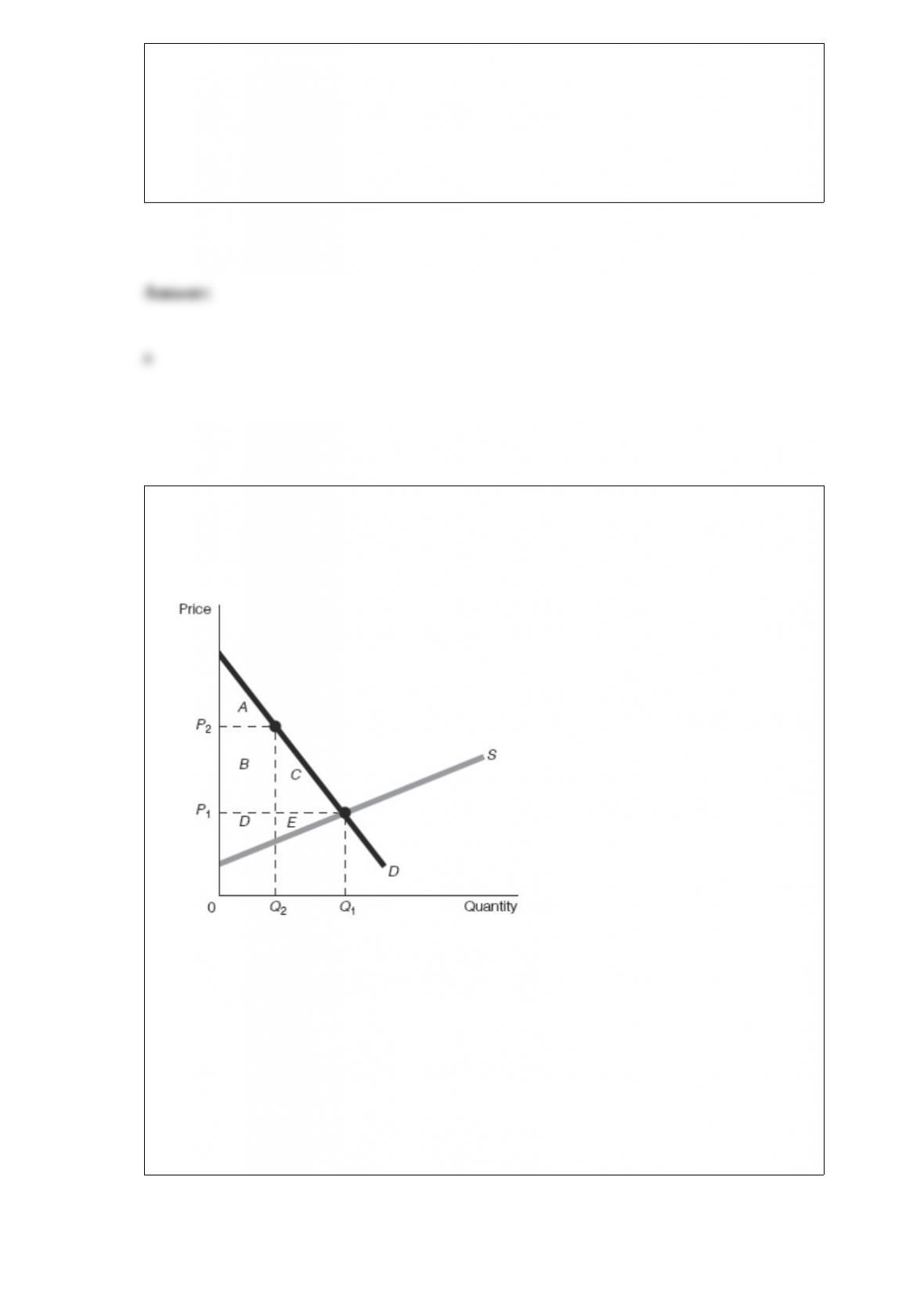
c. Yes, but his economic profit is $0 and that is not good.
d. We cannot be sure, because “normal” profit is a subjective judgment.
e. No, his economic profit is negative.
Refer to Exhibit 32-4.At the market equilibrium price of the good, producers’ surplus is
the area
Exhibit 32-4
a. D + E
b. A + B + C + D + E
c. A + B + C
d. C + E
e. none of the above
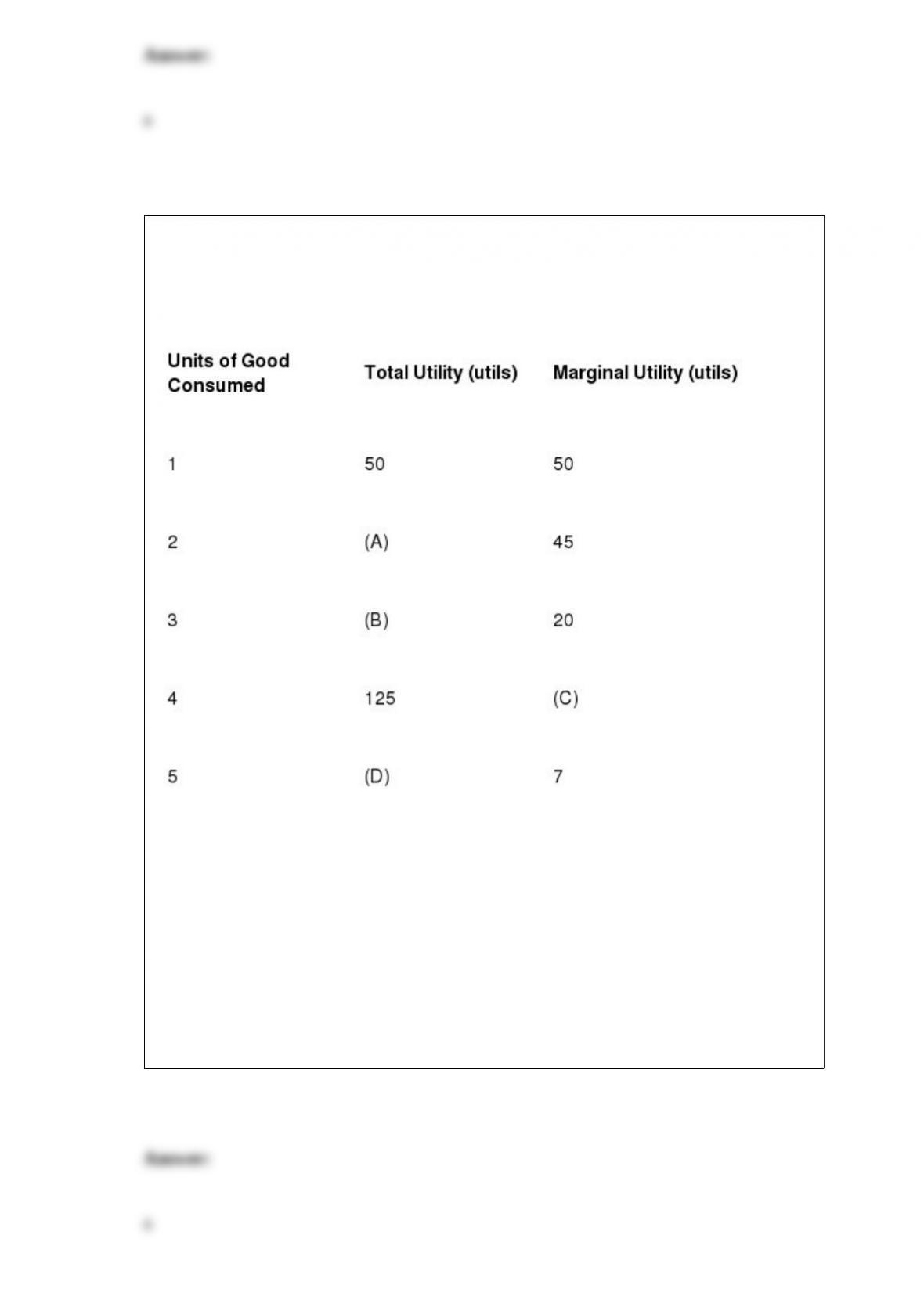
Refer to Exhibit 21-4.What value goes in blank (D)?
Exhibit 21-4
a. 132
b. 111
c. 118
d. 25
e. There is not enough information to answer this question.

Candidate A says, “Health care is too expensive in the United States. We need to do
something-and quickly-to develop a better, more responsive, less expensive health care
system.” Candidate B, who is running against candidate A in a two-person race, says,
“Health care is too expensive in the United States. We need to do something about it
and quickly. I suggest that we have the federal government develop a centralized system
for delivering health care in this country.” If you know nothing else about the two
candidates, it follows that
a. candidate A has taken polls and candidate B has not.
b. candidate B has taken polls and candidate A has not.
c. candidate B is smarter than candidate A.
d. candidate B has a higher probability of winning the election than candidate A.
e. candidate A has a higher probability of winning the election than candidate B.
Suppose the demand for a particular good is perfectly inelastic and the government
decides to impose a tax on the production of this good. Who will pay the greater share
of such a tax?
a. The buyers will pay the entire share.
b. The sellers will pay the entire share.
c. The buyers and the sellers will pay equal shares.
d. The sellers will bear the greater share of the tax.