A decrease in quantity supplied is represented by a leftward shift of the supply curve.
The dynamic aggregate demand and aggregate supply model accounts for the price
level rising every year.
A network externality causes firms to sacrifice profits in the short run in order to satisfy
their customers and increase their long-run profits.
If Sanjaya can shuck more oysters in one hour than Tatiana, then Sanjaya has a
comparative advantage in shucking oysters.
A country which incurs a current account deficit will most likely have a financial or
capital account surplus.
There are a limited number of original Picasso paintings. This means that the supply of
original Picasso paintings is perfectly inelastic.
Adverse selection refers to the actions people take after they have entered into a
transaction that make the other party to the transaction worse off.
Adverse selection is a situation in which one party to a transaction takes advantage of
knowing more than the other party to the transaction.
An increase in the price level in the United States will reduce imports and increase
exports.
If a firm in a perfectly competitive industry introduces a lower-cost way of producing
an existing product, the firm will be able to earn economic profits in the long run.
Changes in interest rates affect all four components of aggregate demand.
Human capital refers to the percentage of the working-age population in the labor force.

An explicit cost is
A) a nonmonetary opportunity cost.
B) a cost specifically related to government rules and regulations.
C) a cost that involves spending money.
D) a cost unique to corporations.
In September 2012, the average price of gasoline in the United States was $3.91 per
gallon, and consumers purchased nearly 5 percent less gasoline than they had during
September 2011, when the average price of gasoline was $3.66 per gallon. Based on
these figures, when the price of gasoline rose from $3.66 per gallon to $3.91 per gallon,
total revenue
A) increased.
B) decreased.
C) did not change.
D) There is not enough information to determine what happened to total revenue.
Table 9-6
Production and
Consumption Production
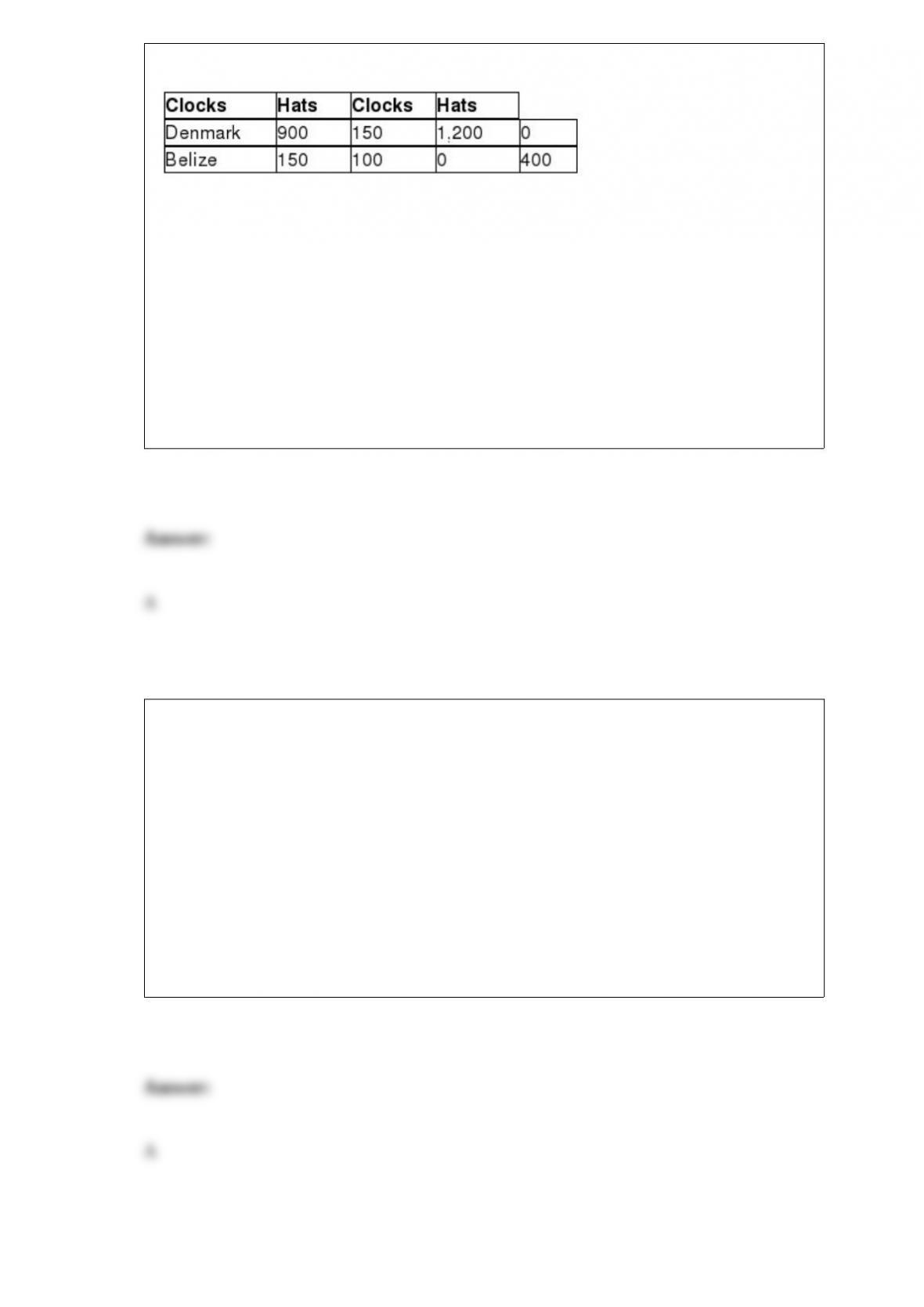
Without Trade With Trade
Denmark and Belize can produce both clocks and hats. Table 9-6 shows the production
and consumption quantities without trade, and the production numbers with trade. With
trade, what is the total gain in hat production?
A) 150
B) 300
C) 400
D) 650
A sequential game can be used to analyze whether a retail firm should build a large
store or a small store in a city, when the correct choice depends on whether a competing
firm will build a new store in the same city. Which of the following is used to analyze
this type of decision?
A) a decision tree
B) a decision matrix
C) a sequential matrix
D) an either-or graph
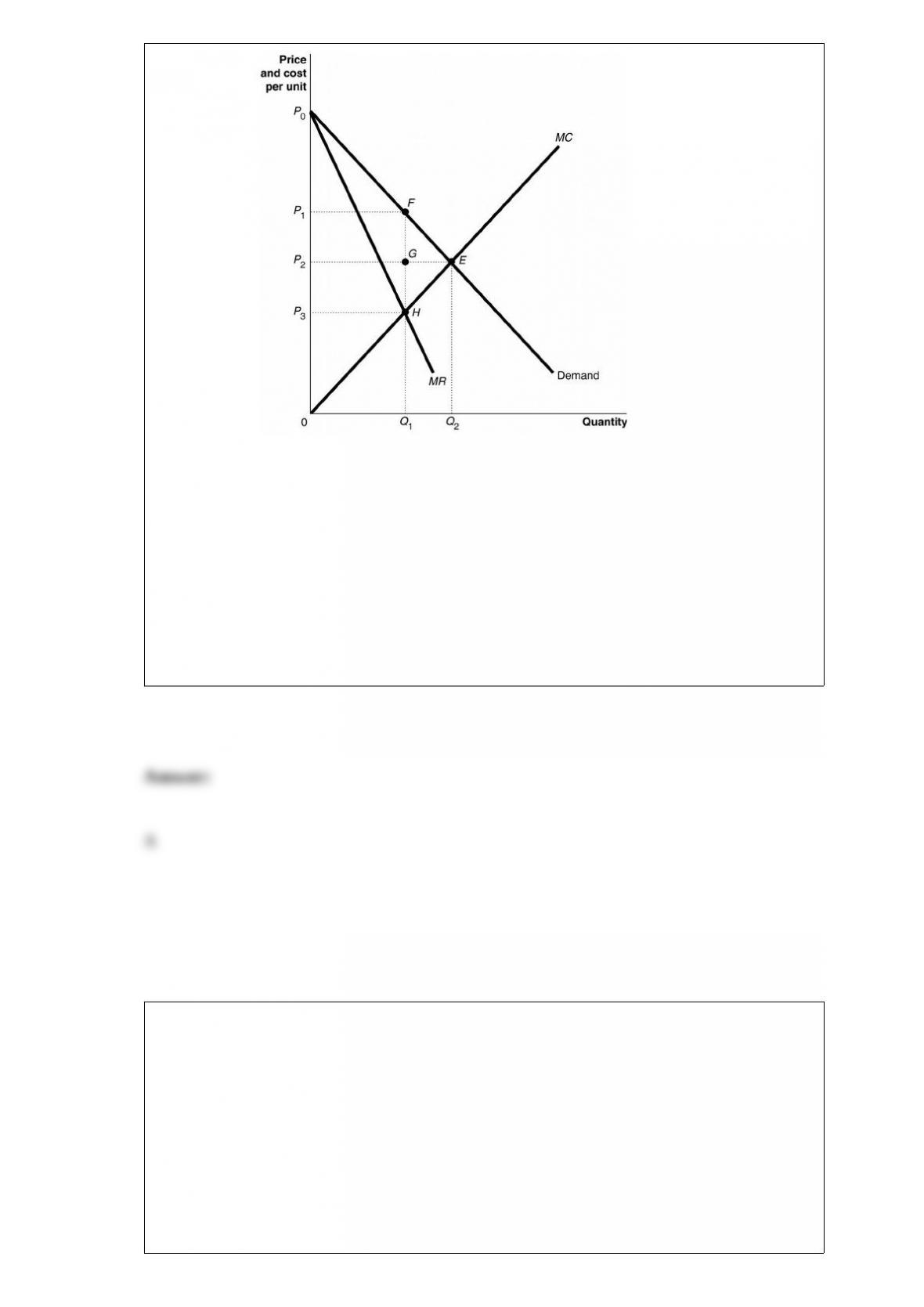
Figure 15-10
The deadweight loss due to a monopoly is represented by the area
A) FHE.
B) FGE.
C) GEH.
D) FQ1Q2E.
If total variable cost exceeds total revenue at all output levels, a perfectly competitive
firm
A) should produce in the short run.
B) is making short-run profits.
C) should shut down in the short run.
D) has covered its fixed cost.

Holding everything else constant, the demand for a good tends to be more elastic
A) the more substitutes there are for the good.
B) the shorter the time period involved.
C) the more consumers perceive the good to be a necessity.
D) the less important the product is in consumers’ budgets.
Alejandro expects the price level to rise from 105 this year to 108 next year. If the price
level rises to 110 next year instead of 108, which of the following will occur?
A) Alejandro’s real wage remains unchanged.
B) Alejandro’s real wage falls.
C) Alejandro’s real wage rises.
D) Alejandro’s real wage may rise or fall, depending on the unemployment rate.
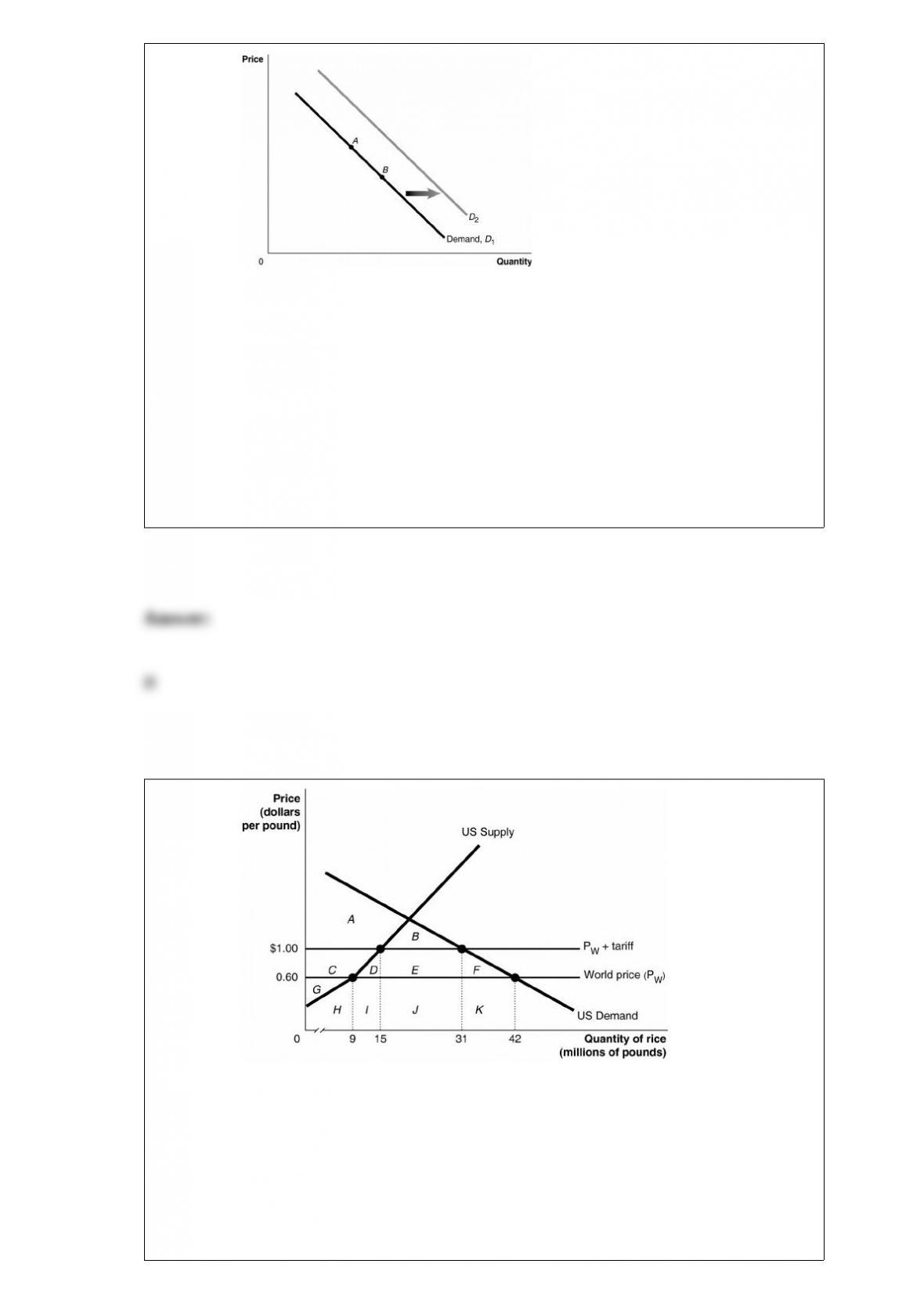
Figure 3-1
An increase in the price of the product would be represented by a movement from
A) A to B.
B) B to A.
C) D1 to D2.
D) D2 to D1.
Figure 9-2 Suppose the U.S.
government imposes a $0.40 per pound tariff on rice imports. Figure 9-2 shows the
impact of this tariff. The loss in domestic consumer surplus as a result of the tariff is
equal to the area
A) B + D + E + F.
B) D + E + F.
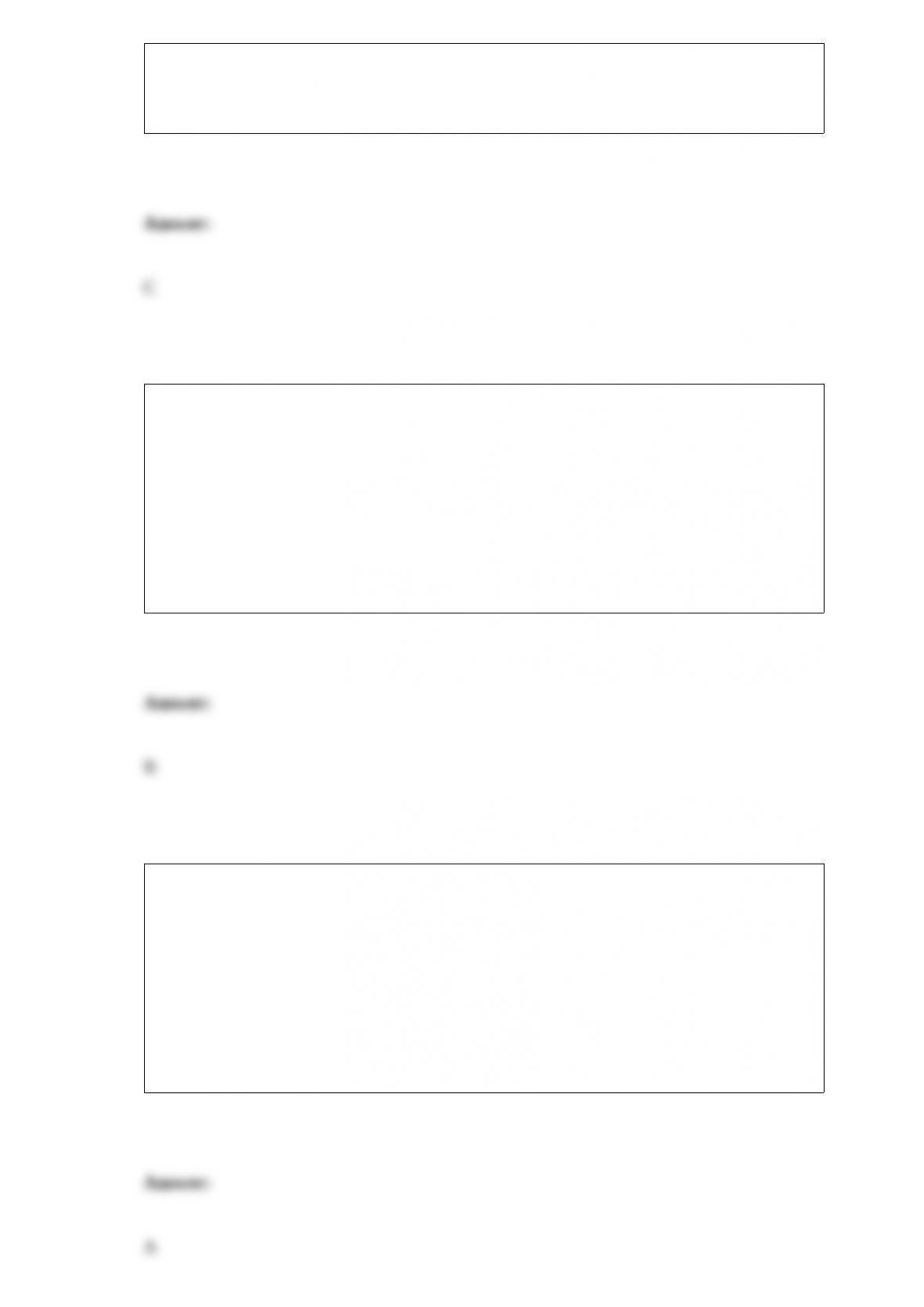
C) C + D + E + F.
D) B.
In 2013, the average height of adult males in the United States was
A) 5′ 7.”
B) 5′ 9.”
C) 6′ 0.”
D) 6′ 4.”
If a vineyard wants to raise funds to purchase a new bottling machine, it does so in the
A) factor market.
B) output market.
C) product market.
D) alcoholic beverages market.
If opportunity costs are constant, the production possibilities frontier would be graphed
as
A) a ray from the origin.
B) a positively sloped straight line.
C) a negatively sloped curve bowed in toward the origin.
D) a negatively sloped straight line.
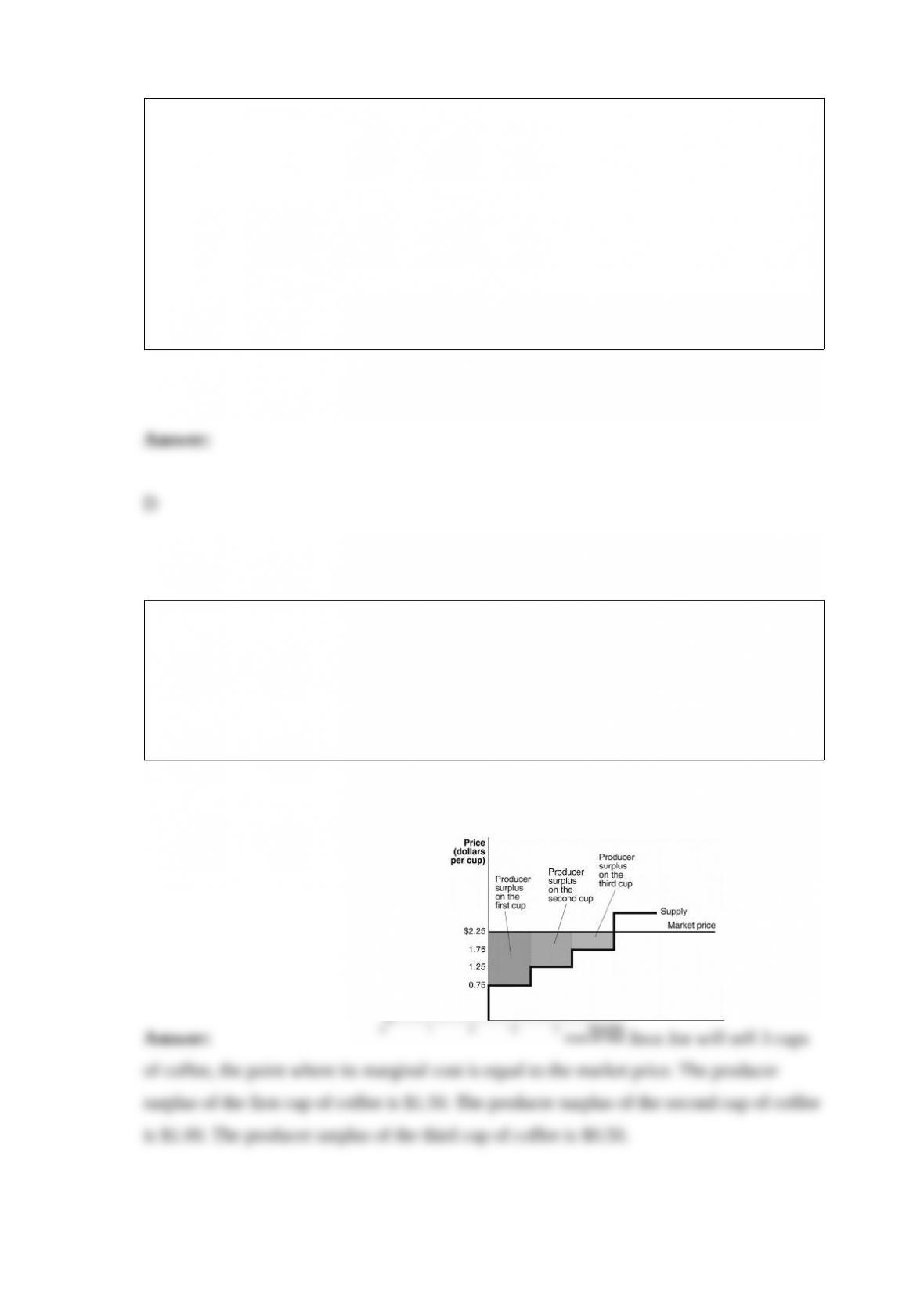
The marginal cost for Java Joe’s to produce its first cup of coffee is $0.75. Its marginal
cost to produce its second cup of coffee is $1.25. Its marginal cost increases by $0.50
for each additional cup of coffee it produces. Suppose the market price for coffee is
$2.25. Construct a graph showing the producer surplus for each cup of coffee Java Joe’s
will sell. How many cups of coffee will Java Joe’s sell? What is the value of the
producer surplus Java Joe’s receives for each cup of coffee it sells?
Explain the Law of Demand.
What is an isocost line? What is the slope of an isocost line?
What is meant by the “law of one price”? In discussing the law of demand, Hubbard
and O’Brien claim there has been no evidence of an exception to the law (that is, no
evidence of an upward-sloping demand curve). Are there exceptions to the law of one
price?
What is a tariff?
“When it comes to public goods, individuals do not reveal their true preferences
because it is not in their self interest to do so.” Evaluate this statement.