The slope of a (nonlinear) curve varies from one point to another.
a. True
b. False
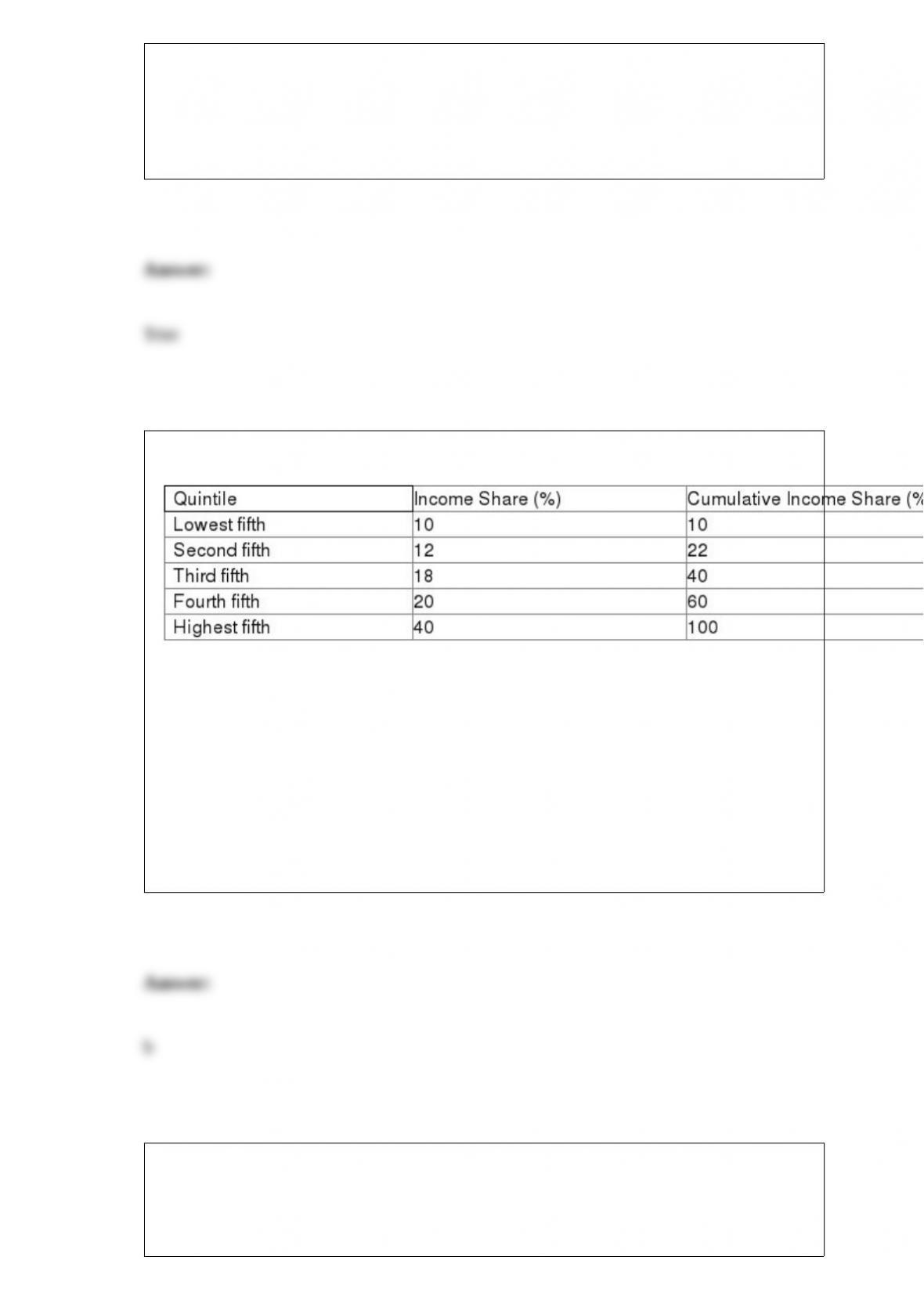
Exhibit 29-3
The Gini coefficient for the income distribution of the country depicted in the exhibit is
a. a number less than 0.
b. a number between 0 and 1.
c. equal to 1.
d. equal to 0.
Which of the following can issue bonds?
a. the government
b. corporations
c. government agencies
d. all of the above
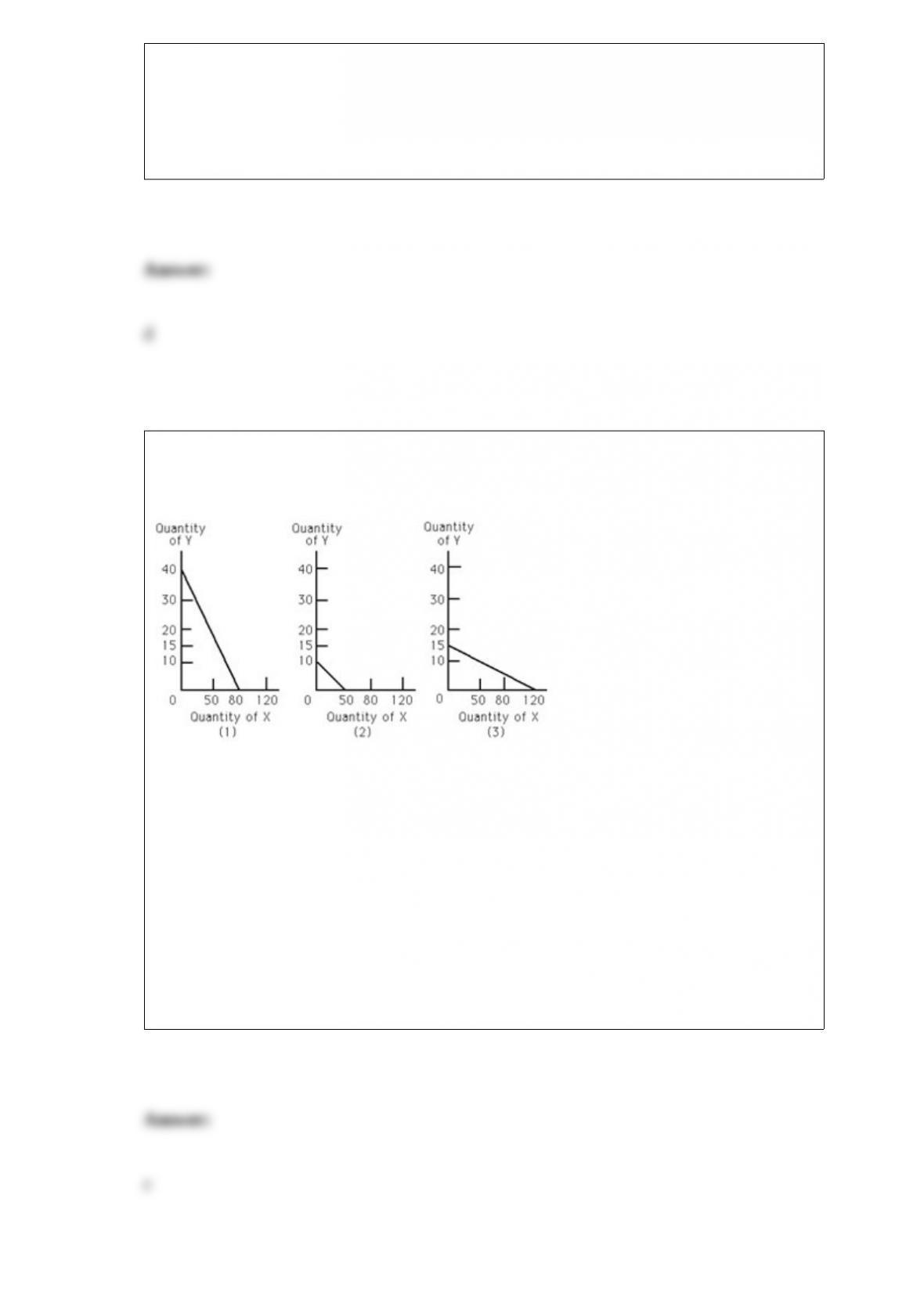
Exhibit 21-7
For graph (2), if the price of X is $60, what is the consumer’s income?
a. $1,000
b. $2,000
c. $3,000
d. $6,000
e. This cannot be determined from the information provided.

A fixed input is an input whose quantity
a. can be changed as output changes in the short run.
b. cannot be changed as output changes in the short run.
c. cannot be changed as output changes in the long run.
d. a and c
e. b and c
If a labor union tries to reduce the availability of substitutes for the product it sells, it is
attempting to affect the __________ for labor. But if it tries to increase substitute factor
prices, it is attempting to affect the __________ labor.
a. elasticity of demand; supply of
b. demand; elasticity of demand for
c. elasticity of demand; demand for
d. demand; supply of
e. none of the above
The perfectly competitive firm charges a price equal to __________ while the

monopolist charges a price __________.
a. marginal revenue; equal to marginal cost
b. marginal cost; greater than marginal cost
c. marginal revenue; greater than marginal revenue
d. average total cost; greater than average total cost
e. b and c
Which of the following is the best example of a homogeneous good?
a. new cars
b. ice cream
c. soft drinks
d. wheat
Exhibit 35-4
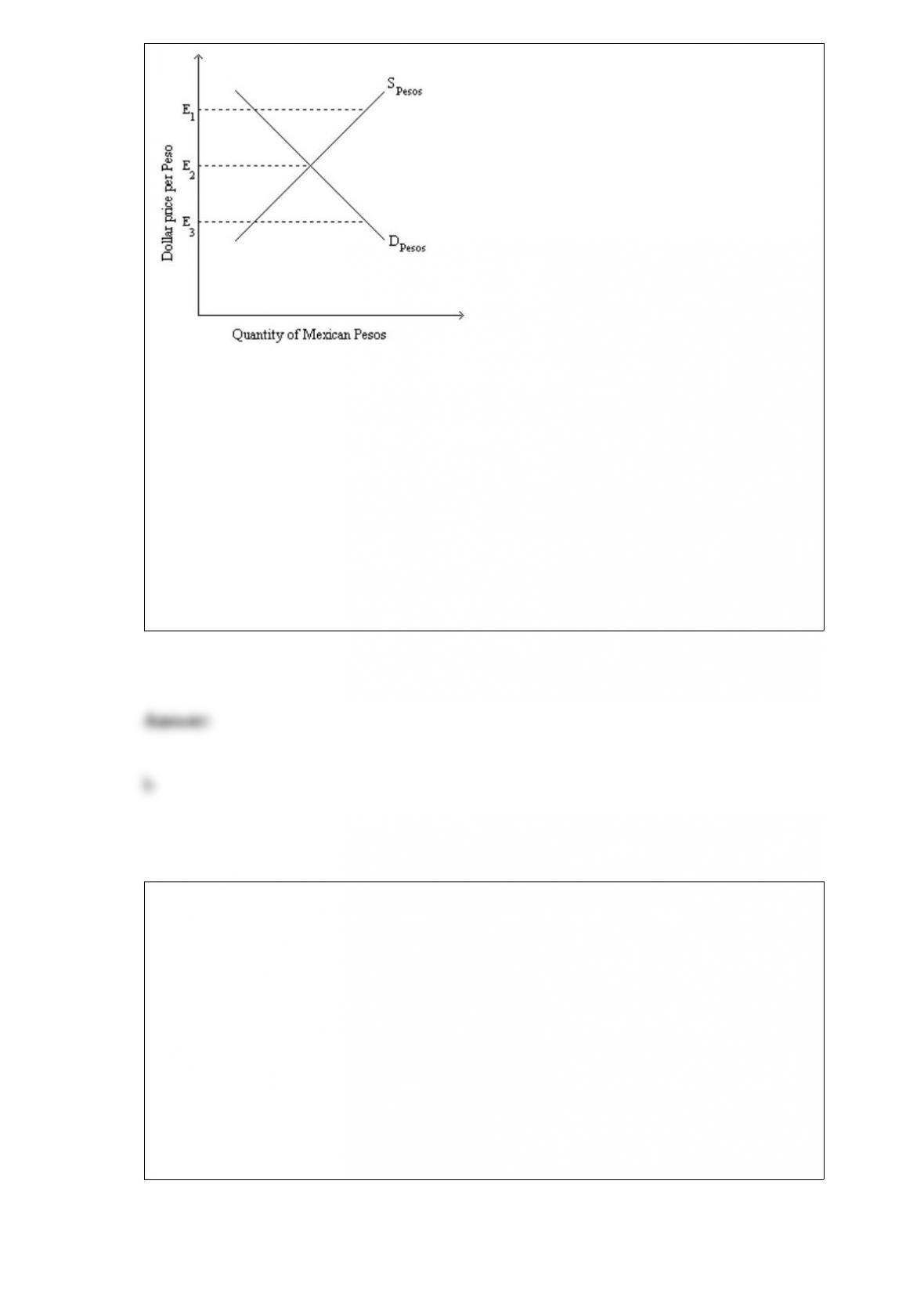
Under a fixed exchange rate system, at the exchange rate of E3, the peso is __________
and there is a __________.
a. overvalued; surplus of dollars
b. undervalued; shortage of pesos
c. overvalued; shortage of dollars
d. undervalued; surplus of pesos
A price searcher
a. faces a horizontal demand curve.
b. is a seller that searches for good employees and pays them a low wage.
c. is a seller that searches for the best location to sell its product.
d. is a seller that has the ability to control to some degree the price of the product it
sells.
e. none of the above

Minimum efficient scale refers to the
a. smallest plant size a firm can utilize and still maintain production.
b. lowest point on a given SRATC curve.
c. output level at which the LRATC curve touches each SRATC curve.
d. lowest output level at which average total costs are minimized.
At a price below the equilibrium price, there is
a. a surplus.
b. a shortage.
c. excess supply.
d. sub-equilibrium.
e. none of the above
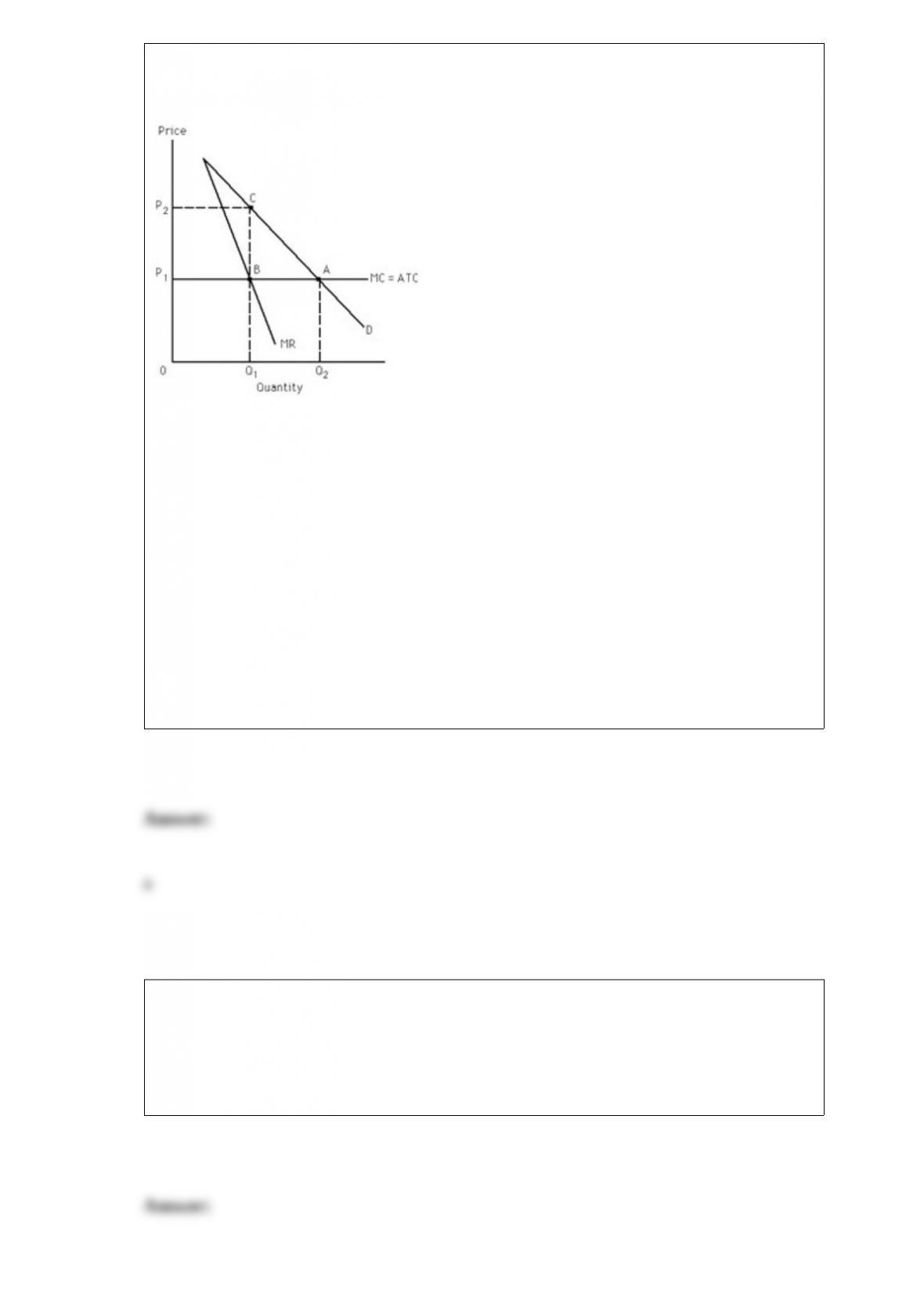
Exhibit 24-1
If the product is produced under single-price monopoly, what does total revenue equal
at the profit maximizing level of output?
a. area 0P2CQ1
b. area BCA
c. area P1P2CB
d. area P2CAP1
e. none of the above
Economists assume that the goal of consumers is to maximize total utility.
a. True
b. False
A perfectly competitive firm will always maximize short-run profits by producing the
level of output where average total cost is minimized.
a. True
b. False
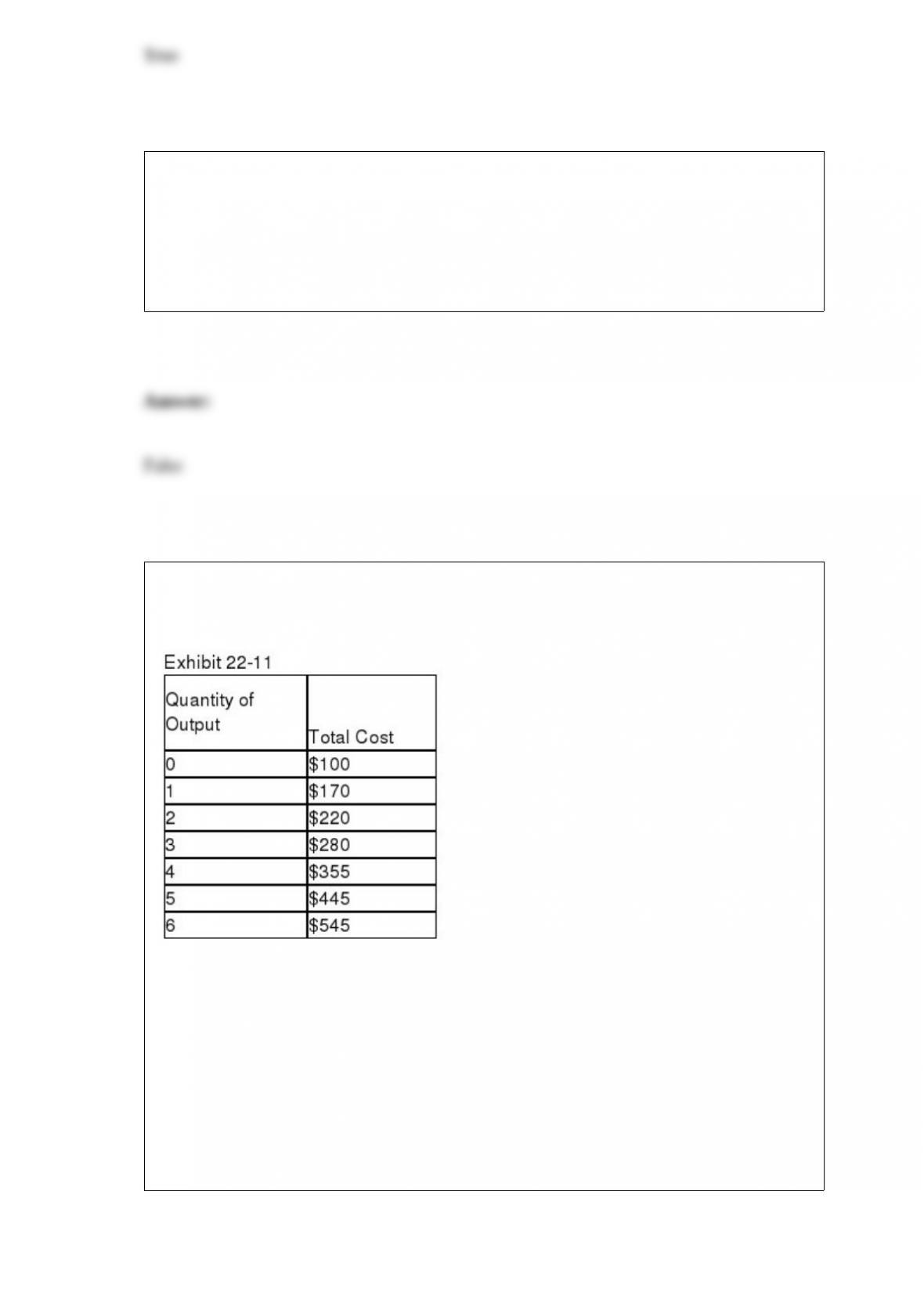
Marginal cost of the first unit of output is
a. $170.
b. $150.
c. $70.
d. $90.83.

According to public choice theorists, people in the market sector and people in the
public sector behave differently because
a. people in the two sectors have different motives.
b. the two sectors have different institutional arrangements.
c. government employees do not act in their own self-interest.
d. there are economies of scale in the market sector.