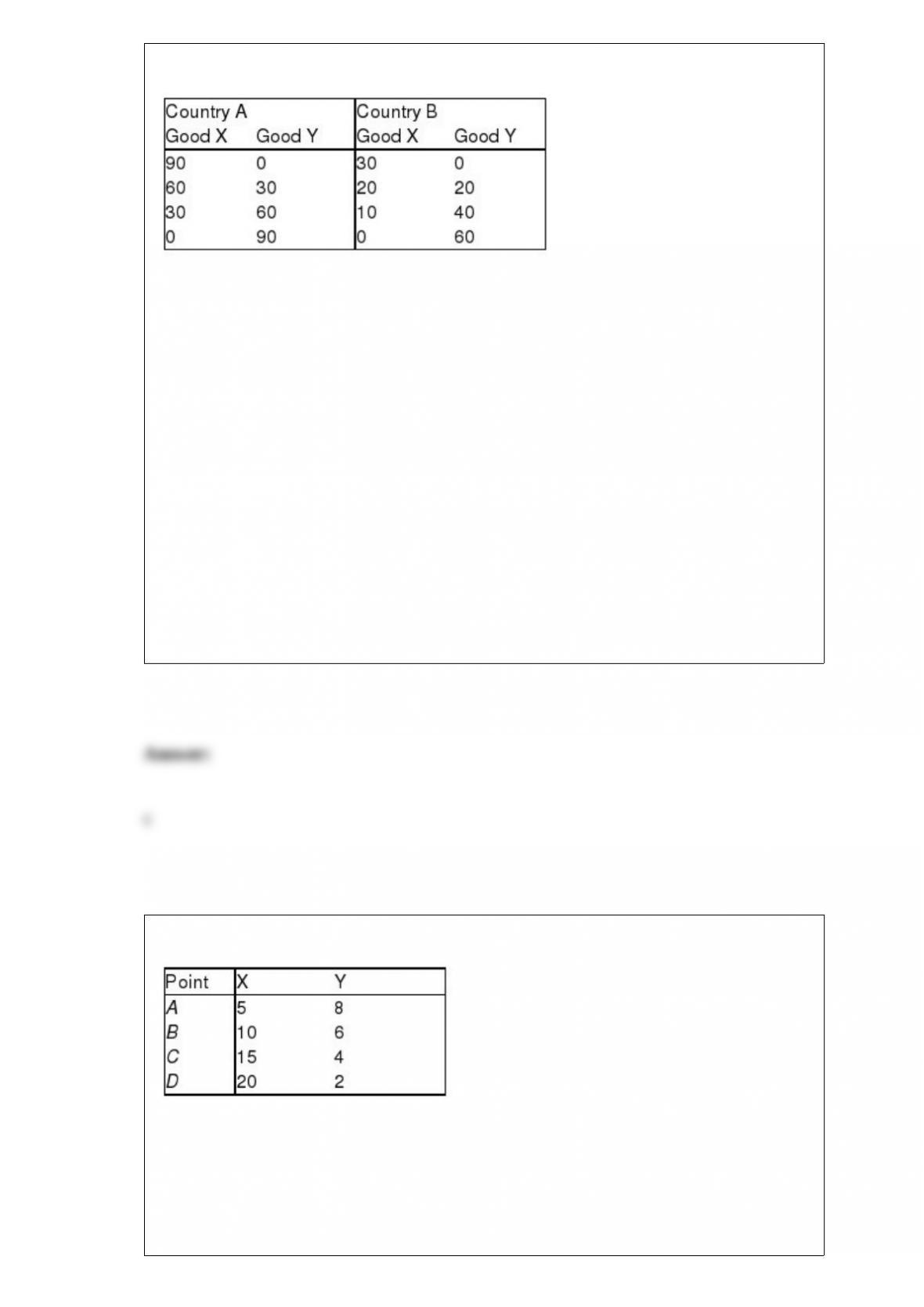
Exhibit 34-1
If country A is to specialize in the production of one of the two goods (and then trade
that good with Country B), which good should it be and why? If Country B is to
specialize in the production of one of the two goods (and then trade that good to with
Country A), which good should it be and why?
a. Good X for Country A because it is the higher opportunity cost producer of good X;
good Y for Country B because it is the higher opportunity cost producer of good Y.
b. Good Y for Country A because it is the lower opportunity cost producer of good Y;
good X for Country B because it is the lower opportunity cost producer of good X.
c. Good X for Country A because it is the lower opportunity cost producer of good X;
good Y for Country B because it is the lower opportunity cost producer of good Y.
d. Good Y for Country A because it is the higher opportunity cost producer of good Y;
good X for Country B because it is the higher opportunity cost producer of good X.
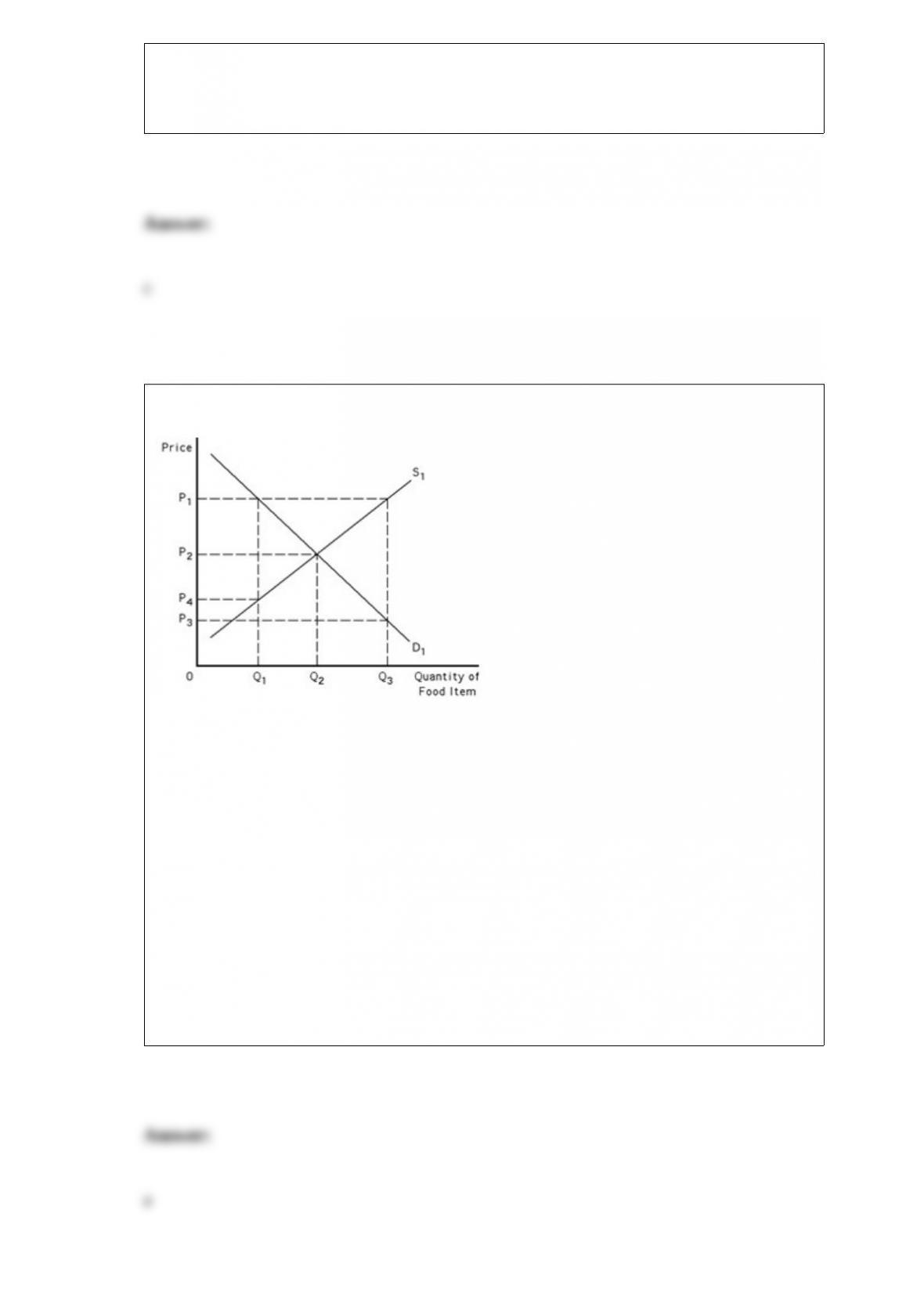
Exhibit 1-3
Based on the data provided in this table,what type of relationship exists between
variables X and Y?
a. inverse

b. direct
c. independent
d. There is no relationship between variables X and Y.
Based on the income data presented for the United States (in the textbook), it follows
that the Gini coefficient for the United States is
a. greater than 0 and less than 1.
b. definitely less than 1, but it may be 0.
c. definitely greater than 0, but it may be 1.
d. definitely 1.
e. approximately 2.3.
As a firm buys more capital and less labor, the marginal physical product of capital
__________ and the marginal physical product of labor __________, assuming the law
of diminishing marginal returns has set in for each factor.
a. decreases; increases
b. increases; increases

c. decreases; decreases
d. increases; remains constant
e. remains constant; decreases
In the theory of perfect competition,
a. sellers of the product are not influenced by other sellers and therefore have virtually
complete control over the production and pricing of their product.
b. buyers of the product may have a preference as to whom they purchase from based
on brand loyalty.
c. buyers and sellers of the product know everything that there is to know about the
product.
d. it can be quite expensive for a firm to enter this type of market, but once the firm is
established, it will be a profitable venture.
In an eight-hour day, Andy can produce either 24 loaves of bread or 8 pounds of butter.
In an eight-hour day, John can produce either 8 loaves of bread or 8 pounds of butter.
The opportunity cost of producing 1 pound of butter is
a. 1/3 hour for Andy and 1 hour for John.
b. 1 hour for Andy and 1 hour for John.
c. 3 loaves of bread for Andy and 1 loaf of bread for John.
d. 1/3 loaves of bread for Andy and 1 loaf of bread for John.
e. none of the above
Exhibit 39-9
Under a price support program, with the price support set at P1, consumers will end up
paying a price of
a. P1.
b. P2.
c. P3.
d. P4.
e. There is not enough information to answer the question.

A vertical supply curve represents:
a. an inverse relationship between price and quantity supplied.
b. an independent relationship between price and quantity supplied.
c. an independent relationship between price and supply.
d. a direct relationship between price and quantity supplied.
e. a direct relationship between price and supply.
The original Dow Jones Industrial Average (DJIA) contained ____________ stocks,
while the DJIA now consists of ____________ stocks.
a. 10; 500
b. 11; 30
c. 15; 50
d. 20; 60
If the Gini coefficient is one (1), this means that there is
a. perfect income equality.
b. some income inequality.
c. complete income inequality.
d. no area between the line of perfect income equality and the actual Lorenz curve.
e. c and d
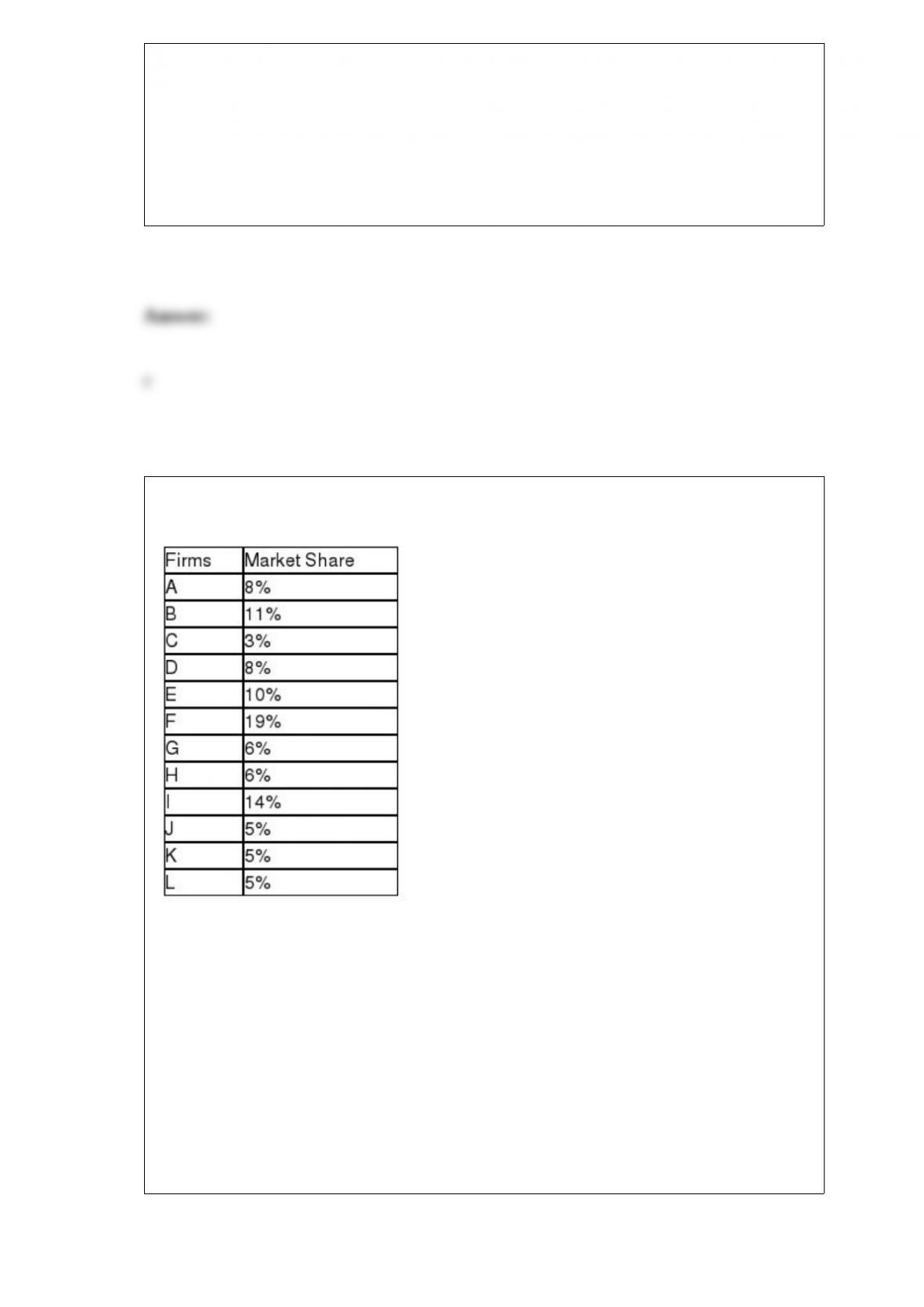
Exhibit 26-3
The four-firm concentration ratio for this industry is
a. 46 percent.
b. 49 percent.
c. 54 percent.
d. 696 percent.
e. This cannot be determined without further information.

The public interest theory of regulation holds that
a. regulators are seeking to do and will do through regulation what is in the best interest
of the public or society at large.
b. even though regulators seek to do what is in the best interest of the public at large,
through regulation they end up doing what is in the best interest of the special interests
of the industry that is being regulated.
c. even though regulators seek to do what is in the best interest of special interests of
the industry that is being regulated, through regulation they end up doing what is in the
best interest of the public at large.
d. regulators are seeking to do and will do through regulation what is in the best interest
of the special interests of the industry that is being regulated.
Exhibit 3-10
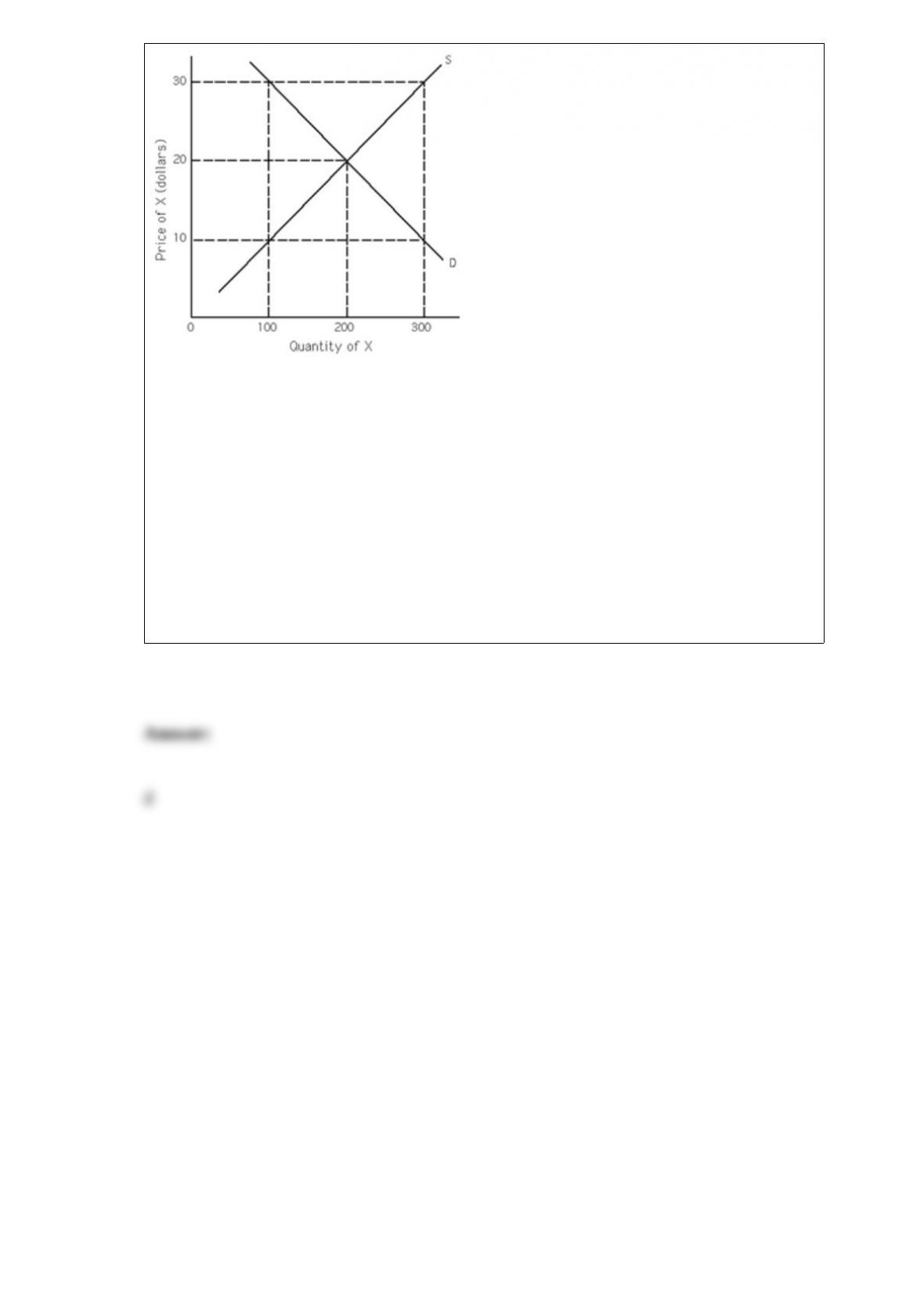
100 units of X will be exchanged in this market if the price is
a. $30.
b. $20.
c. $10.
d. a or c
e. none of the above