When demand is elastic, a fall in price causes total revenue to rise because
A) when price falls, quantity sold increases so total revenue automatically rises.
B) the increase in quantity sold is large enough to offset the lower price.
C) the percentage increase in quantity demanded is less than the percentage fall in price.
D) the demand curve shifts.
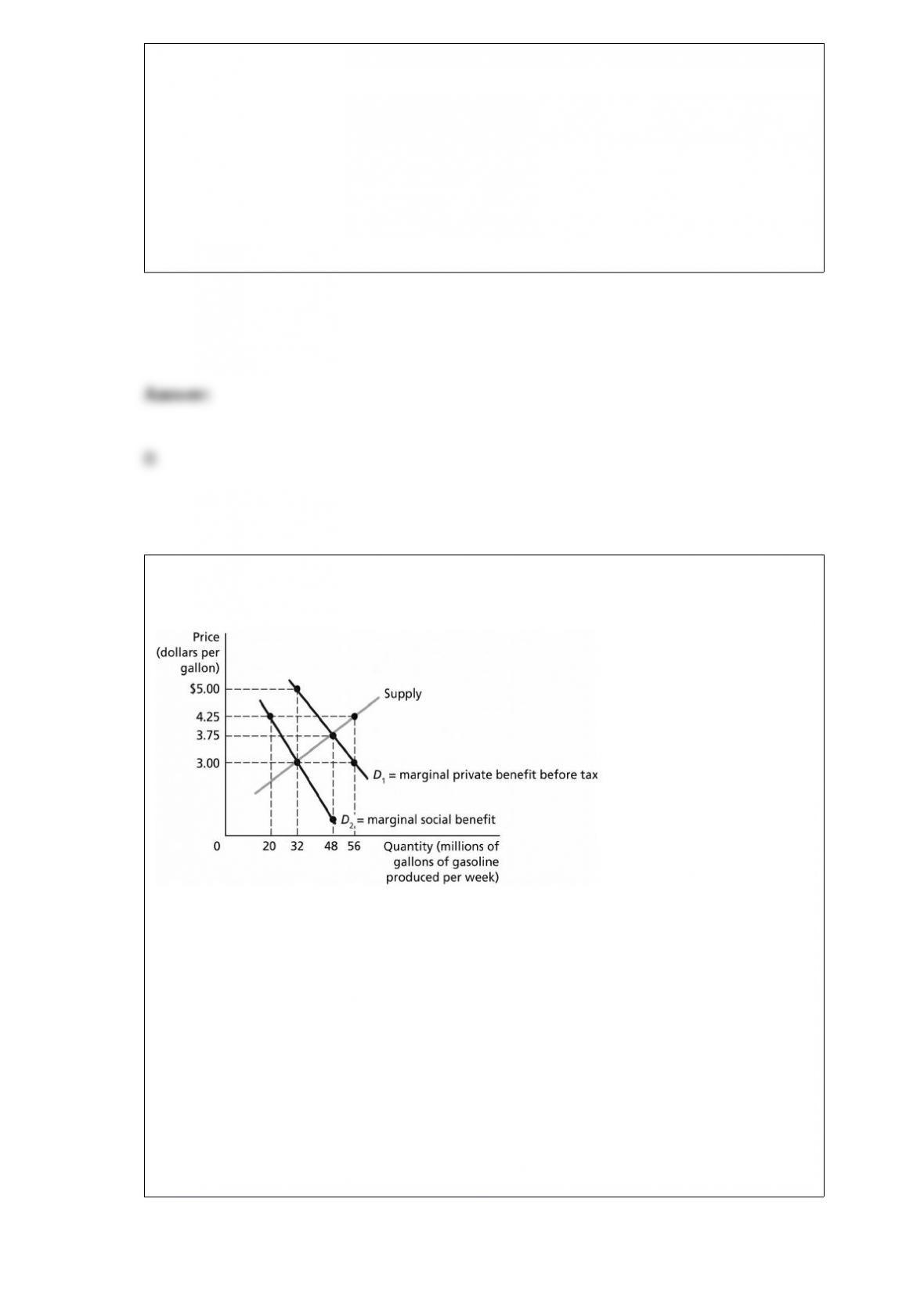
Figure 5-13
Figure 5-13 illustrates the market for gasoline before and after the government imposes
a tax to bring about the efficient level of gasoline production.
Refer to Figure 5-13. The efficient equilibrium price of gasoline is ________ per
gallon.
A) $3.00
B) $3.75
C) $4.25
D) $5.00
If a good has a negative income elasticity of demand, this indicates that the good is
A) a substitute with another good.
B) a complement with another good.
C) inferior.
D) normal.
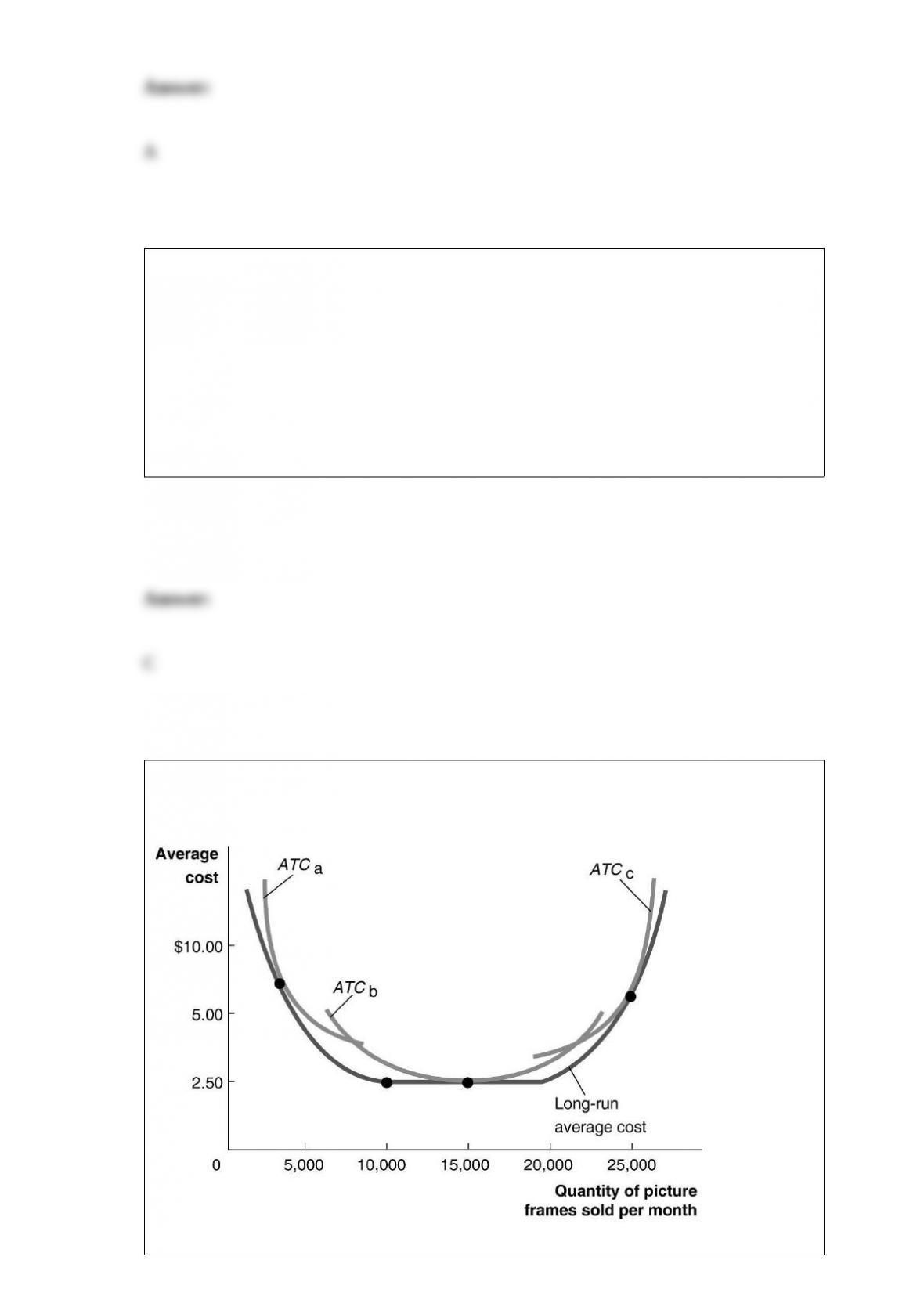
Figure 11-11
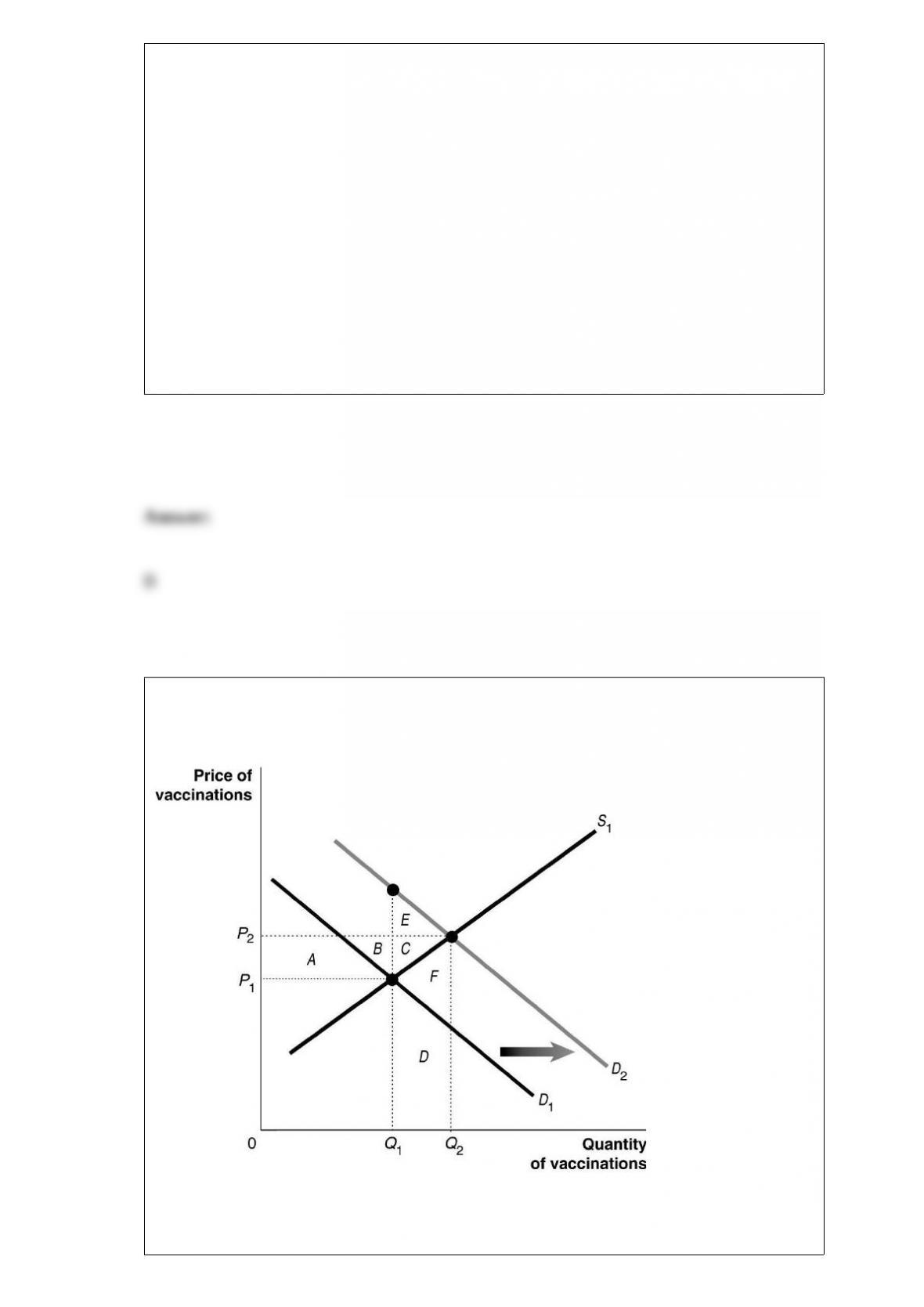
Figure 11-11 illustrates the long-run average cost curve for a firm that produces picture
frames. The graph also includes short-run average cost curves for three firm sizes:
ATCa, ATCb and ATCc.
Refer to Figure 11-11. For output rates greater than 20,000 picture frames per month
A) the firm will not make a profit because the average cost of production will be too
high.
B) the firm will experience diseconomies of scale.
C) the firm will experience diminishing returns.
D) the short-run average total cost will equal the long-run average total cost of
production.
Figure 5-6
Figure 5-6 shows the market for measles vaccinations, a product whose use generates
positive externalities.
Refer to Figure 5-6. Why is there a deadweight loss?
A) because the marginal private benefit for each additional unit between Q1 and Q2
exceeds the marginal cost
B) because the marginal private cost for each additional unit between Q1 and Q2
exceeds the marginal private benefit
C) because the marginal social cost for each additional unit between Q1 and Q2 exceeds
the marginal social benefit
D) because the marginal social benefit for each additional unit between Q1 and Q2
exceeds the marginal cost
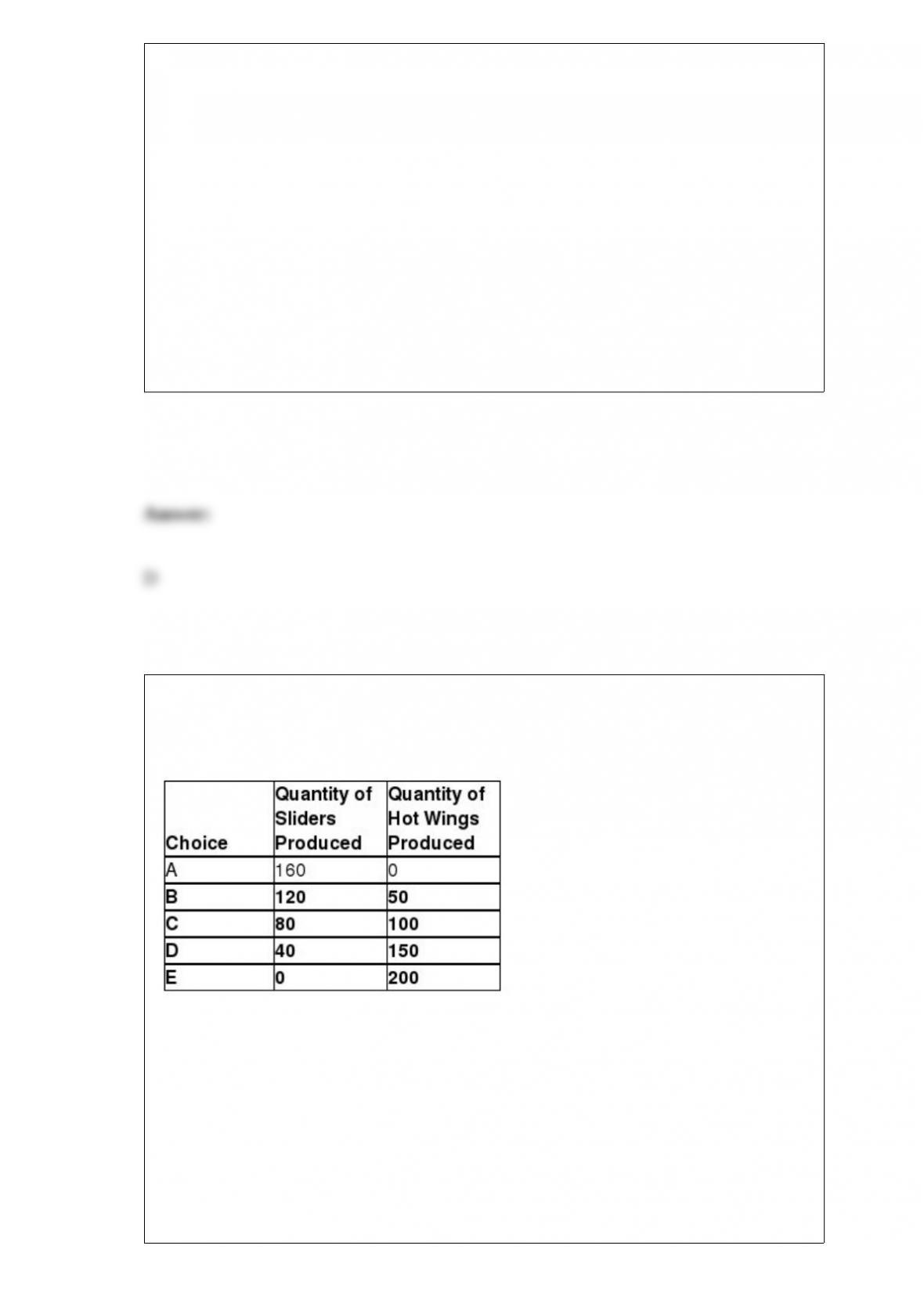
Table 2-3
Production Choices for Dina’s Diner
Refer to Table 2-3. Assume Dina’s Diner only produces sliders and hot wings. A
combination of 80 sliders and 100 hot wings would appear
A) along Dina’s production possibilities frontier.
B) inside Dina’s production possibilities frontier.
C) outside Dina’s production possibilities frontier.
D) at the vertical intercept of Dina’s production possibilities frontier.
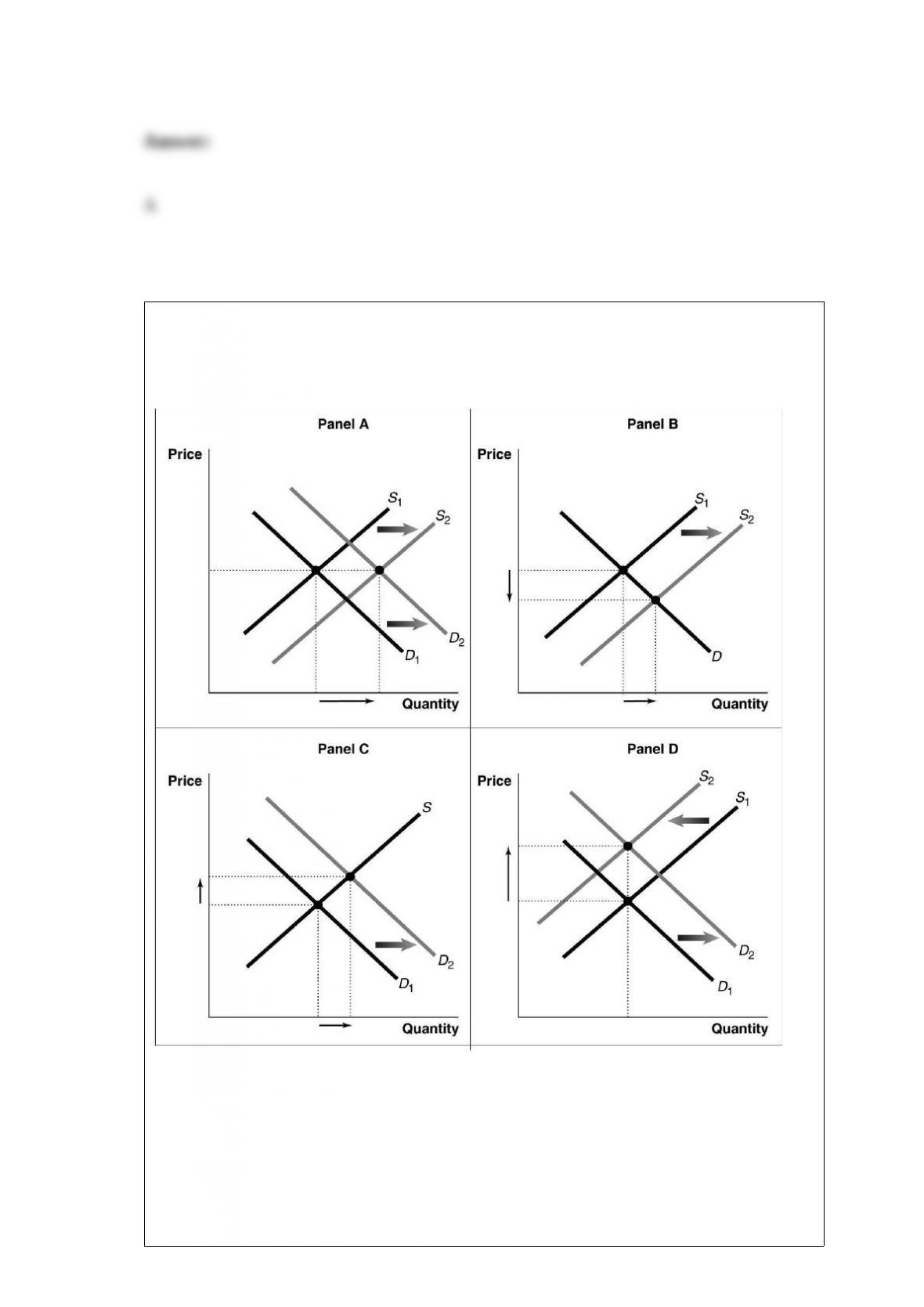
Figure 12-16
Refer to Figure 12-16. Which panel best represents the perfectly competitive organic
produce market in which some firms are experiencing short-run losses, and consumers
are displaying an increased preference for organic produce?
A) Panel A
B) Panel B
C) Panel C
D) Panel D
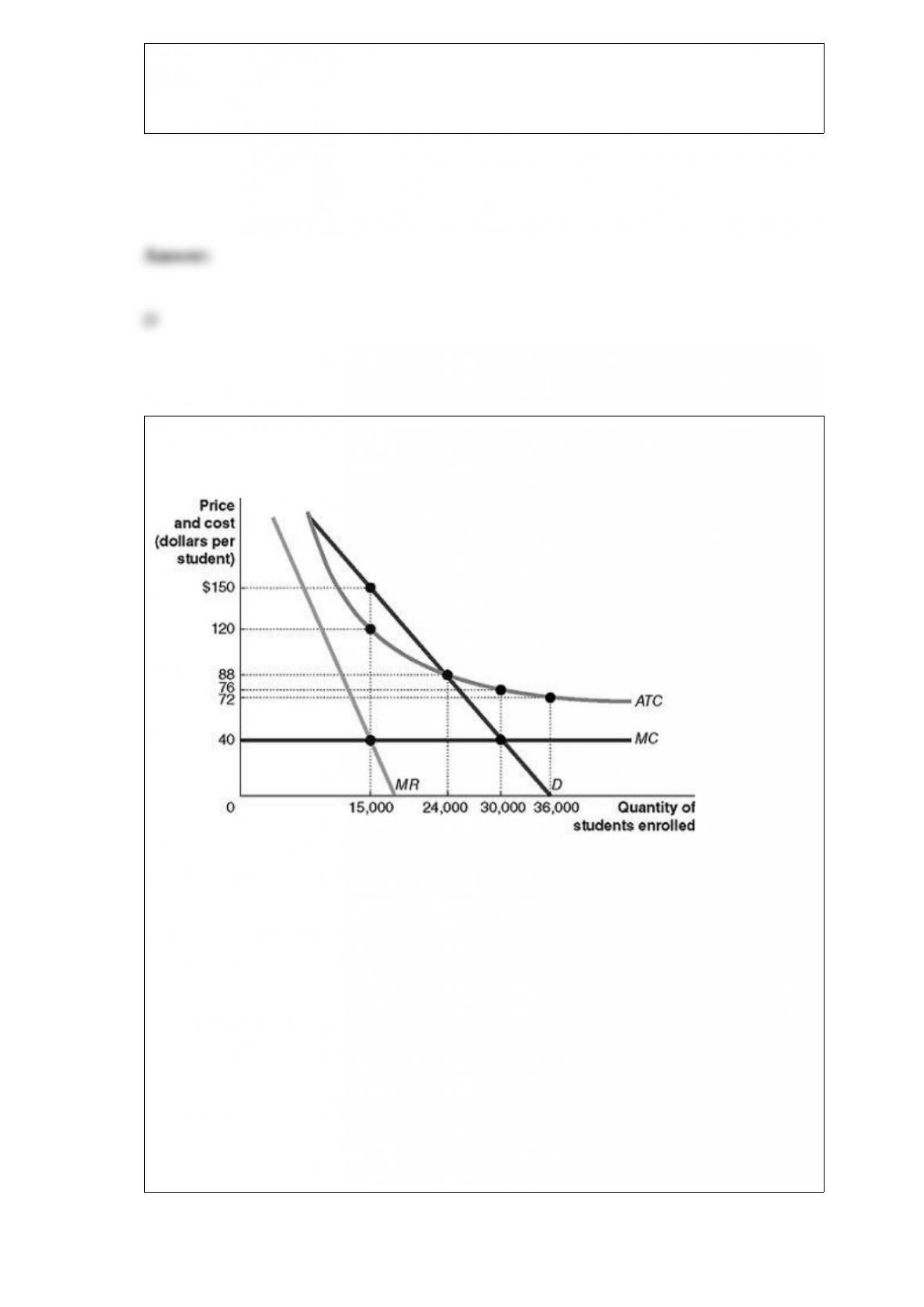
Figure 15-17
Your college decides to offer a psychology course as a MOOC that can be taken by
students anywhere in the world, whether they are actually enrolled in your college or
not. The demand and cost situation for the MOOC is shown in the figure.
Refer to Figure 15-17. The dean of the college argues: “I think the course should be
priced to maximize the profit the college earns, so these funds can be used to pay some
other expenses.” Which price should the dean favor?
A) $0
B) $40
C) $88
D) $150

Suppose Dublin Electronics charges regular customers $90 for a Blu-ray player but
allows senior citizens to purchase the same item for $75. Is this likely to be a successful
price discriminating strategy?
A) Yes, firms price discriminate to maximize profits.
B) No, price discrimination will not be effective because the store cannot prevent senior
citizens from buying large quantities of Blu-ray players and reselling them for a profit.
C) Yes, because senior citizens are likely to have a more elastic demand and therefore
will be willing to pay a lower price compared to regular customers.
D) No, because there are many different brands of Blu-ray players and consumers will
shop around.
The Athenian Theatre sells tickets for the same play at different prices: a lower price to
those who opt for the seats at the back of the theatre and a higher price for those who
purchase seats in the front, around the stage. Which of the following statements is true?
A) This is an example of product differentiation but not price discrimination.
B) The theatre practices first-degree price discrimination by setting prices based on
willingness to pay.
C) Since the cost of producing the play does not change with the seating configuration,
this is evidence of price discrimination based on market segmentation.
D) Charging two different prices is an effective way to avoid an excess demand for play
tickets; the higher price lowers quantity demanded to some extent.

New York Times writer Michael Lewis wrote that “The sad truth, for investors, seems to
be that most of the benefits….are passed through to consumers free of charge.” To
which of the following did Lewis refer?
A) apple farming in New York state
B) the Enron accounting scandal
C) the medical screening industry
D) new technologies developed in the 1990s
The basic economic problem of ________ has always existed and will continue to exist.
A) scarcity
B) efficiency
C) inflation
D) recession
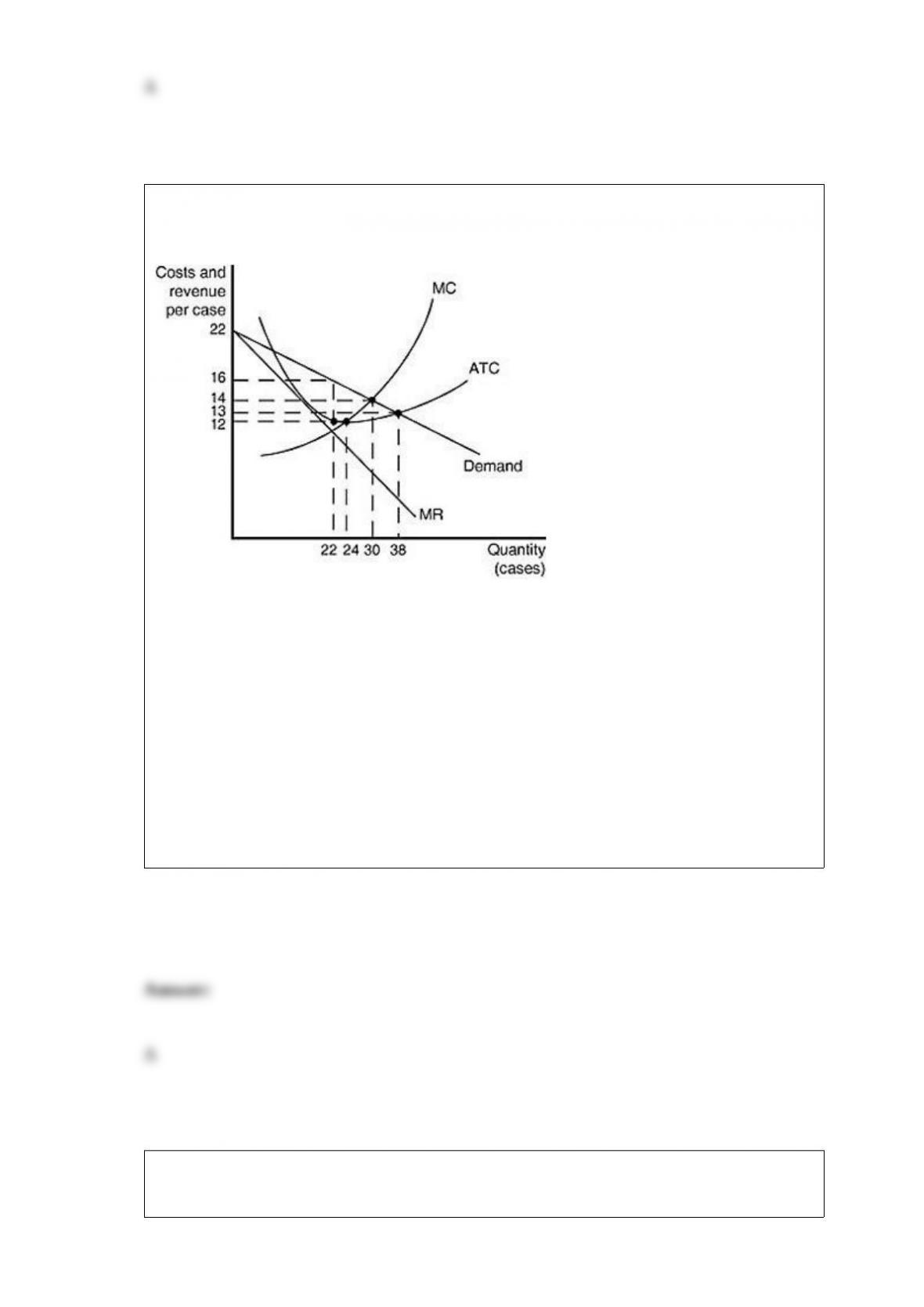
Figure 13-8
Figure 13-8 shows cost and demand curves for a monopolistically competitive producer
of iced tea.
Refer to Figure 13-8. What is the profit-maximizing output level?
A) 22 cases
B) 24 cases
C) 30 cases
D) 38 cases
Figure 5-16
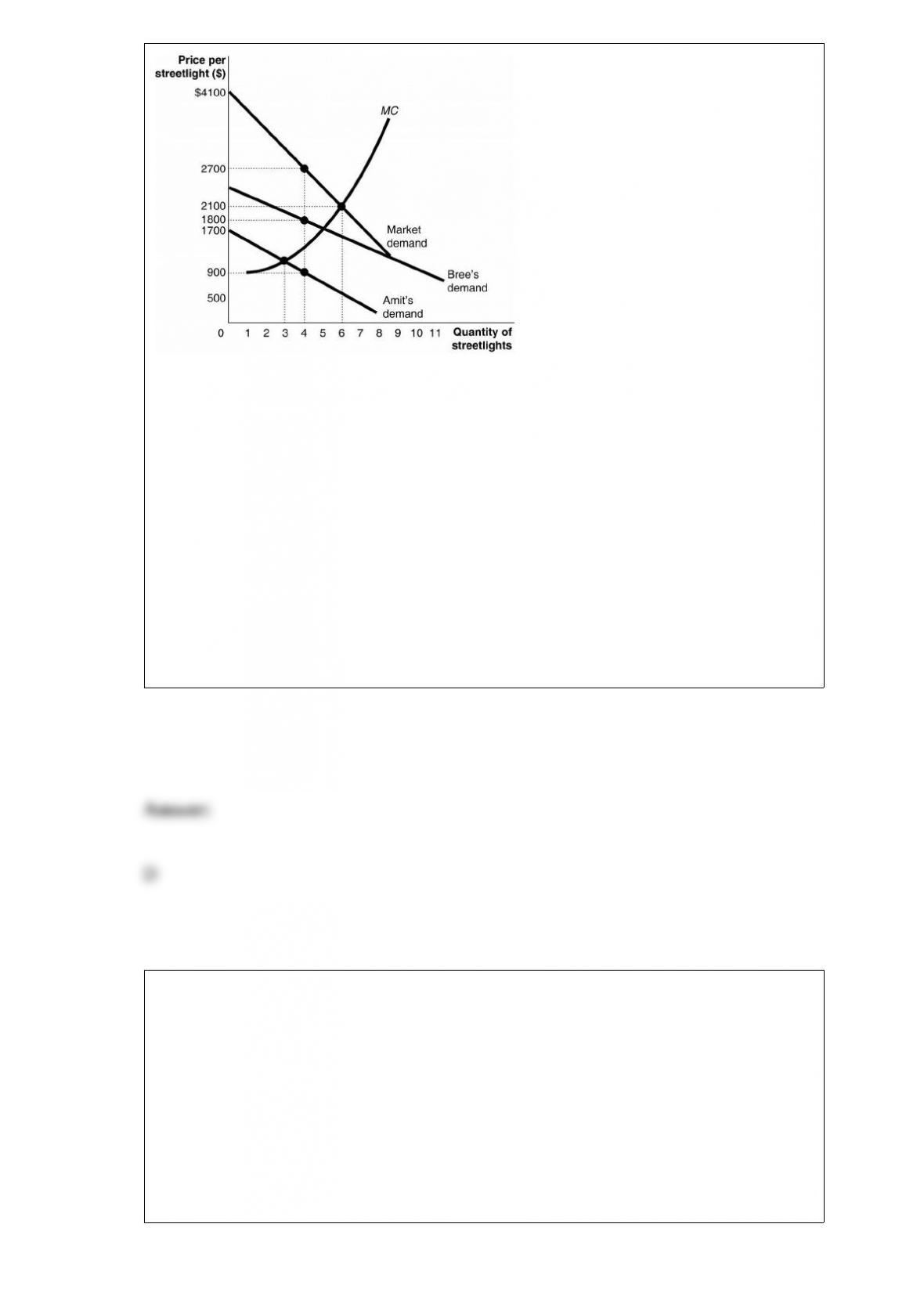
Amit and Bree are the only two homeowners on an isolated private road. Both agree
that installing street lights along the road would be beneficial and want to do so. Figure
5-16 shows their willingness to pay for different quantities of street lights, the market
demand for street lights, and the marginal cost of installing the street lights.
Refer to Figure 5-16. How much is Amit willing to pay to have 4 street lights installed?
A) $3,600
B) $2,700
C) $1,800
D) $900
A firm using a two-part tariff can produce the economically efficient outcome by
A) making the fixed-fee portion of the price as low as possible.
B) setting the per-unit portion of the price equal to the marginal cost of production.
C) setting the per-unit portion of the price equal to the average cost of production.
D) setting the fixed-fee portion of the price at some proportion to the fixed cost of
production.
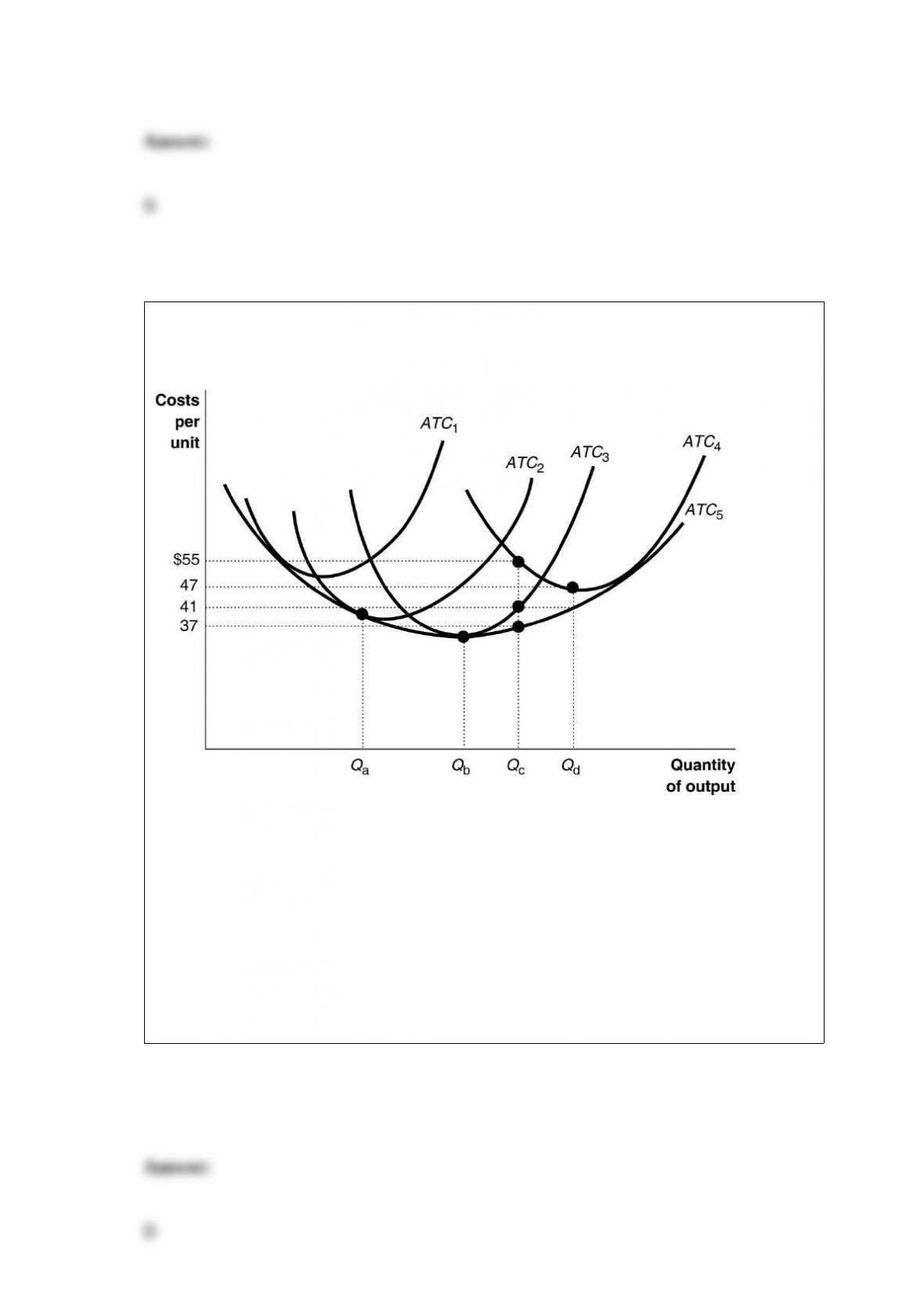
Figure 11-10
Refer to Figure 11-10. Identify the minimum efficient scale of production.
A) Qa
B) Qb
C) Qc
D) Qd

The price elasticity of demand is equal to
A) the value of the slope of the demand curve.
B) the change in quantity demanded divided by the change in price.
C) the percentage change in price divided by the percentage change in quantity
demanded.
D) the percentage change in quantity demanded divided by the percentage change in
price.
All of the following would be considered explicit costs of operating a business except
A) rent paid to a landlord.
B) bonuses paid to employees.
C) a normal rate of return for investors.
D) corporate income taxes.
Painters who paint water towers earn higher wages relative to painters who paint houses
because
A) the demand for tower painters is greater than the demand for residential painters.
B) painting water towers is more risky than painting houses.
C) the tower painters’ union is probably more powerful than the house painters’ union.
D) the supply of water tower painters exceeds the supply of house painters.
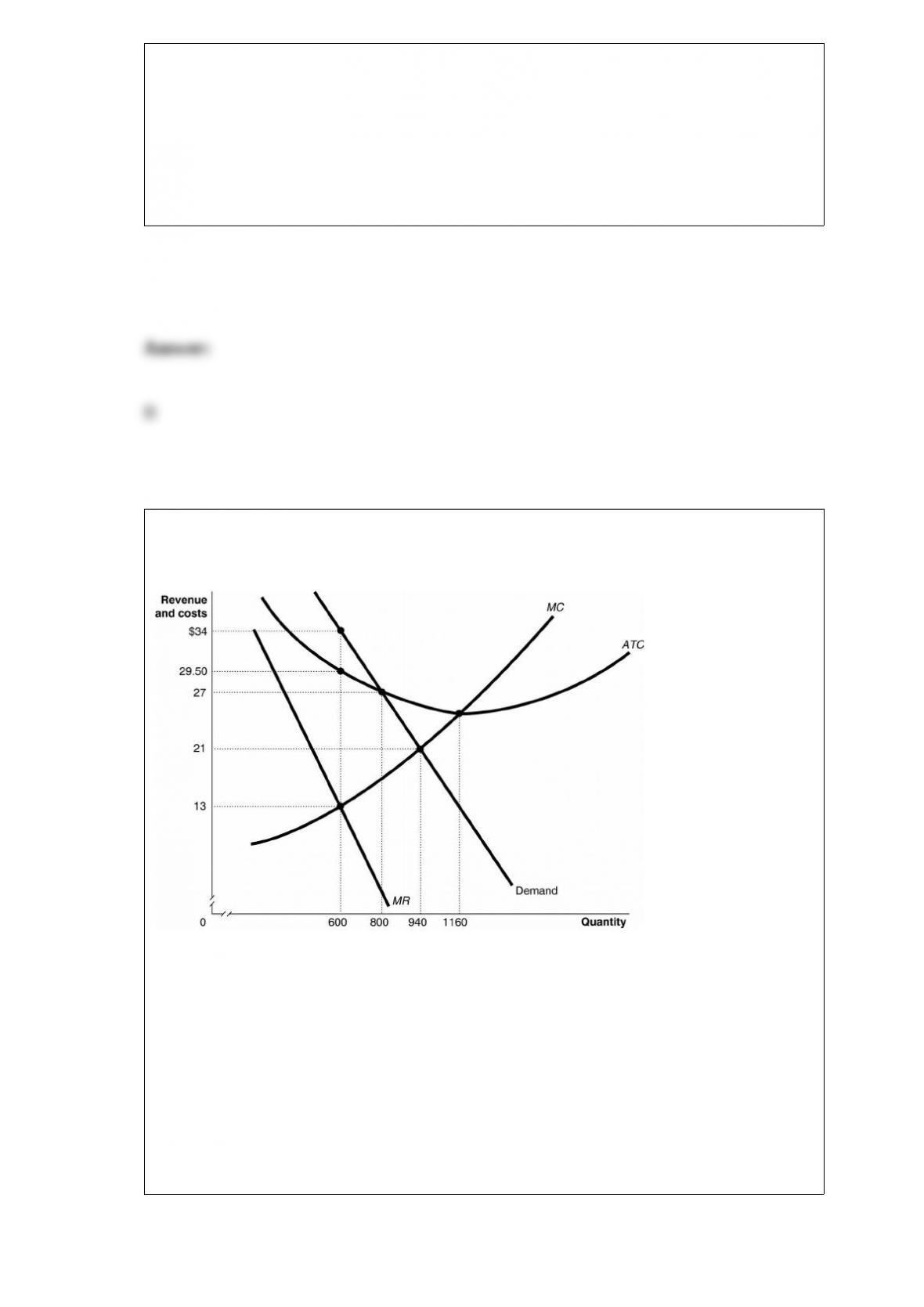
Figure 15-4
Figure 15-4 shows the demand and cost curves for a monopolist.
Refer to Figure 15-4. What is the amount of the monopoly’s total cost of production?
A) $21,600
B) $17,700
C) $9,340
D) $7,800
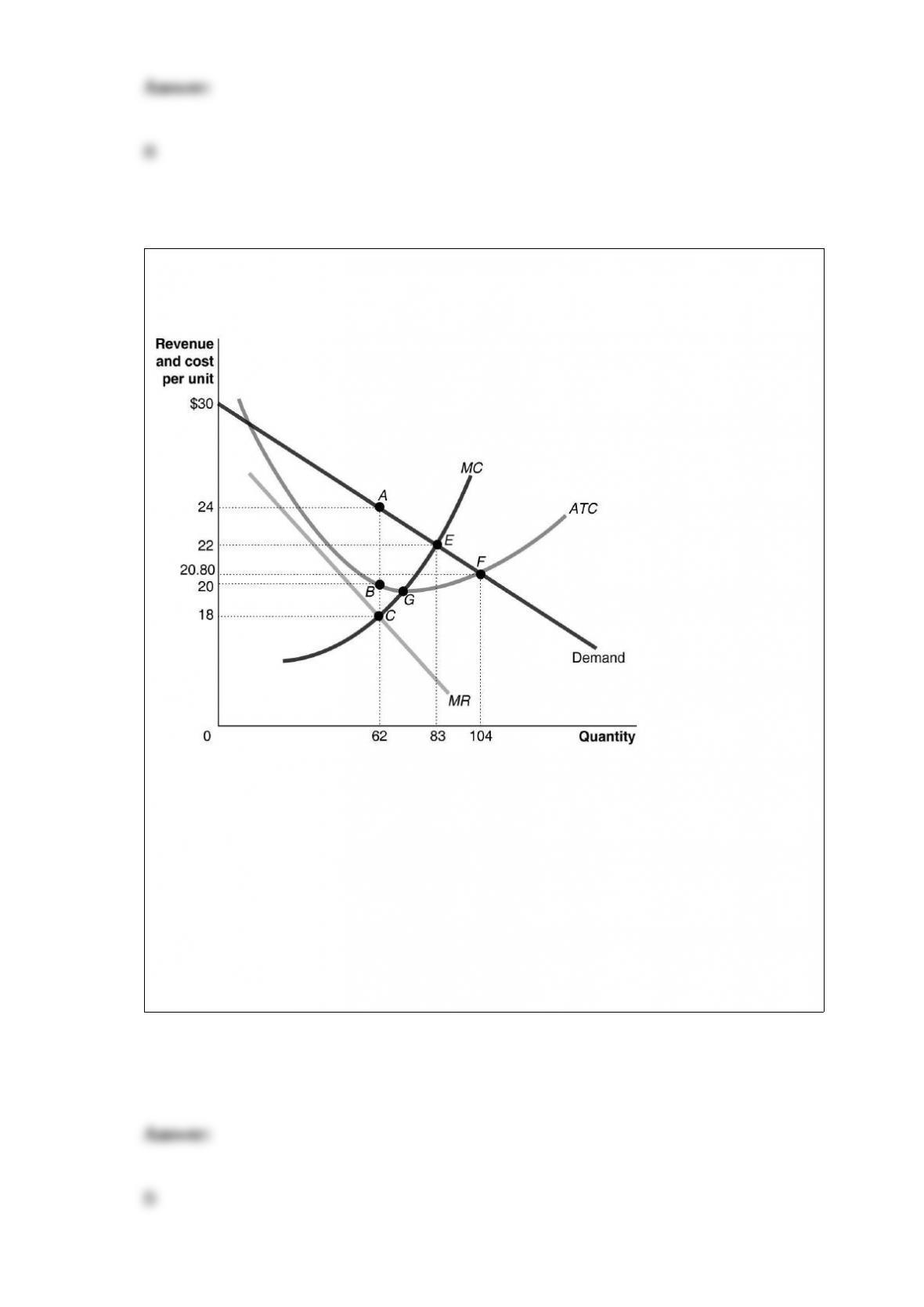
Figure 15-6
Figure 15-6 shows the cost and demand curves for a monopolist.
Refer to Figure 15-6. The monopolist’s total revenue is
A) $1,116.
B) $1,488.
C) $1,726.40
D) $1,826.
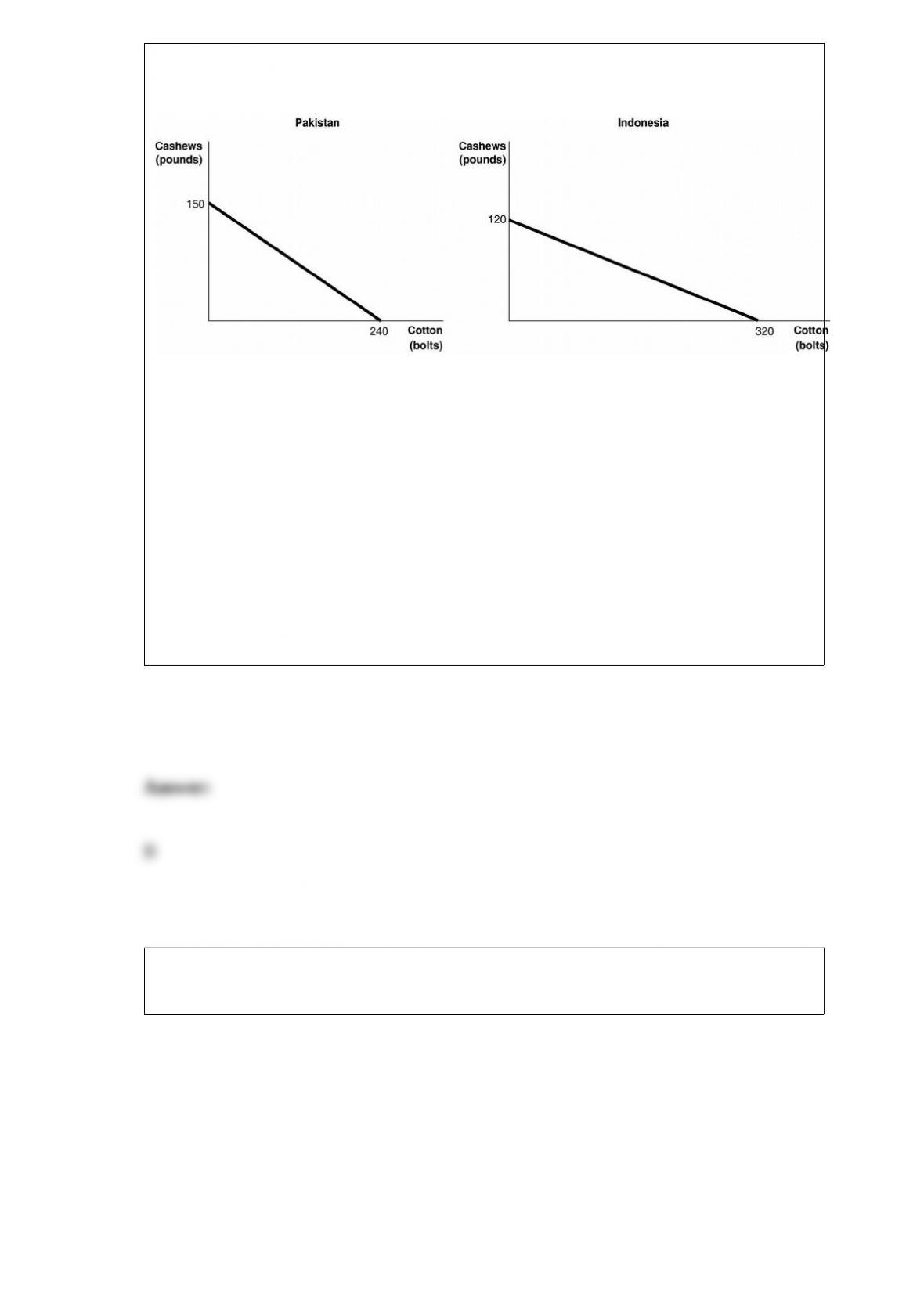
Figure 2-9
Figure 2-9 shows the production possibilities frontiers for Pakistan and Indonesia. Each
country produces two goods, cotton and cashews.
Refer to Figure 2-9. What is the opportunity cost of producing 1 bolt of cotton in
Pakistan?
A) 3/8 of a pound of cashews
B) 5/8 of a pound of cashews
C) 1 3/5 pounds of cashews
D) 150 pounds of cashews
Table 10-1
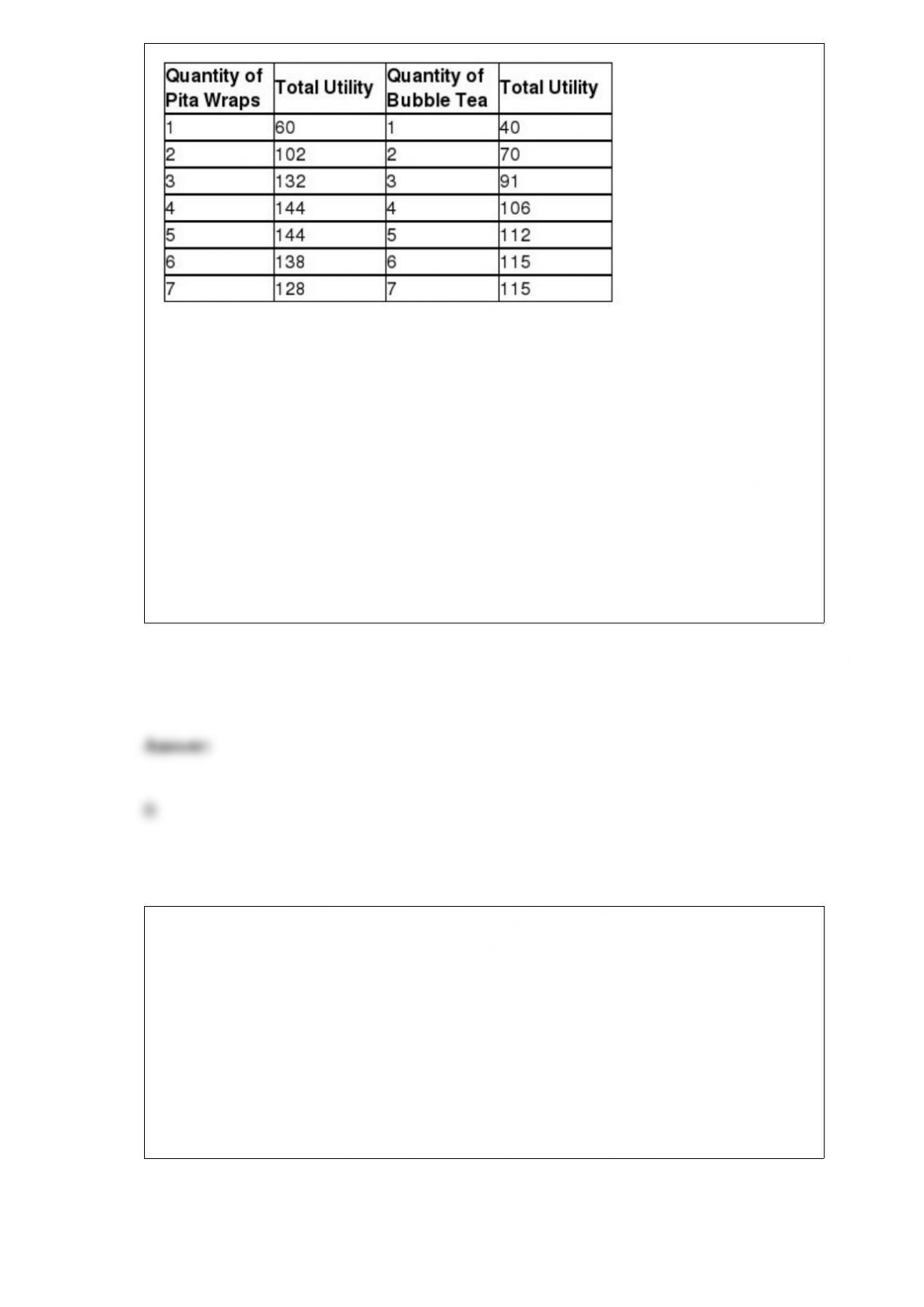
Keegan has $30 to spend on Pita Wraps and Bubble Tea. The price of a Pita Wrap is $6
and the price of a glass of Bubble Tea is $3. Table 10-1 shows his total utility from
different quantities of the two items.
Refer to Table 10-1. What is Keegan’s optimal consumption bundle?
A) 3 pita wraps and 3 bubble teas
B) 3 pita wraps and 4 bubble teas
C) 4 pita wraps and 2 bubble teas
D) 5 pita wraps and 0 bubble teas
Why does a monopoly cause a deadweight loss?
A) because it does not produce some output for which marginal benefit exceeds
marginal cost
B) because it appropriates a portion of consumer surplus for itself
C) because it increases producer surplus at the expense of consumer surplus
D) because it does not produce some output for which demand exceeds supply

Which of the following is one reason why the income of small family farms has
decreased over time?
A) Technology has increased farm productivity and market supply.
B) The demand for farm products is price elastic.
C) The demand for farm products is income inelastic.
D) The U.S. population has increased greatly since 1950.
The size of a deadweight loss in a market is reduced by
A) government legislating a ceiling price.
B) government legislating a price floor.
C) market price being close to marginal cost.
D) creative destruction.
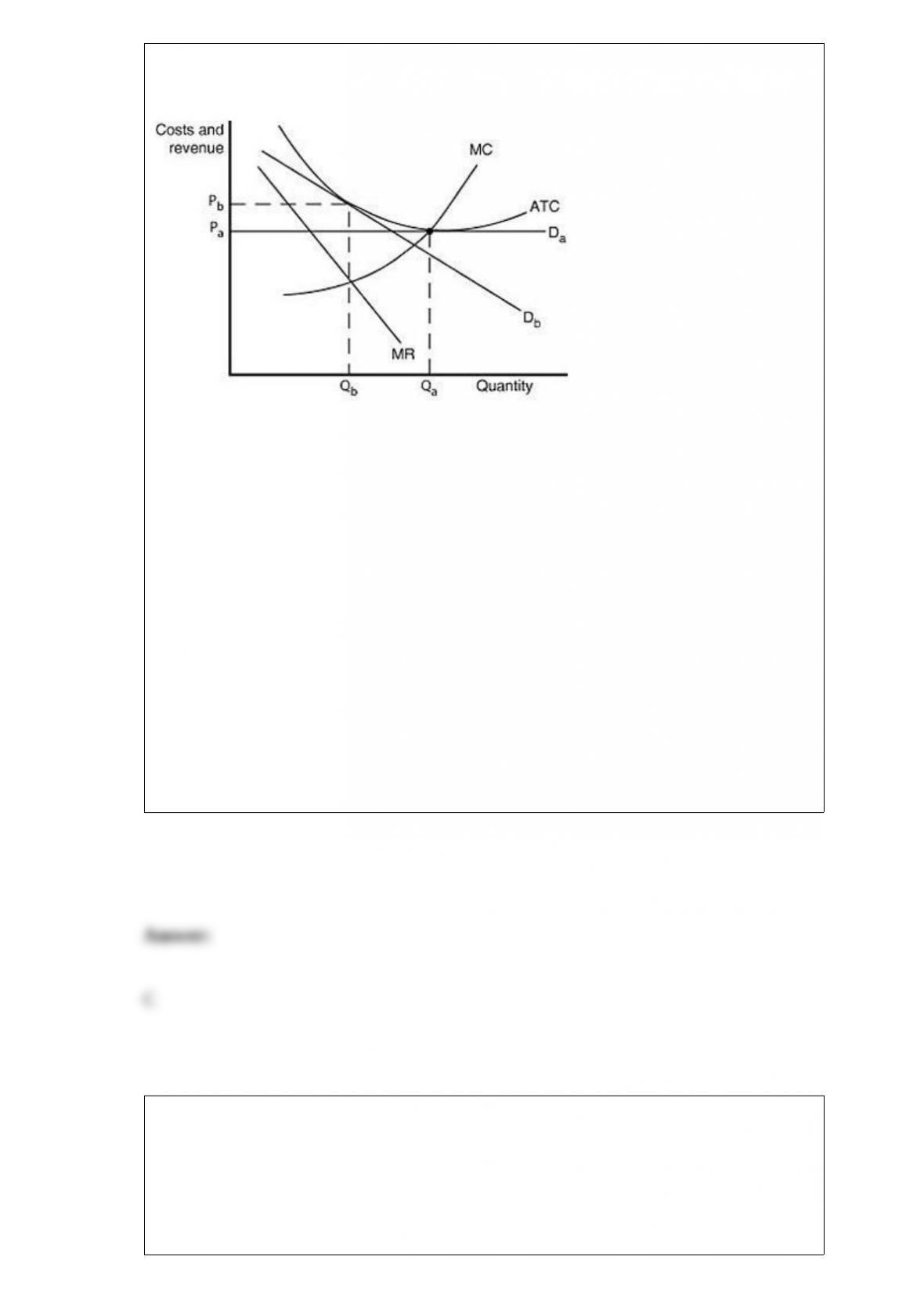
Figure 13-18
Refer to Figure 13-18. Which of the following statements is true?
A) Da represents the long-run demand curve facing a monopolistic competitor in a
constant-cost industry while Dbdepicts the demand curve in the short run.
B) Da represents the long-run demand curve facing a monopolistic competitor in a
constant-cost industry while Db depicts the long-run demand curve in an increasing-cost
industry.
C) Da represents the long-run demand curve facing a perfect competitor while
Dbdepicts the long-run demand curve facing a monopolistic competitor.
D) Da represents the long-run supply curve in a perfectly competitive, constant-cost
industry while Dbdepicts the long-run demand curve facing a monopolistic competitor
in a decreasing-cost industry.
A tariff is
A) a limit placed on the quantity of goods that can be imported into a country.
B) a tax imposed by a government on goods imported into a country.

C) a subsidy granted to importers of a vital input.
D) a health and safety restriction imposed on an imported product.
The total value to society of having garbage removed is greater than the value of
baseball games. Why, then, are baseball players paid more than garbage collectors?
A) Although the total value of garbage removal is greater than the total value of
baseball, wages are determined by average values.
B) Garbage removal results in significant external benefits that are not captured in the
price paid for garbage removal. As a result, wages of garbage collectors do not reflect
their social benefits.
C) There is greater competition in the garbage collection industry than there is in Major
League Baseball.
D) Wages do not depend on total values but marginal values. The marginal revenue
product of baseball players exceeds the marginal revenue product of garbage collectors.
Suppose when the price of laptops fall, college students buy more laptops. This implies
that
A) there is a positive relationship between laptop prices and quantities purchased by
college students.
B) there is a negative relationship between laptop prices and quantities purchased by

college students.
C) there is a direct relationship between laptop prices and quantities purchased by
college students.
D) there is a one-to-one relationship between laptop prices and quantities purchased by
college students.