
The Sherman Antitrust Act of 1890 is the federal antitrust law that prohibits:
a. monopolization and conspiracies to restrain trade.
b. mergers the substantially lessen competition.
c. exclusive dealing, tying contracts, and interlocking directorates.
d. unfair methods of competition in commerce.
At the efficient level of pollution, the:
a. total social costs and total social benefits of reduction are equal.
b. marginal social costs and marginal social benefits are equal.
c. marginal private costs and marginal private benefits are equal.
d. total private costs and total private benefits are equal.
A hurricane destroyed the peach crop in South Carolina. Shortly thereafter the price of
peaches rose significantly. These events suggest that a(n):
a. decrease in the supply of peaches caused the price of peaches to rise.
b. increase in the supply of peaches caused the price of peaches to rise.
c. increase in demand caused the price of peaches to rise.
d. decrease in demand caused the price of peaches to rise.
Marginal utility (MU) equals:
a. P/Q.
b. Q/TU.
c. PQ/TU.
d. TU/P.
e. TU/Q.
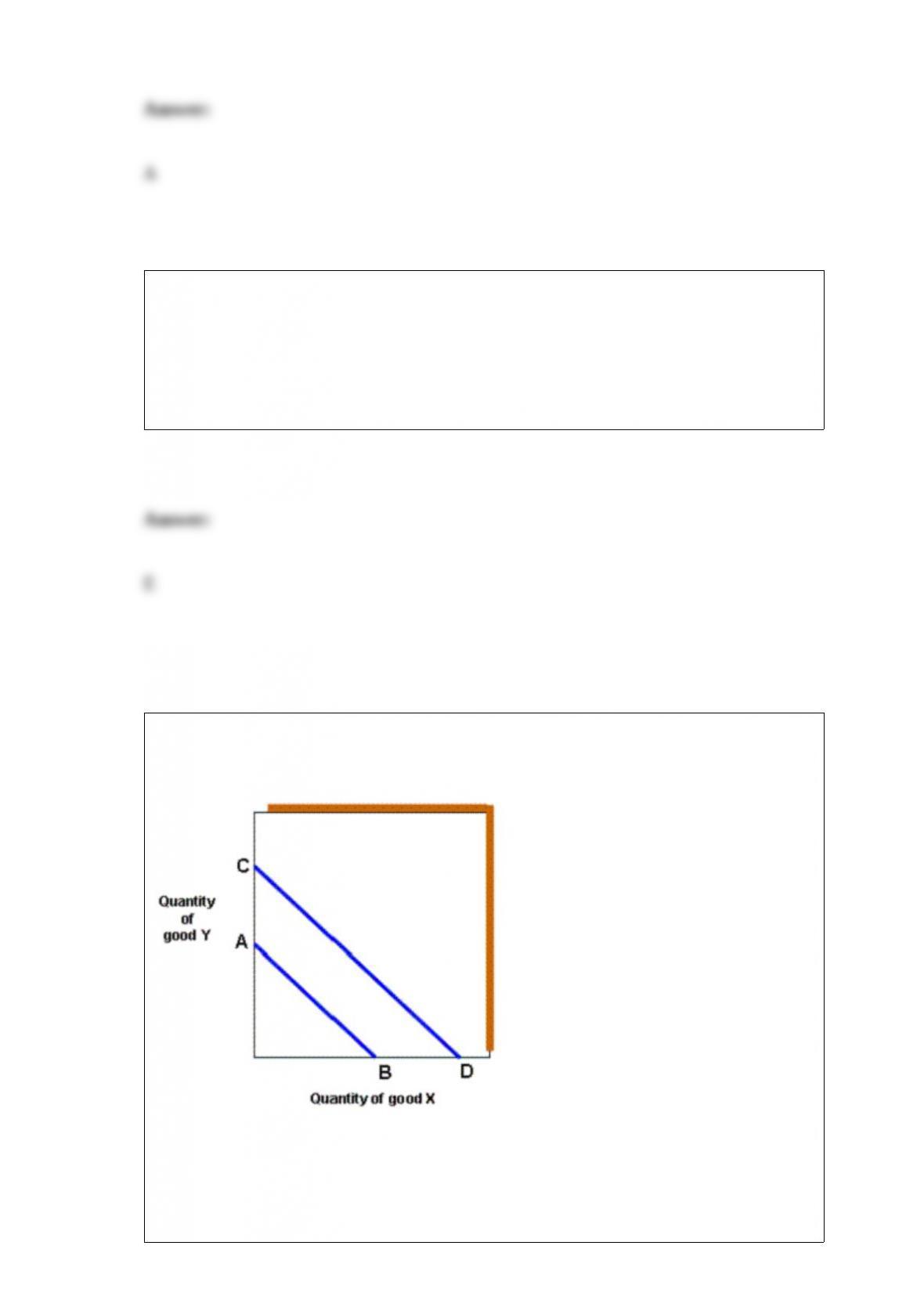
Exhibit 6A-1 Budget line
Assume the price of good Y with its quantity measured on the vertical axis is $100 and
the price of good X with its quantity measured on the horizontal axis is $10. If the
consumer’s budget is $500, then the absolute value of the slope of the budget line is:
a. 500.
b. 1/10.
c. 10.
d. 100.
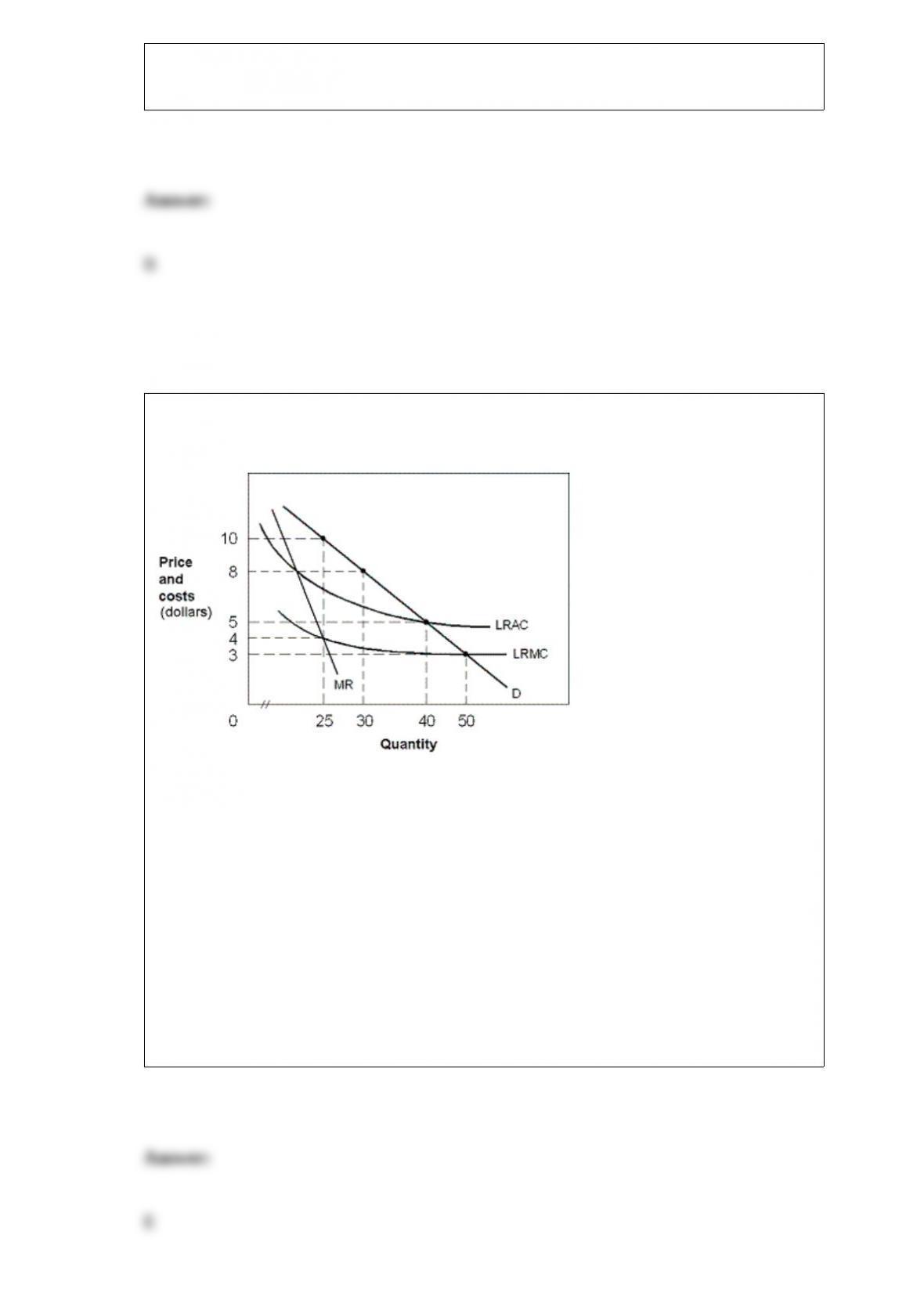
Exhibit 13-3 A monopolist
In Exhibit 13-3, if this industry is regulated and the regulatory commission wants price
to be set equal to marginal cost, the proper price and output combination to be set is:
a. price = $8; output = 25.
b. price = $8; output = 30.
c. price = $5; output = 40.
d. price = $4; output = 25.
e. price = $3; output = 50.
Suppose Japan has a comparative advantage over Canada in the production of VCRs.
This means that Japan:
a. needs fewer resources to produce DVDS than does Canada.
b. has better technology for producing DVDs than does Canada.
c. has a lower opportunity cost of DVD production than does Canada.
d. can produce more VCRs in a given period of time than can Canada.
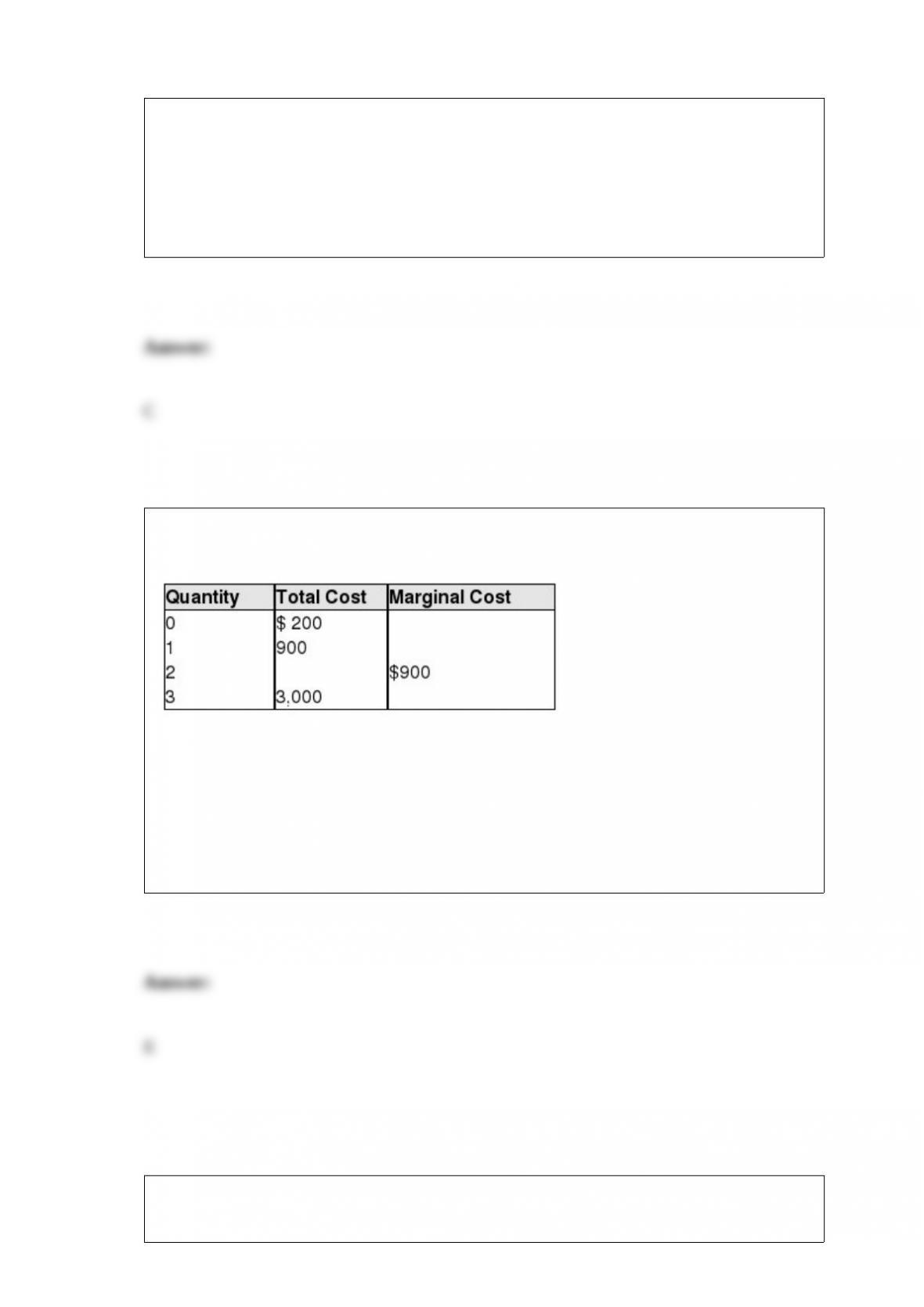
Exhibit 7-7 Cost schedule for a firm
In Exhibit 7-7, by filling in the blanks it can be determined that the total cost of the
second unit of output is:
a. 0.
b. 700.
c. 1,000.
d. 1,200.
e. 1,800.
The Clayton Act was passed in:
a. 1887.
b. 1890.
c. 1914.
d. 1936.
e. 1952.
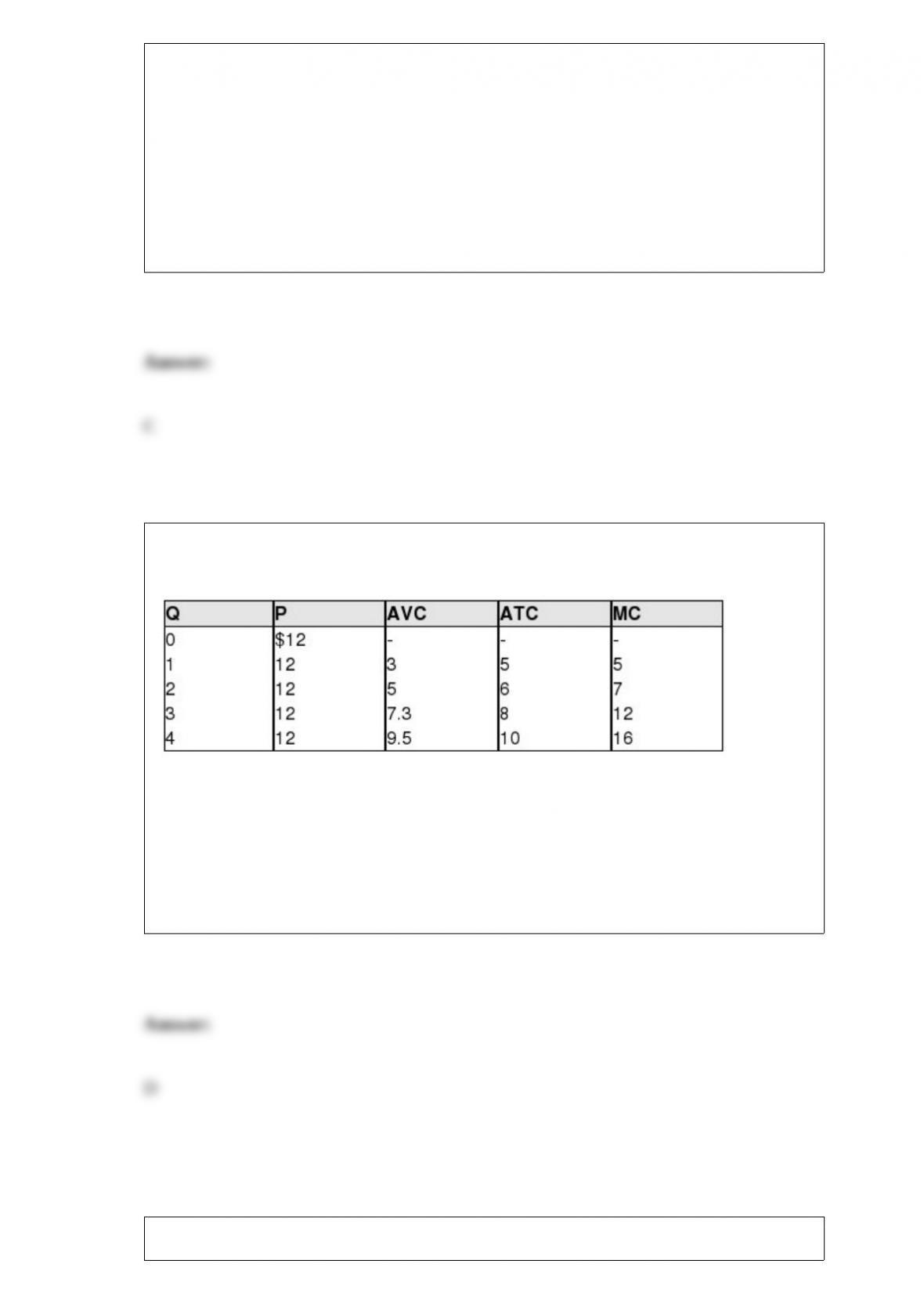
Exhibit 8-10 Price and cost data for a firm
In Exhibit 8-10, following the rule regarding MR and MC, the most profitable output
level is:
a. 0.
b. 1.
c. 2.
d. 3.
e. 4.
Suppose a firm wants to build a new factory that would add pollution to an already

polluted area. Under an offset program, the firm must:
a. install scrubbers and other government-mandated equipment.
b. purchase pollution permits from the government.
c. reduce or eliminate an old pollution source in the area.
d. pay a tax which depends on the amount of pollution created.
Assuming DVDs and DVD players are complements, the effect of an increase in the
price of DVD players on the market for DVDs is a(n):
a. downward movement along the demand curve for DVDs.
b. upward movement along the demand curve for DVDs.
c. rightward shift in the demand curve for DVDs.
d. leftward shift in the demand curve for DVDs.
The marginal revenue product of a resource:
a. is defined as the marginal product of the resource multiplied by the resource price.
b. simply means that a firm should add to its capital stock as long as competition
requires it.
c. equals the extra output produced by an additional unit of the resource multiplied by
the price of that output.
d. equals the average product of the resource multiplied by the cost of hiring an
additional (marginal) unit of the resource.

When there is a shortage of a product in a market the:
a. price will fall.
b. price must be below the equilibrium price.
c. price must be above the equilibrium price.
d. producers will reduce output and sales will fall.
When the price of a good falls, consumers buy more of the good because it is cheaper
relative to competing goods. This statement describes the:
a. consumer equilibrium effect.
b. price effect.
c. income effect.
d. substitution effect.
Explain why companies that choose low-pollution technologies will find it hard to
survive in a competitive industry.

The economically efficient car is the one with the lowest emissions.
If at some output level for a firm price exceeds average total cost, then the firm is
earning an economic profit.
The Lorenz curve is best used to measure the distribution of income.

Suppose a firm earns an accounting profit. This means the firm also earns a positive
economic profit.
If the demand curve for a good is elastic, consumers will spend more on that good when
its price increases.
Economies of scale exist over all ranges of output for which short-run average total cost
exceeds long-run average cost.
If two variables are inversely related, then they change in the same direction.

In the real world, countries use a mixture of the three basic types of economic systems.