1) Measured in terms of farm employment and the number of farms, agriculture has
been:
A.a declining industry.
B.an expanding industry.
C.a stable industry.
D.a volatile industry.
2) Bilateral monopoly occurs where:
A.a monopsonistic employer bargains with an inclusive union.
B.a monopsonistic employer bargains with an exclusive union.
C.a craft union bargains with a purely competitive employer.
D.an industrial union bargains with a purely competitive employer.
3) under pure competition in the long run:
a.neither allocative efficiency nor productive efficiency are achieved.
b.both allocative efficiency and productive efficiency are achieved.
c.productive efficiency is achieved, but allocative efficiency is not.
d.allocative efficiency is achieved, but productive efficiency is not.
4) at the output level defining allocative efficiency:
a.the areas of consumer and producer surplus necessarily are equal.
b.marginal benefit exceeds marginal cost the by the greatest amount.
c.consumer surplus exceeds producer surplus by the greatest amount.
d.the maximum willingness to pay for the last unit of output equals the minimum
acceptable price of that unit of output.
5) which of the following goods will least likely suffer a decline in demand during a
recession?
a.dinner at a nice restaurant
b.ipods
c.toothpaste
d.plasma screen and lcd tvs
6) The following are hypothetical exchange rates: $1 = 140 yen; 1 Swiss franc = $.10.
We can conclude that:
A.1 yen = 280 Swiss francs.
B.1 yen = 14 Swiss francs.
C.1 Swiss franc = 28 yen.
D.1 Swiss franc = 14 yen.
7)
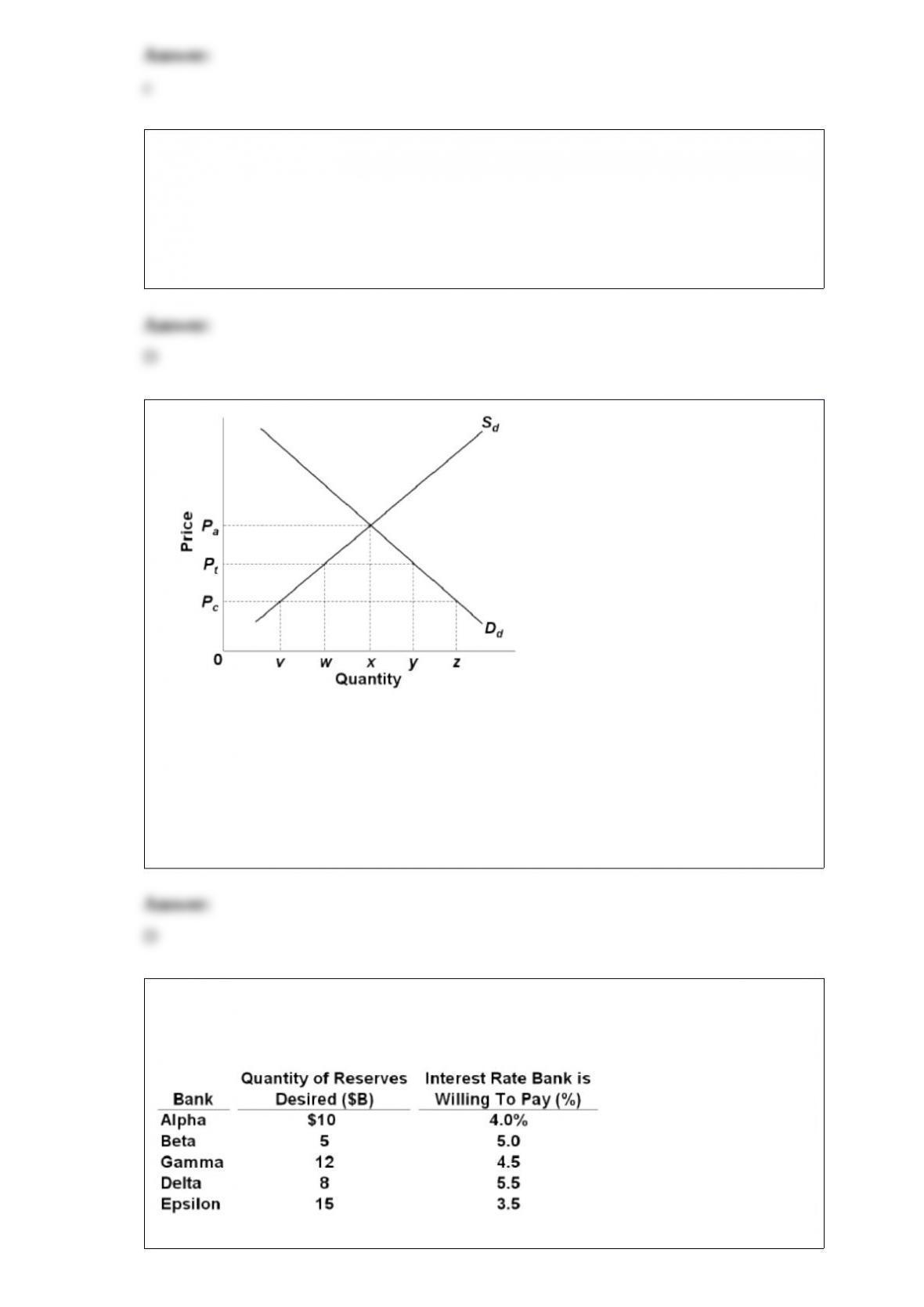
Refer to the above diagram, where Sd and Dd are the domestic supply and demand for a
product and Pc is the world price of that product. With a PcPt per unit tariff, per unit
revenue received by domestic and foreign producers respectively will be:
A.Pc and Pa.
B.Pa and Pc.
C.Pa and Pt.
D.Pt and Pc.
8) The following information: The Fed is going to auction $30 billion in reserves using
the term auction facility. It receives the following bids:
Refer to the above information. As a result of the auction, how much and at what
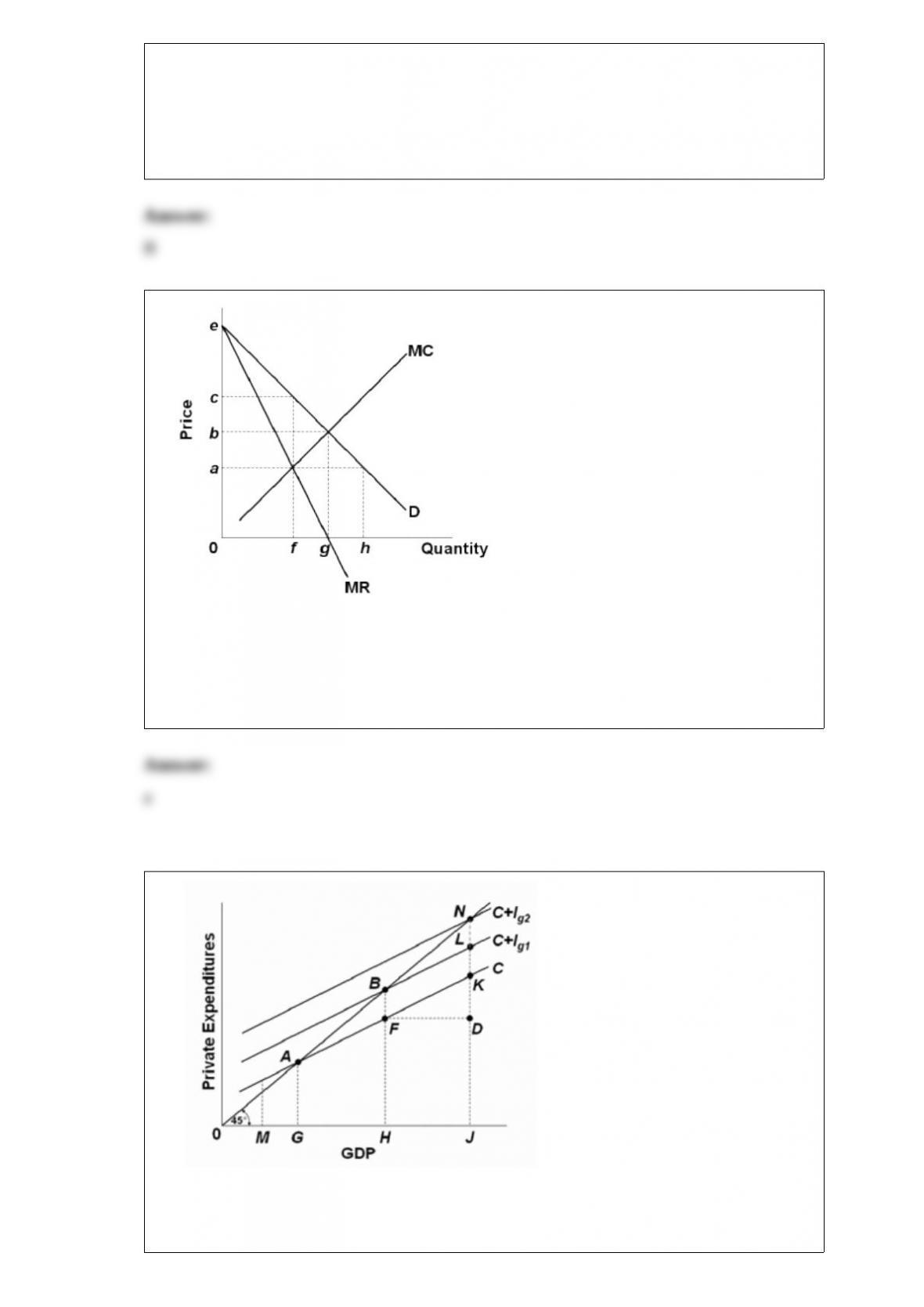
interest rate will Delta bank borrow?
A.$8 billion; 5.5 percent
B.$8 billion; 4 percent
C.$0; 4.5 percent (rate charged winning bidders)
D.$3 billion; 4 percent
9)
refer to the above diagram for a pure monopolist. monopoly profit:
a.cannot be determined from the information given.
b.will be ae per unit sold.
c.will be bc per unit sold.
d.will be ac per unit sold.
10)
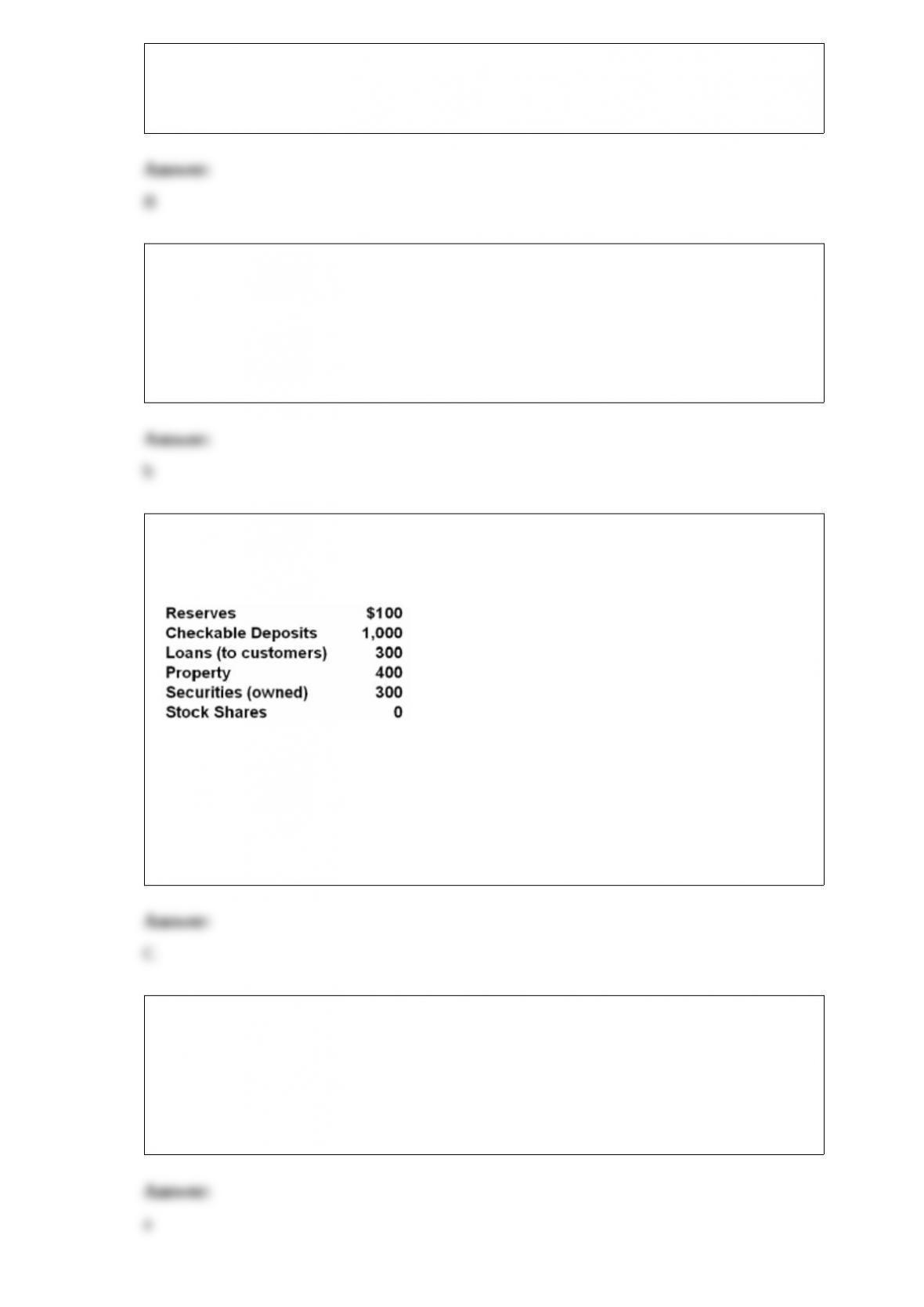
Refer to the above diagram that applies to a private closed economy. The slope of the
consumption schedule in this figure reveals that the:
A.MPS rises as income rises.
B.MPC is constant.
C.APC is constant.
D.APC increases as income increases.
11) it is generally agreed that in the long run the cost of private health insurance
provided by employers is:
a.at the expense of business profits.
b.at the expense of real wages.
c.paid by taxpayers through government.
d.included as taxable income for income tax purposes.
12) The following information for the Moolah Bank.
Refer to the above information. If Moolah Bank is legally “loaned up,” the banking
system’s monetary multiplier must be:
A.5.
B.8.
C.10.
D.20.
13) the relationship between quantity supplied and price is _____ and the relationship
between quantity demanded and price is _____.
a.direct, inverse
b.inverse, direct
c.inverse, inverse
d.direct, direct