1) to help developing nations strengthen their international competitiveness, many
industrial nations have granted nonreciprocal tariff reductions to developing nations
under the:
a.international commodity agreements program
b.multilateral contract program
c.generalized system of preferences program
d.export-led growth program
2) by the mid-1990s, the european union had essentially achieved the common market
stage of economic integration.
a.true
b.false
3) assume that canada initially faces payments equilibrium in its merchandise trade
account as well as in its capital and financial account. now suppose that canadian
interest rates increase to levels higher than those abroad. for canada, this tends to
promote:
a.net financial inflows
b.net financial outflows
c.net merchandise exports
d.net merchandise imports
4) a joint venture leads to increases in national welfare if its cost-reduction effect is due
to productivity gains and if it more than offsets the market-power effect.
a.true
b.false
5) because the balance of payments is a record of the economic transactions of a
country over a period of time, it is a “flow” concept.
a.true
b.false
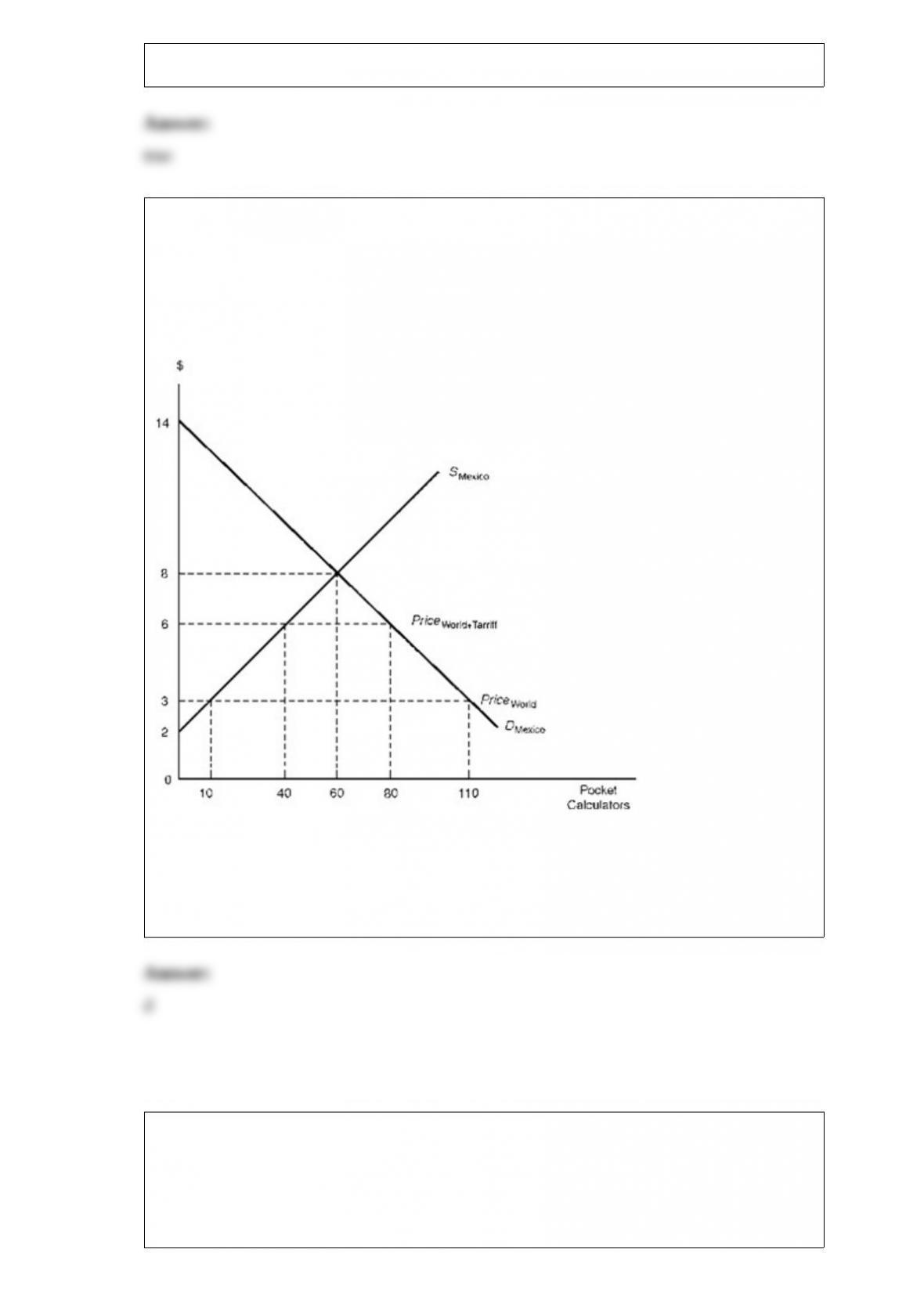
6) figure 4.1 illustrates the demand and supply schedules for pocket calculators in
mexico, a ‘small” nation that is unable to affect the world price.
figure 4.1. import tariff levied by a ‘small” country
consider figure 4.1. the tariff would be prohibitive (i.e., eliminate imports) if it equaled:
a.$2
b.$3
c.$4
d.$5
7) the uruguay round of trade negotiations lowered:
a.trade sanctions levied against south africa
b.trade sanctions levied against the soviet union
c.tariffs, but not nontariff trade barriers
d.tariffs as well as nontariff trade barriers
8) if the current account of the balance of payments registers a deficit, the capital
account registers a surplus, and vice versa.
a.true
b.false
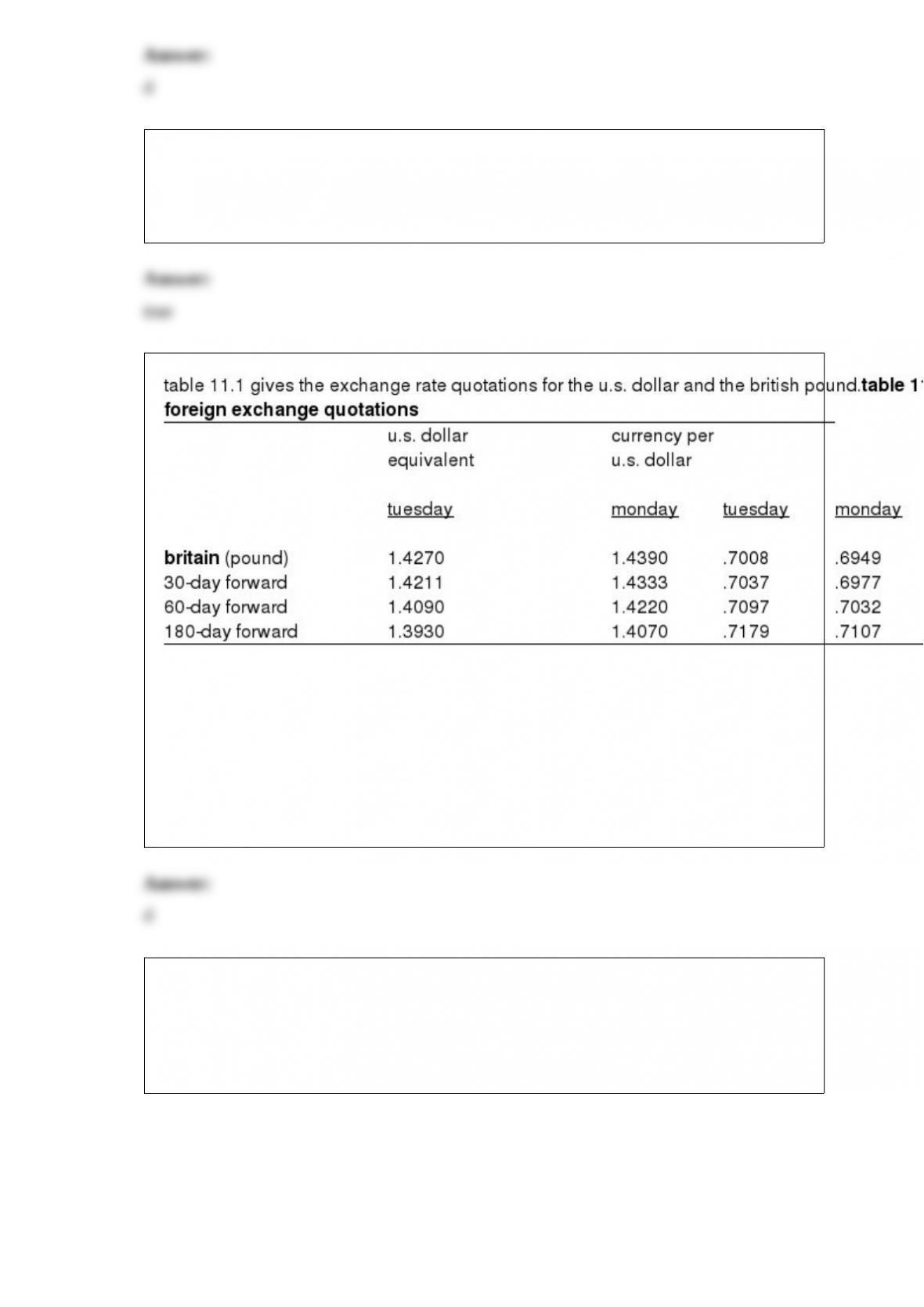
9) consider table 11.1. if one were to buy pounds for immediate delivery, on tuesday the
dollar cost of each pound would be:
a.$0.7008
b.$0.7037
c.$1.4211
d.$1.4270
10) the figure below illustrates the supply and demand schedules of swiss francs under
a system of floating exchange rates.
figure 12.2. the market for swiss francs
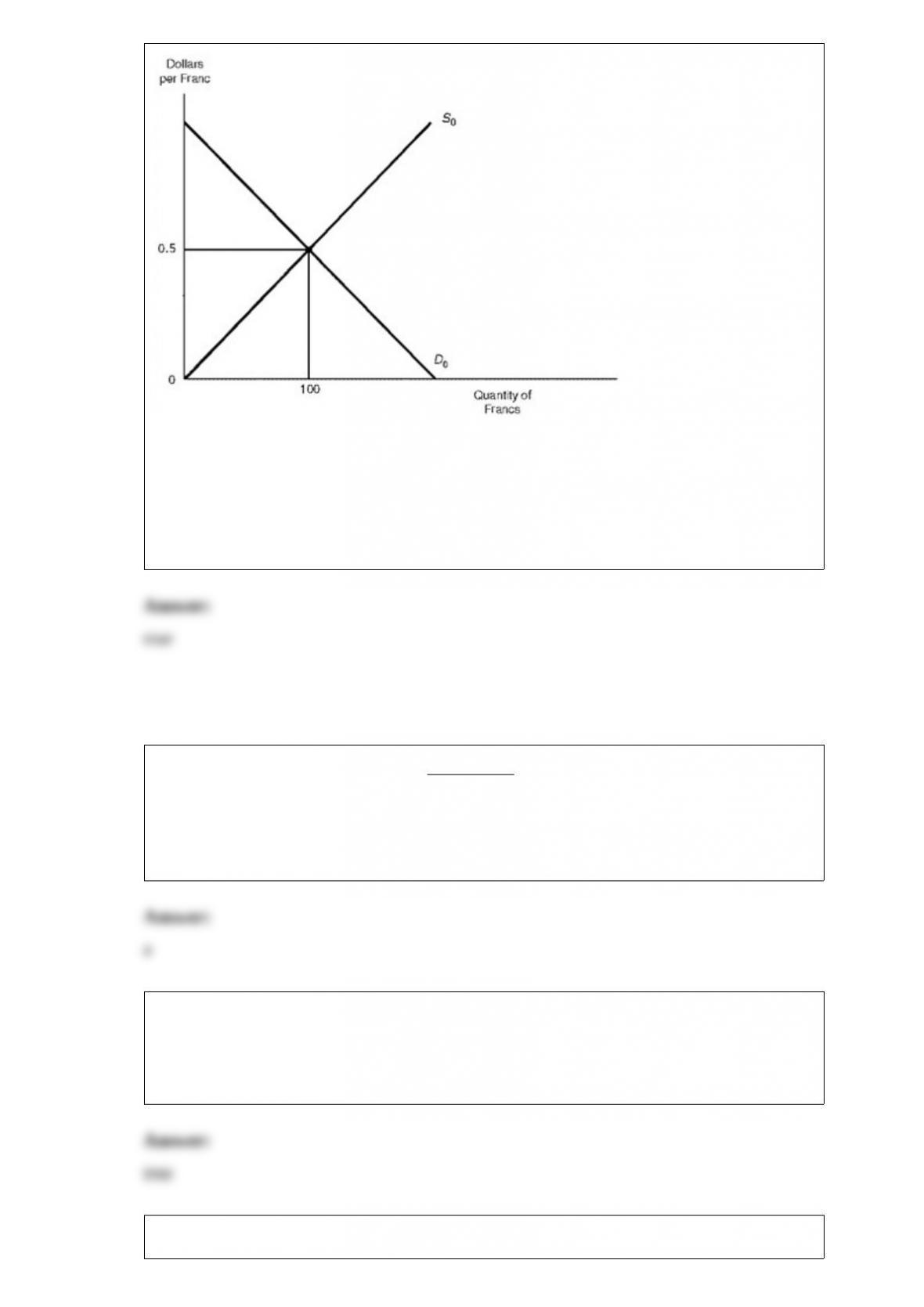
refer to figure 12.2. if the federal reserve adopts a restrictive monetary policy that leads
to relatively high interest rates in the united states, the demand for francs would
decrease, the supply of francs would increase, and the dollar’s exchange value would
appreciate.
a.true
b.false
11) as a policy instrument, currency devaluation may be controversial since it:
a.imposes hardships on the exporters of foreign countries
b.imposes hardships on exporters of the devaluing country
c.is generally followed by unemployment in the devaluing country
d.is generally followed by price deflation in the devaluing country
12) the value of the sdr is tied to a currency basket consisting of the u.s. dollar, german
mark, japanese yen, french franc, and british pound.
a.true
b.false
13) the north american free-trade agreement was most strongly opposed by u.s.:

a.electronics manufacturers
b.labor unions
c.commercial banks
d.engineering companies