
____________________ constitute(s) perhaps the most significant barrier to entry into
an oligopolistic market.
a. Patent rights
b. Exclusive ownership of essential resources
c. Legal barriers
d. Economies of scale
e. Copyrights
A bond purchaser bought a bond from which she receives $800 a year from the issuer. If
the face value of the bond is __________ then the coupon rate is __________.
a. $10,000; 10 percent
b. $8,000; 8 percent
c. $10,000; 8 percent
d. $8,000; 12 percent
e. none of the above
Exhibit 31-1
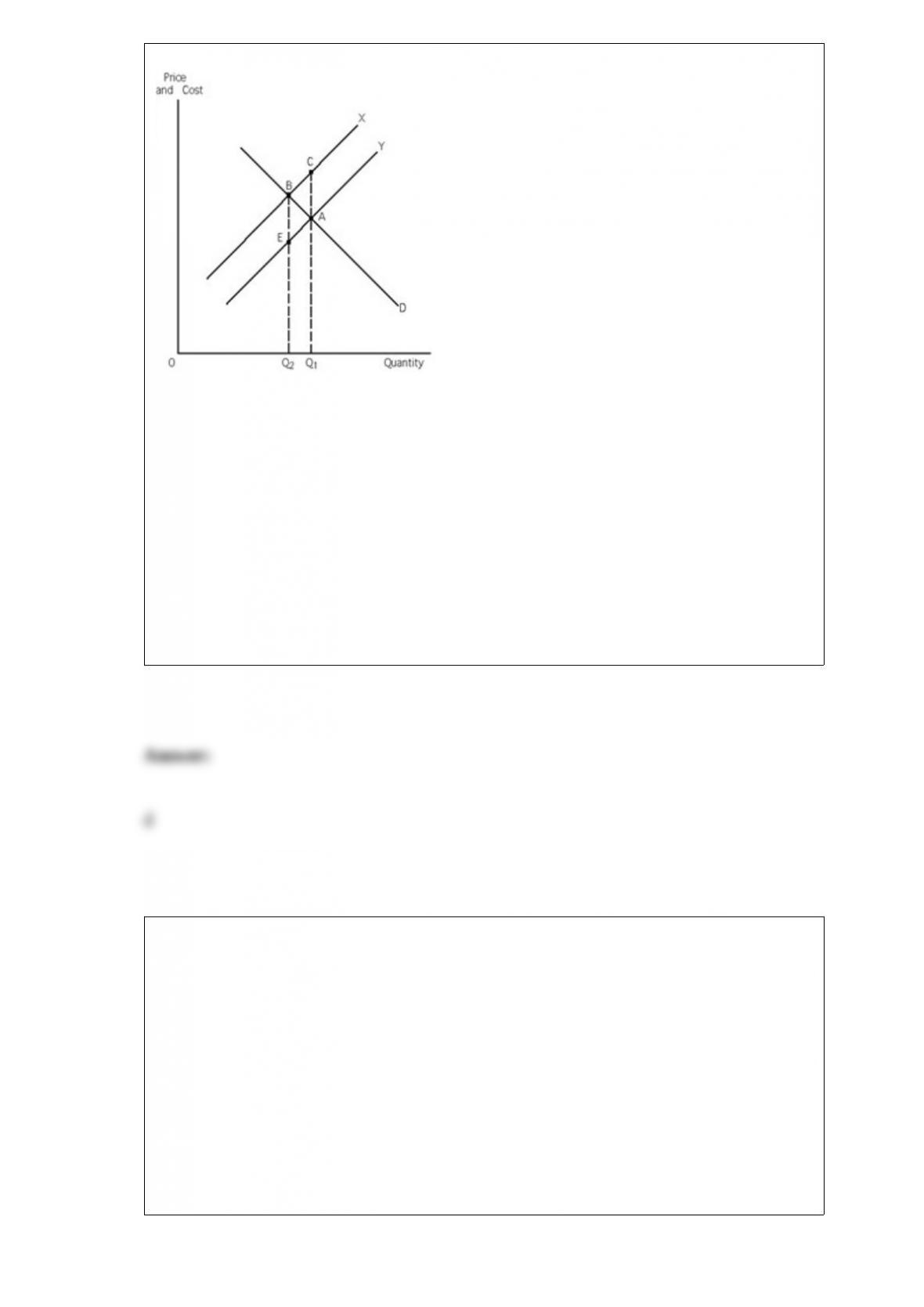
If the exhibit represents a negative externality situation, the private cost of expanding
output from Q2 to Q1 is the area of
a. ABC.
b. Q2BCQ1.
c. Q2BAQ1.
d. Q2EAQ1.
If a monopoly firm produces the quantity of output at which MR = MC, and charges a
price greater than average total cost, it necessarily
a. minimizes the difference between total fixed cost and total variable.
b. maximizes the difference between total fixed cost and total variable cost.
c. maximizes total revenue.
d. earns profit.
e. a, b, and d
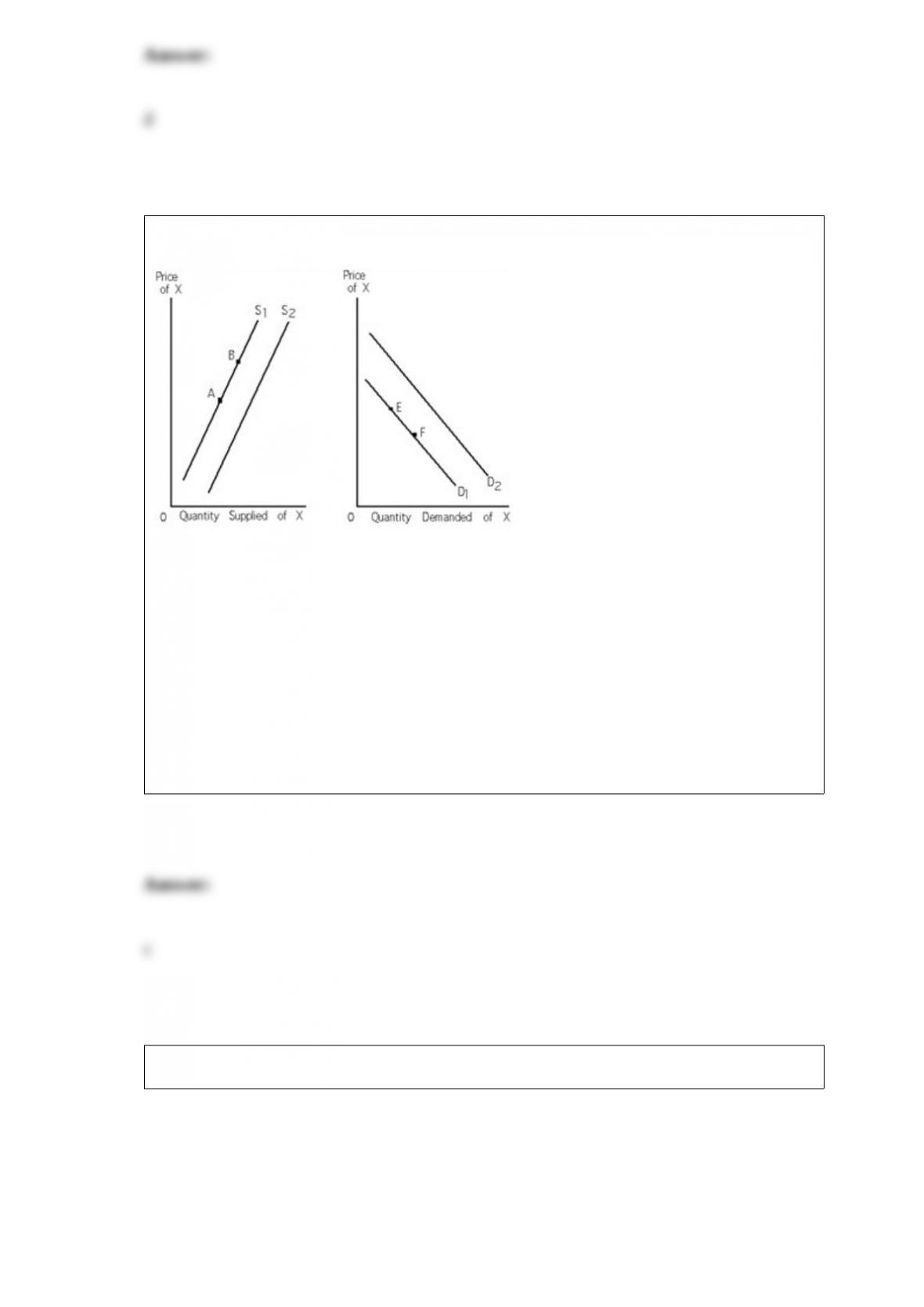
Exhibit 3-9
X is produced using input Z. If the price of Z rises, an economist would expect a
movement in the market for X from
a. E to F.
b. A to B.
c. F to E.
d. B to A.
Exhibit 30-3
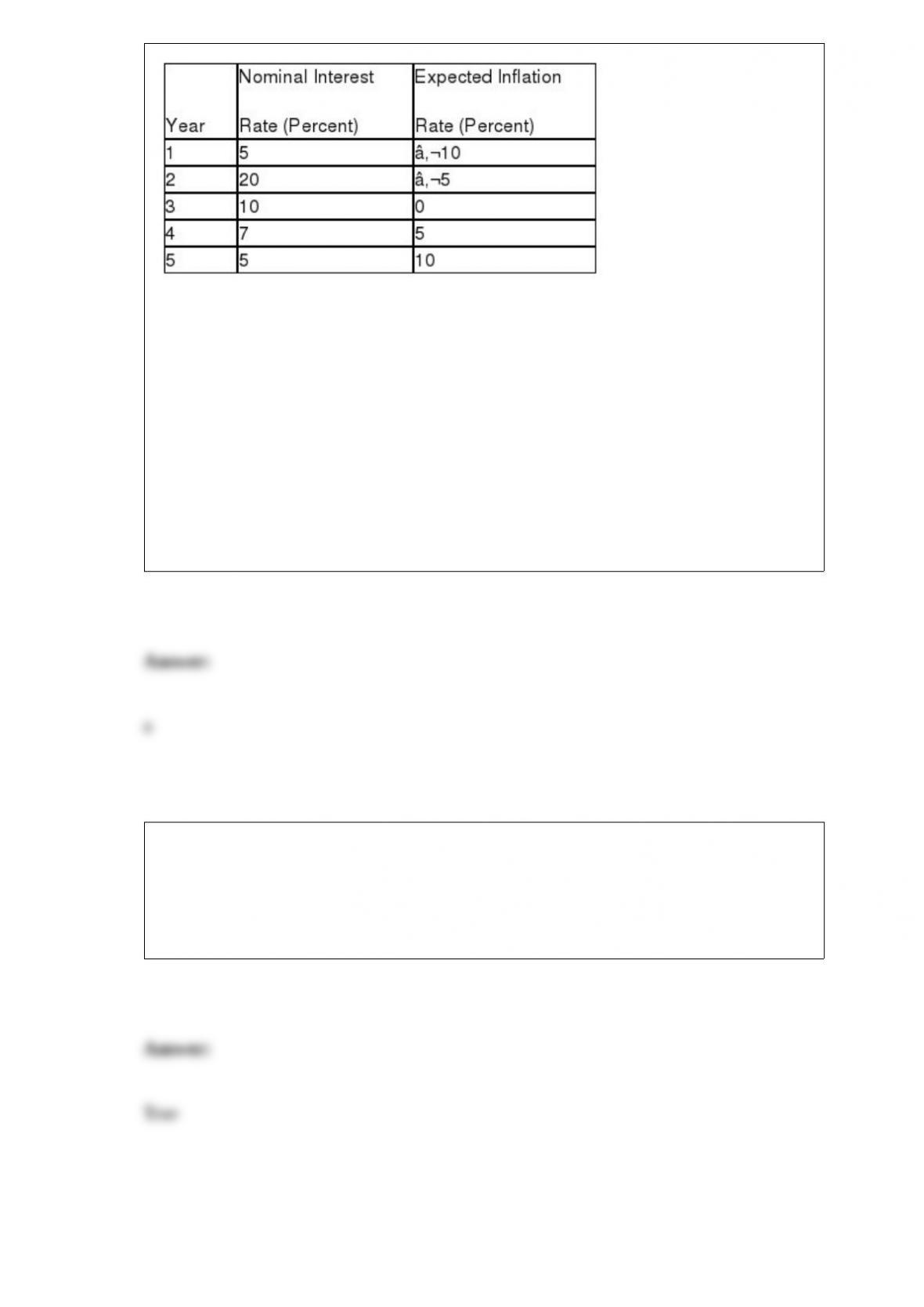
The real interest rate in year 2 is
a. 25 percent.
b. 5 percent.
c. 15 percent.
d. -25 percent.
e. -15 percent.
Scarcity occurs in both wealthy societies and poor societies.
a. True
b. False
In the short run, the best policy for a perfectly competitive firm is to
a. shut down its operation if price ever falls below average total cost.
b. produce and sell its product as long as price is greater than average variable cost.
c. shut down its operation if price falls between average total cost and average variable
cost.
d. a and c
e. none of the above
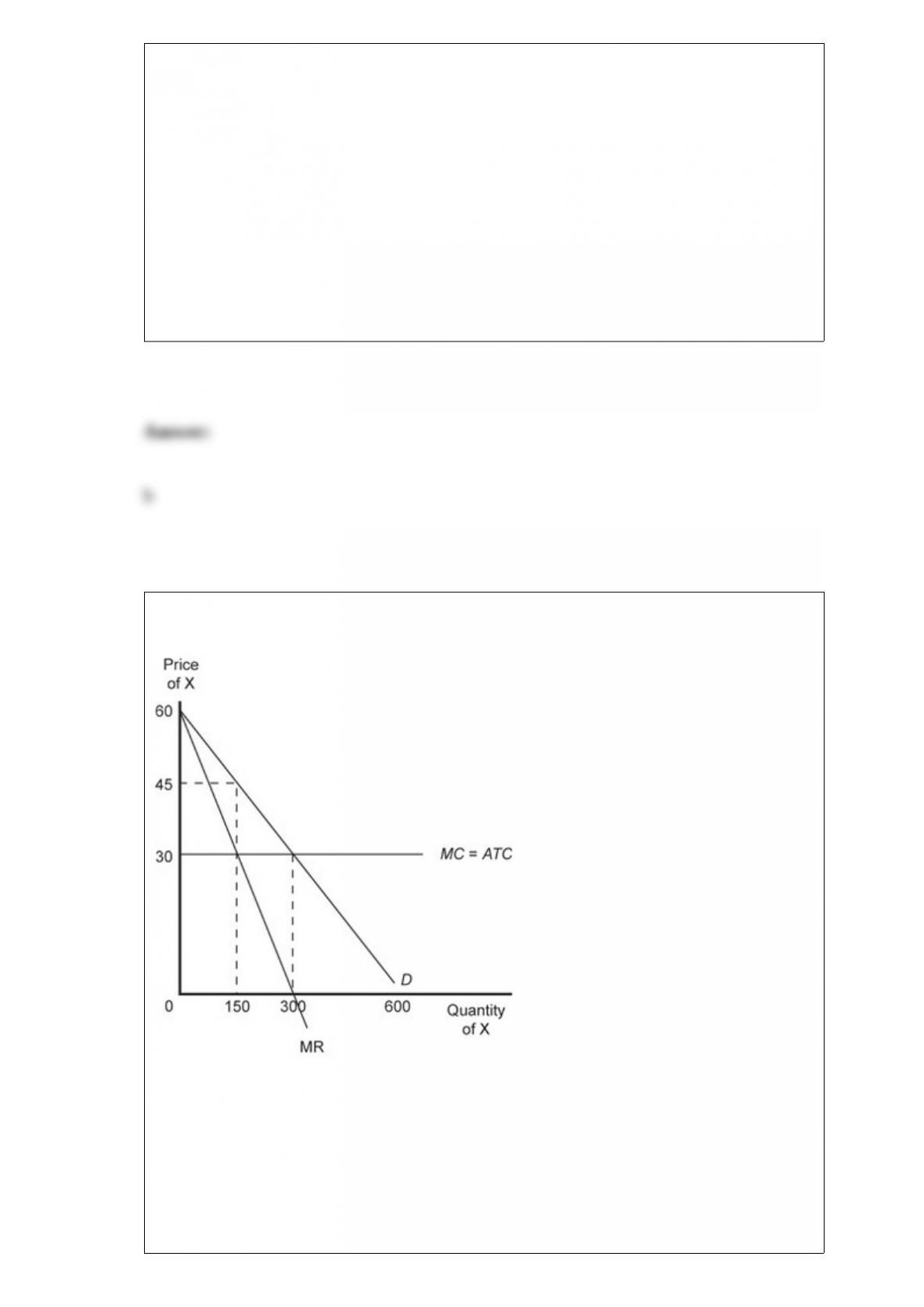
Exhibit 24-7
The total revenue collected by a profit-maximizing single-price monopolist is
a. $4,500.
b. $2,250.
c. $6,750.

d. $9,000.
If, as the price of good Y rises from $5.00 to $5.75, the quantity demanded of good Y
falls from 54 units to 48 units, price elasticity of demand for good Y in this price range
is
a. 1.05.
b. 1.19.
c. 0.37.
d. 4.77.
e. 0.84.
Consumer equilibrium exists when
a. marginal utility for all goods is the same.
b. total utility is constant.
c. prices for all goods are the same.
d. total utility for all goods is the same.
e. the MU/P ratio for all goods is the same.