1) A $1 increase in government spending on goods and services will have a greater
impact on the equilibrium GDP than will a $1 decline in taxes because:
A.government spending is more employment-intensive than is either consumption or
investment spending.
B.government spending increases the money supply and a tax reduction does not.
C.a portion of a tax cut will be saved.
D. taxes vary directly with income.
2) (last word) “z visas” in the proposed immigration reform of 2007:
a.would have allowed nearly 12 million illegal immigrants to live and work legally in
the united states.
b.are required of all new immigrants to the united states.
c.are issued to refugees and those seeking political asylum, allowing immigration
quotas to be exceeded.
d. would have been issued primarily to guest workers seeking short-term employment
in the united states.
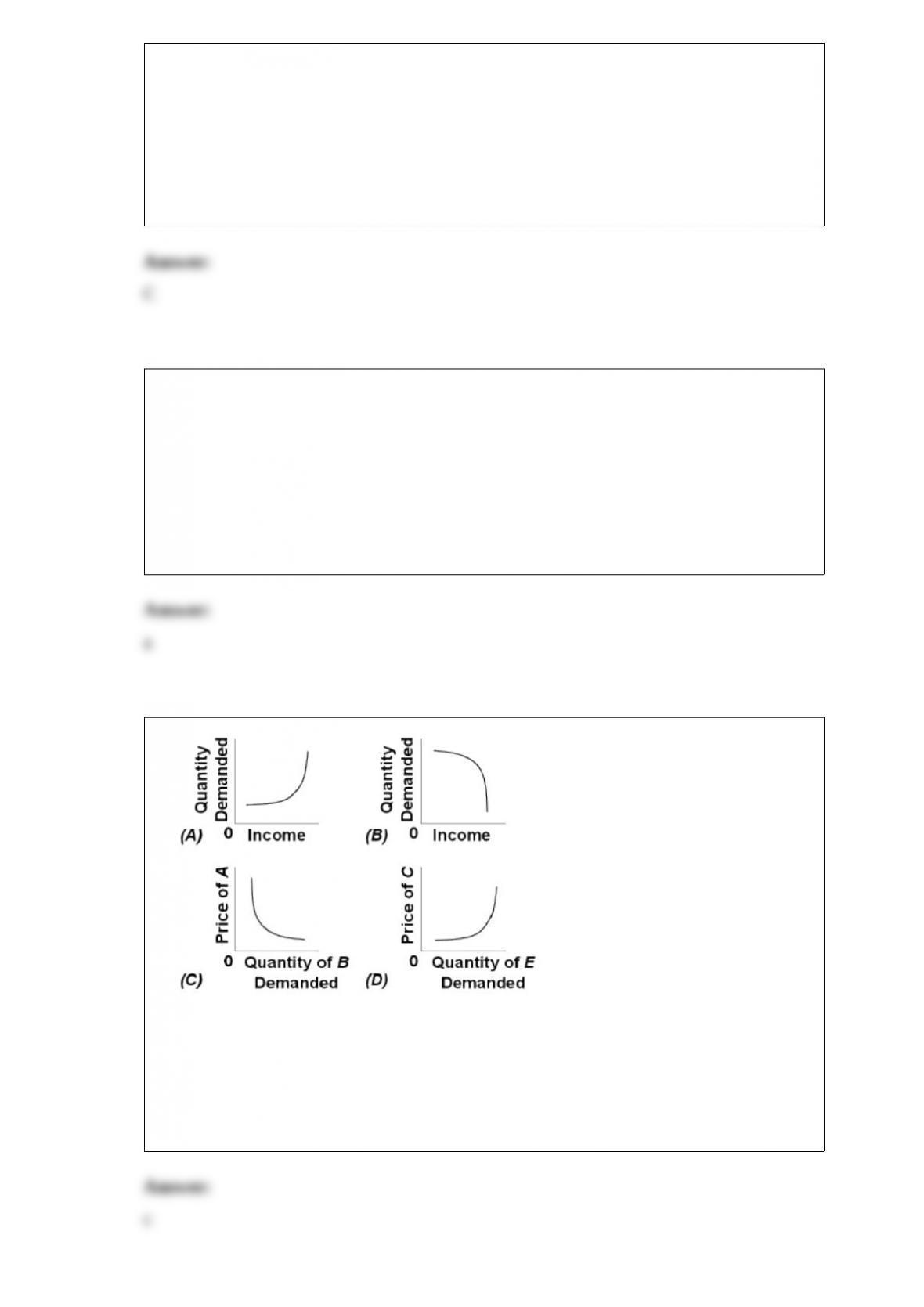
3)
refer to the above diagrams. in which case would the coefficient of cross elasticity of
demand be negative?
a.a
b.b
c.c
d.d
4) the number of americans currently without health insurance is approximately:
a.20 million or about 7 percent of the population.
b.29 million or about 10 percent of the population.
c.45 million or about 15 percent of the population.
d.72 million or about 25 percent of the population.
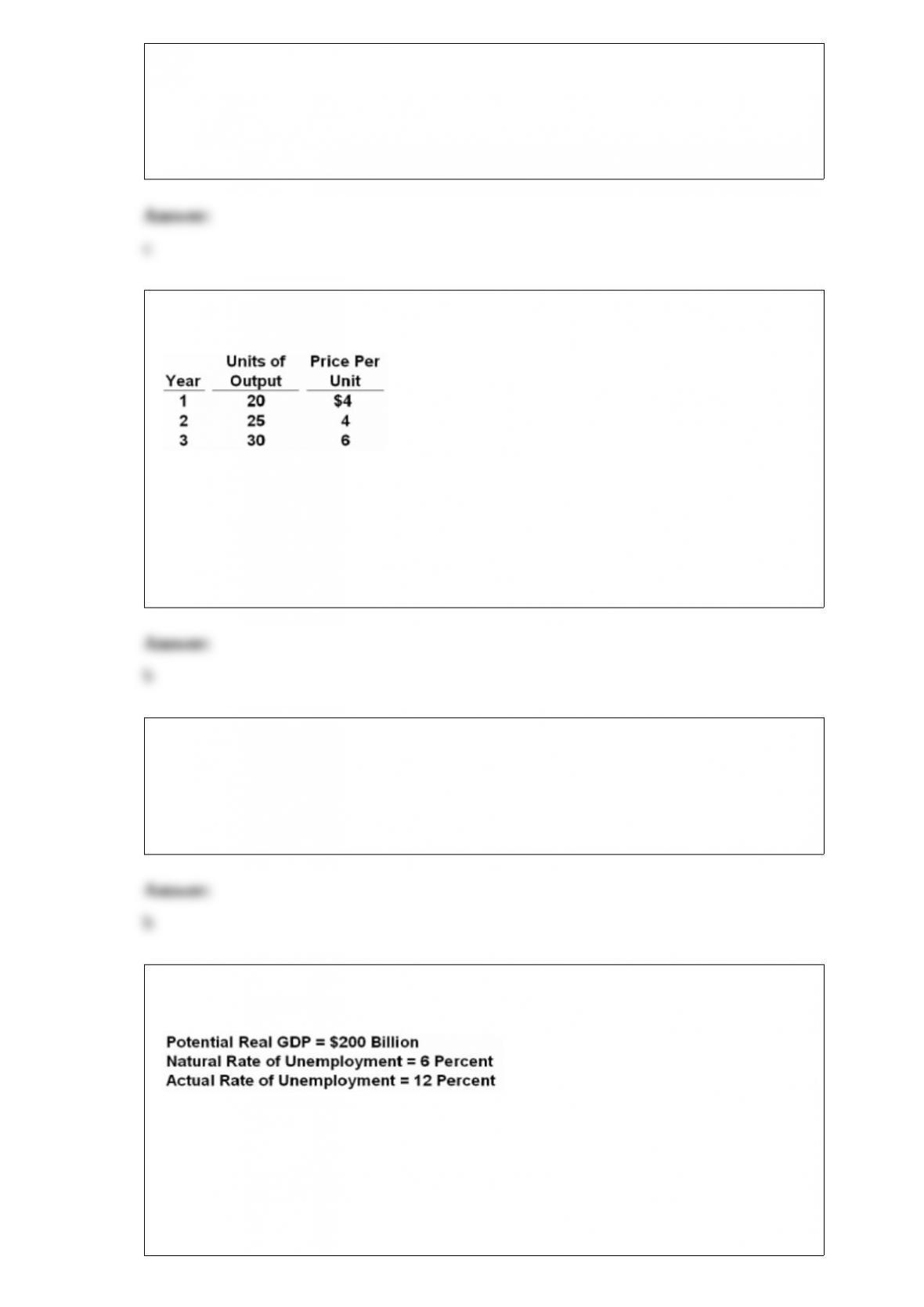
5) assume an economy that is producing only one product. output and price data for a
three-year period are as follows. answer the next question(s) on the basis of these data.
refer to the above data. if year 2 is chosen as the base year, the price index for year one
is:
a.80.
b.100.
c.120.
d.20.
6) studies show that the demand for gasoline is:
a.price inelastic in the short run, but elastic in the long run.
b.price inelastic in both the short and long run.
c.price elastic in the short run, but inelastic in the long run.
d.price elastic in both the short and long run.
7) answer the next question(s) on the basis of the following information for a specific
year in a hypothetical economy for which okun’s law is applicable:
refer to the above data. if the unemployment rate in the above economy declined to 6
percent, we could conclude that:
a.only structural unemployment remained.
b.the economy’s production possibilities curve shifted outward.
c.the economy had moved from a point inside its production possibilities curve to a
point on or near the curve.
d.nominal gdp would rise but real gdp would fall.
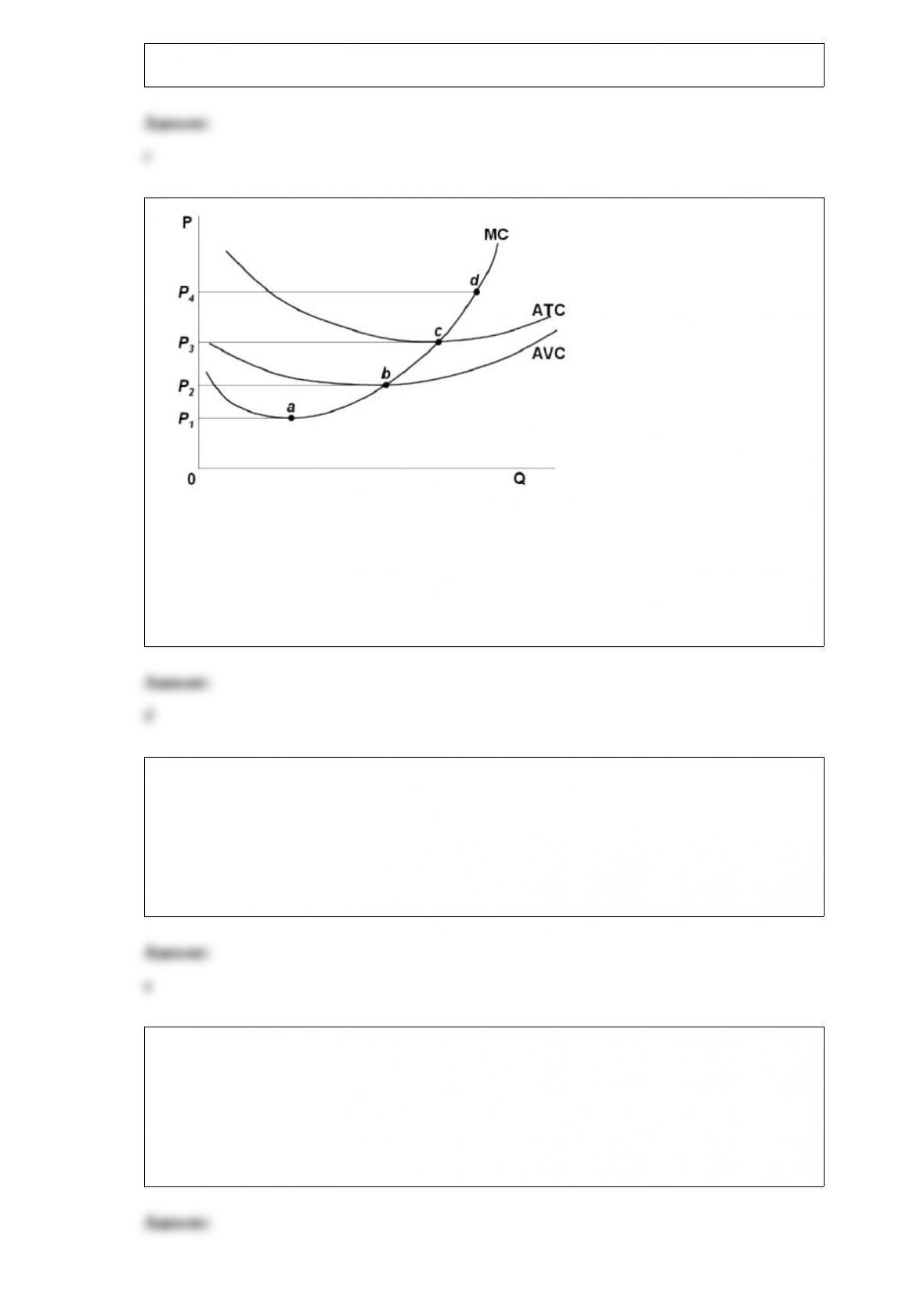
8)
refer to the above diagram for a purely competitive producer. the firm will produce at a
loss at all prices:
a.above p1.
b.above p3.
c.above p4.
d.between p2 and p3.
9) according to estimates, what percentage of food preparation workers in the united
states are illegal immigrants?
a.12
b.14
c.17
d.24
10) When congressional representatives vote on an appropriations bill, they must vote
yea or nay, taking the bad with the good. This statement best reflects the:
A.paradox of voting.
B.special-interest effect.
C.benefits-received principle.
D.idea of limited and bundled choice.
11) economies and diseconomies of scale explain:
a.the profit-maximizing level of production.
b.why the firm’s long-run average total cost curve is u-shaped.
c.why the firm’s short-run marginal cost curve cuts the short-run average variable cost
curve at its minimum point.
d.the distinction between fixed and variable costs.
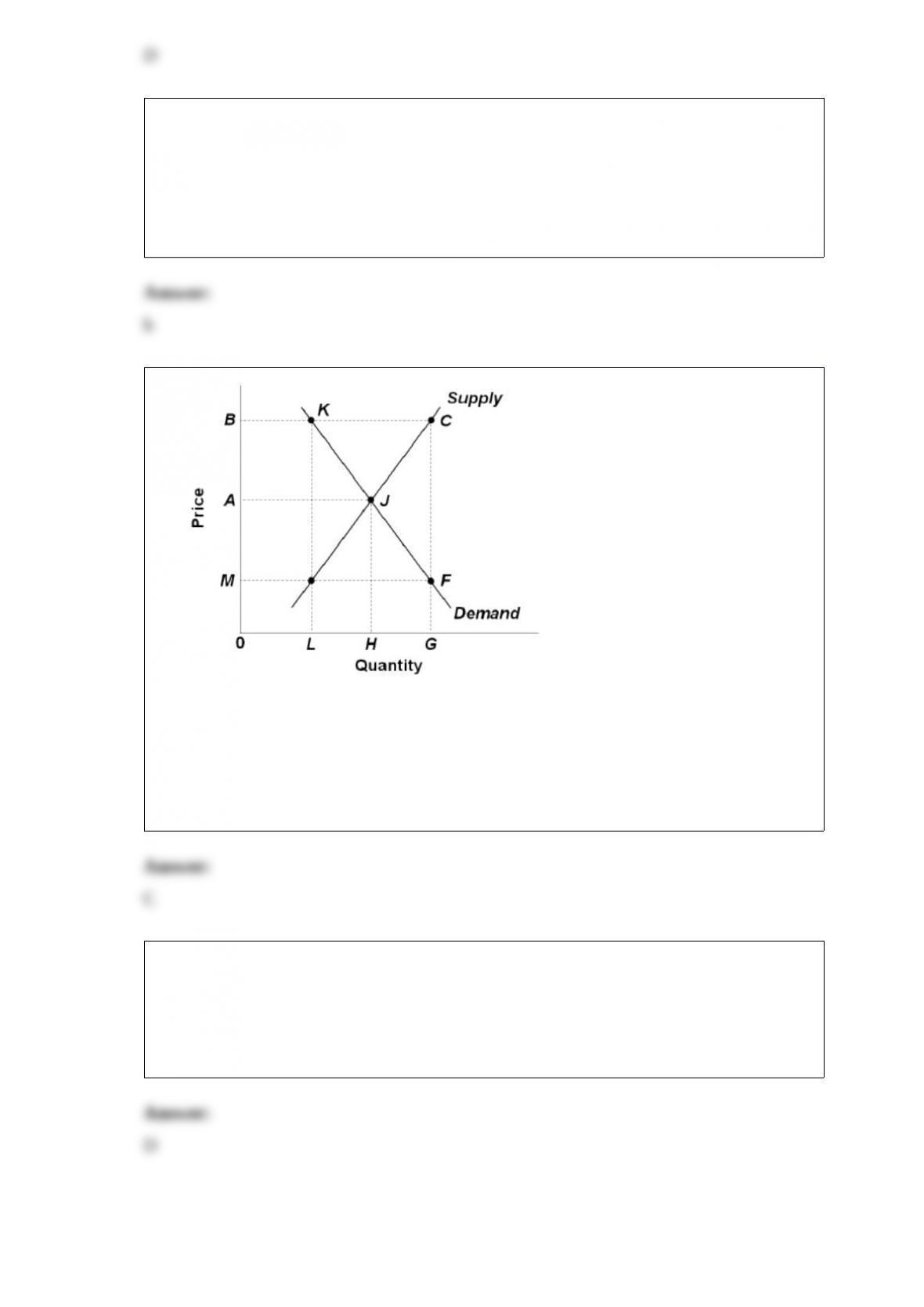
12)
Refer to the above diagram for the corn market. What effect will a price support of B
have on the gross income of farmers?
A.Gross income will be unchanged, although profits will rise.
B.Gross income will increase from 0MFG to 0BKL.
C.Gross income will increase from 0AJH to 0BCG.
D.Gross income will decrease from 0BCG to 0BKL.
13) Expansionary fiscal policy is so named because it:
A.involves an expansion of the nation’s money supply.
B.necessarily expands the size of government.
C.is aimed at achieving greater price stability.
D.is designed to expand real GDP.