A rising marginal cost curve is a reflection of a
a. rising marginal physical product curve.
b. falling marginal physical product curve.
c. falling average fixed cost curve.
d. rising average variable cost curve.
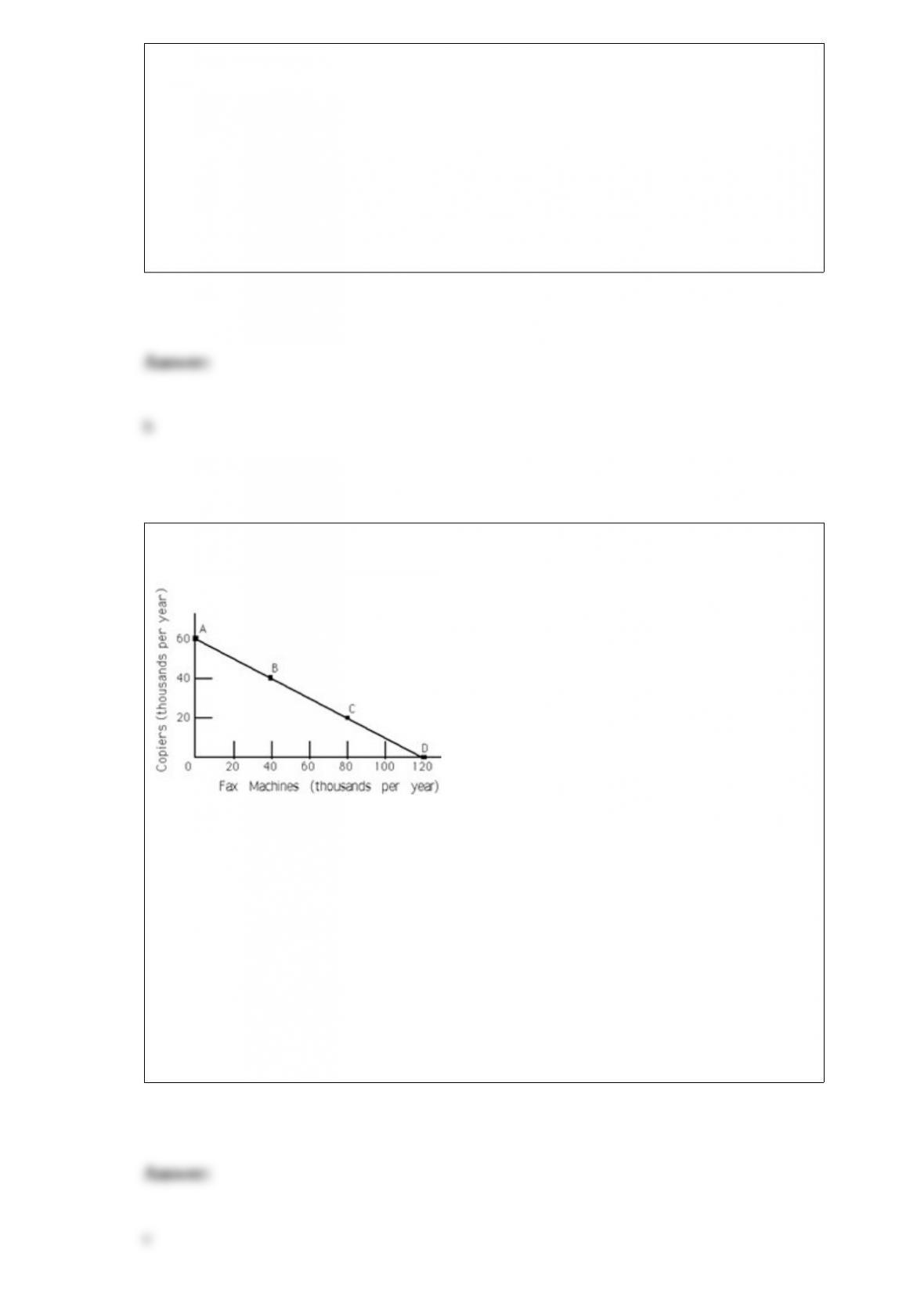
Exhibit 2-4
The opportunity cost of moving from point A to point B is
a. 60,000 copiers.
b. 40,000 copiers.
c. 20,000 copiers.
d. 20,000 fax machines.
e. 40,000 fax machines.

If computers and software are complements, then
a. a fall in the price of computers will increase the demand for software and, ceteris
paribus, the price of software will rise.
b. a rise in the price of computers will decrease the demand for software and, ceteris
paribus, the price of software will rise.
c. a fall in the price of computers will decrease the demand for software and, ceteris
paribus, the price of software will fall.
d. a rise in the price of software will increase the demand for computers and, ceteris
paribus, the price of computers will rise.
e. a fall in the price of software will decrease the demand for computers and, ceteris
paribus, the price of computers will fall.
Exhibit 20-2
The market for good X is initially in equilibrium at $5. The government then places a
per-unit tax on good X, as shown by the shift of S1 to S2. Approximately what
percentage of the tax do consumers end up paying?
a. 63 percent

b. 45 percent
c. 70 percent
d. 55 percent
e. 25 percent
The budget constraint cuts the horizontal axis at 12 units of good X and it cuts the
vertical axis at 20 units of good Y. If the price of good X is $20 and the price of good Y
is $12, then what does income equal?
a. $200
b. $240
c. $520
d. $280
e. There is not enough information to answer the question.
Exhibit 39-4
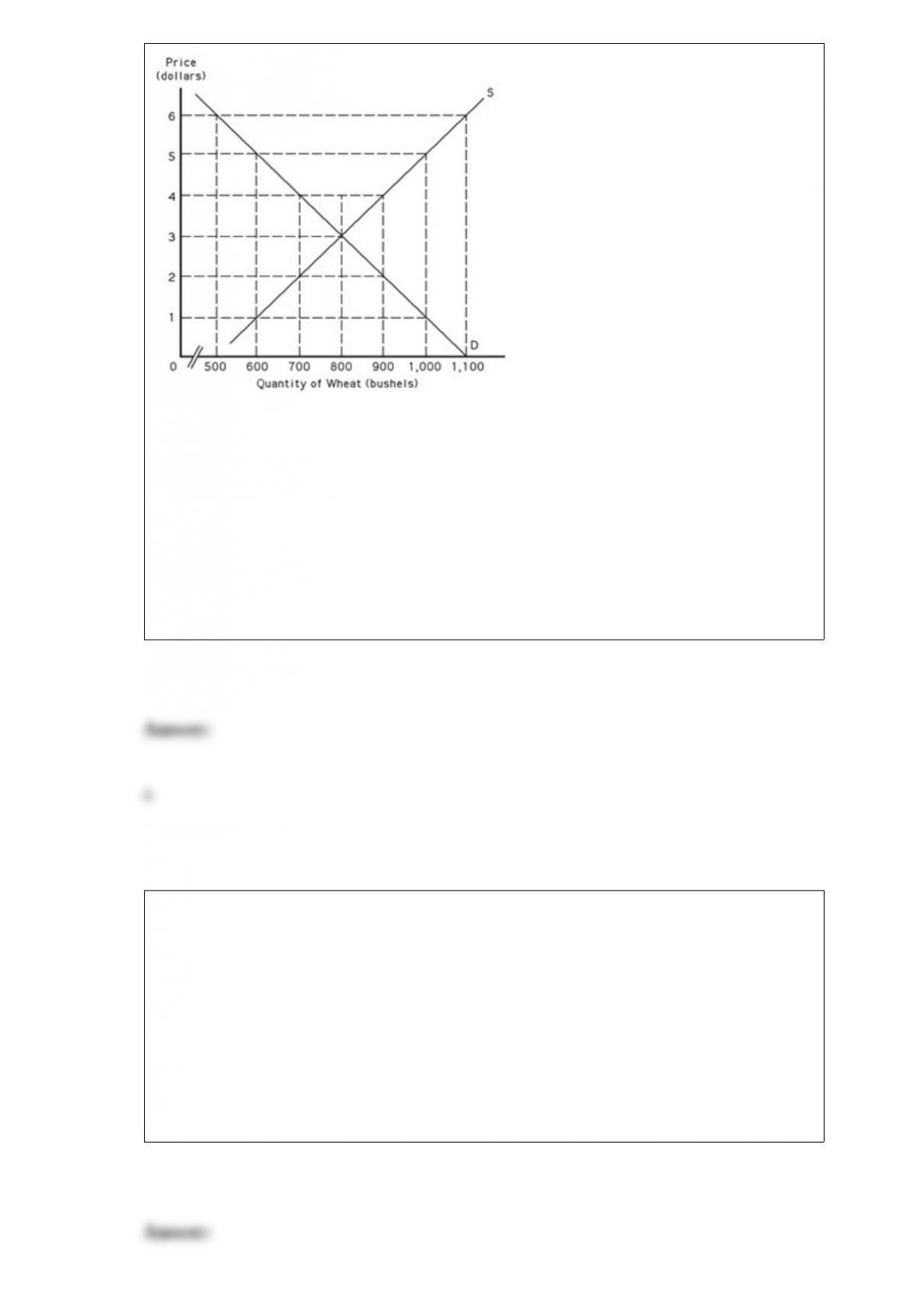
At a target price of $4 per bushel, how many bushels of wheat are produced?
a. 900
b. 800
c. 700
d. 600
The Townsend Acts
a. are anti-trust laws passed in the U.S. in the 1930’s to limit monopoly power.
b. allow district attorneys the opportunity to plea bargain with accused criminals.
c. were British laws enacted in the 1760’s that imposed taxes on products imported to
the American colonies, leading (in part) to the Boston Tea Party.
d. were enacted in the late 1800’s to permit regulation of natural monopolies.

Which of the following statements is false?
a. The list of stocks that are included in the Dow Jones Industrial Average changes from
time to time, and is determined by the editors of the Wall Street Journal.
b. The Dow Jones Industrial Average first appeared on the scene in 1896.
c. When the Dow Jones Industrial Average was first computed, prudent investors
bought bonds, not stocks.
d. The Dow Jones Industrial Average is computed by summing the prices of the thirty
stocks included in the average and dividing by 30.
If people want more cars than there are cars available, then it is necessarily true that
a. cars are scarce.
b. there is a surplus of cars.
c. there is a decreased supply of cars.
d. none of the above

As the price of good A rises, the demand for good B rises. Therefore, goods A and B are
a. normal goods.
b. inferior goods.
c. substitutes.
d. complements.
e. none of the above
The equilibrium price of a good in market A is $24. The current price of the good in
market A is $21. At this price, a(n) ________________________ of the good exists in
market A.
a. surplus
b. shortage
c. excess supply
d. excess demand
e. b and d
If the four-firm concentration ratio is 100 percent, this means that the
a. top four firms each hold 5 percent of the market share.
b. industry consists of no more than four firms.
c. top four firms necessarily each hold a 25 percent market share.
d. none of the above
A stock is purchased either for the expected gain in the price of the stock, for the
dividends that the stock may pay, or both.
a. True
b. False
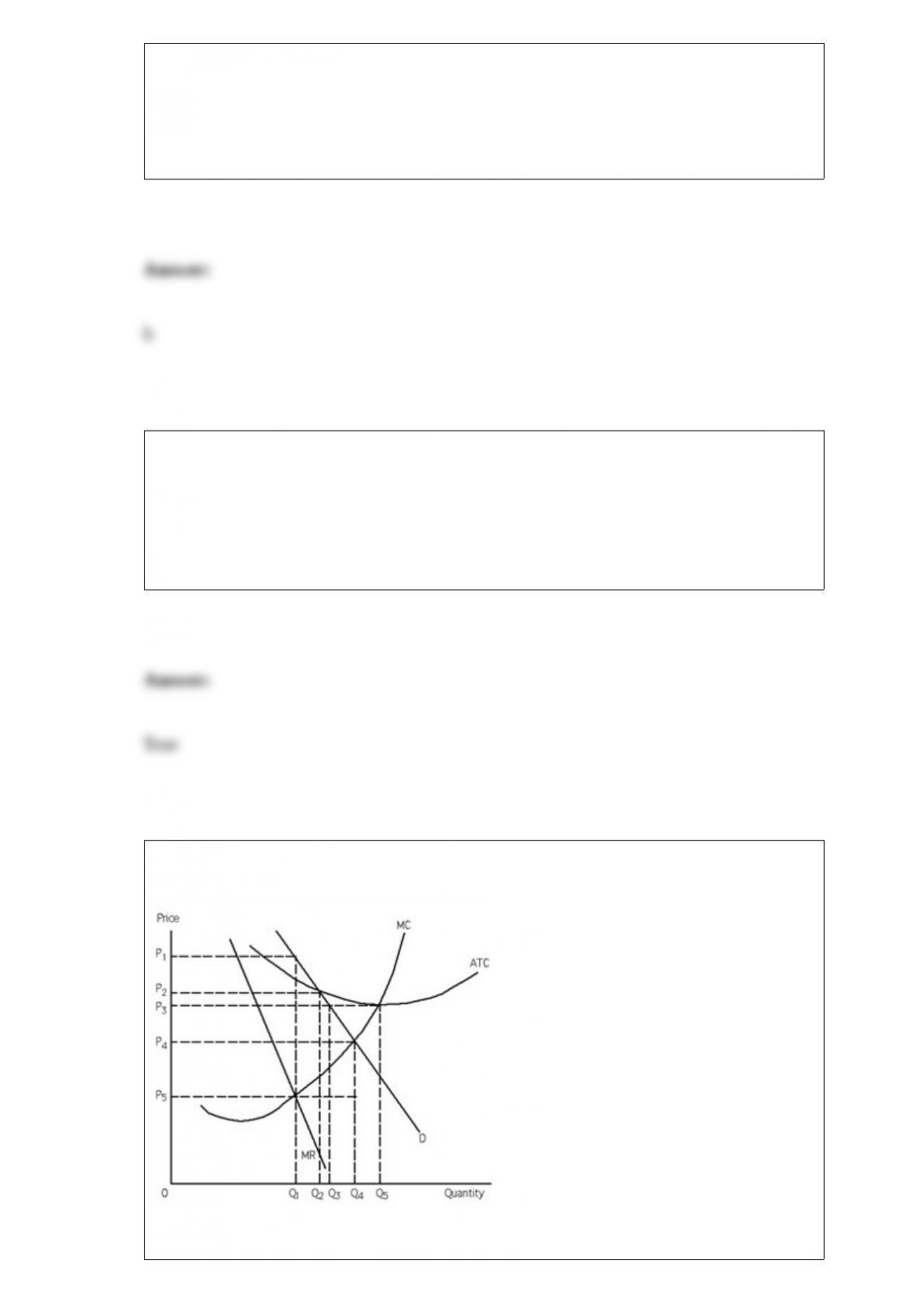
Exhibit 26-4
If marginal-cost pricing regulation were imposed, the firm would be forced to set price

at the level of
a. P1.
b. P2.
c. P3.
d. P4.
e. P5.