
The type of product sold is what differentiates oligopoly markets from the other three
market structure types (perfect competition, monopoly, and monopolistic competition).
Economists will never reach the same conclusions in their positive analyses.
The marginal cost curve for a perfectly competitive firm is downward sloping over the
entire range of output.
When people try to benefit from a public good without paying for it we call it the:
A) free-rider problem.
B) duopolists’ dilemma.
C) public goods problem.

D) taxation problem.
A student has a D grade average in her accounting course and a B grade average in her
economics course. She decides to study an extra hour for her accounting exam and one
less hour for her economics exam hoping to improve her accounting grade while not
hurting her economics grade. This is an example of:
A) thinking at the margin.
B) using assumptions to simplify.
C) ceteris paribus.
D) caveat emptor.
When the price of a car is $25,000, car sales are 10,000 per month. When the price of a
car increases to $29,000, car sales fall to 8,000 per month. Therefore, using initial
value, a 1% increase in the price of the car will result in a ________ in the quantity
demanded of cars.
A) 1.67% decrease
B) 1.25% decrease
C) 0.8% decrease

D) 0.8% increase
A free rider is a person who:
A) does not maximize utility.
B) enjoys something only if he pays for it.
C) acts irrationally.
D) enjoys something without paying for it.
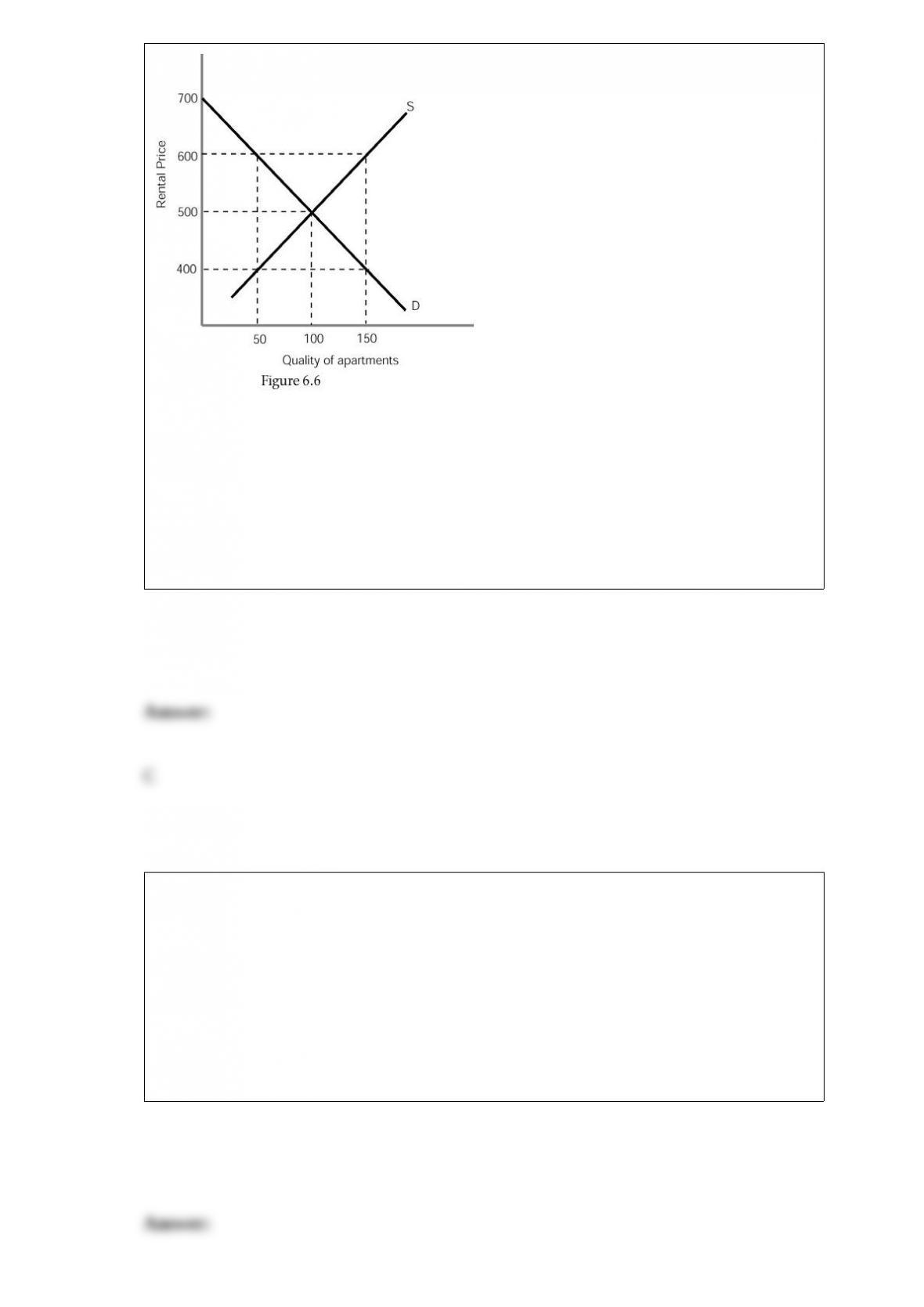
Refer to Figure 6.6. If the government will not allow landlords to charge more than
$400 for an apartment, the deadweight loss will be equal to:
A) $2000.
B) $2500.
C) $5000.
D) $7500.
Which of the following does NOT affect incentives to work?
A) base cash payment
B) college premium
C) benefit reduction rate for income earned
D) All of the above affect incentives to work.

Marginal cost:
A) is the increase in total cost resulting from producing one more unit of output.
B) is the average cost of production divided by output.
C) equals the increase in average variable cost resulting from producing one more unit
of output.
D) always equals average cost.
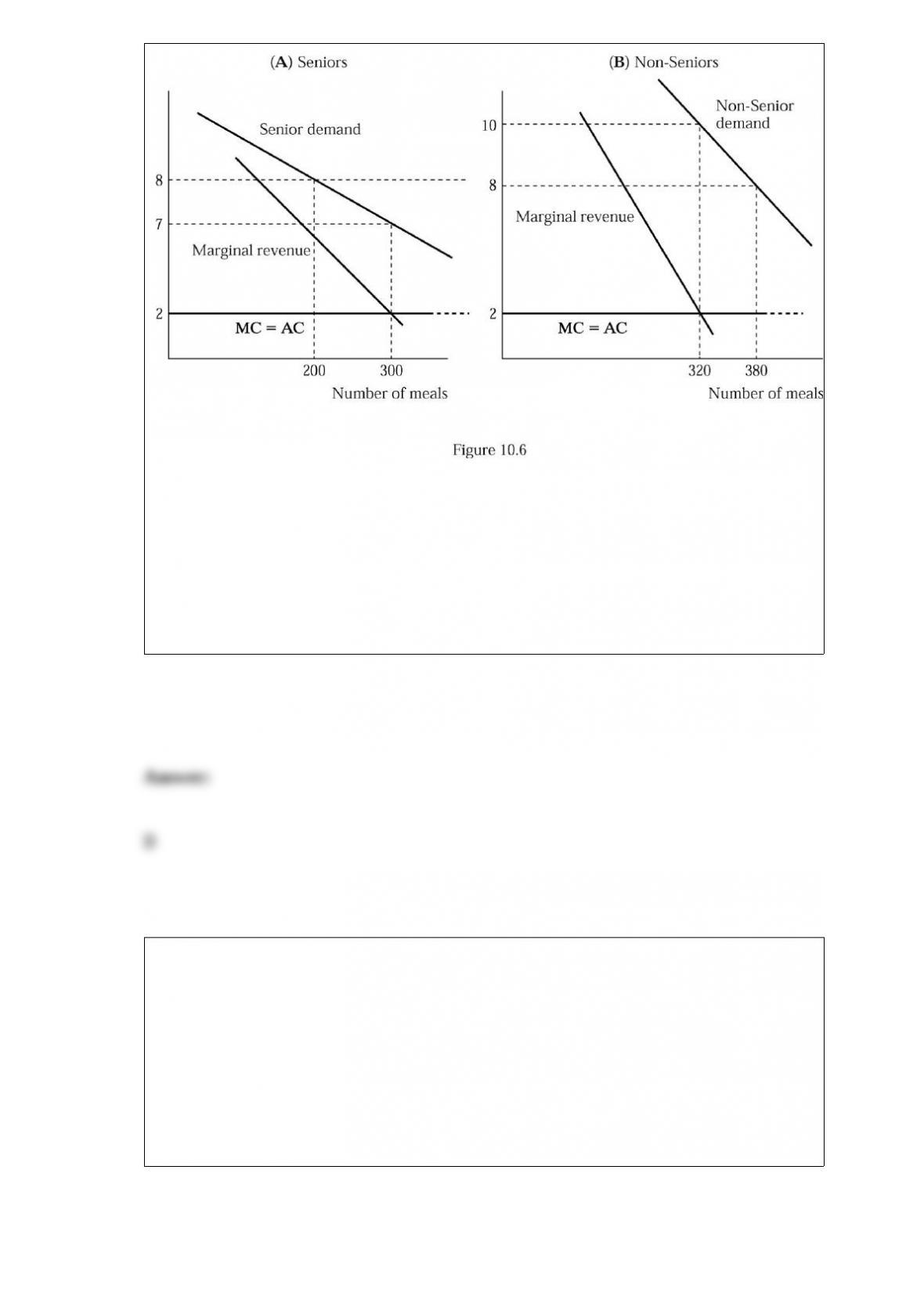
Figure 10.6 shows prices, demands, and cost data for the only restaurant in a small
town. Compared to the profit under the single price policy, how much additional profit
does the restaurant earn under the senior discount policy of a $7 senior price and a $10
non-senior price?
A) $920
B) $580
C) $300
D) $280
A decrease in demand for coffee can be caused by:
A) an increase in demand for substitute products by younger populations.
B) a decrease in demand due to changing preferences for healthier products.
C) an increase in income and coffee is an inferior good.
D) all of the above.

Which of the following situations will arise in the domestic market following the
imposition of a voluntary export restraint?
A) imports increase, domestic production increases, prices increase
B) imports decrease, domestic production increases, prices increase
C) imports increase, domestic production decreases, prices decrease
D) imports decrease, domestic production increases, prices decrease
Recall the application about satellite vs. cable, how will an existing cable-TV provider
respond in most cases to the entry of a firm that provides TV signals via satellite?
A) The cable firm improves the quality of service and leaves the price the same.
B) The cable firm lower the quality of services and lower the price.
C) The cable firm increases the price without any improvements to its service.
D) The cable firm improves the quality of service and decreases its price.

The higher the price of a product, the lower the opportunity cost of the product, and
thus the weaker the activity of the insula.
Recall the application about the cost of protecting a luggage job, luggage and handbags
are subject to import quotas and tariffs that decrease the supply of luggage and increase
the price to consumers by 13 percent. These policies protect 226 jobs in the industry,
which of the following statements is true about the impact of protecting these jobs?
A) Consumer surplus increases.
B) Consumer surplus decreases.
C) Producer surplus decreases.
D) none of the above
Assume that an insurance company sets a single price for insurance equal to the total
medical bills paid by the insurance company divided by the number of its customers. If
it pays medical bills of $5,000 for half of its customers and $9,000 for the other half of
its customers, the price of insurance will be:
A) $5,000.
B) $6,000.

C) $7,000.
D) $9,000.
The big advantage to consumers of product differentiation is that it:
A) allows for a large number of firms.
B) provides variety.
C) prevents monopoly.
D) improves technology.
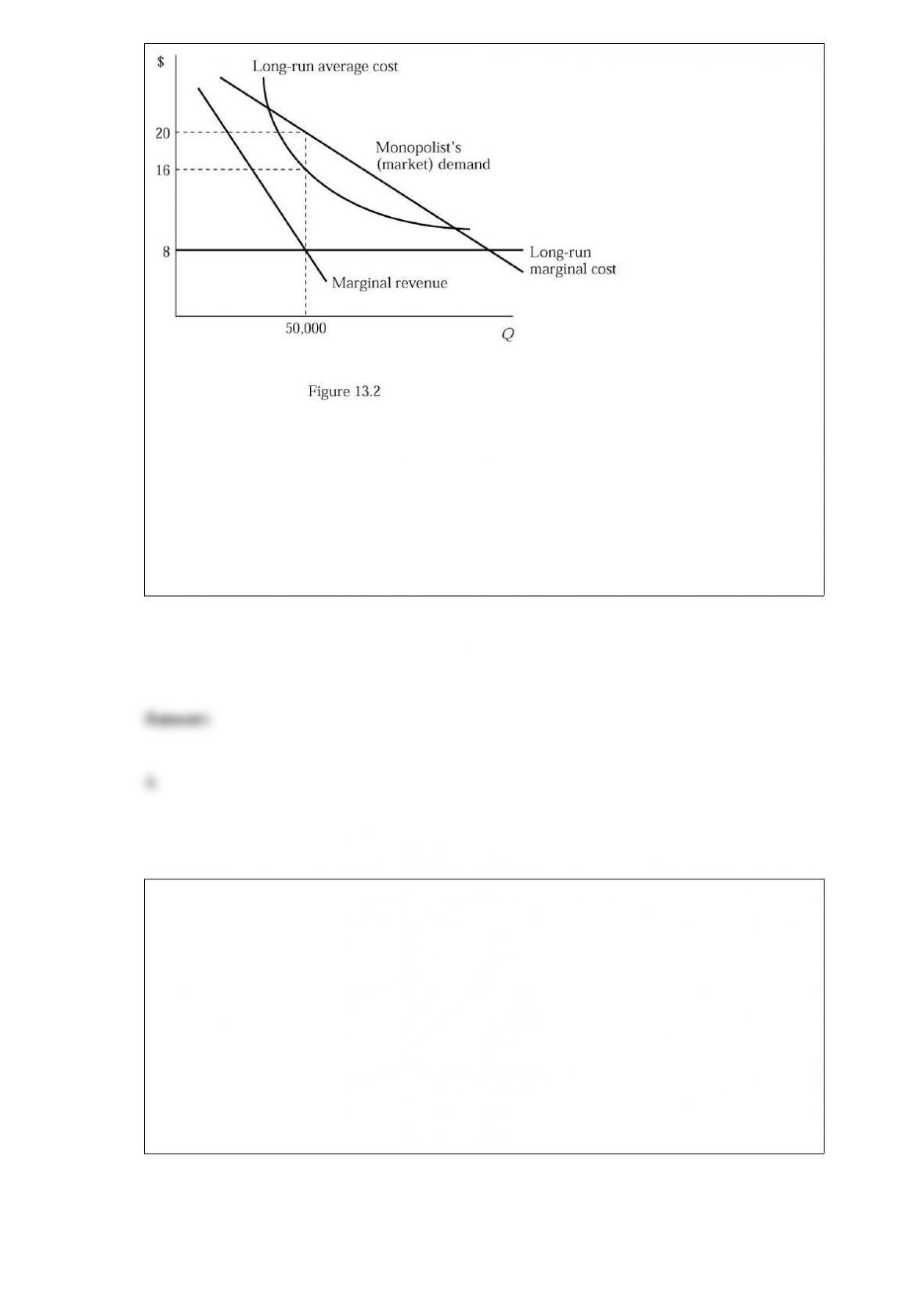
Consider an unregulated monopoly in Figure 13.2. If that monopoly set its price equal
to it marginal cost it would:
A) earn negative profits.
B) earn maximum profits.
C) earn zero profits.
D) earn small, but greater than zero, profits.
Suppose that your firm’s marginal cost of producing a pencil is 5 cents and the average
cost of producing a pencil is 7 cents. If your firm is interested in minimizing average
total costs, what should your firm do?
A) Increase production.
B) Decrease production.
C) Maintain production at the current level.
D) Look for ways to increase fixed costs.
Recall the example of increasing-cost industries such as apartments, why is the supply
curve for apartments positively sloped?
A) Land prices increase with total output of the industry.
B) Tenants pay lower rent prices.
C) Average cost decreases.
D) none of the above
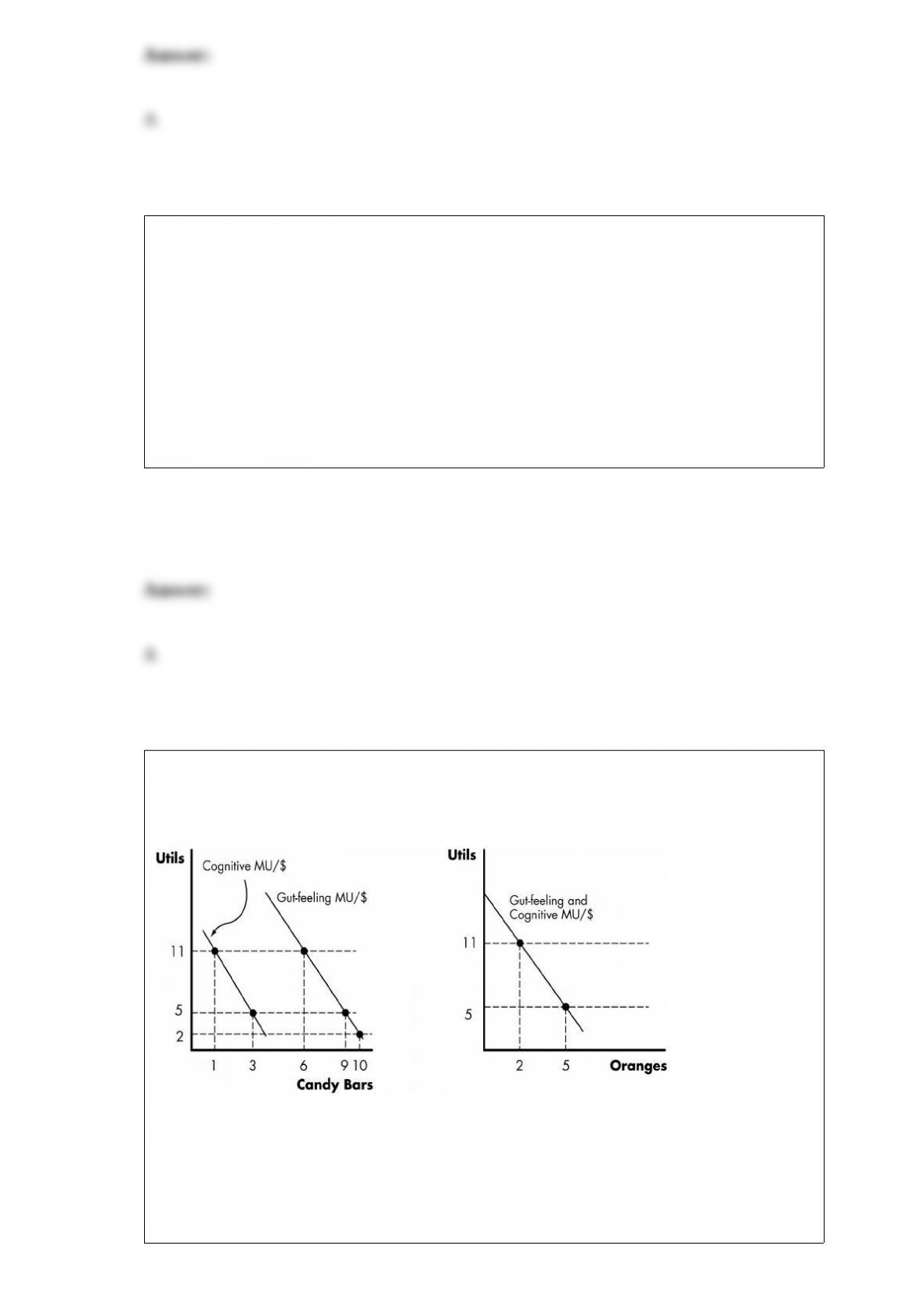
Refer to Figure 7.4. If Sophia bases her choice on cognition, she will purchase
________ candy bars and ________ oranges to maximize utility.
Figure 7.4
The above figure represents the marginal utility per dollar for candy bars and
oranges for Sophia. The price of each product is $0.50, and Sophia has a budget of
$4.
A) 3; 5
B) 6; 2
C) 9; 0
D) 1; 5
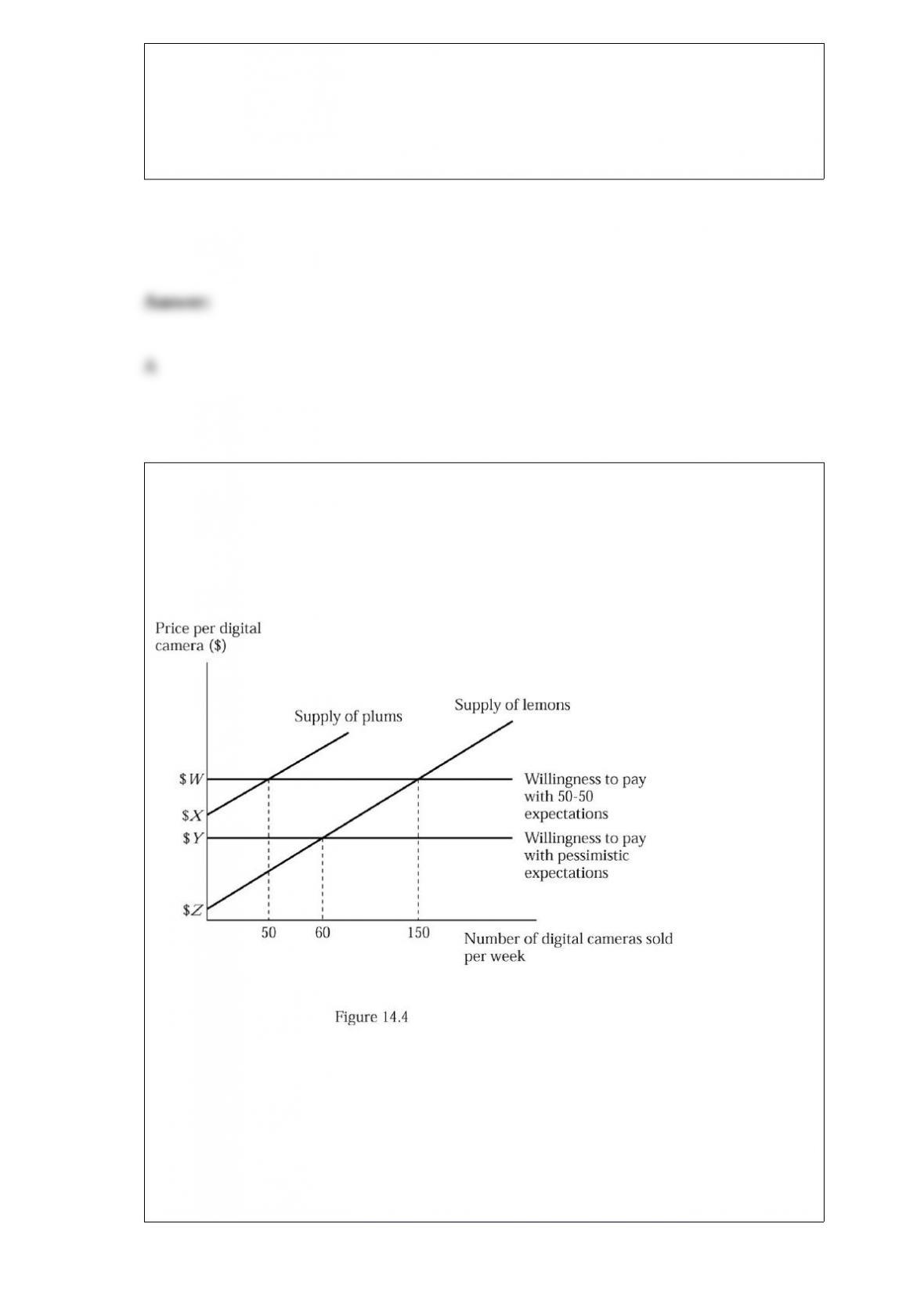
Figure 14.4 represents the market for used 12 megapixel digital cameras. Suppose
buyers are willing to pay $400 for a plum (high-quality) used digital camera and $200
for a lemon (low-quality) used digital camera. If buyers believe that 50% of used digital
cameras in the market are lemons (low quality), what percent of used digital cameras
sold will actually be lemons? (low-quality)?
A) 25%
B) 50%
C) 75%
D) 100%

Public-choice economics is:
A) the vote of every politician with respect to economics.
B) the right of every citizen to know about the economic status of his/her country.
C) the field that uses models of rational choice to study how governments operate.
D) none of the above
Assume that the price elasticity of demand for glass is 1.7 and the price elasticity of
supply for glass is 0.8. If supply rises by 18%, the price of glass will:
A) rise by 7.2%.
B) fall by 13.88%.
C) rise by 13.88%.
D) fall by 7.2%.

Studio clothing store knows that the price elasticity of demand for its jeans is 2.5. If the
price of jeans were to increase by 10%:
A) quantity demanded of jeans would rise by 25%.
B) quantity demanded of jeans would fall by 25%.
C) quantity demanded of jeans would rise by 4%.
D) quantity demanded of jeans would fall by 4%.
Economists have found that as a nation’s economy grows:
A) the poorest families are left behind.
B) the poorest families have a decline in income.
C) the poorest families share in the prosperity.
D) the poorest families are unaffected.
The first major international trade agreement following World War II was the North
American Free Trade Agreement (NAFTA).

Strawberry Inc. has a monopoly on the sale of a specialized smartphone. If it sells 9 of
these smartphones its total revenue is $1,800, and if it sells 10 smartphones its total
revenue is $1,950. The marginal revenue of the tenth smartphone sold is:
A) $150.
B) $75.
C) $1,950.
D) $1,800.
The supply of workers in a particular occupation could be relatively large if:
A) training costs are low.
B) job features are undesirable.
C) there are few people with the required skills.
D) there are artificial barriers to enter that profession.
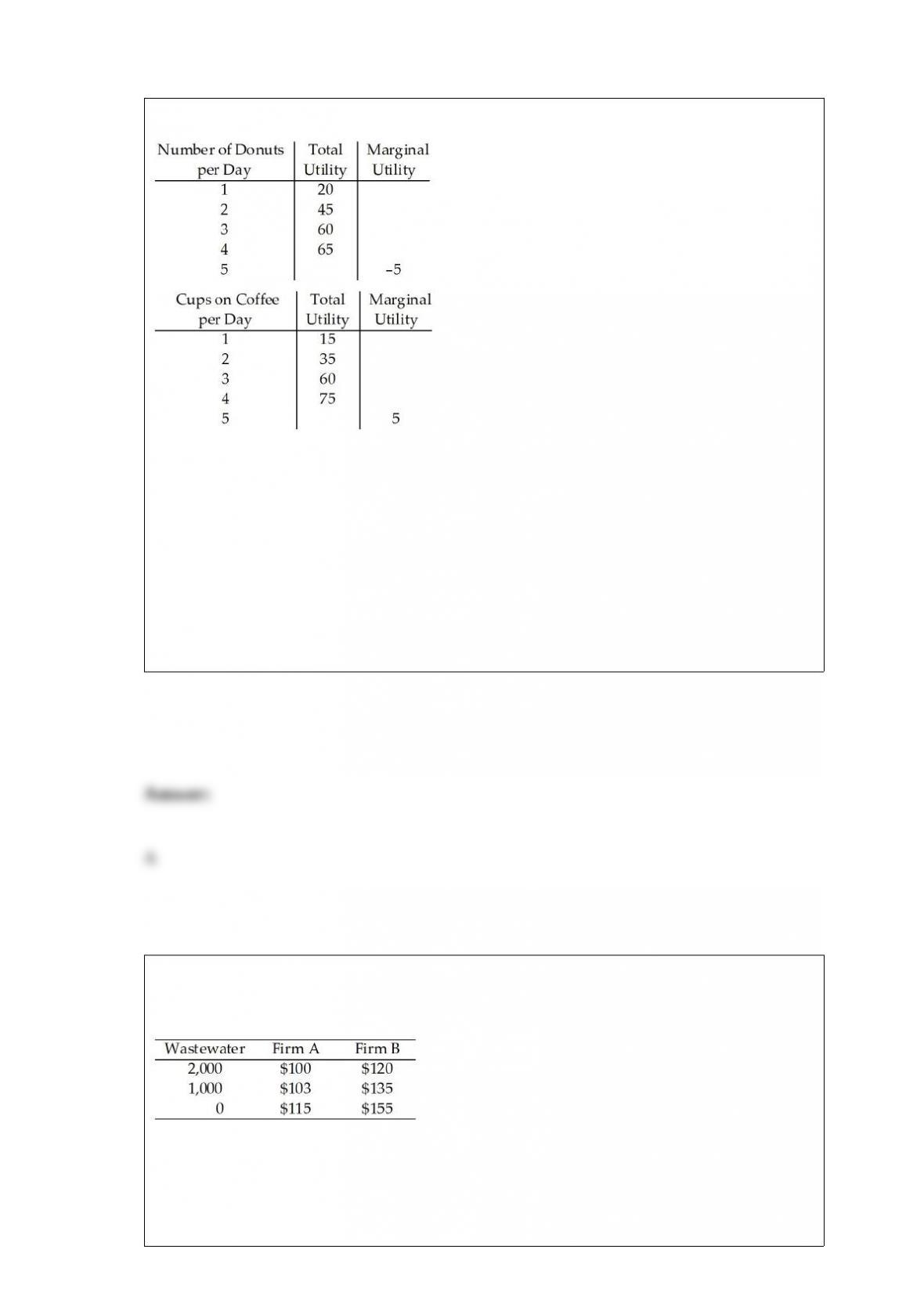
Refer to Table 7.1. The total utility of five donuts per day is:
Table 7.1
A) 60.
B) 70.
C) 65.
D) 78.
If each firm depicted in Table 16.1 is currently generating 1,000 gallons of wastewater
per day, Firm B would be willing to pay up to ________ to Firm A to be able to
generate 2,000 gallons of wastewater per day.
Table 16.1
A) $15
B) $20

C) $35
D) $120
The quantity of TVs sold is 100 at the unit price $200. Suppose the price elasticity of
demand for TVs by the initial value method is 2.0, and you would like to decrease the
unit price for TVs to $150. Then the new quantity sold must be:
A) 125.
B) 150.
C) 200.
D) 250.
Imagine two countries, Bruceland and Davidia. Bruceland is producing everything at a
lower absolute cost than Davidia. If the two countries trade what is the reason?

Total cost of production is the sum of total variable cost and total fixed cost. If the total
fixed cost alone increases:
A) the average total cost curve shifts downward at all output levels.
B) the marginal cost curve shifts upward at all output levels.
C) the vertical distance between the average total cost curve and average variable cost
curve increases at all output levels.
D) the average variable cost curve shifts upward at all output levels.
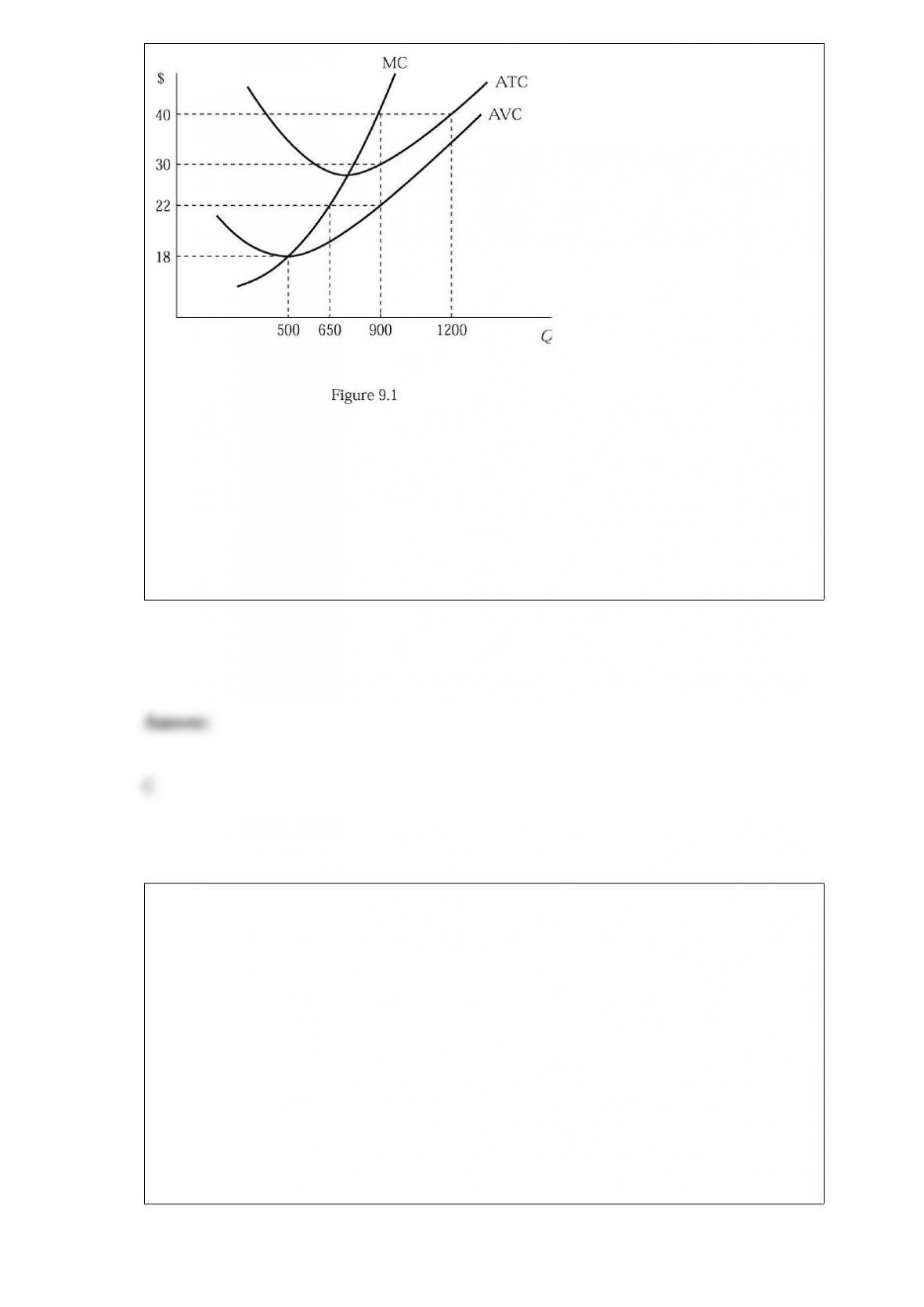
Figure 9.1 shows the cost structure of a firm in a perfectly competitive market. If the
market price is $40 and the firm is currently producing the profit maximizing output
level, its total variable cost is:
A) $12,500.
B) $14,300.
C) $19,800.
D) $27,000.
Recall Application 3, “Shrinking Wine Lakes,” to answer the following questions:
From the Application, we can infer that the presence of wine lakes indicate that the
market is experiencing:
A) an equilibrium.
B) a shortage.
C) a surplus.
D) All of the above are correct.

The rate at which nations will exchange goods and services is known as the:
A) exchange rate.
B) transfer rate.
C) terms of trade.
D) terms of exchange.
What are the characteristics of monopolistic competition?
Describe the Celler-Kefauver Act.
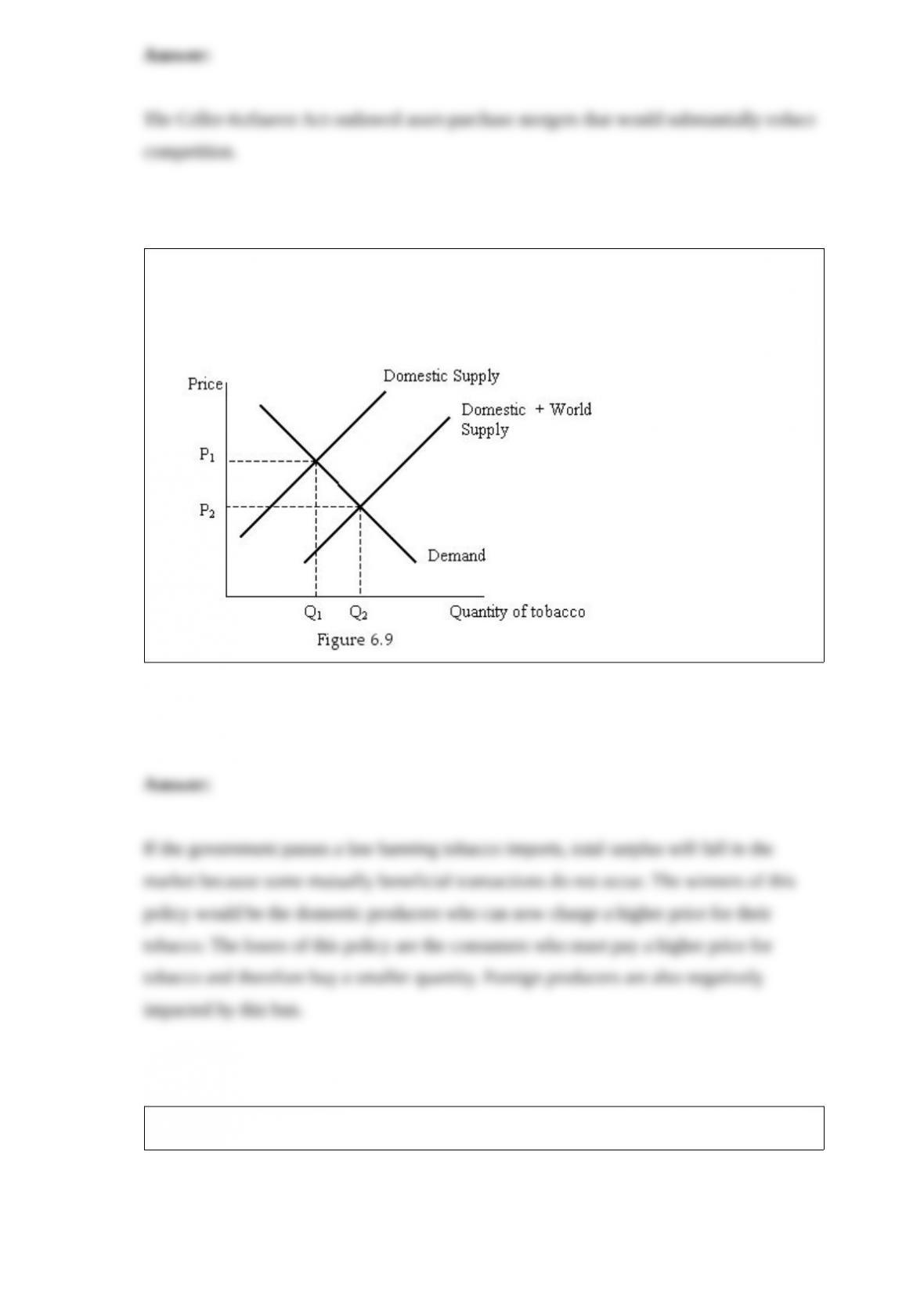
Figure 6.9 shows the market for tobacco. If the government passes a law banning
tobacco imports, what happens to the total surplus of the market? Who wins and who
loses as a result of this policy?
Why did the U.S. boycott of Mexican tuna caught with nets violate the rules of WTO?
What is “competitive” about a monopolistically competitive market?
It is common in most towns that major department stores are locating next to each
other. Provide an intuitive explanation of this common finding.
Many large companies offer employees time off during the workday to attend seminars
on how to improve their health. Some even give bonuses to people who show that they
are adopting healthy lifestyles by, for example, weighing in before and after the
holidays to show that they are following a sensible diet. Other than showing that they
“care” about their employees and trying to minimize number of days missed from work,
why would a company adopt a program like this?
Why do you think that the demand for coffee is less elastic than the demand for
restaurant meals?
Describe the changes in the variables that will cause demand for a product to increase,
shifting the demand curve to the right.
What are some of the sources of market failure?
What is public choice economics?
What is the difference between a ‘shift in the supply curve” and a “movement along the
supply curve”?
Identify markets in which there is an exchange.
What is a budget line?