
1) Capitalist income (corporate profits, interest, and rent) has:
A.declined sharply since 1900 because of the growing strength of labor unions.
B.remained approximately constant in this century.
C.increased significantly because of rising rents.
D.fallen in this century because of the declining importance of corporations.
2) The corporate decision on type and level of R&D activity is difficult because:
A.the interest-rate cost of funds is difficult to estimate.
B.much of corporate R&D is based on the pursuit of science, not on the profit motive.
C.expected returns lie in the future and are highly uncertain.
D.total returns and marginal returns greatly diverge.
3) A user cost of zero implies that:
A.a firm will extract all of a resource in the present.
B.a firm will extract resources at a faster rate than if the user cost was positive.
C.a firm will extract resources at a faster rate than if the user cost was negative.
D.the price of the resource will not change.
4) all of the following are economic implications of the recent productivity acceleration
except:
a.a lower natural rate of unemployment.
b.higher rates of productivity advance.
c.an end to the business cycle.
d.a greater rate of economic growth.
5) suppose you find that the price of your product is less than minimum avc. you
should:
a.minimize your losses by producing where p = mc.
b.maximize your profits by producing where p = mc.
c.close down because, by producing, your losses will exceed your total fixed costs.
d.close down because total revenue exceeds total variable cost.
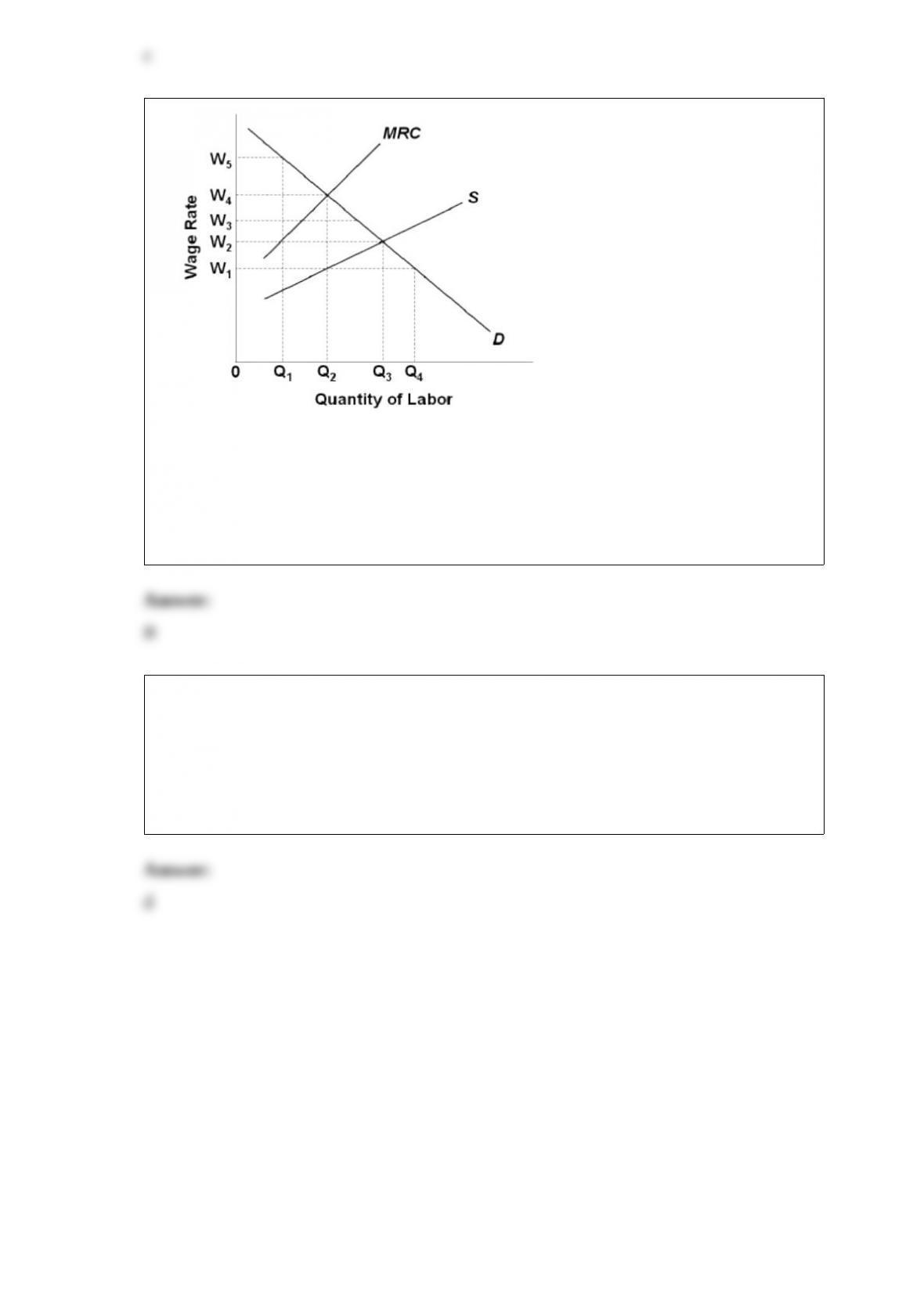
6)
If the above diagram was relevant to an individual firm, we could conclude that the firm
is:
A.a pure competitor in the hire of labor.
B.a monopsonist in the hire of labor.
C.selling its product in an imperfectly competitive market.
D.selling its product in a purely competitive market.
7) opportunity cost is best defined as:
a.the monetary price of any productive resource.
b.the amount of labor that must be used to produce one unit of any product.
c.the ratio of the prices of imported goods to the prices of exported goods.
d.the amount of one product that must be given up to produce one more unit of another
product.
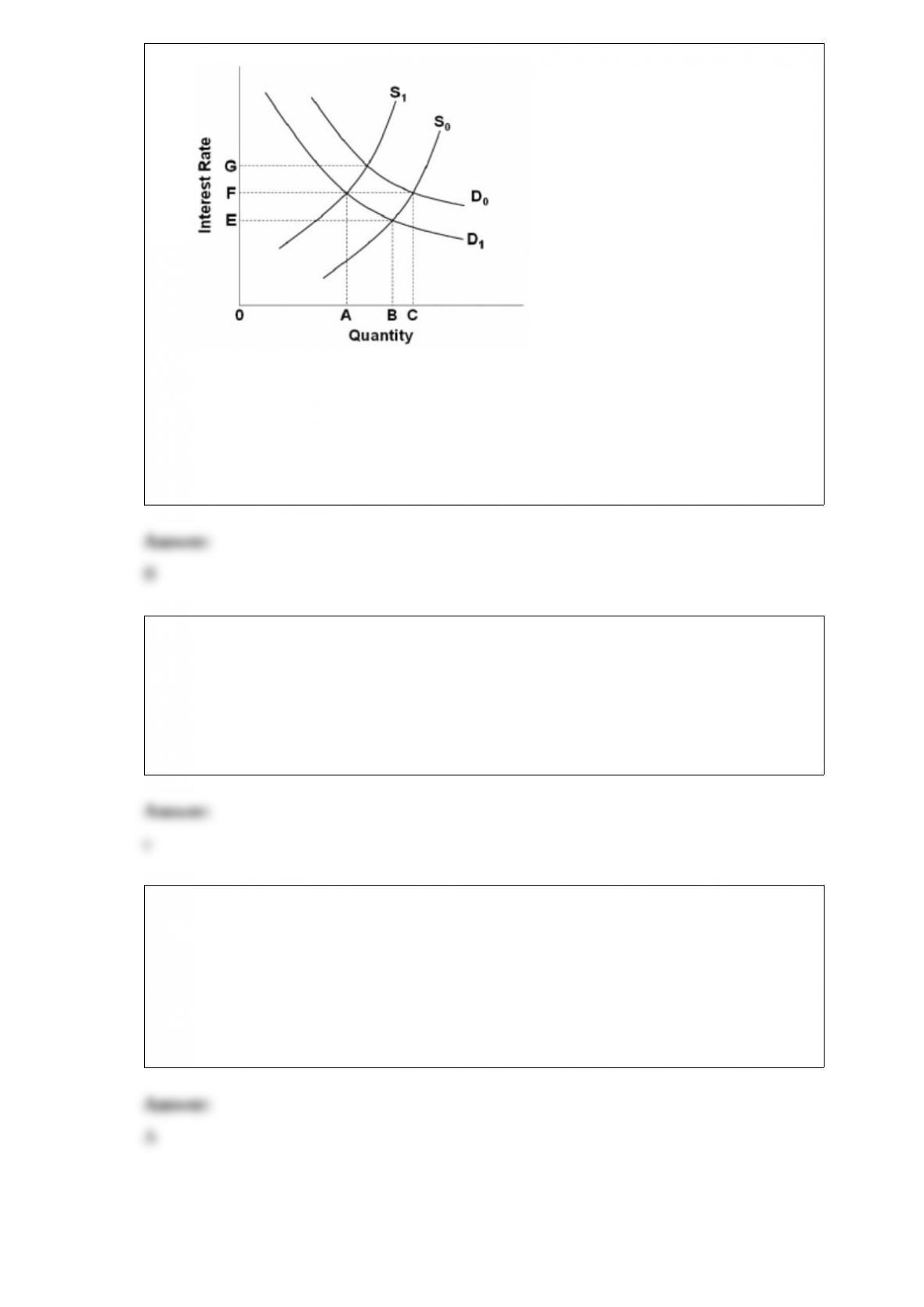
8)
Refer to the above diagram. The supply of loanable funds curve S1 slopes upward
because:
A.business will borrow more funds at lower interest rates than at higher ones.
B.at higher interest rates households will make more funds available for lending.
C.at lower interest rates, households will consume less and save more.
D.business will borrow more funds at higher interest rates than at lower ones.
9) approximately half of the u.s. international trade is with:
a.the nations of eastern europe.
b.the developing countries of africa, asia, and latin america.
c.other industrialized nations, for example, canada, japan, and the countries of the
european union.
d.china.
10) (Consider This) According to the Consider This box on catfish and art, which of the
following airlines in 2007 agreed to pay $300 million fines for fixing fuel surcharges on
passenger tickets and cargo?
A.Korean Air and British Airlines
B.Qantas and Lufthansa
C.United Airlines and American Airlines
D.Virgin Atlantic and Aeroflot
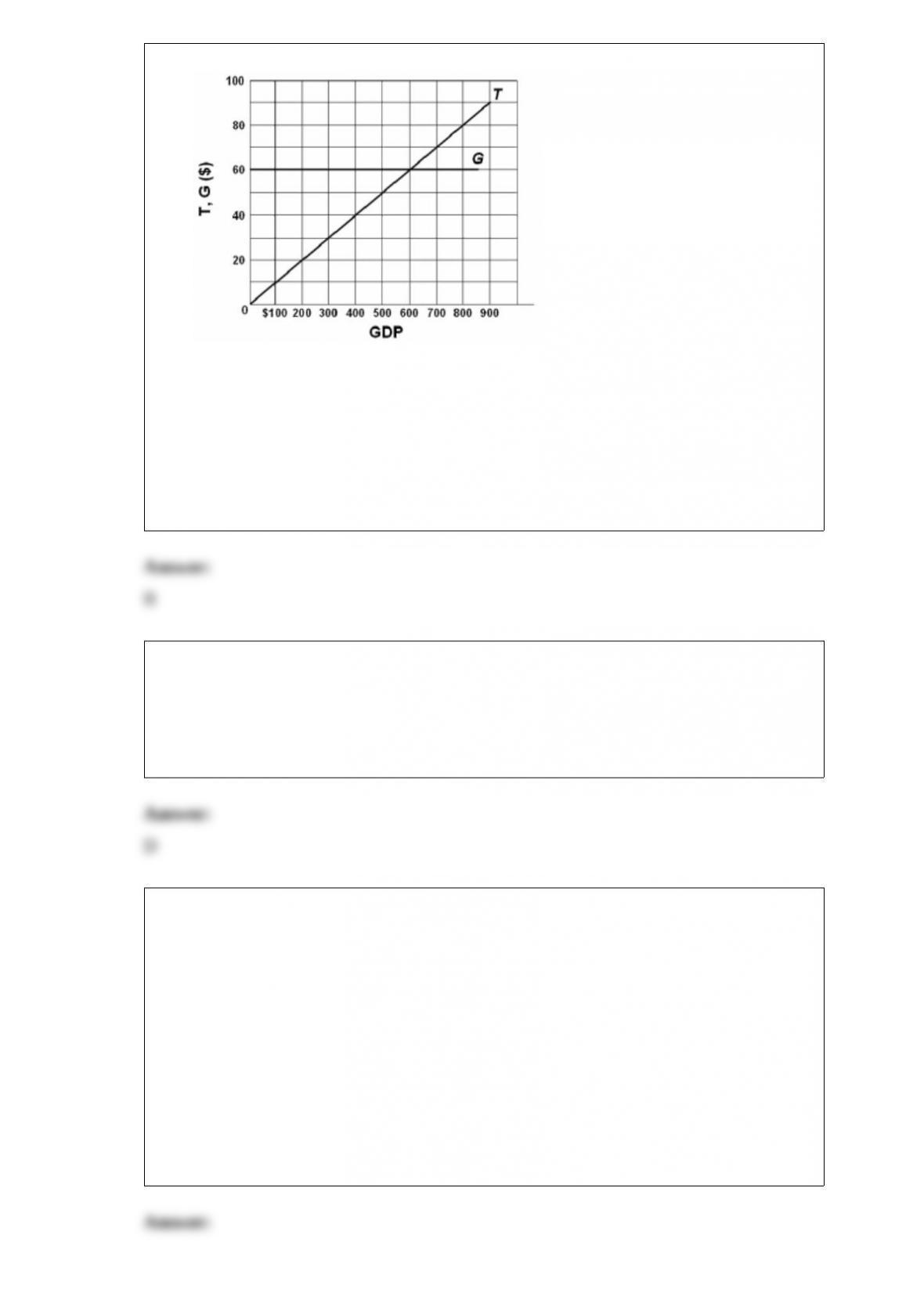
11)
Refer to the above diagram where T is tax revenues and G is government expenditures.
All figures are in billions of dollars. If the full-employment GDP is $400 billion while
the actual GDP is $200 billion, the cyclical deficit is:
A.$40 billion.
B.$20 billion.
C.zero.
D.$60 billion.
12) The real rate of interest is:
A.the interest rate charged on long-term government bonds.
B.the interest rate associated with a riskless loan.
C.the interest rate that large commercial banks charge their best customers.
D.the interest rate after adjustment has been made for inflation.
13) Suppose that a hypothetical economy has the following relationship between its real
domestic output and the input quantities necessary for producing that level of output.
(a)What is the level of productivity in this economy?
(b)What is the unit cost of production if the price of each input is $2.00?
(c)If the input price decreases from $2 to $1.50, what is the new per unit cost of
production? In what direction would the aggregate supply curve move? What effect
would this shift have on the price level and the level of real domestic output if the
economy is initially operating in the intermediate range?
(d)Suppose that instead of the input price decreasing, the productivity had increased by
25 percent. What will be the new unit cost of production? In what direction would the
aggregate supply curve move? What effect would this shift have on the equilibrium
price and output level if the economy?

14) renee earns $500 per hour in the courtroom as a trial lawyer; she can type up her
legal documents at a rate of 80 words per minute. christopher has no training as a trial
lawyer, but can type legal documents at a rate of 50 words per minute for a wage of $30
per hour. based on the theory of comparative advantage:
a.renee should do all of her own typing.
b.renee should specialize in courtroom trials and hire christopher to type her legal
documents.
c.renee should only hire christopher if he can raise his typing speed to faster than 80
words per minute.
d.comparative advantage doesn’t apply to this case because it does not involve
international trade.
15) with a downsloping demand curve and an upsloping supply curve for a product,
placing an excise tax on this product will:
a.increase equilibrium price and quantity.
b.decrease equilibrium price and quantity.
c.decrease equilibrium price and increase equilibrium quantity.
d.increase equilibrium price and decrease equilibrium quantity.
16) Rational expectations theory assumes that:
A.people behave rationally and that all product and resource prices are flexible both
upward and downward.
B.firms pay above-market wages to elicit work effort.

C.markets fail to coordinate the actions of households and businesses.
D.markets are dominated by monopolistic firms.
17)
Effective usury laws cause:
A.a surplus in the market for loanable funds.
B.the quantity of loanable funds demanded to be brought into balance with the quantity
supplied.
C.the quantity of loanable funds demanded to exceed the quantity supplied.
D.the quantity of loanable funds supplied to exceed the quantity demanded.
18) a decreasing-cost industry is one in which:
a.contraction of the industry will decrease unit costs.
b.input prices fall or technology improves as the industry expands.
c.the long-run supply curve is perfectly elastic.
d.the long-run supply curve is upsloping.
19) Capital flight is a problem to DVCs because it:
A.causes the value of an DVCs currency to appreciate.
B.reduces the volume of DVC investment.
C.reduces the flow of foreign aid from the IACs.
D.causes inflation in the DVCs.
20) the slope of a budget line reflects the:
a.desirability of the two products.
b.price ratio of the two products.
c.amount of the consumer’s income.
d.utility ratio of the two products.