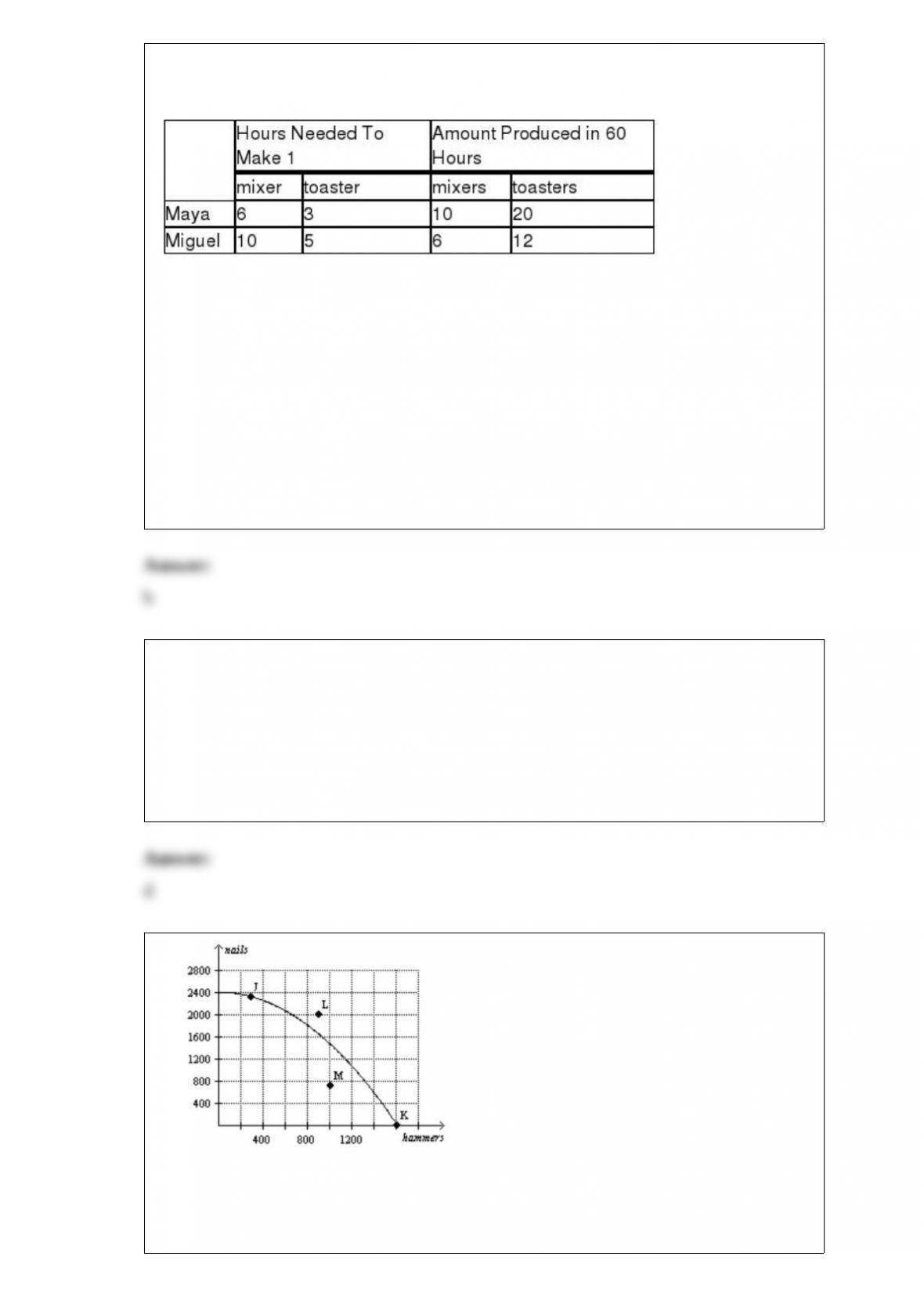
1) Assume that Maya and Miguel can switch between producing mixers and producing
toasters at a constant rate.
We could use the information in the table to draw a production possibilities frontier for
Maya and a second production possibilities frontier for Miguel. If we were to do this,
measuring toasters along the horizontal axis, then
a.the slope of Maya’s production possibilities frontier would be 2 and the slope of
Miguel’s production possibilities frontier would be -2.
b.the slope of Maya’s production possibilities frontier would be 0.5 and the slope of
Miguel’s production possibilities frontier would be -0.5.
c.the slope of Maya’s production possibilities frontier would be 1.67 and the slope of
Miguel’s production possibilities frontier would be -1.67.
d.the slope of Maya’s production possibilities frontier would be 0.6 and the slope of
Miguel’s production possibilities frontier would be -0.6.
2) A common argument in favor of restricting international trade in good x is based on
the premise that
a.international trade reduces total surplus in countries that export good x.
b.international trade reduces total surplus in countries that import good x.
c.international trade is desirable only when countries with different domestic supplies of
natural resources play by different rules when trading with one another.
d.trade restrictions can be useful when one country bargains with its trading partners.
3)
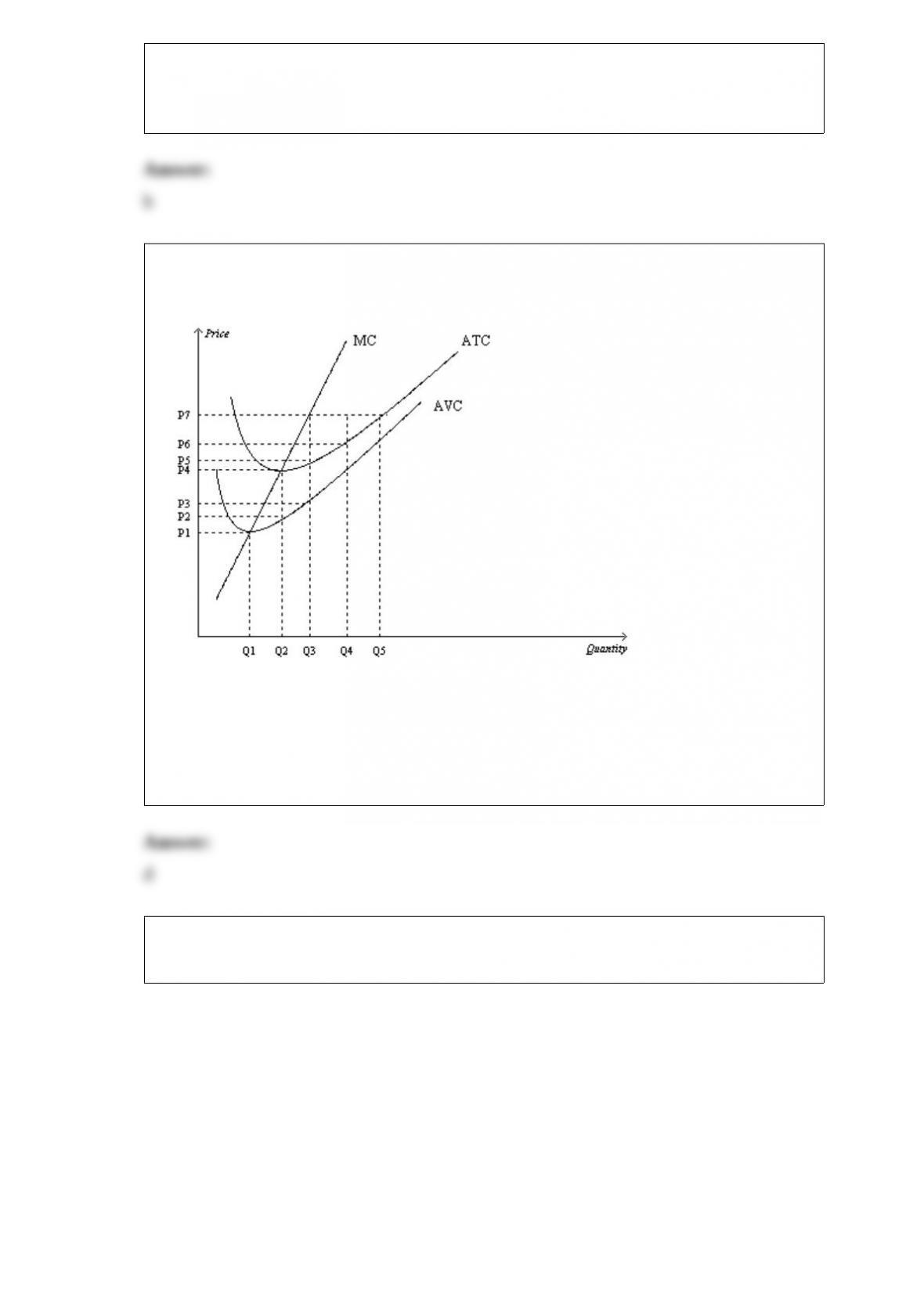
For this economy, as more and more hammers are produced, the opportunity cost of an
additional hammer produced, in terms of nails,
a.remains constant.
b.increases.
c.decreases.
d.This answer cannot be determined from the graph.
4) Figure 14-5
Suppose a firm operating in a competitive market has the following cost curves:
Firms would be encouraged to enter this market for all prices that exceed
a.P1.
b.P2.
c.P3.
d.P4.
5) Scenario 16-1
Suppose the following are the sales for all of the firms in two different industries.
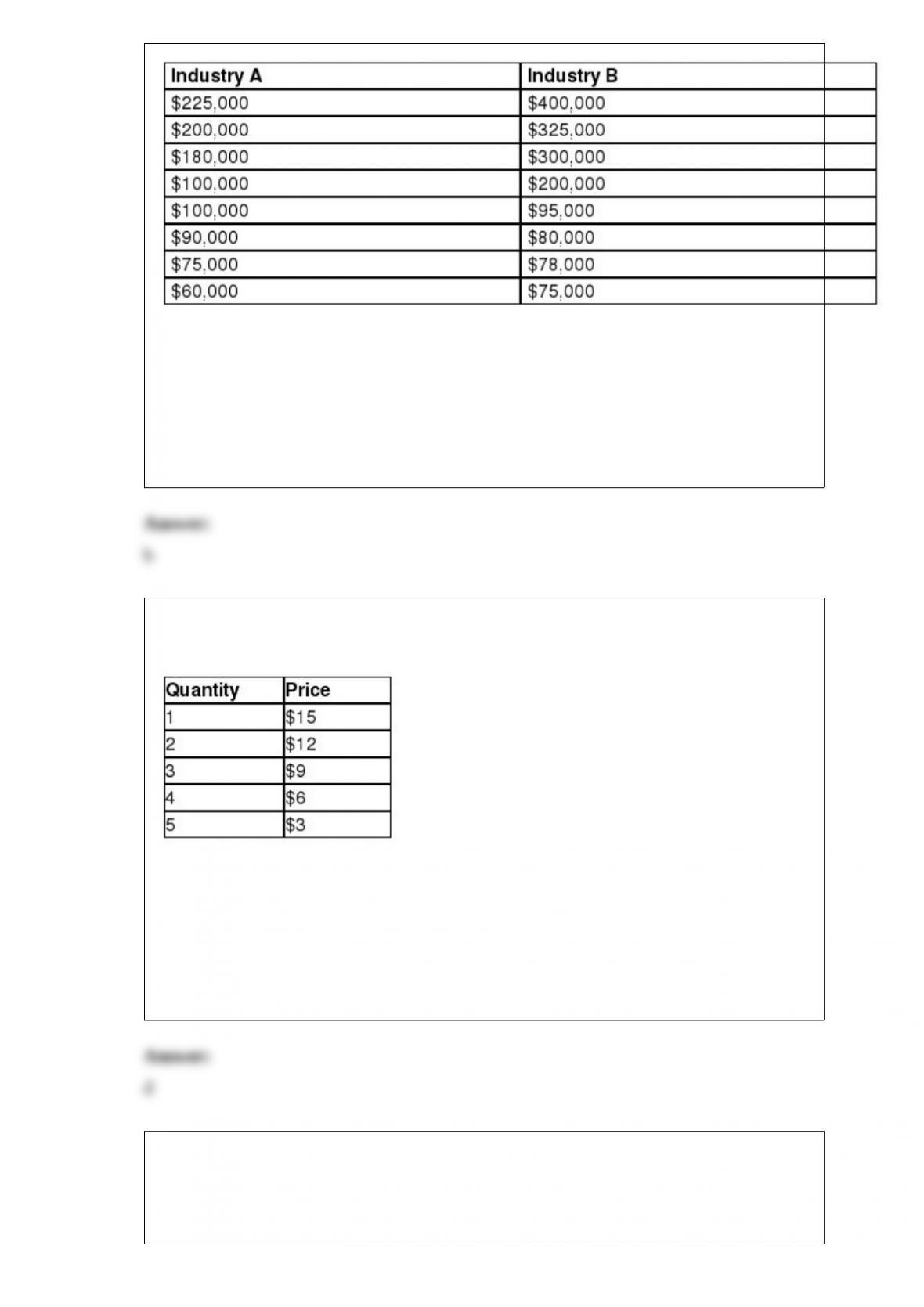
Which of the following statements is correct regarding the competitiveness of these two
industries?
a.Industry A and Industry B are equally competitive.
b.Industry A is more competitive than Industry B.
c.Industry A is less competitive than Industry B.
d.The competitiveness of these two industries cannot be determined from the
information given.
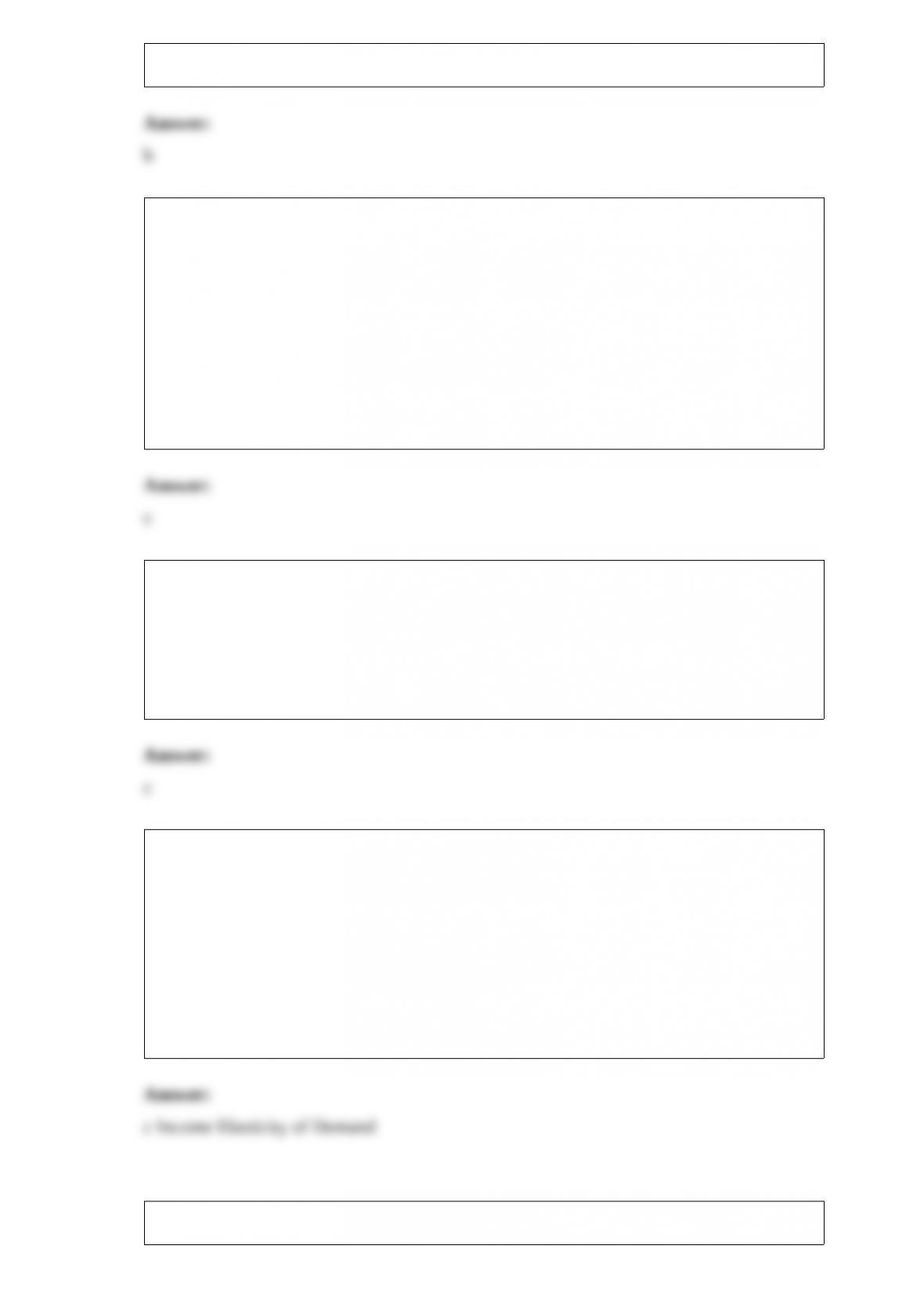
6) Table 15-6
A monopolist faces the following demand curve:
Suppose the monopolist has total fixed costs equal to $5 and a variable cost equal to $4
per unit for all units produced. What is the total profit if she operates at her
profit-maximizing price?
a.$1
b.$7
c.$9
d.$11
7) A monopolistically competitive industry is characterized by
a.many firms, differentiated products, and barriers to entry.
b.many firms, differentiated products, and free entry.
c.a few firms, identical products, and free entry.
d.a few firms, differentiated products, and barriers to entry.
8) An airline knows that business travelers have more inelastic demand for travel than
vacationers. That is, business travelers are often willing to pay more for airline tickets
than vacationers. The airline also knows that business travelers do not like to travel over
weekends. When customers request airline tickets that do not involve travel over a
weekend, the airline determines that a traveler is likely a business traveler and charges a
higher price. This is an example of
a.moral hazard.
b.signaling.
c.screening.
d.adverse selection.
9) “Only individual members of society earn income, not society itself.” This statement
is most closely associated with the political philosophy of a
a.utilitarian.
b.liberal.
c.libertarian.
d.None of the above is correct.
10) When her income increased from $10,000 to $20,000, Heather’s consumption of
macaroni decreased from 10 pounds to 5 pounds and her consumption of soy-burgers
increased from 2 pounds to 4 pounds. We can conclude that for Heather, macaroni
a.and soy-burgers are both normal goods with income elasticities equal to 1.
b.is an inferior good and soy-burgers are normal goods; both have income elasticities of
1.
c.is an inferior good with an income elasticity of -1 and soy-burgers are normal goods
with an income elasticity of 1.
d.and soy-burgers are both inferior goods with income elasticities equal to -1.
11) Assume that Huang and Min can switch between producing parasols and producing
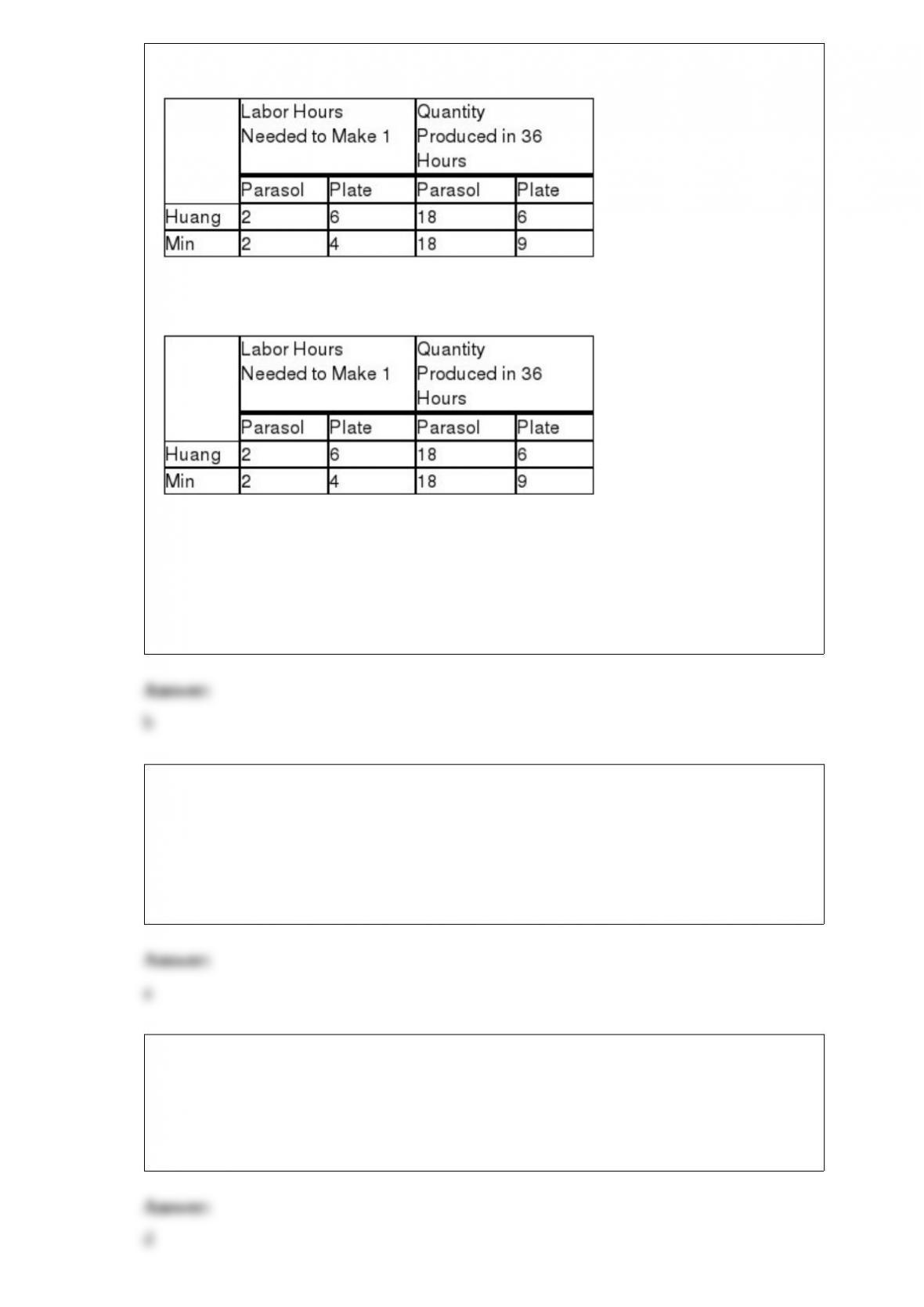
porcelain plates at a constant rate.
Assume that Huang and Min can switch between producing parasols and producing
porcelain plates at a constant rate.
At which of the following prices would both Huang and Min gain from trade with each
other?
a.15 parasols for 10 plates
b.15 parasols for 6 plates
c.15 parasols for 3 plates
d.Huang and Min could not both gain from trade with each other at any price.
12) What do economists call the business practice of selling the same good at difference
prices to different customers?
a.price discrimination
b.collusion
c.compensating differential
d.Both a and b are correct
13) Which of the following is not a cost of taxes to taxpayers?
a.the tax payment itself
b.deadweight losses
c.administrative burdens
d.goods and services provided by the government
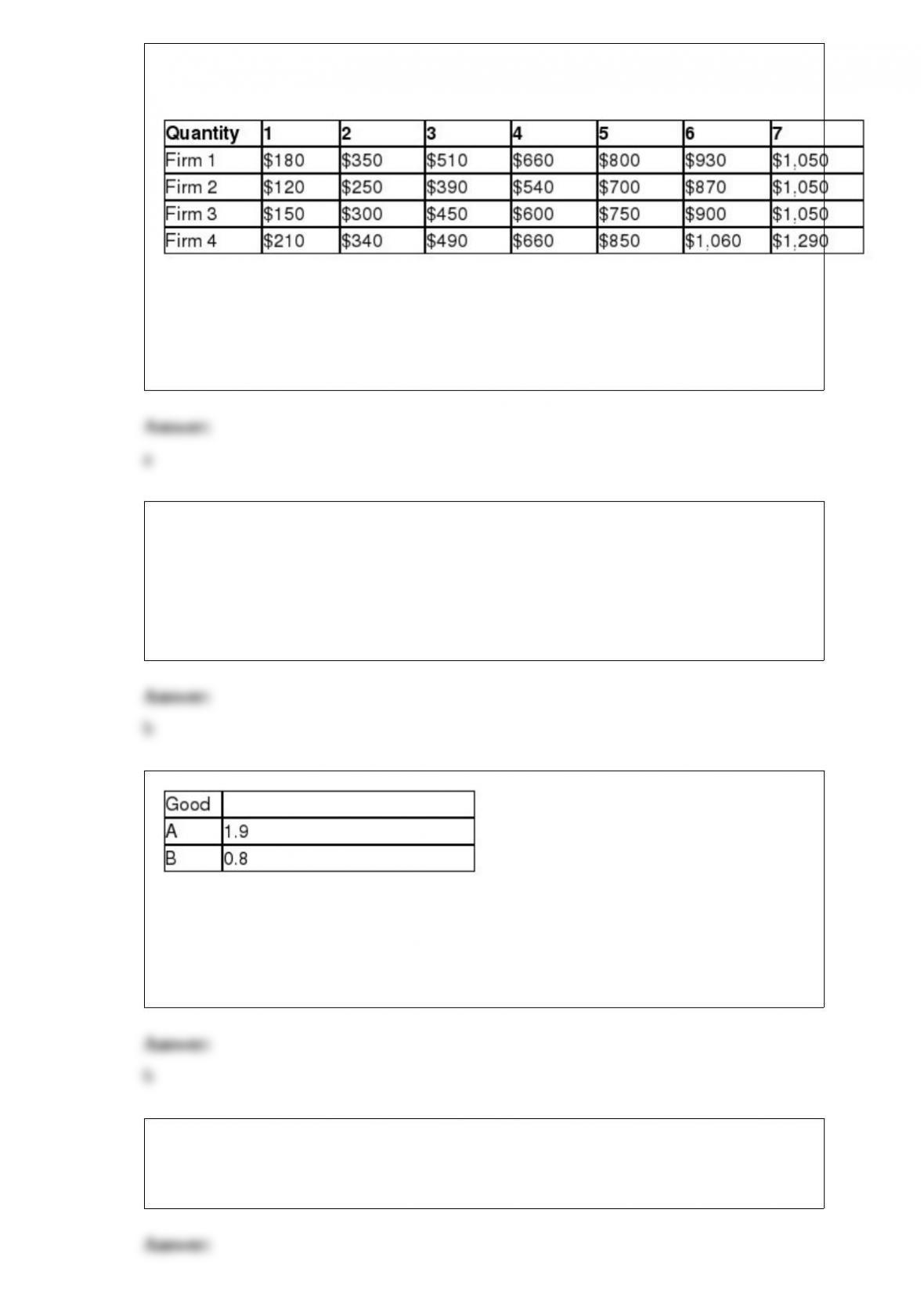
14) Table 13-17
Consider the following table of long-run total cost for four different firms:
Which firm has economies of scale over the entire range of output?
a.Firm 1 only
b.Firms 1 and 2 only
c.Firm 2 only
d.Firm 3 only
15) As with many public goods, determining the appropriate level of government
support for the production of general knowledge is difficult because
a.patents correct for an unknown portion of the externality.
b.benefits are hard to measure.
c.members of Congress are often experts in the sciences.
d.the costs always exceed the benefits.
16) Which of the following is consistent with the elasticities given in Table 5-1?
a.A is laundry detergent and B is Tide.
b.A is Diet Pepsi and B is soda.
c.A is food and B is a yacht.
d.A is toilet paper and B is candles.
17) Social welfare can be enhanced by allowing firms to trade their rights to pollute.
a.True
b.False
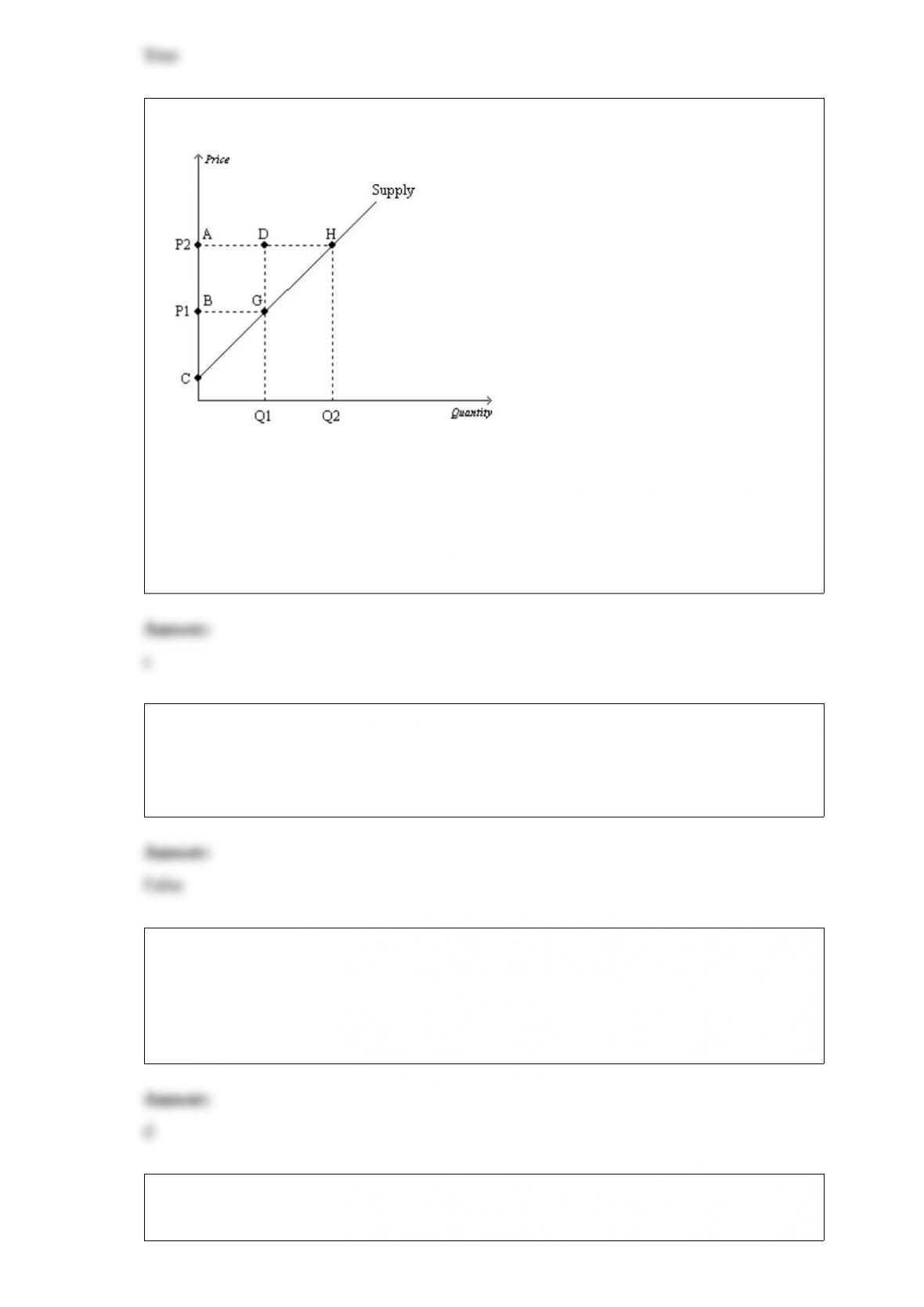
18) Figure 7-10
Which area represents the increase in producer surplus when the price rises from P1 to
P2 due to new producers entering the market?
a.BCG
b.ACH
c.DGH
d.AHGB
19) When advertising is used to relay information about price, each firm is able to
enhance market power.
a.True
b.False
20) Which of the following is NOT an example of a negative externality?
a.air pollution from a manufacturing plant.
b.disrupted sleep from a neighbor€s loud music.
c.an illness caused by secondhand cigarette smoke.
d.a decrease in your property value from neglecting your lawn and garden.
21) Table 20-13
Distribution of Income in Imagination
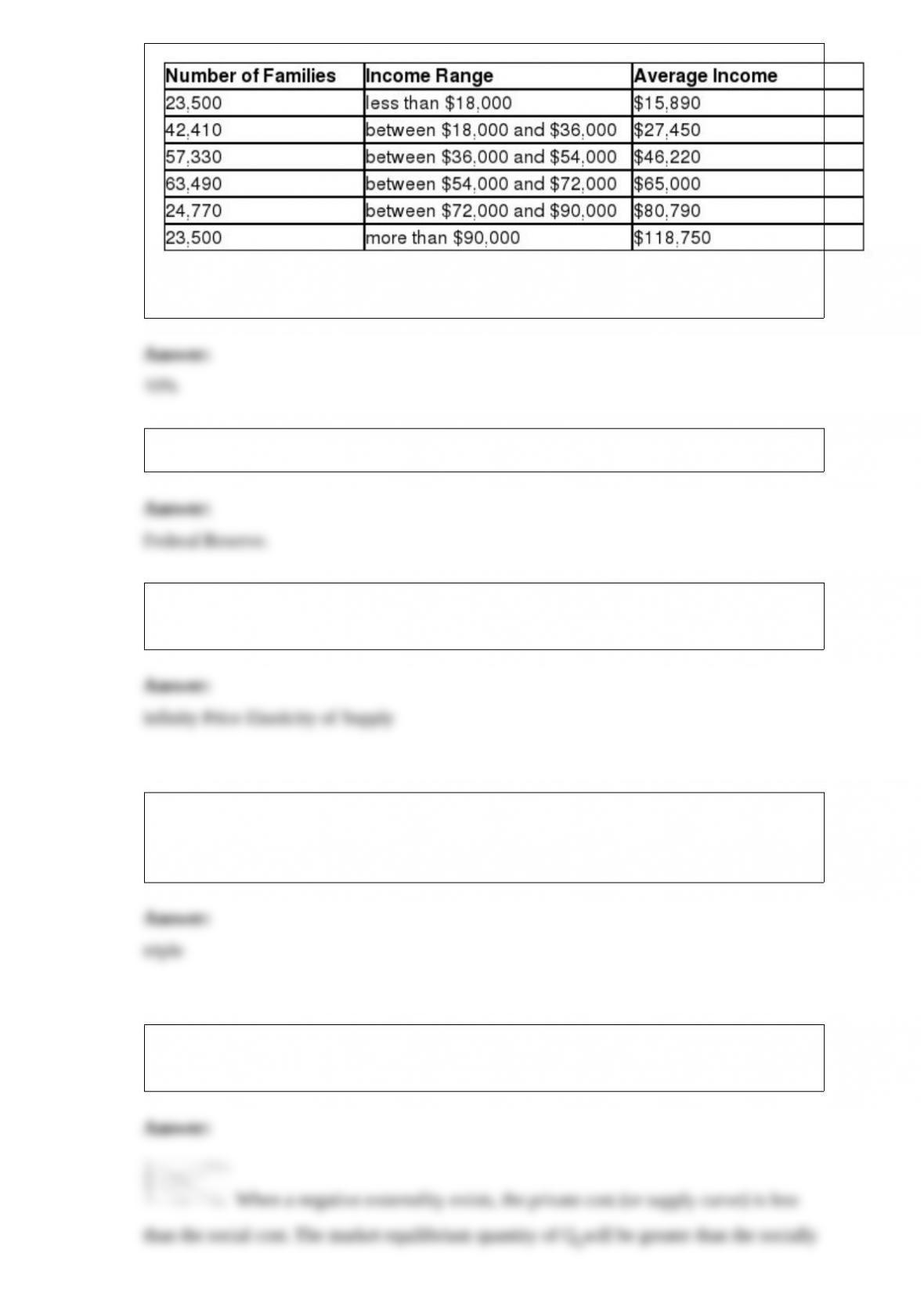
Refer to Table 20-13. If the poverty line in Imagination is $18,000, what is the poverty
rate?
22) The institution that sets the nation’s monetary policy is called the
23) If a supply curve is perfectly horizontal, what is the value of the price elasticity of
supply?
24) The Clayton Act of 1914 allowed a person who successfully sued a company for
damages caused by an illegal arrangement to restrain trade to recover ________
damages.
25) Using a supply and demand diagram, demonstrate how a negative externality leads
to market inefficiency. How might the government help to eliminate this inefficiency?
26) Describe the shape of the monopolistically competitive firm’s demand curve.
27) What is the primary problem in comparing income inequality in the US with
income inequality in other countries?
28) Give an example of a tax system where the marginal tax rate would equal the
average tax rate.