
The shrinking gap between the income levels of poor and rich countries is known as the
a. conservative hypothesis.
b. divergence hypothesis.
c. convergence hypothesis.
d. confluent hypothesis.
Any reserves held by a bank above the amount of minimum legal reserves are called
a. total reserves.
b. required reserves.
c. fiat money.
d. excess reserves.
If Ms. Anniston transfers $1,000 from her checking account to her money market
account, then
a. M1 falls and M2 remains the same.
b. M1 falls and M2 rises.

c. both M1 and M2 rise.
d. M1 remains the same and M2 rises.
The national debt
a. is increased by budget surpluses.
b. is the value of the government’s indebtedness at a moment in time.
c. exceeded $20 trillion in 2014.
d. All of the above are correct.
The notion that equally situated individuals should be taxed equally is referred to as
a. horizontal equity.
b. vertical equity.
c. the benefits principle.
d. the Gini principle.

The sequence of events following a contractionary monetary policy would be higher
interest rates followed by dollar
a. depreciation, higher exports, and lower imports.
b. depreciation, lower exports, and higher imports.
c. appreciation, lower exports, and higher imports.
d. appreciation, higher exports, and lower imports.
A major advantage of the corporation is
a. limited taxes.
b. preferential treatment by state governments.
c. limited liability of individual owners.
d. limited numbers of owners and ease of decision making.
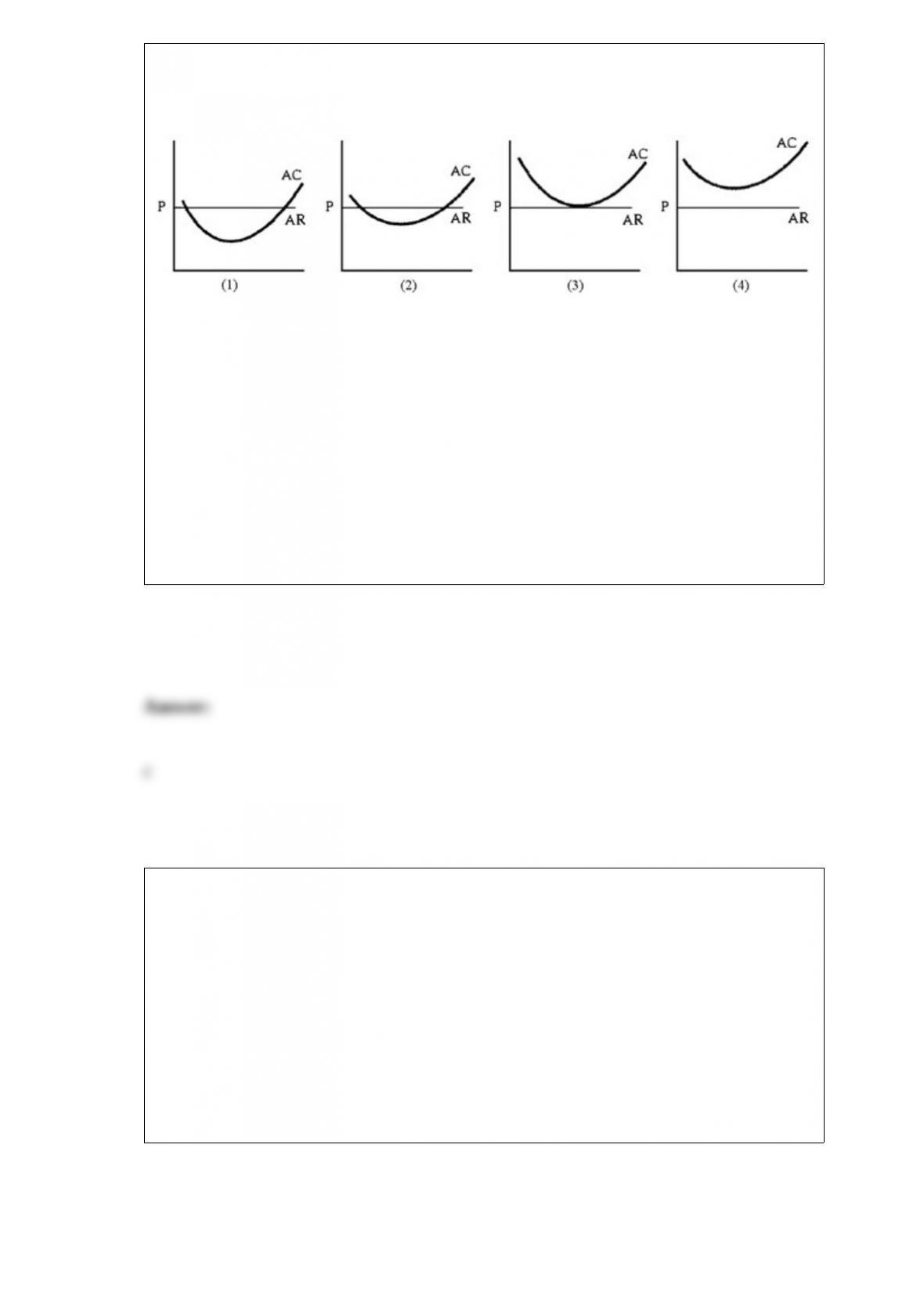
Figure 7-13
Figure 7-13 shows the average total cost curves of four firms that produce milk. Some
of the dairies are more productive. AR = P is the long-run price of milk. How many of
these dairies will remain in the industry in the long run?
a. all of them
b. only 2
c. only 3
d. cannot determine with information given
Stock prices fell throughout much of 2007 and 2008 and many investors decided to
switch their funds into the bond market. What only about 30 percent of surveyed
investors knew was that as bond prices rise, interest rates
a. fall in reaction to the increased demand for bonds.
b. fall in reaction to the decreased demand for bonds.
c. rise in reaction to the increased demand for bonds.
d. rise in reaction to the decreased demand for bonds.

Rising prices will discourage consumption and encourage conservation.
a. True
b. False
You are a member of Congress in 2007-2009 when the economy is in a recessionary
gap. If your goal is to achieve full employment, you should vote for
a. decreased government purchases, increased taxes, and a cut in transfer payments.
b. a balanced federal budget.
c. increased government purchases, decreased taxes, and an increase in transfer
payments.
d. increased government purchases and transfer payments, and an equal increase in
taxes.
In the long-run, a monopolist charges the same price as a perfectly competitive firm.

a. True
b. False
The national debt is the
a. result of previous budget deficits.
b. result of rising interest rates.
c. result of previous budget surpluses.
d. result of efficient balancing.
The percentage of work time lost due to strikes is greater than the percentage of work
time lost due to coffee breaks.
a. True
b. False
When the Fed buys a Treasury bill from the public, how does it usually pay for the
T-bill?
a. by writing a check on a commercial bank account
b. by printing new Federal Reserve notes
c. by creating new reserves in bank accounts
d. by prepaying taxes into the Treasury’s account
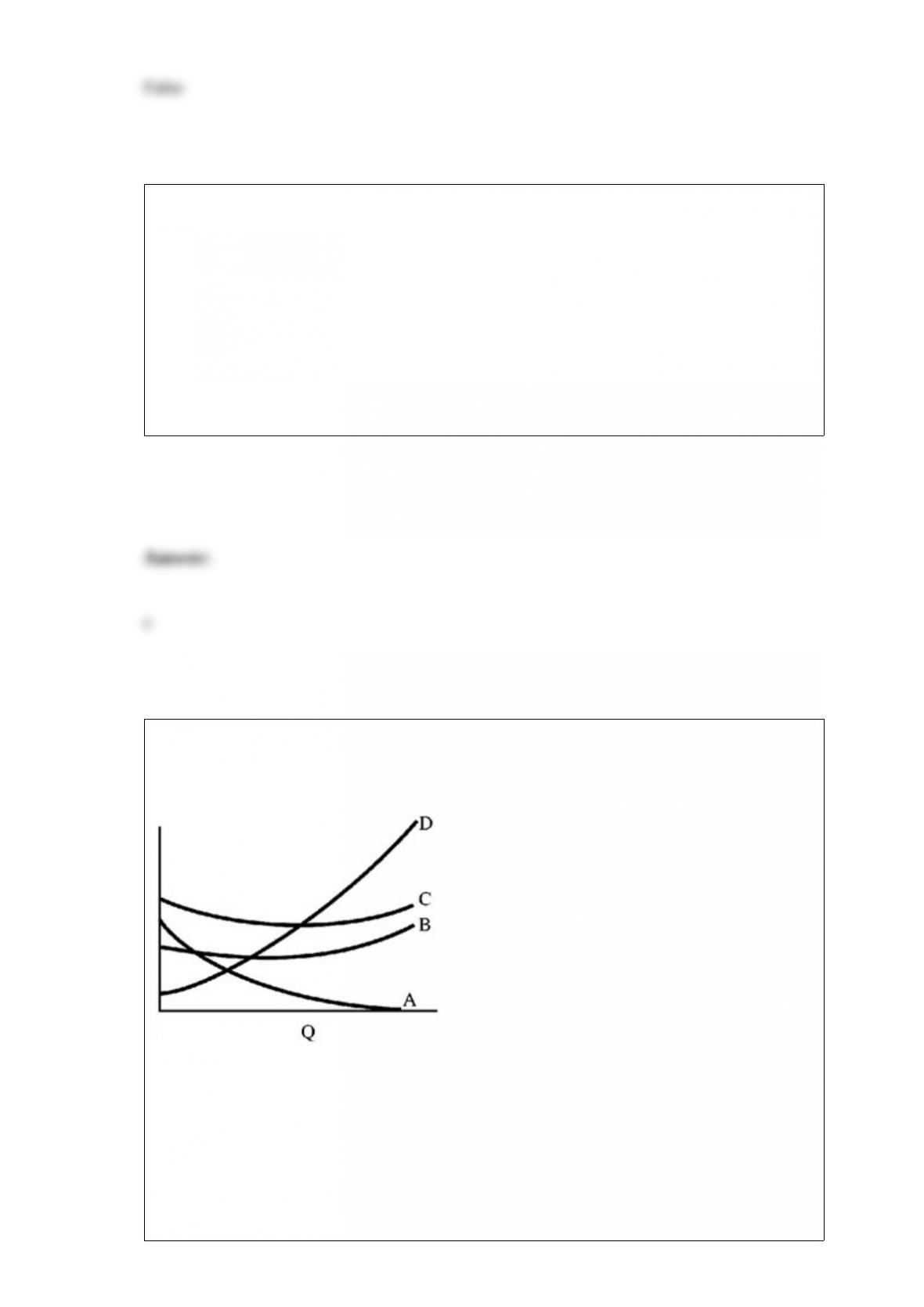
Figure 7-10
In Figure 7-10, the curve B is
a. average fixed cost.
b. average total cost.
c. average variable cost.

d. marginal cost.
In her book on the American work week, economist Juliet Schorr argues that Americans
work too much. Her argument may be interpreted as concluding that this behavior
a. increases GDP but decreases well being.
b. increases GDP and increases well-being.
c. decreases GDP and decreases well being.
d. decreases GDP but increases well being.
The benefits principle states that the users of a service should pay for that service.
a. True
b. False

The strict crowding-out argument relies on the assumption that
a. the government must raise taxes to pay for spending, and the tax increase crowds out
the stimulative effect of increased spending.
b. the total flow of saving is a fixed amount.
c. investment is invariant to interest rates, but very dependent on aggregate spending.
d. consumption will rise to absorb most of an increase in income, and investment will
accordingly fall.
If the level of government spending increases at the same time the Fed is pursuing
contractionary monetary policy, we know that
a. incomes will fall.
b. the interest rate will rise.
c. incomes will rise.
d. the interest rate will fall.
Figure 11-2
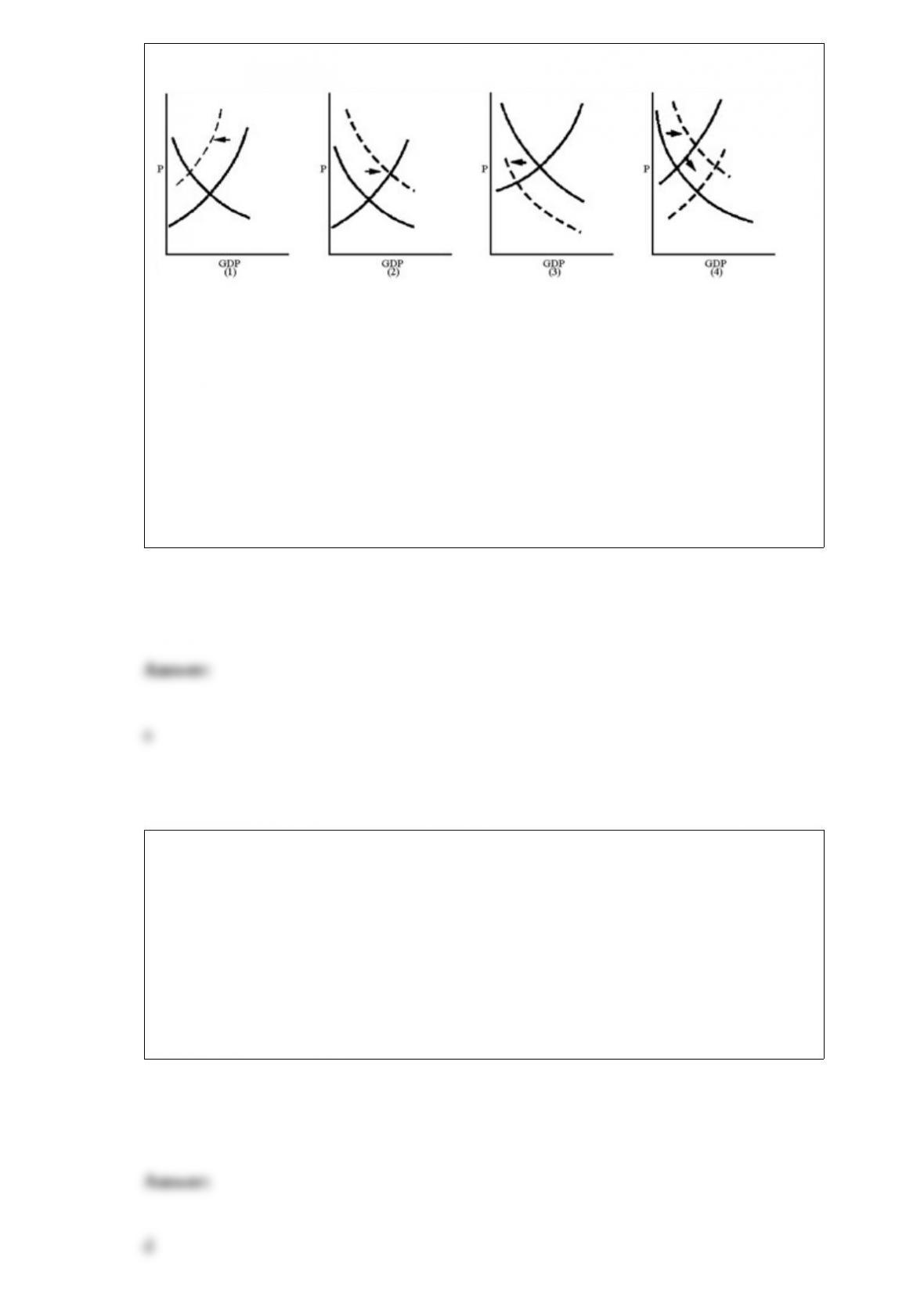
Which graph in Figure 11-2 best reflects a supply-sider’s view of the impact of an
increase in the personal income tax rate?
a. 1
b. 2
c. 3
d. 4
Inefficiency in an economy can be caused by
a. misallocating resources.
b. underemploying resources.
c. discrimination.
d. All of the above are correct.

The principle of comparative advantage explains specialization and trade among
countries but not among individuals.
a. True
b. False
Which of the following government entities relies most heavily on sales taxes?
a. local government
b. state government
c. federal government
d. the Social Security Administration
The psychological rewards of inventing a new product generally result in ____ profits
for entrepreneurs.
a. below average
b. only average
c. above average

d. indeterminate
The remarkable fact about the structural deficit after 1983 was that it was
a. very high.
b. very small for a period of economic recovery.
c. very high during peacetime.
d. high during Republican administrations.
One way in which the Phillips curve is misinterpreted is to think of it as
a. a model of economic activity that explains changes in unemployment and inflation by
changes in aggregate demand.
b. a statistical relationship between inflation and unemployment.
c. depicting a number of alternative equilibrium points the economy could achieve.
d. All of the above.
Derivatives can be used to reduce risk but they also can be a source of risk in
themselves.
a. True
b. False
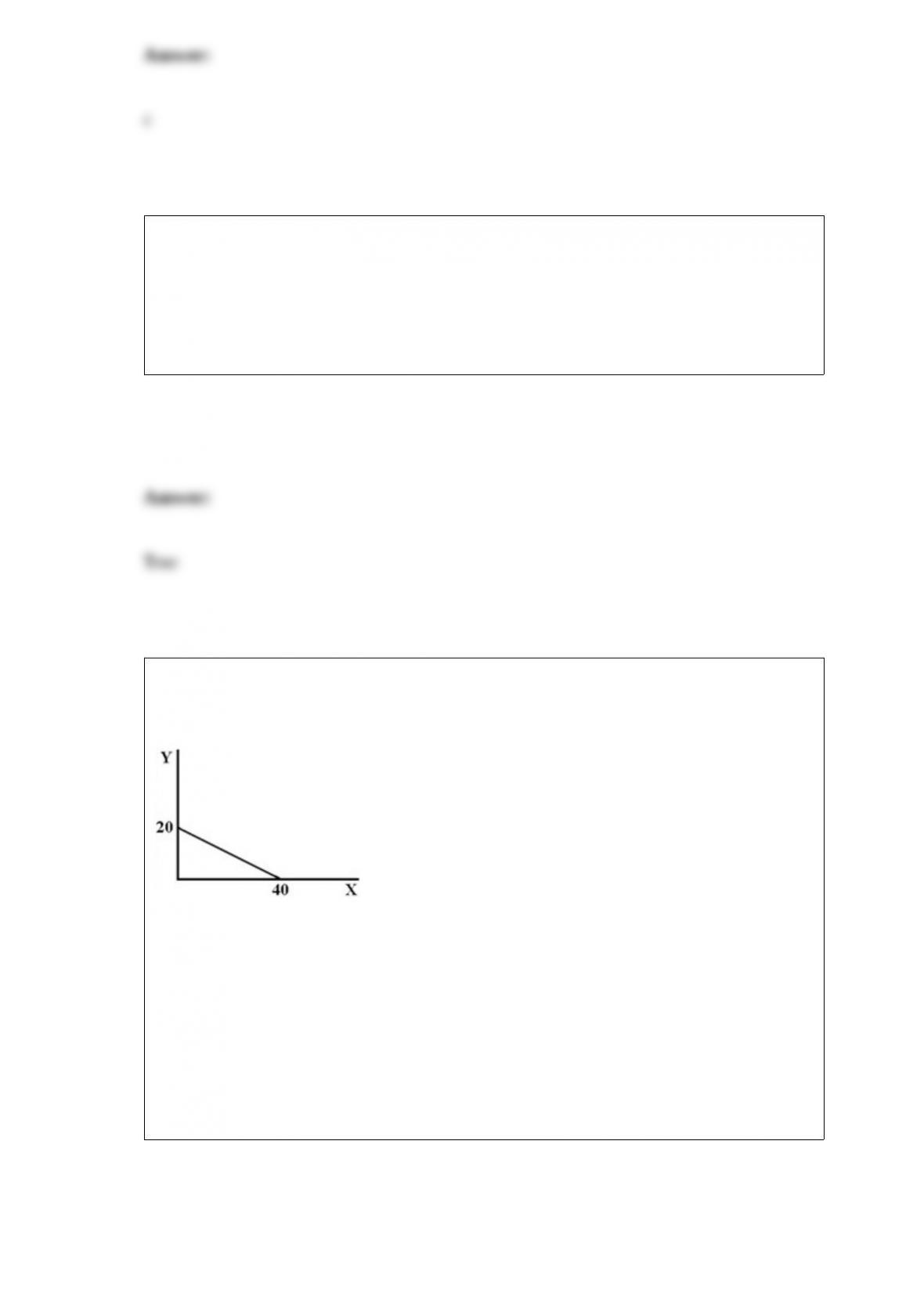
Figure 1-1
The slope of the line in Figure 1-1 is
a. 0.5.
b. 2.0.
c. −0.5.
d. −2.0.
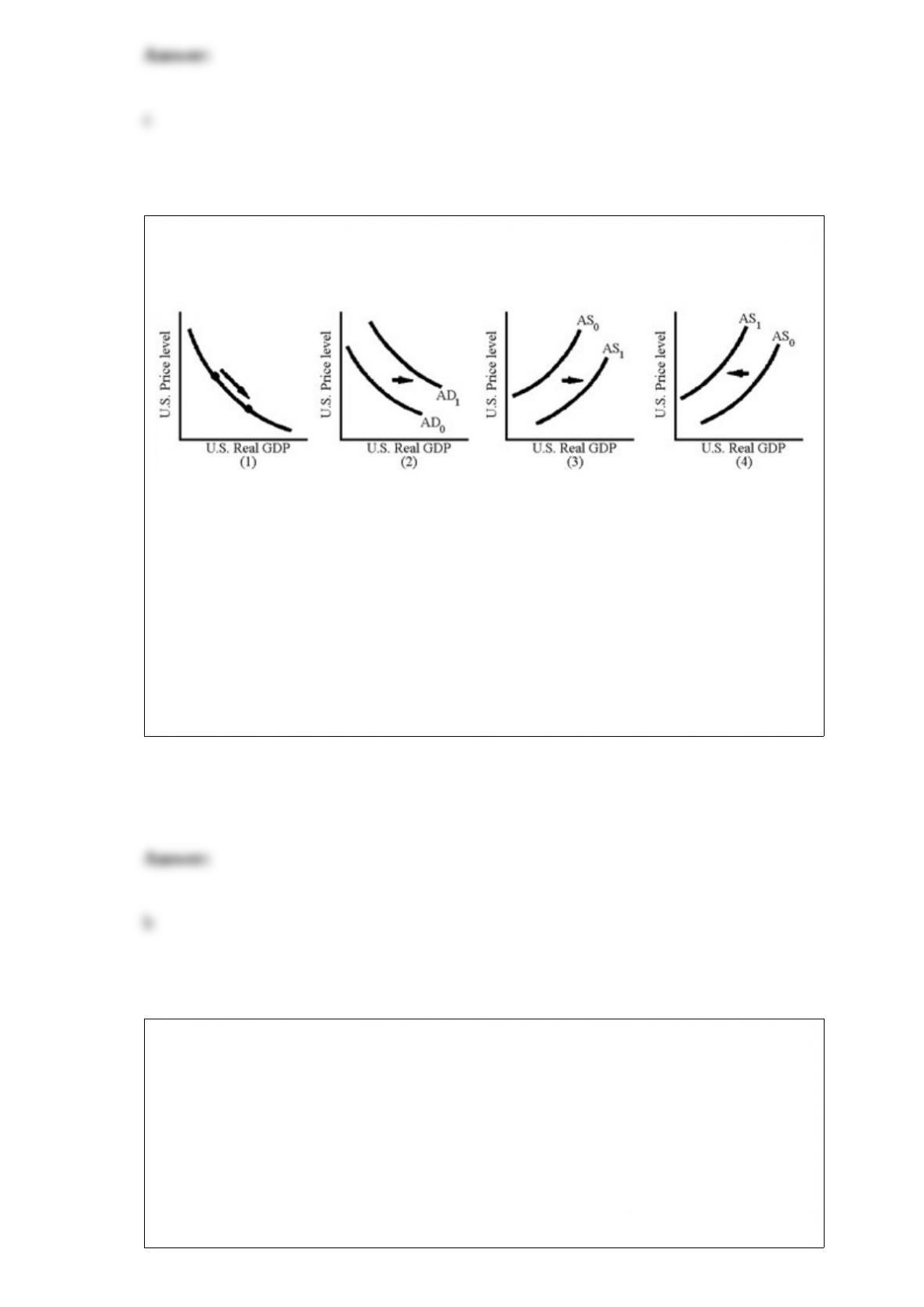
Figure 20-5
Which of the graphs in Figure 20-5 are consistent with a depreciation of the U.S. dollar
and an increase in net exports caused by a decrease in U.S. interest rates?
a. 1
b. 2
c. 3
d. 4
The significantly high rates of inflation in the 1970s occurred, in part,
a. because of increased petroleum prices.
b. due to high unemployment.
c. despite falling gasoline prices.
d. due to restrictive monetary policies.

The equilibrium rent for marginal land
a. equals zero.
b. depends on the supply and demand of land.
c. exceeds the opportunity cost of the land.
d. is always greater than the equilibrium rent for nonmarginal land.
Increasing environmental awareness in the United States has occurred with increasing
GDP, which has reduced concerns about basic needs.
a. True
b. False
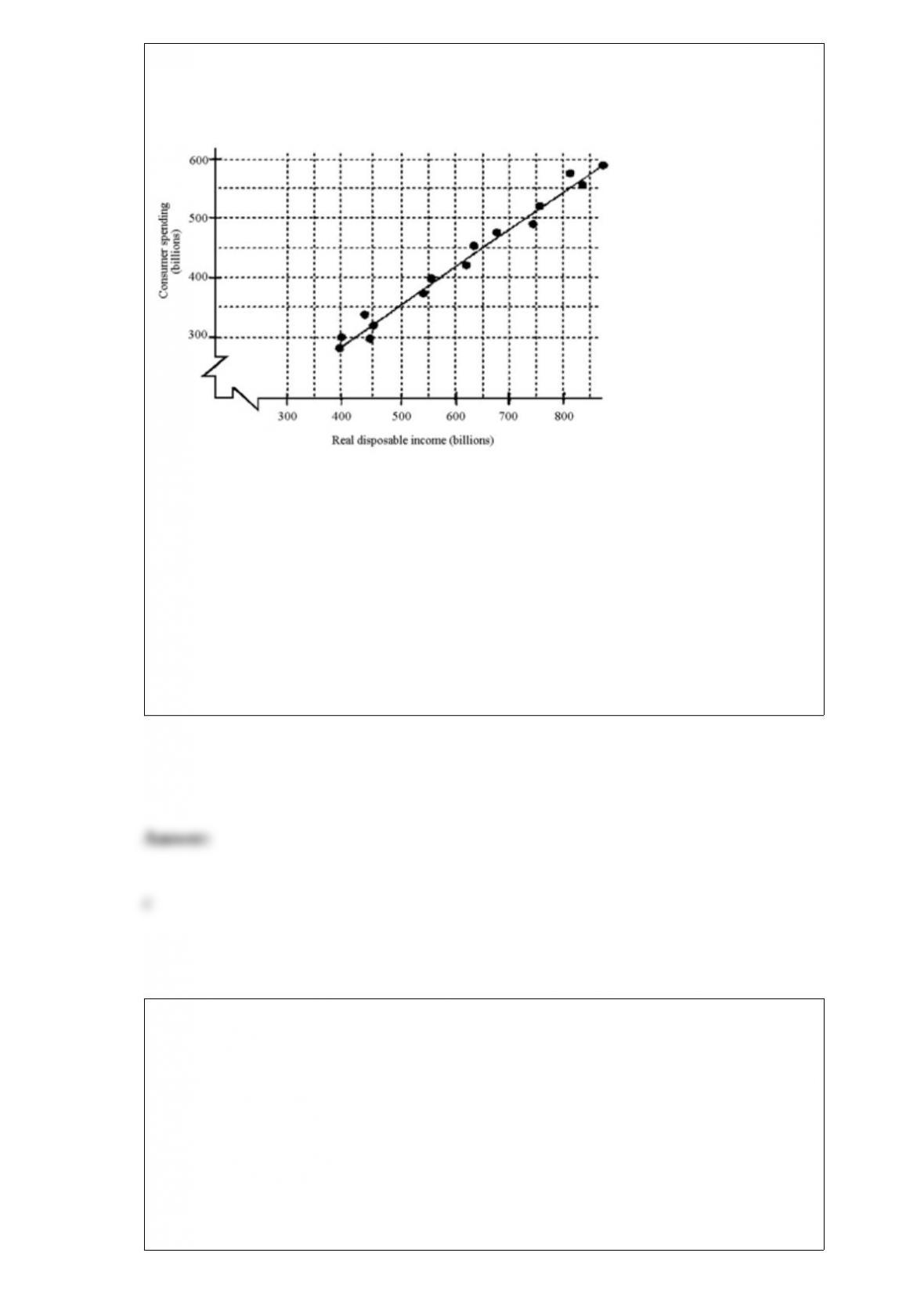
Figure 8-1
Based on the scatter diagram in Figure 8-1, if real disposable income is $800 billion, the
consumption spending would be approximately
a. $800 billion.
b. $650 billion.
c. $540 billion.
d. $420 billion.
If the capital stock increases, then the economy can produce ____ output with the ____
amount of labor.
a. same, same
b. less, same
c. more, same
d. less, less